

What Does Unisex Mean in Fashion? Clothing, Fit and Sizing
What does unisex mean? In fashion, unisex describes clothing, footwear or accessories intended for wearers of more than one gender rather than being restricted to labels such as 'men's' or 'women's'. The key is flexibility: cuts, colors, details and size ranges that let people choose according to their body and personal taste.
Someone asking 'what is unisex?' usually wants more than a definition. They may wonder whether unisex T-shirts fit loosely, how a woman should choose a men's or shared size, whether unisex always means oversized and whether it works for streetwear or dark aesthetics. These are practical shopping questions because a vague size label can lead to the wrong purchase.
Guide collection: Aesthetic Dictionary: Fashion Style Terms (Vietnamese)
What Does Unisex Mean?

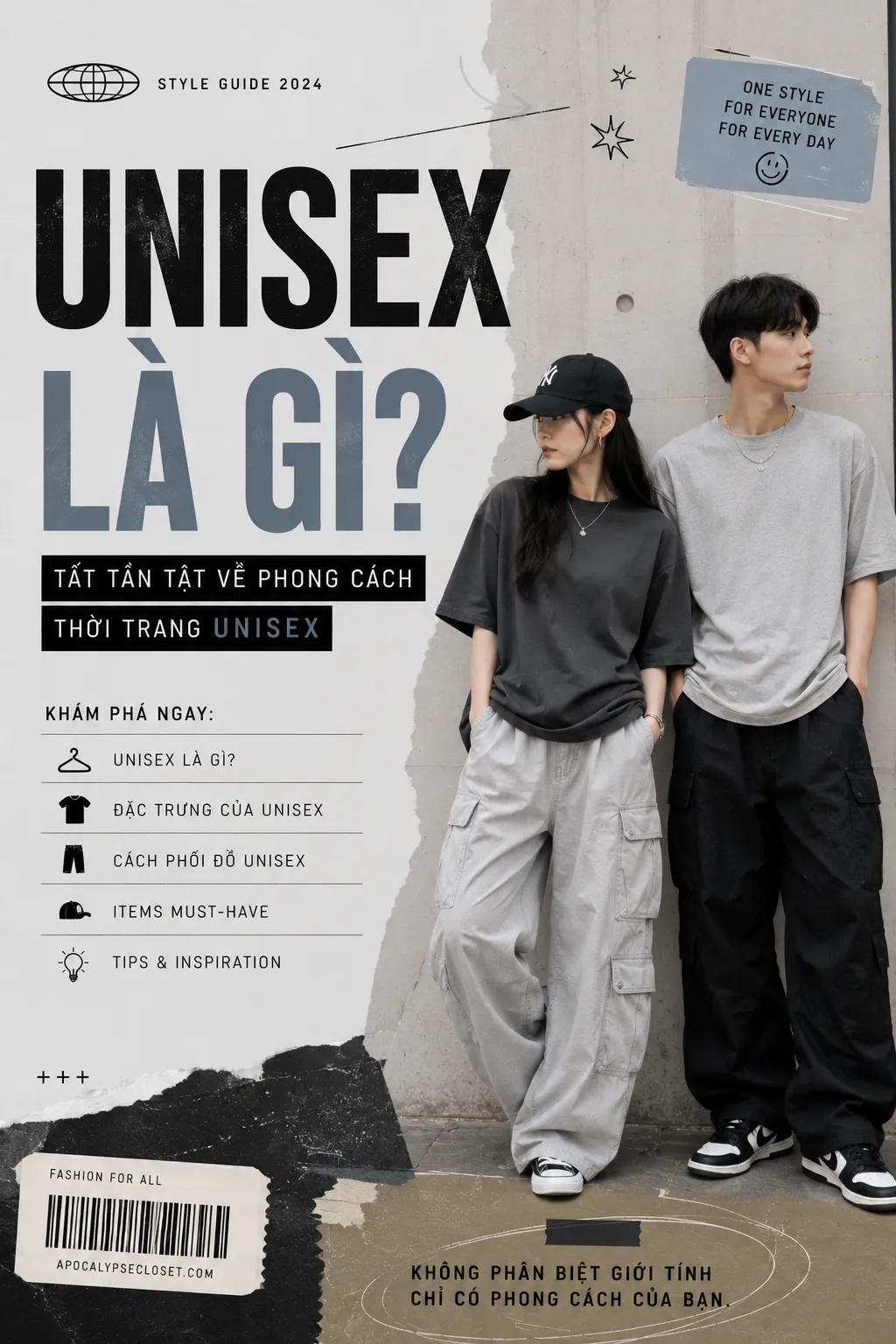
Unisex simply means suitable for people of different genders. For garments, that doesn't mean one item will fit every body. It means the design isn't tied too closely to a single gendered body template and is often sold using one shared sizing chart.
T-shirts, hoodies, jackets, cargo trousers, hats, bags and jewelry are relatively easy to offer as unisex because relaxed cuts, stretch waists, drawstrings or varied sizes provide more flexibility. Products that must fit closely around the bust, waist or hips or provide specialized support are harder to design around one shared chart.
Unisex doesn't erase the wearer's body. It lets the person's shape and taste guide a choice before a gender category does.
Is Unisex the Same as Gender-Inclusive Fashion?
These expressions are often used interchangeably. 'Gender-inclusive fashion' emphasizes not restricting clothing by male or female categories. 'Unisex' appears frequently in product labels, size charts and store categories. When shopping, both encourage people to look first at fit, measurements and personal expression.
However, a unisex outfit does not have to be minimalist or visually neutral. A unisex graphic tee can feel distinctly Punk. A shared-fit jacket can look Goth. A unisex bag can sharpen a Dark Feminine outfit. The product's intended audience may be broad even when its aesthetic is very specific.
Unisex vs Oversized, Gender-Neutral and Androgynous
| Term | What it describes | Example |
|---|---|---|
| Unisex | A product designed for different genders | A T-shirt sold with a shared size chart |
| Oversized | A deliberately larger garment silhouette | A dropped-shoulder, roomy hoodie |
| Gender-neutral | An approach that avoids assigning clothing to one gender | A collection organized by cut rather than men's/women's categories |
| Androgynous | A style mixing conventionally masculine and feminine cues | Sharp suiting paired with softer makeup |
An item can be both unisex and oversized, but the words don't mean the same thing. Oversized describes shape; unisex describes intended wearers. Androgynous refers more to overall expression. Keeping those differences clear helps you search accurately and interpret sizing information.
Common Features of Unisex Clothing
Unisex pieces often have straighter cuts, comfortable shoulders, versatile color palettes and details that don't depend on one specific set of body proportions. Black, white, gray, denim blue, olive and brown work across many wardrobes. Drawcords, elastic waists, adjustable fastenings and relaxed shapes increase flexibility.
These are tendencies, not rules. Pink fabric, lace or metallic details can absolutely be unisex when the fit and sizing support different bodies. Conversely, a roomy black shirt isn't automatically unisex if its cut, length and size chart were developed for only one audience.
Why Unisex Works for Streetwear and Alt Fashion
Streetwear (Vietnamese) has long emphasized community, music, movement and personal identity over traditional dress rules. Core pieces such as graphic tees, hoodies, bombers, cargo trousers and sneakers cross gendered fashion categories easily. Wearers choose them for shape, print, material and how they feel—not necessarily the department in which they're sold.
Alternative fashion works similarly. Goth, Punk, Grunge and E-Girl outfits borrow across wardrobes: oversized jackets, corsets, boots, chains, mesh and baggy pants. A look doesn't need to prove that it's feminine or masculine enough; it needs to feel right for the wearer and their chosen mood.
Is Unisex Clothing Always Loose?
No. Many brands use relaxed cuts because they're adaptable to more bodies, but unisex clothing can also have a regular fit. A regular-fit unisex tee often has a relatively straight torso, little waist shaping and a broad size range. Unisex trousers may use adjustable waists to accommodate different waist-to-hip ratios.
Don't automatically size up or down when you see 'unisex'. Read the actual measurements. Two brands' unisex medium T-shirts may differ substantially in chest width and body length.
How Women Can Choose Unisex Sizes
Start with the silhouette you're aiming for. For a closer fit, compare chest width and length to a tee you already like. For a looser look, add room while checking shoulders and hem placement. If your bust or hips need extra space, prioritize the largest relevant measurement and look for side slits, stretch or adjustable details.
With trousers, shared size charts can be most misleading around the hips and rise. A waist that fits doesn't guarantee comfortable hips, and correct hip width doesn't guarantee sufficient rise. Styles such as cargo pants with stretch waists, drawcords or adjustable hems may accommodate a wider range of proportions.
When buying online, favor sellers who publish finished-garment dimensions and model measurements. Our alternative-fashion online size guide explains how to measure clothing you already own and compare it directly, rather than choosing by body weight.
Does Unisex Clothing Hide Your Shape?
Only if the proportions don't suit the look you want. Unisex doesn't require you to hide your shape. You can define a neckline, waist, wrist, waistband or hem. A loose unisex shirt with high-rise trousers creates a different shape from a long baggy tee over trousers that bunch around the ankles.
In Dark Feminine outfits, a unisex piece can create valuable contrast: a roomy jacket over a fitted top, straight trousers with a corset or an oversized graphic tee with tall boots. The difference between structure and volume can add depth without concealing all your shape.
Can You Build a Shared Unisex Wardrobe?
Yes, if the wearers have similar measurements or enjoy different fits from the same garment. T-shirts, hoodies, jackets, bags and accessories are easier to share; trousers are trickier because waist, hips, rise and leg length vary. Drawstrings and adjustable waists are often more practical than a fixed closure.
A shared wardrobe shouldn't become another excuse to overbuy. The real value is wearing clothes more often. One jacket used by two people in different outfits can live longer in the wardrobe and inspire more outfits of the day (OOTDs) (Vietnamese) .
How to Read a Unisex Product Listing
Look for four types of information: finished-garment measurements, fabric, stretch and the model's fit. One model photo doesn't show how the item behaves on different bodies. If a store includes photos of men and women wearing the same piece, compare shoulder position, hem length and room around the hips.
Fabric also matters. Heavy cotton holds a straight unisex shape; soft jersey drapes closer to the body; nylon adds a utility feel; heavyweight denim needs enough ease for movement. Don't buy something merely because it's labeled unisex—choose it because the numbers and material work for your intended use.
Which Unisex Pieces Should You Try First?
Good entry points include T-shirts, hoodies, roomy jackets, cargo trousers, crossbody bags, caps and silver accessories. These are useful across different outfits and aren't heavily dependent on gendered labeling.
At Apocalypse Closet, unisex connects introductory fashion knowledge to individual style guides. If you prefer relaxed fits, explore Baddie Streetwear (Vietnamese); if you like graphics, boots and metal hardware, move toward Punk / Grunge (Vietnamese) or Goth (Vietnamese). Clothes can express a strong identity without a gendered product label.
Conclusion: Choose for Your Body, Not the Label
So what is unisex? It's an approach to designing and selling products for more than one gender, prioritizing flexibility rather than rigid men's and women's categories. It doesn't mean oversized, require minimalist styling or guarantee one size works for everyone.
When shopping, look past assumptions about 'men's' and 'women's' clothing to measurements, cut, fabric and the look you want. This opens up more options for building Streetwear, Goth, Punk and Dark Feminine outfits around your own body and taste.
Frequently Asked Questions
Do unisex clothes have separate men's and women's sizes?
Most unisex pieces are sold with one shared size chart. Compare shoulder, chest, waist, hip and length measurements rather than selecting solely by a gender label.
Which unisex T-shirt size should a woman choose?
Measure a tee that fits the way you like and compare its finished dimensions. For a neater fit, stay close to those numbers; for a relaxed or oversized effect, deliberately allow more room in the relevant areas.
Does unisex mean oversized?
No. Unisex refers to an item intended for different genders; oversized describes a deliberately roomy silhouette. A unisex piece can be regular, loose or oversized.
Can unisex clothing suit all body shapes?
No single cut fits everyone perfectly. A unisex design still needs to be chosen according to each person's shoulders, torso, hips and garment length.
References
The following sources inform the definitions, terminology and context; the outfit and shopping applications are Apocalypse Closet's editorial guidance.
- Vogue — Lessons on the New Gender-Neutral — context about gender-neutral design in contemporary fashion.
- Vogue — The Menswear Phenomenon — historical context for unisex dressing and borrowing dress codes across genders.