

What Is Athleisure? Sportswear in Everyday Life
Athleisure brings sportswear-associated clothing into everyday use. Stretch, movement, ventilation, and a manageable silhouette are useful features to assess, but not guaranteed by the label. The outfit still needs to suit travel, study, a café, or an actual casual-work dress code.
This guide explains the term and women's styling possibilities, then uses an informal wearability check to examine coverage, waistbands, pockets, seams, recovery, and changes over several hours.
In this guide: understand what athleisure means through everyday use and garment behavior. For a more fashion-focused combination of sports references and polished finishing, read what Sporty Chic means.

Guide collection: Aesthetic Dictionary: Fashion Style References (Vietnamese)
Athleisure The name combines athletic associations with leisure. It describes clothing intended or styled for everyday use alongside exercise-related references. For this guide, usefulness means clothing that supports the actual day without repeated waistband, strap, or coverage adjustments; exercise suitability still requires separate assessment.
Sportswear and Everyday Use
Merriam-Webster describes athleisure as a blend of athlete and leisure and records a first known use in 1976. Its earlier word-history article also cites Nation's Business in 1979. These documented uses do not identify one moment when all related clothing began; they provide context for sportswear's use beyond a particular activity.
For the everyday interpretation here, assess three things alongside any sports logo: movement that works for you, features useful during the day and a finish suited to the intended setting. The Sporty Chic specialist develops the more polished visual-pairing question separately.
Identifying Features
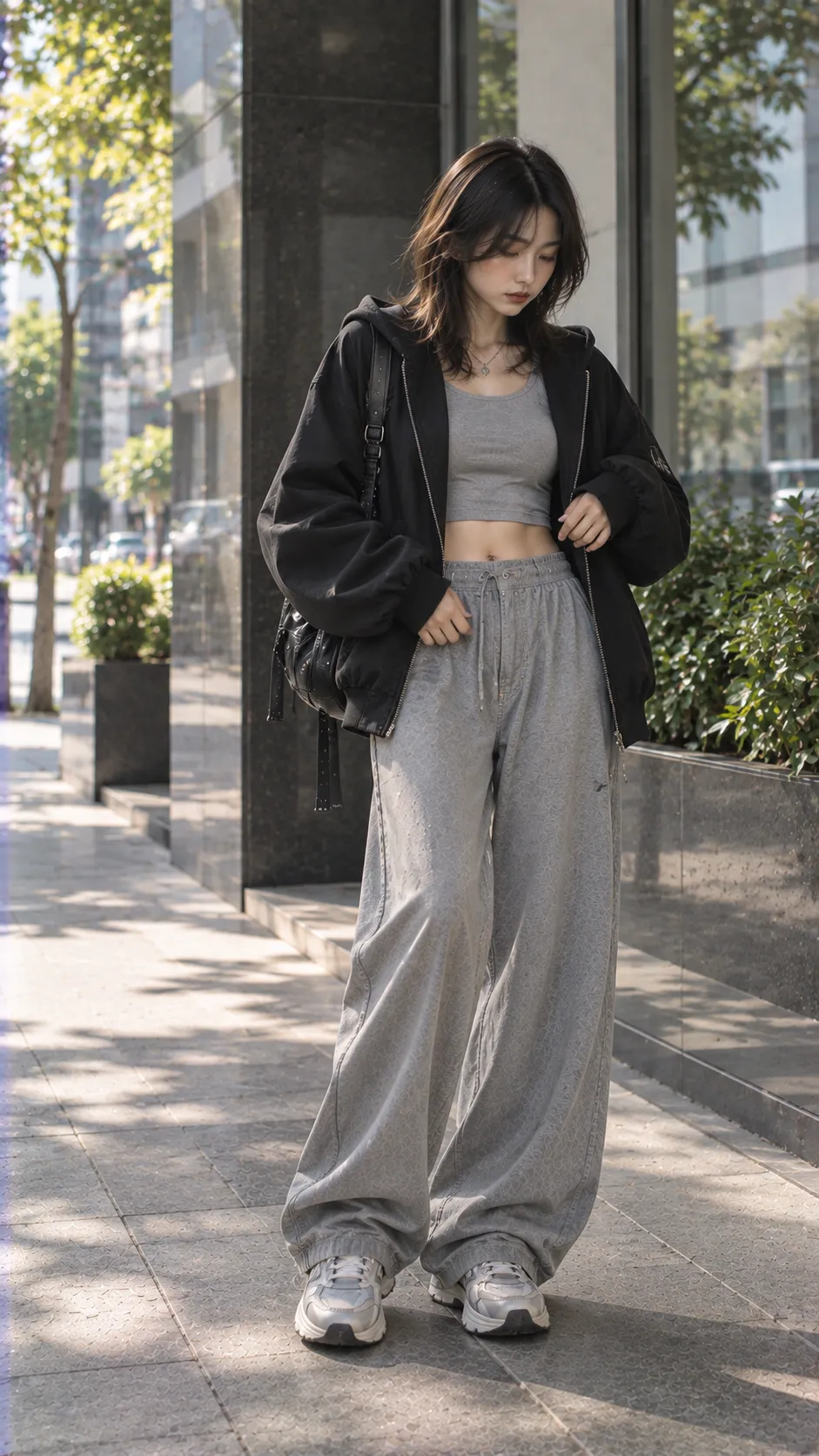
An outfit need not contain every feature. One starting point is one or two sportswear-associated pieces combined with deliberate proportions, layers, and accessories. When the main question becomes visual polish rather than sustained everyday use, compare the Sporty Chic guide for that emphasis. The terms overlap rather than forming rigid categories.
Activewear, Athleisure, and Sporty Chic
Assess suitability for a specific activity such as running, gym training, or yoga. Compression, support, moisture handling, and movement requirements differ by product and activity.
Athleisure in this guide retains movement while considering coverage, storage, fabric condition, and practical use beyond exercise.
Sporty Chic places further emphasis on the outfit's proportions, layers, color, accessories, and intended level of polish.
Put simply, test activewear for the activity, athleisure for the planned day, and Sporty Chic guide for the finish you want in that setting. A fashion label alone answers none of those practical questions.
An Informal Eight-Hour Observation
Read More Than Stretch Claims
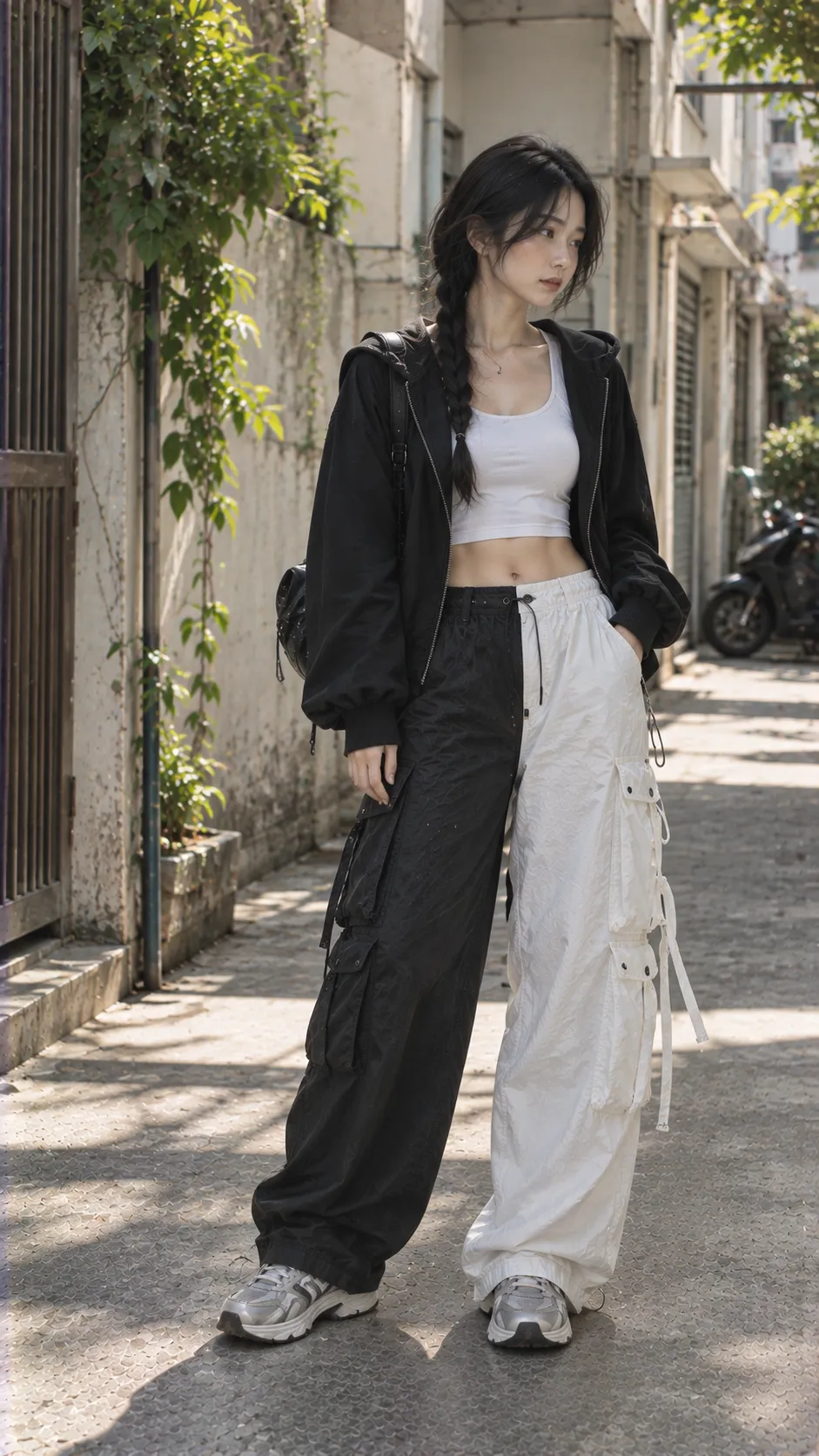
Six Useful Product Details
Opacity and Coverage
Soft studio light and a standing pose may not show how stretch changes coverage. Check the actual wearing positions rather than asking only whether the fabric is thick.
Use comparable brighter lighting and inspect stretched areas around hips, thighs, and knees.
Check the back and central seams. Fabric that appears opaque while standing may behave differently under stretch.
A rear-camera photograph can supplement a mirror view for shine, damp marks, and underlayer outlines. It is not an objective opacity rating.
Their color, seams, and thickness can change the outer surface and coverage.

Pockets, Cords, and Fastenings
Pocket outlines do not prove that a phone fits, and decorative straps do not establish support under a crossbody bag. Test ordinary interactions: sitting, carrying keys, leaning, wearing a backpack, and walking.
| Feature | Practical check | Reason to reassess |
|---|---|---|
| Pockets | Insert the actual phone, walk, and sit | Gaping, striking contents, or a pulled waistband |
| Drawstrings | Secure them as intended and move | Loosening, heavy ends, or rubbing |
| Zippers | Try normal opening and closing | Caught fabric, rough hardware, or distracting noise |
| Seams | Inspect the inside and normal movement tension | Raised, twisted, loose, or rubbing areas |
| Lining | Assess it after moving in the garment | Unwanted dampness, cling, or restricted outer stretch |
Changing Settings
Four Outfit Starting Points
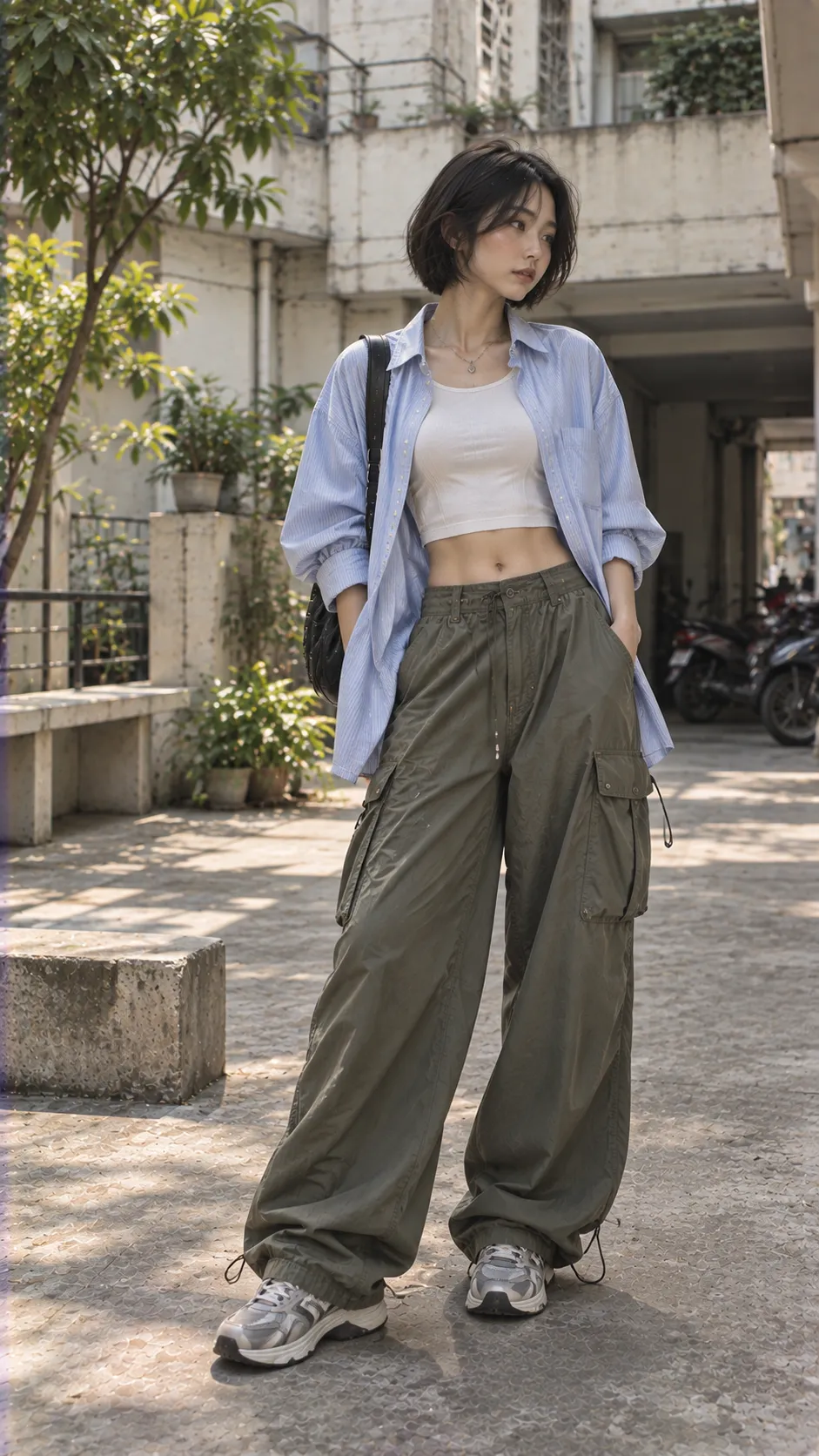
Each formula below has a different proportion or activity focus. In warm and humid conditions, assess actual layer weight, removability, and moisture behavior rather than copying a cold-weather reference in full.
For a permitted casual-work setting, try changing one soft line to a more structured one, such as a knit polo with track pants or a blazer over an opaque leggings base. Consult the Business Casual guide for that separate dress-code question. The aim is suitable wearability and finish rather than dressing up at any cost.
Trouser Choices
Joggers provide a cuffed sportswear reference; check waistband and ankle pressure. Open track pants create another hem line. Parachute fabrics vary in gathering, warmth, and sound, while loaded cargo pockets can change drape and support. Evaluate the actual garment.
Compare relaxed and stretched waist, hips, thighs, rise, inseam, hem opening, and fabric information. If these are missing, ask the seller rather than predicting from a model photograph or marketing label.
Before Ordering: Reduce Uncertainty
Can you see the back, sitting, or movement? Are composition and finished measurements provided? Do reviews mention opacity, knee bagging, odor, or rolling? Check the seller's actual current return terms before home try-on; do not assume a particular policy from the product category.
Common Wearability Problems
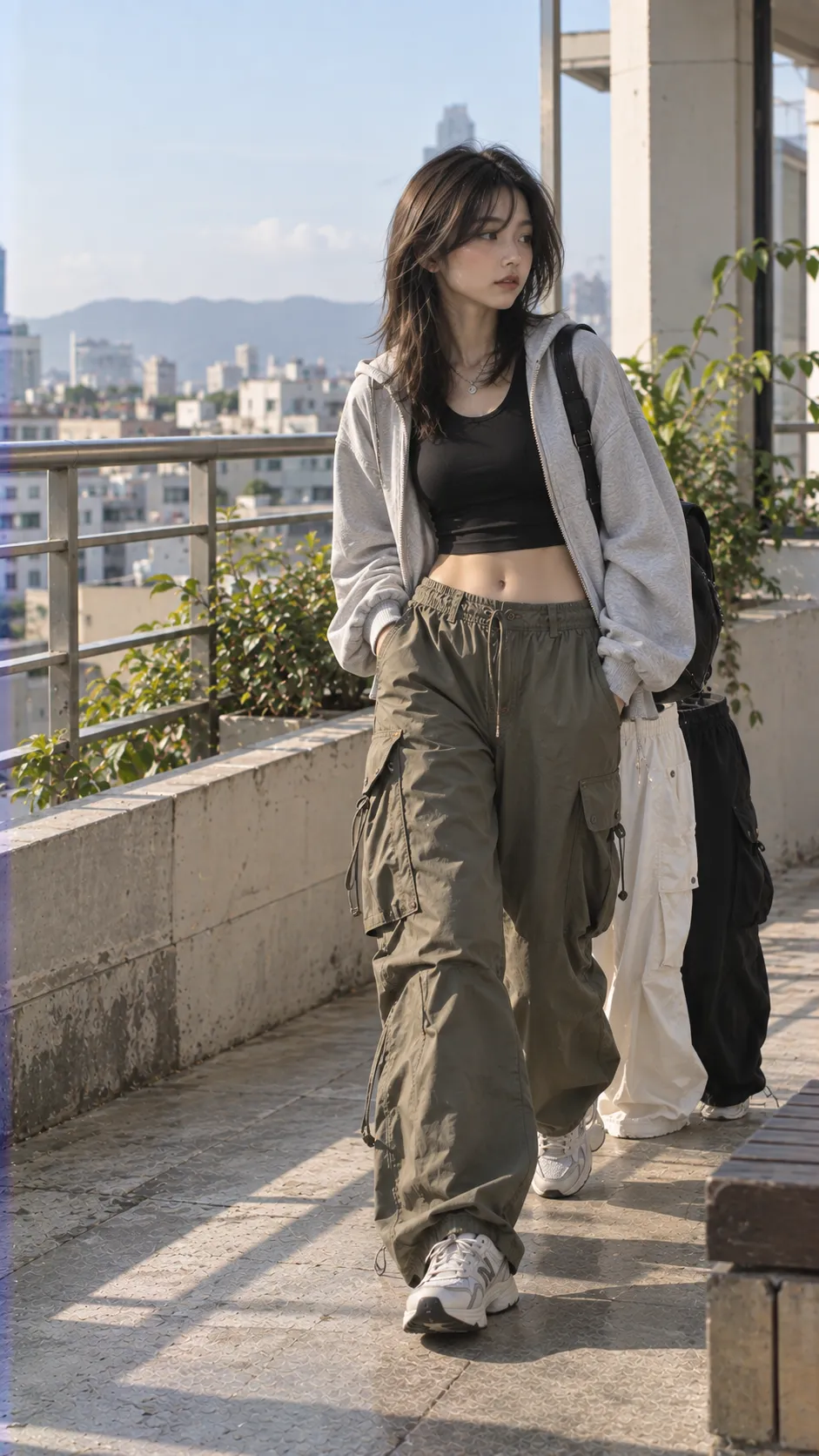
Useful athleisure need not resemble expensive training clothing. It should work for the day you actually plan. Stable fit, suitable fabric recovery, usable storage, and appropriate coverage matter more than a premium label.
For a More Polished Sportswear Combination: read what Sporty Chic means. For individual constructions, compare jogger pants, parachute pants and cargo pants.
References
The following sources support the term and its documented word history:
- Merriam-Webster — Athleisure — dictionary definition and first known use.
- Merriam-Webster — Athleisure: Words We're Watching — earlier usage and word-history context.
The outfit formulas and practical observations are Apocalypse Closet editorial suggestions, not validated performance tests.
Frequently Asked Questions
What is athleisure?
Athleisure describes sportswear-associated clothing used for general daily activities as well as exercise-related contexts. Check actual movement, coverage, pockets, and finish; the label does not establish suitability for every workout or setting.
How does athleisure differ from activewear?
Activewear is assessed for a specific physical activity; this guide assesses athleisure for a broader day. A product may serve both purposes if its actual construction and features meet each use.
Are athleisure and Sporty Chic the same?
They overlap. Here athleisure emphasizes everyday use of sportswear-associated clothing, while Sporty Chic emphasizes the visual pairing and polished finish. These are working editorial distinctions.
What should you check online?
Composition, construction, weight if available, stretch direction, opacity under movement, seam placement, pocket capacity, relaxed and stretched waist, rise, inseam, care instructions, and the seller's current return terms. A one-size or premium label is insufficient.