

Nylon vs Cotton-Twill Cargo Pants
Nylon or cotton-twill cargos? Neither wins universally. Lightweight parachute-style fabrics can provide movement and quicker drying; suitable twills can provide clearer pockets and a steadier everyday outline.
In this guide: we compare cargo fabrics before purchase through climate, shape, durability, care, and style. For definitions and cargo, parachute, or baggy distinctions, read What Are Cargo Pants?.
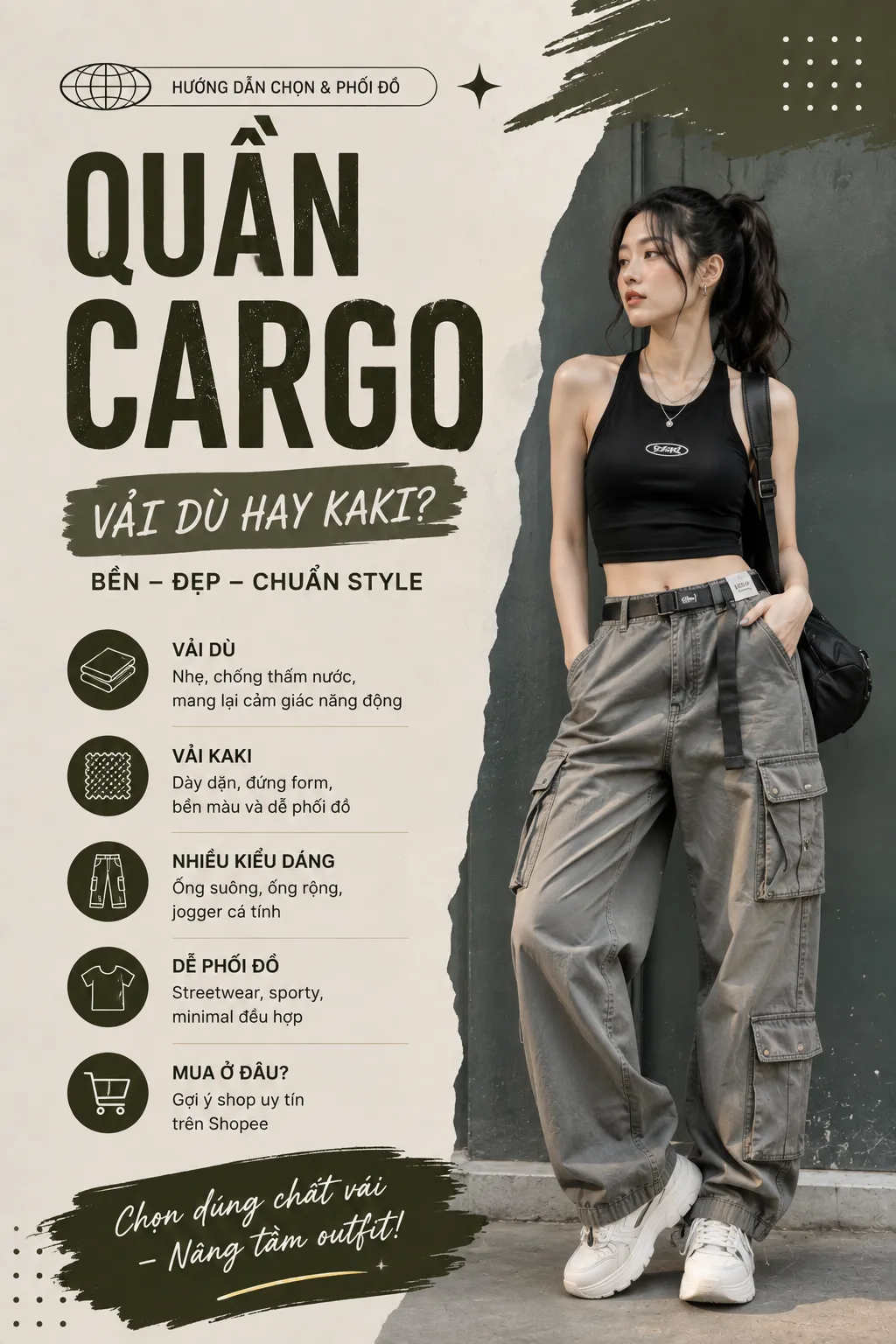
Guide collection: Women's Trouser Guide: Shape, Rise, and Styling (Vietnamese)
A Quick Starting Point: for lower weight, puffier legs, quicker drying, and parachute, sporty, or technical-looking references, consider lightweight nylon, polyester, or a suitable blend. For a matte surface, clearer pockets, quieter movement, and everyday workwear or streetwear, consider moderate-weight twill. These remain broad categories; fiber content, construction, lining, coatings, and sewing determine the actual experience.
Nylon and “Khaki” Are Broad Listing Labels
Do not treat the Vietnamese listing terms as fixed recipes. Lightweight synthetic fabric can describe nylon, polyester, or blends with matte or shiny surfaces and optional coatings. Cotton or blended twill can mean cotton twill, cotton-polyester blends, or stretch fabrics. Two trousers with that label may differ substantially in weight, softness, drape, and structure.
When comparing nylon-style and twill cargos, ask about fiber content, weight or thickness, stretch, and coatings or lining. The category alone cannot establish coolness, durability, or value.
Choose by Intended Use
Nylon-Style and Twill Cargos Compared
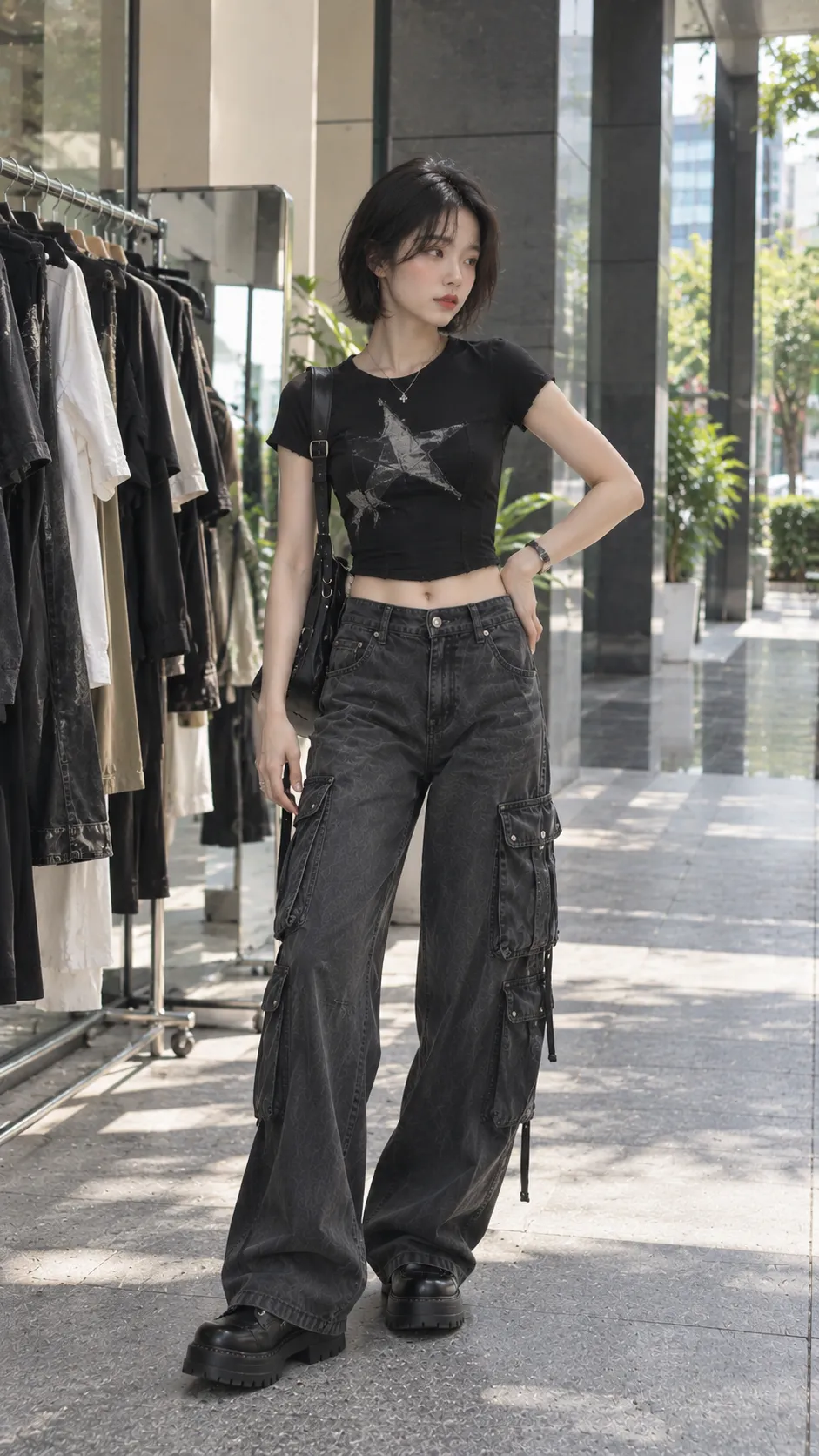
| Criterion | Nylon, polyester, or parachute-style fabrics | Cotton or blended twill |
|---|---|---|
| Weight | Often lighter, depending on lining and coating | Often more substantial and stable |
| Drape | May billow, slide, or move more freely | Often holds a clearer leg line |
| Sound | Some constructions rustle while walking | Often quieter |
| Airflow | Coatings and construction matter more than the label | A suitable cotton twill may feel comfortable, but heavy versions can still be warm |
| Drying | Light synthetic constructions may dry more quickly | Cotton-heavy fabrics may retain moisture longer |
| Pocket Shape | Thin fabric may sag under pocket loads | Sufficiently structured twill can hold pocket shape more clearly |
| Style mood | Parachute, sporty, technical-looking, Y2K | Streetwear, Grunge, workwear, casual |
Do not choose from one row alone. A light synthetic with a heavy coating may feel enclosed; a heavier twill may hold its shape better while sitting. Prioritize your actual needs rather than a universally superior material.
Cargo Fabrics in Hot, Humid Weather
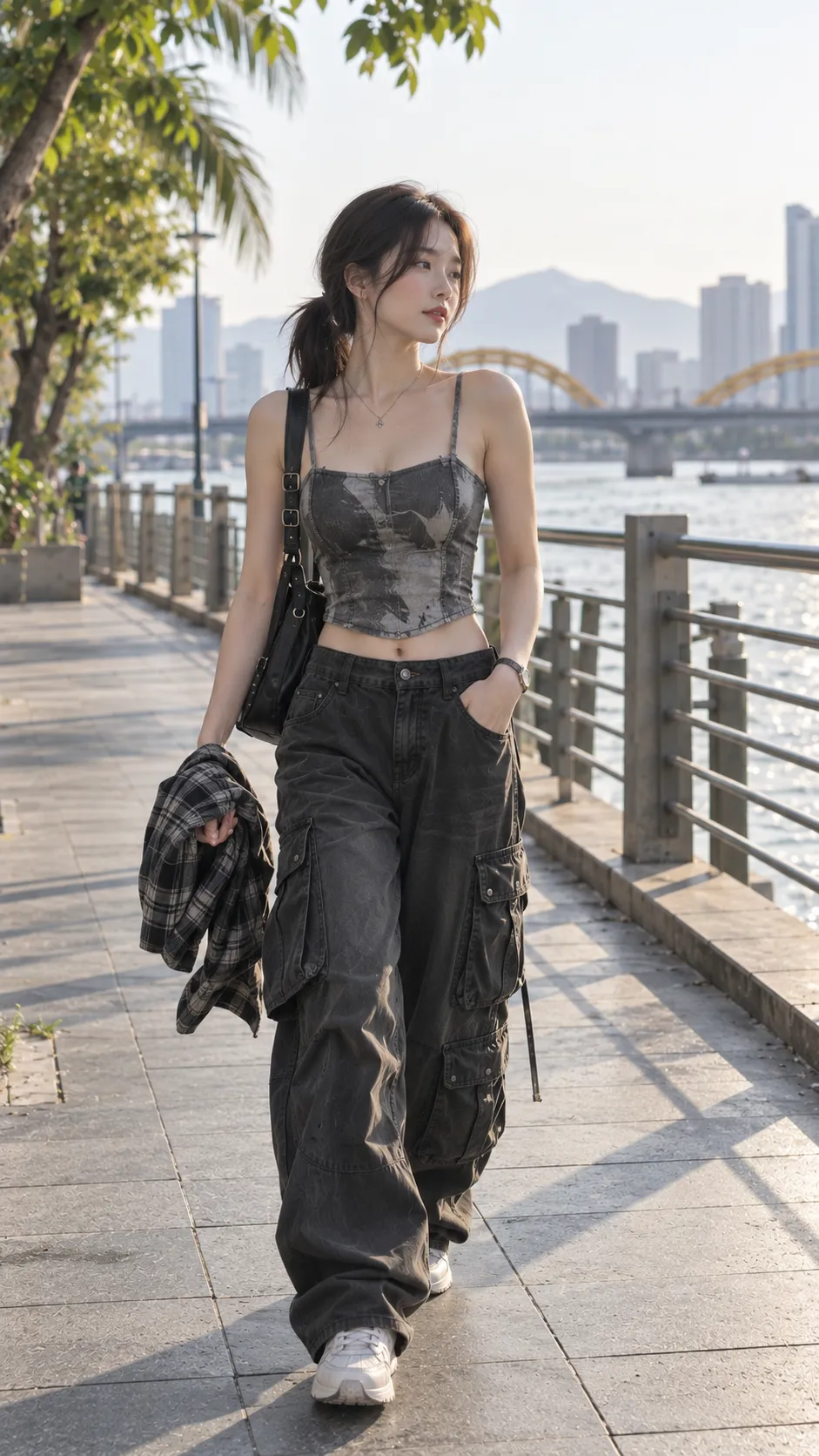
In Vietnam's humid heat, thickness and finishing can matter more than a category name. Coated or lined synthetics may retain warmth; moderate cotton twill with sufficient room can feel less enclosed than a dense glossy fabric.
For outdoor movement, assess lining, crotch room, leg width, and contact when damp. A light synthetic may help with quicker drying, but shine does not prove water resistance. Finishes, seams, fastenings, and the condition of any coating all matter.
How Shape and Drape Differ
Lightweight Synthetic Cargos can emphasize moving volume through wide legs, gathered hems, and softer folds. A compact baby tee, tank, or corset top contrasts with that shape. If both jacket and trousers billow, a waistband or visible wrists can restore definition.
Twill Cargos can show pocket, thigh, and leg structure more clearly. Matte utility references pair with graphics, leather jackets, bombers, or boots. Dense fabric, projecting pockets, wide legs, and excessive length together may create unwanted bulk.
For petite proportions, assess more than fiber type: rise, pocket position, leg length, and where volume sits. Low large pockets and piled hems can divide the lower line in either fabric. The Alternative Outfits for Shorter Women Guide (Vietnamese) covers those proportions separately.
Durability: Pockets and Seams as Well as Fabric
Cargo pockets, flaps, zippers, and drawcords place loads on the fabric. Inspect pocket-corner reinforcement and seams under normal movement. On thin synthetics, tension around needle holes, pockets, or zippers can cause puckering. A premium fabric claim cannot compensate for unsuitable construction.
If you carry a phone, wallet, or power bank, test the pockets with comparable loads. A pocket that pulls the leg or waistband out of shape changes the fit. Decorative pockets do not necessarily require heavy fabric.
Washing and Care
Many nylon or polyester fabrics dry relatively quickly and shrink less than some cotton constructions, but high heat and coatings need care. Follow the label, close fastenings, remove detachable accessories, and use an appropriate gentle inside-out wash where permitted. Avoid assuming every technical surface tolerates hot drying or direct ironing.
Cotton-containing twill may soften, shrink, or fade depending on treatment and blend. Suitable cool washing and avoiding prolonged harsh sun can help black garments retain appearance. Stretch blends also need label-appropriate temperatures. Missing care information creates uncertainty about repeated wear and washing.
How Fabric Changes the Style Reference
Parachute movement, drawcords, and a smoother surface can suggest Y2K, sporty, Baddie, or technical-looking styling. Matte twill with clearer pockets and darker washes can lean toward streetwear, Grunge, utility, or workwear.
| Style | Possible fabric | Top and footwear references |
|---|---|---|
| Baddie / Y2K | Light nylon or parachute fabric | Baby tee, fitted tank, sneakers, or manageable platforms |
| Techwear-Inspired | Suitable nylon or ripstop with specified functional features where required | Compact top, shell jacket, dark sneakers |
| Streetwear | Twill or cotton-polyester blend | Graphic tee, bomber, sneakers |
| Grunge / Punk | Black, charcoal, or olive twill | Graphic top, leather jacket, combat boots |
Heavy twill can add too much bulk alongside a large jacket and substantial boots. Compact tops leave room for fuller parachute shapes; moderate twills can also be styled more quietly for varied settings.
Six Checks in Store or on Arrival
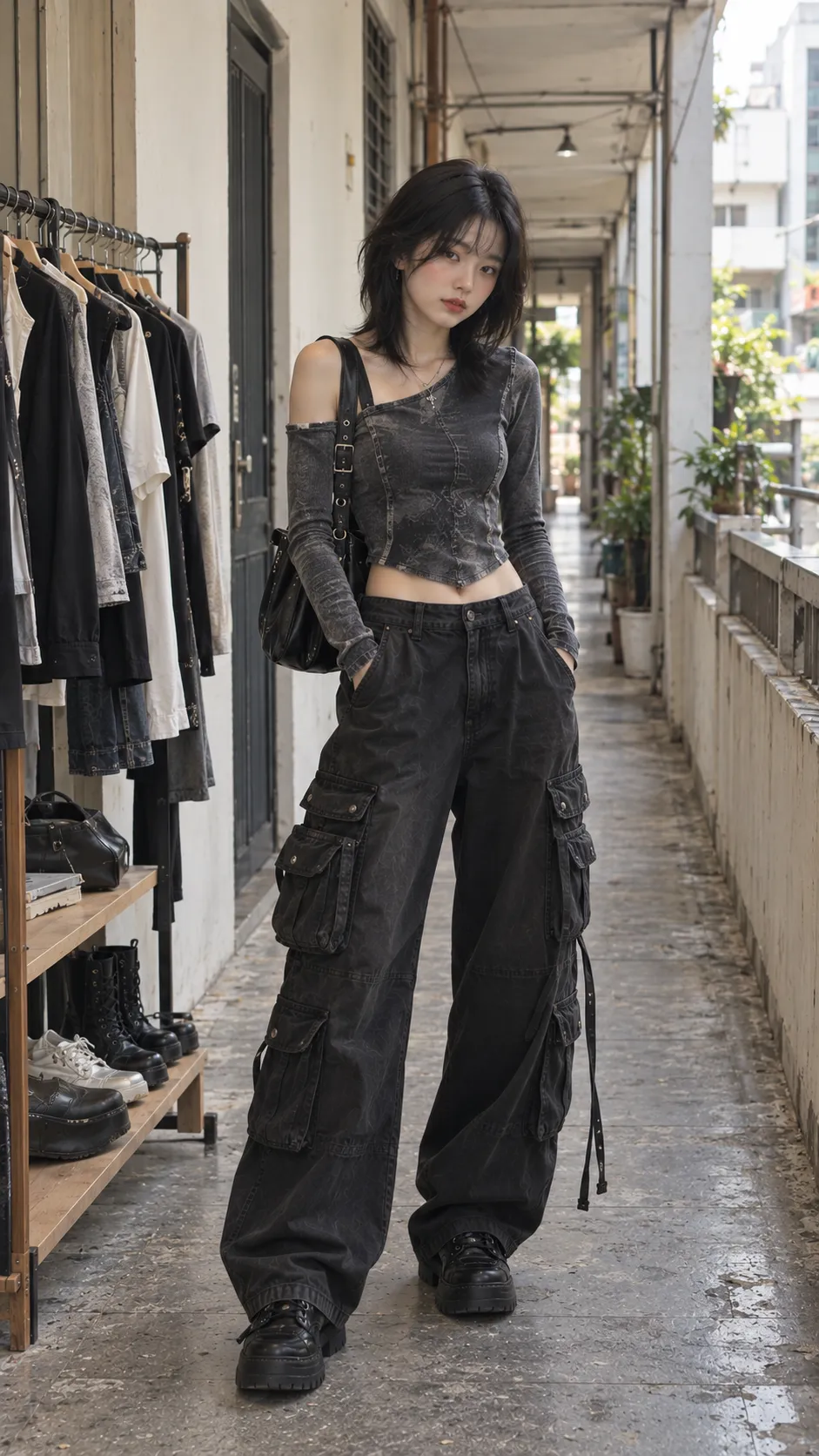
- Gently Crease and Release.
Observe recovery, wrinkling, and rustling.
- Inspect Against Light.
Check opacity, lining, and whether pockets show through.
- Sit, Bend, and Stand.
Watch for uncomfortable pulling at crotch, knees, or seat.
- Load a Pocket.
Check whether the leg twists or waistband drops.
- Test Claimed Stretch Gently.
Assess recovery as well as extension.
- Walk for a Few Minutes.
Check sound, leg friction, hem clearance, and sticking fabric.
Online Cargo Buying Checklist
Look for composition, measurements, close-ups, worn views, and care instructions. Vague premium or imported labels cannot predict fit. Compare waist, hips, rise, length, and leg width. Elastic or drawstring waistbands still need relaxed and stretched measurements.
For evaluating sellers, read Where to Buy Women's Cargos (Vietnamese). For cargo, parachute, and baggy definitions, return to What Are Cargo Pants?. Once the trousers are chosen, the Women's Cargo Outfit Guide covers tops and shoes rather than unnecessary additional purchases.
A Practical Choice: consider lightweight synthetic or parachute fabrics for lower weight, quicker drying, movement, and technical-looking references; consider moderate twills for clearer pockets, quieter movement, and everyday structure. Composition and construction should decide the comparison, not the listing label alone.
Frequently Asked Questions
Which cargo fabric feels cooler?
The name alone cannot decide. Check weight, weave, coating, lining, fit, and conditions; both dense synthetics and heavy twills can feel warm.
Are nylon cargos more durable than twill?
Not automatically. Some ripstop constructions resist tearing for their weight, while heavier twills can support pockets. Weave, seams, reinforcement, and use all affect durability.
Are twill cargos always stiff and hot?
No. Weight, washing, cotton-polyester composition, or stretch blends can change the feel. Compare the actual fabric and movement.
Which fabric is an accessible first choice?
A moderate twill can suit varied everyday settings. Lightweight parachute-style fabric may better match a preference for fuller movement, quicker drying, or Y2K and technical-looking outfits.
Does glossy nylon mean waterproof?
No. Look for specific finish and performance information; seams and fastenings matter too.
Closet outfit references
Use these looks as outfit references. Open each to explore its pieces and combinations.


