What Are Baggy Pants? Construction, Measurements, and Fit
Identify baggy construction, distinguish wide-leg, cargo, and oversized descriptions, and compare waistband, rise, thighs, legs, and measurements before buying online.
A definition is only the starting point when reading a listing. You also need to know where the room sits, whether the garment is deliberately cut that way, and which dimensions affect its fit. This guide examines construction and measurement rather than listing outfit formulas or assigning clothes to body types.
In this guide: understand what baggy pants are through shape, rise, legs, and sizing. For the more specific length and proportion questions of shorter wearers, see baggy pants for shorter people (Vietnamese).
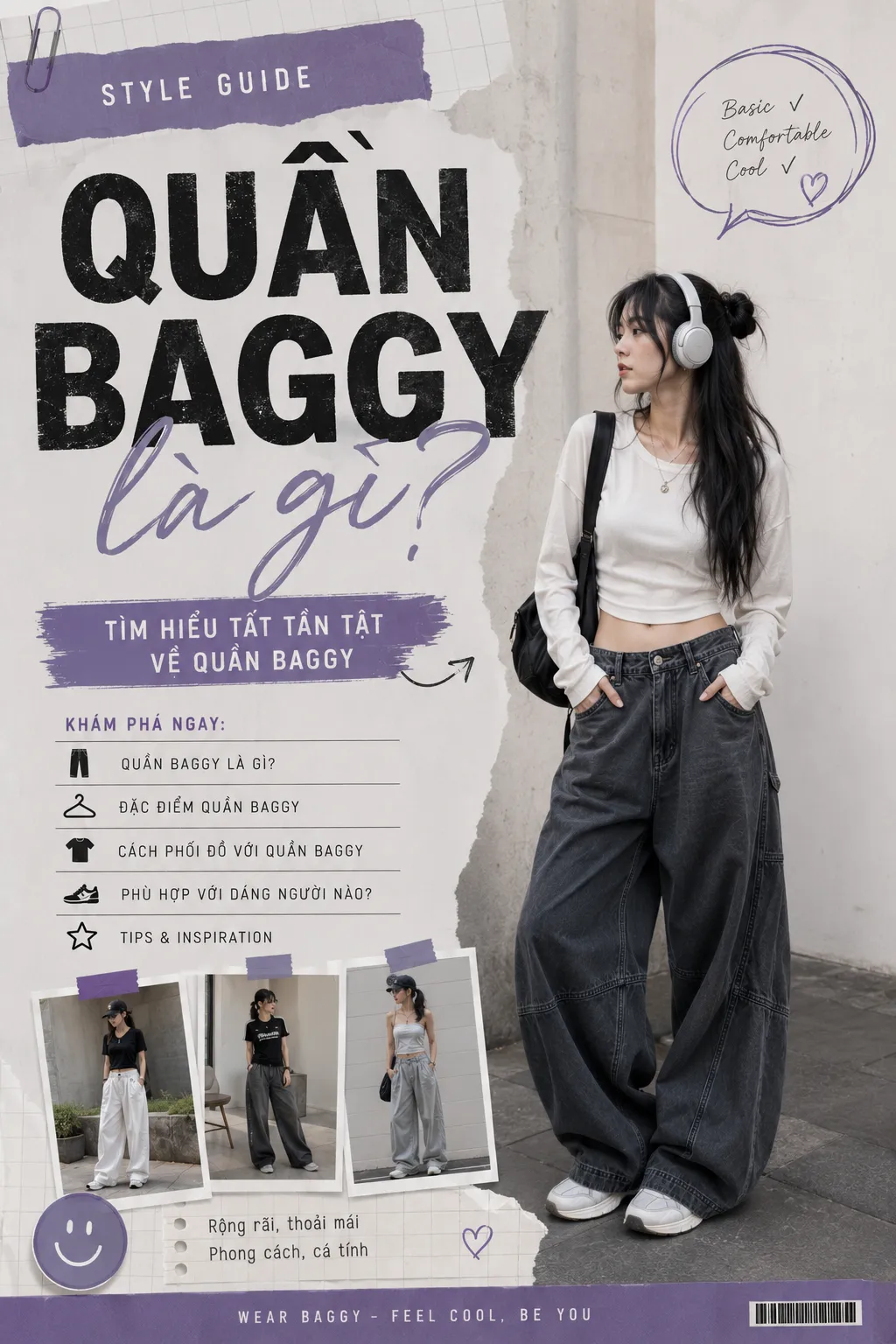
Guide collection: Women's Trouser Guides: Shape, Rise, and Styling
Baggy pants contain intentional room around the hips, thighs, or legs. Some narrow toward the hem, while others retain a straighter, roomier outline. The useful question is how waistband, rise, thigh, and leg width work together, rather than whether a pair is the widest available.
The fabric sits away from the hip to create a relaxed outline. Inspect whether its drape matches the shape you want.
Check sitting room and whether the seams remain reasonably aligned rather than pulling across the body.
A lower crotch creates a different trouser line from a shorter rise. Compare the intended wearing position and movement instead of assuming either is universally better.
A slight taper, straighter opening, clean break, or deliberate stacking produces different effects. Excess length still needs reassessment if it trails or catches.
Baggy Construction versus an Unsuitable Size

Simply choosing a larger size can enlarge waistband, rise, hips, and length together. An intentionally roomy pattern distributes ease while keeping its intended wearing position. Distinguish designed volume from dimensions that do not suit the wearer.
Streetwear References and Contemporary Shapes
Roomy trousers are associated with hip-hop, skate, and streetwear histories, including 1990s references. For this guide, the practical lesson is their movement and contrast with tops and footwear. Contemporary interpretations can be very full or more tapered while retaining relaxed hip and thigh room.
The label baggy covers several constructions: straighter skate-inspired legs, roomier upper sections narrowing toward the hem, and lower-rise Y2K interpretations. Use the word to find options, then inspect actual waistband, rise, thigh, and hem measurements.
Baggy, Wide-Leg, Cargo, Jogger, and Oversized
| Description | Construction logic | What to inspect | Possible mismatch |
|---|---|---|---|
| Baggy | Intentional hip, thigh, or leg room, with several possible hem shapes | Rise, thigh, hem, and pocket placement | Slipping waistband or unwanted stacking |
| Wide-leg | Leg width creates a broader line toward the hem | Opening width and fabric drape | A stiffer or larger shape than intended |
| Cargo | Utility-pocket construction | Thigh pockets, expansion, and material | Additional volume where you do not want it |
| Jogger | Often an elastic or drawstring waist with a tapered, cuffed ankle | Cuff, taper, fabric, and waistband | Treating every roomy cuffed pair as the same construction |
| Oversized | An intentional larger proportion applicable to many garment types | The overall pattern and intended fit | Confusing deliberate pattern ease with unsuitable sizing |
Descriptions can overlap: a pair can be baggy cargo or baggy and wide-legged. Examine the construction. Read what cargo pants are for pockets and utility details; what joggers are for cuffs and taper; and what oversized fit means for the distinction between intentional volume and simply sizing up.
Read the Garment from Waistband to Hem
Choose Where You Want Volume
Baggy construction is not reserved for one body. For less lateral hip emphasis, compare flatter pockets or straighter drape; for more volume, compare stronger fabric or pocket shapes. Shorter wearers can assess rise and inseam, while anyone can choose deliberate stacking if it remains practical for movement.
Ask where the garment places volume and whether you want that outline. Roomier clothing creates another silhouette rather than requiring the body to meet a prescribed shape.
An Online Measurement Sequence
- Measure a suitable pair: waistband, hips, thigh, front rise, outseam, and inseam, using the seller's method where available.
- Compare those with the seller's finished garment dimensions rather than confusing body and garment measurements.
- Check stretch and recovery. Rigid cotton denim needs different ease from a stretch construction; fiber percentage alone does not establish feel.
- Use model height and size as secondary context.
- Between sizes, assess waistband access, hip room, and the least adjustable area before considering an alteration to length. Do not rely on different shoes to resolve unsafe excess fabric.
The guide to alternative clothing sizes online provides more measurement detail. Include rise: a visually appealing lower crotch in a photograph may behave differently while you sit or walk.
How Fabric Changes the Shape
Stiffer denim can hold a more pronounced shape; softer versions can drape closer. Twill may provide another surface for casual or more tailored combinations. Lighter woven nylon can suggest parachute-style movement. These effects depend on weight, weave, finish, stretch, and lining rather than the fiber name alone. Check opacity, pocket outlines, and hem accumulation.
A Listing Checklist
- Side and back photographs as well as the front view.
- Rise, thigh, and inseam dimensions.
- Clear composition and stretch information.
- Back pockets at an intended position rather than unexpectedly low from unsuitable fit.
- A leg opening and hem length assessed with your actual shoes.
Denim, Twill, and Cargo Variations
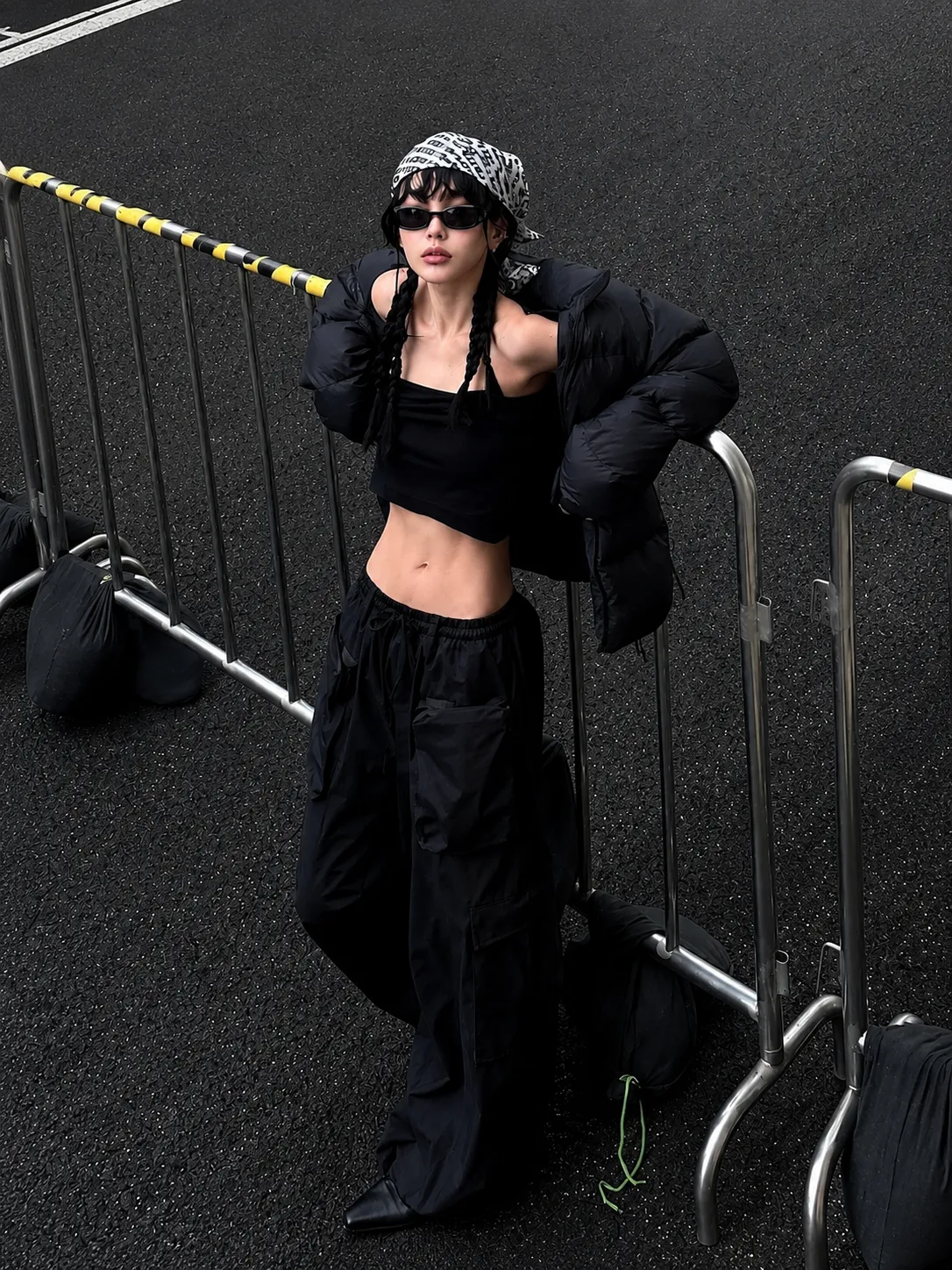
Baggy jeans combine the roomier silhouette with denim; stiffness, wash, and finish change the appearance. Baggy twill trousers provide a different surface and drape that may suit casual or more tailored outfits, depending on the actual garment and setting. Baggy cargo pants combine roomier proportions with utility pockets, making pocket position and expansion particularly useful to check.
The labels need not exclude each other. A garment can be baggy, cargo-pocketed, and made from a lighter woven fabric. Separate three questions: where is the volume?, how does the fabric fall?and which details add shape?. This is more useful than forcing every listing into one exclusive category.
Streetwear, Acubi, and Darker Wardrobes
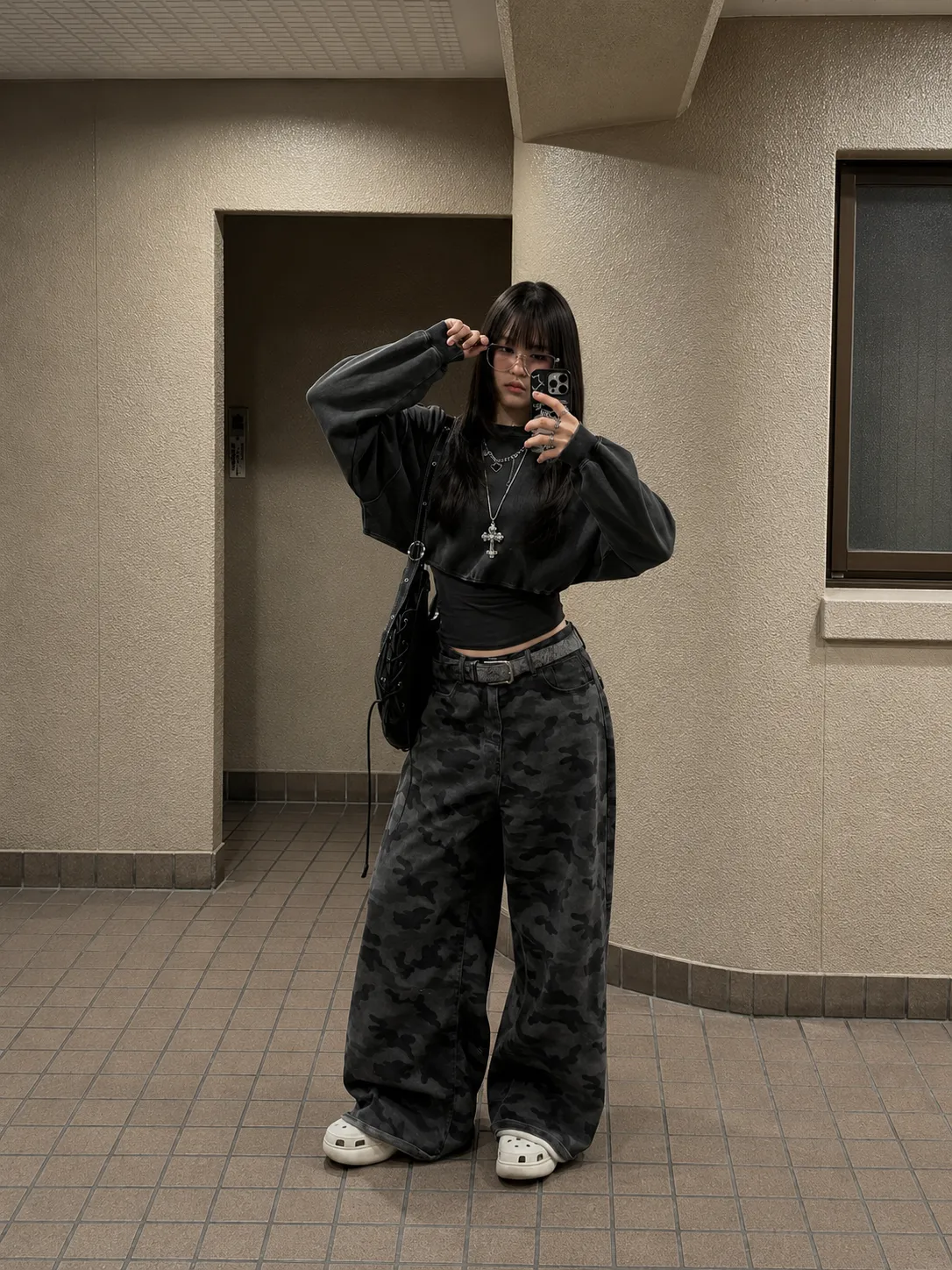
In streetwear (Vietnamese), baggy trousers supply volume to compare with tanks, tees, hoodies, or jackets. An Acubi interpretation may use softer drape, fine layers, and gray or black, while a darker outfit may combine washed denim with mesh or selected metal details. For actual top, shoe, and layer combinations, continue to baggy-pants outfit ideas .
The guide to Acubi styling explores that visual vocabulary. A suitable pair can support several interpretations without buying an entire labelled outfit.
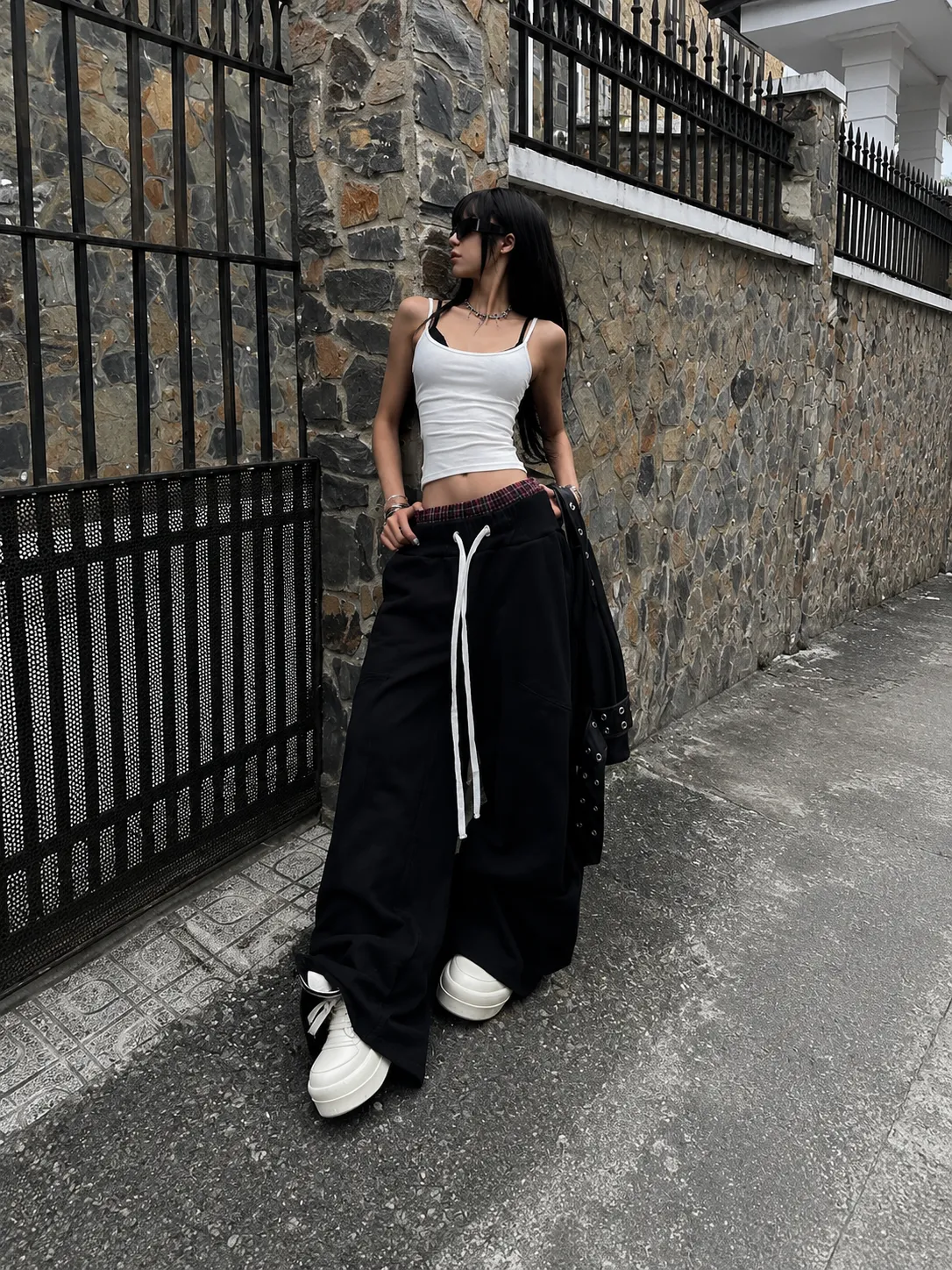
Compare Complete Outfits: explore the Baddie Streetwear looks (Vietnamese) to assess trouser volume, shoe shape, and top length together. These are proportion references rather than measurement evidence for every trouser category.
Shorter Wearers: Compare Construction Before Color

If slipping, a low crotch, or unwanted stacking is a recurring problem, use the separate guide baggy pants for shorter people (Vietnamese) for waistband, rise, leg, and hem comparisons, listing photographs, and a short movement test.
Choose the Construction Behind the Label
Baggy pants contain deliberately distributed ease. Read waistband, rise, thighs, legs, and hems as connected features. A name helps locate a listing; measurements and actual fabric behavior determine whether it becomes useful clothing for you.
Frequently Asked Questions
Are baggy and wide-leg pants the same?
They overlap but describe different emphases. Baggy refers to intentional room around hips, thighs, or legs, sometimes with tapering; wide-leg emphasizes broader legs. A pair can satisfy both descriptions.
Can shorter people wear baggy pants?
Yes. Compare the rise, inseam, waistband position, and hem behavior you want. There is no mandatory rise for every shorter wearer.
Should you size up for baggy pants?
Not automatically. The pattern already contains intended ease. Compare finished waistband, hip, thigh, rise, and length measurements with a pair you know.
Do baggy jeans always make the legs look shorter?
No. A lower crotch, slipping waistband, or stacking changes the visual line, but these are construction and styling variables rather than an inevitable result. Choose the proportions you enjoy.
Are baggy pants and baggy jeans identical terms?
Baggy pants covers the silhouette in different materials. Baggy jeans specifies denim; other versions may use twill, nylon, blends, or other fabrics.
Related guides: Chicano Style (Vietnamese) and women's wide-leg trouser outfits.
Complete-Outfit References
Use the looks as complete-outfit references; inspect each garment rather than treating every roomy example as confirmed baggy construction.