

Slim-Frame Outfits for Women: Shape and Alternative Style
Styling a slim frame need not revolve around concealment or appearing fuller. Decide where you want volume, where you want a narrow line, and how cut, layers and texture can give the outfit structure.
Alternative fashion offers many options for a slim frame: a fitted top with wide trousers for contrast, light layers for depth, or a neat all-black silhouette that follows the body’s lines. This guide applies practical proportion choices to E-Girl, Dark Feminine, Goth, Baddie Streetwear, Punk and Soft Grunge.

Guide collection: Aesthetic Dictionary: A Guide to Fashion Styles (Vietnamese)
Slim-Frame Styling: Start with Proportions Rather Than Concealment
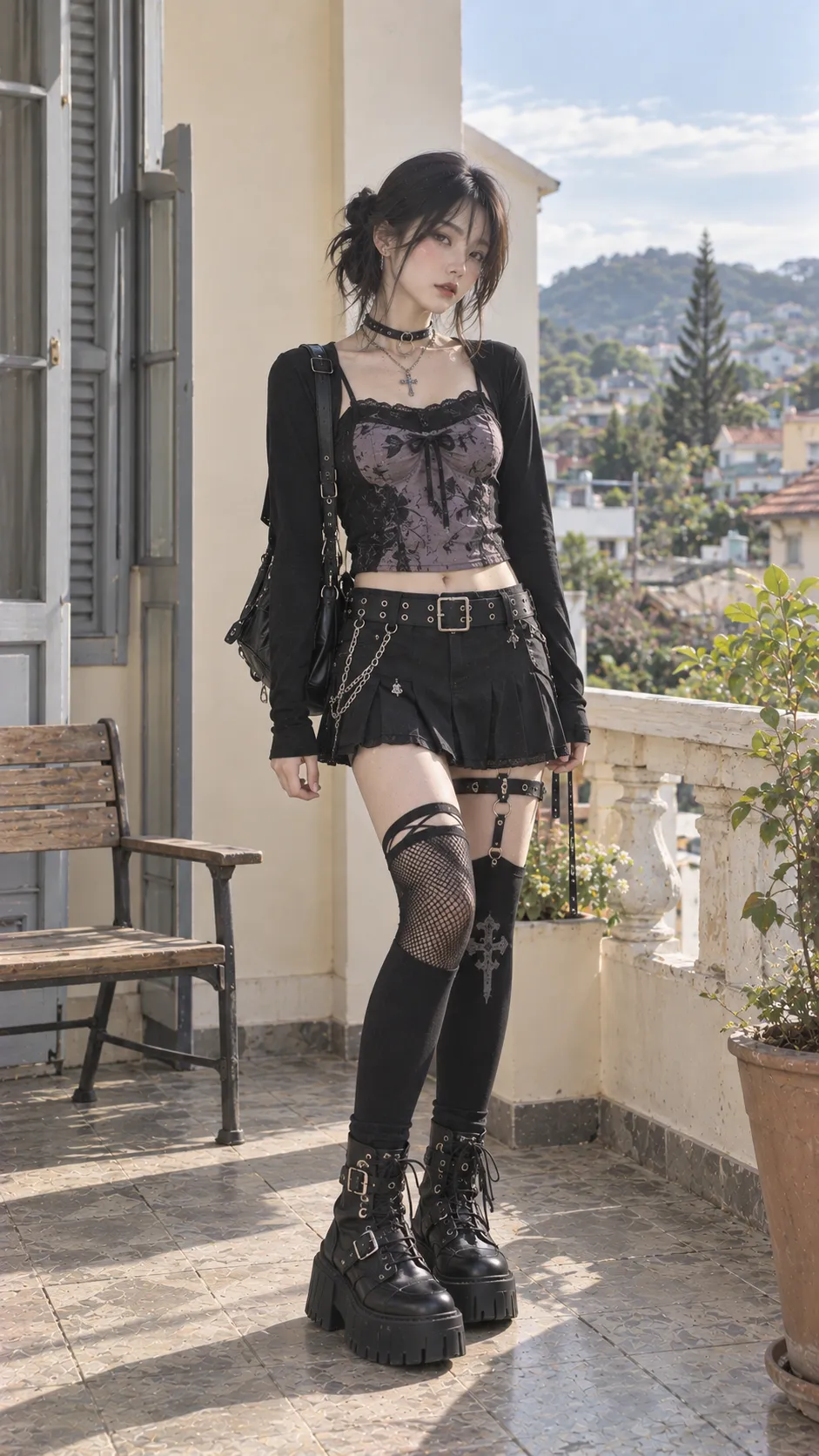
Advice on dressing a slim body often recommends light colors, many layers or loose clothing to appear fuller. These are useful options if that is the effect you want, but they are not rules. A slim frame can also wear fitted clothing, all-black or long, narrow silhouettes when the aim is to emphasize its existing lines.
Read the outfit through four questions: where is the volume, should the waist show, how long is the vertical line, and what is the focal point? A voluminous top can contrast with a neater bottom. If both halves are loose, an anchor at the waistband, hem, belt, crossbody bag or defined footwear can organize the composition. This balances clothes without framing your body as a problem.
Ask where an item adds volume, a vertical line or emphasis, rather than whether a slim person is allowed to wear it.
Where Do You Want More Volume? Choose the Tool for That Area
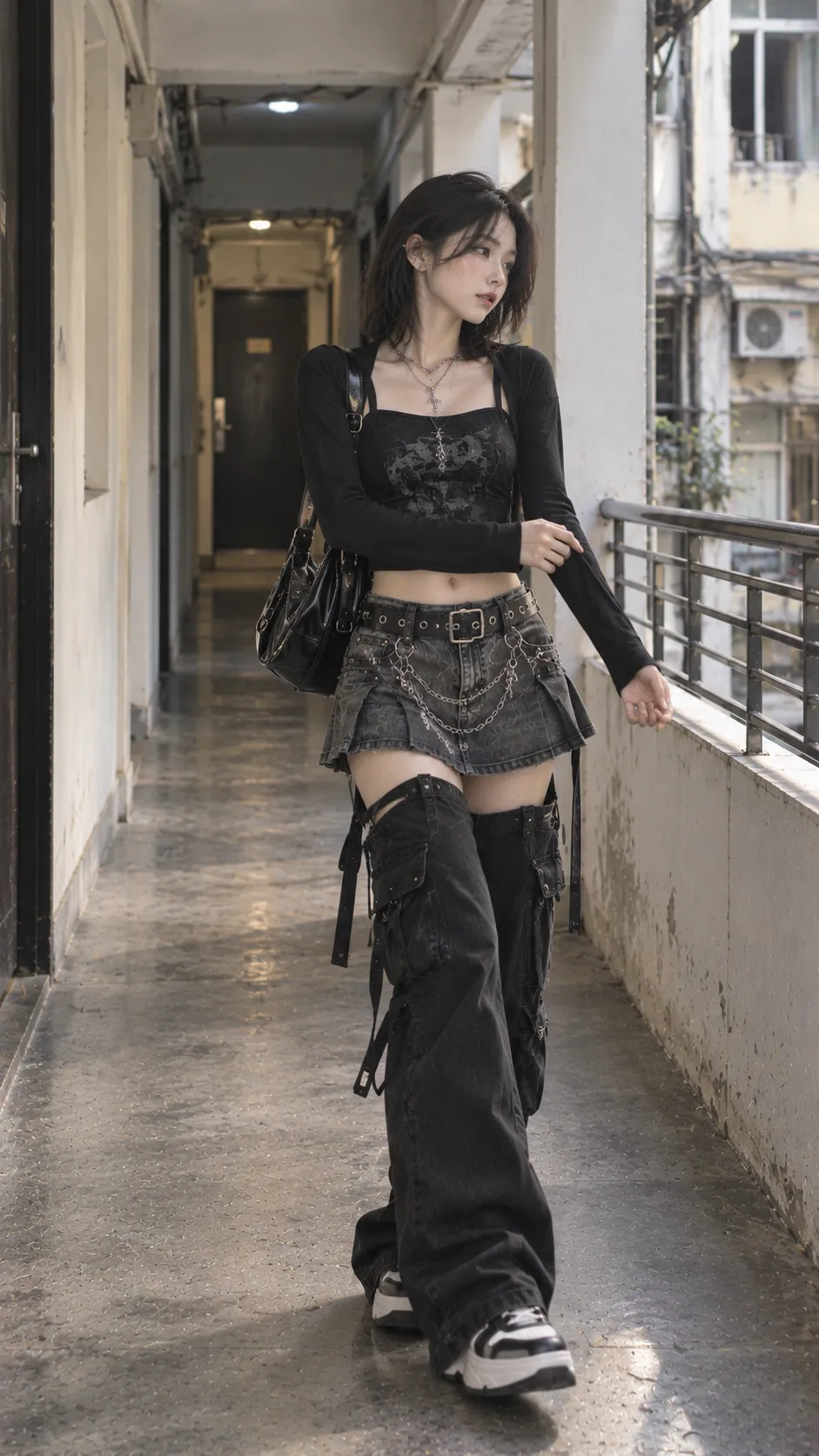
If you want a fuller-looking outfit, choose one or two areas rather than adding bulk everywhere. For more shoulder presence, try a structured jacket, moderately full sleeves or a defined shoulder seam. For upper-body depth, ribbing, mesh, a light knit or a well-placed graphic can be clearer than a shapeless oversized top.
Cargo pockets, baggy jeans, pleated skirts and utility trousers create actual volume around hips or thighs through construction. To retain a narrow outline while giving the outfit presence, increase visual weight through boots, belts, bag hardware or texture instead of larger clothing.
If you enjoy oversized cuts, see what oversized fit means. A deliberately drafted roomy garment differs from sizing up until shoulders, neckline, armholes and length become unsuitable.
How Do Cut, Fabric and Color Affect Proportions?
Cut determines the visible outline. A boxy top broadens the upper shape; a fitted top follows it; wide-leg trousers create a substantial vertical column; an A-line skirt widens from the waist. Each produces an effect rather than belonging exclusively to a slim body.
Fabric affects whether that shape stands away or drapes. Firm denim, twill, faux leather and heavier cotton can hold volume; light jersey, rayon, mesh and knits may follow the body more closely. Construction and weight vary within each category. One moderately structured garment can sometimes do more than several soft layers.
Color need not be restricted to pastel or light shades. Light surfaces can feel more prominent, but dark palettes also work through texture contrast: washed black, ribbing, leather-like surfaces and silver tones. This may suit your alternative style better than replacing your wardrobe solely to appear fuller.
Choose a Formula for Your Goal Rather Than a Body Label
If you are unsure where to start, pick a visual goal first. For more upper-body presence: try a boxy tee, shoulder detail, open outer layer or defined neckline, with quieter bottoms to make the upper area the focus. For more lower-body volume: choose cargos, baggy jeans, a pleated skirt or wide-leg trousers with a neater top for contrast.
To retain a long, narrow silhouette: use fitted or straight pieces, tonal dressing or continuous vertical lines, then add alternative character through texture, hardware and shoes. For clearer proportions in photographs: check the top hem, waistband and shoes; these breaks can matter more than whether the clothes are light or dark.
In Vietnam’s heat, create structure through cut and surface texture before adding layers. Mesh, ribbed cotton, washed denim, matte nylon or a light overshirt may add depth, depending on weight and construction. An outfit requiring four layers you cannot comfortably wear outdoors is a poor everyday formula.
Step back from the mirror and read shapes rather than scrutinizing your body. Is there a main area of volume, a clear line and a focal point at the face, neck, waist or shoes? If every detail competes or nothing stands out, remove one detail before buying another item.
1. E-Girl: Fitted Top, Baggy Bottoms and One Color Accent
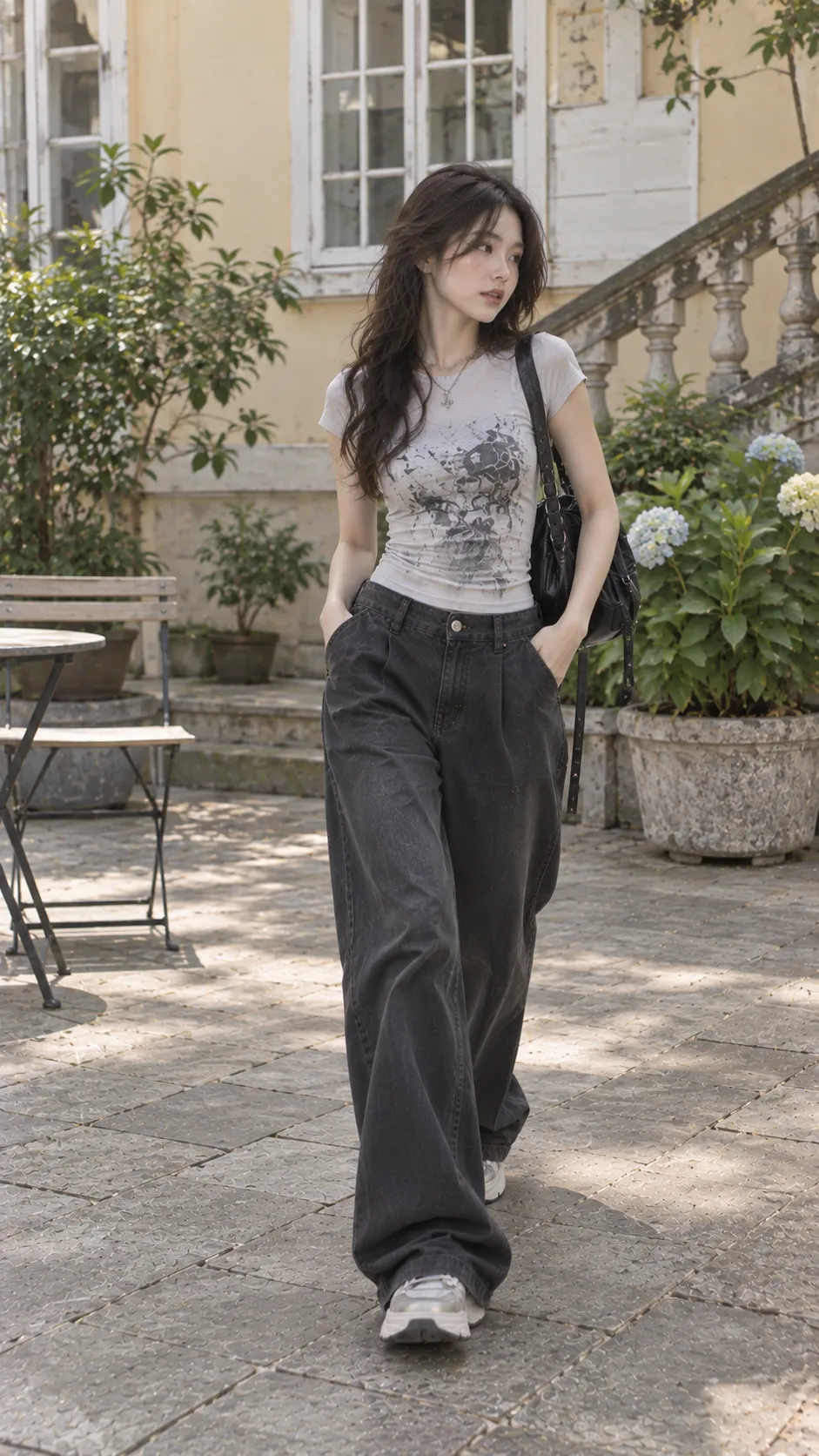
A baby tee, fitted long-sleeve top or tank with baggy jeans or cargos offers clear contrast. The upper half shows shoulder and waist placement while the lower half adds volume, establishing an E-Girl or alternative proportion without many layers.
For a color accent, choose a bag, shoes, hat or graphic rather than scattering color throughout. A waistband belt or chain is useful when you want to emphasize the division; a slim body does not always need a newly defined waist.
2. Dark Feminine: Structured Top and Straight-Falling Bottoms
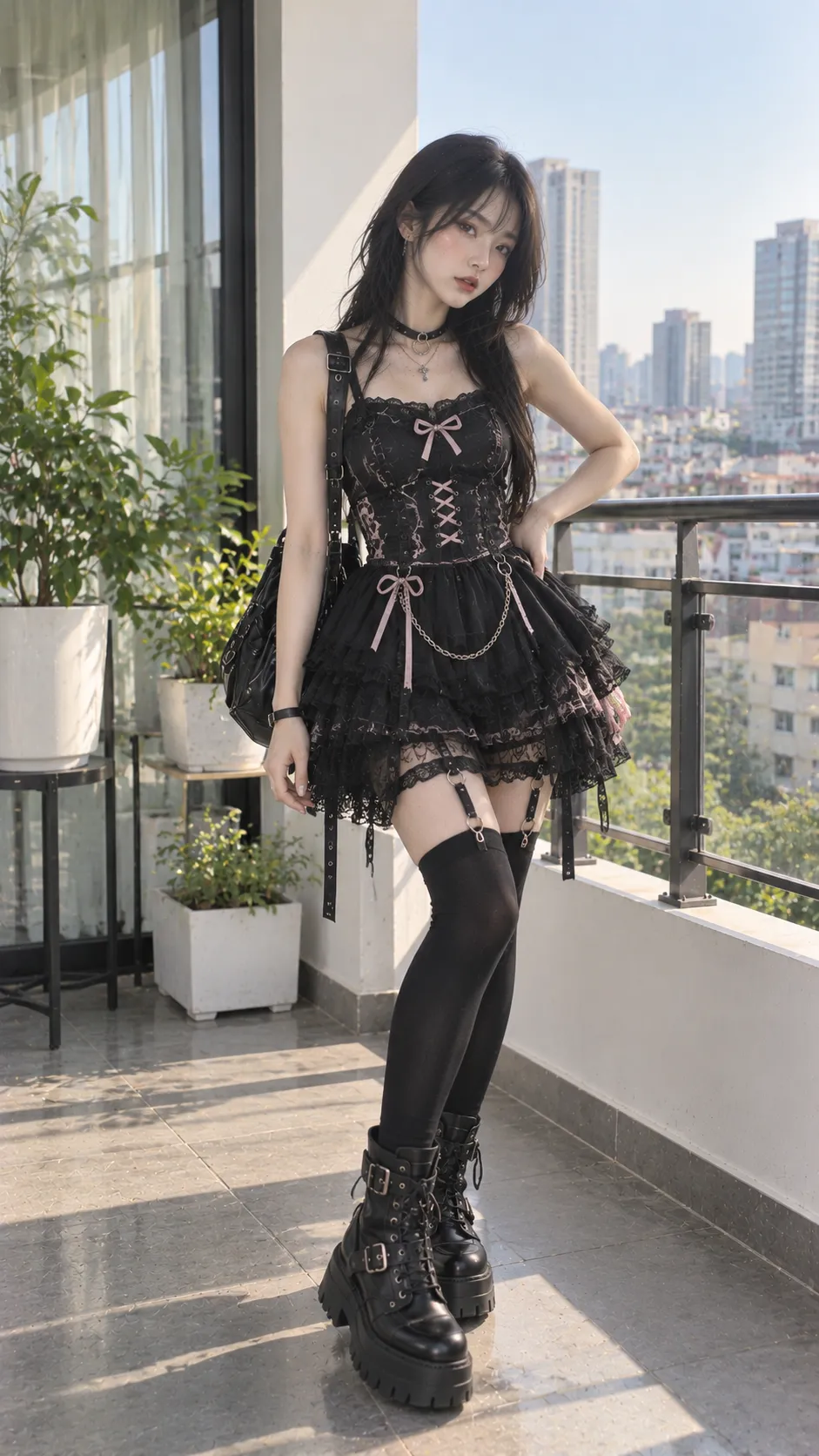
For Dark Feminine outfits, a corset-inspired top, bodysuit or fitted top with visible seams can give the upper half structure. The visual effect comes from construction and proportion, rather than tightening the body. Choose the correct size and intended use; waist compression is not a requirement.
Wide-leg trousers, a straight skirt or a straight-falling maxi can create a continuous lower line. Footwear provides a finishing point. Platforms are optional; ankle boots, substantial loafers or clearly shaped sneakers can also balance the composition when comfortable and stable.
3. Goth: Black with Varied Textures
All-black can appear flat when every surface is alike. Combine matte cotton with mesh, washed denim, lace or faux leather so differences in reflected light distinguish the layers within a black palette.
For a narrow line, try a fitted top and straight or maxi bottoms. For more volume, substitute a boxy tee, wide jeans or layered skirt. Accessory size should relate to the neckline, garment width and focal point, rather than a body label. A fine choker can work with an open neckline and enough texture elsewhere.
4. Baddie Streetwear: Crop, Cargos and an Outer Layer
A crop or fitted tee with cargos establishes a neat upper half and roomy lower half. An open bomber, denim jacket or overshirt reveals the base top, creating an anchor within the surrounding volume.
With cargos, check the waist and length before focusing on how much volume they add at the thigh. Excess stacking places visual weight low down; an unwanted short hem interrupts the line. Choose length for the shoes you actually wear and compare measurements, rather than relying on model photographs.
5. Punk: Structured Layers and a Defined Edge
Punk styling allows texture and hardware, but layering can still benefit from a clear order. Start with a light mesh or ribbed base, add a firmer denim or faux-leather layer, then choose a main accessory area at the neck, waist or wrists. Chains, studs and graphics everywhere can compete for attention.
For more on arranging layers, see alternative layering outfits for women. Individual lengths matter more than layer count: let an inner hem show deliberately, give the jacket a different finishing point and keep the lower half quieter if desired.
6. Soft Grunge: Soft Volume with an Anchor
For gentler volume without substantial hardware, try open flannel over a fitted tee, a light knit with baggy jeans or a partially tucked graphic tee. These add shape while retaining an anchor.
A shirt tied at the hips or a shoulder bag ending there creates a stronger horizontal line. If you prefer less volume in that area, omit it and retain the trouser line. See Soft Grunge style for texture and palette choices.
What Differs Between Taller and Shorter Slim Frames?
The main difference is garment length, rather than permitted items. Taller frames offer more vertical space for long tops, maxis or wide trousers. To interrupt that length if desired, use a belt, cropped layer or contrasting upper and lower colors.
For shorter frames, check where the top, waistband and trouser hems end so multiple layers do not collect in one area. Oversized cuts remain options with controlled lengths. If height is your main styling variable, the guide to petite alternative outfits covers vertical proportions and footwear in more detail.
Five Common Slim-Frame Styling Mistakes
1. Adding volume everywhere at once: a roomy top, long jacket, wide trousers and large accessories can all compete. Choose the area you want to lead.
2. Wearing everything tight because oversized clothes feel intimidating: fitted pieces are valid, but matching tight textures everywhere may feel visually flat. A structured bottom, light layer or defined shoe can add depth if wanted.
3. Treating light colors as compulsory: keep a dark palette if you enjoy it. Washed black, charcoal, texture and hardware can distinguish the elements.
4. Choosing sizes by weight: people of the same weight can have different shoulders, bust, waist, hips and limb lengths. Compare finished measurements with well-fitting clothes; the alternative-fashion online size guide provides a detailed checklist.
5. Trying to fix the body rather than choosing an effect: you may want more volume one day and a narrow silhouette another. A useful wardrobe allows both instead of enforcing one ideal of balance.
Related Closet Outfits
Explore the original outfit references: Look #43 · Black Graphic Crop Top and Plaid Skirt (Vietnamese) (E-Girl: black graphic crop top and plaid skirt), Look #55 · Black Crop Top with Beige Sleeves and Pleated Skirt (Vietnamese) (E-Girl: black crop top with beige sleeves and pleated skirt), Look #17 · Black Graphic Tee and Blue Baggy Jeans (Vietnamese) (chunky streetwear), Look #04 · Brown Off-the-Shoulder Top and Frayed Ripped Jeans (Vietnamese) (statement dark styling), Look #03 · White Graphic Crop Tee and Black Wide-Leg Cargos (Vietnamese) (statement Punk styling).
Frequently Asked Questions
Which alternative style suits a slim frame?
No aesthetic is compulsory for a body type. E-Girl, Dark Feminine, Goth, Baddie, Punk and Soft Grunge are all options. Adapt volume, layers, texture and footwear to the effect you want.
Can women with a slim frame wear corsets?
Yes. A corset-inspired outfit can gain structure from seams and its relationship with the bottoms, without excessive compression. Prioritize correct sizing, unrestricted breathing and comfortable movement. A light mesh or long-sleeve base can add depth if wanted.
Can a slim frame wear oversized clothing on both halves?
Yes, with deliberate lengths and anchors if you want a clearer composition. A boxy top and wide trousers can work when the waistband, hem or footwear establishes a finishing point. The issue is proportion rather than width alone.
Should a slim frame wear light or dark colors?
Either. Light colors may make a garment area more prominent, but dark colors also offer depth through texture, washed finishes, layers and hardware. Choose for your aesthetic and preferred effect.