

Outfits for a Fuller Stomach: Fit and Proportion Options
When looking for outfits for a fuller stomach, you need not start with concealment. Decide what you want from the composition: a continuous upper line, fewer breaks at the waist, defined shoulders, a longer apparent leg line, or simply comfortable clothing.
This guide focuses on fit and proportions around the midsection, rather than replacing the broader plus-size guide. Crop tops, fitted dresses, wide trousers and layers remain options for every body.
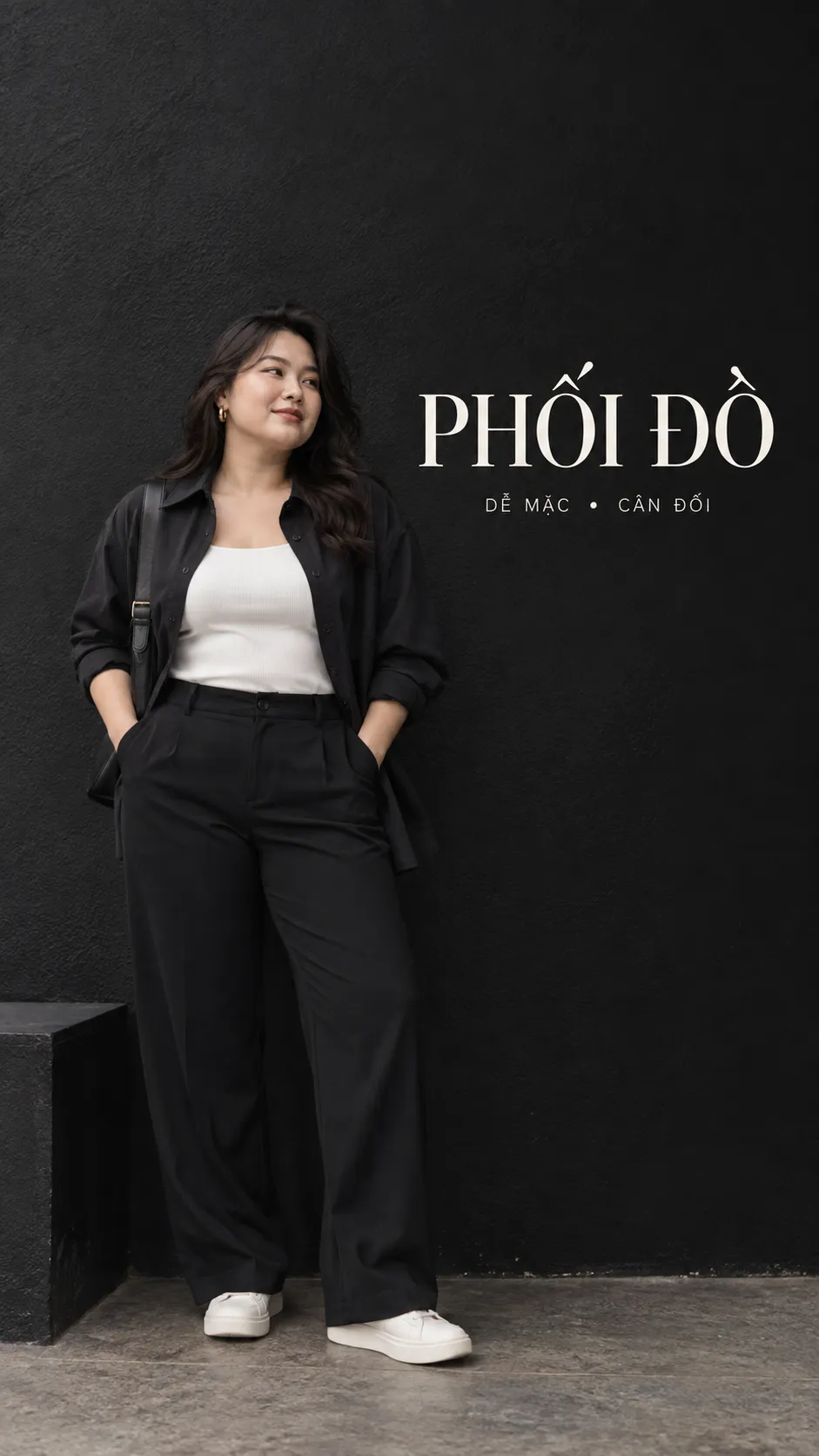
Guide collection: Alternative Outfits for Women: E-Girl, Baddie, Goth and Grunge (Vietnamese)
Start with a Styling Goal Rather Than Hiding Your Stomach
An outfit can direct attention elsewhere without covering your body completely. An open blazer makes two vertical edges, a defined neckline brings focus upward, a stable waistband makes a clear division and shaped footwear finishes the leg line. These are composition choices, rather than judgments about a body.
Use a belt or short top if you enjoy waist emphasis. Choose a longer top and straight trousers if you prefer a column. There is no single correct proportion. Styling lets you decide where horizontal lines, vertical lines, volume and exposed areas appear.
The plus-size alternative outfit guide covers a wider set of outfit choices. This article specifically examines how tops, bottoms and layers interact around the torso and stomach.
Four Points to Assess Before Replacing Your Wardrobe
Photograph the complete outfit from farther back than your usual mirror view. This helps reveal how the waistband, top length and footwear divide the silhouette. Look at the whole composition rather than zooming in on your stomach.
Choose Tops by Hem, Neckline and Drape
Fitted tops remain an option. A moderately substantial fitted tee may give a smoother outline than a very soft, wrinkling oversized top. Choose a fabric you enjoy, test it sitting down and use the neckline or an outer layer for structure if desired.
Wrap tops and diagonal seams direct the eye without relying on one horizontal break. V, square and scoop necklines open the neck area. Crew necks are also valid; a necklace, open blazer or cardigan can add a vertical line.
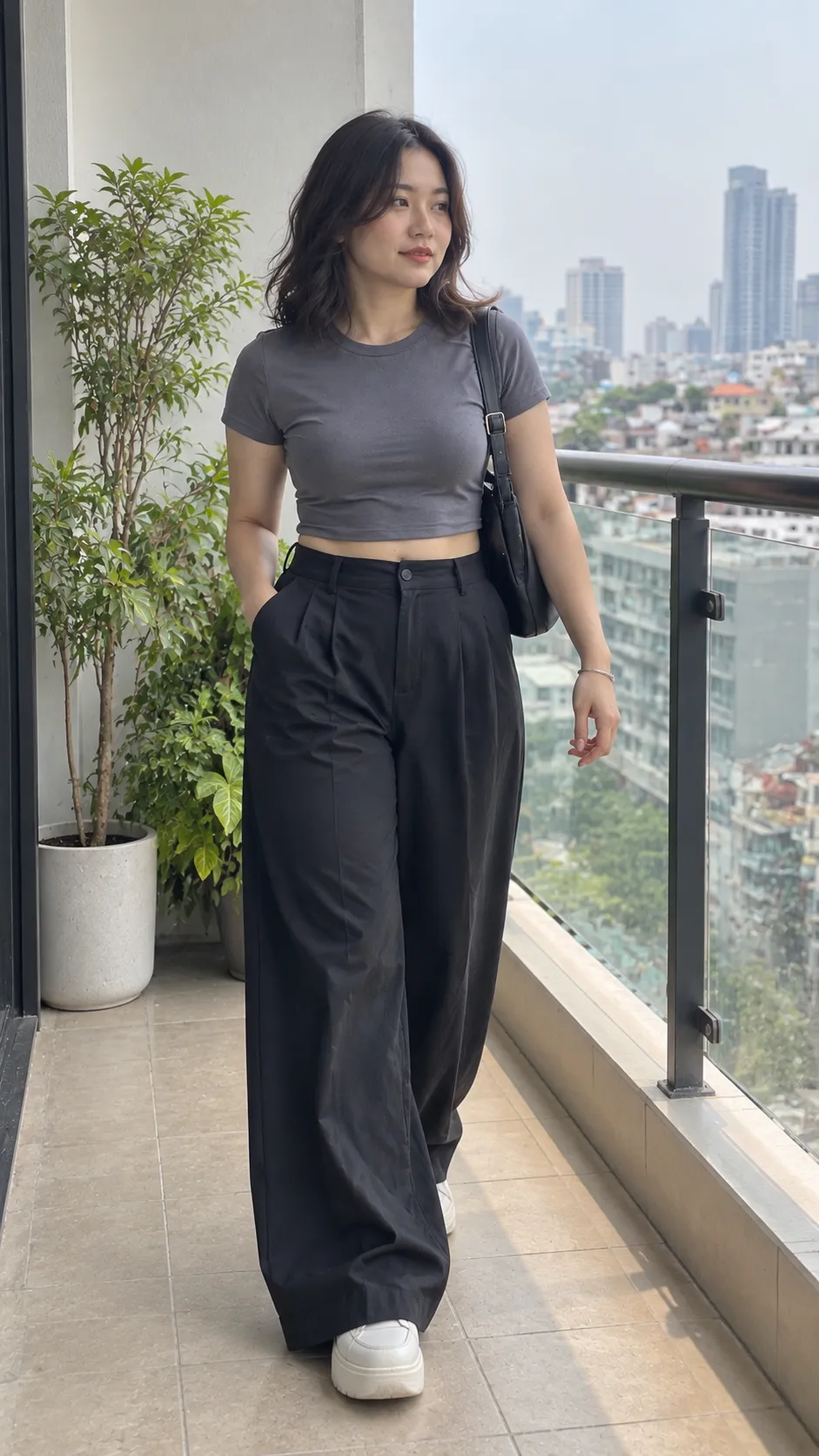
Crops can stay in your wardrobe. A longer crop meeting the waistband leaves less exposed skin. If you enjoy more midriff exposure, make it intentional and choose the lower half for your style, such as wide trousers, a maxi or cargos.
Bottoms: A Comfortable Waistband Matters More Than Reshaping Claims
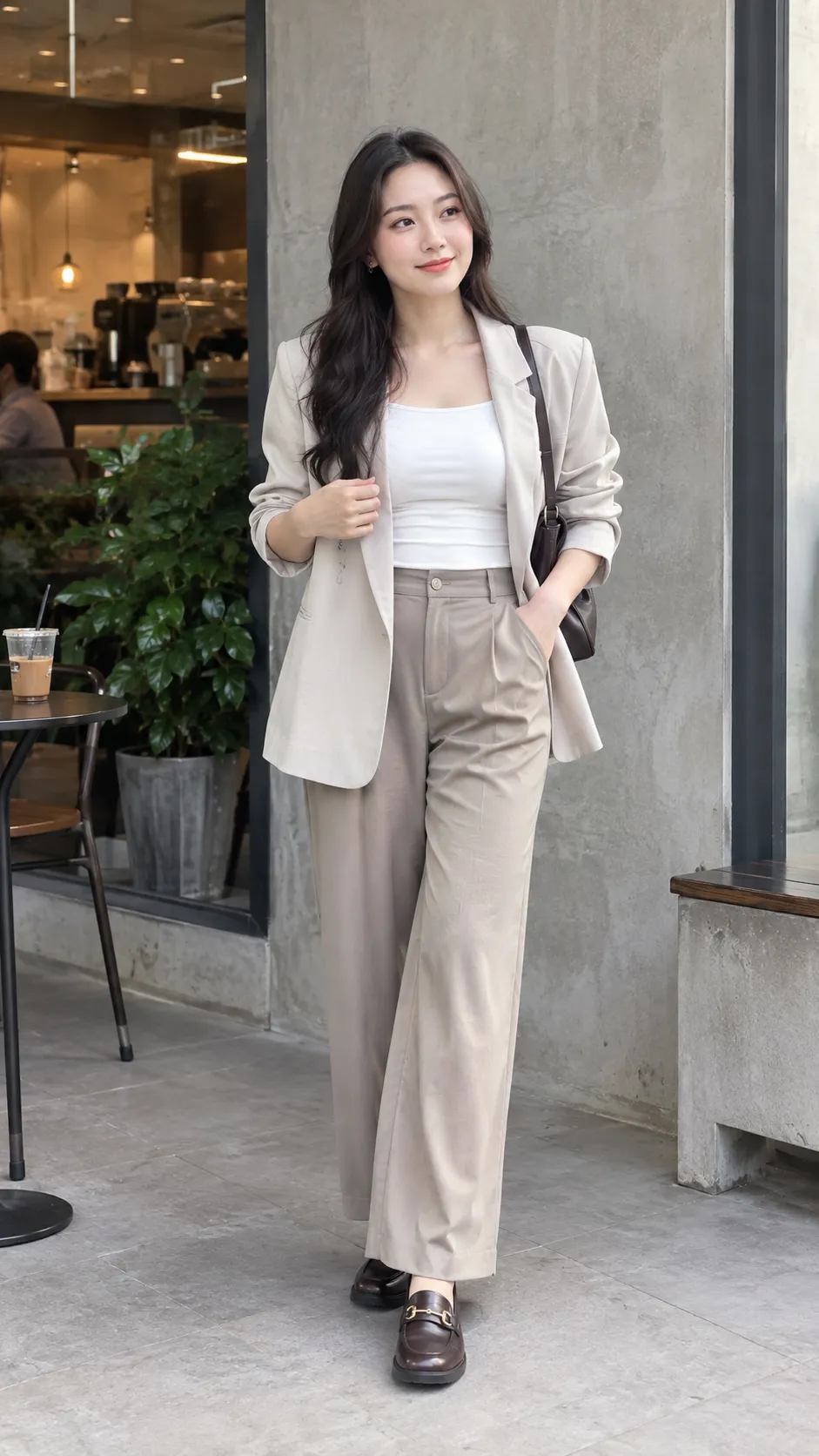
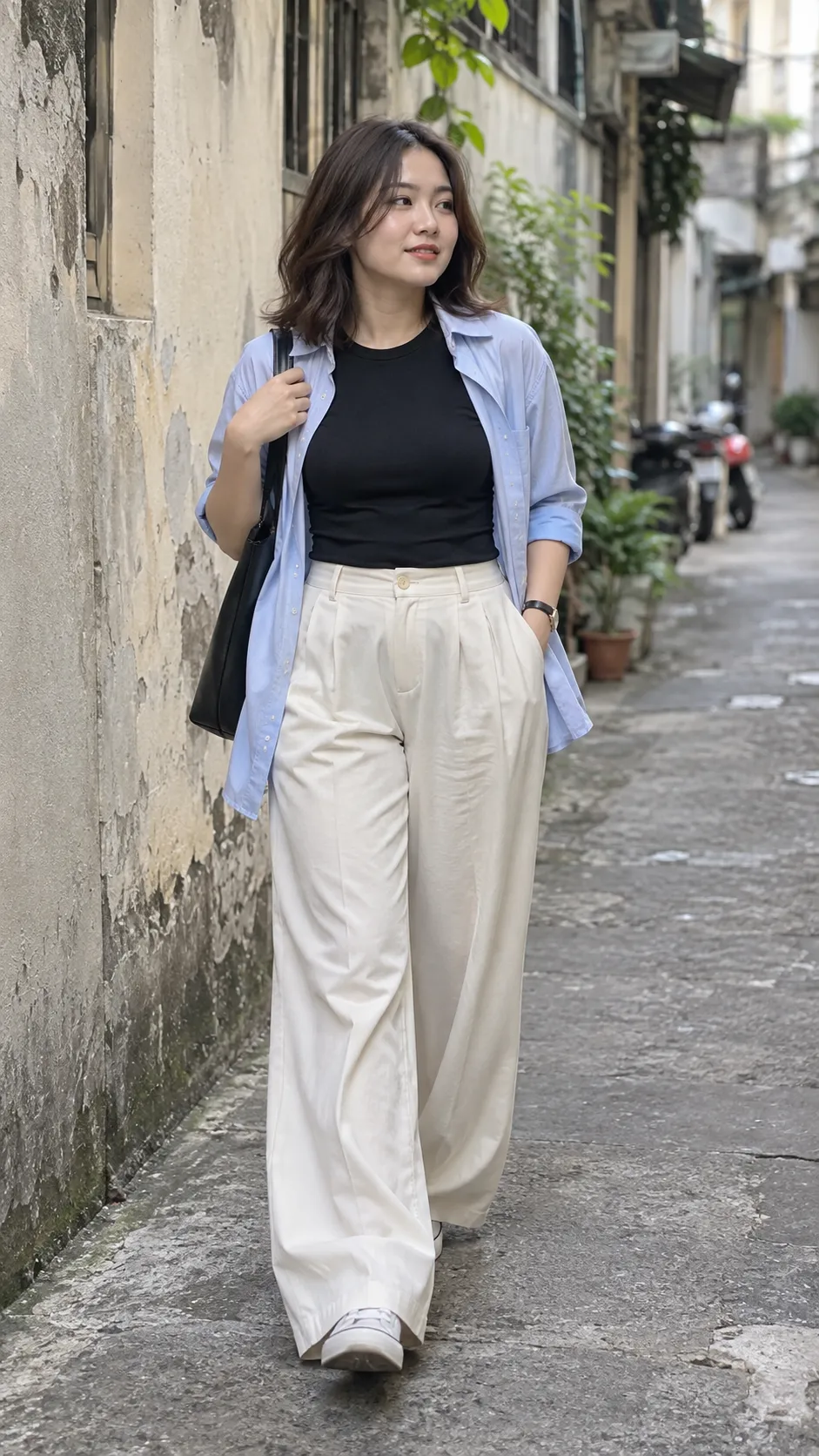
Straight and wide trousers provide a vertical fall, but are optional. Straight jeans, bootcuts, A-line skirts, bias skirts and bodycon skirts can also work with suitable fabric and waistband fit.
With wide trousers, check hem and footwear together. A very long hem over a small sneaker can concentrate visual weight low down. A substantial sneaker, moderate-soled loafer or boot offers a clearer finishing point. With finer shoes, adjust the hem to reveal the toe and avoid dragging.
A high rise places the apparent leg start higher; a mid-rise may feel more comfortable for some people sitting; a low rise offers a Y2K reference and a longer-looking torso. Choose for feel and style. No rise corrects a body.
For more on trouser shapes, see the women’s trouser guide collection. For upper garments, the women’s tops guide collection explains cut, necklines and layering before you add more clothes.
Layers Can Frame an Outfit Without Covering Everything
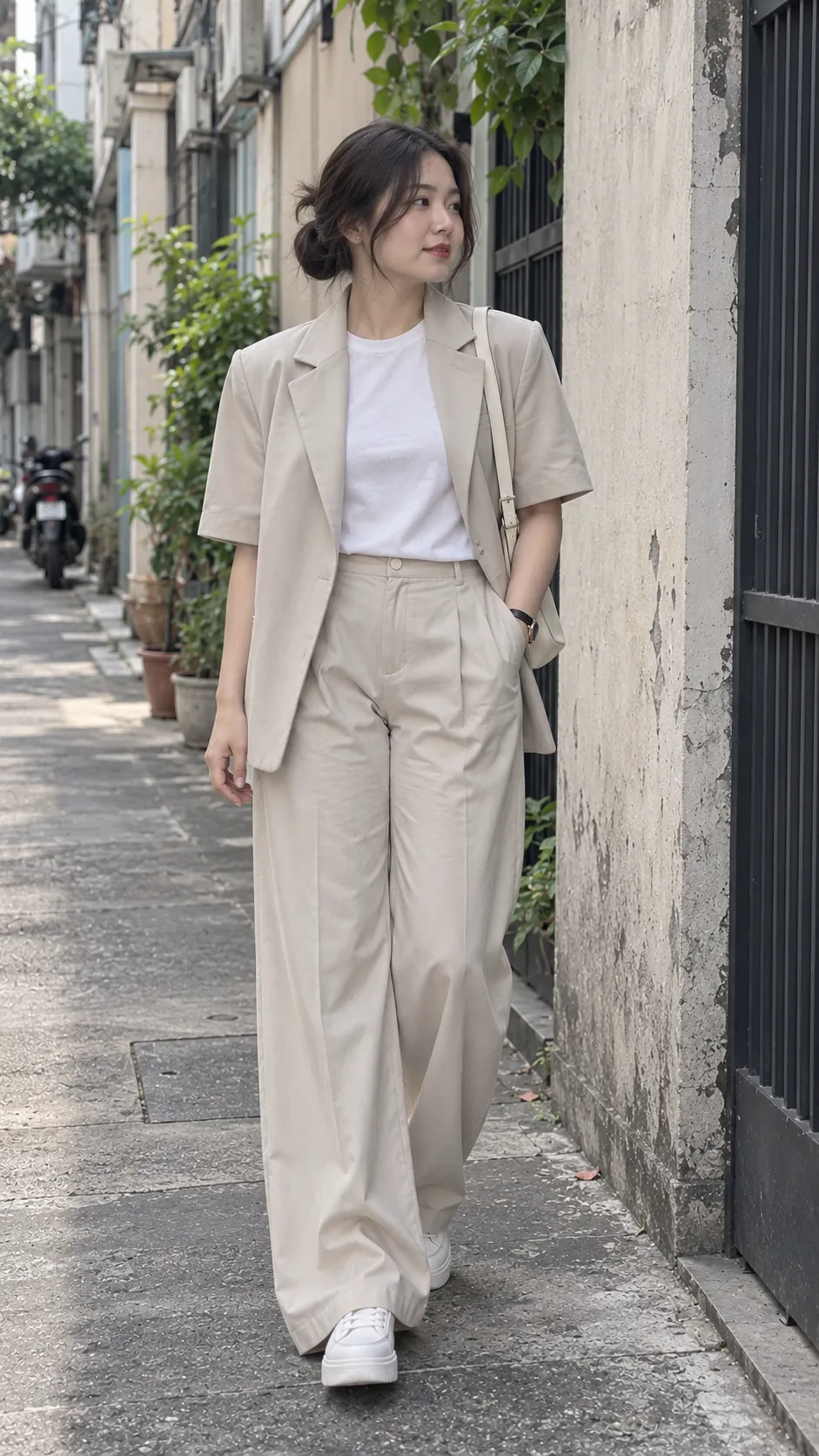
An open blazer, overshirt, cardigan or jacket creates two vertical torso edges while keeping the base visible. Partly fasten it for more coverage if desired, or leave it open if that feels better.
Layer length changes proportions. A cropped jacket draws attention higher and reveals the waistband; a hip-length blazer makes a medium frame; a long coat extends the vertical line. Choose for the outfit and weather rather than assuming a long layer is needed to cover your stomach.
Texture matters too. A structured jacket contrasts with a soft base; a soft cardigan relaxes a fitted dress; a sheer overshirt adds a layer with less visual weight. In heat, a lightweight open cotton shirt may be more practical than a heavy blazer, depending on construction and conditions.
Eight Outfit Formulas Focused on Proportion
Square-neck top + straight trousers + loafers
The neckline opens the upper area, trousers add a vertical line and loafers finish the hem. Add a belt if you want waistband emphasis.
Fitted tee + open overshirt + straight jeans
The fitted base establishes shape and the overshirt adds vertical edges. Check movement and heat comfort for a longer day.
Waistband-length crop + wide-leg trousers
The small gap between hem and waistband avoids several torso breaks. Wide trousers provide lower volume with sneakers or comfortable platforms.
Wrap top + bias-cut midi + ankle boots
Diagonal top lines meet the skirt’s soft fall. Boots create a defined finishing point below the midi.
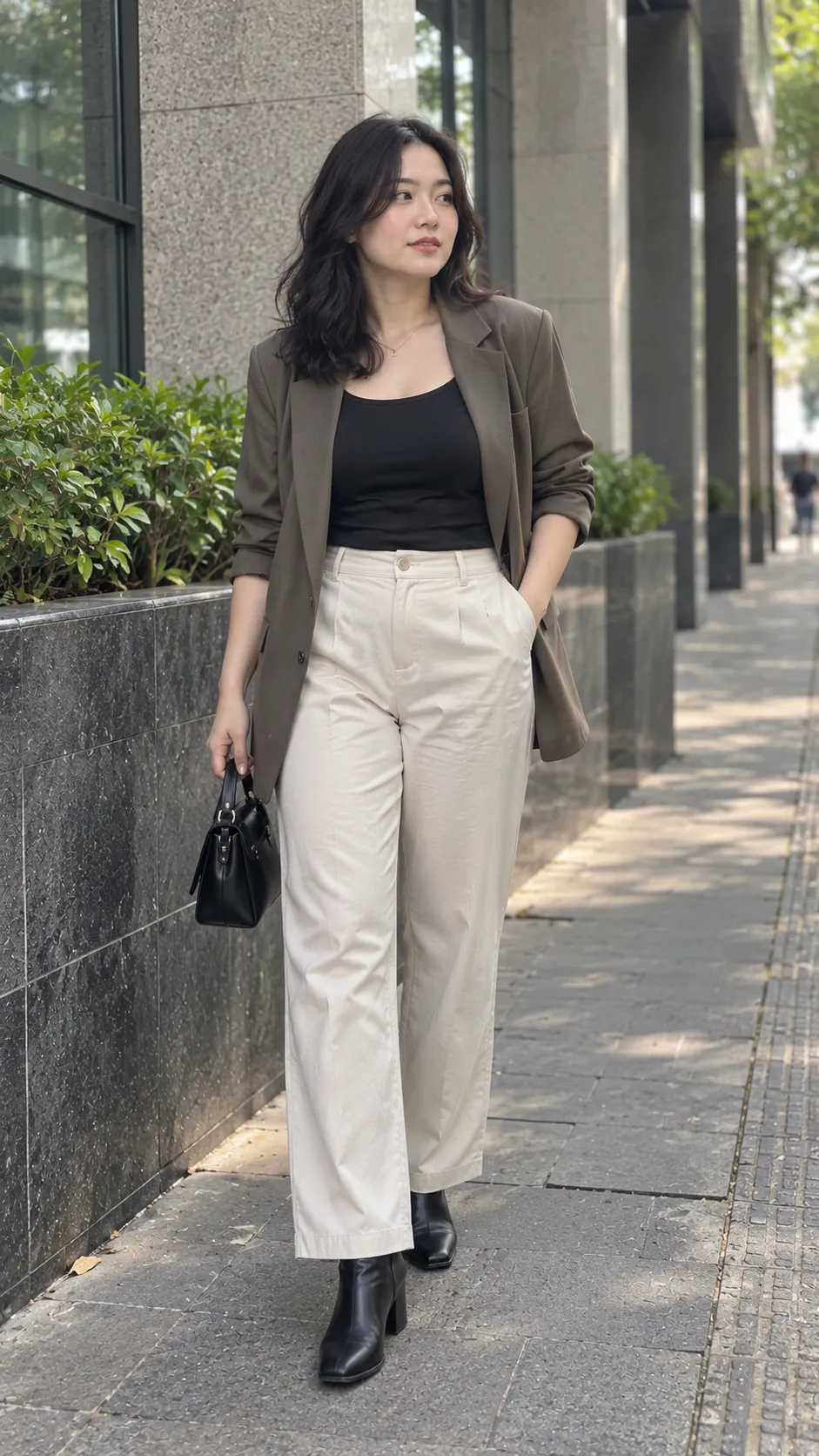
Tank + boxy blazer + straight jeans
Structured shoulders contrast with a neat base. With a longer blazer, straighter jeans can reduce competing volume.
Tonal top and bottoms + contrasting bag
A continuous color area reduces horizontal breaks. The bag or jewelry becomes a chosen focal point.
Slip dress + cropped cardigan
The dress gives a continuous line and the short cardigan places emphasis higher. Combat boots can give the outfit a stronger alternative reference than flats.
Boxy graphic tee + straight maxi skirt
The tee adds a clear upper shape and the long skirt balances it. A light front tuck is optional for a more visible waistband.
Good Fit Reduces the Need for Constant Adjustment
Sit, bend to pick something up, raise your arms, take a long step and carry your usual bag. A rolling waistband, constantly rising top or straining seated buttons points to garment fit, rather than a body being unsuitable for the style. This is an initial check, not proof of all-day comfort.
If you like a smoother surface under a fitted dress or knit, choose comfortable underwear or a seamless layer. Shapewear is optional, like a belt or camisole, rather than a requirement for a silhouette.
Some people enjoy structured fabric because it clings less; others enjoy soft jersey for movement. Both are valid. Online, prioritize finished measurements, stretch information and fabric reviews over generic size labels.
Footwear affects comfort too. If trousers require heels to clear the ground but you will walk far, adjusting the hem or changing trousers may be more practical than enduring uncomfortable shoes. Let the outfit work with your plans.
Rules You Can Question
“A fuller stomach rules out fitted tops”
This is not a universal fashion rule. Fitted tops create a defined silhouette; fabric, stretch and your comfort matter.
“You must wear black”
Dark colors can create continuity, but light colors also work with deliberate proportions and lines. Cream, gray or burgundy tonal outfits can feel unified too.
“The looser the top, the better”
An excessively loose top can add volume exactly where you want less emphasis. A structured boxy cut may be easier to control than very soft, collapsing fabric when your goal is a straight line.
“Always choose a high rise”
A high rise is one option. Mid and low rises may suit your comfort or Y2K styling. Assess them in movement.
“You must define the waist”
No. Column silhouettes, oversized streetwear and straight dresses are also options. Waist emphasis is a visual effect you can choose.
Moving a Horizontal Line Can Change an Outfit
Try the same top and trousers fully tucked, lightly front-tucked and untucked. Each places the hem differently without changing your body or size. A belt at a high or mid-rise waistband, or no belt, also changes the visual rhythm.
If the outfit places more emphasis on your midsection than you want, try shifting the hem a few centimeters, opening a layer, moving the bag or choosing footwear with a more defined shape before buying looser clothes. Several lines may be gathering in one area; that is a composition issue, rather than a forbidden garment.