

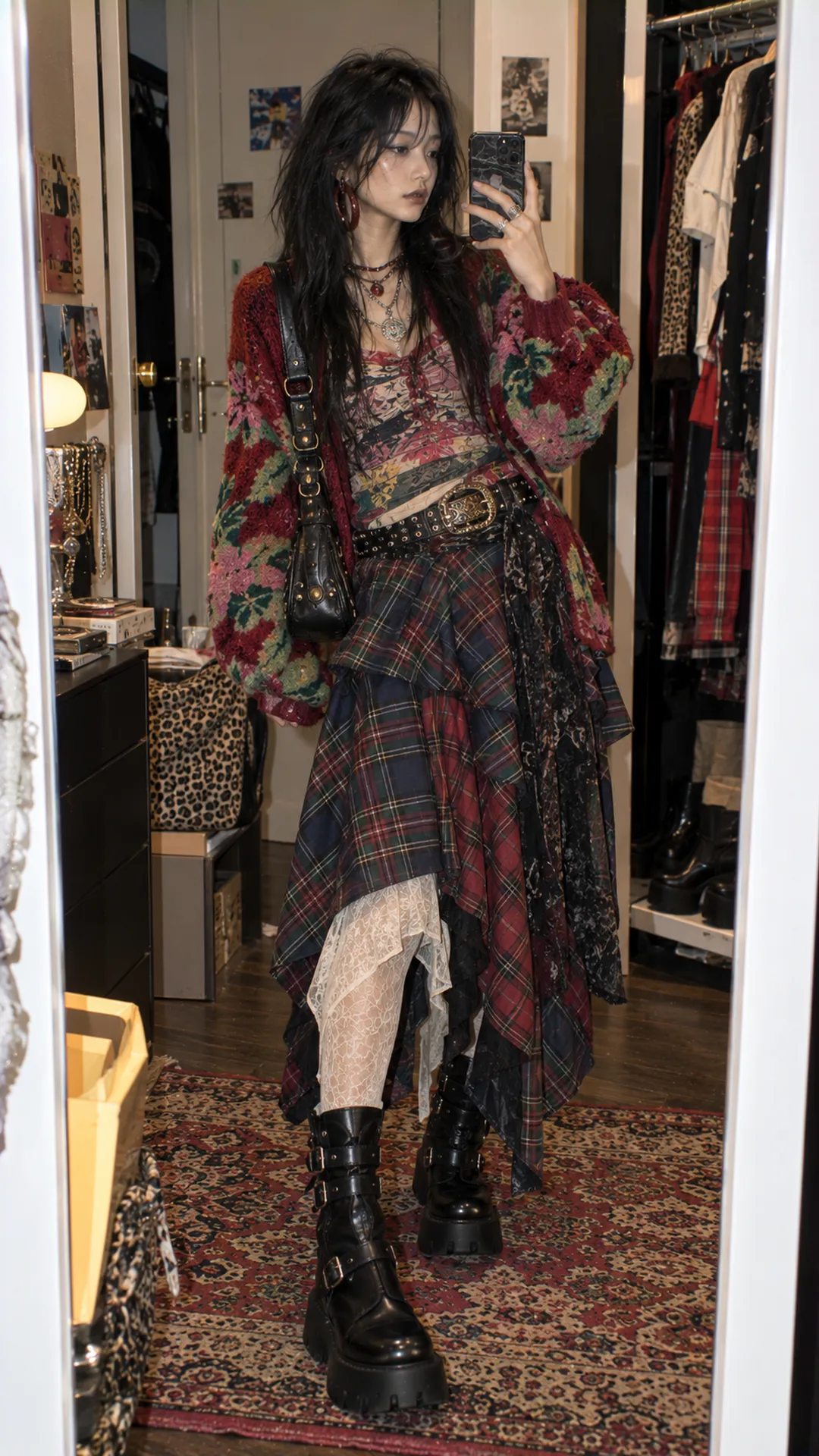
How does maximalism differ from minimalism, layering and Kidcore?
Minimalism usually restrains details and emphasizes cuts, materials or open space. Maximalism allows more elements to participate. This concerns visual organization, not which approach is more elegant, economical or tasteful.
Layering means wearing several layers; three neutral layers can remain restrained. Maximalism can consist of a patterned dress and bold accessories without multiple tops. If layer lengths or thicknesses are the problem, explore the women's layering guide rather than adding items to solve the wrong issue.
Kidcore has specific connections to childhood memories and playful imagery. It can be styled maximally, but a colorful outfit is not automatically Kidcore. Likewise, Harajuku provides a context for varied dress rather than an alternative name for every heavily accessorized outfit.
Start with one piece and choose what to repeat
Lay the main piece in good light. Note the base color, two clear pattern colors and one surface quality. A blue shirt with orange flowers and dark green leaves, for example, provides three connections: orange in the bag, green in the trousers or floral curves in earrings.
You need not repeat everything. If trousers, bag, shoes and jewelry all use many colors, identifying the leading item becomes harder. Try one clear connection first, then another element. Even a highly detailed outfit needs differences in emphasis so the eye can distinguish its parts.
The main piece need not be expensive or new. An old scarf, handmade bead necklace or long-worn skirt can start the outfit. Their value lies in coordination rather than matching brands or prices.
Use color through area, not just quantity
Three equally sized color areas feel different from one large base and two small accents. Try a dark-blue top, floral skirt with a blue base and yellow bag: blue connects the large areas, yellow adds brightness. A yellow top changes their roles even with the same palette.
Related colors can create gentle transitions; clearly different ones increase contrast. For a beginner, borrowing colors from an existing print is easier than selecting each item separately. This is a convenient experiment, not a rule requiring every color exactly twice.
Maximalism does not demand neon. Brown, cream and burgundy can be rich through weaves, prints and jewelry. If you like all black, explore surfaces and silhouettes rather than forcing bright colors. You are increasing visual information, not just glare.
Mix prints through scale and spacing
Notice flower size, stripe thickness and how much background remains visible. Two prints of the same scale and density may merge confusingly. Change one scale or introduce a plain interval to clarify the boundary.
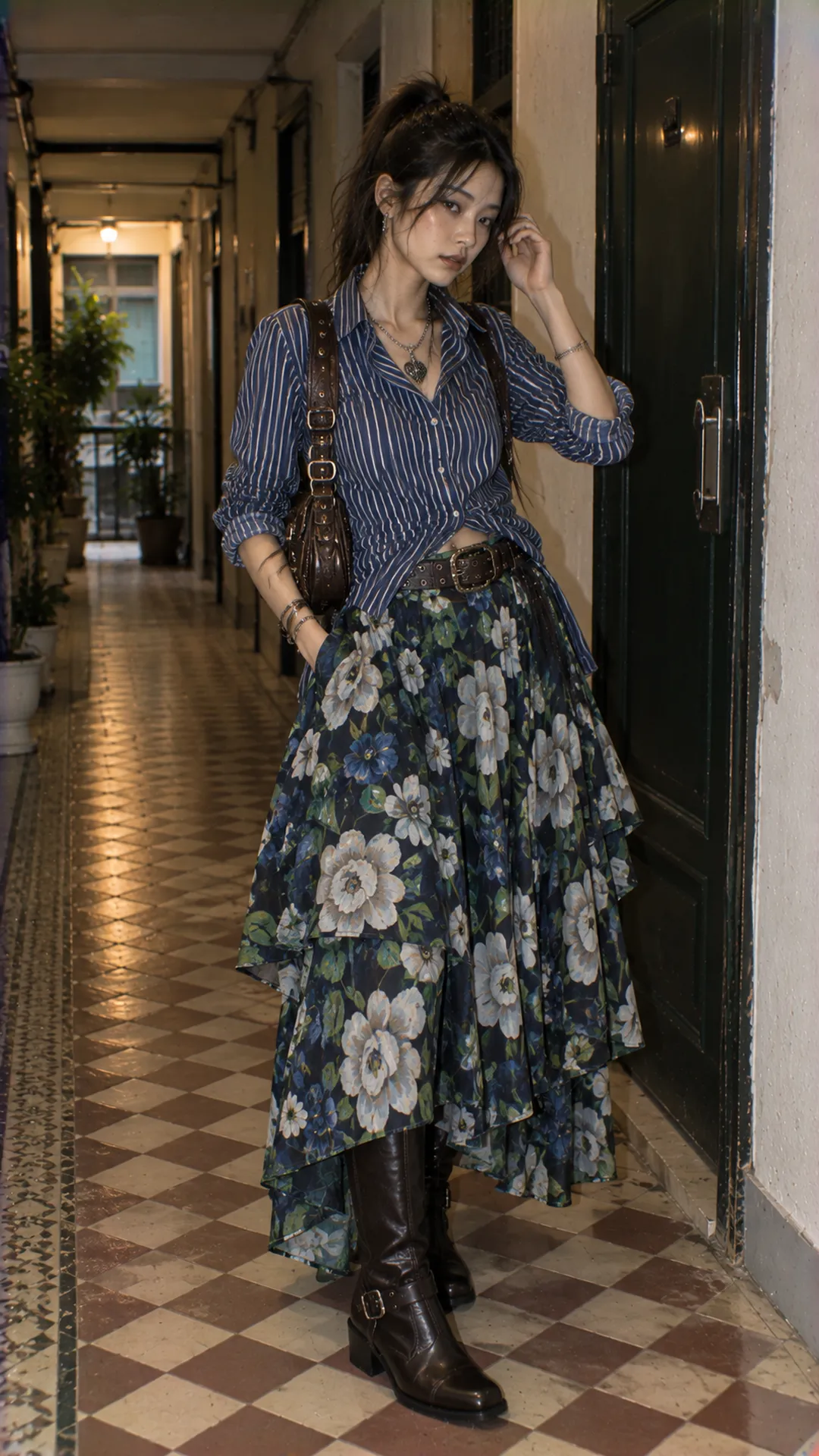
Fine blue-and-white stripes can sit beside a large floral skirt containing blue. Stripes supply regular rhythm, flowers larger moving areas, and blue connects them. For a dotted bag, first try small, low-contrast dots so it does not become a third equally dominant block.
This is an exercise, not a guarantee that every print combination works. Prints sharing colors but differing in brightness can still separate strongly. Compare flat pieces, step back, then wear them. Folds and concealed fabric can change the result considerably.
Textures enrich outfits without extra colors
Pleats, lace, raised weaves and glossy accessories change how light falls. A solid pleated skirt already creates visual rhythm without a print. With a floral top, it adds structure without necessarily needing another pattern.
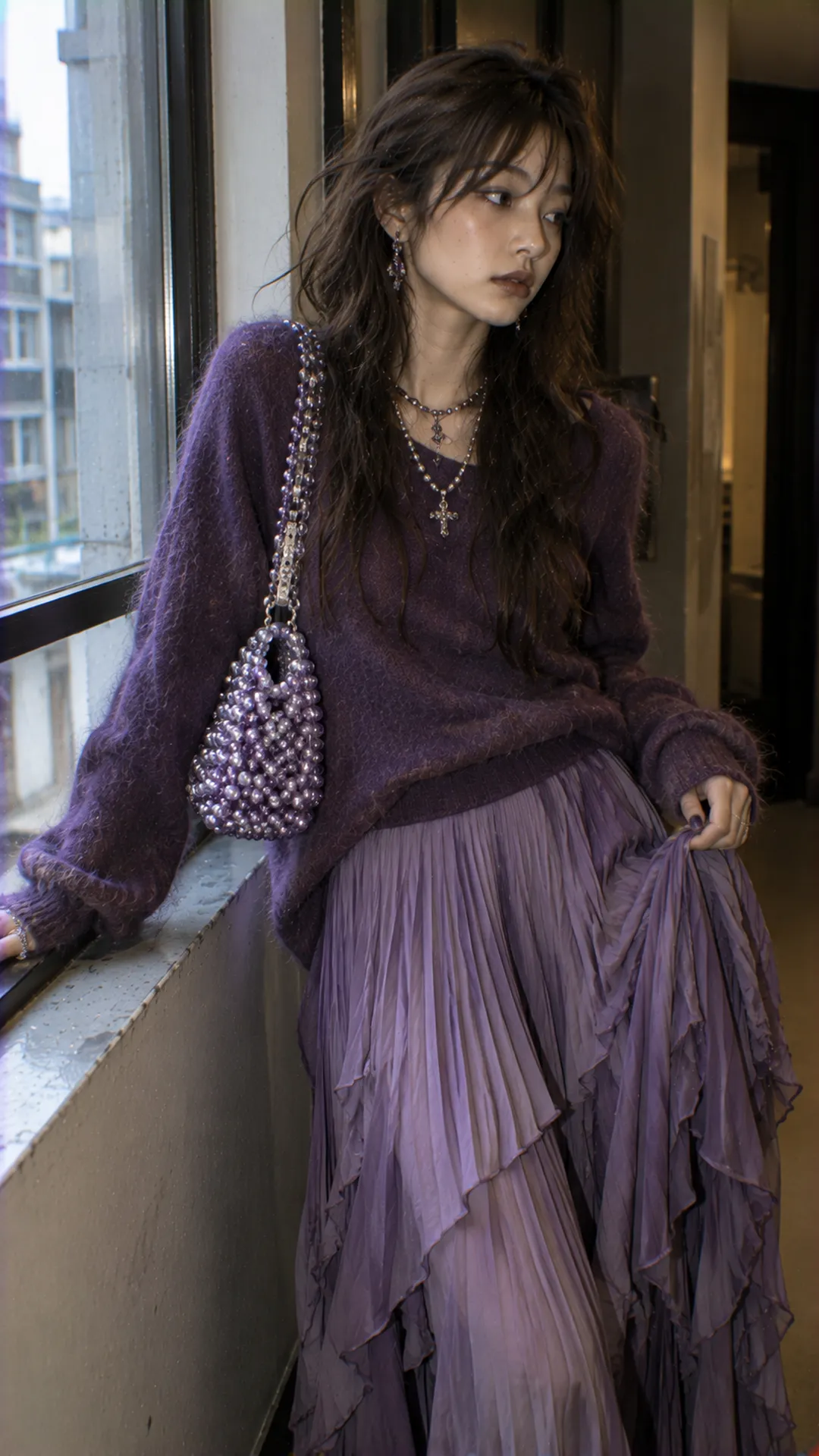
Try a matte top, slightly glossy skirt and beaded bag. If all three reflect strongly, replace one with a quieter surface to preserve distinction. Conversely, if everything is soft and matte, a rigidly shaped accessory can create a clear change.
Do not judge comfort by fabric names alone. Knits can be thin or thick; lace can feel soft or abrasive. Check joins, linings and accessory contact points. A beautiful surface that always catches a bracelet is difficult for regular use.
Layered accessories need space to function
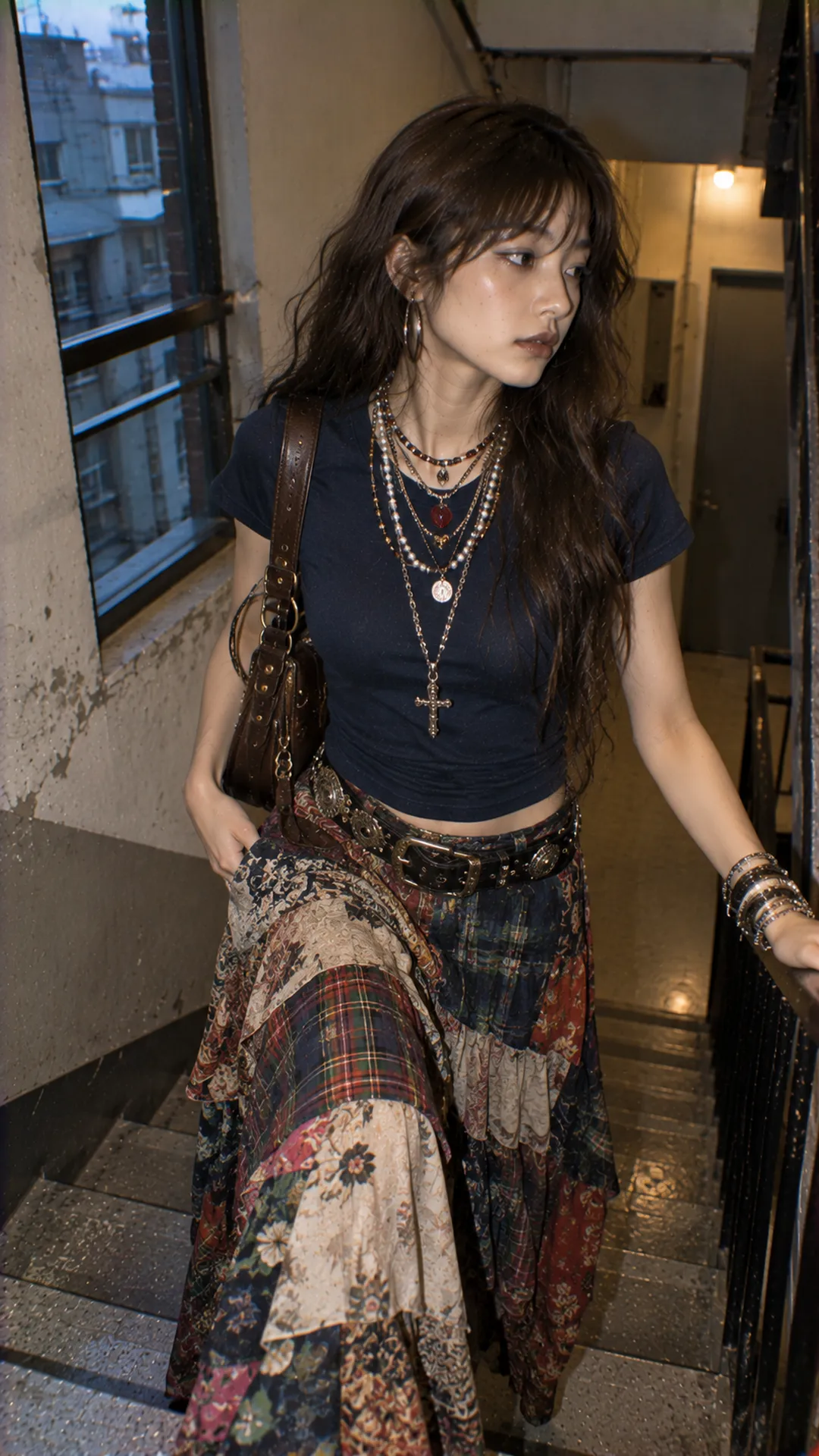
Necklaces of different lengths can form one group rather than disconnected points. Test them on the actual neckline: high collars, V-necks and button fronts offer different spaces. If a pendant meets a large button, adjust length or remove one item to avoid overlap.
For bracelets, consider writing, typing and carrying bags. Grouping them on one wrist may be more convenient than many on both. For bag charms, check weight and attachment points; decoration should not compromise function or keep catching clothes.
The Maximalist Style guide from Kate Spade also uses bags and charms as starting points. This is an accessory brand's perspective, not a requirement to buy its products. Try the idea with existing pieces and assess color, shape and function.
Formula 1: fine stripes, large flowers and one linking color
Pair blue-and-white stripes with a light-ground floral skirt containing some blue, plain shoes and a bag taking a color from the petals. A relatively streamlined shirt prevents stripes gathering into too many folds. For a loose shirt, try a partial tuck to show the division between prints.
The appeal is seeing varied shapes while finding a shared color. If it becomes busy, do not replace both top and skirt immediately. Try a bag in the background color or remove the neck scarf; small items can create more competition than expected.
Formula 2: one main color, several textures
Choose a matte purple top, dark-purple pleated skirt and beaded bag from the same color family. Simple-shaped metal jewelry contrasts with the soft surfaces. The outfit remains detailed without rainbow contrast.
Compare the purples in natural light. If one leans strongly red and another blue, keep that contrast intentionally or use a neutral bag to reduce competition. Exact matching is unnecessary; notice and choose the difference rather than trusting sales-page color names.
Formula 3: basics and one strong accessory group
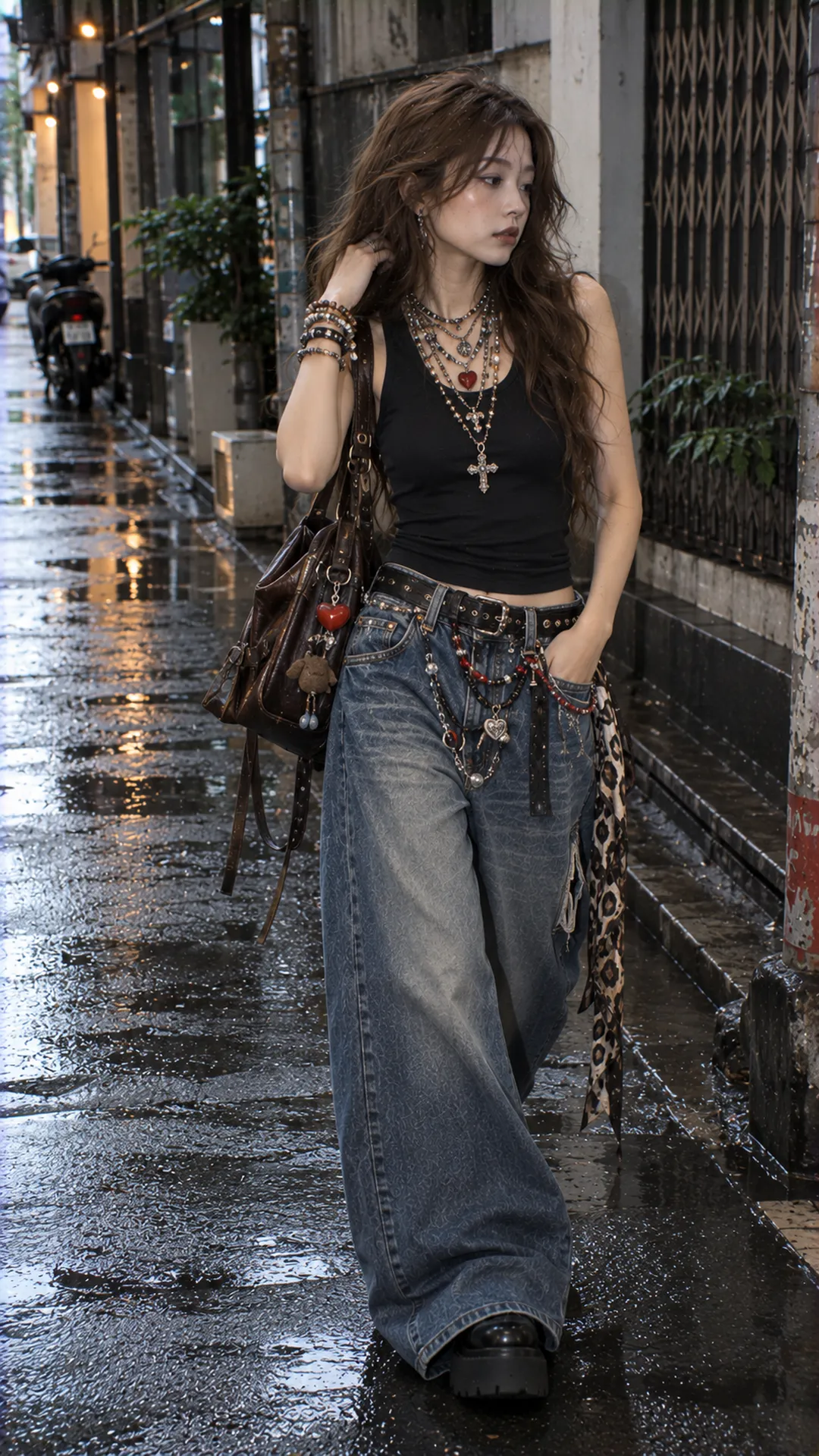
A plain top, well-fitting denim and walkable shoes support layered necklaces, a colorful bag and clearly shaped earrings. Concentrate accessories above if the face should lead; keep the belt area simple so every region does not demand attention.
This suits a wardrobe with few prints. To go further, replace the plain top with a small graphic and reassess. A basic foundation does not make an outfit “insufficiently maximalist”; richness also comes from accessory proportions, scale and connections.
Fix three situations that obscure an outfit
Everything stands out equally: choose the main piece to retain and reduce another item's contrast. Replace floral shoes with plain ones in the same color, or a large necklace with small earrings. Many details can remain without making the outfit minimalist.
Prints merge into one confused area: check scale, spacing and background colors. Reveal a plain waistband, try an open jacket or replace a dense print with a more spacious one. If a jacket adds too much heat, change a piece rather than layering.
The silhouette loses its boundaries: inspect shoulders, waist and hems before blaming color. A loose top completely covering a tiered skirt's waistband can hide structure. Adjust top length or roll sleeves to create space. If an entirely loose silhouette is intentional, keep it and reduce density in one area to clarify the idea.
Dress for heat and build a remixable wardrobe
In hot, humid weather, create richness with prints, color and light accessories instead of heavy jackets. A floral dress, scarf tied to a bag and bead necklace already provide several information layers without extra clothing layers. Check accessory weight for a long day.
Before buying, try the prospective piece with three items you own. If it only works in a complete set requiring other purchases, consider whether you would use it often. One statement piece with several combinations is often more useful than many unusual but disconnected items.
Use the style dictionary for further references without renaming your style after every color change. Save tested outfits and note what works: connecting colors, leading patterns and snagging items. Through adjustments, maximalist style becomes an intentional use of your wardrobe rather than a race to add more.