

Kidcore Style: Childhood References and Six Colorful Outfits
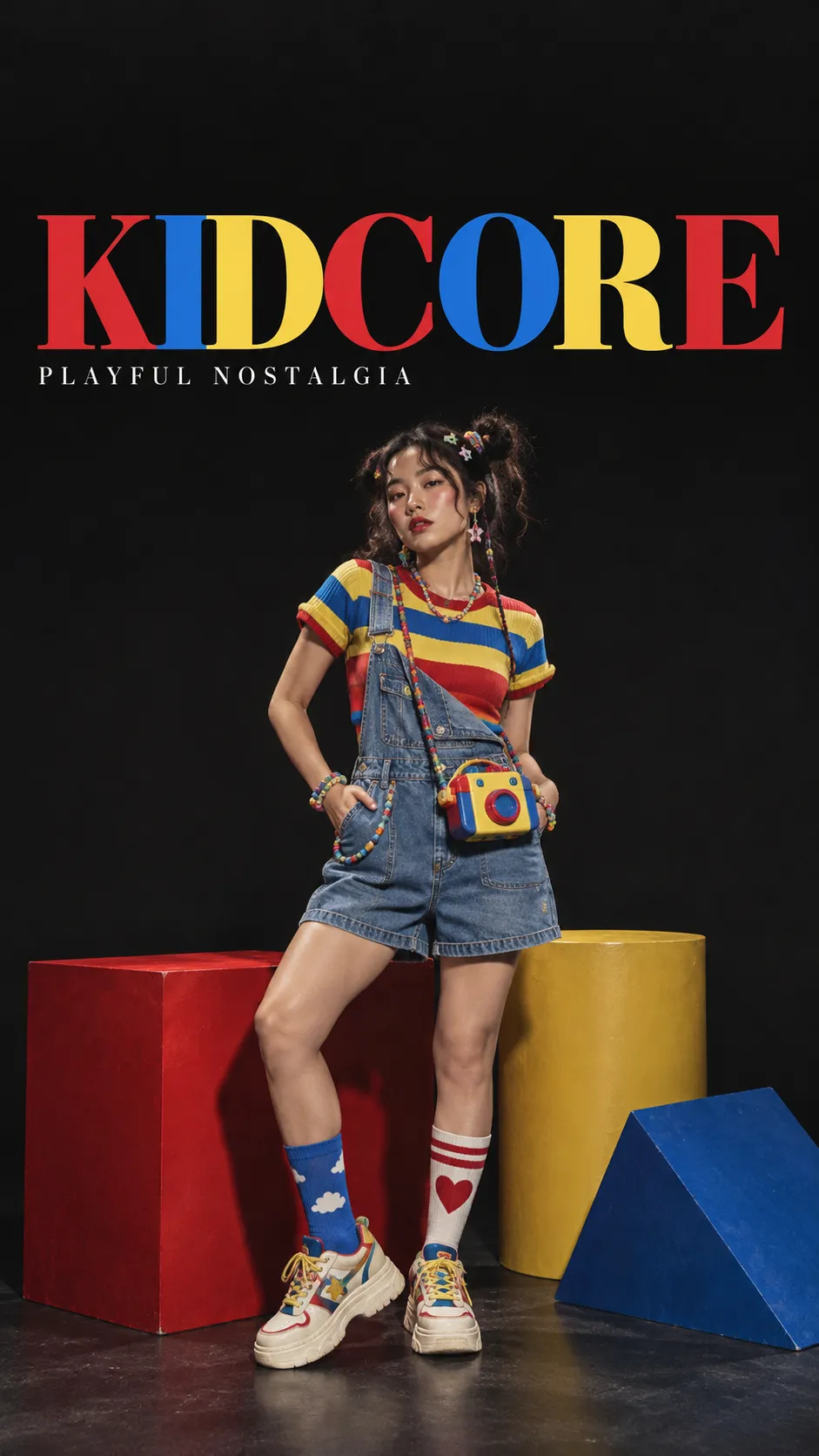
Kidcore uses childhood nostalgia through bright colors, cartoon graphics, striped tees, dungarees and colorful beads. Fashion interpretations often reference 1990s and early-2000s play and popular culture.
Adults can pair one expressive piece with familiar basics. This guide explains the cues, distinguishes Cutecore and offers six Kidcore outfit formulas to adapt from existing clothes.
Guide collection: Aesthetic Dictionary: Fashion Style Reference
What Is Kidcore?
Kidcore is an internet aesthetic organized around childhood nostalgia. NYLON’s 2020 coverage highlighted rainbow color, toy-inspired styling, cartoon graphics and 1990s or early-2000s references. Seventeen’s 2022 outfit discussion included primary colors, dungarees, patchwork and popular-culture cues.
Seventeen associates the name with artist Matt Star; this is a publication attribution rather than proof of a single uncontested origin. The visual materials are older: toys, cartoons, children’s television, stickers, bead crafts, dungarees, rainbow stripes and DIY. Kidcore brings selected references into a clothing moodboard.
If you have read what aesthetic means in fashion, think of Kidcore as a connected vocabulary. A red top alone may be generic; red with dungarees, colorful socks, a charm bag and cartoon detail supplies more specific context.
Childhood References Are Personal
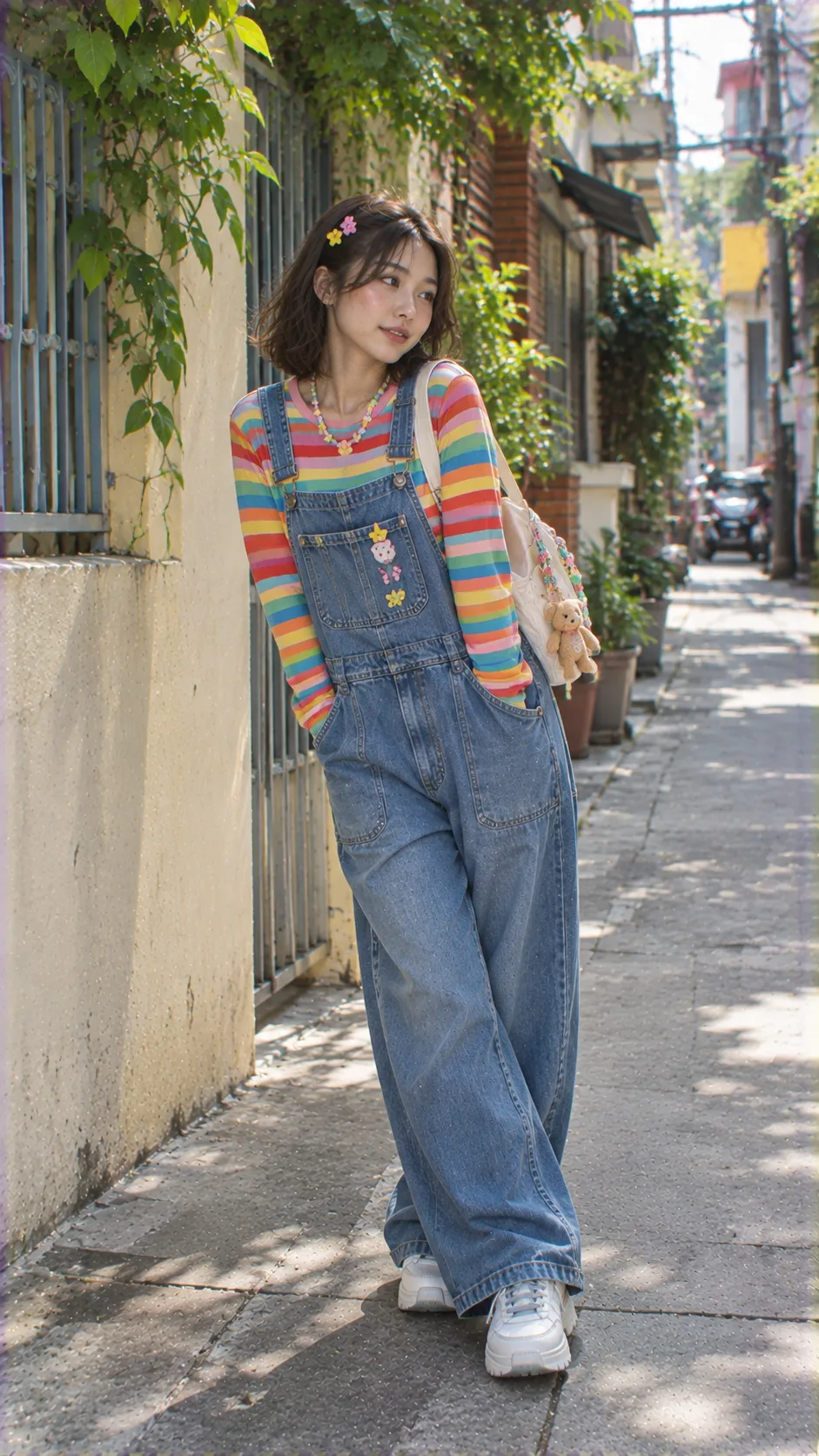
People remember different objects and periods: primary-colored blocks, cartoons, substantial sneakers, denim, virtual pets, sticker books, plastic accessories, character backpacks or pixel games. There is no compulsory reference year, and generations’ memories overlap.
NYLON’s examples emphasized clashing prints, vibrant colors, beads and secondhand cartoon pieces. The useful lesson is how playful or overlooked references can support personal expression, rather than a requirement to buy from named shops.
Four Kidcore Cues
Red, yellow and blue offer a clear starting vocabulary. You need not use all three; decide on a base and selected accents.
A cartoon tee, dungarees, bead bag, toy charm, retro sneaker or patchwork garment.
Loose tees, short dungarees, baggy jeans, substantial cardigans or sneakers can create a relaxed silhouette.
Pins, beads, patch-like graphics, mismatched socks or a customized bag add individuality.
Do not maximize every cue automatically. A strong graphic can lead with solid bottoms; a multicolored cardigan may need quieter accessories; a heavily charmed bag may not need several additional bracelets.
Bright Colors with a Clear Hierarchy
Red, yellow and blue against denim or white for a recognizable reference.
Hot pink, lime and orange with a quieter neutral; consider fewer prints.
Pastel blue, pink, mint and cream with a clear cartoon or childhood reference to distinguish the emphasis from Cutecore.
Denim can act as a neutral beneath several colors, as can a plain white tee. If every garment has an equally strong color, consider where you want the eye to rest.
Six Kidcore Outfit Formulas
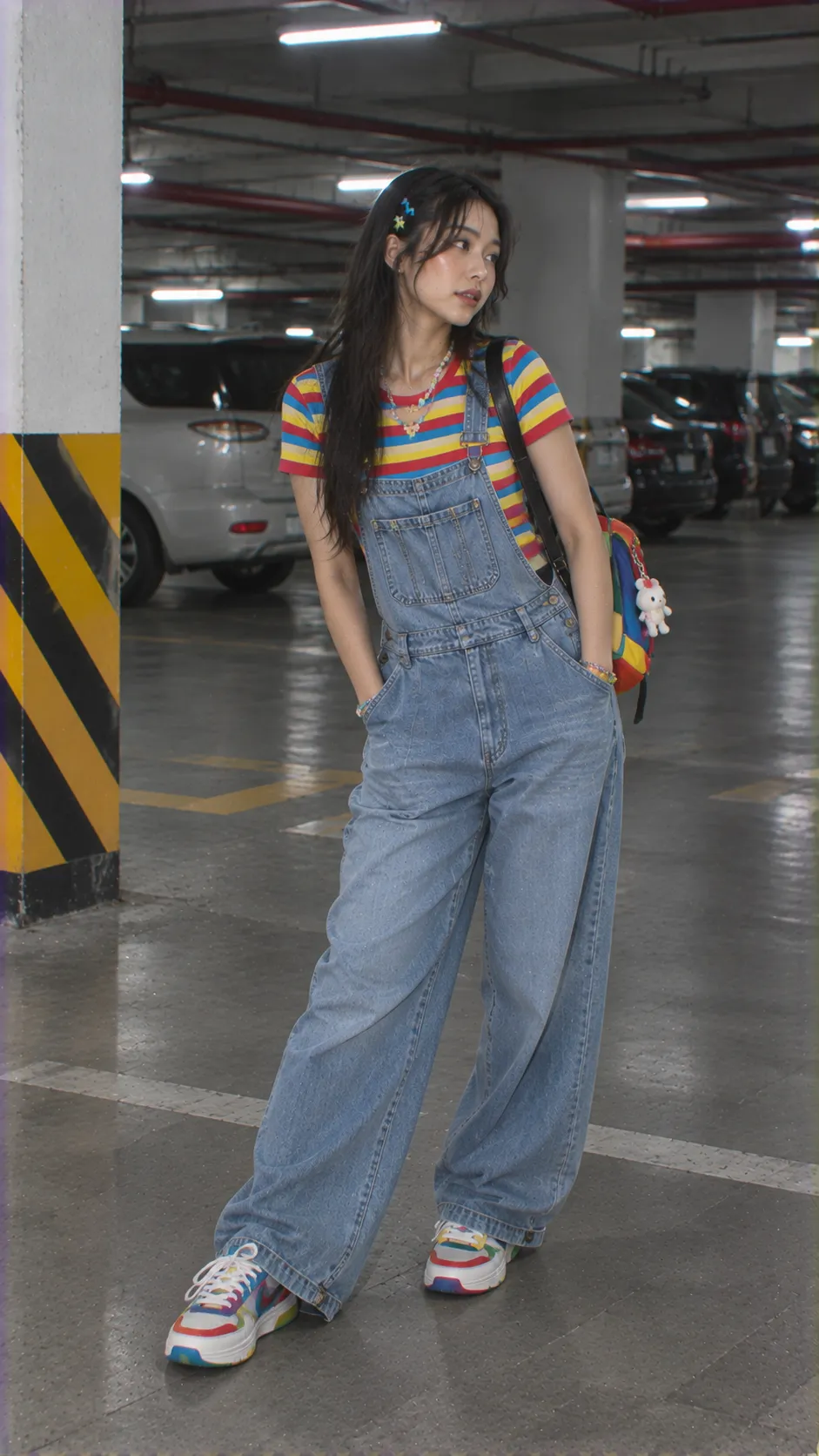
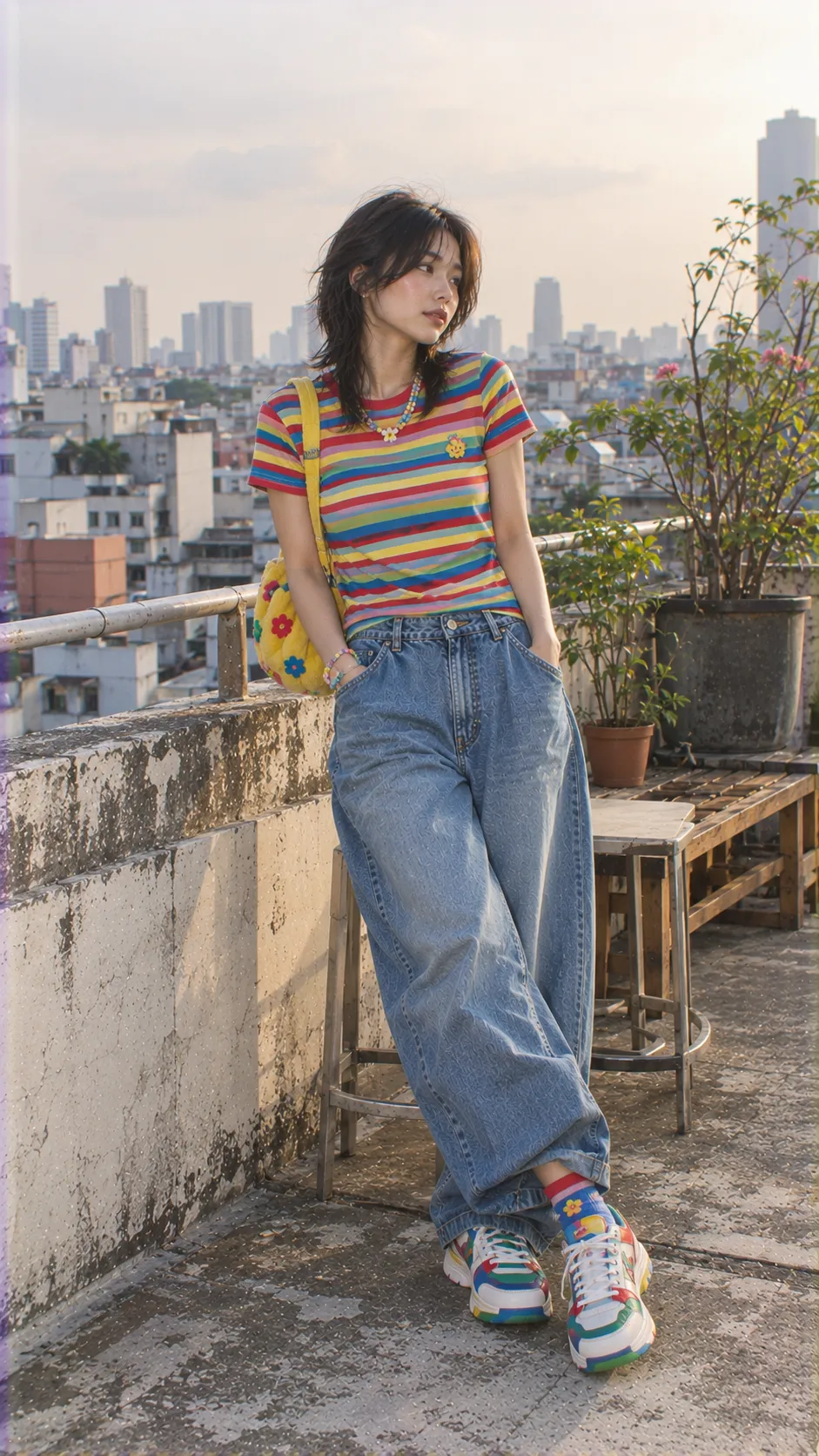
Dungarees provide the nostalgic anchor, stripes supply the palette and sneakers repeat one color.
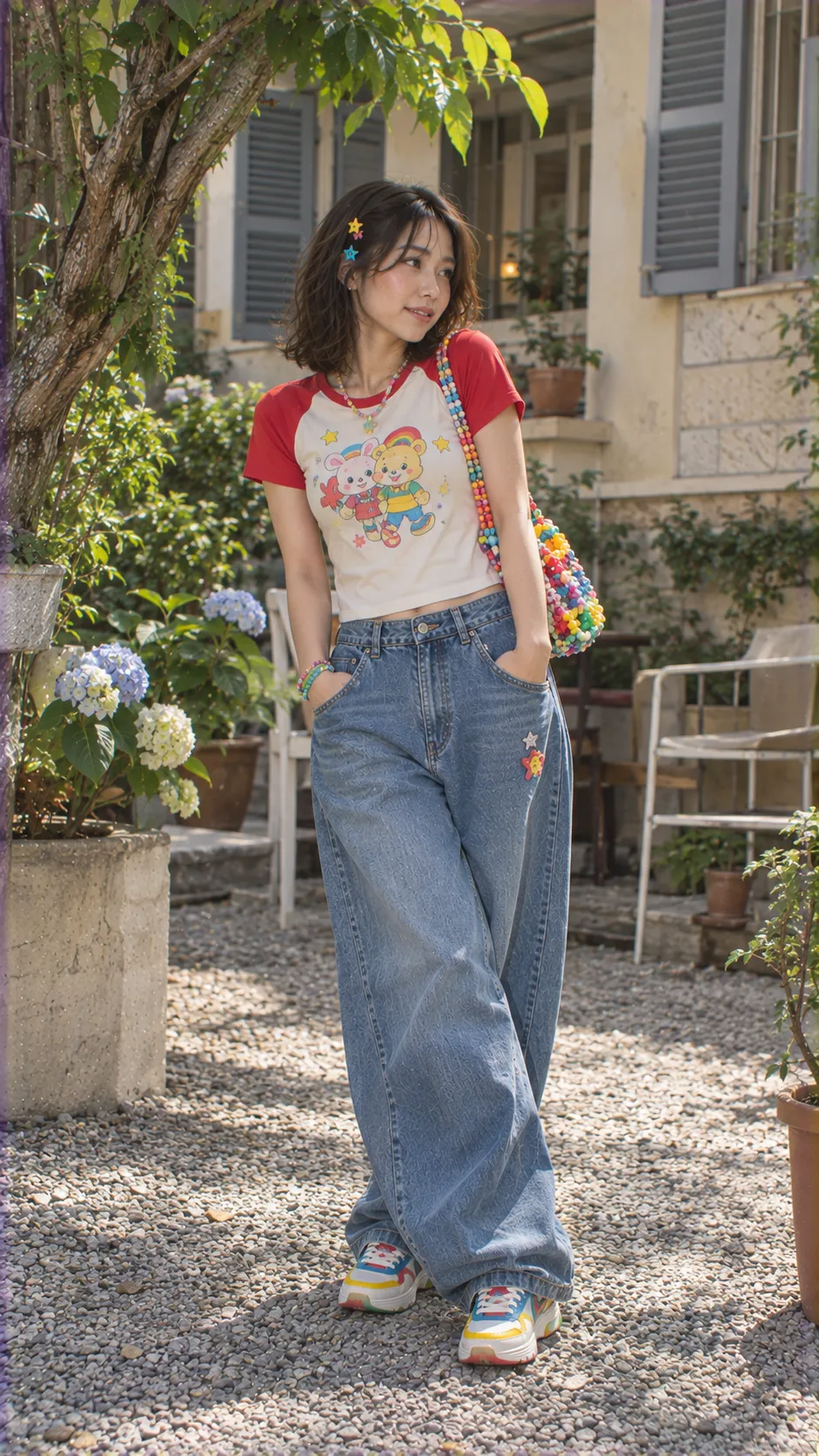
An accessible beginner combination.The graphic leads, denim provides a base and the bag adds a craft reference.
For a cafe or street photograph.A larger color block above, a quieter inner layer and repeated color below.
Adapt to cooler conditions.When two prints share the upper body, a solid bottom can provide balance. Repeat one color between vest and stripes.
A more maximal interpretation.Upper-body volume contrasts with a visible leg line; socks add a selected playful detail.
A sporty interpretation.Let the bottom lead while the belt and bag concentrate nostalgic details rather than scattering them everywhere.
A streetwear-adjacent option.A Kidcore product label is unnecessary. Existing dungarees, colored tees, loose denim and sneakers can supply a base. Color, print and accessory relationships establish the direction, including with secondhand or customized pieces.
Organize Prints, Layers and Accessories
Seventeen and NYLON highlight related color, craft and nostalgic references. Combinations need not match perfectly, but a shared palette can give intentional mismatching a structure.
Kidcore, Cutecore, Vintage and Y2K
| Aesthetic | Main reference | Common cues | Distinction |
|---|---|---|---|
| Kidcore | Childhood nostalgia and play | Primary colors, toys, cartoons, dungarees, beads and patchwork | Childhood reference is central. |
| Cutecore | Cuteness and softness | Pastels, hearts, bows and plush motifs | Does not require 1990s or early-2000s nostalgia. |
| Vintage | Older garments or references to previous fashion periods | Depends on the reference era | Older is not synonymous with childhood. |
| Y2K | Selected late-1990s and early-2000s futuristic or pop-cultural references | Metallic surfaces, low rises, fitted tops and technology nostalgia | Can emphasize teen, pop or technology imagery rather than toys and play. |
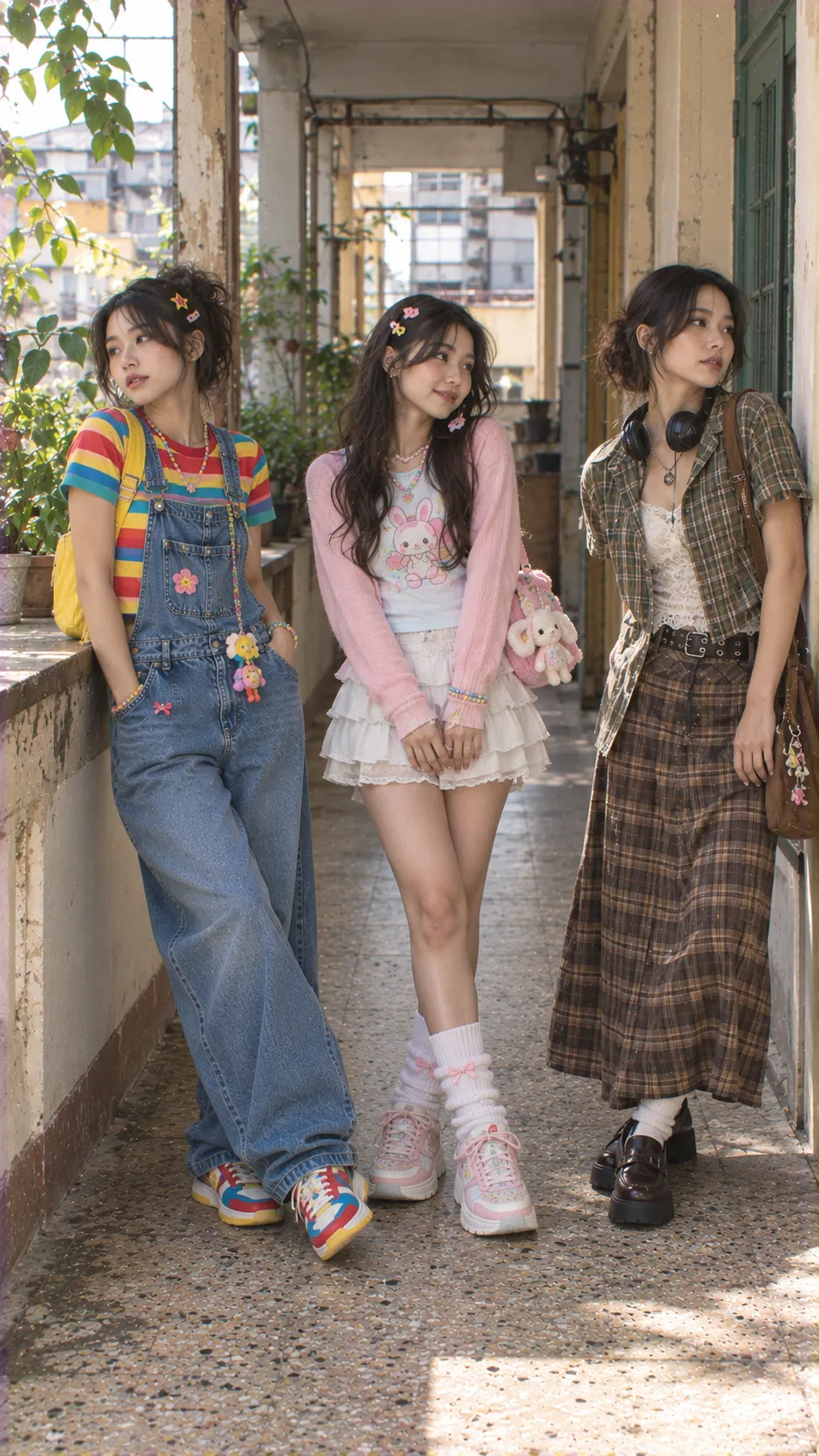
Cutecore is visually related but has a different emphasis. A pastel heart cardigan may read as Cutecore without nostalgia; stripes, dungarees and a toy charm can read as Kidcore without a particularly sweet presentation. Their overlap does not make them identical.
Vintage style is broader: a 1980s blazer or 1950s dress can be vintage. Kidcore selects childhood references, commonly associated with later decades. For a wider map, use the Aesthetic Dictionary rather than applying one label to every colorful outfit.
Five Beginner Modules
Start with a striped or graphic tee, dungarees or baggy jeans, colorful knit or vest, comfortable sneakers and one accessory group, rather than a complete themed purchase.
Choose one clear rainbow stripe, cartoon graphic or primary-color tee.
Dungarees, loose jeans or a denim mini provide a quieter foundation.
A cardigan, sweater vest or long sleeve changes the palette without replacing every piece.
Beads, clips, a charm bag or socks sharing two or three colors.
The fifth module is footwear. Existing white sneakers can connect through colored laces or socks. Customization may provide more individuality than an extra purchase.
Six Common Mistakes
1. No Quieter Area
A rainbow is optional; denim, white or a solid color can provide a pause.
2. Cartoons on Everything
One main graphic can communicate more clearly than several competing characters.
3. Confusing Kidcore with Cutecore
Cuteness alone does not establish the childhood-reference emphasis.
4. Treating It as Dressing Like a Child
Adults can reference childhood while choosing silhouettes suited to their bodies, settings and comfort.
5. Unconnected Print Mixing
A shared color or repeated motif can connect contrasting prints.
6. More Accessories Than Wearable Bases
Charms cannot replace useful tops and bottoms. Establish a base before adding the toy-box details.
References
These references provide published and community interpretations; the outfit framework is Apocalypse Closet editorial guidance.
- NYLON — Kidcore Is The Wholesome Internet Aesthetic Inspired By Childhood: childhood references, rainbow colors, toy imagery, contrasting prints and crafts.
- Seventeen — Colorful Kidcore Outfits: primary colors, dungarees, patchwork, popular culture and its attribution of the term to Matt Star.
- Aesthetics Wiki — Kidcore: a community reference for motifs and terminology, not an authoritative universal taxonomy.
Frequently Asked Questions
What is Kidcore?
Kidcore is a childhood-nostalgia aesthetic often using bright colors, cartoon graphics, dungarees, patchwork and playful accessories.
How does it differ from Cutecore?
Kidcore emphasizes childhood memories and toy or cartoon references. Cutecore focuses more broadly on cuteness and need not be nostalgic.
Must I wear all primary colors?
No. Denim or white can provide a base with a few deliberately repeated brighter colors.
What should beginners start with?
A striped tee, dungarees or baggy denim, followed by one nostalgic graphic and a related bead, charm or sock accent.