

What Is Morute? Morbid-Cute References and Outfit Styling
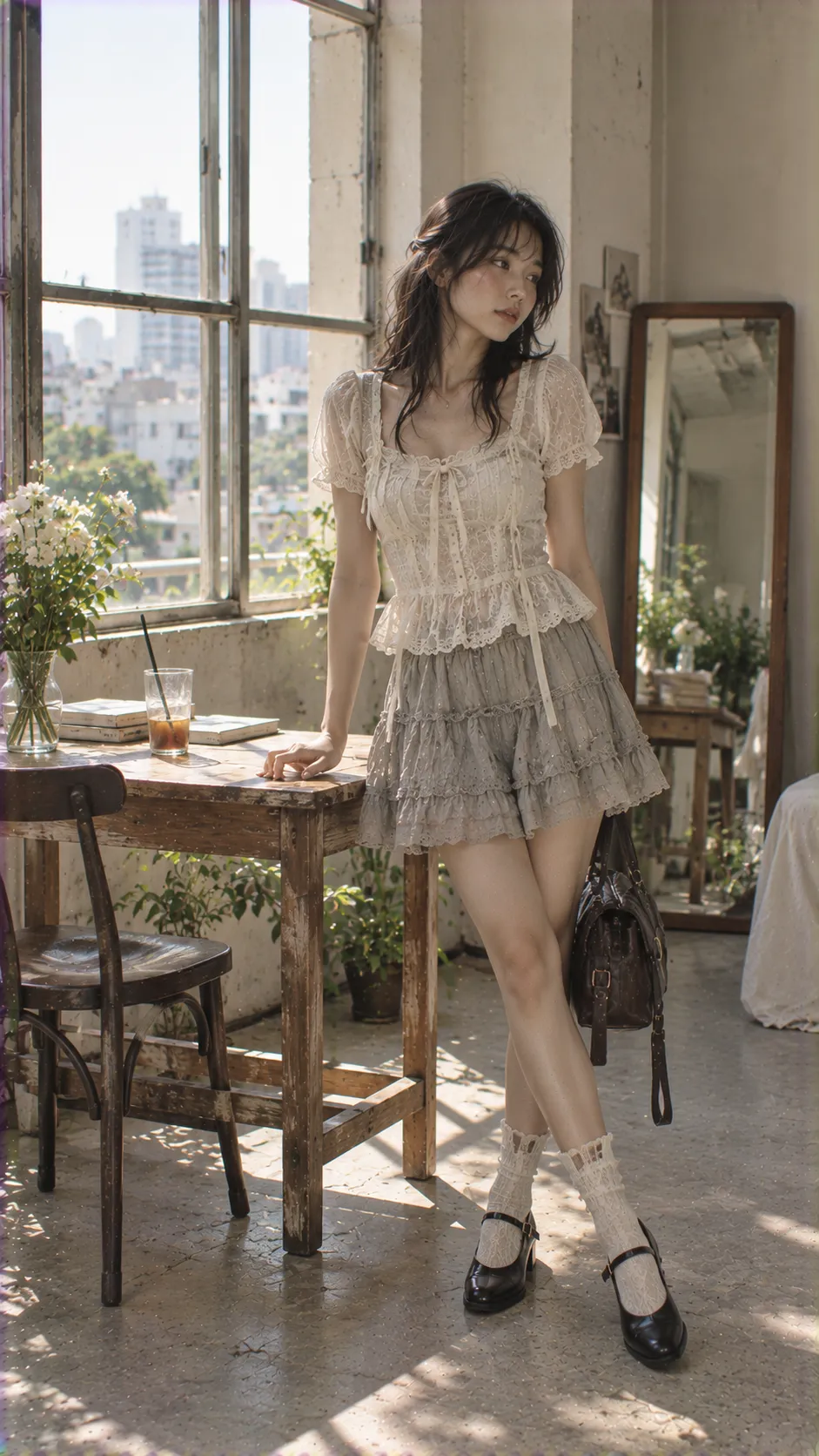
Morute combines morbid and cute. Community accounts associate it with early-2010s Tumblr imagery juxtaposing softer, doll-inspired femininity with darker, aged, Gothic, or unsettling moods. Clothing references include lace, vintage nightwear-inspired shapes, faded pink, ivory, black, gray, ribbons, worn-looking knits, Mary Janes, and boots.
Some archived community imagery includes sensitive themes involving trauma, self-harm, or eating disorders. This styling guide does not reproduce or romanticize those elements; it retains color, texture, silhouette, and contrasting moods through clothing rather than bodily harm.
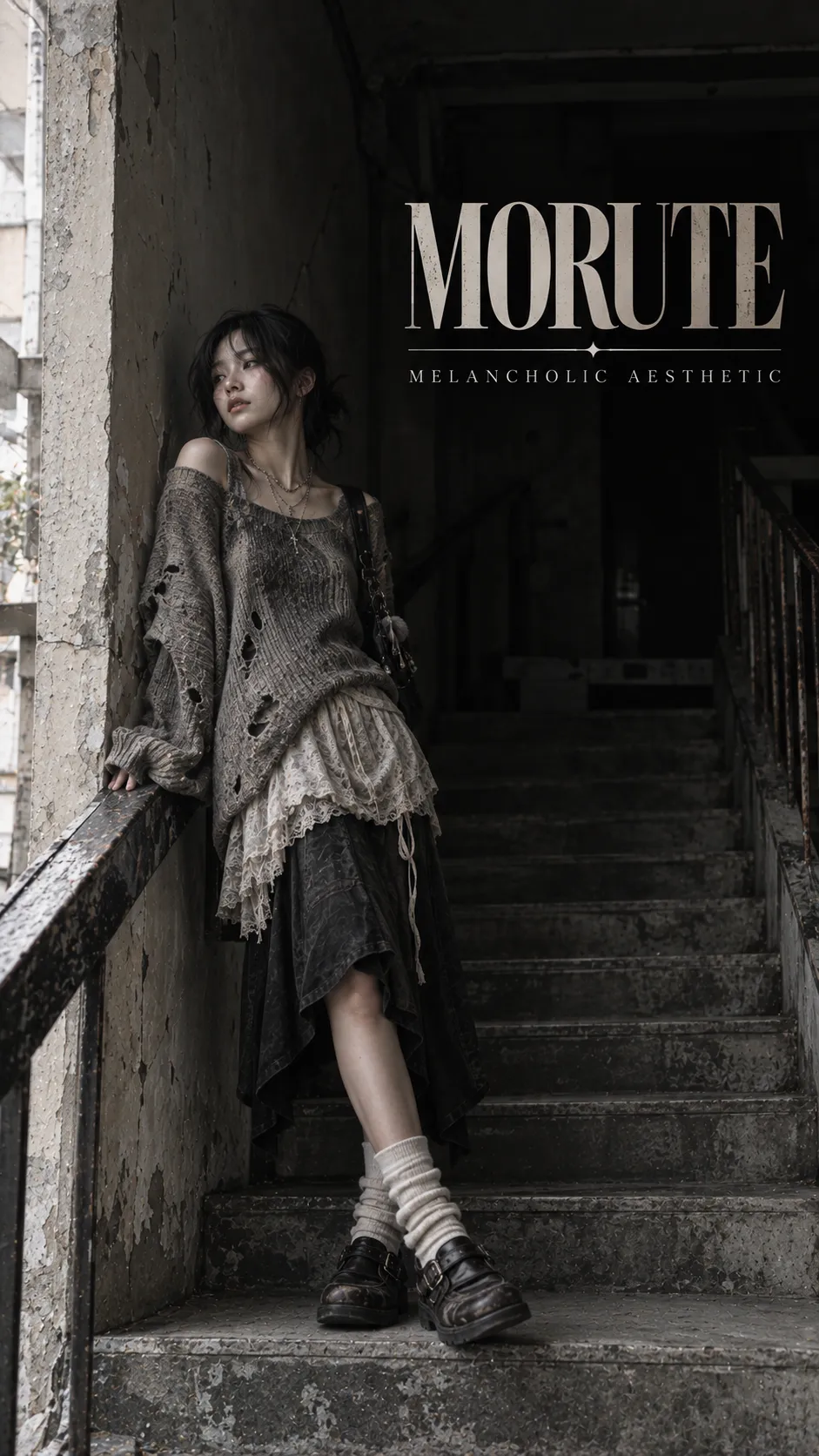
Guide collection: Aesthetic Dictionary: A Guide to Fashion Styles (Vietnamese)
What Is Morute?
Aesthetics Wiki, a community reference rather than an academic taxonomy, associates Morute with early-2010s Tumblr and names such as Morbid Cute, Morbid Dolly, or Sad Babydoll. The name combines morbid and cute, reflecting a contrast between lace, ribbons, doll-inspired softness, faded pink or ivory, and Gothic, aged, or uneasy imagery.
Community accounts frequently cite Nicole Dollanganger's music and visual presence as an influence. Morute also overlaps with delicate feminine clothing, Gothic references, and Tumblr-era Grunge. Reblogs, photography, music, and moodboards create variable boundaries rather than a formal dress code.
Current uses of Morute core can lean differently toward doll-inspired, Gothic, or darker Coquette references. To keep this guide focused, its styling framework uses soft femininity with worn or darker tension as the main contrast rather than claiming one universally accepted classification.
Is Morute a Japanese Fashion Subculture?
Do not infer a Japanese subcultural origin solely because Morute appears beside Lolita, Jirai Kei, or Yami Kawaii on moodboards. The community account cited here places its development around Tumblr, music, and photography. Similar appearances do not establish identical histories.
Overlap with Japanese fashion references is possible. A specific Lolita silhouette, Jirai makeup treatment, or other recognizable code may shift the main reference; identify what leads rather than assuming all darker cute styles share an origin.
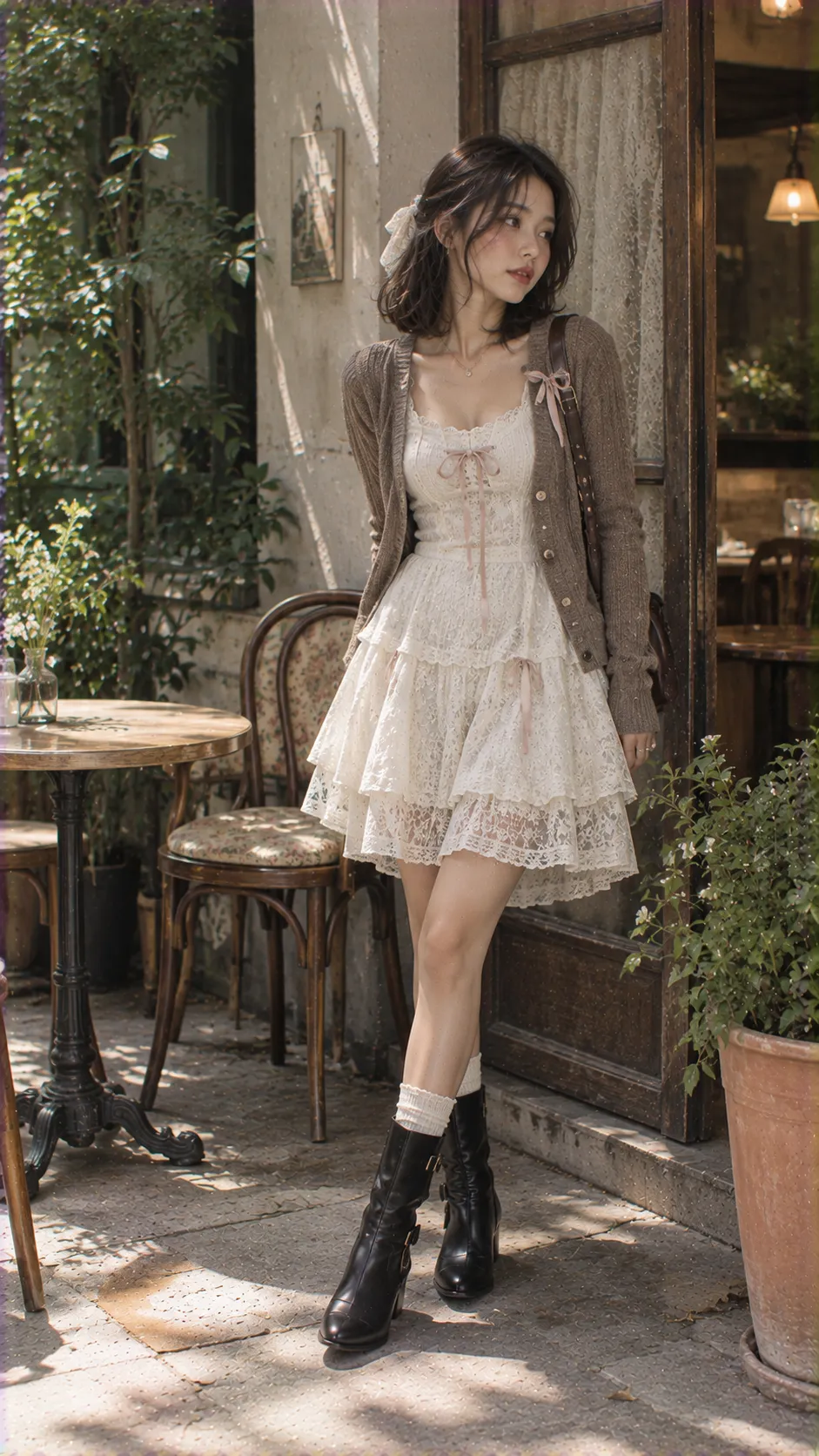
Ivory or cream lace, faded pink, ribbons, soft cotton, small florals, delicate knits, and vintage slip or nightwear-inspired shapes.
Black or gray, distressed-looking knits, aged finishes, dark boots, Gothic jewelry, muted photographs, and antique-inspired details.
How Morbid-Cute Contrast Works
A lace dress and black boots alone can suggest several styles. Here, worn-looking knit, washed cotton, a dusty palette, or an aged accessory creates tension with the softer garment. A polished lace outfit may lean more toward Coquette or Romantic Goth.
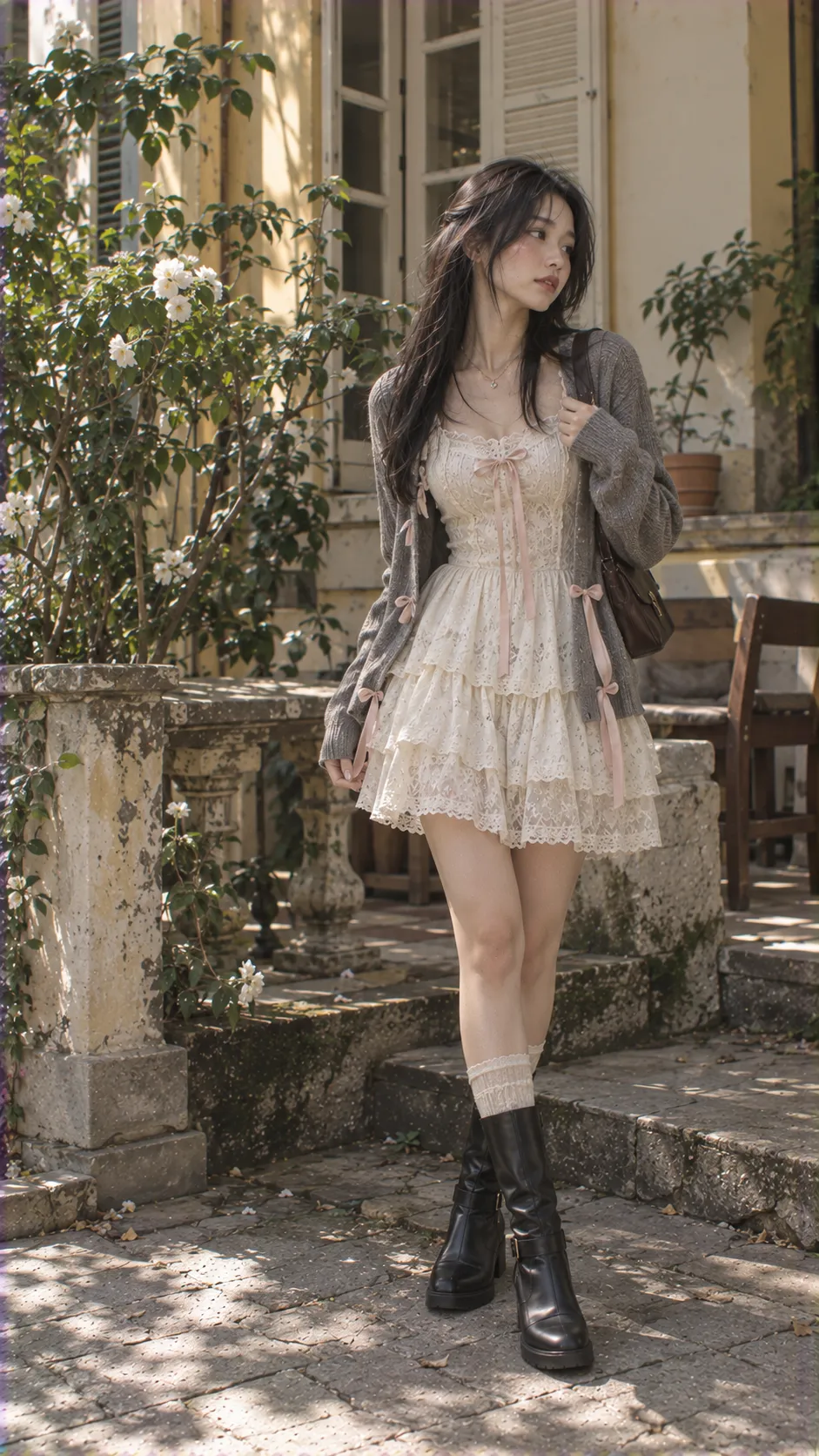
If every piece is heavily distressed, the delicate side may disappear into Grunge or Goth. Try one softer leading piece with selected darker or aged supports: a cream lace dress, washed-gray cardigan, and black boots. The ratio is an editorial exercise, not a fixed rule.
Five Clothing References
Three Styling Contrasts
A clear soft area—lace, ribbon, or faded floral—can meet darker footwear, knit, or aged metal. Losing either side changes the balance.
One washed or vintage-looking detail can suggest time and wear without making the clothes dirty or poorly maintained.
Create an uneasy mood through palette, lighting, or aged objects rather than injury imagery.
Entirely soft, clean, sweet styling may lean toward Cutecore or Coquette; entirely rough, dark, worn styling may lean toward Grunge or Goth. This guide places Morute between those visual poles.
Keeping the Aesthetic without Harmful Imagery
Translate mood into materials: washed fabric for age, an appropriately lined sheer layer for delicacy, an antique-style pendant or lace collar for period references, garment shape for doll-inspired styling, and subdued colors or lighting for melancholy.
No body type is required. Thinness or illness imagery on some moodboards does not establish a fashion rule. Clothes, texture, color, and styling create the visual relationship regardless of weight, skin, or health.
Six Adaptable Outfit Formulas
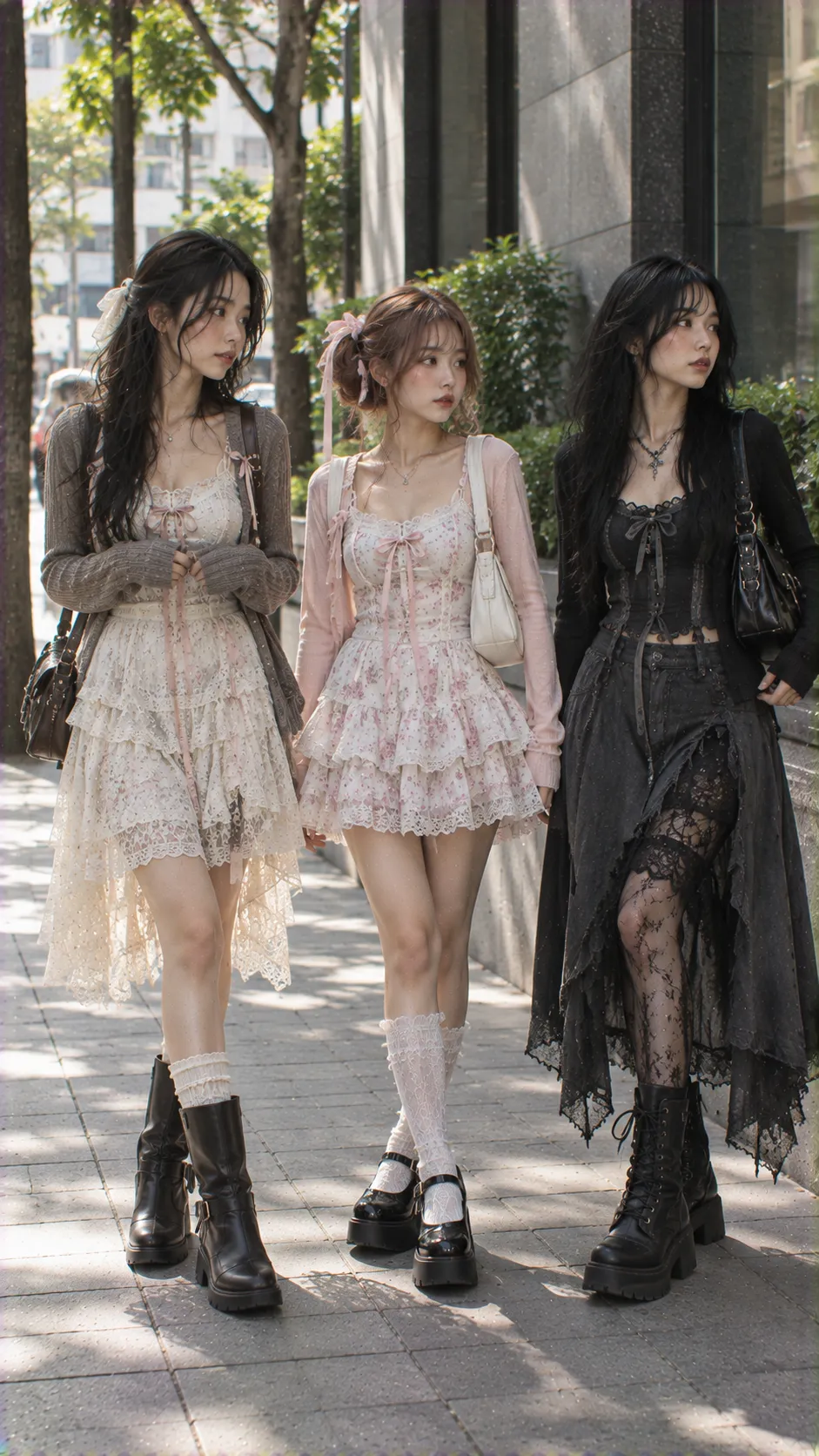
1. Cream Lace Dress, Gray Cardigan, and Black Boots
Soft focal garment → worn-looking layer → dark anchor.
A slightly roomy cardigan can frame rather than hide the dress; suitable boots anchor the lower area. A small ribbon may be enough decoration.
2. Faded Pink Knit, Black Lace Midi, and Mary Janes
Soft color → dark texture → defined low shoe.
Muted pink and darker lace create contrast, while Mary Janes retain a smaller, structured footwear outline.
3. Vintage Slip Dress, Long-Sleeve Tee, and Combat Boots
Nightwear reference → practical layer → firmer footwear.
The tee can adapt a slip dress for everyday coverage while combat-style boots maintain contrast.
4. White Blouse, Washed Skirt, and Distressed-Look Knit Vest
Clear collar → aged-looking middle layer → muted bottom.
A more covered route in which a lace collar or ribbon can supply the main softer reference.
5. Black Cardigan, Ivory Babydoll Dress, and Dark Tights
Dark frame → softer center → tonal lower layer.
Babydoll refers here to an adult garment silhouette. Select accessories and fit for the adult wearer rather than treating childlike roleplay as part of the styling.
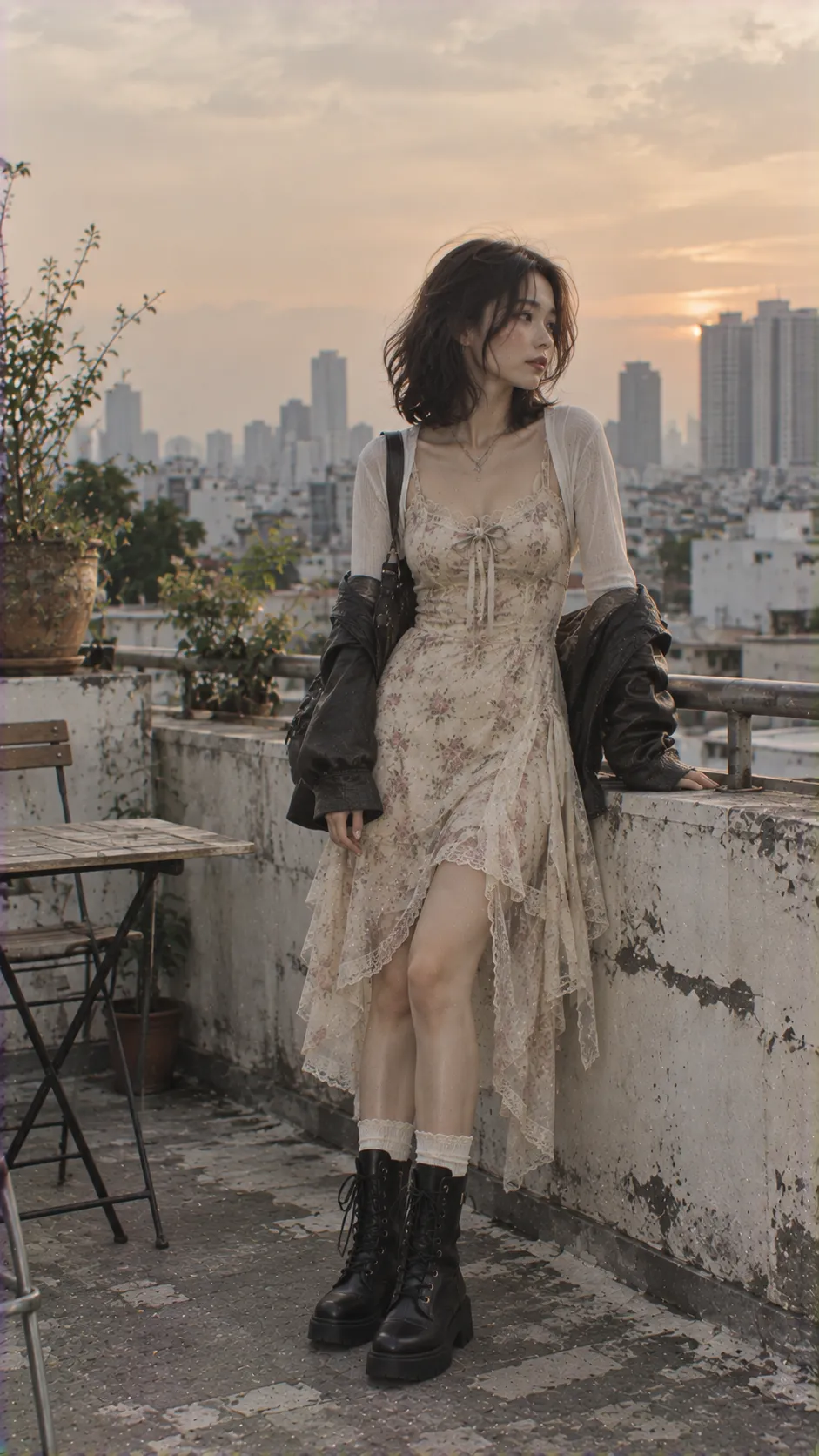
6. Faded Floral Dress, Leather Jacket, and Lace Socks
Aged floral reference → firmer outer layer → softer finish.
The jacket contrasts with the floral dress; lace socks repeat the softer texture below. A simpler bag can leave the combination clearer.
Warm-Weather Morute: Texture without Heavy Layers
Thick cardigans, tights, and boots are optional. Consider a fine crochet vest or short-sleeve knit, lace socks, a suitably lined cotton slip dress, and a dark anchor at a bag or Mary Janes.
Retain both sides of the contrast. If removing boots, a black bag or aged pendant can anchor the outfit; if removing a washed cardigan, a faded skirt can carry the worn-looking surface. Lighter clothes can still retain the palette and textural relationship.
Morute, Cutecore, Soft Goth, and Romantic Goth
Darker Coquette or other doll-inspired aesthetics can overlap. Bows, lace, and pink without a worn or darker counterpoint may communicate a different main reference.
Five Common Styling Mistakes
1. Treating illness as authenticity
Clothing, colors, textures, and silhouettes carry the references. Bodily harm is not a fashion accessory.
2. Only darker Coquette details
Bows, lace, and black can remain Dark Coquette; an aged or worn-looking tension distinguishes this interpretation.
3. Distressing every surface
If every piece is torn, washed, and dark, the delicate contrast may disappear.
4. Infantilizing the wearer
Doll-inspired garment shapes do not require presenting adults as children. Choose suitable adult fit and styling.
5. Assigning a Japanese origin from visual overlap
The cited community history associates Morute with Tumblr. Shared imagery with Japanese fashion does not establish the same origin.
Frequently Asked Questions
What is Morute?
An online morbid-cute aesthetic associated in community accounts with early-2010s Tumblr, combining softer or doll-inspired clothing with darker, aged, or unsettling moods.
Is Morute core a Japanese style?
Not according to the community origin account used here. It can appear beside Japanese fashion on moodboards because of visual overlap, which should not be confused with a shared history.
Does Morute require self-harm or eating-disorder imagery?
No. Lace, faded colors, vintage-inspired cuts, worn-looking knit, and dark accessories can establish the clothing contrast without harmful imagery or restrictive body ideals.
What colors are common in Morute styling?
Ivory, cream, faded pink, black, and gray are common references, often with a dustier or aged finish than brighter cute aesthetics.
References
The original community reference is Aesthetics Wiki — Morute, which documents names, motifs, and community history. Such documentation is not an academic classification or a complete independently dated origin record. Treat online usage as evidence of how a label is used rather than an official universal definition. Outfit interpretations here focus on clothing and do not make diagnostic or health claims.