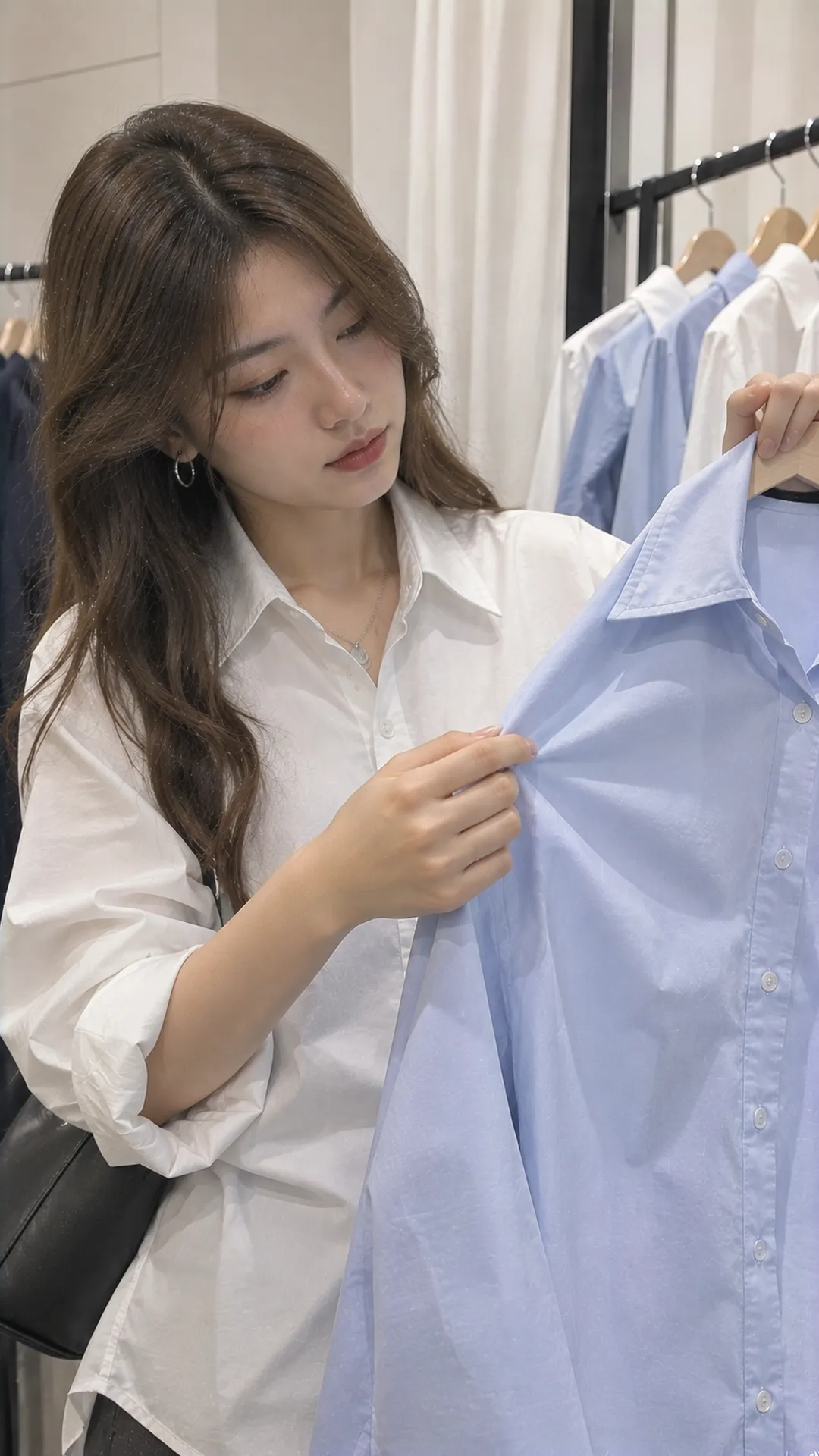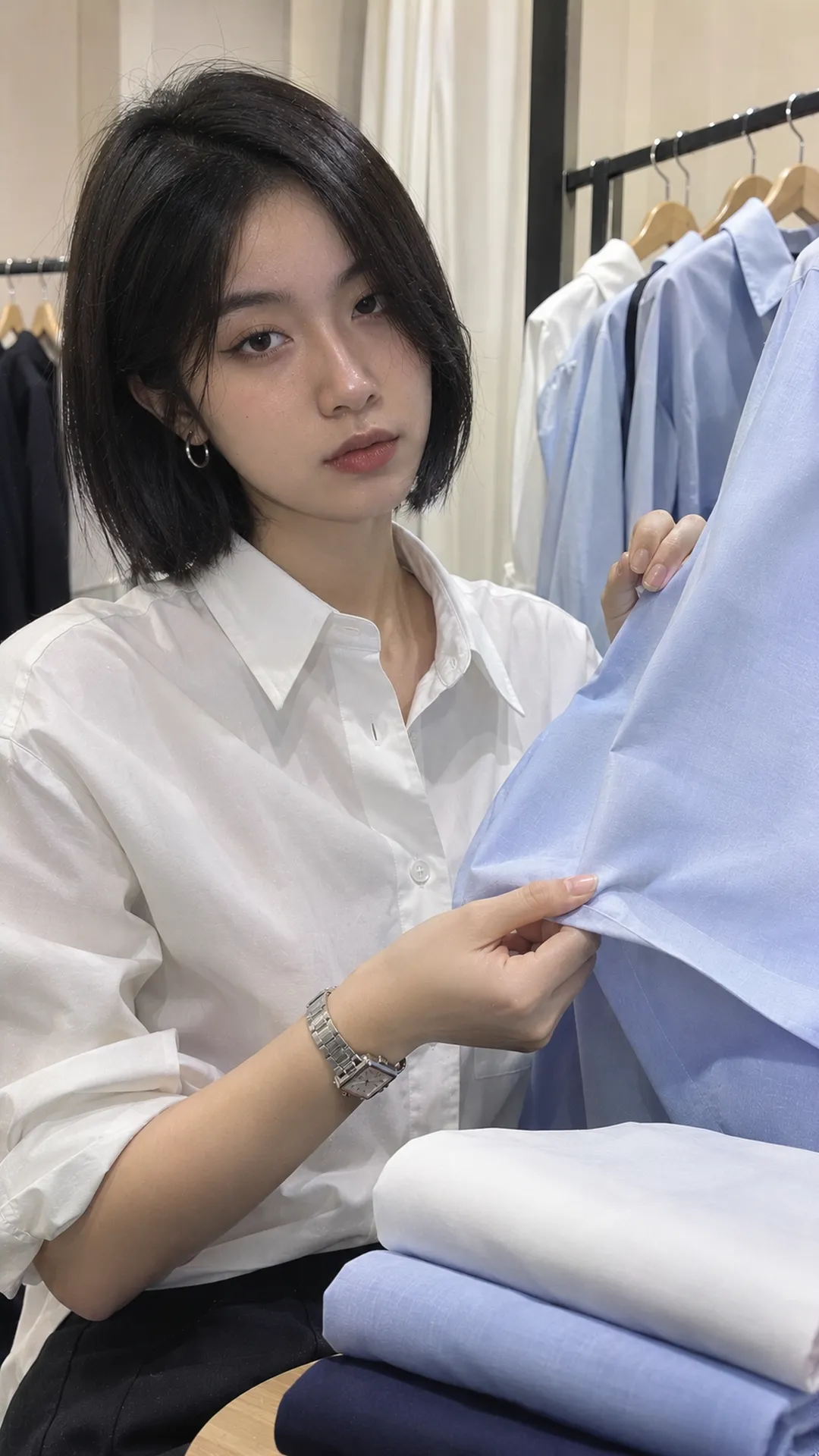
What is poplin, and what does the name tell you?
Merriam-Webster defines poplin as a plain-woven fabric with crosswise ribs. When shopping for a shirt, remember that the name describes the fabric’s structure. Fiber content can vary, so look at the label or product specifications.
Poplin can be made from fibers other than pure cotton. If a product page only says “premium poplin” and gives no percentages, ask for the composition. A photo of a model moving freely also tells you little about stretch. The cut can provide room to move even when the fabric itself has little give.
Descriptions such as soft, crisp, lightweight, and wrinkle-resistant apply to the shirt you’re looking at. Sharp creases on one shirt in a photo don’t mean all poplin is stiff. Look for close-ups, photos of the shirt untucked, and care instructions to get a better sense of the garment.
Read the fiber label before the sales copy
Start with fiber percentages if the brand lists them, then see whether it describes a finish. Composition tells you what you’re buying. Thickness and feel against the skin still need their own check. Consider where and how you’ll wear the shirt before deciding based on a single percentage.
For a shirt you’ll wear regularly to work or school, check how it needs to be washed and ironed. Even if you love the look, you may rarely wear a shirt whose care routine you can’t keep up with. Compare the full details of each shirt before choosing based on a single word in the listing.
If the information is unclear, ask three questions: What’s the exact composition? Does the fabric stretch? What does the care label say? If the seller sends a label photo, check it against the model number. These answers tell you more than a broad claim that the shirt works in every season.
Check thickness and sheerness in the light
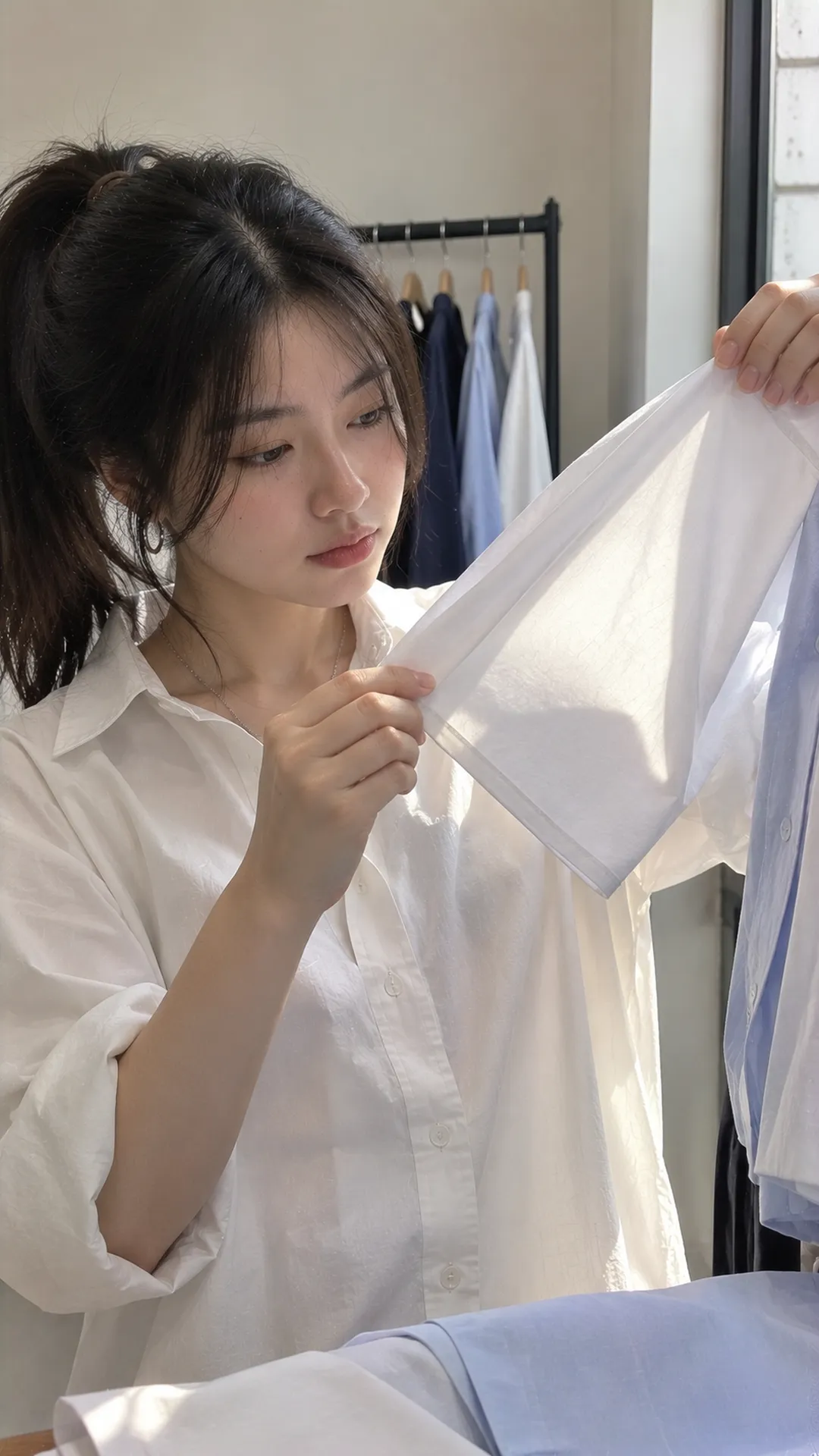
Try light-colored shirts in lighting similar to where you’ll wear them. Look from the front, side, and back to see how clearly the layer underneath shows. How much you’re comfortable showing depends on the setting and your preference. Check ahead of time so you know what to expect.
Online, a flat-lay photo against a white background makes it hard to judge sheerness. Ask for a photo with the fabric against a contrasting background or a video of someone moving in the shirt. Lighting and camera settings still influence what you see. If opacity matters to you, look for clear try-on and exchange policies.
Consider thickness alongside how you’ll use the shirt. A thin one may pack easily but give you less definition at the shoulders. A thicker one may hold a clearer shape but bunch up when tucked. Choose the weight that suits how you’ll wear it most often.
Try the shirt with the bra or base layer you plan to wear and look at the full outfit. Straps, seams, and color underneath can be more visible than you expected when you saw the shirt on a hanger.
See how the shirt holds its shape as you move
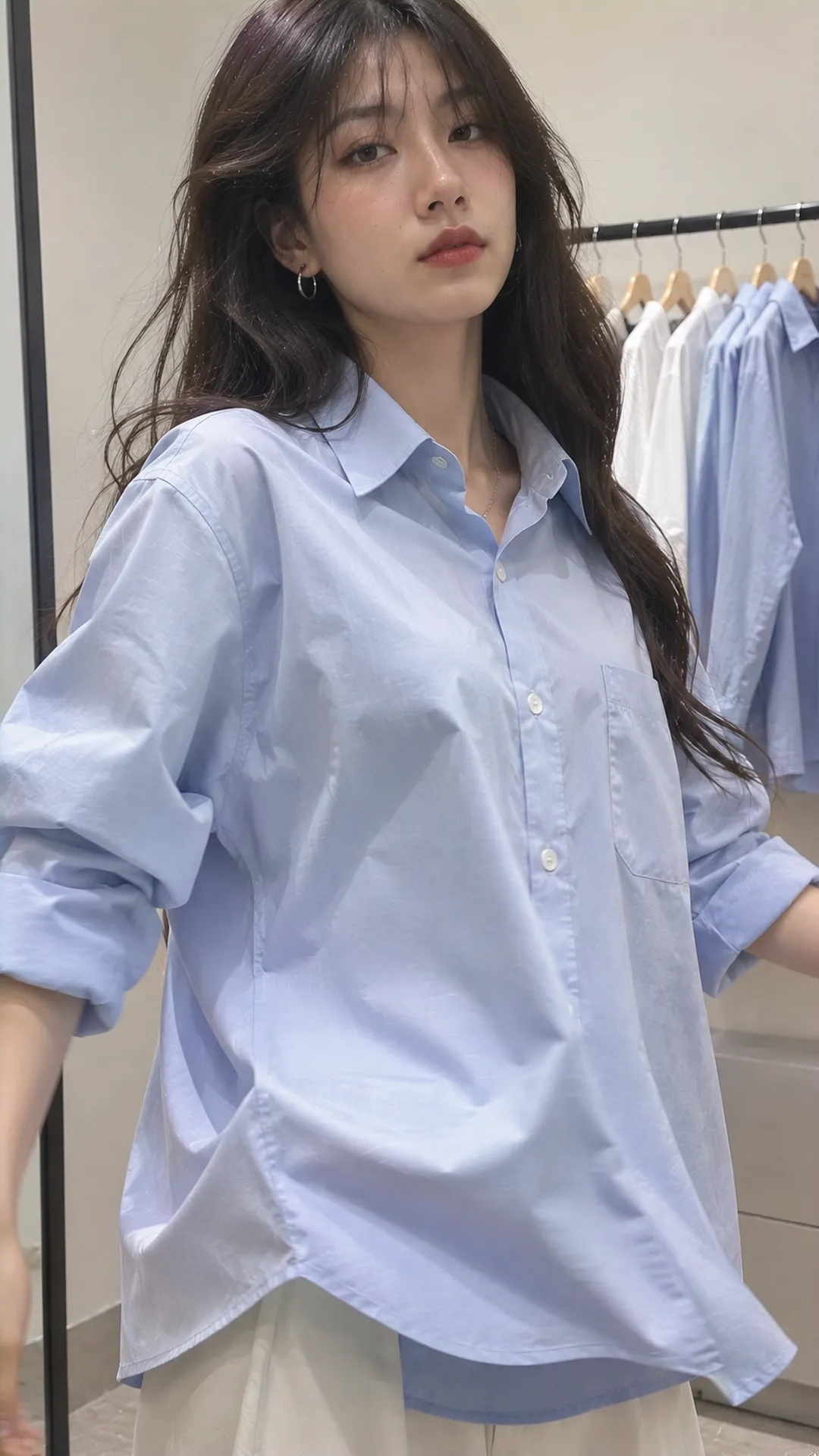
A shirt can hold its shape without feeling stiff everywhere. Look separately at the collar, button placket, shoulders, and body, since these areas may be constructed differently. Raise your arms and sit down during the fitting. See whether the shirt falls back into place or needs constant adjustment.
In an oversized shirt, shoulder placement and sleeve length make a big difference. Extra fabric in the body, shoulders, and sleeves can give more volume than you intended. If the shirt is already cut oversized, check the measurements and fit photos before going up another size.
With a fitted shirt, watch the bust, upper arms, and back as you move. Strain lines or gaping buttons may come from the size or cut. Our online sizing guide explains how to compare body and garment measurements so you can pinpoint the issue.
Is poplin suitable for hot days?
It depends on the shirt. Consider fiber content, weight, coverage, fit, and the setting. The same shirt may feel different worn close to the body and fully tucked in than worn loose or open over a base layer. A day outdoors and a day in air conditioning call for different choices.
If you’re choosing a black shirt, consider more than color. Our guide to wearing black in summer looks at fabric, fit, and conditions. Apply those factors to each poplin shirt you compare before deciding how cool or warm it’s likely to feel.
Wear the shirt for a few minutes, move your arms, and sit as you would at work. If you’ll use it as an outer layer, try it buttoned and unbuttoned. Dark color or a thick feel doesn’t establish UV protection. Look for separate product information if that feature matters.
Three ways to wear a poplin shirt based on its drape
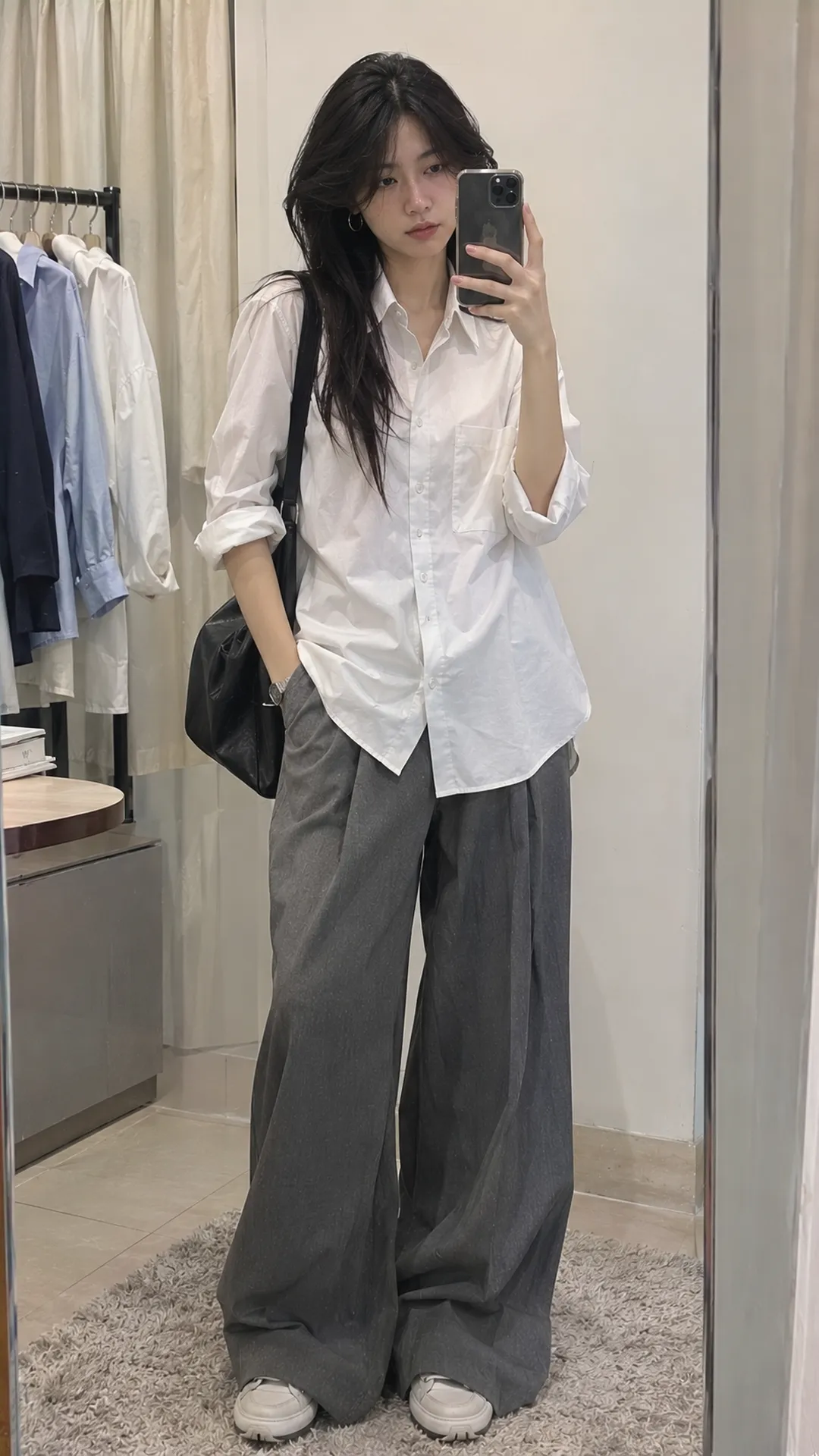
Tuck a more structured shirt into straight-leg trousers and pull it out slightly so you can sit comfortably. Check how much fabric collects at your hips and back. If the waistband feels bulky, try a shorter or narrower shirt, or a partial tuck, before changing trousers.
Leave a softer shirt untucked for an easy drape, and see where the hem ends in relation to your pockets and hips. Look from the side to check whether the hem catches or forms a crease you didn’t want. Choose a length that works while you walk as well as when you stand still.
Wear a shirt open over a tee and let the collar and placket create two clear vertical lines. A close-fitting base layer gives the outer shirt room to move. Our guide to layering women’s outfits can help you balance fabric thickness and avoid bunching at the shoulders and underarms.
For more combinations of colors, trousers, and accessories, see our guide to styling women’s shirts. Once you’ve picked a combination, go back to the fabric of the shirt you own. A soft shirt and a crisp one may need different amounts of fabric pulled out above the waistband to get the same effect.
Wash and iron according to the label
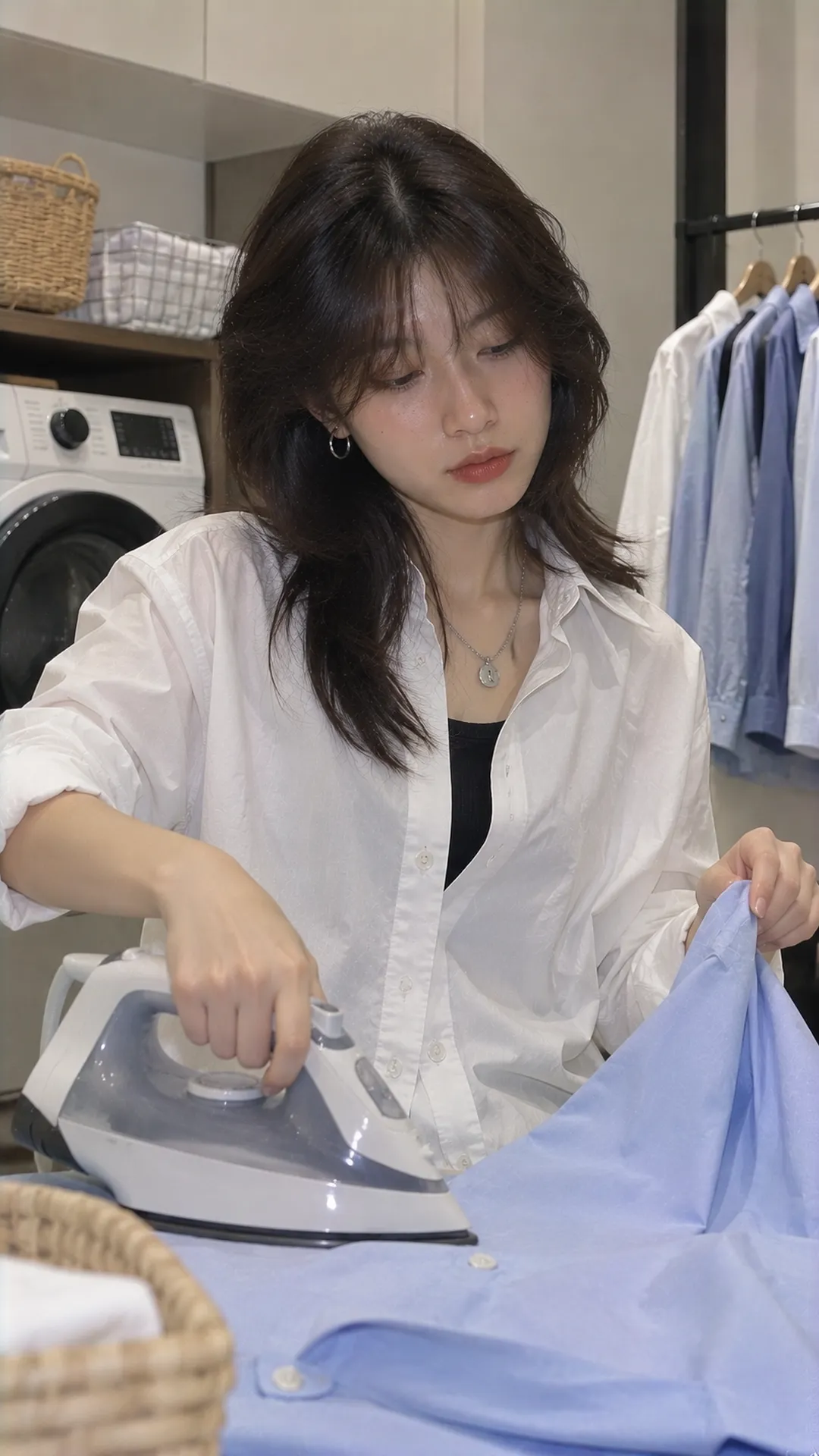
Read the care symbols and instructions before the first wash. Water temperature, spin speed, and iron settings can vary between poplin shirts. The fibers, dye, finish, and trims all play a part.
Prepare the shirt as directed, check the pockets, and look for details that might snag. If machine washing is allowed, use a cycle that follows the label. Raising the temperature on your own can run against the care instructions. For colored shirts, check sorting and detergent guidance as well. The weave name doesn’t guarantee colorfastness under every washing condition.
Before ironing, check the heat setting and any separate instructions for the collar, placket, or decorative details. If you don’t know the fiber content and the label is unclear, ask the seller before applying heat. A plain body can still have trims that need different care.
Once the shirt is dry, hang or fold it according to the care guidance and the space you have. Crowding shirts together can crease them. Before getting dressed, check the collar and placket first. Those two areas contribute a lot to how neat a shirt looks.
Choose a shirt you’ll keep wearing
A poplin shirt worth buying should work with how you dress and how you can care for it. Think of at least two outfits using trousers, skirts, or base layers you already own. If you’d need to buy several more pieces to wear the shirt, see whether another color, length, or cut would be easier to use.
A fabric name alone doesn’t establish sustainability. Our guide to sustainable fashion takes a broader look at how long clothes are used, cared for, and reused. For this purchase, start with a shirt you need and can keep in wearable condition.
One last check before buying
Read the fiber content and care label, check sheerness in the right light, move around, and see how much fabric bunches when you tuck the shirt in. Then try it with an outfit you’ll actually wear. If it feels right and you can manage the care routine, a poplin shirt can be a versatile choice. Judge the individual garment by what it does for you.