

Women's Shirt Outfits: Fit, Color, and Tucking
A shirt need not mean officewear. Shoulder shape, hem, fastening, tuck, and bottoms change the result toward minimal, darker, Grunge, or Office Siren references.
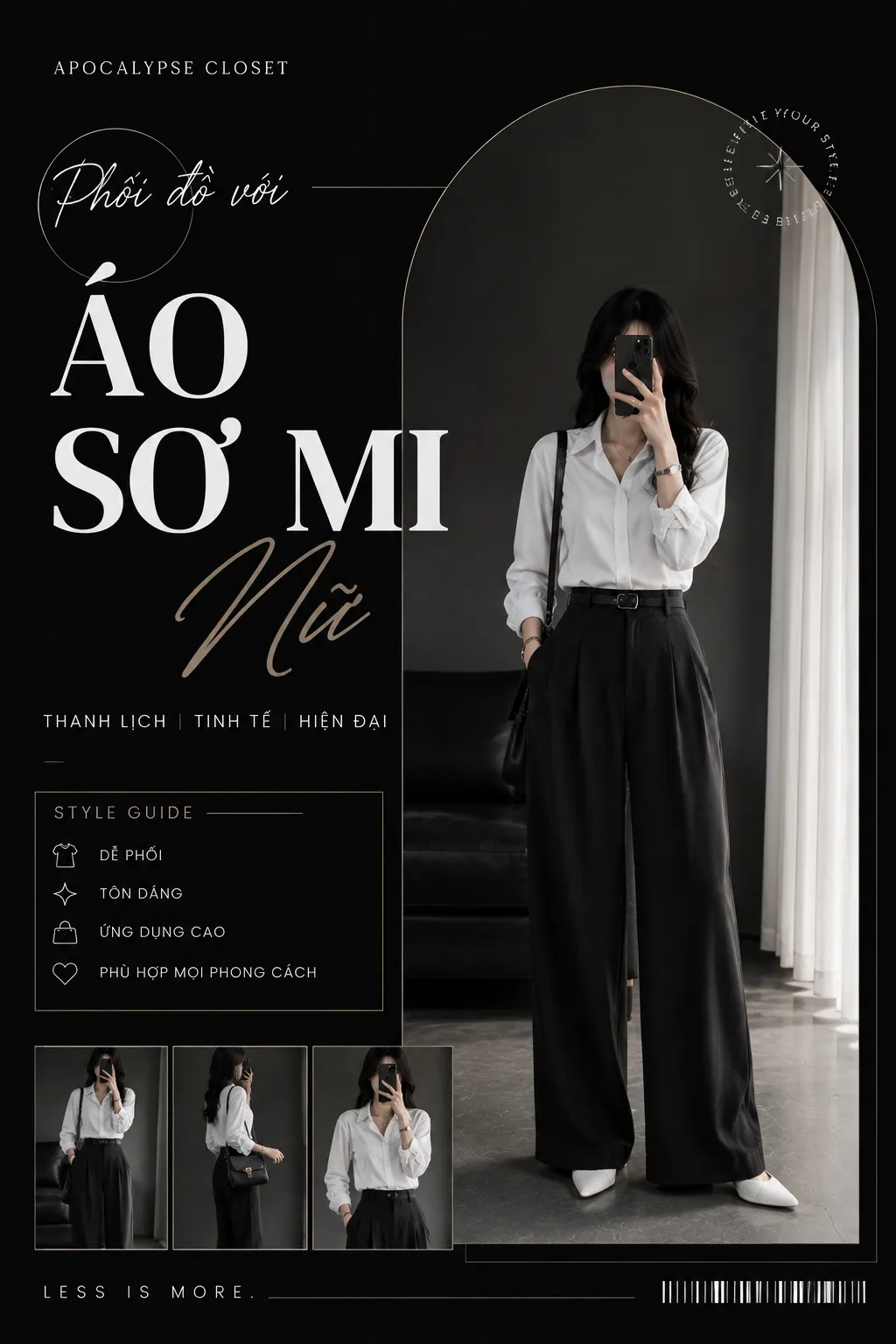
Guide collection: Women's Top Guides: Fit, Layers, and Styling
Start here: roomy shirt with a visible waistband; fitted shirt with straight trousers or a long skirt; black shirt with denim or leather for surface contrast; white shirt with a darker garment or substantial shoe to change the uniform reference. Try fastening or tucking changes before more accessories.
On this page
Read the Shirt Shape Before Choosing Bottoms
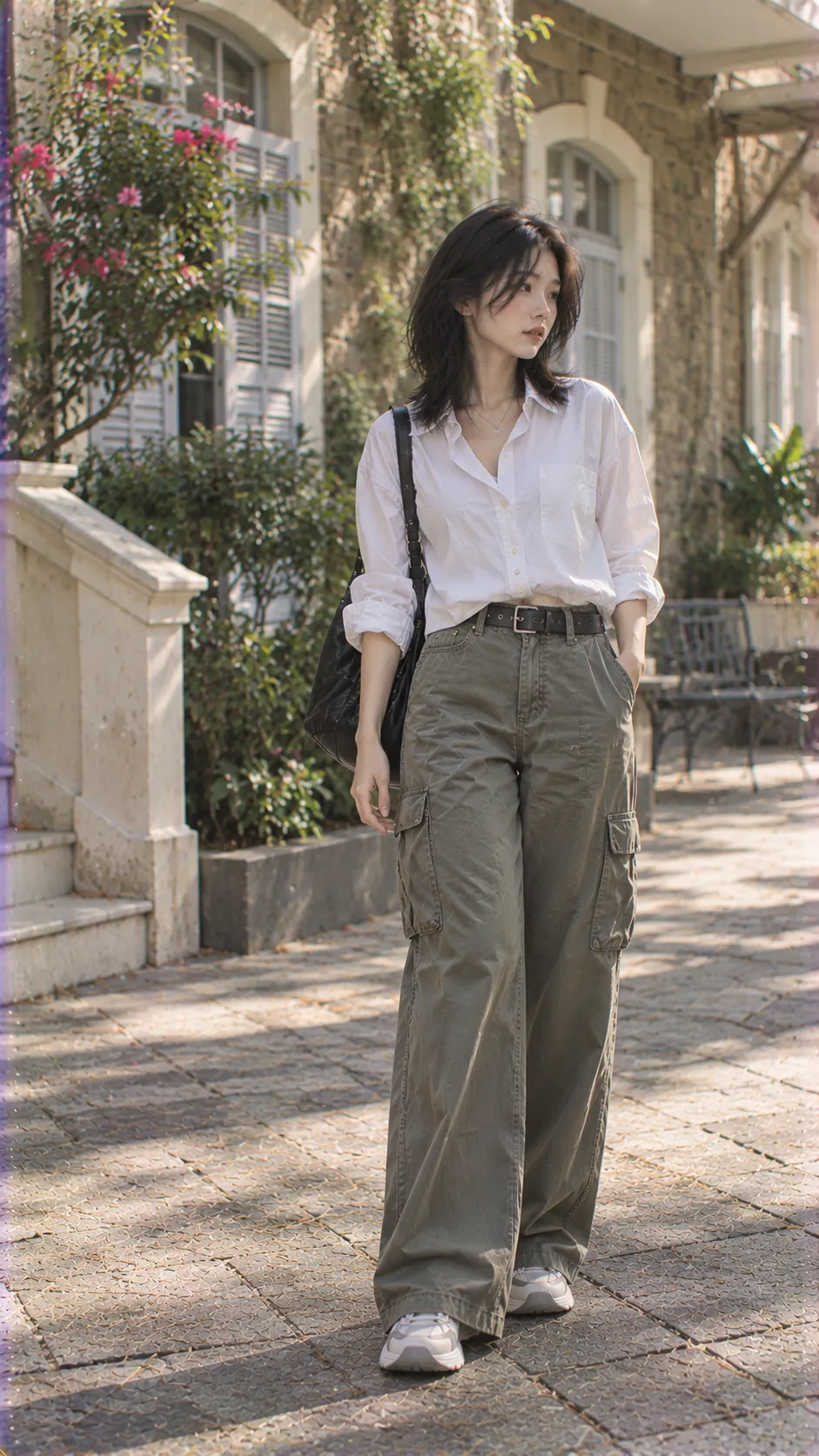
A fitted shirt generally defines the shoulder and torso; boxy or oversized construction adds room and often a longer hem. The fitted version already supplies upper structure beside a wider bottom. With a roomier shirt, a visible waistband, wrist, or leg line can define another point if desired.
Fabric changes the effect too. Firmer poplin can hold a structured frame; softer satin or rayon drapes differently and may reveal folds. Denim or chambray can act as an open overshirt. Inspect actual weight and weave as well as the material label.
| Shirt shape | Adaptable bottoms | Wearing option | Style references |
|---|---|---|---|
| Fitted | Straight tailored trousers, straight jeans, midi | Full tuck | Office Siren / Dark Academia |
| Short boxy | Baggy trousers, cargos, mini | Loose hem or selected lower fastening | Y2K / Grunge |
| Long oversized | Leggings, straight jeans, mini | Partial tuck or open outer layer | Grunge / streetwear |
| Soft drape | Straight trousers, leather or midi skirt | Softer tuck, open neckline | Dark Feminine |
What Trousers Work with a Women's Shirt?
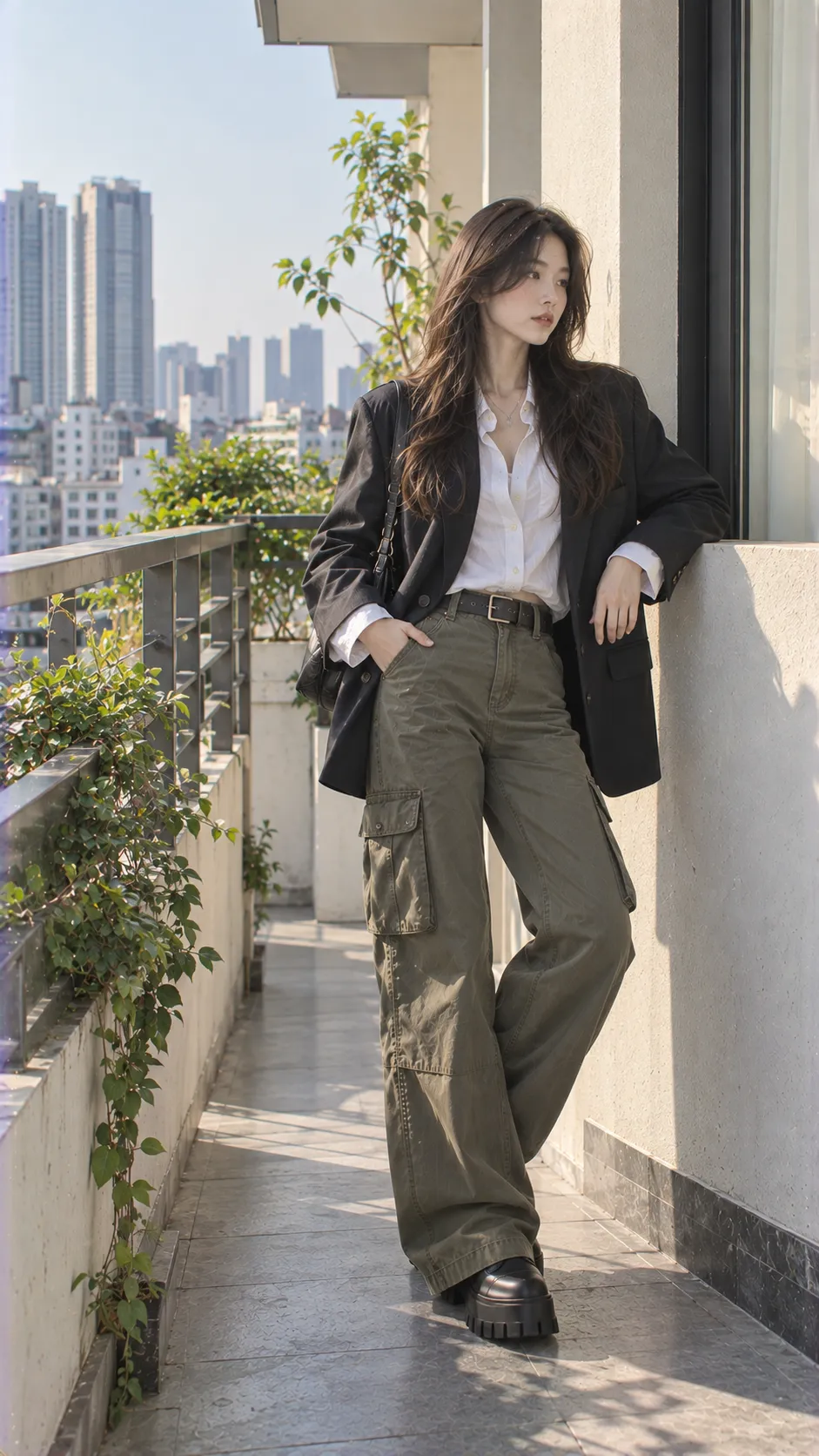
For denim rise and hems, explore straight-leg jeans. For tailoring, straight tailored trousers addresses trouser length and footwear separately.
Shirts and Skirts: Where Does the Fullness Begin?
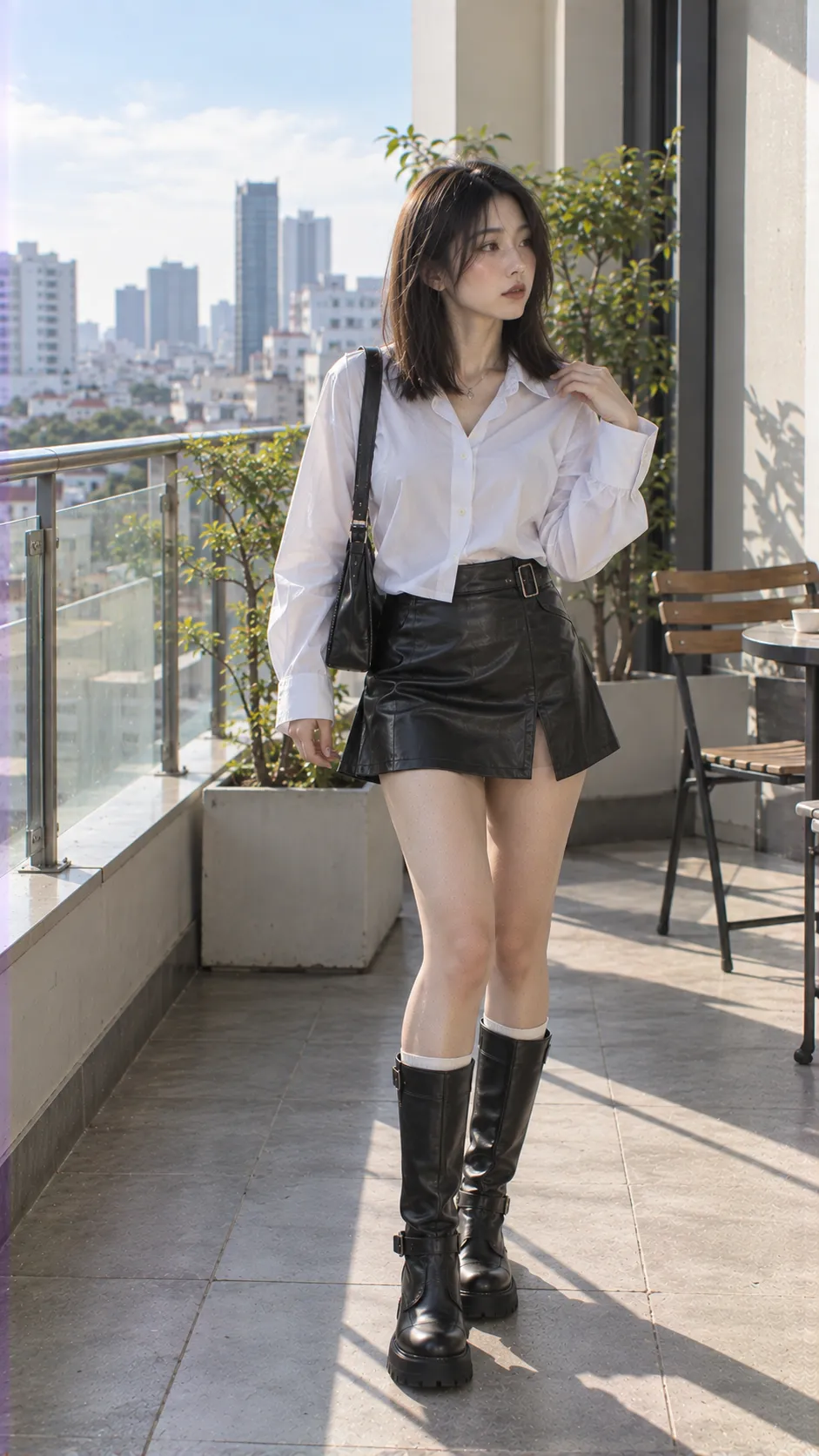
An oversized shirt and mini contrast a longer upper area with a short hem. Boots or substantial Mary Janes add lower weight. Fitted or draping shirts beside midis or A-lines can retain the waist. Matte cotton or poplin contrasts with leather without requiring many accessories.
If a skirt opens directly below the waistband, a shirt hem at the same point adds width. Compare a full or partial tuck, or a shorter boxy shirt, to retain a clearer transition.
Black Shirts: Avoiding an Unintended Single Dark Block
Try blue or gray denim, charcoal tailoring, matte leather, or dark twill. Within all black, change surfaces: cotton, lightly reflective leather, and washed denim remain distinct. A neckline opening, turned-back sleeve, belt, or selected silver provides another break.
A draping black shirt with a midi or leather skirt and ankle boots can support Dark Feminine references. An oversized black overshirt over a baby tee, tank, or mesh creates a Grunge layer; select graphics and hardware around the intended emphasis.
White Shirts Beyond Conventional Officewear
Faded or dark denim, cargos, or a leather skirt changes the white shirt's context. Brown or charcoal trousers and pleats support Academia references. Use selected tie, higher-sock, loafer, or argyle cues if a full uniform effect is not intended.
For translucent fabric, test the actual underlayer in strong light. A tone close to the wearer's skin may create less color contrast than bright white. Alternatively, let a tank or mesh underlayer remain intentionally visible as part of the design.
Oversized Shirts: Choose a Readable Structural Point
Leggings provide one compact lower contrast; explore women's legging outfits for styling beyond workout references.
A roomy shirt does not require close trousers. Straight jeans, defined-waist baggy trousers, minis, or tailoring can work. Reveal wrists, waistband, an open vertical layer, or an ankle-level hem if a clearer frame is desired.
With volume above and below, assess the full shoulder-to-shoe outline. More substantial shoes add one lower anchor; smaller shoes create another contrast. In heat, a suitable fine open shirt can be more practical than an additional thick blazer.
Tucking and Fastening Change Proportions
Full tuck defines the waistband beside mid- or higher rise. Partial tuck retains a relaxed outline while revealing part of the waistband. Untucked works with a deliberate short boxy or longer oversized hem. A mid-hip ending adds a broader horizontal break; choose that effect rather than assuming all shirts must be tucked.
Higher fastening creates a more closed academic reference; a chosen neckline opening introduces a V and softer frame. With more open buttons, plan the inner layer. Selected central fastening with lower openings creates another Y2K-related option where coverage and setting suit.
Three Adjustable Variables: Buttons, Tuck, and Sleeves
Before changing the trousers or buying another shirt, compare fastening, how much hem is tucked, and turned-back sleeve length.
Example scope: Looks #26 and #30 use waist-tied shirts. Look #125 compares an open outer layer rather than a shirt itself.
Compare Actual Looks
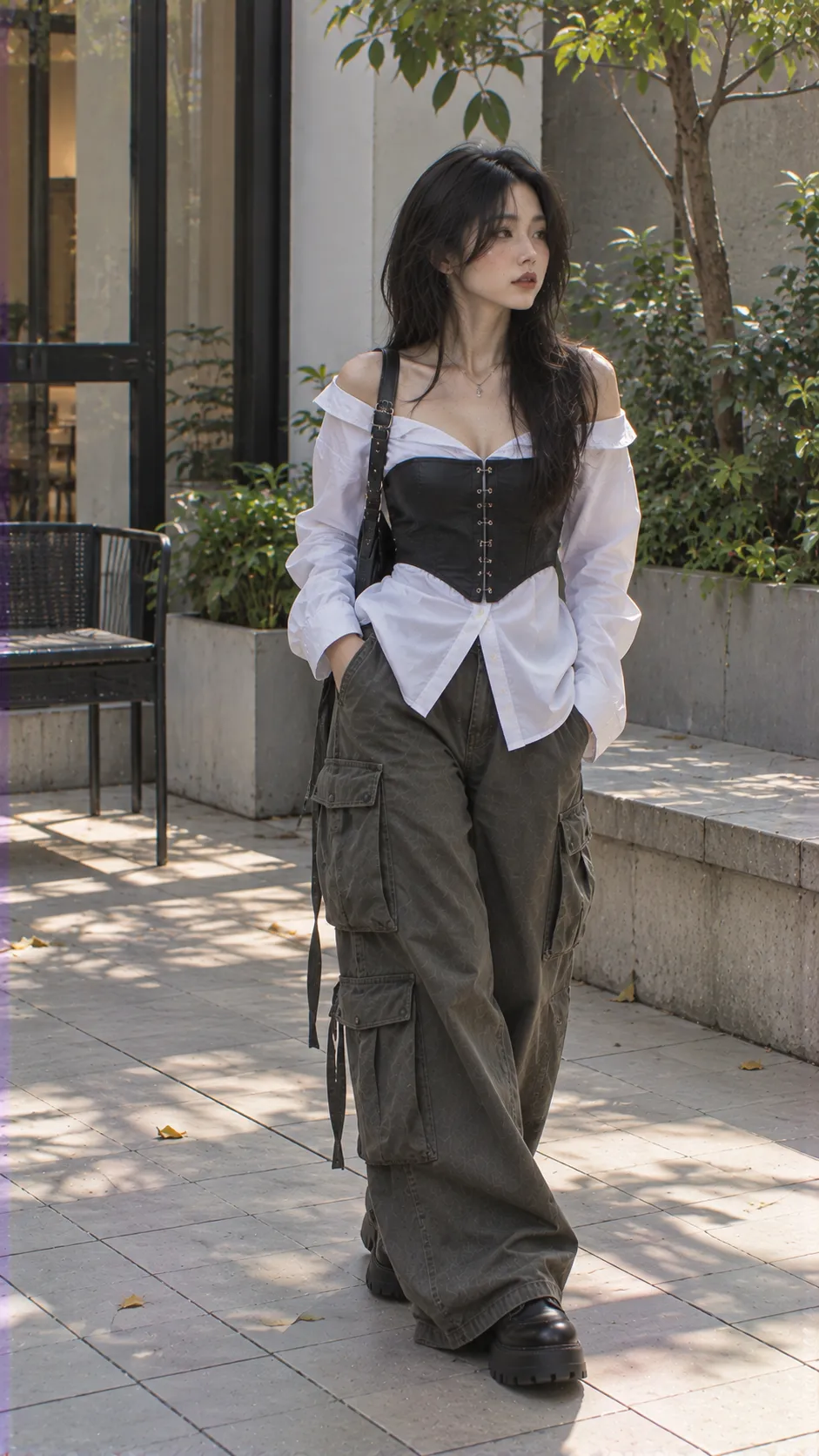


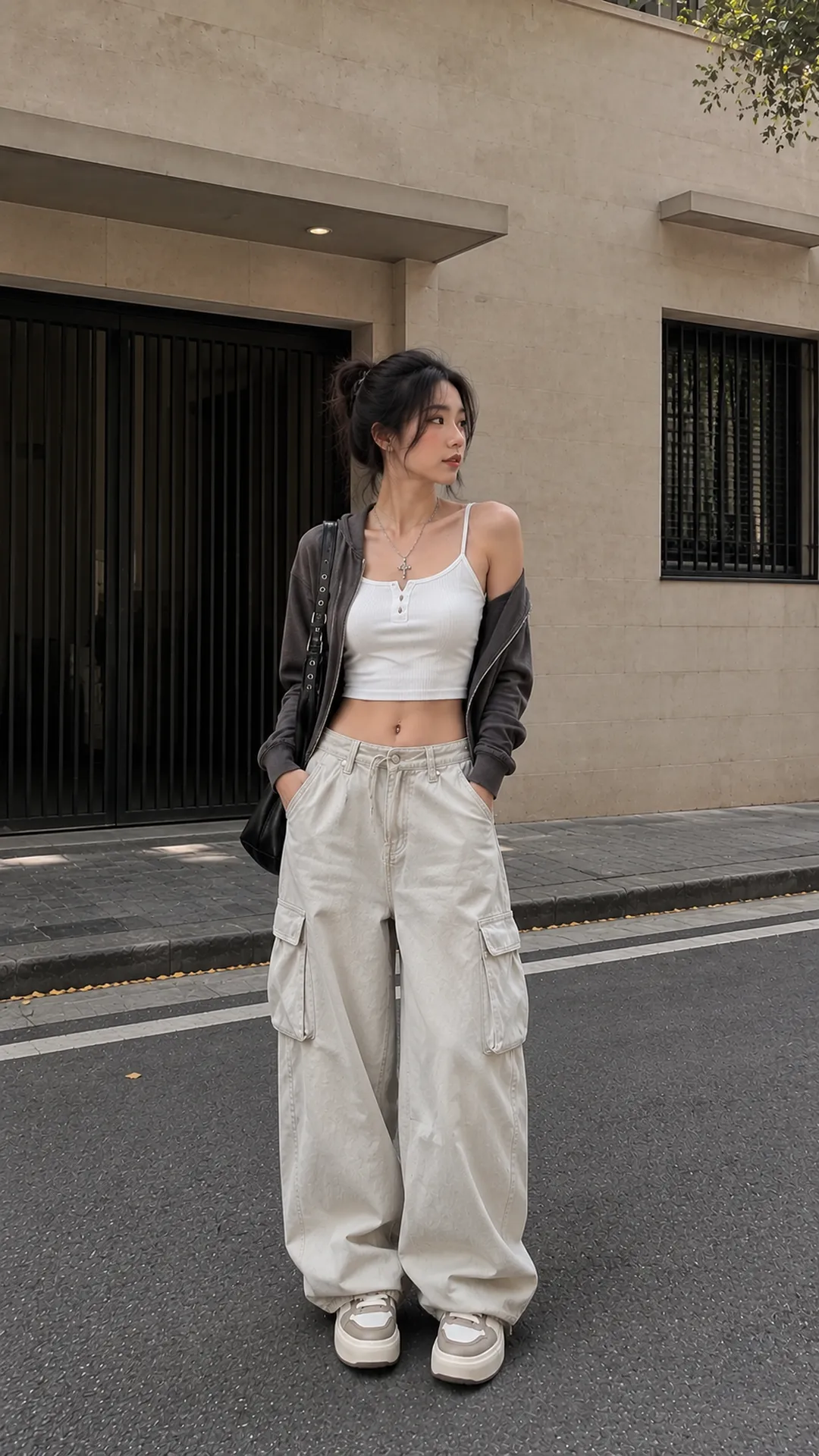
- LOOK #26 (Vietnamese): a plaid shirt tied at the waist creates a horizontal layer rather than acting as the main top, useful when comparing denim or cargos.
- LOOK #30 (Vietnamese): corset-inspired top, tied plaid shirt, and bolero. The shirt supplies a supporting texture within several layers.
- LOOK #125 (Vietnamese): strappy top and gray jacket, not a shirt. It illustrates an open outer layer revealing the waistband and inner top.
- Buttons: a chosen opening creates a V-shaped direction; higher fastening covers more of the upper area.
- Tuck: full tuck defines the waistband, partial tuck adds asymmetry, and an untucked hem creates its own deliberate ending.
- Sleeves: turned-back sleeves reveal wrists or forearms; longer sleeves create another Academia or Grunge-related reference.
Layers and Shoes Change the Shirt's Context
Sweater vests or waistcoats introduce Academia or Office Siren references; black blazers define shoulders; denim changes the tailored surface; leather adds firmer contrast. For vests, explore balancing a vest and its underlayer. For tailoring, women's black blazers compares four silhouettes.
Loafers or Mary Janes add academic references, boots increase darker visual weight, and sneakers make a casual finish. Choose footwear with the final trouser hem so the two decisions work together.
Common Shirt Outfit Checks
- Roomy shirt, wide bottoms, and an unintentionally small shoe: can concentrate volume above with little lower anchoring.
- Tucking only because it seems compulsory: stiff fabric or a thick waistband can gather bulk. Compare a partial tuck or different inner layer.
- All black in one surface: may create less garment distinction than intended.
- Every Preppy cue together: shirt, vest, tie, plaid, loafers, and higher socks create a strong uniform reference; select fewer for a subtler effect.
- Testing only a standing pose: raise arms, sit, and walk to inspect shoulders, armholes, hem movement, and button gaps.
Frequently Asked Questions
What trousers are easiest with a women's shirt?
Straight jeans and straight tailoring provide clear lower lines. With an oversized shirt, a visible waistband or wrist can define the transition if desired.
What bottoms work with an oversized shirt?
Straight jeans, defined-waist baggy trousers, tailoring, cargos, or leggings are options. Partial tucking, sleeves, or open fastening distinguishes fuller layers.
What trouser colors work with a black shirt?
Black, charcoal, blue or gray denim, cooler brown, and white provide options. Vary cotton, denim, leather, or knit within all-black styling.
How can a white shirt feel more alternative?
Try washed denim, cargos, leather skirts, stronger footwear, or an open layer over a tank or mesh. One selected contrast can be enough.