Read a decade through different dressing contexts
The Fashion and Textile Museum's 1920s JAZZ AGE exhibition presents both couture and ready-to-wear, from sportswear and printed day dresses to velvet wraps, silk pajamas and beaded dresses. That diversity is a useful starting point: one period does not mean one dress code.
Ask what the person in an image is doing. Evening clothing needs effects under artificial light that street clothing may not. An advertisement can emphasize novelty, while a museum object permits close study of seams and materials. These sources complement rather than replace each other.
This article focuses on prominent directions in Western women's clothing discussed by museums and fashion sources. Do not assume these examples describe every region, social class or age group worldwide during the 1920s.
Straight shapes and dropped waists change the view of the body
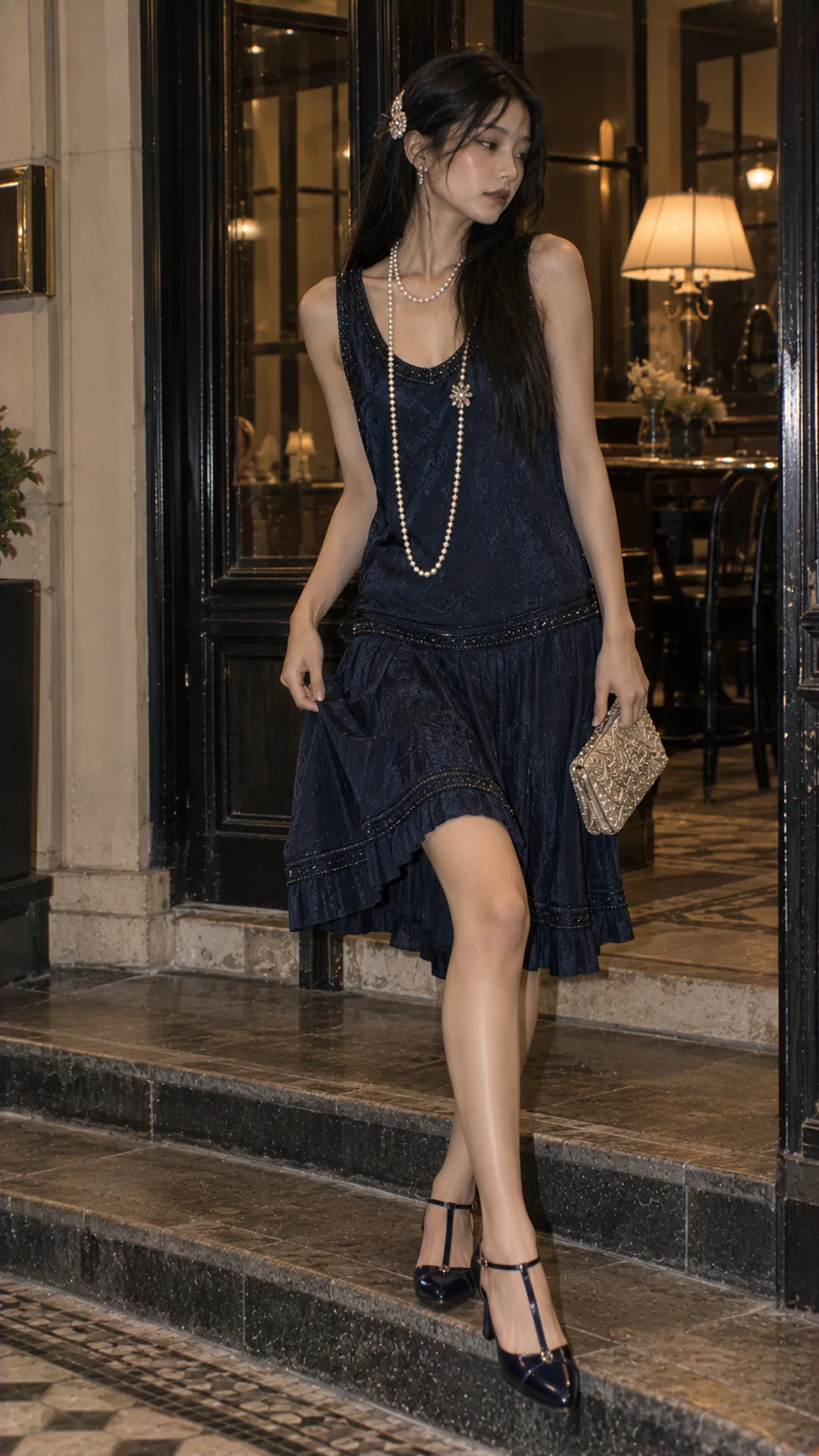
The 1920–1929 overview on FIT's Fashion History Timeline describes simplified clothing and the tubular silhouette often associated with the garçonne. A dropped waist and reduced emphasis on the natural waist differ from the cinched, full-skirted image many people associate with vintage.
A dropped waist is a design line below the natural waist, suggested through a seam, belt or decorated area. Do not mistake a horizontal hip decoration for an incorrectly positioned waistband. Nor is a modern straight dress a reconstruction simply because it does not hug the waist.
For an adaptation, try a relaxed dress with a low dividing line. Check its widest area while sitting and walking. If fabric catches at the hips, the intended drape becomes horizontal tension folds. The issue is fit and fall, not a body that “does not suit” the decade.
Skirt length changes across the decade
FIT and London Museum sources both describe changing hemlines, rising and then lengthening again toward the end of the decade. One length cannot represent every year. For reconstruction, a specific year or date range matters more than a generic “1920s” label.
A useful way to study an image is to mark the wearer's natural waist, the garment's dividing line and the hem. Compare their relationships. Two dropped-waist outfits can have different rhythms: one concentrates movement near the knee, another lengthens the lower body.
For modern inspired clothing, choose your priority first. For easy movement, use a hem that does not catch. For a long draped effect, choose fabric and seams allowing movement. You do not need to shorten a skirt to match a familiar fancy-dress image.
The flapper is prominent, but not all of 1920s fashion
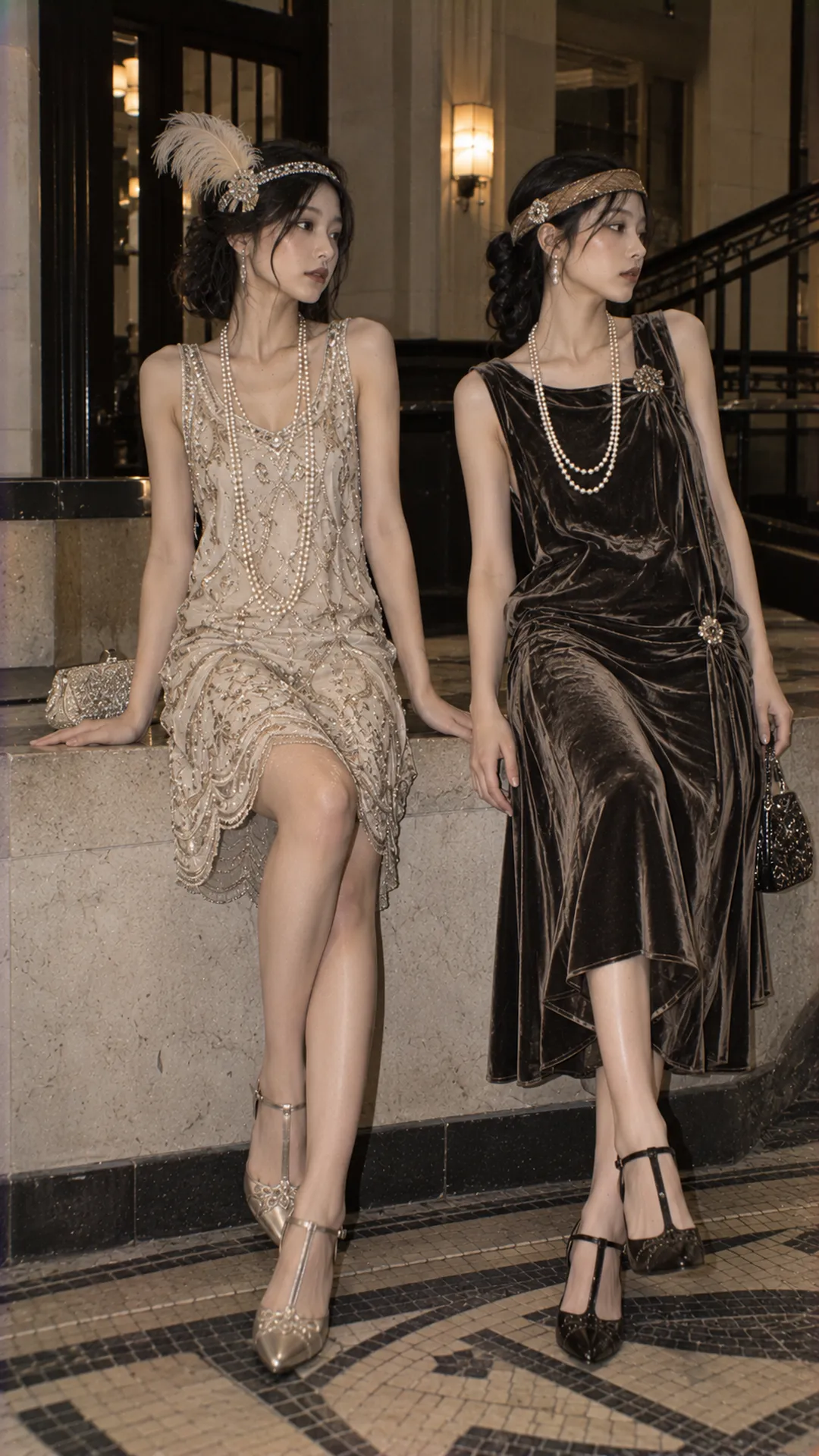
London Museum notes that the image of women constantly dancing in flapper dresses, pearls and head ornaments represents only part of the picture. Its discussion includes underlayers, street dresses, coats and hair changes, extending beyond evening clothes.
This matters when searching for clothing. “Flapper dress” often brings up modern costumes or partywear. They may serve a themed event, but materials, lengths and decoration are not automatically accurate to historical objects.
Compare a product with a dated reference: pattern placement, bodice length, neckline and hem movement. A fun party outfit allows flexibility. A claim of “historical reconstruction” needs more evidence than a ready-made product name.
Daywear: dresses, separates and sporting influences
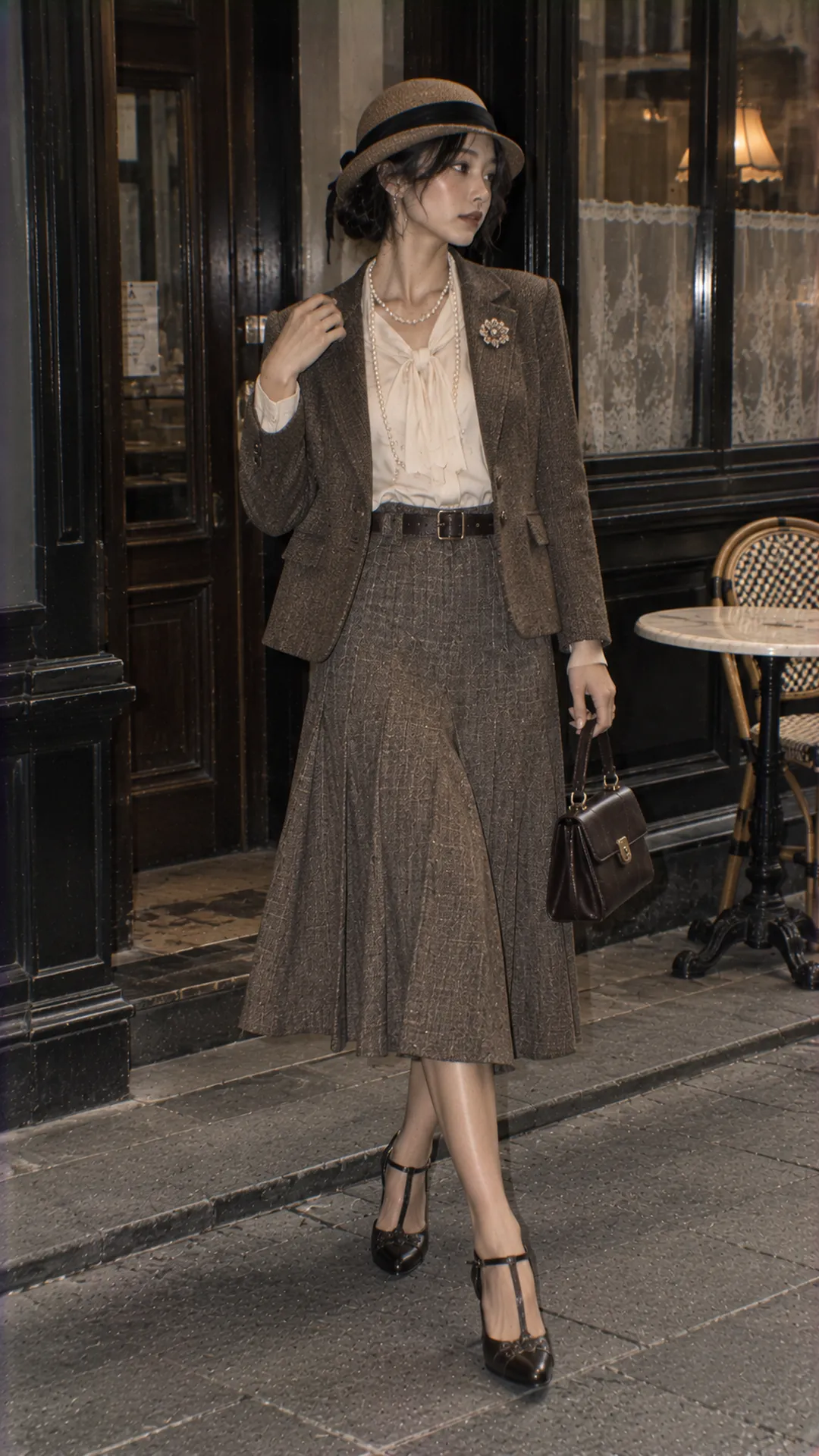
FIT records sportswear as an important influence on daywear, including tennis clothing. Women could wear dresses or combine tops and skirts. The period's modernity therefore concerned simplified clothing as well as sparkle.
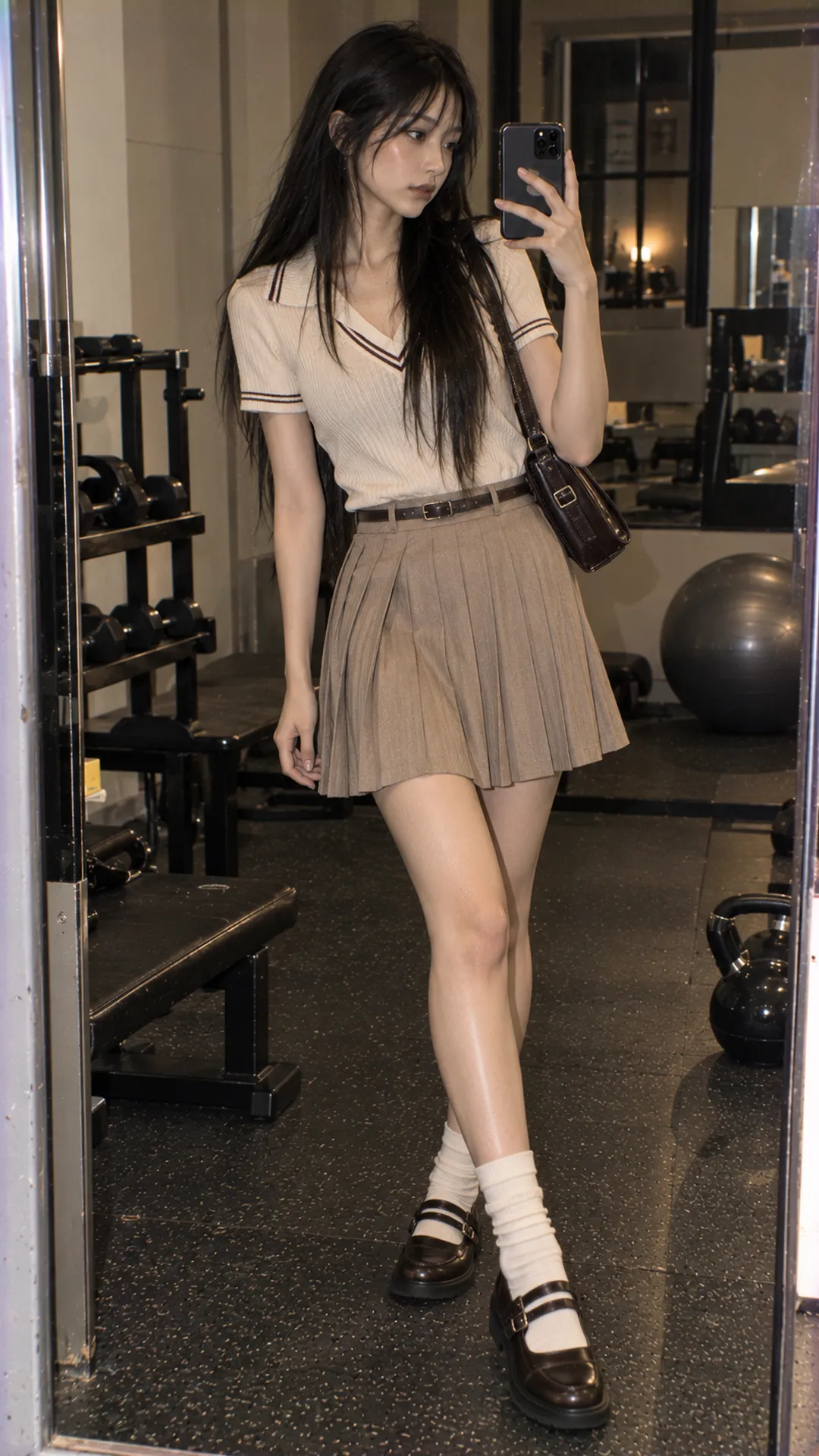
A daywear-inspired outfit can start with a fine knit, a moderately long pleated skirt and low shoes. Keep surfaces relatively simple so the skirt's fall leads. This is a contemporary editorial formula, not a claim that any such top-and-skirt combination accurately represents a specific year.
With a top extending past the waistband, check where its hem meets the pleats. If it grips the hips and forces pleats outward, try a wider or shorter top. For a longer torso line, leave it untucked but choose sufficiently light fabric. Length changes can help more than extra accessories added for “vintage character.”
Evening dress: decoration shapes the surface
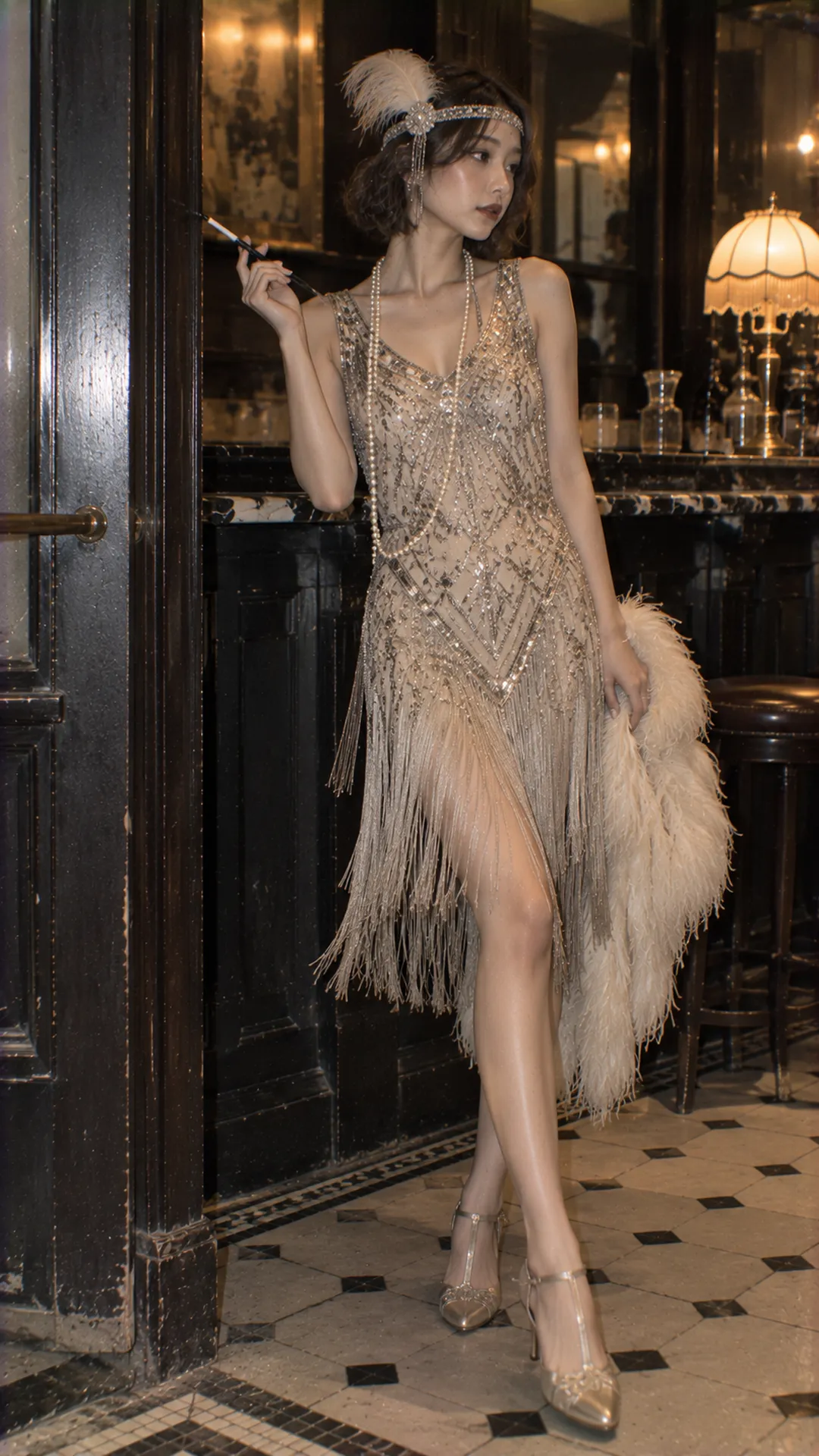
Beads, sequins and embroidery appear in eveningwear sources, but not every dress has fringe. The Flapper Dress at The Mob Museum is described with silver and white motifs directing attention toward the shoulders and hips. Decoration placement can create visual structure on a relatively simple dress body.
Exhibition information for Anything Goes! at the Ulster Museum also mentions luxurious materials, elaborate clothes and a gold-and-silver embroidered coat purchased in 1925. These reflect specific choices, not evidence that everyone owned similar pieces.
For a modern beaded dress, stand and walk to see how weight pulls the fabric. Inspect the armholes, sides and areas touching your bag; angular accessories can catch decorations. Plain shoes and a simple bag maintain focus on the motif without reproducing a complete historical evening ensemble.
Hair, hats and details easily overused
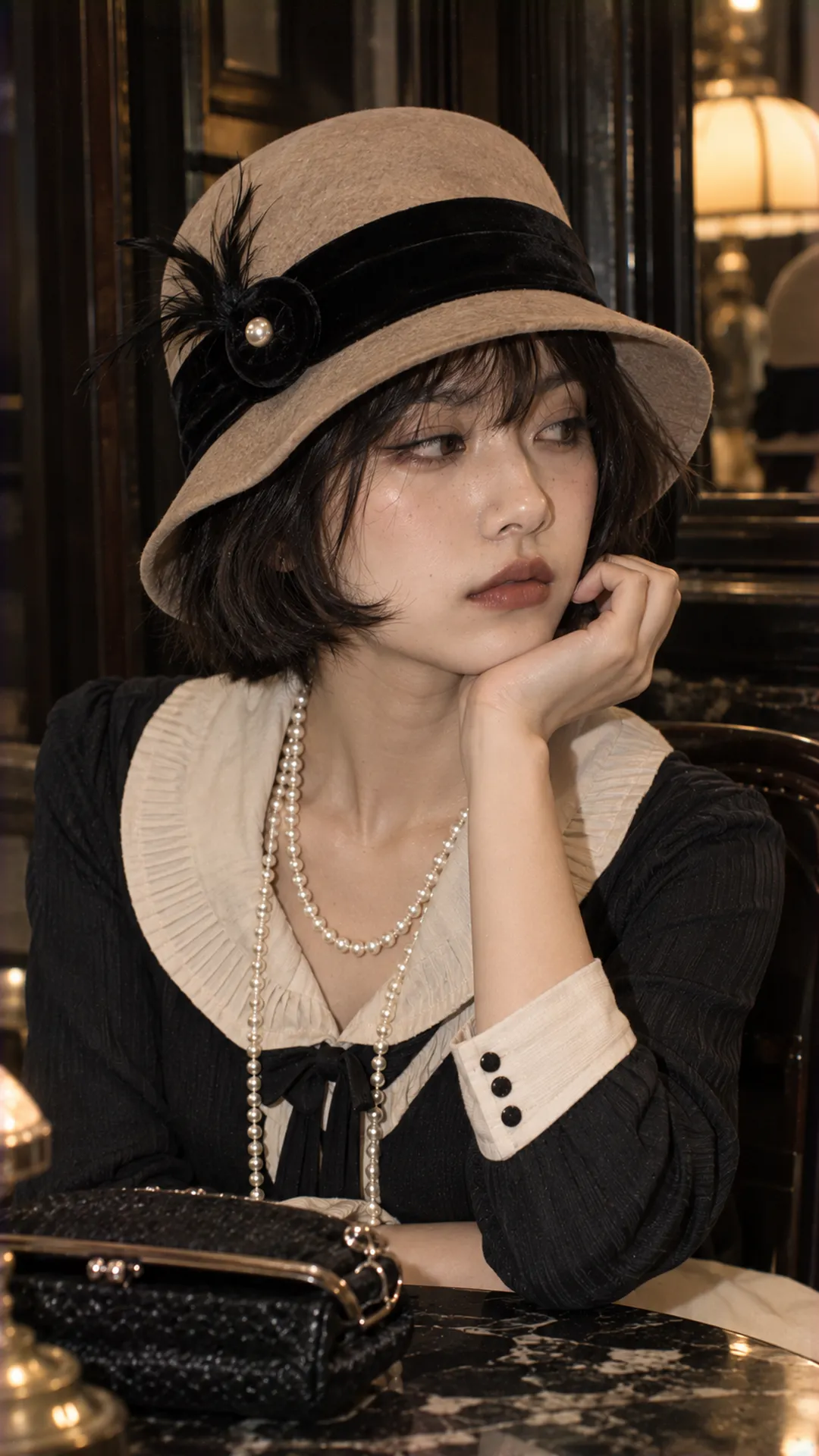
Bobs and cloche hats are familiar period images, but hairstyles and hats also changed. London Museum records other hat choices and the spread of shorter hair. Not every outfit needs a feathered headband to be “1920s.”
Without cutting your hair, try pinning it neatly near the nape for one outfit. Call this a modern interpretation unless using specific historical instructions. For a close-fitting hat, check fit, visibility and seated comfort rather than only the front photograph.
A long bead strand can create a vertical line, but test it with the neckline and embellishments. A highly mobile dress and necklace may tangle or obscure each other's pattern. Keep one accessory and omit another if useful; accessory quantity does not determine historical accuracy.
Distinguishing 1930s and 1950s fashion
For the following period, explore 1930s fashion, where waistlines and long, draped dresses are discussed separately. Change did not happen suddenly on the first day of a year; late-decade clothing may show transitions. Source dates are more reliable than visual familiarity when labeling images.
1950s fashion has different proportions and contexts. A dropped-waist dress with accessories from several periods can create an interesting outfit, but call it mixed-period inspiration. A creative blend does not need to become a claim of accurate reconstruction.
Compare shoulders, waistlines and skirt widths before colors. Black and glossy materials occur across many periods and help less than construction when distinguishing them. This also prevents buying something solely because a seller calls it retro.
Adapt the references for life today
First, choose one element: a dropped waist, relaxed shape, pleats or a geometric pattern. A straight navy dress with simple strap shoes can suggest the period without a headband, gloves and beads all together. For pattern, test placement instead of increasing detail on every surface.
Second, consider your routine. On hot, humid days, check linings and actual layer count; a fabric name does not guarantee comfort. For a party involving movement, test stride and dress weight. Historically inspired clothes should still let you sit, eat and walk comfortably.
Finally, keep references with the museum name, date and the detail you want to learn. For other aesthetics to compare, use the style dictionary; for an outer layer, explore layering outfits. A clear distinction between documentation and adaptation grounds the outfit while keeping it your choice.