

What Does Local Brand Mean in Vietnamese Fashion?
In Vietnamese fashion, “local brand” generally describes a domestic label building its own products, identity, story and community. Unlike a shop mainly reselling generic stock, it offers a recognizable aesthetic alongside the garments themselves.

Guide collection: Alternative Fashion Shopping: Sizes, Budgets and Sellers (Vietnamese)
What does local brand mean?
Local brand in this context means a domestic label serving a particular market or community, with products sold under its own name and visual identity. In Vietnam, the term commonly distinguishes labels developing their own ranges from shops mainly reselling ready-made products.
A “made in Vietnam” label or ownership of a factory is not the defining test. A brand may use manufacturing partners while remaining responsible for products, specifications, quality, imagery and the buying experience. Accordingly, local brand does not simply mean a nearby clothing shop.
Local labels, resellers and fast fashion
| Criterion | Local brand | Order shop or reseller | Fast fashion |
|---|---|---|---|
| Product source | Develops and sells under its own label | Primarily resells existing products | Large-scale ranges with rapid product turnover |
| Identity | Often has a consistent concept, fit and visual direction | May vary considerably with stock sources | Strong branding across a broad product range |
| Fit information | May maintain recognizable cuts or measurement conventions across products | Can vary among suppliers | Often uses standardized systems aimed at a broad market |
| Reasons to buy | Aesthetic, design, fit, community or brand story | Trend-led choice, convenience, price or speed | Breadth, access and frequent updates |
These are practical comparisons rather than mutually exclusive business categories, and none guarantees a better product. A reseller may suit a quick trend experiment. Following a few domestic labels with compatible fits can help build a coherent wardrobe. Fast-fashion retailers may offer broad choice and accessible basics.
Do not treat “local brand” as a quality certificate. Domestic labels can have poor fits or incomplete descriptions, while resellers can be transparent and helpful. Assess the actual product rather than relying on its category.
Why younger shoppers follow local labels
A major attraction is the ability to serve a specific taste. Labels may focus on streetwear, minimalism, workwear, Y2K, Dark Feminine, skating or punk influences, making it easier to find compatible pieces.
Social media presents collections through lookbooks, videos and styling, but popularity alone is a weak purchase reason. Hype can introduce a brand; fit, materials and repeat wear decide whether the garment earns a lasting place in your wardrobe.

Signs of a label with its own product direction
An initial assessment does not require investigating factories. On a website, marketplace listing or social account, look for:
- Consistent products and images: photography, concepts and outfit styling show a clear direction rather than unrelated supplier images for every item.
- Useful specifications: size charts, garment lengths, chest, waist or thigh measurements, and stretch information rather than only generic S/M/L claims.
- Informative material descriptions: fabric type, thickness, surface or stretch that helps you picture the garment instead of unsupported “premium” wording.
- Images showing fit: front and back views, full-body images or movement videos revealing shoulders, waist, hems, trouser drape and skirt length.
- Clear after-sales terms: written details on size exchanges, product faults and applicable time limits.
- A recognizable point of view: not every item must be unusual, but the intended audience and collection’s purpose should be understandable.
These signals are more useful than follower counts. A small label with detailed specifications may make sizing easier than a viral account that hides fit and materials.
Choosing labels for your wardrobe
Rather than asking which women’s label is trending, identify gaps in your wardrobe: weekly baggy trousers, a structured blazer or an evening top. The practical need should guide your search.
- Choose the silhouette before the brand. For fitted tops and loose bottoms, look for clearly photographed cropped tops, fitted cuts, baggy trousers and cargo pants. For dark tailoring, seek blazers, straight trousers and cleanly cut skirts.
- Try one statement piece first. Avoid buying a whole lookbook outfit immediately. One suitable jacket, pair of trousers or top lets you assess actual fit and construction before returning for more.
- Compare with what you own. A new piece should combine with several wardrobe items. If it only works with the brand’s entire collection, the practical cost exceeds its individual price.
- Read close-fitting garment measurements carefully. Corsets, baby tees, low-rise trousers and fitted skirts require closer sizing checks than oversized graphic tees.
- Separate personal taste from trends. If you would still wear the garment without its logo or campaign, it is more likely to suit your needs.
For alternative fashion, think in compatible pieces and proportions. Streetwear trousers, a fitted top from another label and separately sourced accessories can still form a coherent outfit.
Fit, sizing and materials
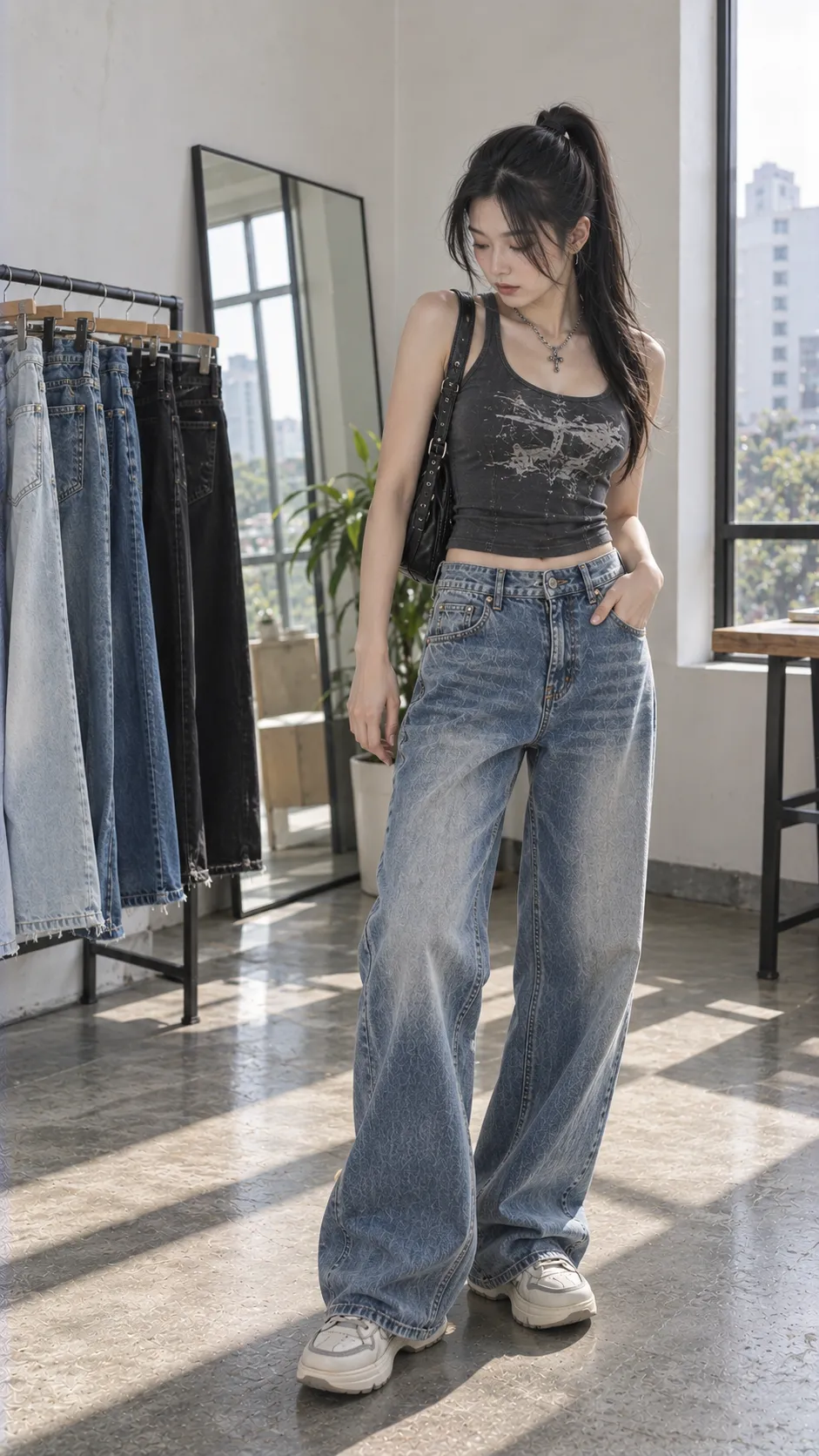
A label’s characteristic cut can be an advantage, but two brands’ medium sizes may differ substantially. When shopping online, compare garment measurements with something that fits you, rather than relying solely on the model’s height and weight.
For tops, check shoulders, chest width, body length and stretch. For trousers, examine waist, hips, thighs, rise and leg length. For skirts, check waistband position and actual length. If a listing is unclear, our guide to choosing alternative-fashion sizes online explains measurement-based decisions.
Read fabric alongside silhouette. A substantial cotton tee may hold its shape but feel warmer; rigid denim defines a leg shape with less flexibility; rib knits suit fitted tops; satin offers drape and may need careful care. Construction, weight, composition and intended use matter more than a universal “best fabric” label.
Local labels and dark aesthetics
For a dark wardrobe, look beyond a black color filter. Consider texture, proportion and hardware: ribbed tops, dark washed denim, leather-look skirts, mesh layers or silver-toned accessories offer more variation than identical black cotton surfaces.
For streetwear, explore graphic tees, bombers, cargo pants and denim. For Dark Feminine, consider neat blazers, corset-style tops and dark skirts. For Goth-inspired dressing, consider pieces that layer. Read Dark Feminine (Vietnamese), Goth (Vietnamese) and Streetwear to establish your direction before buying.
Are local brands always expensive?
No. Prices vary across labels and product categories. Ask what you are paying for: fit, materials, printing or embroidery, finishing, or mainly popularity.
Consider cost per wear: price divided by actual wears. Well-fitting trousers worn 40 times can offer better value than a cheaper statement top worn twice, depending on their prices. With a limited budget, prioritize frequently worn foundations.

Five buying mistakes
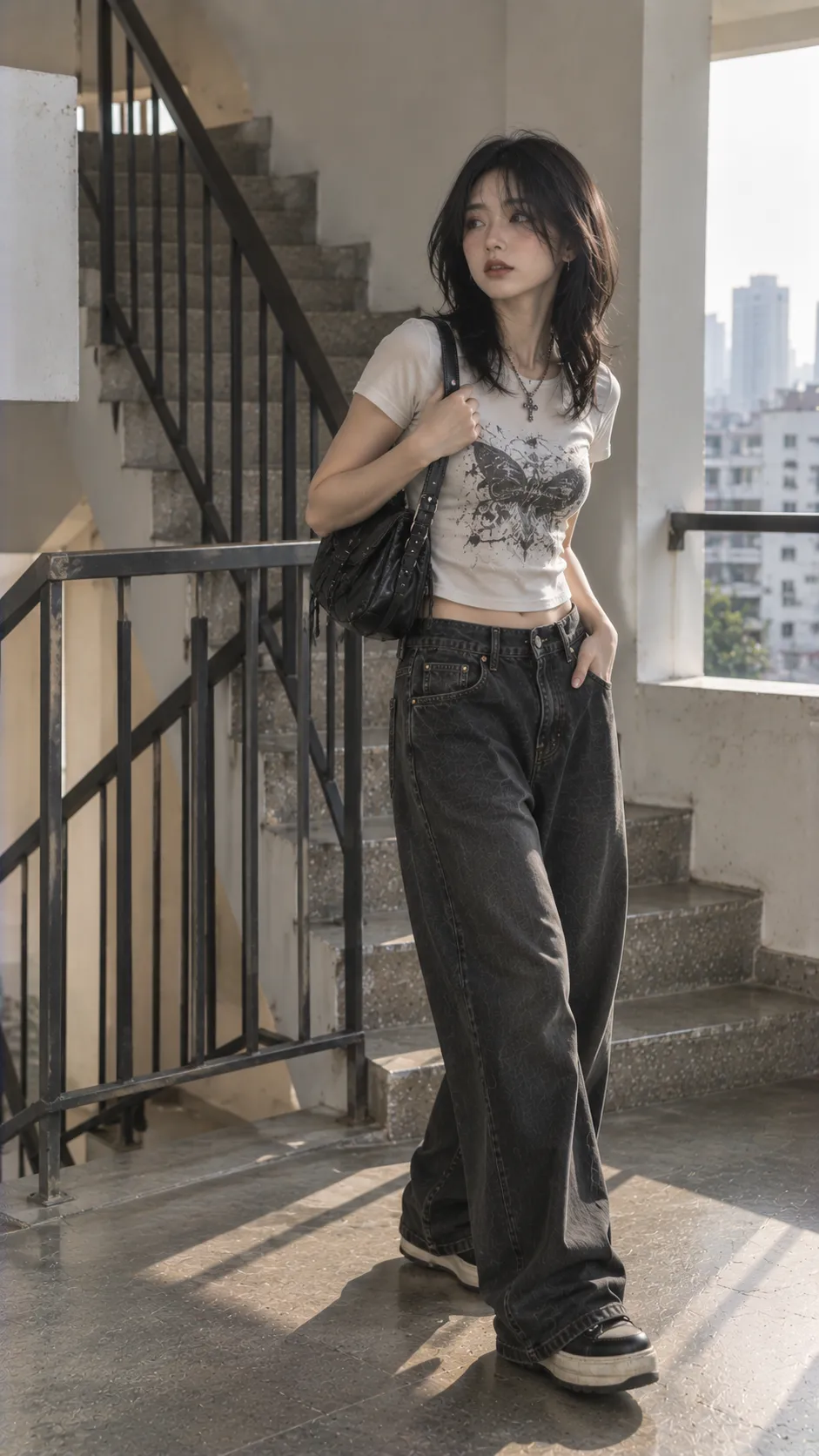
- Buying the logo rather than the product: popularity cannot compensate for a shape, fabric or styling requirement that does not suit your wardrobe.
- Assuming your usual size applies: S/M/L labels can conceal different measurements; read each product’s chart.
- Buying too many statement pieces: large graphics, cut-outs and heavy hardware on every garment make combinations harder.
- Assuming domestic means sustainable: domestic origin alone does not establish responsible materials, working conditions or product longevity. Seek specific evidence from the brand if this matters to you; see Sustainable Fashion.
- Letting a lookbook replace your actual needs: a campaign sells a complete mood. Assess whether the individual garment works for your body, climate and schedule.
Where to start
For a first purchase, choose something whose value you can assess, such as a well-cut graphic tee, jeans or cargo pants, a blazer, bomber or moderately structured top. These reveal how the label handles fit, materials and finishing.
For dark dressing, establish a silhouette first: wide trousers and a fitted top for streetwear, a blazer and straight trousers for dark tailoring, or a corset-style top and clean-lined bottoms for Dark Feminine.
Related directions: Amekaji (Vietnamese), Japanese Streetwear (Vietnamese) and Sustainable Fashion.
References
These sources offer context for terminology and developments in Vietnam’s domestic fashion market:
- Vietnam News — Trends come and go, but can businesses capitalise? — context on social media, Gen Z and domestic labels in Vietnam.
- VietnamPlus — Vietnamese garment-textile, footwear firms strengthen domestic presence — context on domestic demand, quality, design and brand identity.
Styling suggestions are Apocalypse Closet editorial interpretations based on the website’s outfit collection.
Frequently Asked Questions
What does local brand mean here?
In Vietnamese fashion usage, it generally means a domestic label developing and selling products under its own name and visual direction, as distinct from a shop mainly reselling existing stock.
Must a local brand own a factory?
No. More relevant to shoppers is whether the label clearly takes responsibility for its products, specifications, quality, branding, images and after-sales experience.
How does a local brand differ from a clothing shop?
A retailer can source products from many suppliers. A local label typically sells under its own name, with a relatively coherent identity, product direction, sizing approach and target audience.
What should women check before buying?
Prioritize fit, size charts, materials, actual outfit images, size-exchange terms and compatibility with your wardrobe. Follower counts and virality should not decide alone.
Are local brands always better than fast fashion?
No. Product quality requires individual assessment. Domestic labels may offer a particular aesthetic or fit; fast-fashion retailers may offer broader choice and access. Neither category guarantees quality.