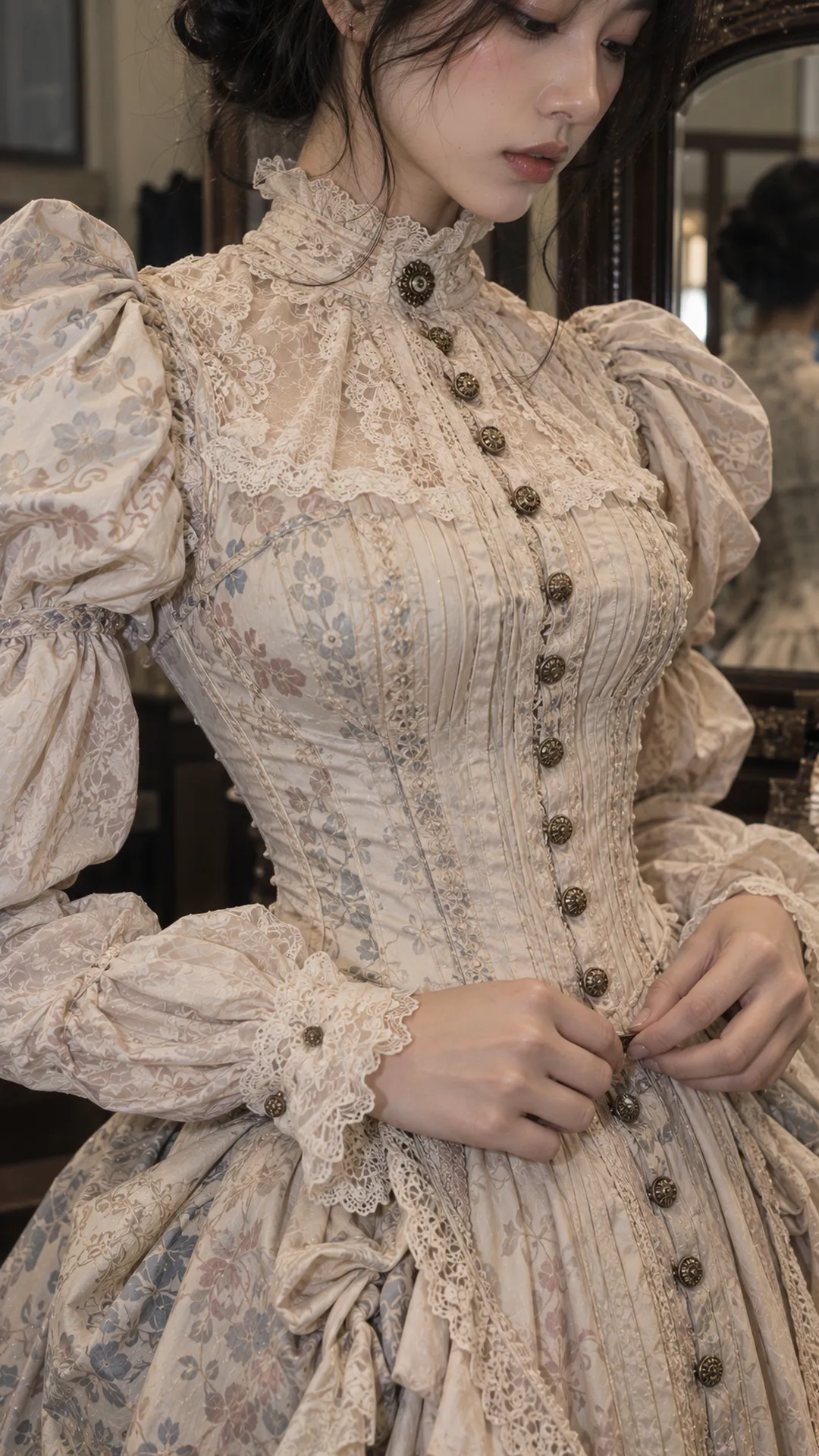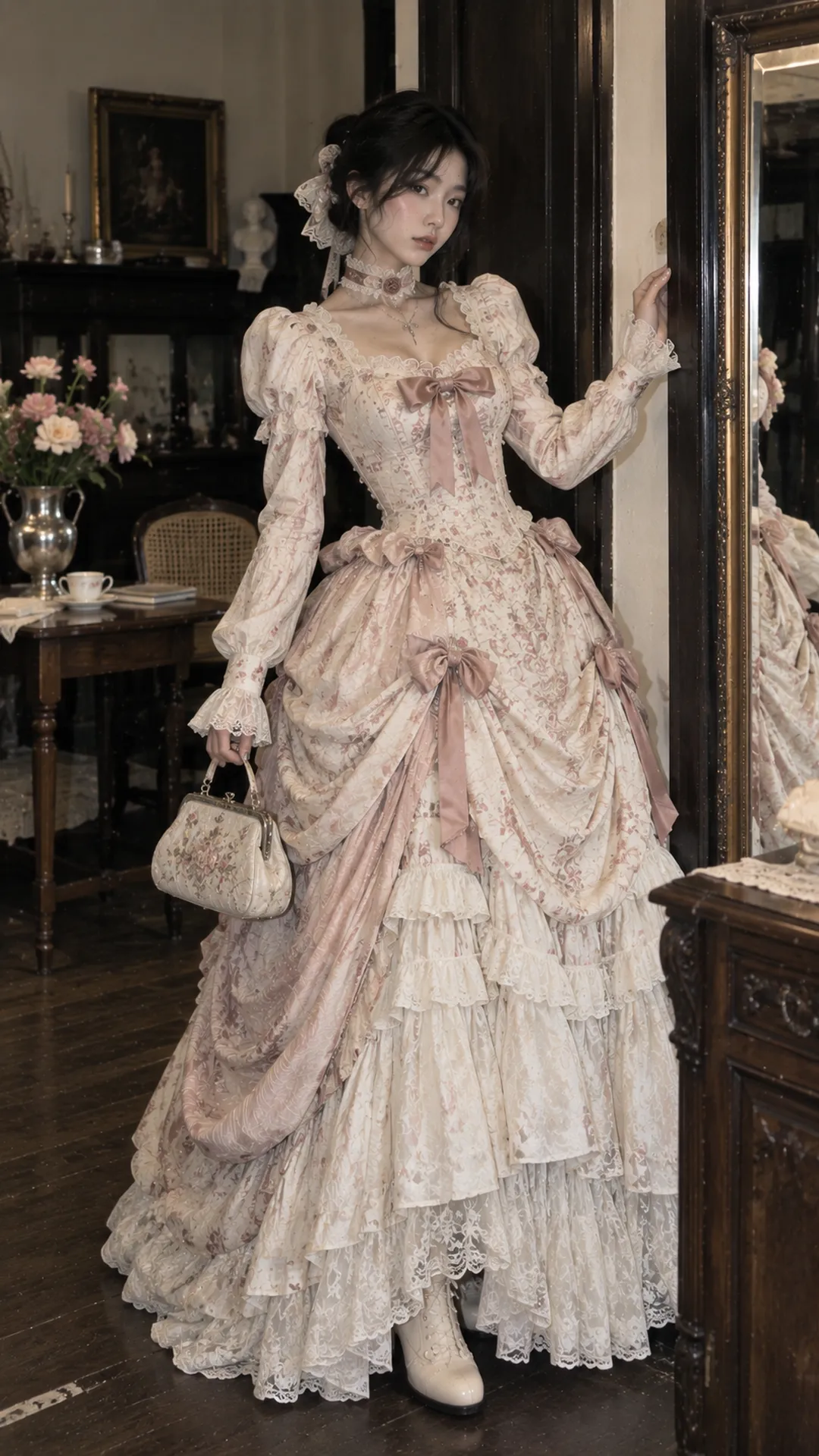
Victorian fashion is a period, not one outfit
The name Victorian comes from British history, but images commonly presented under this label also involve fashion exchanges with France and elsewhere. It should not describe every woman's clothing around the world in the nineteenth century as if it were uniform.
Even within one society, clothes differed by financial circumstances, occupation, age and occasion. Museum-preserved evening gowns are often striking, but they do not represent all workwear or everyday dress.
When searching for “Victorian fashion female,” record the date and object name alongside the image. Saving a beautiful photograph alone does not establish whether it shows daywear, a wedding dress or a costume made later. Those small facts determine the interpretation.
Similarly, the “Victorian fashion era” does not refer to one silhouette lasting continuously for over six decades. A useful approach divides it into approximate phases and tracks the area emphasized: the waist, skirt width, back, shoulders or sleeves.
Read the silhouette through the layers
A silhouette is the overall shape seen from outside. It can result from the outer fabric's cut, layers of petticoats and internal supports. You cannot explain every full skirt solely through fabric quantity or the wearer's body size.
The V&A distinguishes three important structures: a corset shapes the torso, a cage crinoline supports skirt volume, and a bustle creates projection at the back. Their functions differ; they should not all be called corsets.
Look at the side view too. From the front, two outfits may both suggest a defined waist and wide hem. From the side, one expands around the body while the other concentrates fabric behind it. That second view helps identify how the shape is constructed.
For photographs of separate museum objects, consider the display as well. A mannequin, reconstructed petticoats and positioning can affect the visible shape. The museum description helps distinguish the artifact itself from its presentation.
Main phases of Victorian women's dress
Early in the period: a fitted bodice and full skirt
Early examples can show a defined waist, shaped bodice and full skirt supported by underlayers. Necklines also depended on the occasion, so high-necked images cannot represent every outfit in the period.
When reading an image, note how the shoulder line, bodice and skirt work together. Do not date it from one detail such as lace alone. Lace can appear across many phases; the overall structure usually offers better clues.
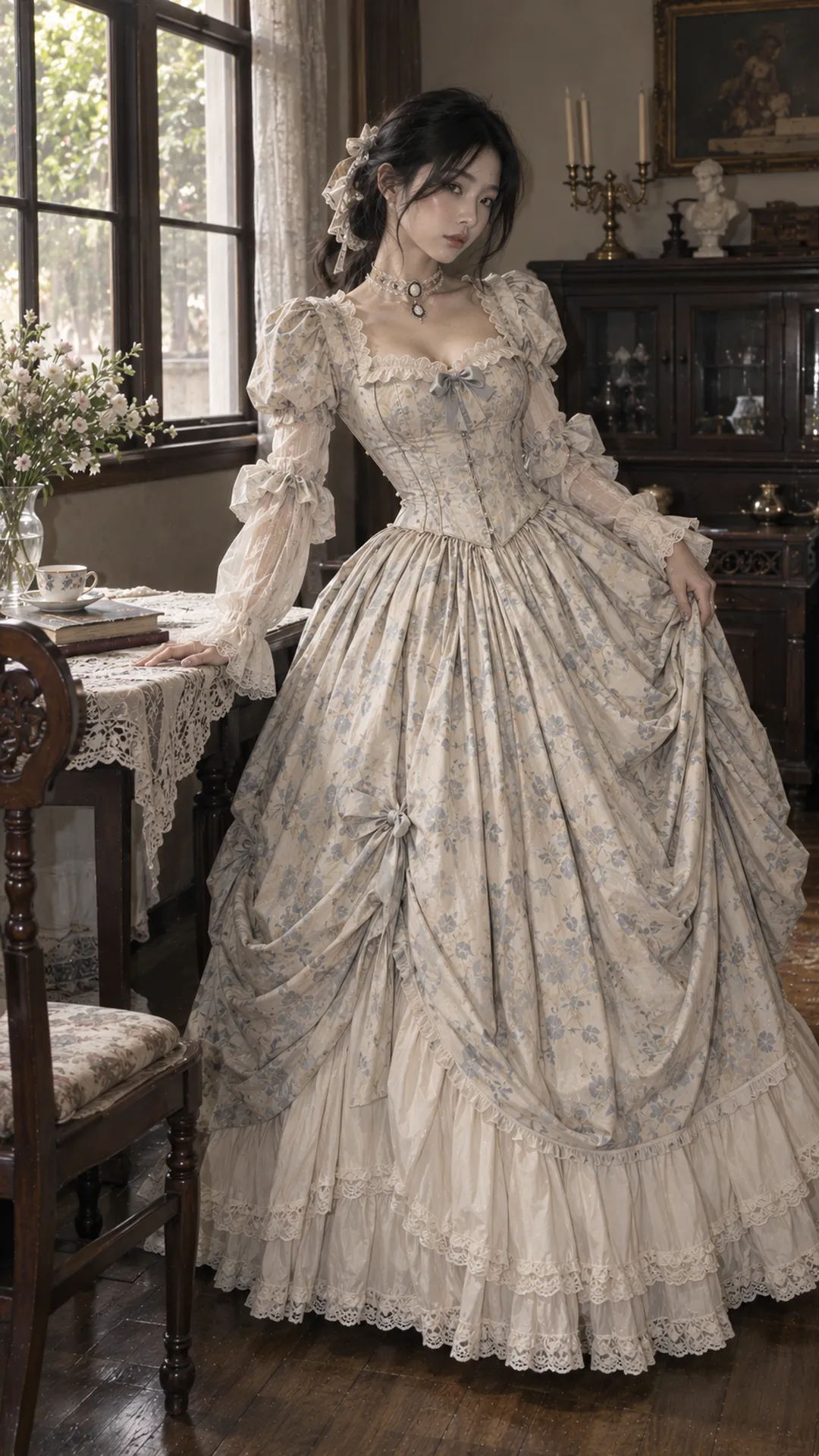
Mid-century: skirt volume supported by crinoline
A cage crinoline uses supporting hoops to create skirt width. In many mid-century designs, the skirt outline becomes a prominent visual feature. This is why an artifact photograph needs to show the lower half rather than cropping closely at the waist.
Not all crinolines are identical or extremely large. Compare the actual year and object in historical images. Caricatures often exaggerate shapes for humor and cannot alone provide a neutral account of everyday dress.
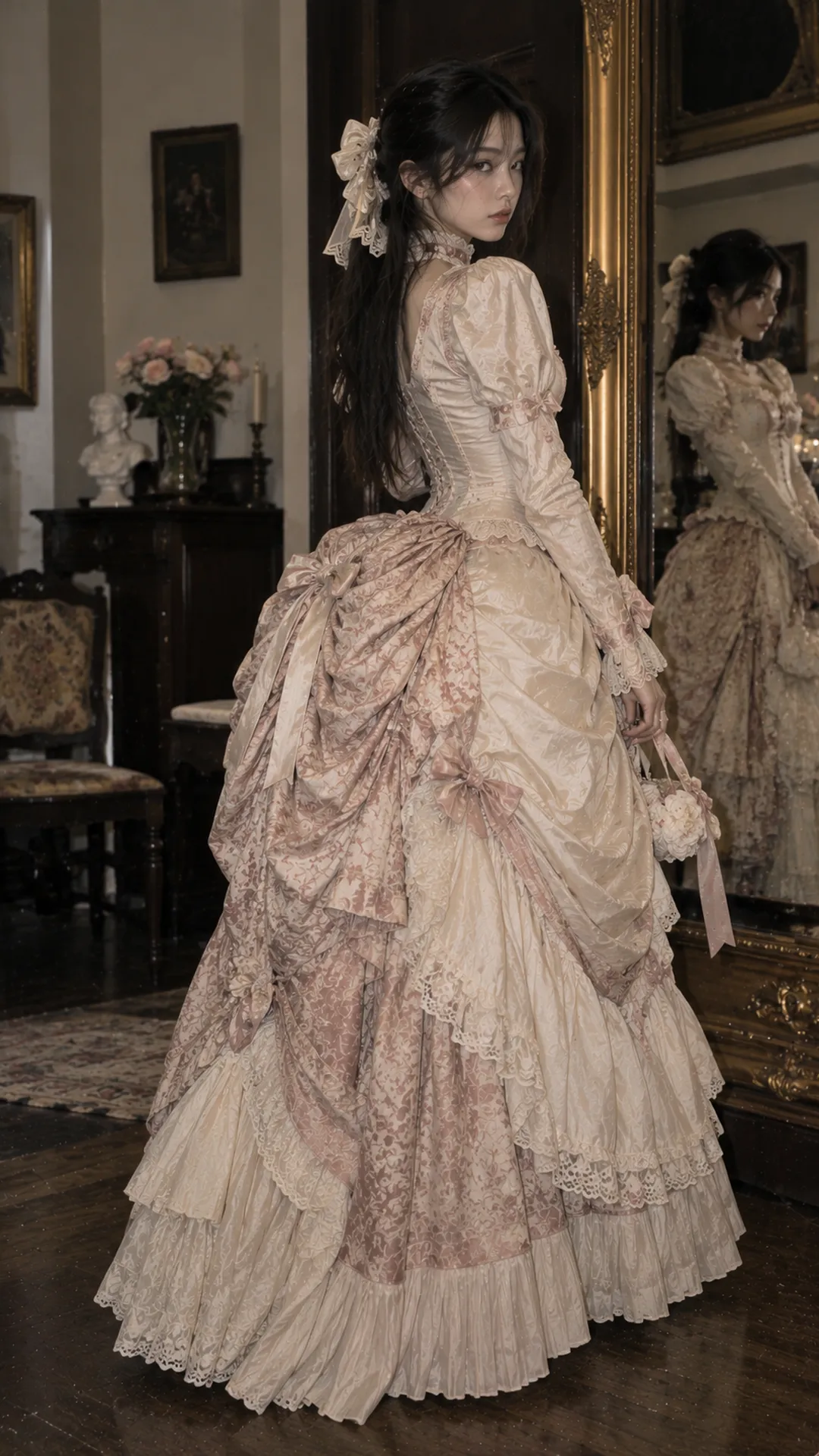
The 1870s–1880s: volume moves toward the back
In its article on an 1870–1872 day ensemble, the ASU FIDM Museum explains the transition from crinoline toward back-focused shapes. The specific artifact shows why a period label should be accompanied by construction information rather than inferred from elaborateness alone.
Fabric pleated, draped or gathered behind the body creates a different silhouette from a skirt expanding evenly all around. But shapes continued changing within these two decades. Do not combine every bustle example into one uninterrupted development.
FIT's Fashion History Timeline overview of the 1870s shows projection, bodice lines and body-lengthening effects changing within the decade. When choosing illustrations, use a specific year label rather than the generic caption “Victorian dress.”
The 1890s: shoulders, sleeves and clothing for activity
According to FIT's overview of the 1890s, large gigot sleeves were a prominent feature in the middle of the decade, while blouse-and-skirt combinations played a notable role in daywear. Women's activities and lives also influenced dress.
This is why the Victorian period should not be described as a time when women wore only immobile evening gowns. Everyday photographs, sporting dress and occupational clothing broaden the view beyond elaborate dresses.
Clothing reflects living conditions as well as taste
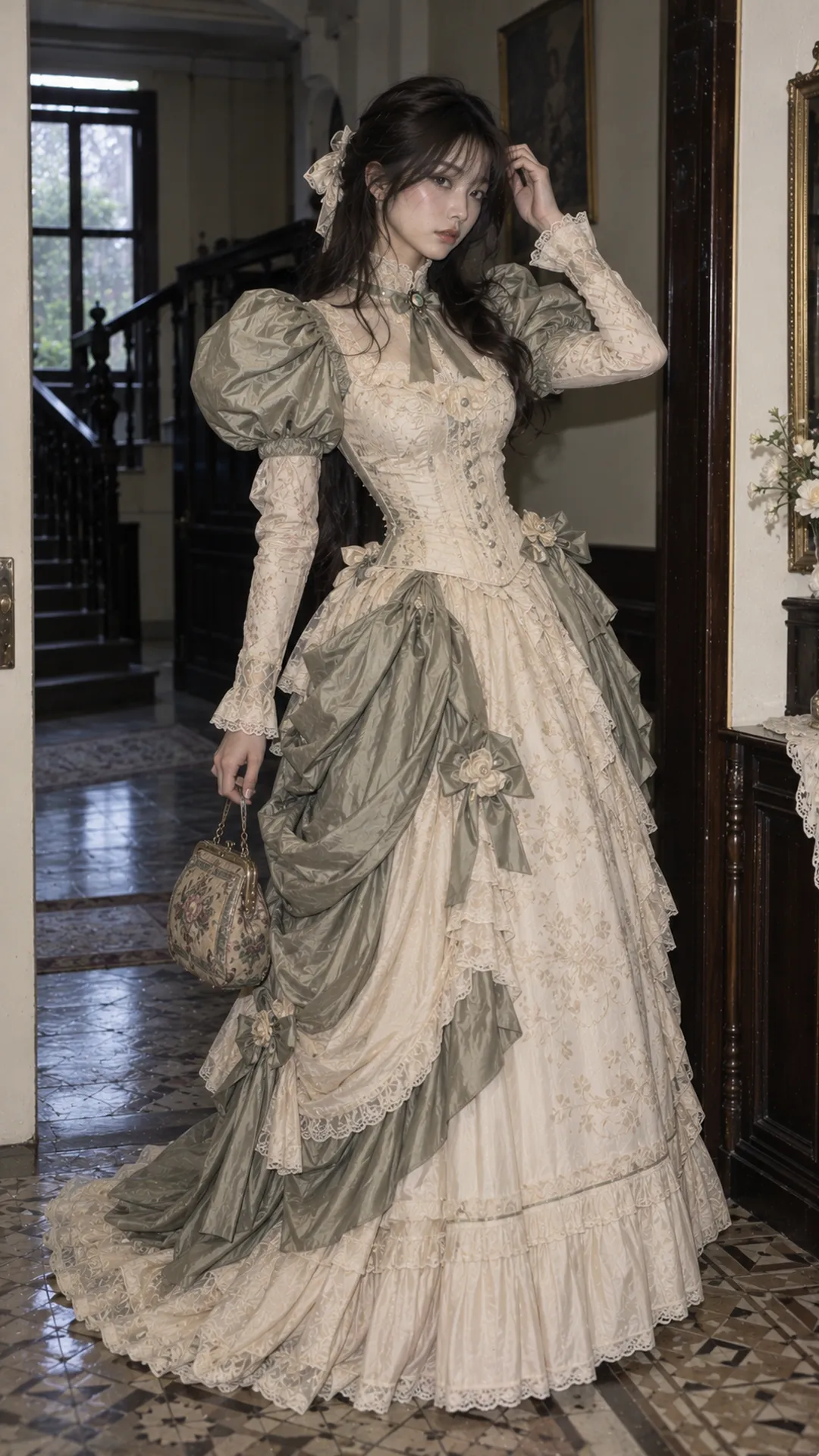
The exhibition The Impossible Ideal at the Fleming Museum of Art places clothing and accessories alongside magazine material to examine contradictions in Victorian women's lives. It reminds us that dress relates to social expectations and living conditions as well as decorative choices.
An ensemble for a formal event does not explain how manual workers dressed. Likewise, fashion magazines show what was promoted or desired but cannot establish that every woman wore it. Historical writing needs to distinguish fashion ideals from the practices of particular groups.
When placing two images side by side, compare on a grounded basis: a similar date range, occasion or object type. If one is a fashion plate and the other a family photograph, differences may come from the sources' functions rather than changing taste alone.
Consider fabric, color and occasion together
Black-and-white photographs do not prove that historical clothes were all dark. To establish a dress's color, consult the object, material description or appropriate color sources. Aging can also make the fabric's current color different from when it was new.
Shine, thickness and the ability to hold folds change how a design appears. With the same cut, soft fabric can drape while firmer fabric holds volume. Look at folds and the way fabric falls rather than imagining a generic result from the material name alone.
Daywear and evening dress cannot be collapsed into one rule either. A high-necked outfit does not make contemporary off-the-shoulder designs historically incorrect. Occasion, location and wearer belong alongside any observation about coverage.
Read accessories in the same context. Hats, gloves or parasols can help explain an ensemble, but an isolated item is not enough to date the whole look. Clearer sourcing reduces reliance on impressions.
How does Victorian fashion differ from Victorian Goth?
Victorian fashion is a subject in dress history. Victorian Goth is a Goth-related aesthetic interpretation that may borrow high collars, lace, fitted bodices or long skirts from ideas of the nineteenth century. A modern Gothic outfit is not automatically an accurate reconstruction.
Conversely, a black historical dress is not automatically Goth. Understand its color alongside its date and context. Separating the concepts prevents confusion between studying artifacts and creating contemporary style.
If what attracts you is lace, velvet and dark romance, the guide to Romantic Goth is closer to your styling needs. To compare a twentieth-century silhouette with a defined waist and full skirt, read about Dior's 1947 New Look while preserving the historical distance between the two periods.
For a clearer comparison with the twentieth century, the guide to 1950s women's fashion silhouettes is useful. Both periods can emphasize the waist, but lengths, supporting structures and contexts need separate consideration; a similar outline does not prove two outfits belong to the same era.
Use the inspiration without calling it reconstruction
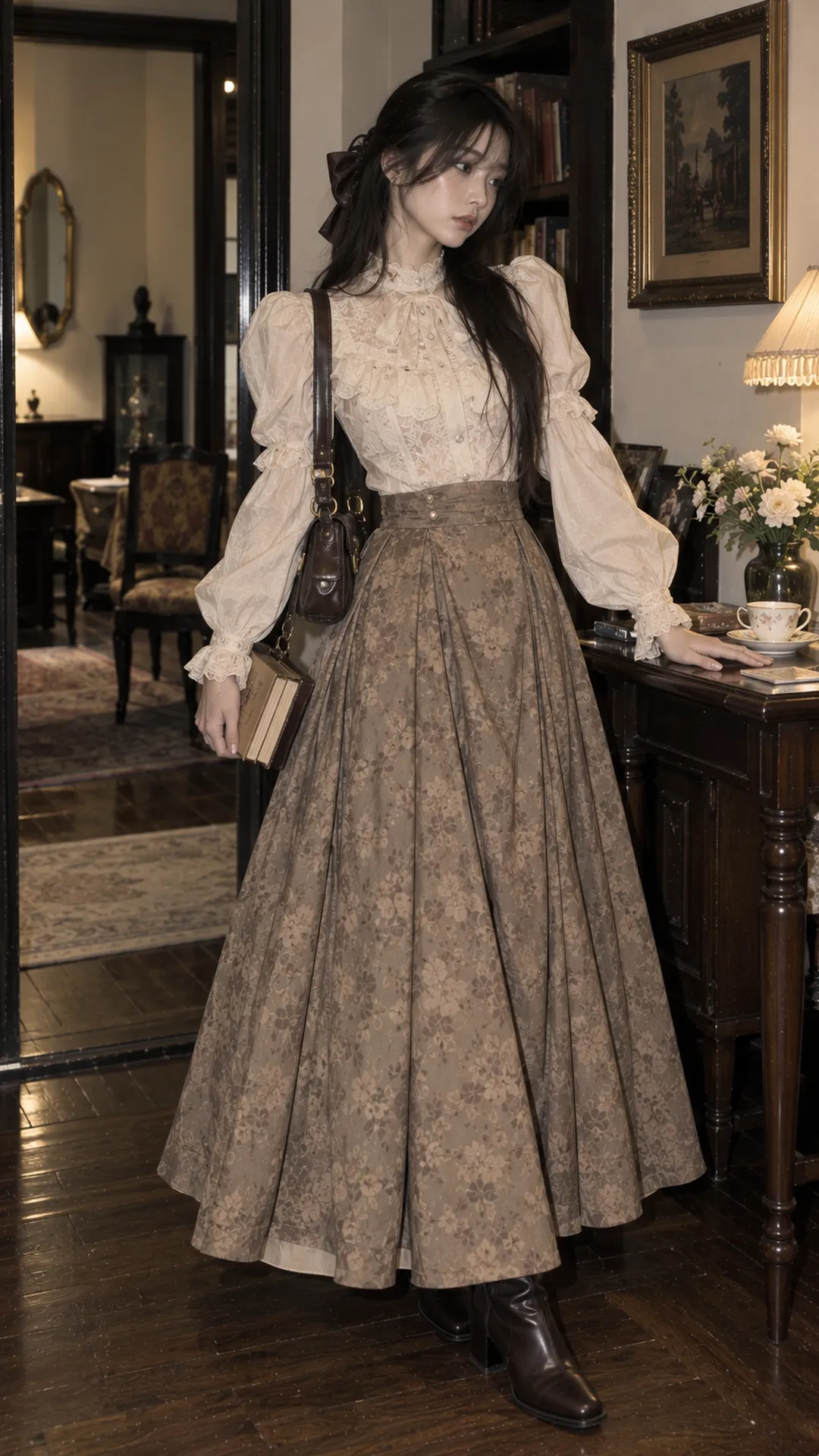
A high-neck blouse with a long skirt can suggest history, but it remains a modern outfit when cuts, materials and construction change. Calling it “Victorian-inspired” is more accurate than claiming to reproduce one particular year.
Choose one element: moderately puffed sleeves, a row of buttons, a waistline or a lace collar. Keep the other pieces simple so it remains visible. You do not need to compress the waist or build a large skirt structure just to give everyday clothing a historical reference.
For example, a blouse with gently puffed sleeves, an A-line skirt and flats emphasizes the shoulders while remaining practical. If the blouse already has a large lace collar, reduce necklaces. If the skirt is layered, choose a less decorated upper half to avoid heaviness.
Historical reconstruction requires a stricter approach: choose the year, occasion, location and wearer first, then compare each layer with documentation. Newly created images or inspired costumes should not be presented as original museum artifacts.
When shopping for clothes advertised as vintage or retro, read descriptions rather than inferring age from lace collars and buttons. The guide to vintage, retro and secondhand distinctions helps set expectations: newly made nineteenth-century-inspired clothes may meet a styling need without becoming genuine antique garments.
How to read an image of Victorian dress
First, find the source and date. Then examine the shoulders, waist and front and back of the skirt, noting the emphasized area. Next, read the material, occasion and information about internal construction where available.
Finally, check the image's limits: is the side view missing, the hem cropped or the color unclear? When facts are missing, describe what you see rather than guessing an exact identification. This approach helps more than memorizing a list of details and applying it to every dress.
Understanding Victorian fashion means understanding change. Placing each design in its own time and context makes its beauty more specific and gives greater intention to borrowing references for a modern wardrobe.