

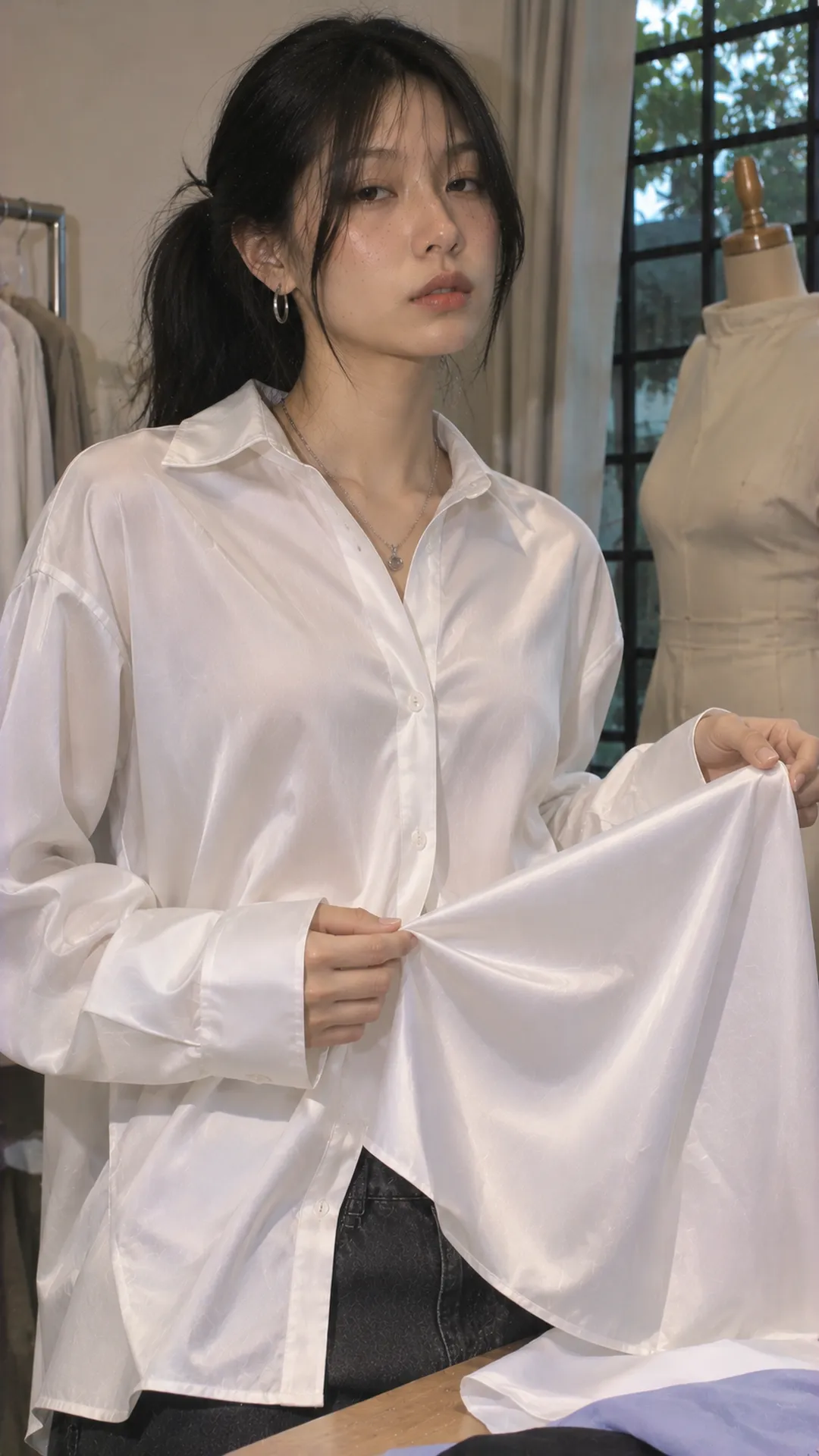
What the labels “kate silk” and “kate lụa” tell you
Listings may say “kate silk,” “kate lụa,” or “white kate silk.” They usually refer to fabrics sold for clothing, but the amount of detail varies. Look for the fiber composition in the listing or on the label.
For example, an article from Đồng Phục Sài Gòn says in one passage that polyester makes up more of the fabric than cotton and elsewhere lists 100% polyester. That inconsistency makes it important to check the exact product rather than relying on a general overview.
If a seller says “premium kate lụa,” ask what fibers it contains, in what percentages, and whether the label or swatch card confirms them. Those details help you choose and care for the shirt.
Ask for a swatch and written specifications when ordering fabric or having a shirt made. Home burn tests or chemical tests can damage the sample without giving you a reliable composition.
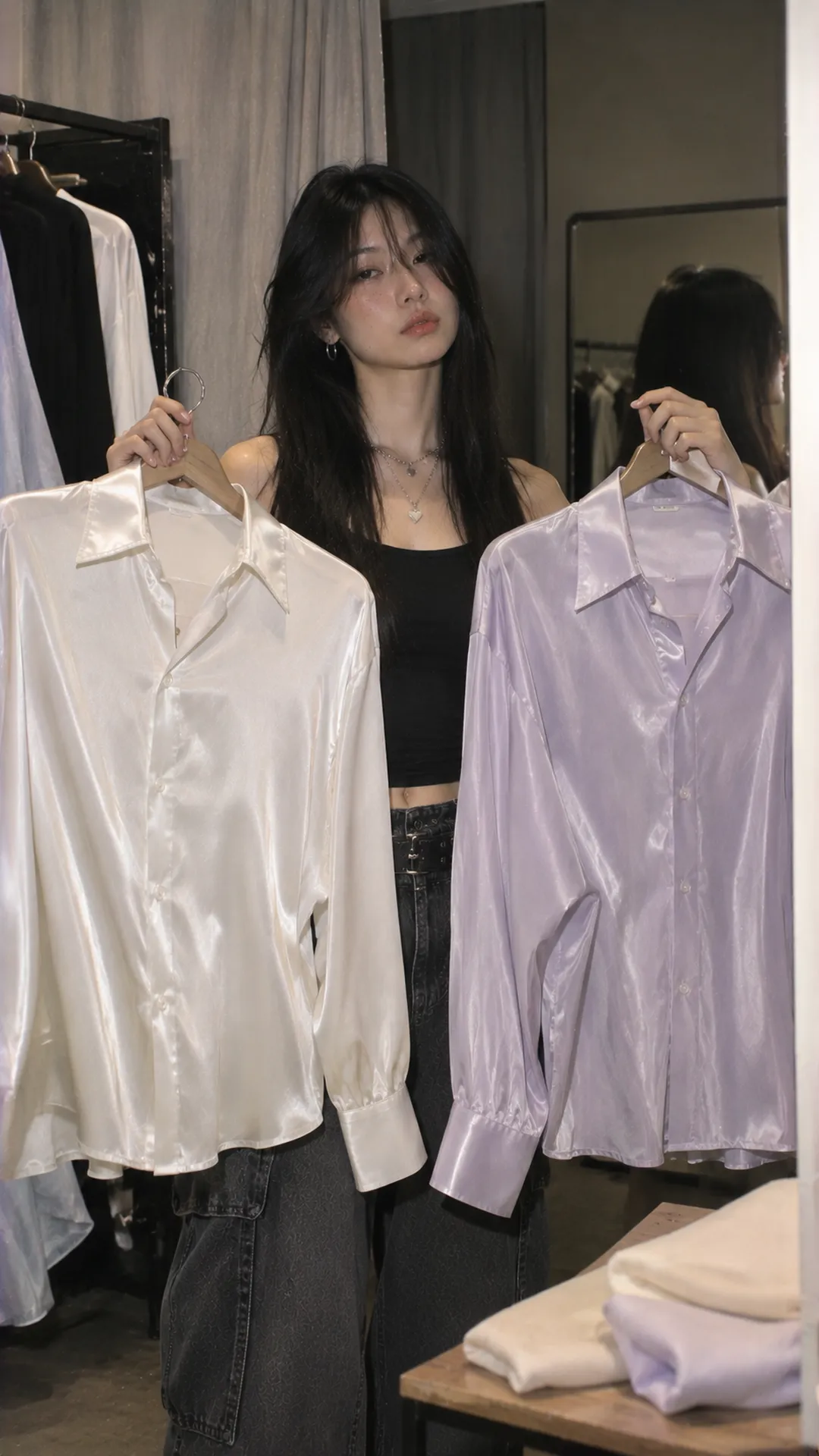
Four questions to answer before buying
1. Are you buying fabric or a finished shirt?
If you’re buying fabric, account for the cut, width, seams, and interfacing. With a ready-made shirt, check the whole garment. The collar, placket, and contrast materials can affect comfort. The same fabric can behave differently in different cuts.
2. Where will you wear it and for how long?
A few hours indoors call for different choices from a full day that includes walking outside. Think about your routine before deciding on the weight, sleeves, and fit. A fabric’s popularity for uniforms tells you little about how it feels on you.
3. Do you want a crisp or soft shape?
Drape a swatch over your hand or look at the shirt hanging and worn. If you want a neat tuck, check how much fabric sits at the waist. If you’ll wear it untucked, look at its length and how the hem falls around the hips.
4. Can you follow the care instructions?
Check washing and ironing instructions and any notes about trims. Choose a shirt you can care for regularly. Ask the seller for details if the label is unclear, since shirts sold as kate silk can require different care.
Check the coverage of white kate silk
On a white shirt, single-layer areas can look different from the placket, pockets, and seams. Look at the front, back, and sleeves in daylight. A front-facing photo in a dark room or a heavily brightened image can hide the difference.
Try the intended underlayer beneath the shirt. A shade close to your skin, white, or another color each gives a different contrast. Check which one gives you the coverage you want on this shirt.
Watch the placket while sitting and raising your arms. If it gaps, check the size and room at the bust and shoulders before adding a button. A more opaque layer underneath won’t resolve a tight fit.
If you’re buying yardage, ask whether you’re looking at one layer or a swatch laid over a white backing. Fabric can look more opaque on a table than it does in a shirt. Compare the swatch with the underlayer you’ll wear if possible.
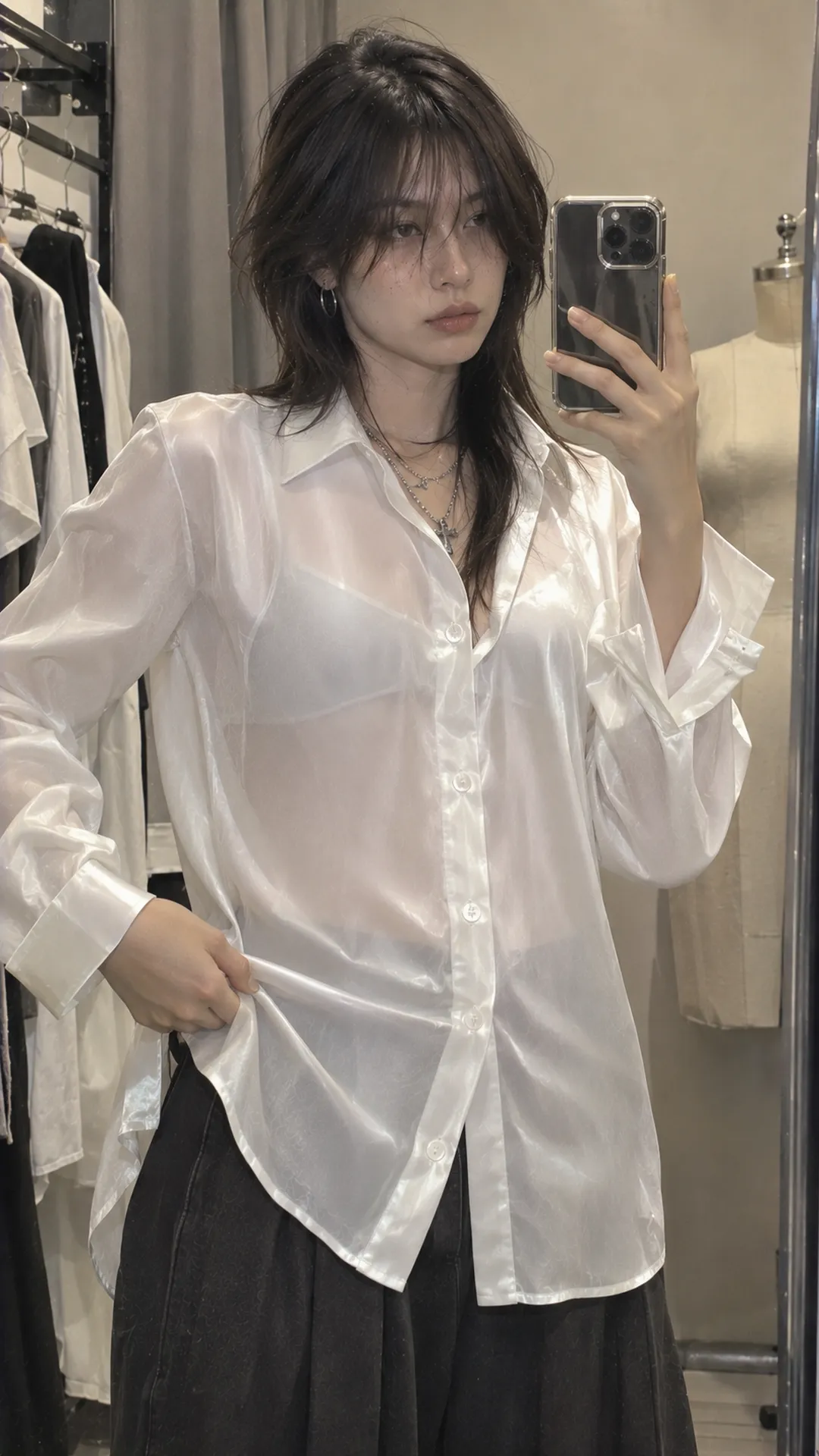
Check warmth and wrinkling on the actual garment
Claims such as wrinkle-free, fade-proof, or cool all day are broad without conditions. Consider thickness, construction, room to move, and the layer underneath. Try the actual shirt to see how it feels.
If the seller allows it, lightly scrunch a swatch, then release it and check the creases. That tells you how the sample behaves briefly. Wear and repeated care can give different results.
In hot, humid weather, move around and check the armholes, back, and sleeves. A close fit can feel uncomfortable even in a thin fabric. Going up too many sizes can shift the shoulders and placket out of place.
Our guide to choosing fabrics for summer outfits explains how thickness and fit affect comfort. Apply those factors to the specific shirt you’re considering.
Check the shirt from shoulder to hem
Shoulders and armholes: Reach forward as if you’re working at a desk. Check for pulling across the back and pressure at the armholes. If the shoulders shift, compare another size or cut even if the length is right.
Collar: Button it the way you normally wear it and turn your head. If you leave the top button open, check whether the collar still lies flat. Interfacing and seams can make the collar feel different from the rest of the shirt.
Sleeves and cuffs: Bend your elbows and rest your hands on a desk. A tight cuff or sleeve that rides up can need repeated adjustment. If you roll the sleeves, check whether the fold feels bulky.
Placket and pockets: Stand naturally and see whether the front hangs straight. Check the buttons, buttonholes, loose threads, and pocket edges. Consider the finish even if you like the fabric.
Hem: Try the shirt tucked and untucked if you’ll wear it both ways. A long shirt can bunch at the waistband, while a short one may pull free when you reach. Choose the length for how you’ll wear it most often.

Style a kate silk shirt for how you’ll wear it
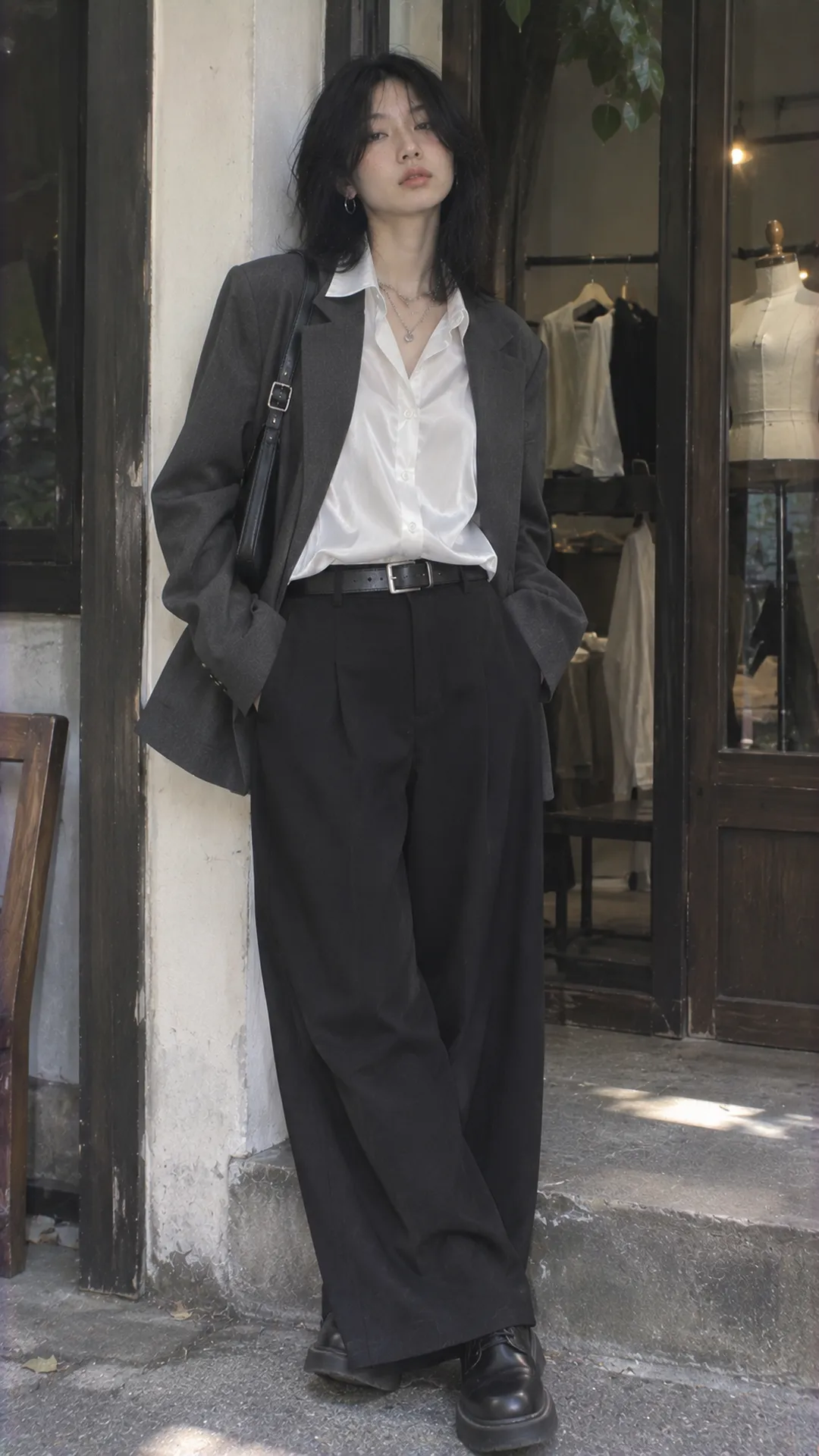
Straight trousers for school or work
Try a white or light blue shirt with dark trousers. Choose trousers you can sit in comfortably, smooth the shirt tails, and tuck them in if needed. Use shoes and a bag that suit the day.
A crisp shirt can contrast with trousers that have some drape. If the shirt is soft, try pleats or a defined leg shape. Our women’s shirt styling guide helps you pick the bottoms once you know how the shirt fits.
Untucked with jeans or a skirt
With jeans, see where the hem ends against the hips and waistband. Try a partial tuck if the shirt is long. If you prefer it loose, choose a width you like with the jeans.
With a skirt, check the amount of fabric at the waist and around the zipper. Fabric that looks smooth in your hand can crease when pressed into a narrow waistband. Try both pieces to see whether a different tuck or shirt would help.
Wear it under an outer layer
Try the shirt with the blazer or cardigan you’ll use. Check for bunching at the shoulders, collar, and sleeves, then sit as you would at work. Two layers that fit separately can feel tight together.
Our women’s tops guide compares several cuts and uses. Choose the shirt and layers for the actual outfit and occasion.
Keep a swatch and confirm details before ordering
For a custom order, keep the selected swatch, color code, and fiber specifications. Fabrics sold as “white kate silk” can vary in shade, thickness, and finish. A swatch gives you a reference when the shirts arrive.
Agree on the fit, length, pocket, collar, sleeves, and whether the shirt will be worn tucked. For a larger order, fit a sample shirt instead of assigning sizes by height and weight alone. People with similar height and weight can have different shoulders, bust measurements, and arm lengths.
Try the sample with the intended underlayer and bottoms. Give the tailor specific feedback, such as sleeves that are too long, a placket that pulls, or extra fabric at the hem.
Inspect the shirt on arrival and follow the care label
Before the first wash, compare the shirt with the order details and check the return policy. Inspect seams, shade consistency, buttons, and labels. Contact the seller about any problem before doing anything that could affect eligibility for a return.
Follow the shirt’s care label, including guidance for trims and interfacing. Check the recommended iron setting and ask the seller if it’s missing. When trying an approved care method, use a suitable hidden area or leftover swatch first.
For a white shirt, treat stains as directed and avoid mixing cleaning products. Store it dry and check areas that mark easily, such as the collar and cuffs. Choose a care routine you can keep up with.

Consider whether you can wear the shirt in several outfits, replace a button, and use it often. Our sustainable fashion guide looks at use across a garment’s life cycle. Fiber names and trade names tell you only part of that story.
Before choosing kate silk, confirm the fiber content and try the shirt for coverage and fit. Check that you can follow its care instructions. If one option falls short, compare another fabric or shirt.