

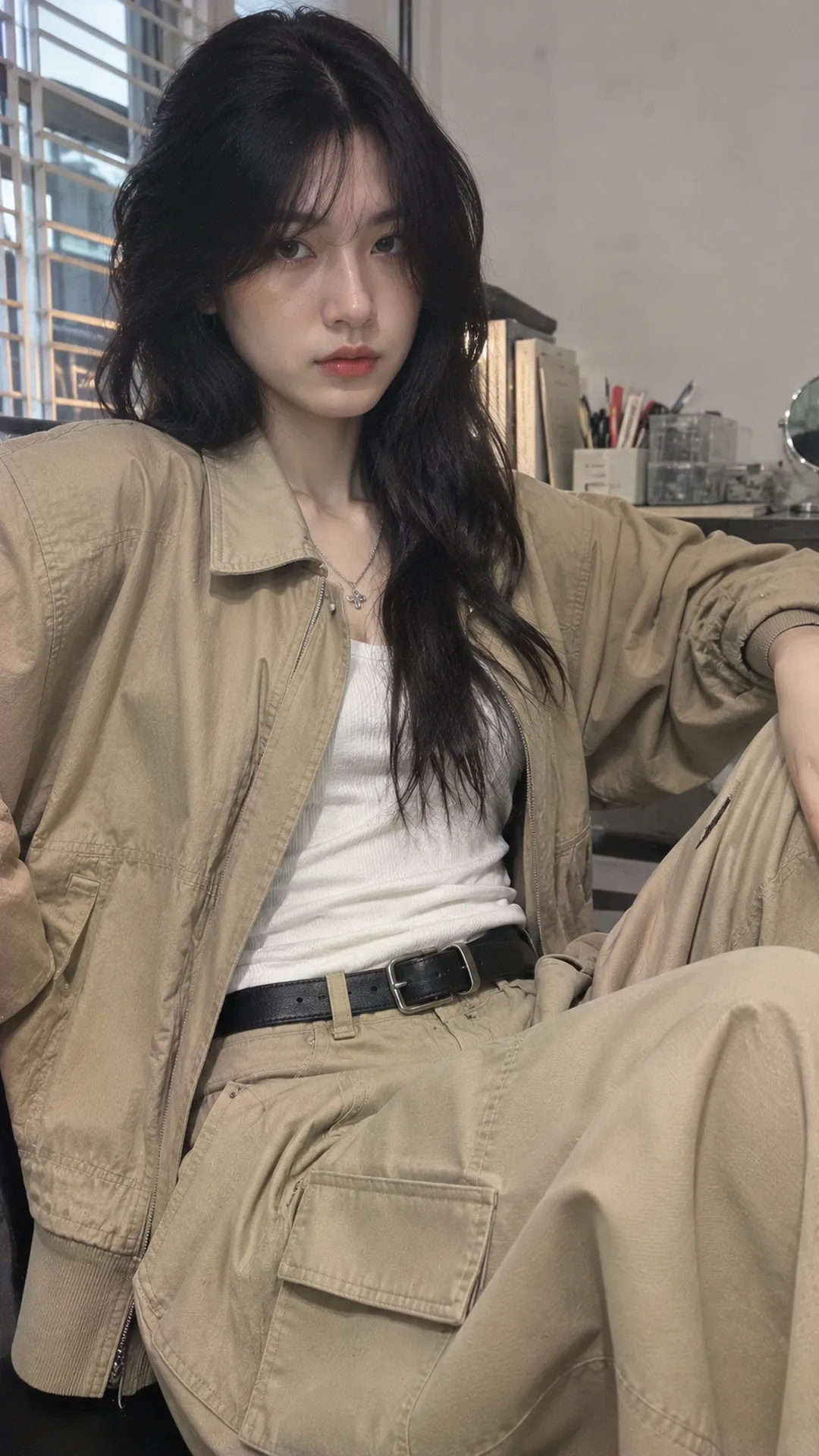
Does khaki refer to a fabric or a color?
Merriam-Webster lists khaki as a light yellowish-brown fabric, garments made from that fabric, and the color itself. Read the word in context to see which meaning a clothing listing uses.
If khaki appears next to black, white, and blue in a product selector, it usually refers to the color. If it appears under material, check the fiber content next. Picking the right shade tells you little about whether the fabric has the surface or structure you want.
A khaki-colored knit top won’t drape like a structured woven jacket. Trousers sold as “quần kaki,” meanwhile, may be available in several colors. Read the full listing so the color and material don’t get confused.
What can a diagonal rib tell you?
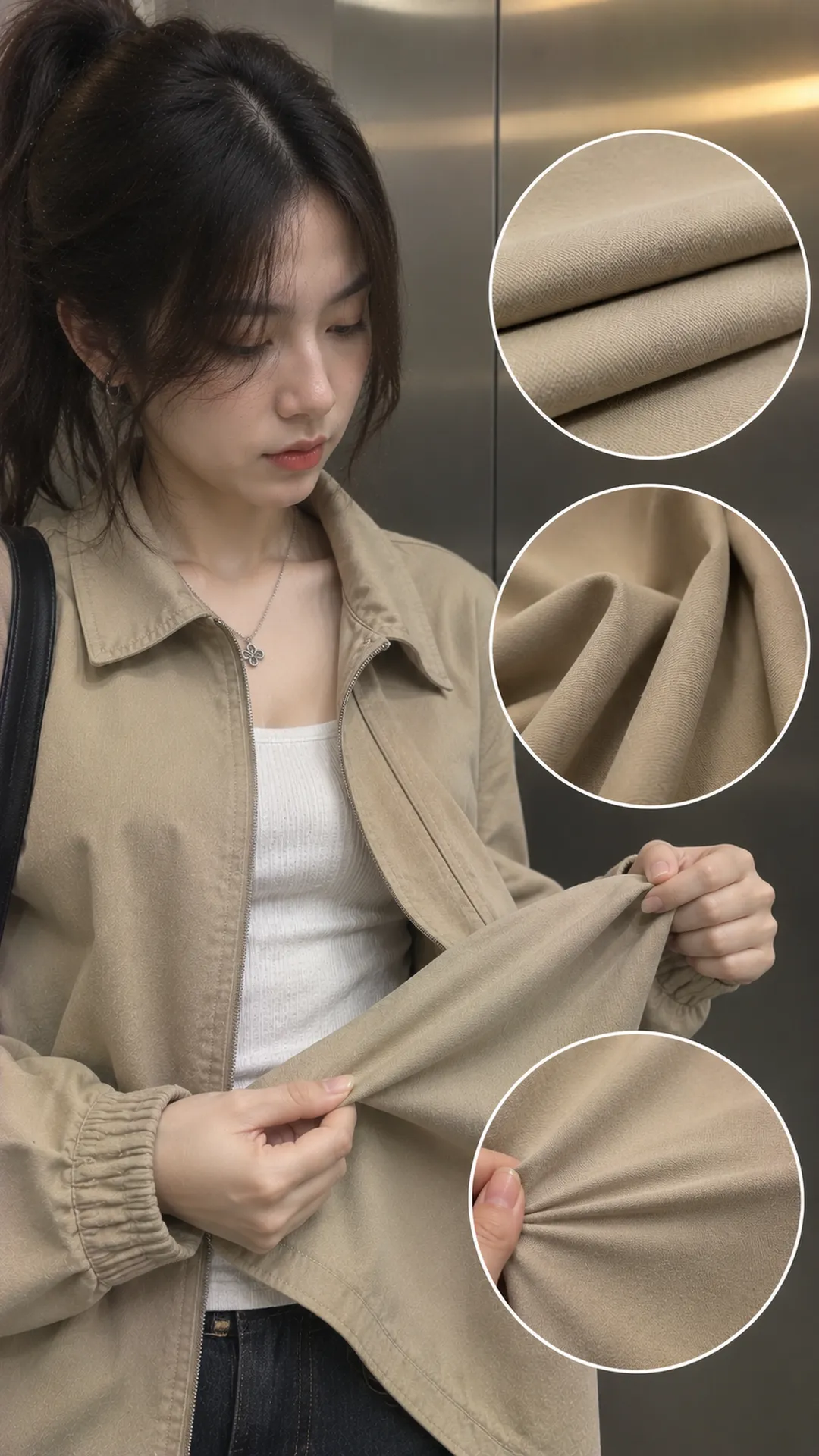
Some garments labeled kaki are described as cotton twill or as having a twill weave. According to CottonWorks’ guide to woven fabric structures, twill can be recognized by its diagonal ribs. Those ribs tell you about the weave. Cotton content and performance need their own checks.
A close-up taken in angled light may show the diagonal ribs more clearly, if the image is sharp enough. Surface treatments and smoothed photos can obscure the weave. Ask for the manufacturer’s description when you need to identify it precisely.
A diagonal rib won’t tell you how heavy, soft, or breathable a pair of trousers will feel. Two fabrics with similar ribs can use different yarn sizes, weights, and finishes. Compare the weave with the other product details before judging the fabric as a whole.
Check what the fabric is made of
If the label lists cotton, polyester, or elastane, check the percentages and whether they describe the main fabric or a different part. A lined jacket may list separate compositions. The outer fabric alone won’t tell you how the jacket feels against your body when you’re also wearing the lining.
Try a fabric containing elastic fibers while moving as you normally would. A garment can also feel comfortable without an elastic fiber listed. Room at the thighs, rise, shoulders, and armholes can let you move without relying on much fabric stretch.
Labels such as “soft kaki,” “stretch kaki,” and “premium kaki” are hard to compare between stores. Ask for the composition, thickness, and a photo of the inside. If the seller repeats the same adjectives, you still won’t know how the garment compares with one you already like.
If you have a favorite, photograph the label and write down why you like it. Perhaps it’s lightweight, holds its shape, feels comfortable when seated, or rarely needs ironing. Use those details when shopping for the next piece.
Check thickness, drape, and stretch separately
Thickness describes how substantial the fabric feels. Drape is how it hangs and folds. Stretch is how far it extends under tension. A thick fabric can still be supple, and a soft fabric may stretch very little.
When trying trousers, look at the legs from the front and side. For a clean straight line, check whether the fabric settles back into place after you sit. For softer movement, walk a few steps and look at the knees and hems. Choose the way you want the fabric to fall before deciding how much structure you need.
With a jacket, bend your arms and move your shoulders. A roomy body can still have restrictive sleeves. With a stretch fabric, check the seams as well. The flexibility of one panel doesn’t guarantee the joins allow the same range of movement.
If the listing gives fabric weight, compare it with similar fabrics. Weight on its own won’t establish breathability, durability, or summer comfort. If technical details are missing, a realistic fitting and a clear exchange policy can tell you more than a guessed number.
Choose by garment: jacket, trousers, or skirt
For work trousers, sit down and check the waist, hips, and knees. Put what you usually carry in the pockets to see whether it pulls the trousers out of shape. If you tuck in your tops, try the pants with the thickness of top you usually wear.
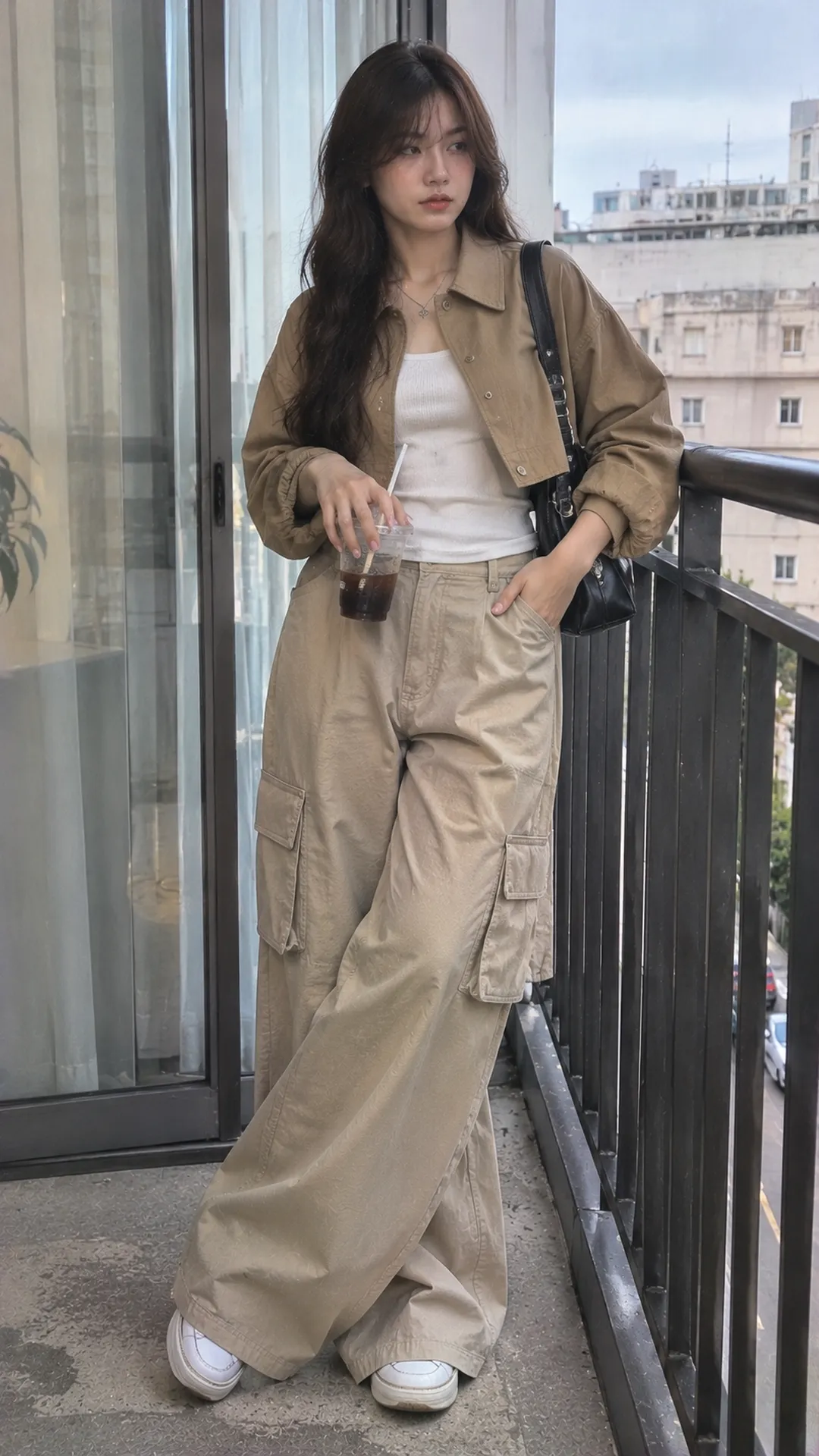
With cargo pants, look at the fabric alongside pocket construction and volume. Our guide to choosing between shell fabric and khaki twill for cargo pants compares those options. Check the fabric of the exact pair before judging how bulky it will look or how you’ll wear it.
For a skirt, take a stride, sit down, and check the slit and how much room you have. Fabric you like in trousers may hang differently in a long skirt because it’s cut differently. With an A-line skirt, see whether the body opens out as intended or forms folds around the hips.
Try a jacket over your usual base layer. Check the shoulders, armholes, and elbows when carrying a bag or reaching forward. If it feels too heavy for your routine, try a lighter version with a similar look.
Check the khaki shade beyond the product photo
Brands can use the same color name for several shades. Look at photos in different lighting and compare them with colors you’ll wear. If you’re trying to match something you own, look at a physical sample or check whether you can exchange the color.
Try a light yellowish-brown garment with a black, ivory, or deep blue top. Look at the sheen and texture alongside the colors. A soft black top with matte trousers creates a different effect from a shiny black top in the same palette.
For outfit ideas based on the cut, see our women’s pants styling guide. When choosing a shade, think about the tops you already wear. A color described as versatile is more useful if it goes with those pieces.
Will khaki feel hot or stuffy?
Consider thickness, weave density, lining, fit, and how long you’ll be outside. Loose, unlined trousers can feel different from a close-fitting pair with several layers at the pockets and waistband, even if both are sold as the same kind of khaki.
Try the garment for how you’ll use it: a long stretch sitting, lots of walking, or a short trip between indoor spaces. Our guide to wearing black in summer covers how color and construction can affect warmth. Thickness and a dark shade also don’t establish UV protection.
When shopping online for hot weather, ask for an inside photo and details about the lining and thickness. Those details are more specific than asking whether a garment feels cool. If you can try it on, make your usual movements so you can judge it beyond a quick touch.
Follow the label when washing and pressing
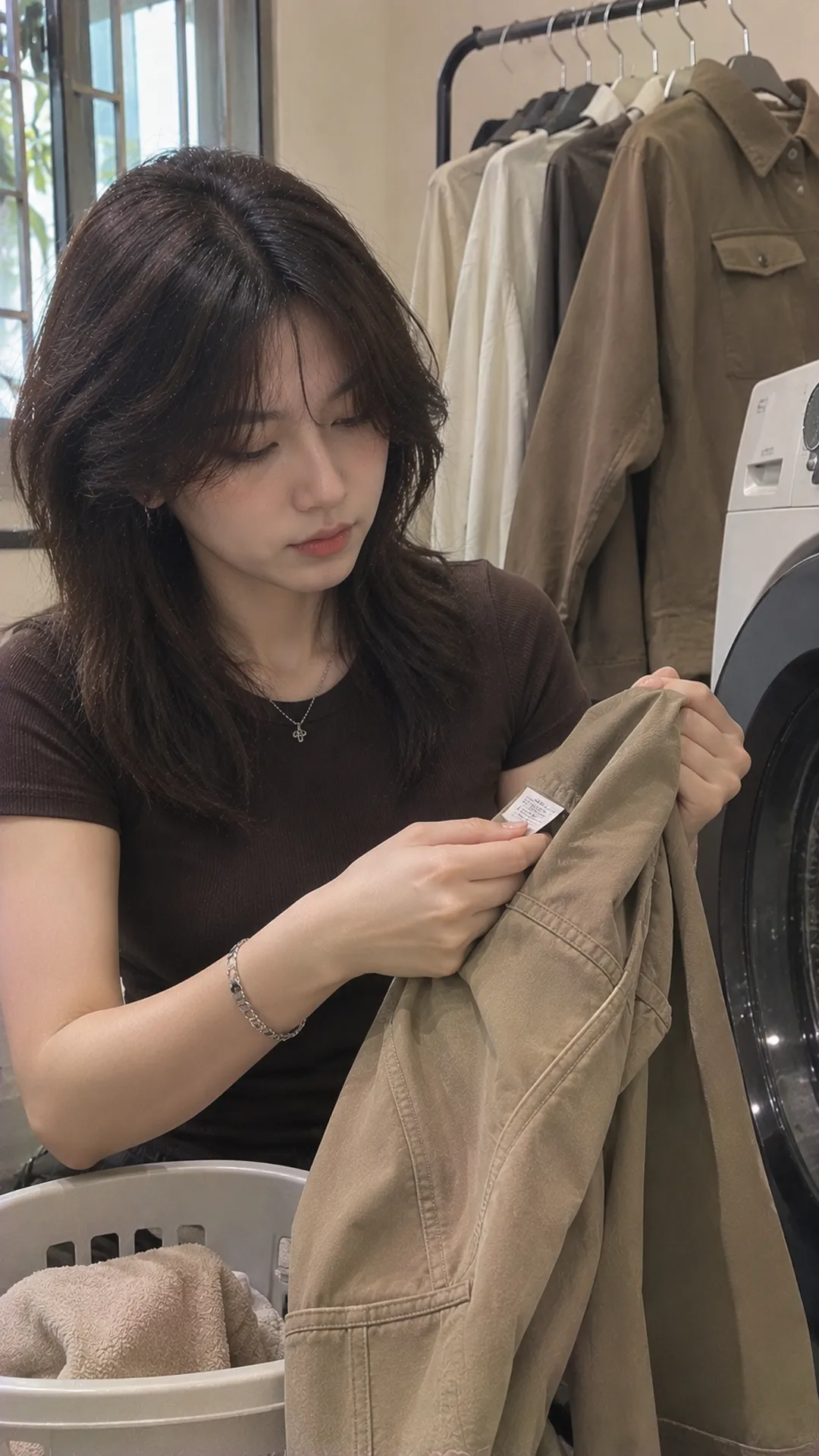
Read the finished garment’s instructions before washing, especially if it has a coating, leather trim, a print, or more than one fabric. Fiber content, color, and finishing can mean that two similar-looking garments need different wash and iron settings.
Before washing, empty the pockets and prepare the fastenings as directed. After drying, check the legs, plackets, or hems before putting it away. If you want to press in a crease, use the heat allowed by the label. A thick feel is no reason to turn up the iron.
If the shape changes, check whether the fabric, seams, or waistband is responsible. A loose waist may need an alteration. A damaged part may need repair. A harsher wash won’t reliably shrink the whole garment to the dimensions you want.
Make your choice based on the garment’s details
Confirm the shade, fiber content, thickness, stretch, and care needs before buying. Then try it with a specific outfit. A piece you can wear often and care for easily is more useful than one chosen for a familiar fabric name.
A life-cycle view of sustainable fashion also takes more into account than fiber or fabric names. Choose a garment you understand, that does what you need, and that you can keep using for a long time.