

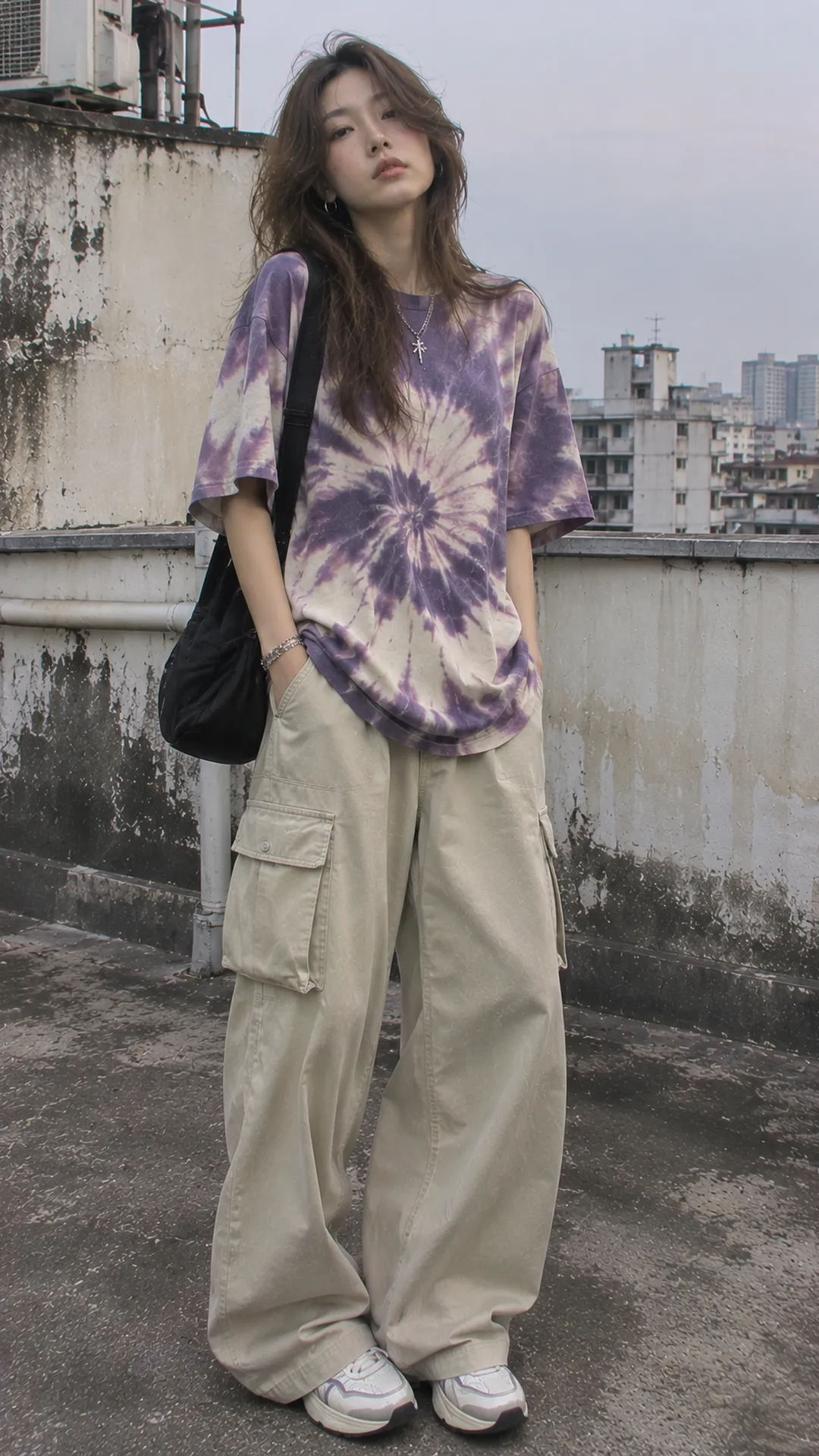
Understand technique before pattern
The exhibition introduction from Colorado State University's Avenir Museum describes resist dyeing through methods that block dye from parts of cloth. Shaped resist methods can fold, tie, twist and bundle. Every irregular color area does not prove the same production process.
Unfolding secured or tied cloth reveals color differences as patterns. Spirals are recognizable but not exclusive. Treatment can produce rings, stripes, light-dark areas or irregular clouds.
Tie-dye need not be vivid. Black-gray, blue-white or brown-cream can create interest. For dark wardrobes, start with surface contrast and composition rather than many unfamiliar colors.
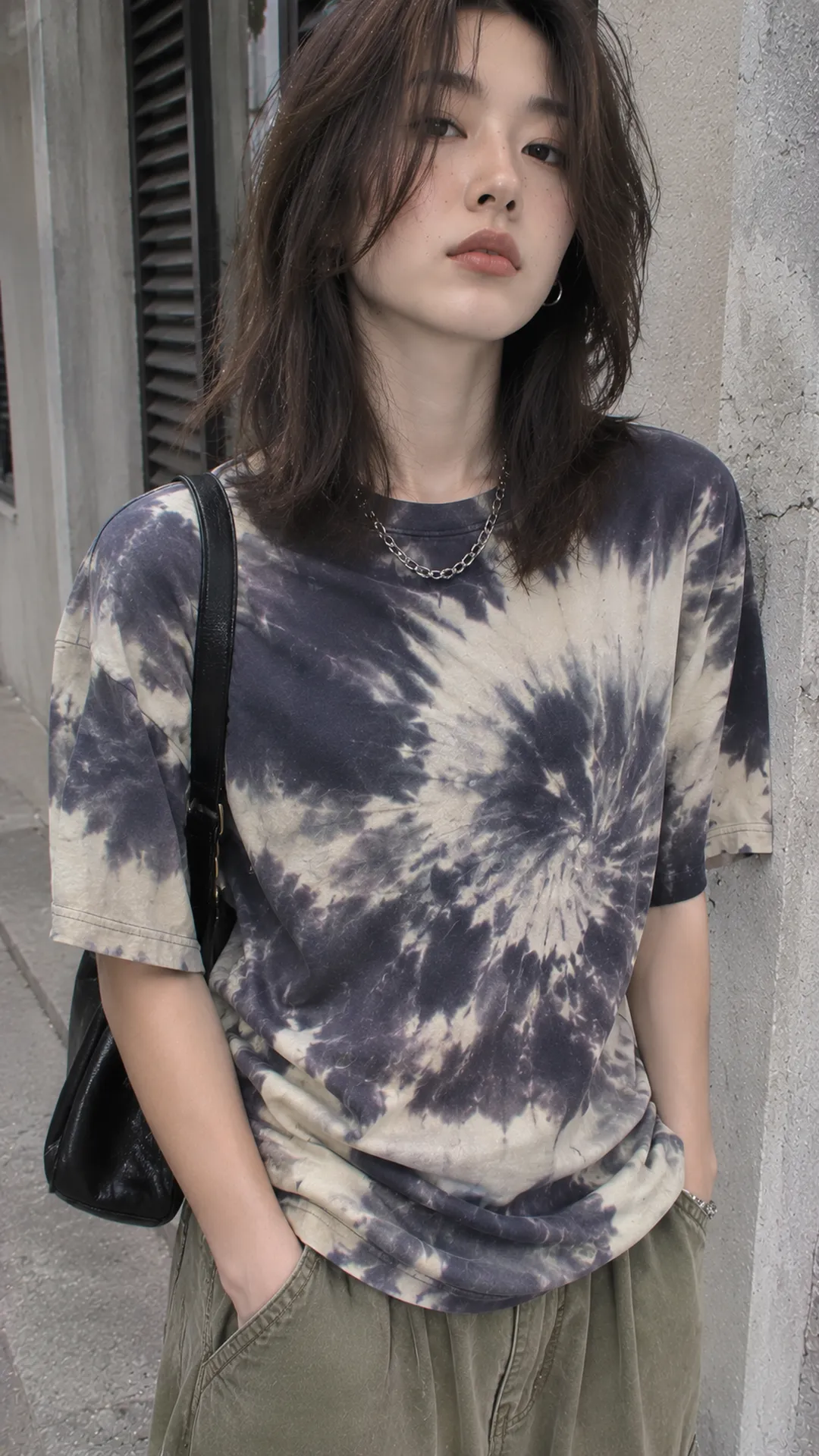
What can visual inspection establish?
| What you see | A supported observation | Not established |
|---|---|---|
| Spirals or irregular color lines | A tie-dye-like appearance | Definitely hand-dyed |
| Products with similar layouts | Repeated design | Printing confirmed from images alone |
| Different front and back surfaces | Construction and process need inspection | Immediately good or poor quality |
| An even gradual color transition | A gradient effect | Necessarily tie-dyed |
If technique justifies your payment, ask whether the finished garment was dyed, cloth dyed before sewing or the pattern printed. Request the actual delivered item's photo. Specific answers beat an unsupported one-of-a-kind claim.
If you enjoy the appearance alone, print may meet the need. Clear descriptions set expectations. Printing is not automatically inferior, nor is every dye variation acceptable regardless of extent.
Resist-dye traditions are not all identical
The V&A's material on adire introduces Yoruba indigo-patterning traditions including tying and other resist methods. This shows a history broader than the familiar multicolored spiral tee.
For a named technique or tradition, investigate that name rather than relabel everything tie-dye. Daily styling still benefits from separating method, pattern and aesthetic. The fashion aesthetic dictionary explores style without conflating it with material or dyeing.
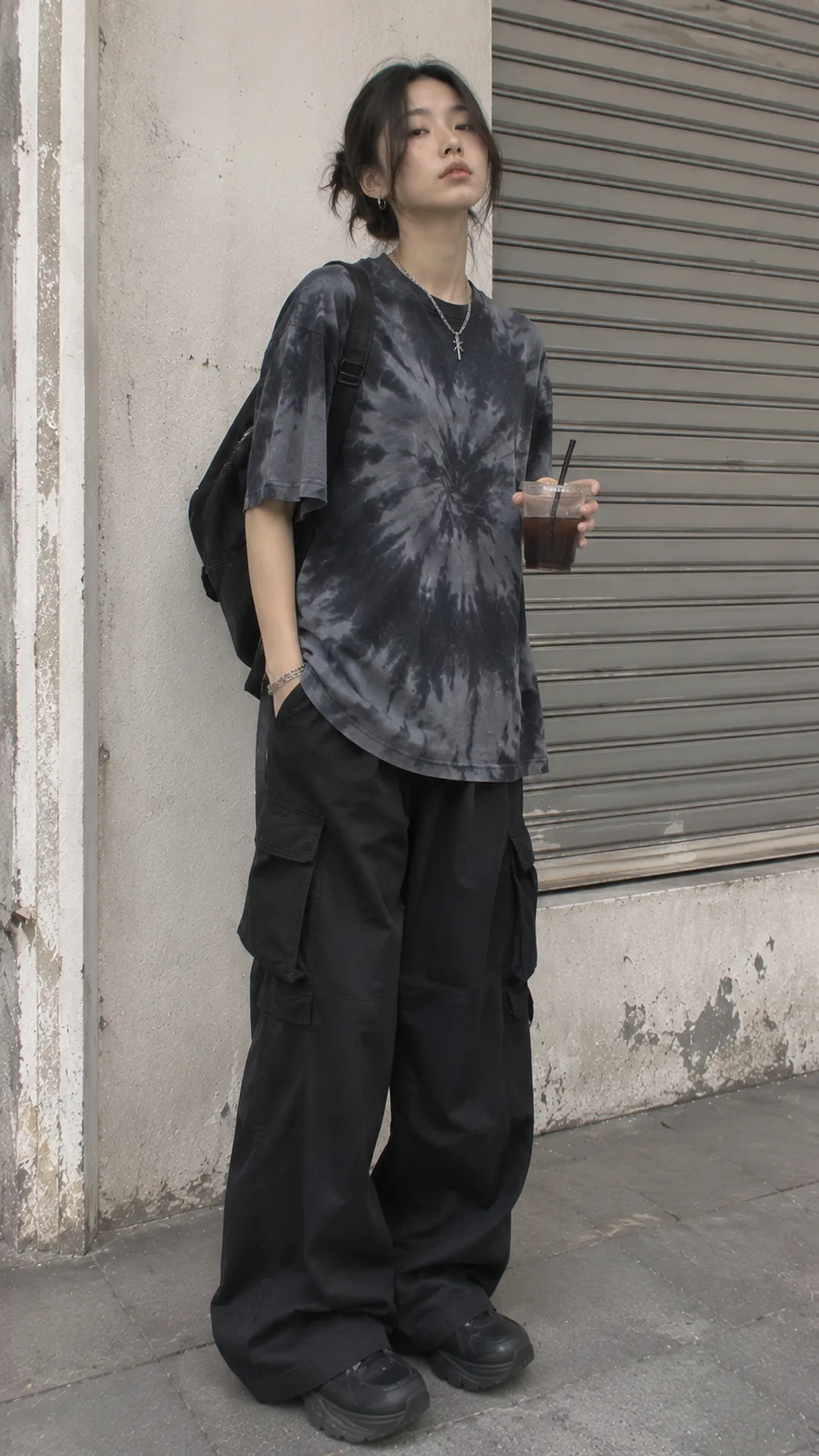
Choose color areas for your preferred prominence
Few colors and low contrast
A gently mottled black-gray top can look almost plain at distance and reveal detail nearby. This eases experimentation in a mainly black wardrobe with familiar jeans, trousers or skirts and existing accessories.
Two or three distinct colors
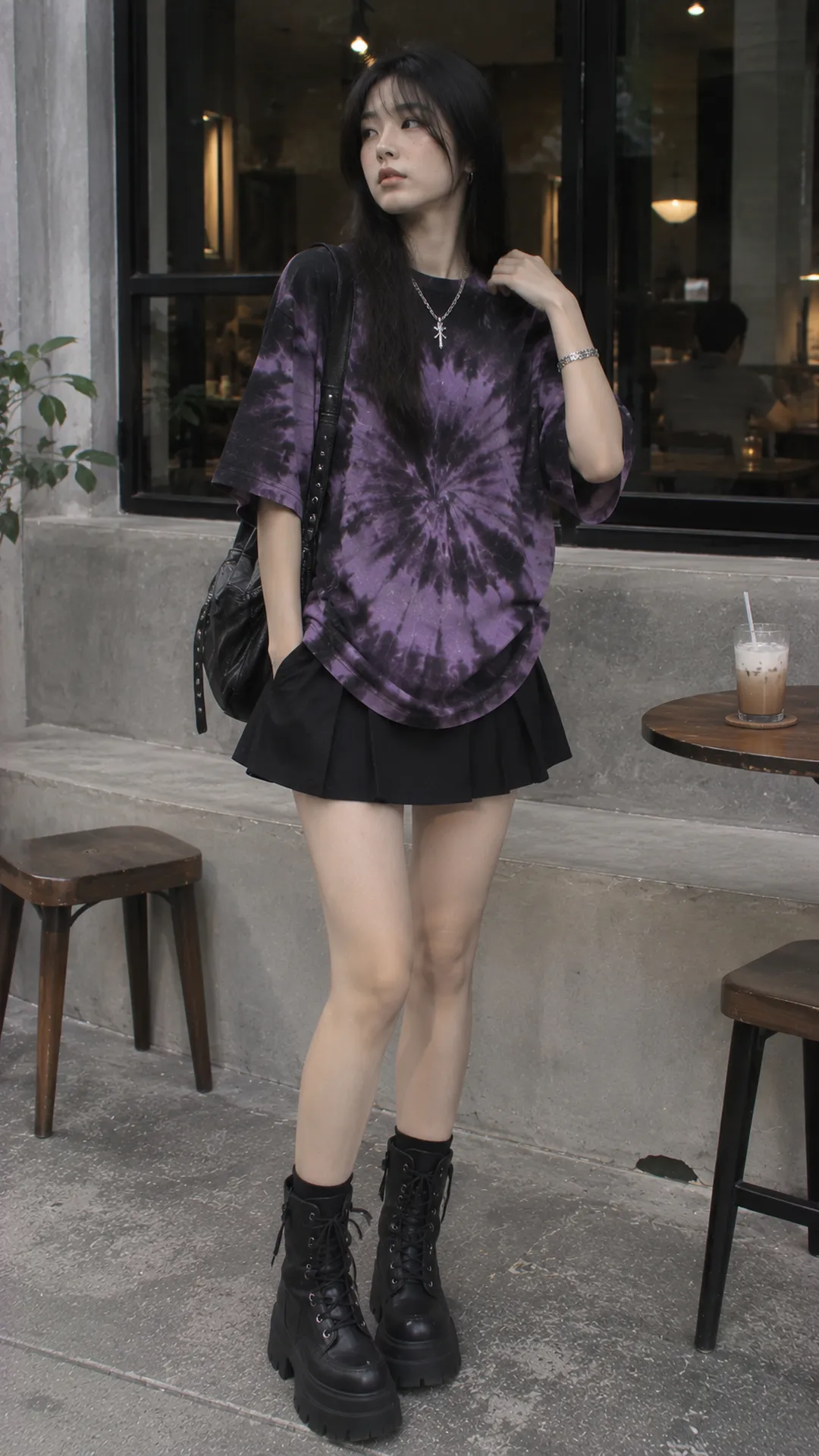
Use one pattern color in trousers or bag: blue-white above ivory, or purple-black above black. Repetition connects without requiring exact matches.
Many colors and broad areas
Identify the brightest patch at neck, chest, waist or hem. Choose the position you want to emphasize, not only color count. A large off-center spiral differs from a centered one within the same palette.
Use a fashion moodboard to compare these three levels. A few references of the same item type help more than mixing tops, trousers, dresses and accessories without knowing what to try.
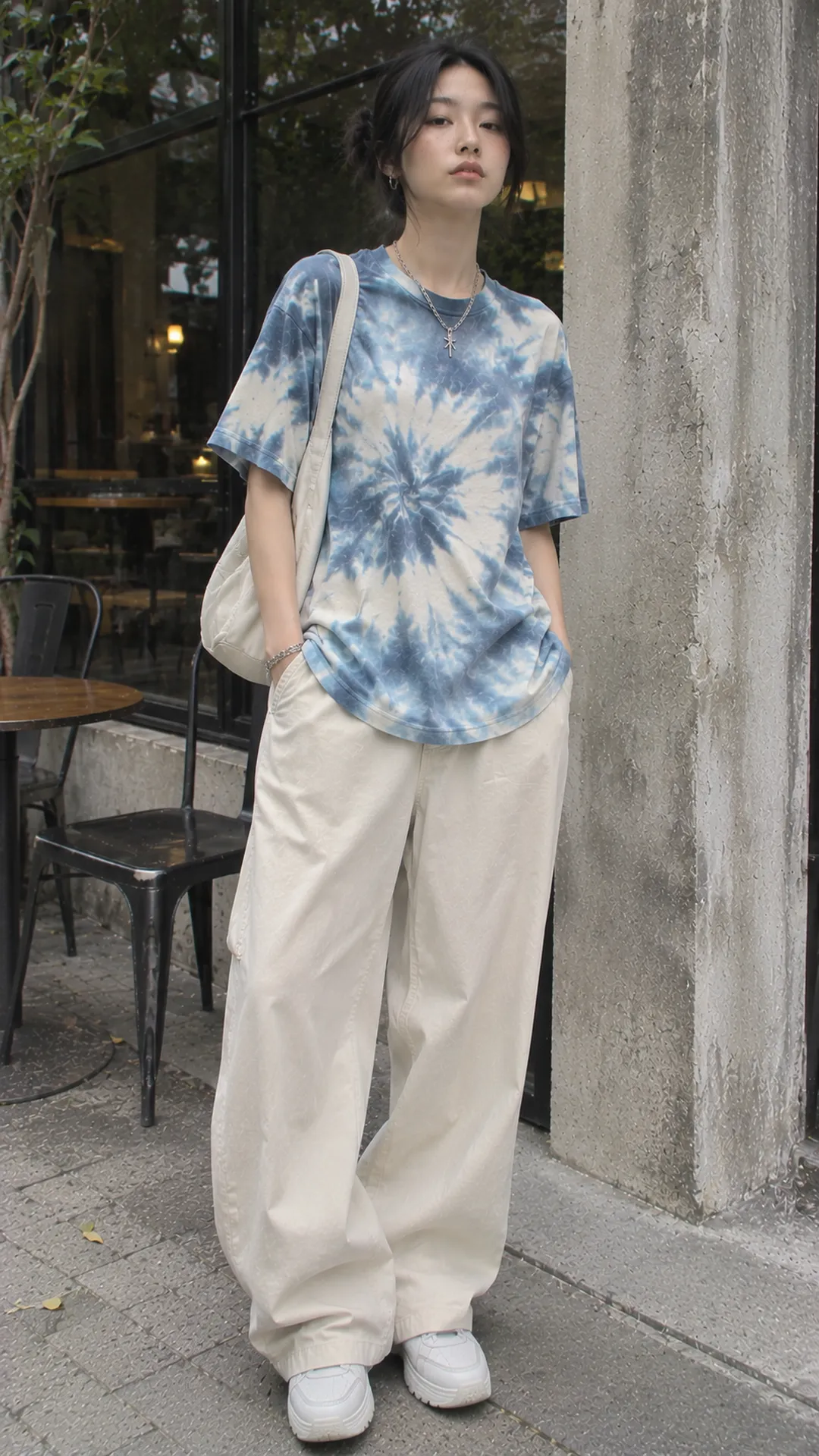
Five patterned outfit formulas
A tie-dye tee and black jeans
Keep trousers and shoes simple while the top carries color. For a loose top, try a near-waistband hem or partial tuck if the fabric permits. Straight jeans give relaxed definition without requiring skinny legs.
Choose black or a dark pattern color for the bag. A large spiral may need only a small necklace. Graphics on every accessory are unnecessary to establish personality.
A dark patterned top and plain skirt
Black-gray or purple-black works with a simple A-line. Check waist fabric while seated for your preferred neatness. Loafers, sneakers or boots follow the schedule; practical shoes encourage repeat use.
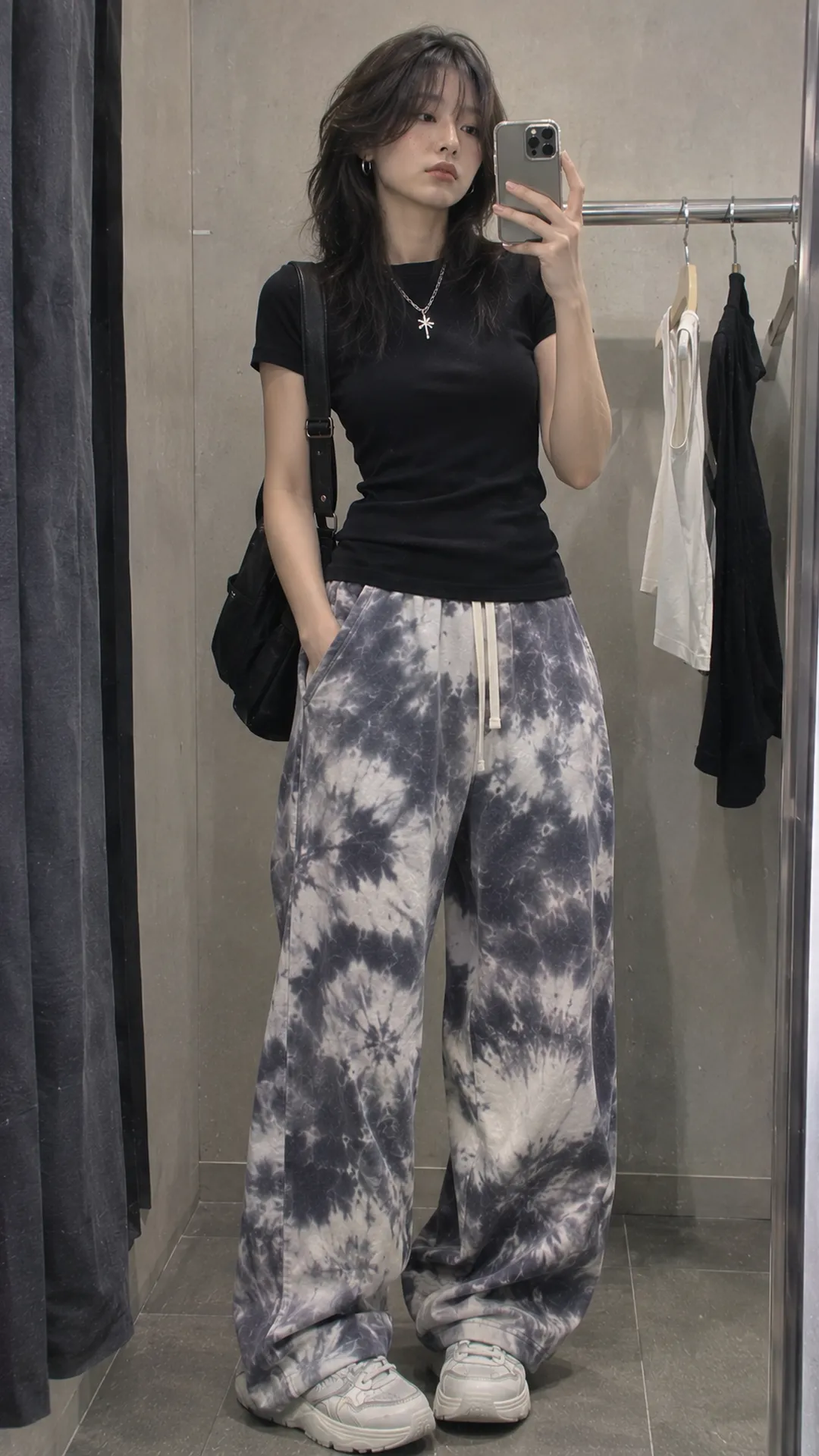
Tie-dye trousers and a neat base top
With patterns below, a plain top provides a pause. Try ivory, black or a related patch color. Leg width and hem length matter more than mandatory cropping. A waistband-length top defines proportions without exposed stomach.
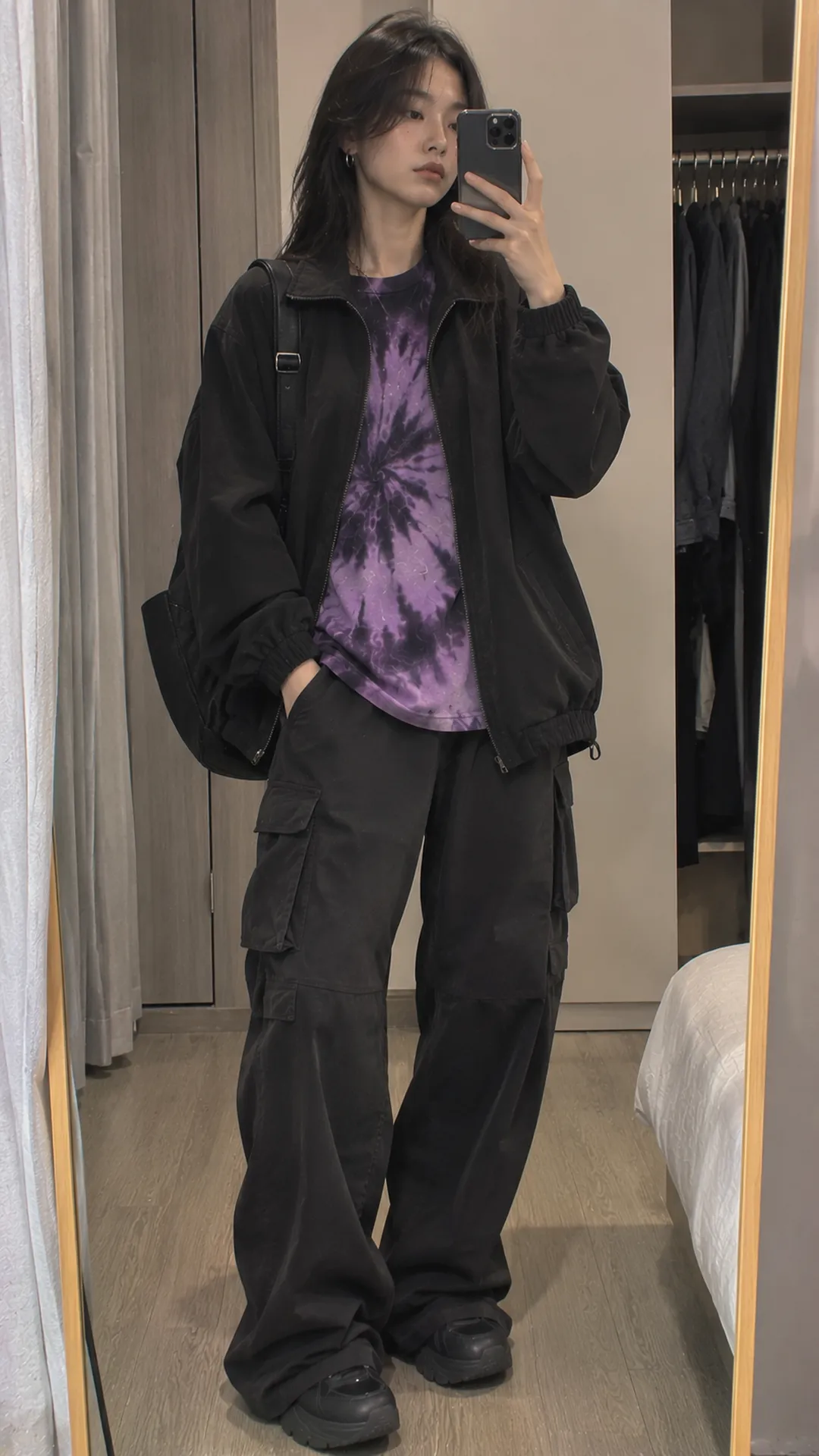
A patterned top beneath plain outerwear
A suitable shirt or jacket limits exposed pattern, making the central torso an accent within an outer frame. Ensure the inner outfit remains complete without the jacket, especially through changing weather.
If both layers are wide, inspect shoulder and armhole bunching. The women's layering guide assigns functions instead of merely adding clothing to hide color discomfort.
A patterned accessory on plain clothing
A canvas bag or scarf with a tie-dye effect tests a smaller area. Choose a simple base and visible accessory position. Many accessory colors need not all repeat; one top or shoe connection starts the look.
Read the description before ordering
Ask composition, dimensions, stretch and specific care. Technique or appearance cannot guarantee coolness, thickness or softness. Beautiful color with unsuitable fabric or fit remains difficult for regular wear.
For piece-to-piece variation, ask expected differences and selection process. Bright patches may sit elsewhere than the sample. If placement matters, actual-item images beat more studio photos of a representative design.
Inspect seams and body balance as well as color. Irregular patterns do not excuse misaligned joins or wrong measurements. The Alt Fashion shopping hub supports size, budget and seller-information checks.
Preserve color through specific care
Read before the first wash and clarify missing directions. Fibers, dyes, finishing and decorations vary, so no universal soak or temperature applies. A no-fade claim cannot replace care.
Follow separate-washing instructions rather than test with pale clothes. Do not add bleach for an imagined stronger aesthetic; results can differ completely. Dry, tumble-dry and iron as labeled, and store only dry.
Photograph the label before it fades and record successful care. For stains, consult product instructions before treating an entire color area. Several improvised methods together obscure the cause if color or surface changes.
Frequently asked questions
Must tie-dye be rainbow-colored?
No. Choose two colors or several depths within one family. Black-gray, blue-white and brown-cream test the effect within existing wardrobes.
Does a printed tie-dye pattern mean a fake product?
Printing alone cannot establish that. Check whether the item is accurately described. A clearly disclosed print meeting quality and practical needs can be chosen for appearance and use.
Can I wear tie-dye head to toe?
Yes, for deliberate strong impact after checking the whole outfit. Beginners can test one piece to learn preferred intensity. With a set, inspect pattern joins, volume and accessories against competing focal points.