

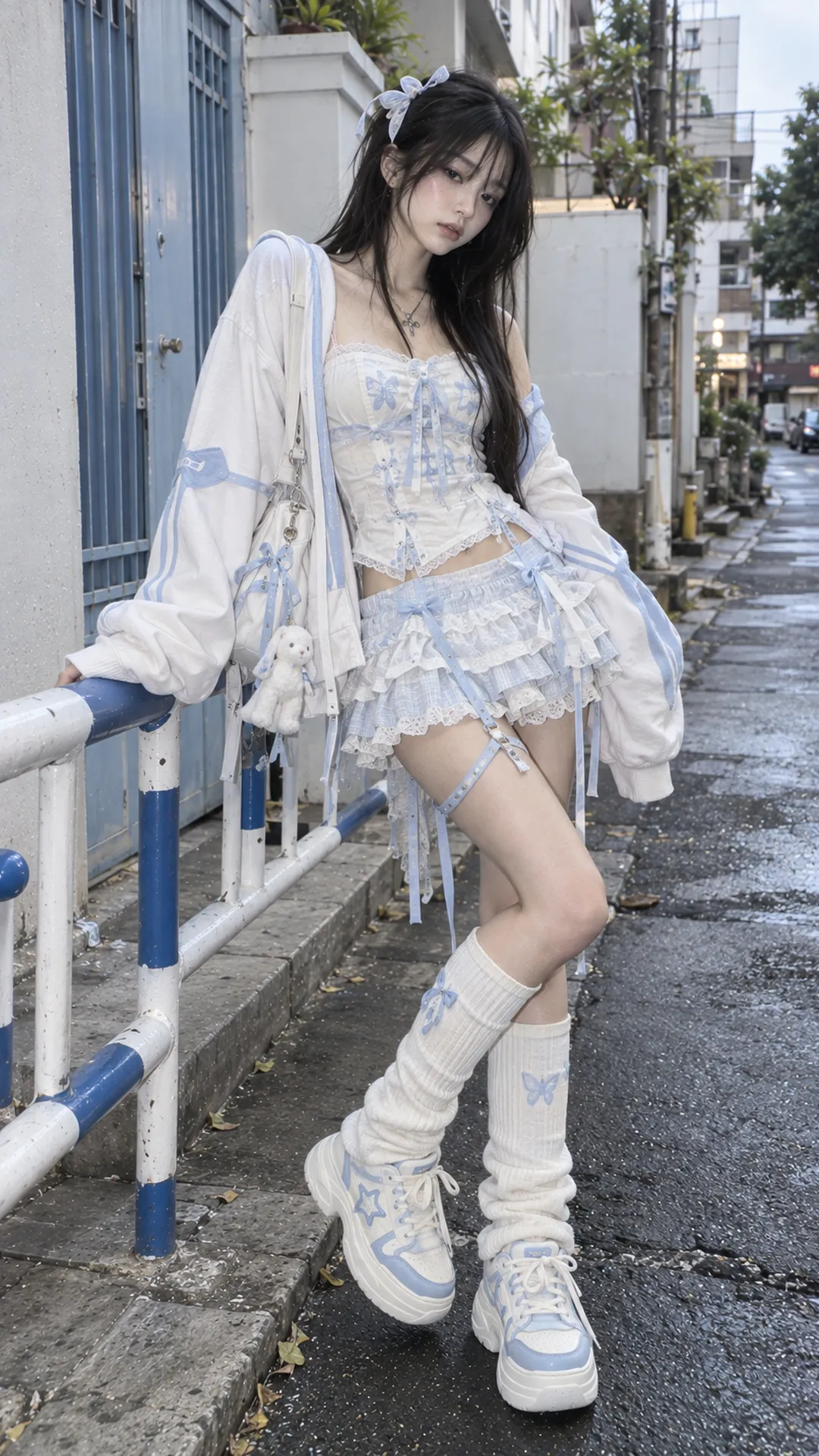
What is Tenshi Kaiwai in the context of J-fashion?
In an analysis published by Shueisha's Shinsho Plus, Tenshi Kaiwai is placed at the intersection of sportswear, cyber references and online culture. Oversized jersey tops, white and pale blue are familiar cues. This is a specific fashion context, not a general name for all angel imagery.
Think of the style name as a way to find a visual community sharing a similar feeling. It helps wearers exchange ideas without creating a compulsory uniform. Two people can follow the direction while one favors loose tops and sneakers and the other prefers skirts, lace and long socks.
To understand its place within Japanese fashion, consider Harajuku as a space encompassing many style branches. Do not reduce everything to very colorful outfits or many accessories. This guide focuses on a wearable white-and-blue interpretation rather than retelling all of J-fashion history.
Recognizing the combination of color, silhouette and details
The palette creates continuity
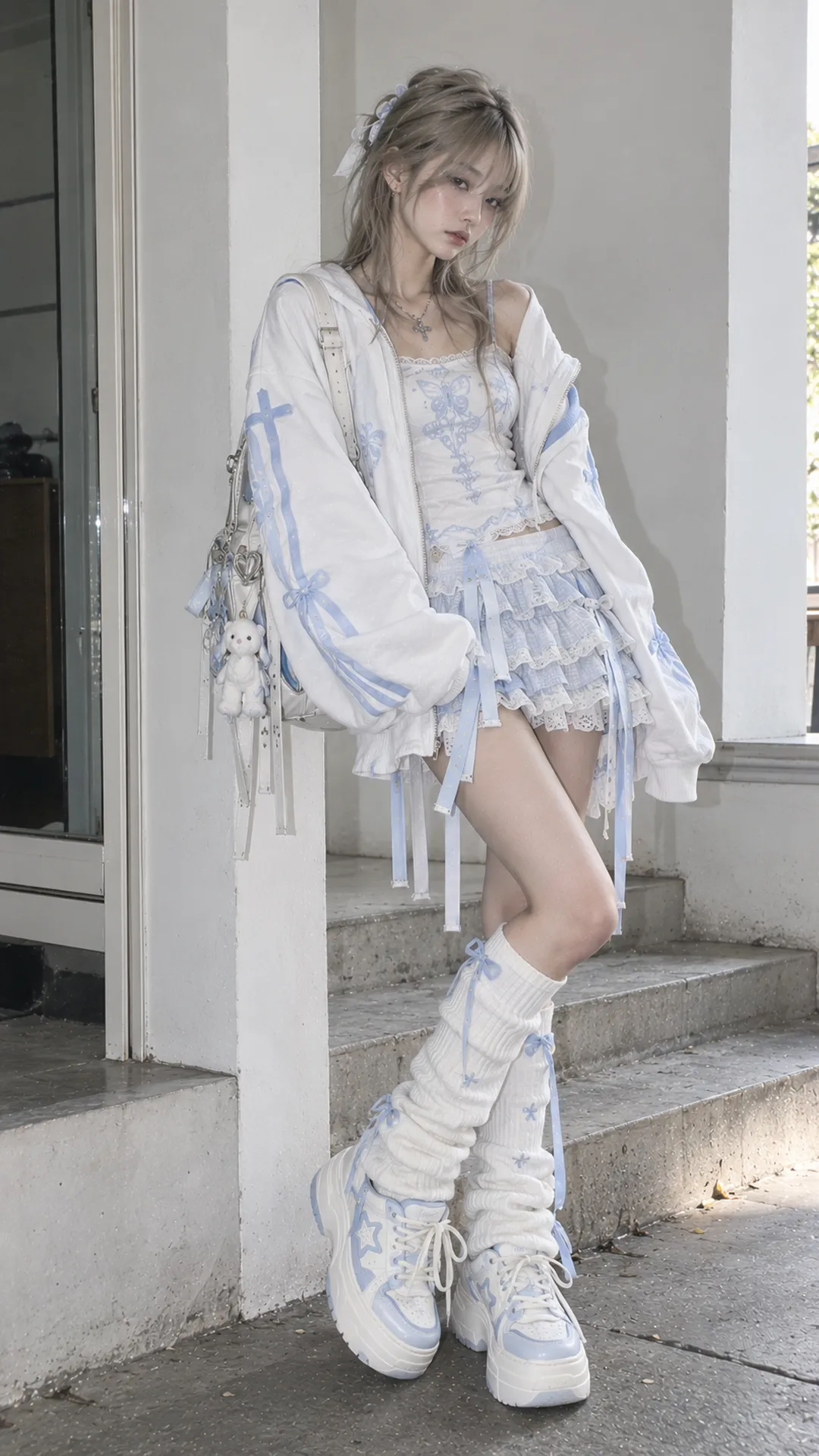
Choose a base color, a secondary color and one detail connecting them. For example: an off-white base, powder-blue jacket and small bag containing both colors. Cool white and creamy white can look noticeably different together; try them in daylight before deciding whether the combination works for you.
The introduction from the Japanese store 彗色予報 emphasizes white, blue and pale blue in its Tenshi Kaiwai direction. This directly illustrates one brand's color interpretation, not an obligation to follow an exact color code or eliminate every dark accent.
Sporty construction distinguishes it from an angel dress
Look at the zipper, standing collar, cuffs and stripes along the sleeves. They provide clear structure beside soft details such as bows, ruffles or a flared skirt. One well-shaped jacket can be the main feature; every possible item does not need to appear together to establish the direction.
Small details connect softness and sharper lines
Bright metal zippers, a somewhat squared bag or transparent accessories can contrast with soft fabric. Try each item and take a full-body photograph. If you see only accessories and no longer recognize the clothing's shape, remove one and retain a detail with practical use.
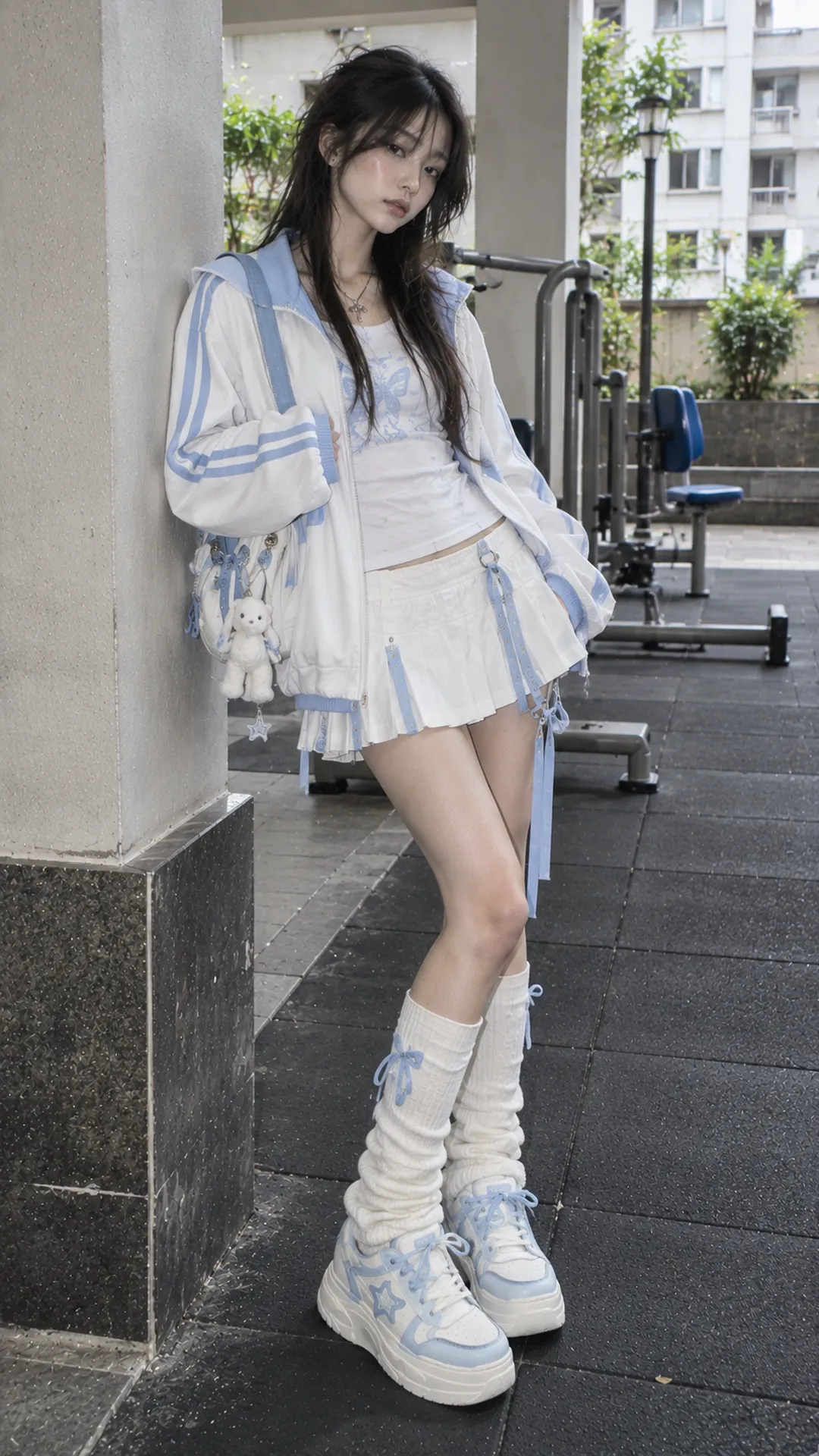
How is Tenshi Kaiwai different from Angelcore?
Both can use white, pale blue and a light feeling, but the outfit's starting point often differs. Angelcore can build on light, drape, fine fabrics and dreaminess. In the Tenshi Kaiwai interpretation considered here, sportswear, roomy proportions and the contrast between softness and modern details play a clearer role.
Place two outfits side by side: a draping white dress with a sheer overlay, and a pale blue jersey top over white with a streamlined skirt. Both can look light, but they construct their lines differently. This comparison helps you choose a direction; it is not a test every outfit must pass.
If light, movement and soft materials appeal more than sporty construction, the guide to Angelcore and angel-inspired outfits may be closer to your needs. You can blend the two, provided you describe it as a personal choice rather than claiming the names are fully interchangeable.
Choose wardrobe pieces by role, not quantity
The main piece: a top with proportions that suit you
Prioritize chest width, body length and sleeve measurements rather than the oversized label alone. A hip-covering top produces very different proportions from a waist-length one in the same color. Zip it, unzip it and raise your arms to see whether it retains its shape in motion rather than only standing still.
If you already have a roomy top, the bottom does not have to be tight. A comfortably fitting A-line skirt or moderately wide straight-leg trousers can still provide visual breathing room. Avoid several layers bunching in one place and requiring constant adjustment.
The base: wearable on its own without competing
A plain tee, camisole with coverage you like or covered sleeveless top can all serve as inner layers. Check the outfit with the jacket removed: is it still covered enough and complete for your destination? If not, change the base before adding accessories.
The connecting piece: shoes, socks or a bag
One item repeating the secondary color can connect the outfit. For example, echo a blue stripe in the bag while keeping shoes white or light gray. Every object does not need the same tone; limited repetition often makes the main garment clearer.
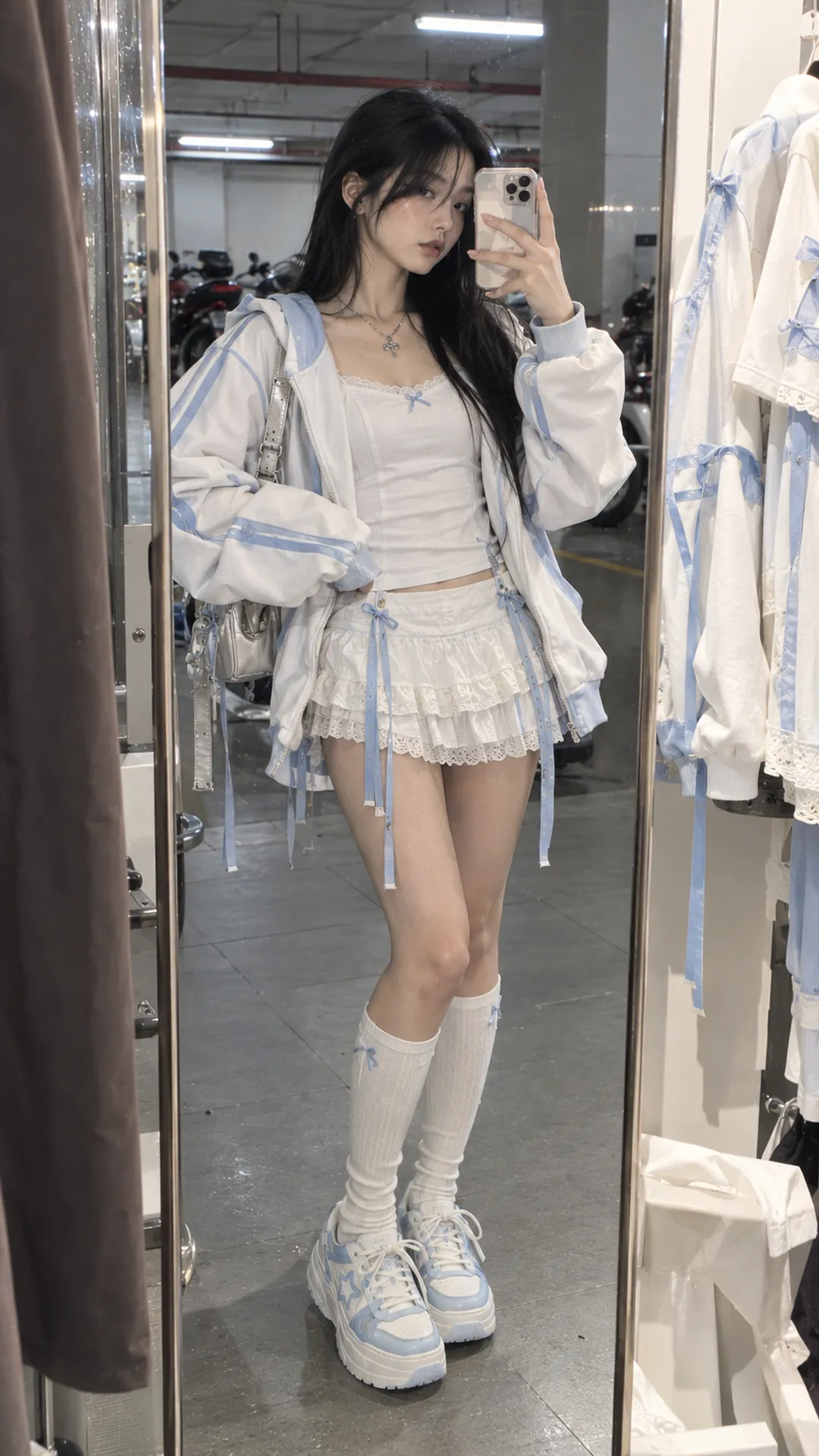
Three white-and-blue outfits at different levels of emphasis
A streamlined look for coffee or meeting friends
Start with a white tee, pale blue A-line skirt and light-colored track jacket. Keep shoes simple and choose a small bag that holds your essentials. If the jacket has many trims, leave the inner top plain. This introduces the reference while leaving room to adapt around existing pieces.
In the mirror, check whether the inner top appears where you intend. A short visible hem can establish a layer; crumpled fabric at the waist makes the proportions less clear. Try a partial tuck or shorter top before immediately buying another jacket.
A sportier direction with less decoration
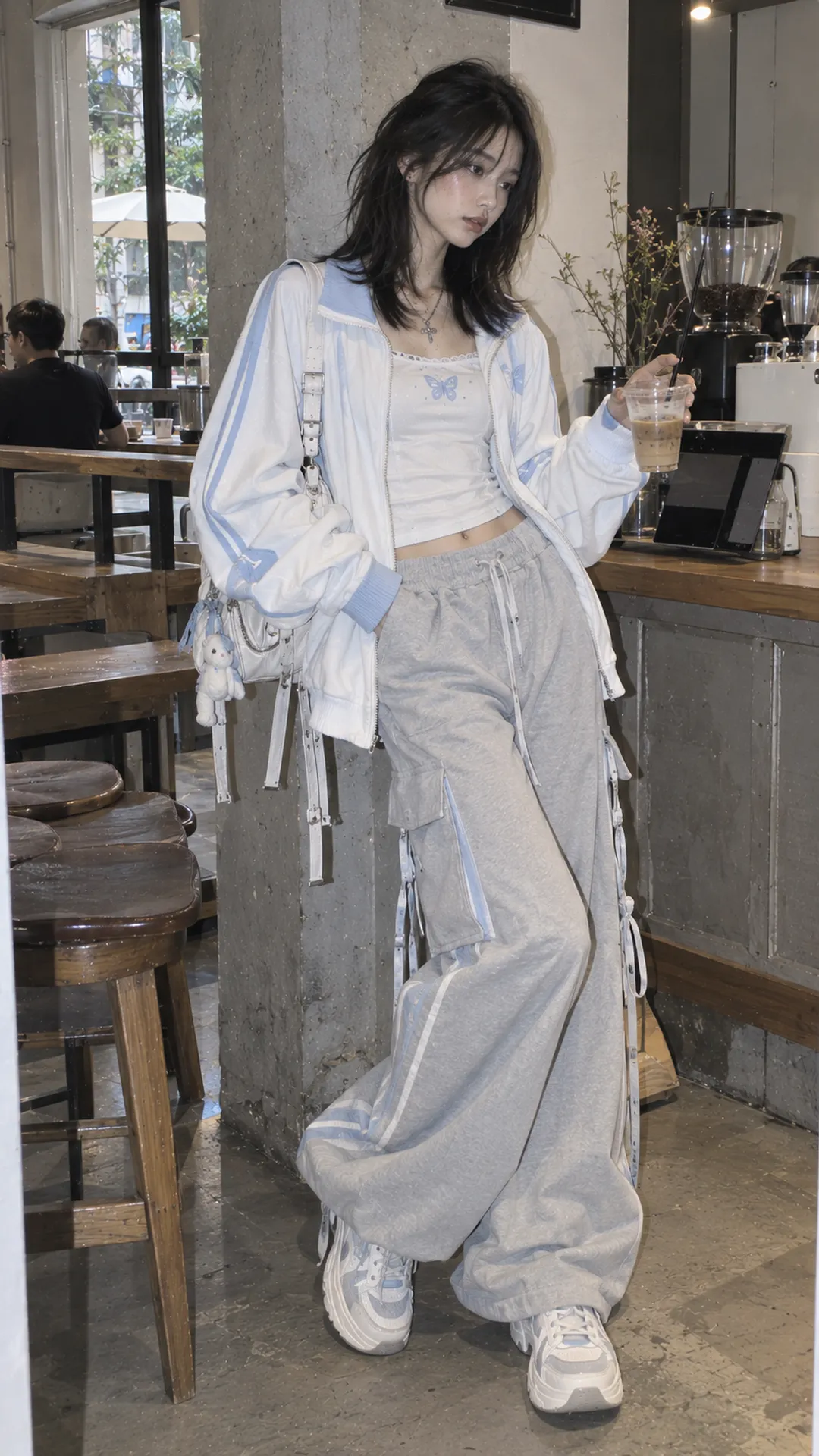
Choose a white jacket with blue panels, pale gray straight-leg trousers and well-fitting sneakers. A white inner top maintains the palette. This version works if you dislike skirts or long socks. Color and cut provide the character without requiring bows or angel-shaped accessories.
Check trouser width with your actual shoes. Adjust the hem so it does not sweep the ground or catch on the sole. If jacket and trousers are both loose, opening the jacket to reveal the base can clarify the torso line. A fitted item is not required to balance the outfit.
More accents for a photo shoot
Make an oversized jacket central, adding a moderately ruffled skirt and light socks or leg warmers. Choose one detail such as a hair bow or distinctively shaped bag. Before leaving, sit, climb stairs and carry the bag; decorative straps should not catch on handles or pull the clothes out of place.
A photographic outfit need not be an all-day outfit. Carry accessories in your bag and add them on arrival. This reduces heat and snagging while preserving creative choices without wearing every layer throughout the journey.
Adjusting for weather and daily life in Vietnam
A fabric or style name does not guarantee that a top will feel cool. Fabrics called jersey can differ in weight, lining and textile construction. Ask for interior photographs, fiber information and actual measurements. If possible, walk around for a few minutes rather than only trying it in an air-conditioned fitting room.
On hot days, retain the palette through short sleeves and one sporty piece, then carry a light jacket for when needed. Multiple layers are not necessary to retain the style label. For long socks or leg warmers, consider outdoor time and how easily you can remove and pack them.
The principles in the guide to layering outfits for women help when choosing lengths and thicknesses between layers. An outer layer you can open or remove is more flexible than an outfit where removing one item leaves the rest unable to provide the coverage you need.
For light colors, inspect transparency under realistic lighting and when the fabric stretches. Choose inner layers for your needs; you do not need several thick layers to compensate for an unsuitable item. For a busy day, prioritize familiar shoes and a bag that opens and closes easily.
Checklist before buying another piece
- Does this fill a missing role or repeat something I own?
- Do the body, sleeve, waist and length measurements suit how I want to wear it?
- Without accessories, can the clothing work for other occasions?
- Do zippers, straps or attached details catch when sitting, carrying a backpack or traveling?
- Do the care instructions fit the time I have for clothing care?
Try existing clothes first and photograph them from the same angle and in the same light. Reviewing them makes it easier to see whether you lack color, shape or simply a connecting detail. A Tenshi Kaiwai sales label does not replace information about quality, measurements and returns.
Frequently asked questions about Tenshi Kaiwai
Do I have to wear wings or headphones?
No. Color, sporty tops and garment proportions can suggest the direction. Accessories should support how you use the outfit; a frequent reference-image item is not automatically compulsory.
Can I wear trousers instead of a skirt?
Yes. Light-colored straight-leg trousers are an adaptable starting point. Pay attention to hem length and balance with the jacket. You do not need an item you find uncomfortable simply to match a template.
Where should I start if I do not know J-fashion?
Choose a few images you like and record exactly what attracts you: color, silhouette or material. Then use the Aesthetic Dictionary to compare style names. This makes labels tools for finding ideas while preserving your choice of outfits that suit you.