Where does Stockholm style sit within Scandinavian style?
Scandinavian fashion is broader than one minimalist image. Stockholm is often associated with restrained dressing, while Copenhagen images may show stronger colors and prints. These are frequently discussed media tendencies, not fixed boundaries between two cities.
A comparison by Who What Wear on Danish and Swedish style records that distinction through fashion professionals' views. Treat such observations as one perspective at one time rather than descriptions of the entire population.
In What Is Scandi Style Today?, voices from Copenhagen Fashion Week also show that Scandi is difficult to contain within one image. Calling every beige outfit Stockholm, or excluding colorful clothes from Scandinavian style, is too simplistic.
For a practical start, choose a specific direction: everyday clothes with clear shapes, moderate decoration and a personal accent. The following sections use that approach rather than attempting to summarize every Nordic fashion branch.
Relaxed shapes need clear endpoints
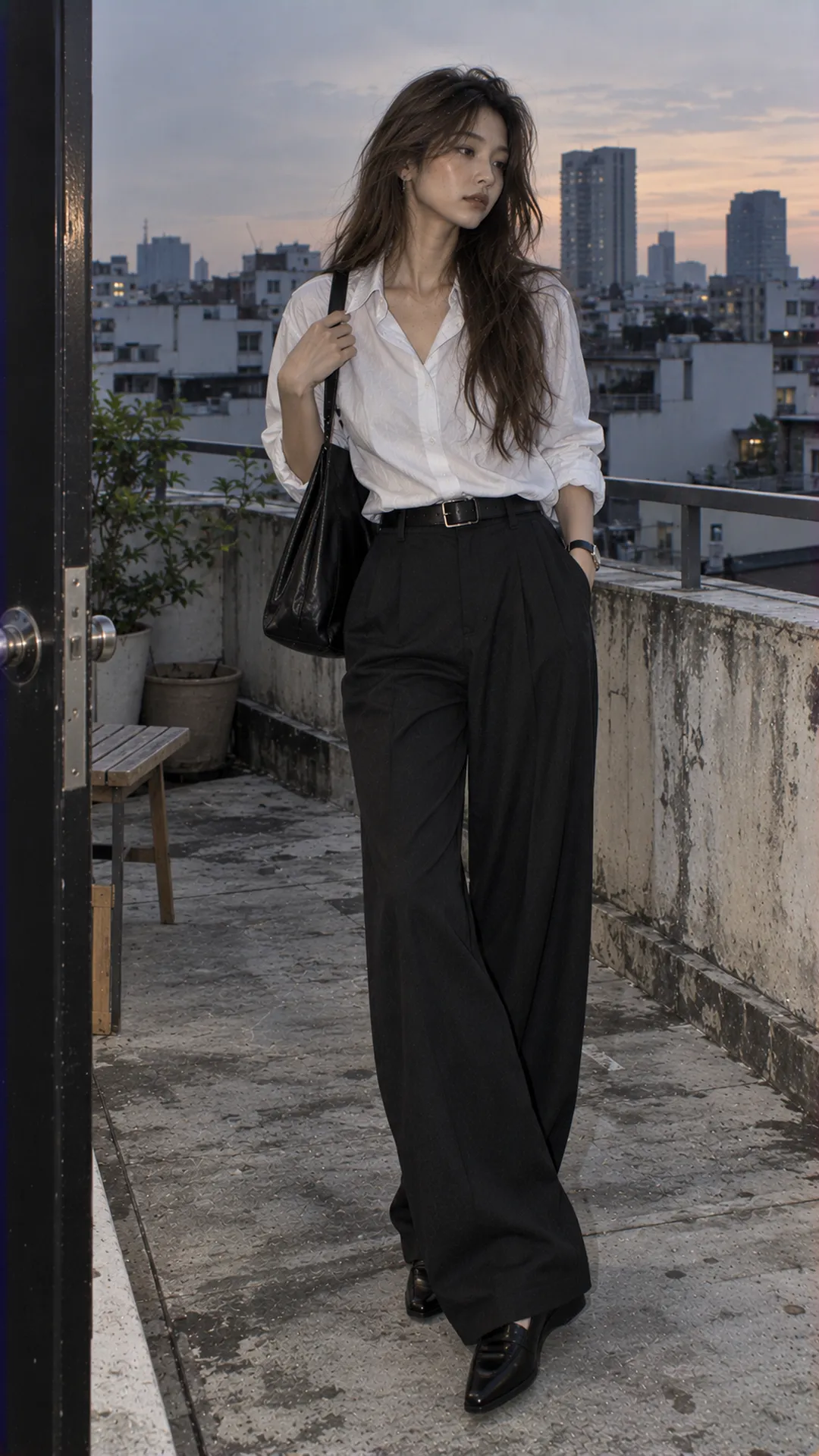
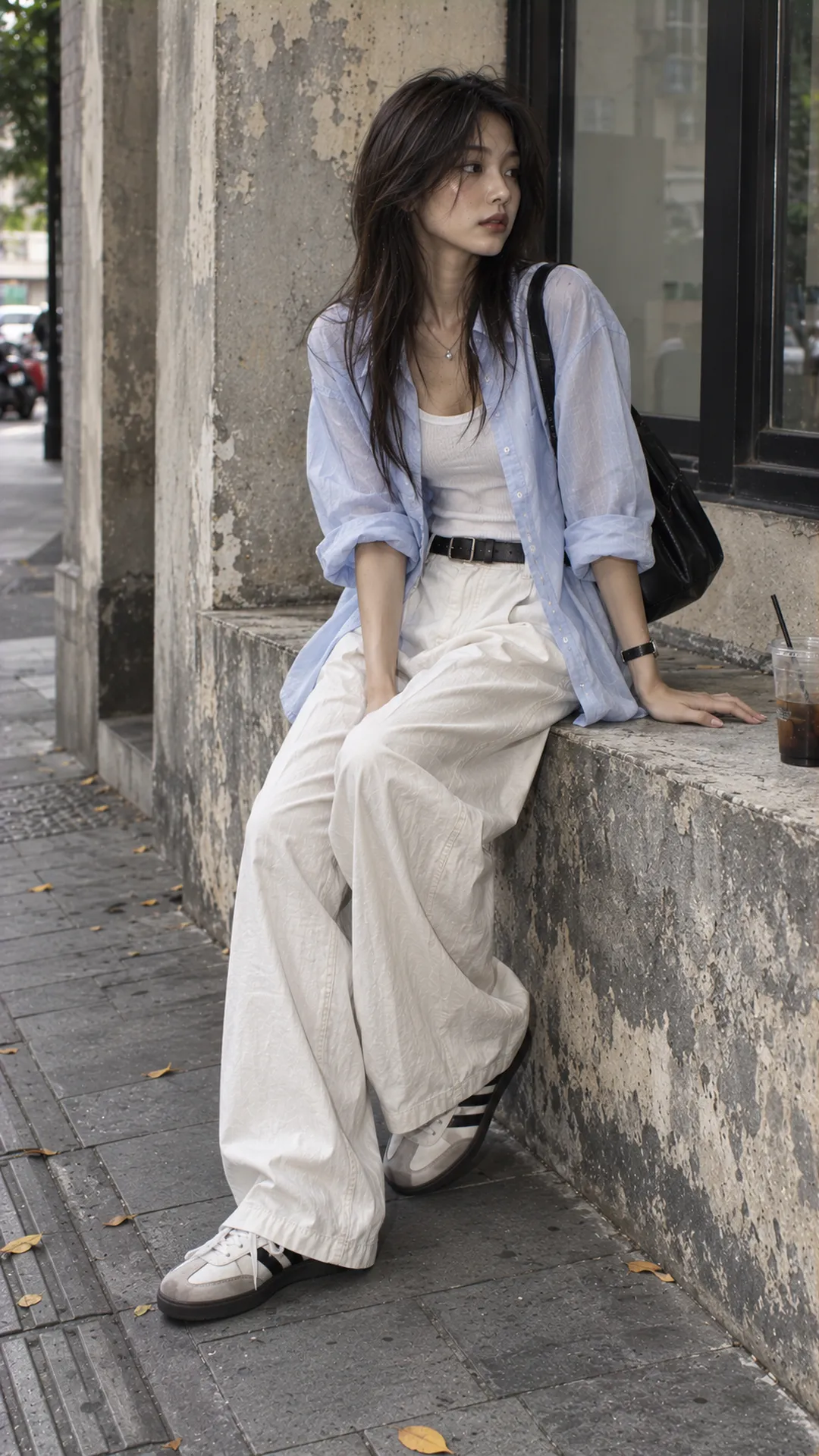
Look at a roomy shirt and straight-leg trousers from shoulders to shoes. If sleeves cover hands, the shirt nears the knees and trousers pile on the shoes, three lengths compete. You need not switch to tight clothes; adjust one or two endpoints to clarify the pieces.
Keep the roomy shirt but fold the cuffs once, tuck the front and let trousers fall near the shoe uppers. If you dislike tucking, choose a shorter shirt or straighter trouser drape. Aim for your preferred feeling rather than supposedly ideal body proportions.
A set of Vogue interviews with Stockholm fashion professionals mentions polish and practicality. Translate that into specific checks: does the collar lie flat, do buttons strain, and do trouser pockets gape when standing?
For more on reducing details to clarify shape, the guide to minimalist style explains general principles. Stockholm style here applies them to everyday dressing without replacing the whole concept of minimalism.
Choose light-dark relationships, not automatically all beige
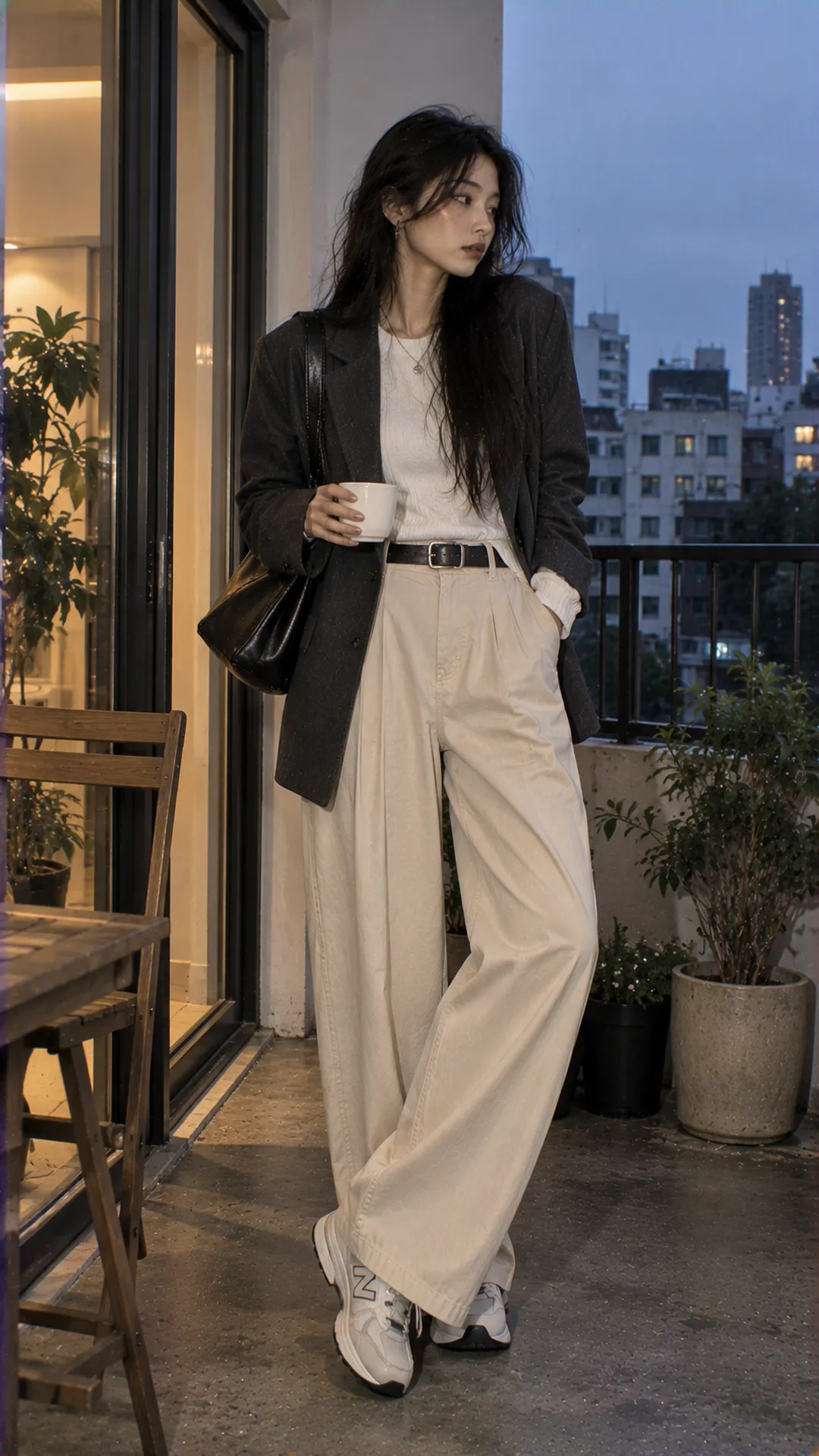
Navy, off-white and blue denim are an easy starting palette. A light shirt defines the neckline, dark trousers give weight below and brown shoes connect the tones without a glaring new area. Even with few colors, individual shapes remain visible from a distance.
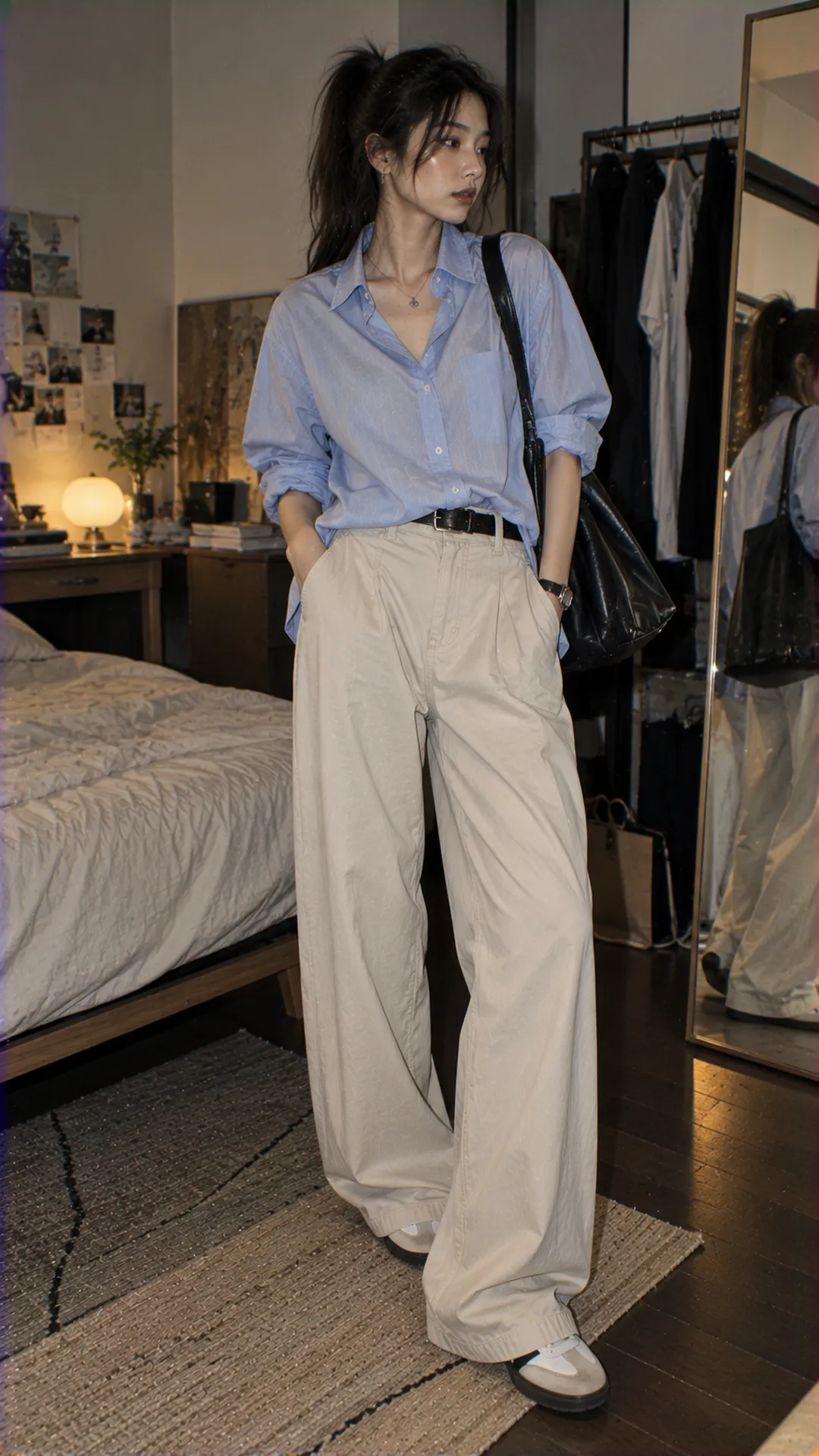
For a black wardrobe, try a matte black top, charcoal trousers and a structured black bag. Surface and shade differences prevent one merged block. For lighter color, a pale blue shirt can replace white while keeping a gentle feeling.
Strong colors also have a place. In Who What Wear's account of a 2025 Stockholm visit, red accents and patterned shoes appear beside basics. Those are the author's observations, not compulsory features or a current trend list for everyone.
Try a small red bag with gray and denim, or patterned shoes with plain trousers. Begin with one clear accent. Once you like it, increase color without seeking permission from an aesthetic rulebook.
One shirt, three levels of polish
School or a flexible workplace: a pale blue shirt, charcoal straight-leg trousers and loafers. Choose a waistband comfortable when seated, then tuck without creating a large bundle at the stomach. A shoulder bag large enough for actual belongings keeps the outfit useful beyond the photograph.
Weekends: retain the shirt but use straight jeans and flats. Open collar buttons within your comfort and leave the hem out if not too long. If pale jeans reduce contrast too much, add a dark-brown bag or narrow belt rather than changing the entire palette.
A relaxed evening: pair the shirt with a draped black skirt, streamlined shoes and clearly shaped earrings. Try a full tuck, then loosen the back slightly for sitting. If the shirt has excess fabric, a shorter cut feels better than forcing it all into the skirt waistband.
These differ through surface, lower garments and shoes. You do not need three shirts labeled as three styles. Check whether your existing shirt has enough shoulder and armhole comfort for all three situations before buying more.
Jackets create shape, but are not an everyday requirement
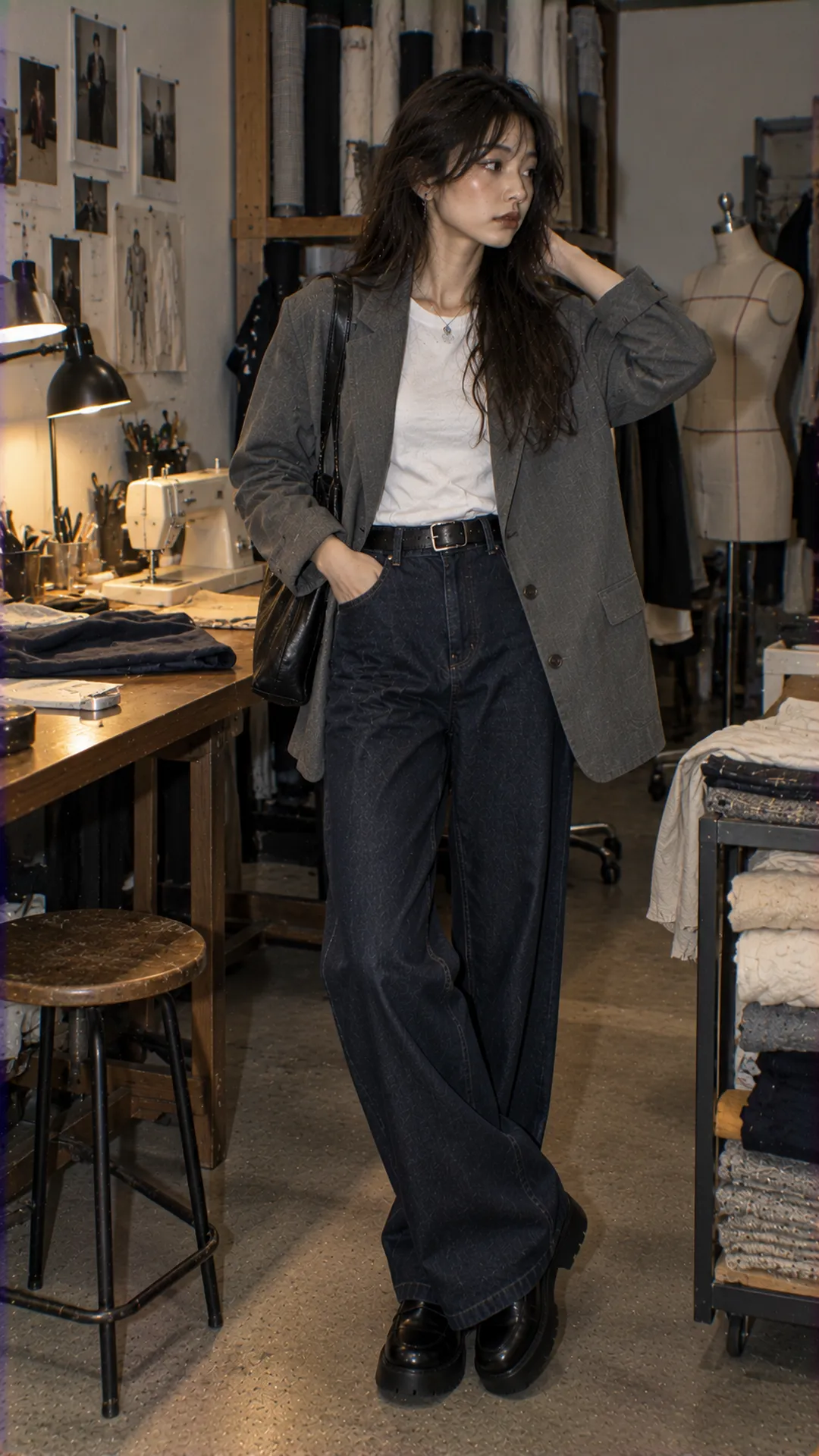
For a cool day, try a gray defined-shoulder blazer over a white tee and dark-blue jeans. The tee is a visually simple base, denim maintains everyday ease and the blazer creates the outer outline. With large shoulders, a small or soft bag may compete less with the jacket's volume.
Choose a short jacket for an outer hem near the waistband, or a longer blazer for continuity through the torso. Either can work with wide trousers when lengths are controlled. Do not assume short people can wear only cropped jackets or broad shoulders must avoid blazers.
For softer lines, try a cardigan. A mostly buttoned gray cardigan with navy trousers can act as the main top rather than requiring another shirt beneath. Removing a layer keeps it lighter while contrasting knit and trouser surfaces.
In the commercial interpretation from YAYA on Stockholm style, layering is prominent. Applying that inspiration in Vietnam, however, starts with actual temperatures rather than reproducing every garment in a cold-weather photograph.
Adapt cold-weather inspiration for hot days in Vietnam
Start with a garment's visual function. If you like a long coat's vertical lines, try an open shirt over a suitable base. If you like knit texture, a fine-knit top alone may work better than a thick sweater over several layers.
For shirts and trousers, inspect weight, transparency and lining. A light-colored shirt that is too sheer may need an underlayer, making the outfit hotter than planned. Choosing a shirt you can wear alone may be more practical than considering fiber composition only.
For travel outdoors followed by air conditioning, choose an easily removed layer and a bag that holds it. The base and trousers should still form a complete outfit without it. The guide to layering outfits for women explores lengths and surfaces; prioritize two wearable configurations rather than many layers attractive only standing still.
Accessories and finishing give basics character
Square-toed flats feel different from rounded sneakers with the same shirt and trousers. Choose shoes before hemming trousers because the right length depends on the pair. Do not insist on very thin or rigid shoes for a day involving much walking.
Above, try a short necklace inside an open collar or clearly shaped earrings. If the collar already leads, omit the necklace and make the bag the accent. Personal details can come from an old watch or reliable belt without a Swedish brand.
Before buying, inspect buttons, fabric edges and seams rather than inferring quality from minimal appearance. The guide to quiet luxury and assessing quality overlaps with this need. Stockholm style does not require luxury purchases or imitating social status.
Misunderstandings that make outfits feel unnatural
Everything is loose: keep overall volume if you enjoy it, but clarify cuffs, collar or shoe toes. If the result exceeds your intention, reduce one item's width. Adjust according to the image and comfort you want rather than size labels.
Everything is pale: add a dark area in trousers, bag or shoes for an anchor. Alternatively, retain a light palette and vary surfaces, such as a plain top with a gently pleated skirt. You do not need prints if you prefer quiet clothes.
Mistaking the style name for a shopping list: blazers, jeans and flats belong to many combinations. Compare nearby directions in the Aesthetic Dictionary, then return to which pieces actually suit your life.
To start now, take a comfortable shirt or tee, choose trousers of a suitable length for your usual shoes and add no more than one accent you like. Sit, walk and carry your bag. That experience shows what needs adjusting before buying more for Stockholm-inspired style.