

What Is Solarpunk? A Green Aesthetic and Practical Fashion
Solarpunk is a cultural movement and aesthetic connecting ecology, renewable energy, optimistic technology and living alongside nature. In contrast to dark dystopian visions, it imagines people using clean technology to support rather than destroy the planet.
This guide explores solarpunk aesthetic through fashion: its underlying ideas, differences from cottagecore and cyberpunk, and practical outfit formulas that bring a greener visual language into everyday clothing without turning it into a costume.
Guide collection: Fashion Aesthetic Directory
What Is Solarpunk? A Green Aesthetic and Its Social Ideas
As environmental challenges encourage discussion of more sustainable futures, cultural and artistic movements express different hopes for what comes next. Among nostalgic and darker aesthetics, solarpunk offers an optimistic vision of relationships between people, nature and technology. It is more than a visual label circulating on forums and social media: its broader ideas concern the possibility of an ecological future and the everyday choices and shared systems that could support it.
The suffix '-punk' can suggest the confrontational energy of punk rock or the disillusionment associated with cyberpunk. Solarpunk instead emphasizes constructive resistance: building practical alternatives in the present rather than simply depicting collapse. Clean-energy independence, urban growing, greener architecture and connected communities are recurring ideas. Technology is imagined as a tool for restoring ecosystems rather than an inevitable enemy of the natural world.
In fashion, these ideas become a vocabulary of clothing, materials and habits. A solarpunk interpretation can prioritize garment longevity, freedom of movement, considered material choices and the combination of traditional craft with useful modern details. Its ecological ambitions concern a product's whole life, rather than a green-looking surface alone. Clothing can express respect for the environment while remaining distinctive, precise and suited to contemporary life.
For more context on clothing and environmental responsibility, read What Is Sustainable Fashion? A Lifecycle Guide. Solarpunk adds a more specific imagined visual identity to these broader concerns: lively natural colors, relaxed cuts and references to a greener future.
Four Layers of Solarpunk Style
To build an outfit that communicates solarpunk without becoming a costume or generic outdoor clothing, examine how its design layers work together. Four useful layers are silhouette, texture, palette and practical details:
The first is Silhouette. Moderately roomy, straight or gently draped cuts allow movement without requiring every piece to be oversized. A natural fall can feel easy and open while a clear shoulder, hem or waist keeps the outfit organized rather than untidy.
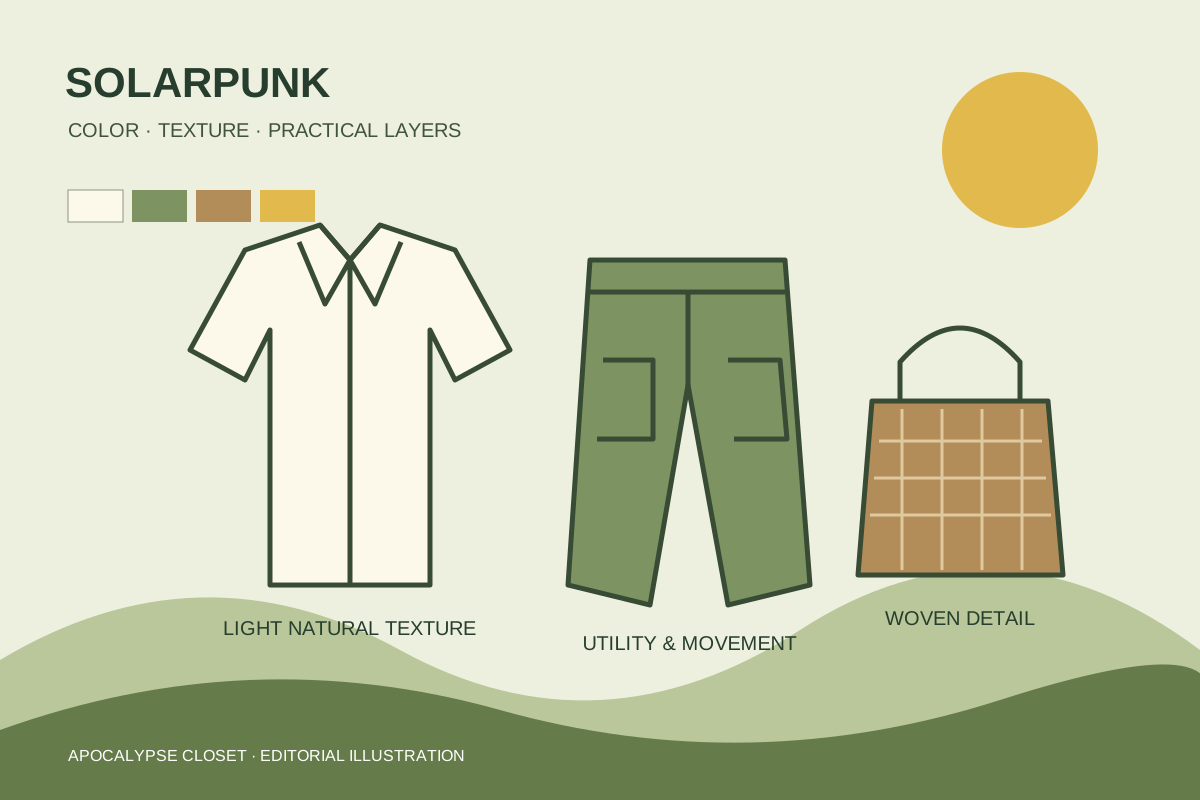
The second is Surface and Texture. Linen, textured silk blends, cotton, hemp, recycled denim and visibly woven surfaces can supply a tactile, natural-looking foundation. Slight irregularities, fabric grain and weave give the clothing depth. Material names alone do not establish environmental performance; provenance and garment longevity still matter.
The third is Color Palette. A common solarpunk interpretation draws from sunlit nature rather than the all-black references associated with some goth looks or the artificial light of cyberpunk imagery. Olive, moss and fresh greens can sit beside warm yellow, earth brown, ivory, terracotta and soft blue. Together they suggest warmth, growth and vitality.
The fourth is Utility Details. Compact cargo pockets, neatly arranged straps, metal fastenings and crafted accessories such as woven bags can connect practicality with a handmade surface. The point is the relationship between useful construction and tactile materials, rather than adding many decorative gadgets or claiming that an unverified buckle is recycled.
Levels of Expression: From Future Concepts to Everyday Clothing
Like many contemporary aesthetics, solarpunk ranges from highly imaginative digital-art concepts to clothing that can be worn in ordinary settings. Recognizing these levels helps you choose an interpretation that fits your environment.
The first level is Futuristic Concept. This is the most conceptual direction, associated with speculative art and experimental fashion. Imagined solar-powered components, digitally fabricated accessories, biodegradable-material experiments and plant-inspired structures communicate the idea of an ecological future. These references supply inspiration; they do not mean every depicted technology is already practical or every material is proven sustainable.
The second level is Urban Solarpunk. This interpretation adapts the imagery to city life. A multi-pocket jacket or straight cargo trousers in linen or substantial cotton can work with practical sneakers or secure, broad-strap sandals. The result can feel organized enough for a creative workplace while allowing outdoor movement. Where recycled materials are important, check the specific product rather than assuming them from its appearance.
The third level is Craft and Maker Energy. This direction foregrounds hand skills and DIY culture. Cotton crochet, lightly washed denim overalls, a wide-brimmed straw hat or a roomy coarse-canvas tote can communicate a warm, handmade character. These combinations suit informal outdoor trips, creative workshops or community activities.
The fourth level is Minimal Eco-Casual. The most accessible starting point uses simple shapes, earth and nature-inspired colors, comfortable fabrics and a tidy relaxed fit. It can work for studying, commuting or everyday errands without requiring an obviously theatrical outfit or a complete wardrobe change.
Start with the Wardrobe You Already Have
Discovering a new style does not require buying a new wardrobe. Reusing what you own is especially consistent with solarpunk's concern for longevity. These three starting directions help reinterpret existing clothes:
Utility and Techwear: If you already own outdoor clothing, workwear or functional pieces such as pocketed jackets, cargos and straps, adjust the overall palette. Moss green, brown or ivory can soften an otherwise black or cold-grey outfit and introduce a more nature-oriented visual direction while retaining its useful construction.
Natural Texture and Linen: If comfort and softness appeal to you, begin with linen, textured silk blends or visibly woven cotton already in your wardrobe. A roomy linen shirt with straight beige trousers suggests the palette and ease of a solarpunk interpretation. Broad-strap sandals can complete the outfit with a practical, considered finish.
Handmade Layering: A light knitted cardigan, cropped canvas jacket, straw hat or canvas bag can introduce craft references. One handmade-looking layer over basic clothes adds visual depth while highlighting an appreciation of skill and repair rather than a large collection of statement pieces.
Six Practical Solarpunk Outfit Formulas
The following six formulas translate the visual ideas into wearable combinations, with adjustments for real climates and everyday activities:
Linen's tactile surface contrasts with cargo construction. A breathable shirt and trousers with enough movement can make the combination useful for city walking, depending on the fabric and weather.
Suitable for: a weekend walk or coffee. Swap: canvas sneakers for supportive sandals with a cork-style footbed.A light outer layer adds structure in changing weather while the natural-looking palette and relaxed shapes retain an outdoor, approachable character. Choose a layer you will actually use.
Suitable for: a creative workplace or an easy outdoor trip. Swap: the khaki skirt for straight trousers.The vest organizes an otherwise simple outfit and introduces the functional construction associated with an urban ecological-future interpretation.
Suitable for: outdoor activities or a concept-focused shoot. Swap: beige trousers for denim with verified recycled content, if that is a purchase priority.An easy, flowing silhouette offers a softer direction for warm days. Keep the waist tie controlled and choose footwear suited to the amount of walking, rather than treating delicacy as the only option.
Suitable for: a park walk or a coastal trip. Swap: flats for white sneakers.This compact warm-weather combination is easy to adapt for a weekend in town or a nature-oriented trip. Pocket placement and a clear hem keep its relaxed shapes deliberate.
Suitable for: travel or outdoor activities. Swap: shorts for linen trousers.The cardigan's handmade texture contrasts with the cleaner foundation and denim shape, bringing older craft references into an everyday outfit.
Suitable for: meeting friends or a mild-weather street outfit. Swap: the cardigan for a cropped canvas jacket.Colors, Fabrics and Details
Silhouette alone does not define the direction. Palette, fabric surface and accessories work together as a recognizable visual vocabulary:
- Main colors: Olive, moss and fresh greens; warm yellow; earth brown; ivory; terracotta; and soft blue. These sunlit colors offer an alternative to a primarily neon or all-black interpretation. They are styling references rather than a rule about who can participate in the broader movement.
- Fabric priorities: Linen, textured natural-fiber fabrics, cotton, hemp and recycled denim are possible starting points. Check fiber content, sourcing, durability and care; a natural or recycled label alone does not prove a lower environmental impact across the garment's life.
- Finishing accessories: Woven natural-fiber bags, wood or verified recycled-metal jewelry and canvas belts can reinforce craft references. Carrying a reusable water bottle can connect the look to a practical habit of reducing disposable packaging, rather than acting only as a prop.
Solarpunk vs. Cyberpunk vs. Cottagecore
Solarpunk is often compared with cyberpunk and cottagecore. The following distinctions concern common visual interpretations and underlying ideas, rather than strict boundaries that every wearer must follow:
| Aesthetic | Underlying emphasis | Clothing references | Main distinction |
|---|---|---|---|
| Solarpunk | Clean technology, solar energy and relationships with nature | Linen, cotton, green and earth colors, compact utility pockets and an optimistic mood | Connects modern practical design with ecological futures rather than centering dystopia or an exclusively nostalgic past. |
| Cyberpunk | High-technology dystopias, unequal urban life and relationships between people and machines | Dark clothing, glossy surfaces, LEDs, substantial metal and technical weather-resistant fabrics | Often uses a darker cityscape and imagery associated with dystopian systems. |
| Cottagecore | Idealized rural life and a retreat from the pace of modern technology | Small floral prints, lace, puff sleeves, historical corset references and pastoral settings | Emphasizes rural nostalgia; solarpunk more often imagines a greener future that can include urban life. |
For a different approach to technology and clothing, read What Is Techwear? Function Before Purchase . Its emphasis on garment performance and technical construction is distinct from solarpunk's broader ecological imagination, although outfits can share useful details.
A Solarpunk Starter Wardrobe: Woven Details, Linen and Green
Start with versatile foundations instead of buying many pieces specifically for one aesthetic:
A roomy ivory or olive linen shirt, or a simple comfortable cotton tee, is easy to combine with existing clothes. Check fabric weight and breathability for your setting.
Straight textured trousers, cargos with controlled pockets or an earth-tone long khaki skirt can provide comfort and a clear lower-body shape.
Canvas sneakers, secure cross-strap sandals or durable soft-leather flats are possible options. Prioritize fit, grip and repairability for the intended use.
A plain canvas tote, crafted woven bag, canvas belt and restrained wood or recycled-silver jewelry can complete the visual direction.
These pieces can also work with ordinary casual clothes. Their value lies partly in how often and how long you can wear them, rather than their exclusivity to solarpunk.
Five Styling Mistakes That Change the Direction
1. Losing structure and resembling sleepwear
Wearing loose, creased linen from head to toe without an organizing line or considered accessories can obscure the intended shape. Add a defined shoulder, controlled hem, firmer bottom or practical accessory.
2. Overloading floral details
A large concentration of flowers and pastoral references may shift the outfit toward cottagecore or bohemian styling. Cleaner lines and a functional urban detail can make the solarpunk interpretation more specific.
3. Losing the intended sunlit palette
An entirely black, grey or midnight-purple outfit may communicate a different visual direction. If you want a lighter solarpunk reference, bring in natural green, warm light or an earthy contrast rather than treating dark colors as a personal restriction.
4. Forgetting function
Solarpunk connects imagined technology with human needs. A genuinely useful pocket, neatly managed strap or practical fabric choice can say more than decorative equipment without a purpose.
5. Overbuying in the name of a green aesthetic
Buying many short-lived items with unverified green claims contradicts the concern for longevity. Consider repair, reuse, secondhand options and the expected life of a garment before adding another purchase.
- Solarpunk connects ecological ideas, clean-energy futures and an optimistic relationship with technology.
- Its fashion vocabulary can be read through four layers: comfortable silhouette, tactile fabrics, nature-inspired color and useful details.
- Distinguish its imagined ecological future from cyberpunk dystopia and cottagecore's rural nostalgia.
Frequently Asked Questions About Solarpunk
What does solarpunk mean?
Solarpunk is a cultural movement and aesthetic connecting solar energy, sustainable technology, ecology and optimism about a future in which people and nature can coexist.
How does solarpunk fashion differ from cottagecore?
Cottagecore emphasizes idealized rural nostalgia. Solarpunk combines natural-looking textures with practical or technical details, cleaner-energy ideas and colors such as green, warm yellow and earth tones.
Can solarpunk be worn in everyday life?
Yes. Rather than reproducing a science-fiction concept, use linen or other tactile fabrics, a woven bag, nature-inspired colors and simple practical details in an outfit suited to your day.
How can an outfit feel solarpunk rather than like gardening clothes?
Combine natural textures with clear cuts, a useful modern accessory and deliberate color contrast, instead of relying only on loose fabric or one earthy color.