

Understanding the name Ryousangata
The Wiktionary entry for 量産型 records meanings concerning commonness or conformity as well as slang usage related to trend-following women's fashion. The word should therefore not be treated as the name of an unchanging rulebook across every period.
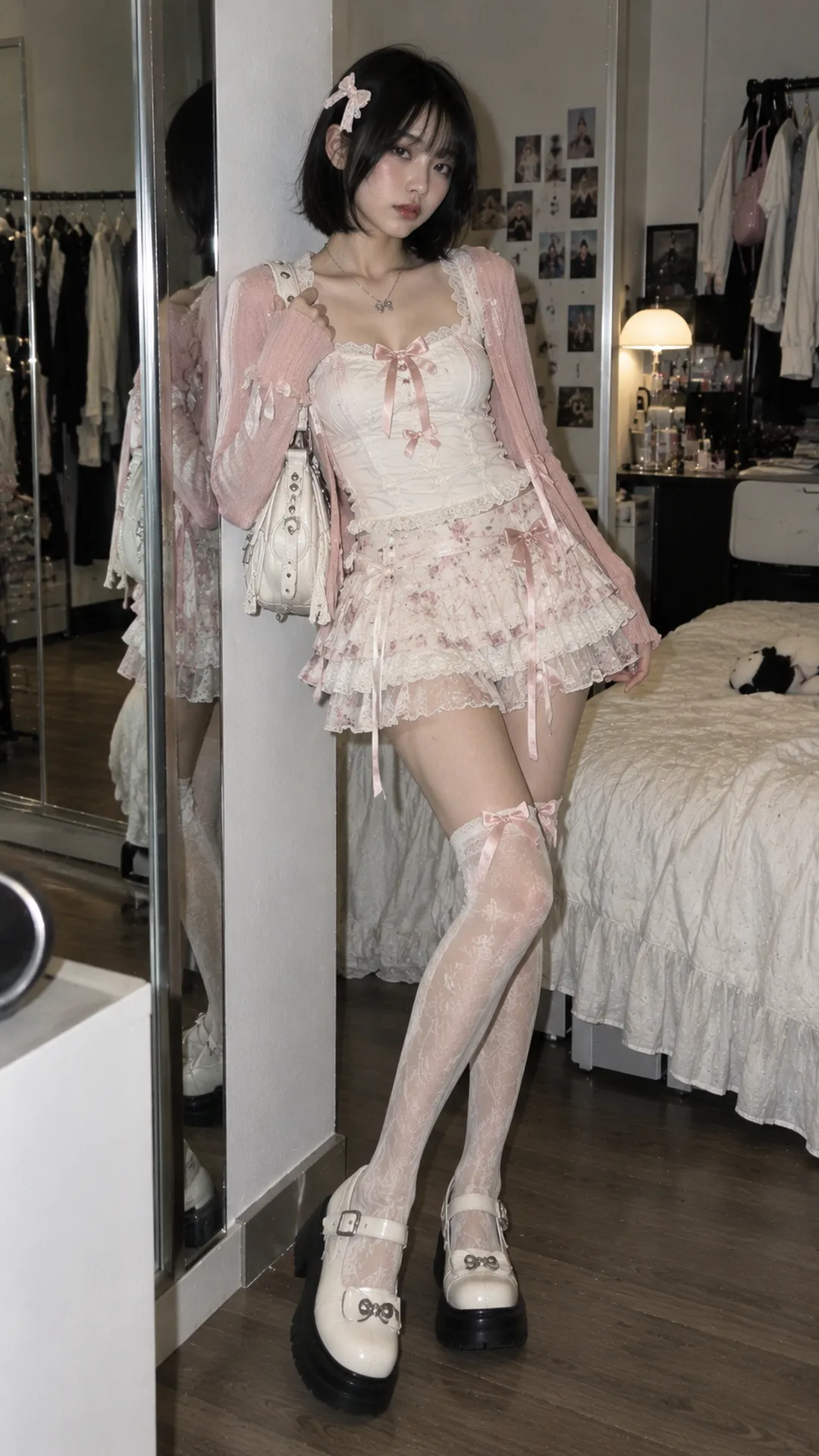
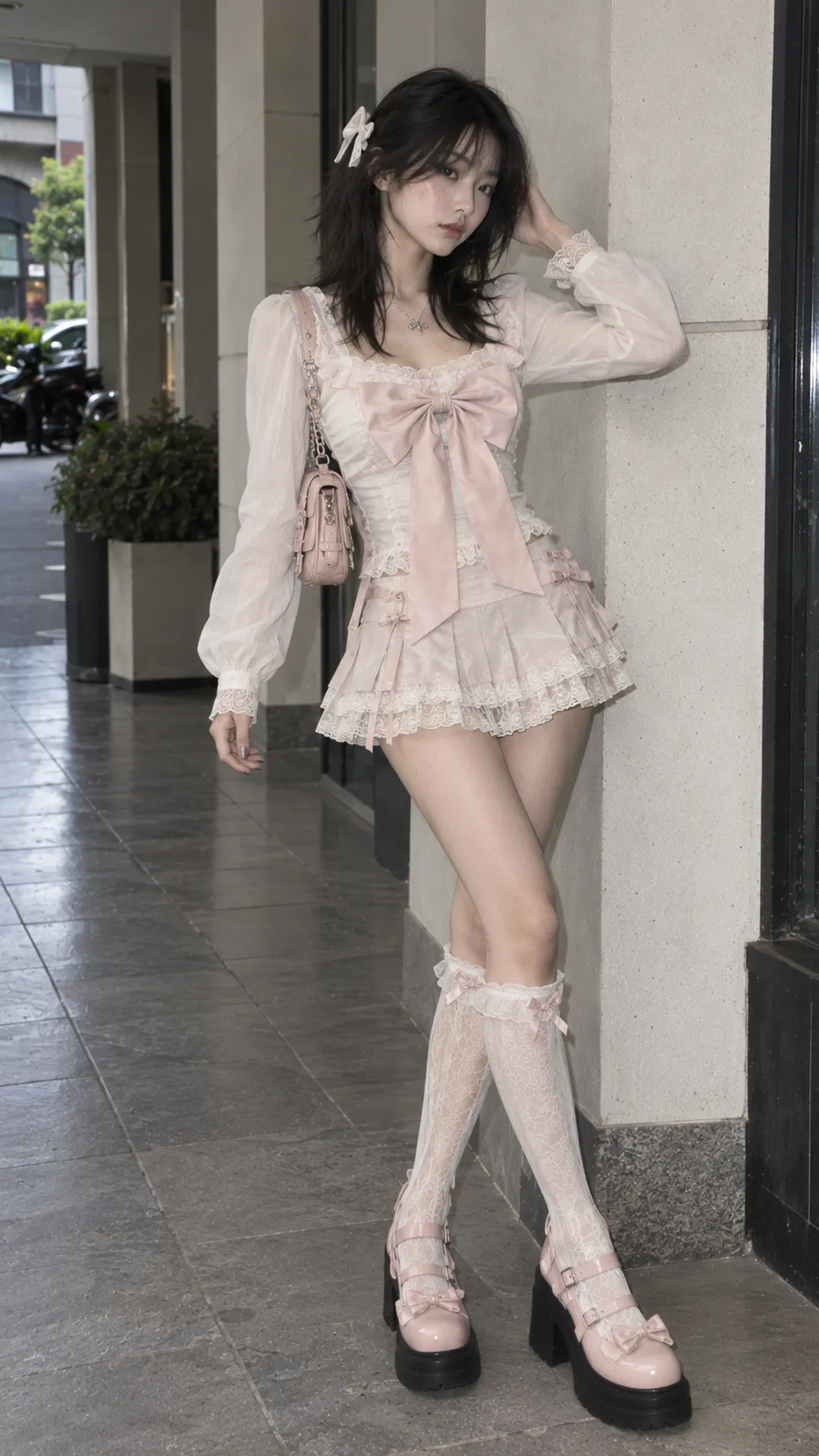
In fashion images labeled Ryousangata, you often see coordinated girly styling with recurring bows, colors and accessories. This article focuses on reading that clothing. An image tag or sales label still needs to be considered alongside the complete outfit rather than one isolated piece.
A white lace-collar top can appear in many combinations. With a streamlined skirt, neck bow, small bag and coordinated hair accessories, it feels different from the same top with jeans and sandals. Relationships between pieces matter more than whether every item has the right hashtag.
Ryousangata is not a substitute name for all Japanese fashion. For broader context, read the guide to Harajuku style and Japanese street fashion. Context helps explain diversity rather than creating one template for everyone.
Community context and how the label is used
ZenMarket's guide connects Ryousangata styling with oshikatsu: activities supporting a favorite idol or character. Representative colors, accessories and coordinating with friends can contribute to the look. This is one relevant context, not a requirement that everyone in girly clothes participate in fandom.
For example, if an event has a theme color, introduce it through a bow or bag instead of buying a whole new outfit. Changing accessories afterward lets the top and skirt remain useful. Choosing around real activities also shows why coordination can matter to the wearer.
When two different images both carry the Ryousangata label, consider the date, community and purpose of the post. A term describing a common trend may have a different scope from a store's product category. You do not need to select one image as the standard and dismiss every other example.
Recognizing collars, skirt shapes and repeated details
The collar creates a focus near the face
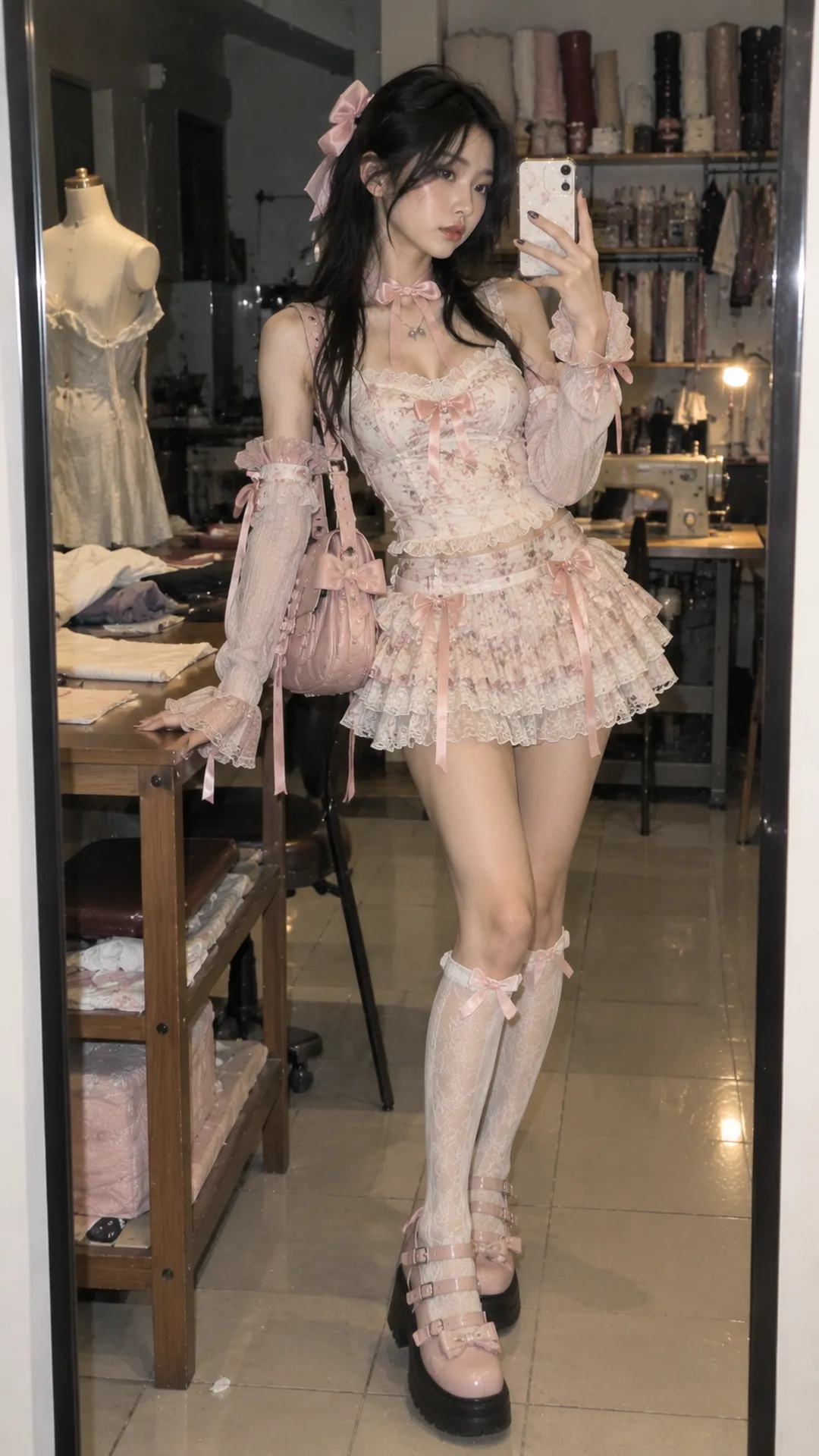
Large collars, lace trims, ruffles and bows readily attract attention. If the neckline is heavily decorated, reduce necklaces to keep the front clear. For a first attempt, a detachable bow makes the intensity easy to adjust.
Assess collar width alongside the shoulders and hairstyle. A large collar does not automatically exclude a body type; the question is whether you like the proportions and feel comfortable. Try it with your intended hairstyle rather than judging the top on a hanger.
A clear silhouette keeps details organized
A defined-waist top with a pleated or A-line skirt, or a structured dress, provides an approachable starting point. Streamlined does not mean tight. You need enough room to sit, walk and raise your arms.
If the top has layered ruffles, try a less decorated skirt. If the skirt has prominent straps, buttons or overlays, reduce complexity above. Contrasting one detailed area with a quieter one gives the composition order.
Bows, bags and shoes share a visual language
Repeating a bow's color in a bag or socks creates a simple connection. Pieces do not need exact color matches: similar softness or one repeated detail may be enough. In a full-outfit photograph, notice where your eye stops first.
Strap shoes, loafers or thick soles can appear depending on the styling. Height does not certify the style. For a long day walking, familiar well-fitting shoes help more than a photogenic pair that discourages repeat wear.
How is Ryousangata different from Hime Gyaru and Himekaji?
All three can use sweet details, so classifying by pink alone is unreliable. Hime Gyaru connects to princess interpretations within Gyaru, often recognized through the complete combination of clothing, hair and makeup. Ryousangata does not require recreating that entire presentation.
Himekaji is often discussed as an everyday princess direction, with a softer and more relaxed feeling. However, pieces from the same brand or a floral dress can appear in several kinds of styling. A brand name should not replace observing the actual outfit.
For the girly Ryousangata direction discussed here, prioritize a distinctive collar, intentionally placed bows and coordination. With Himekaji, a wearer may emphasize softness and everyday ease; Hime Gyaru's overall presentation usually needs to be read within Gyaru's context.
This comparison helps you choose a styling direction rather than test who dresses “correctly.” To study Gyaru's princess imagery separately, explore Hime Gyaru and the elements of an outfit instead of trying to fit everything into one look.
For the specific roles of hair, makeup and finishing in Gyaru, explore the guide to Gyaru styles. The distinction is useful when two outfits both have bows and pink but create very different impressions.
Colors and fabrics: sweetness without excessive detail
White, cream, soft pink and pale blue are easy colors to try for a girly direction. Do not classify an outfit solely from black and pink. LAFARY, for example, offers black, pink, blue and white filters within its Ryousangata-labeled category; commercial use of the label does not follow an absolute division by color.
For fabrics, try a visibly lace-textured top with a plain skirt, or a layered dress with a smooth-knit cardigan. Two highly detailed fabrics can obscure the bow. If you keep both, reduce accessory size and use related colors to limit competing focal points.
If the distinction between an item, aesthetic and substyle is unclear, consult the fashion aesthetic dictionary before buying more. A label should help you understand a choice, not require replacing your wardrobe to fit it.
Three outfits, from subtle to more decorated
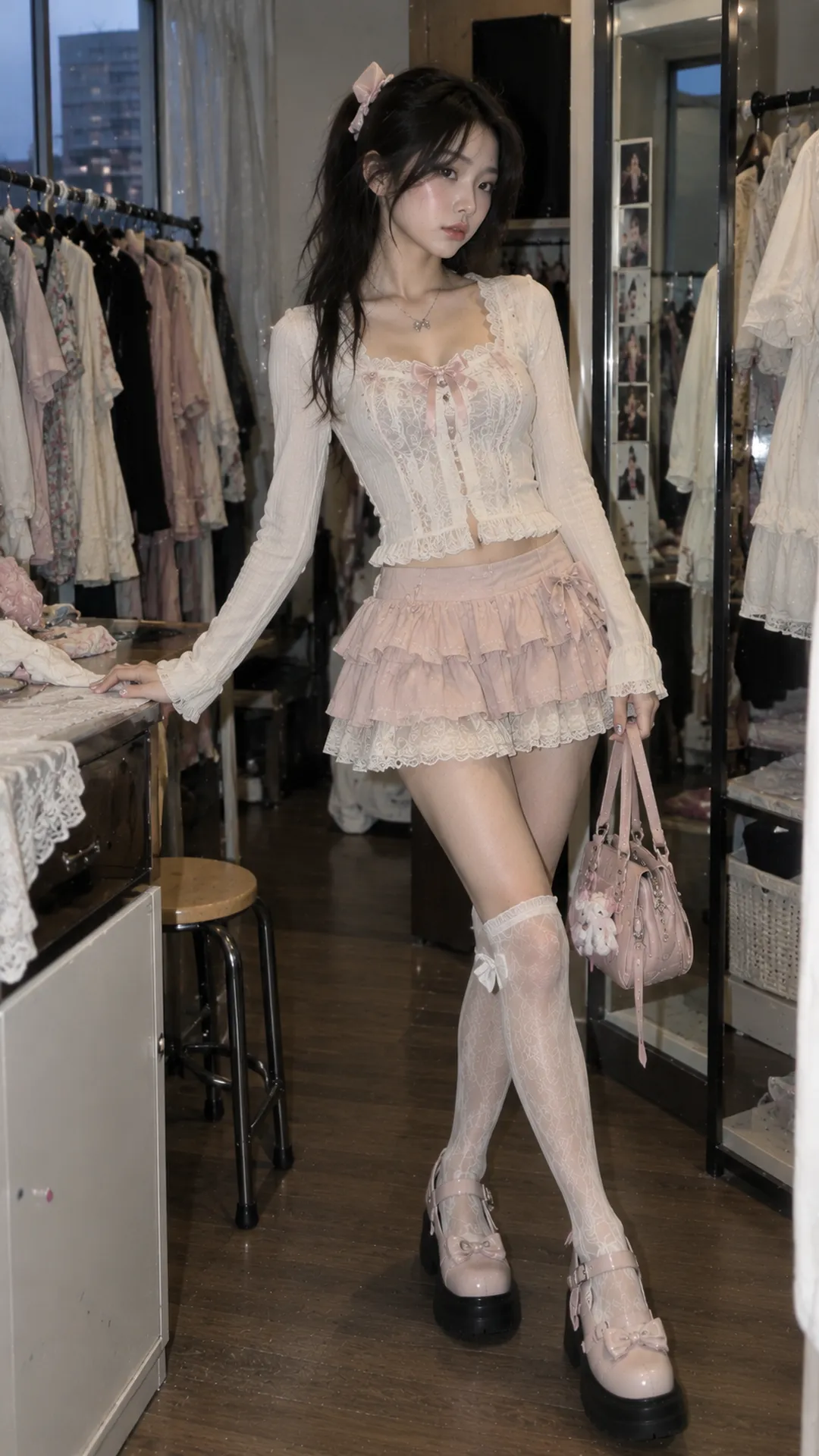
A lace-collar top, plain skirt and strap shoes
Start with a light top with a moderately sized lace collar, a plain A-line skirt and strap shoes. Add a small bow in the hair or at the neck; you do not need both for a gentle effect. A structured bag keeps the outfit clear.
This is convenient for coffee or a short outing. For more restraint, remove the hair bow while keeping the collar and shoes. For more sweetness, repeat the bow color in socks or a bag detail.
Before leaving, sit to check whether the skirt rides up more than you want. For more coverage, choose a longer design or suitable skort. Adjusting length preserves the idea without enduring discomfort.
A bow-detail dress and short cardigan
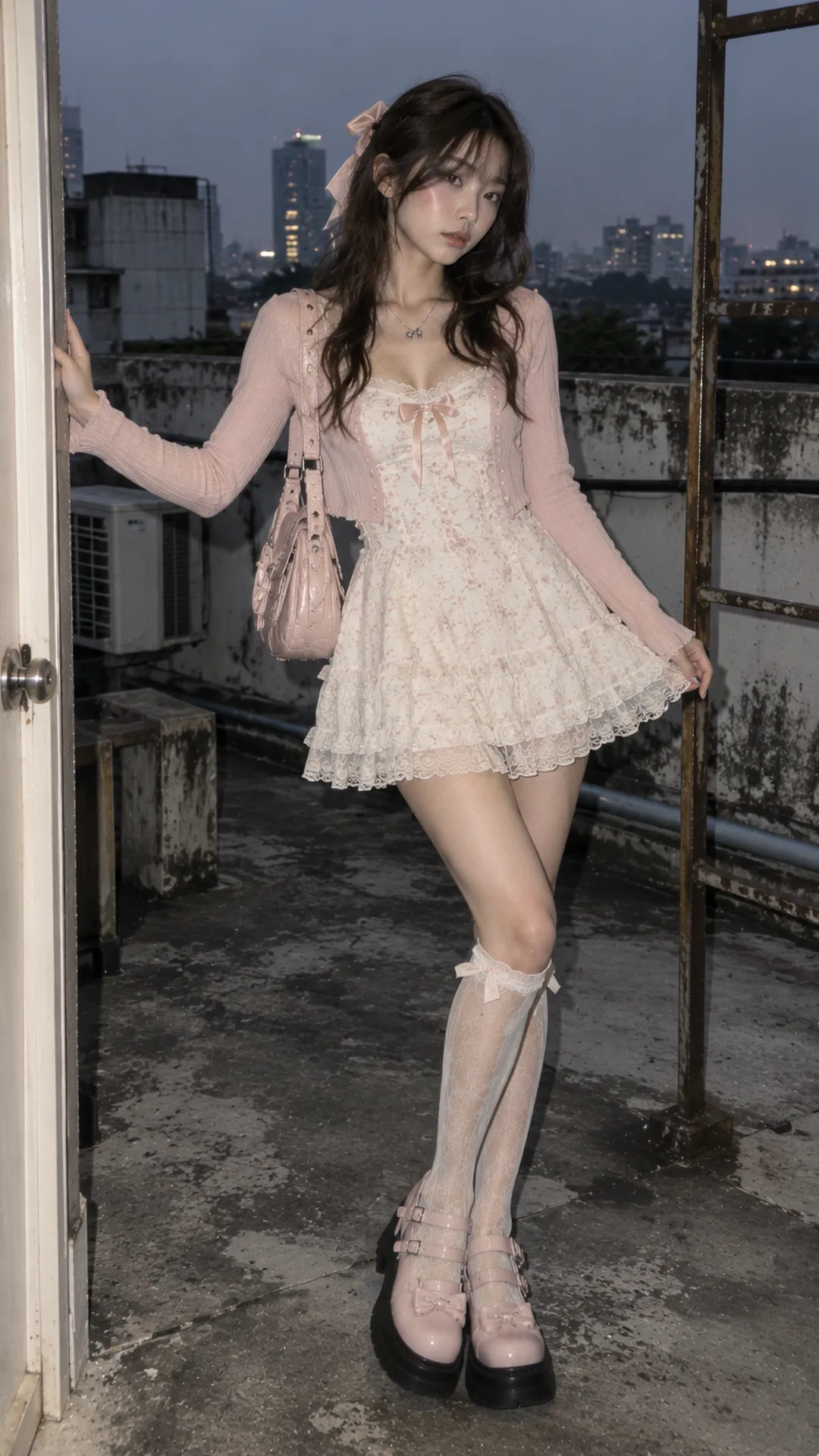
A dress reduces the number of morning decisions. Choose one with a comfortable bodice and an accent at the neck or waist, then add a cardigan whose hem does not hide the main detail. If the dress has many ruffles, a plain cardigan is usually easier to combine.
Try the cardigan both fastened and open. A hem ending at the point you want to emphasize creates different proportions from one extending over the hips. There is no mandatory position, but check it so the choice is intentional.
In hot weather, the cardigan may be useful only in air-conditioned spaces. The dress underneath should still make you feel confident when the layer comes off. Do not select a jacket merely to hide a fit problem another dress could solve.
A statement bow top and pleated skirt
Once comfortable, increase the detail with a large-bow top, pleated skirt and small decorated bag. Repeat one main color in two places for continuity. Keep the hair simple if that helps the collar remain visible.
You do not need patterned socks, multiple necklaces and many clips simply because the reference image has them all. Add one item at a time, photograph and compare. Anything that does not clarify the idea can wait for another outfit.
Choosing pieces and adjusting for daily life
When shopping online, seek finished-garment measurements and lining information, not just a model's height and weight. Check shoulder width, bust, sleeve length and waist placement. A top that fits the bust but digs into the shoulders can still be difficult to wear all day.
Inspect where lace and ruffles contact the skin. Large bows should attach securely without pulling the collar down. For detachable details, check storage and cleaning methods so accessories do not disappear after a few washes.
If you often carry a backpack, try it with the top because straps can cover the bow or flatten the collar. For motorbike travel, keep accessories arranged compactly and avoid long parts that may catch. These are practical adjustments, not reasons to abandon the style.
Check each brand's measurements and return policy too. The same size label does not guarantee the same fit. Brand names frequently mentioned online should be starting points for research rather than substitutes for examining the product.
Keep your individuality rather than copying one ideal
Do not infer someone's personality, interests or mental health from their clothes. Online style labels can carry stereotypes; describing an outfit does not require repeating them. You can like bows and lace without performing a fixed personality.
To build a wardrobe, choose a top, skirt and shoes that can combine in at least two ways. Try changing the bag, bow or outer layer before buying another complete set. Small adjustable details often offer more options than accumulating highly specific pieces.
Ryousangata style becomes approachable when you see the connections between collar, silhouette and accessories. Keep what you like, reduce what causes inconvenience and let the outfit reflect your real routine.