

Plus-Size Alternative Outfits: Fit, Shape and Personal Style
Plus-size outfit styling starts with fit and proportions, rather than a rule to cover as much as possible.
Advice for larger bodies is often reduced to hiding the stomach, covering the arms and wearing black. In alternative fashion, a more useful approach is to build an intentional silhouette, stay comfortable and place emphasis where you want it.
The Vietnamese original uses both a common search phrase for larger women and the term plus size. No formula fits every body; treat these principles as tools to try, rather than compulsory rules.
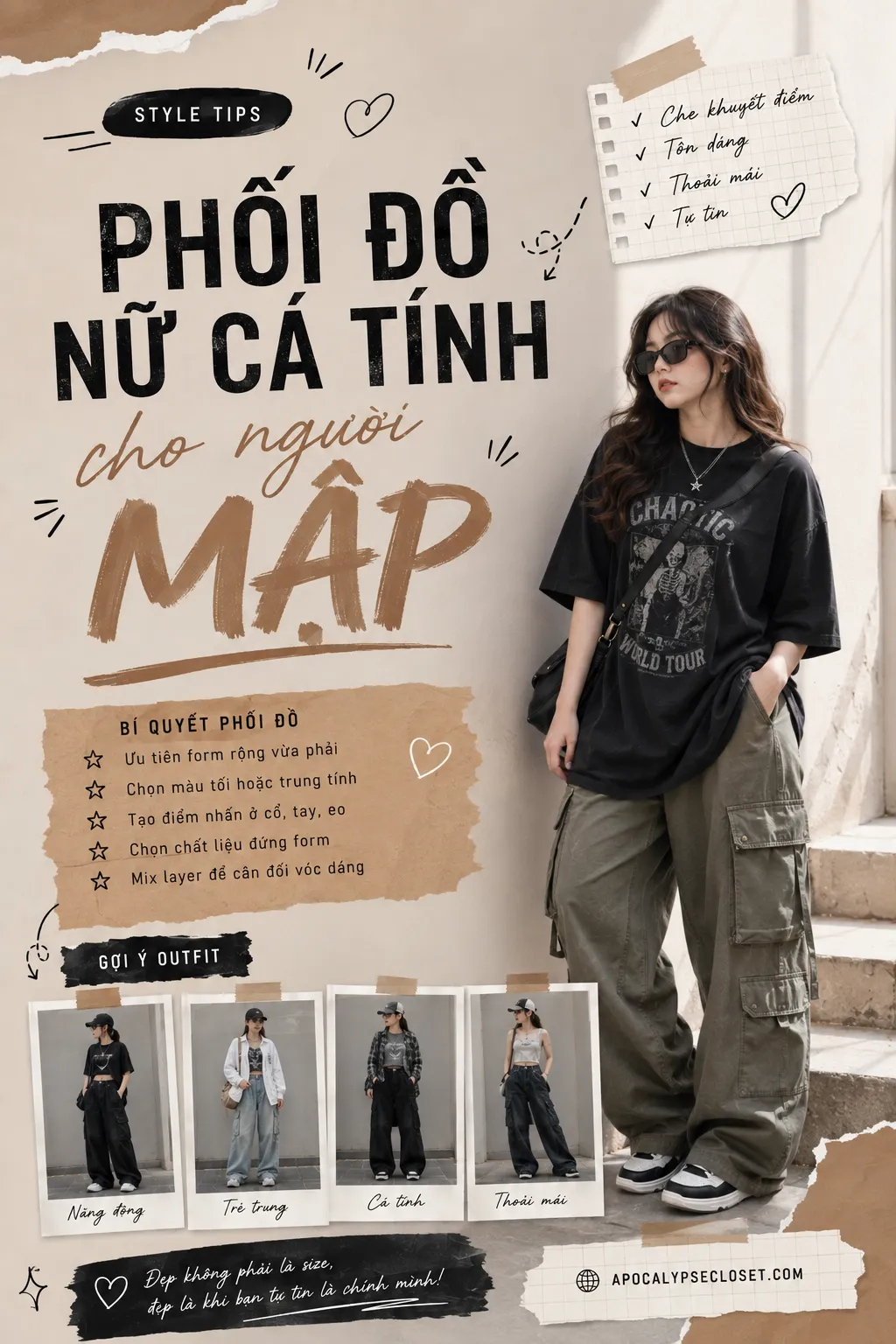
Guide collection: Alternative Outfits for Women: E-Girl, Baddie, Goth and Grunge (Vietnamese)
Plus-Size Outfits: Start with Fit Rather Than Concealment
When searching for plus-size outfit ideas, common advice is to wear dark colors, loose clothes and cover areas described as flaws. Those choices can produce particular visual effects, but they are a limited foundation for a personal wardrobe. Start instead with fit, proportions, movement and the focal point you choose.
A defined silhouette does not mean making your body appear smaller. Here, it means an outfit with clear structure: intentional shoulder placement, fabric that falls rather than strains, horizontal lines that do not all crowd one area, and clothes that let you sit, walk and raise your arms without constant adjustment.
Size is also different from body shape. Two people wearing the same size can have very different shoulder, bust, stomach, hip and thigh proportions. If your particular concern is the fit around your midsection, see the guide to outfits for a fuller stomach; this article takes the broader view of plus-size outfits for women and building a complete look.
1. Make the Outfit Clearer with Proportions and Garment Lines
Instead of asking whether an item covers your body, read the outfit as two or three main shapes: a neat top with wide trousers, a tonal base with an open jacket, or a dress with visually substantial boots. Several hems, ties, belts and layers ending close together can fragment the composition.
Where a top ends matters as much as its width. A boxy tee meeting the waistband creates a different proportion from a long tee covering the hips. If the hem emphasizes an area you would rather leave quieter, try a small tuck, a cropped jacket or a slightly longer top before deciding the entire cut is unsuitable for plus-size bodies.
Oversized shoulders still need intention: a controlled drop for streetwear, or a seam near the shoulder joint for structure. If the body is roomy but the upper arms feel tight, look for a cut with adequate movement space rather than simply increasing the size.
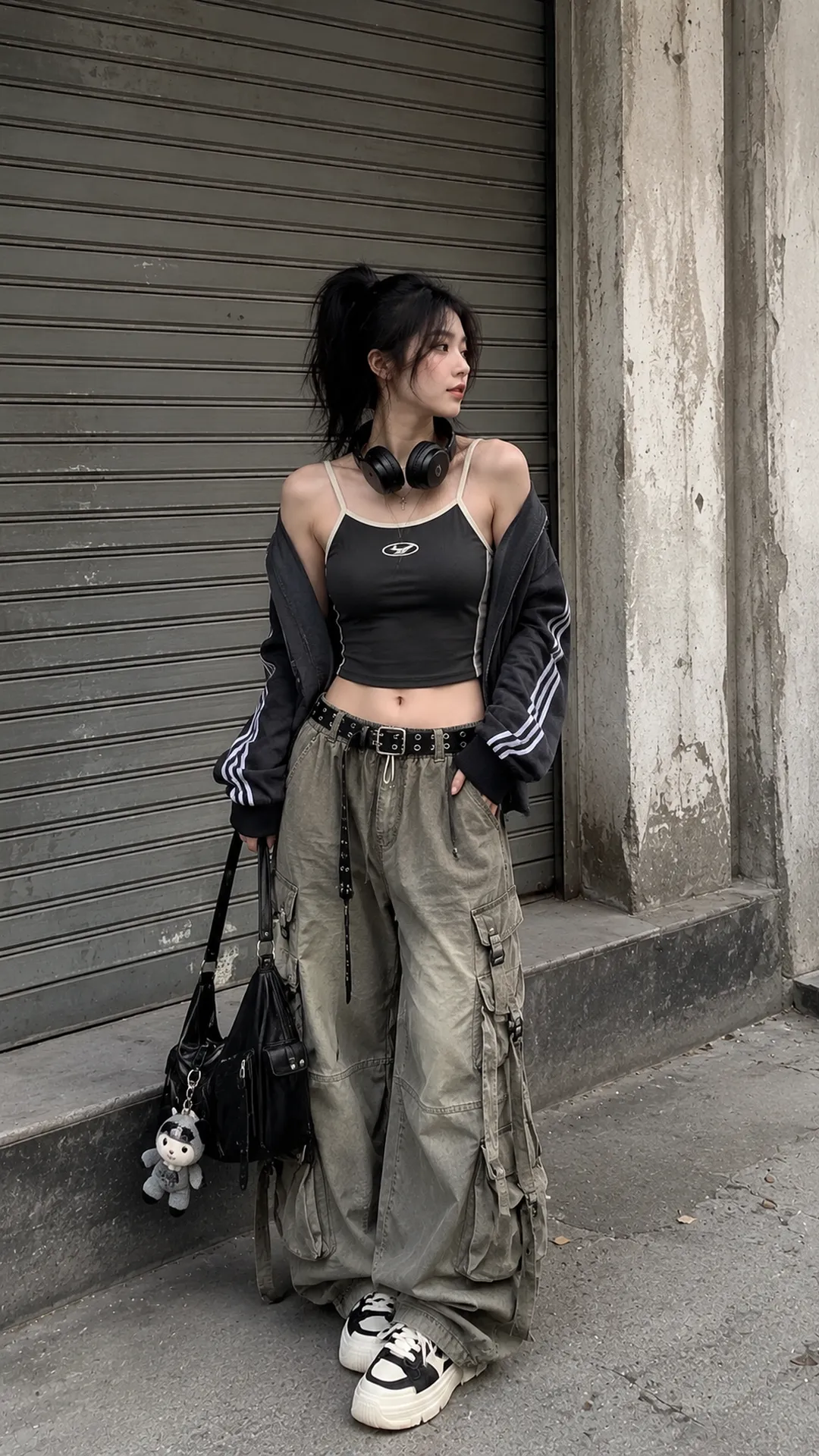
2. Crop Tops Are an Option
Plus-size women can wear crop tops. Check the height of the hem relative to the waistband, rather than a number on the scales. A crop meeting the waistband, leaving a small gap or sitting under an open jacket can establish a higher visual starting point for the legs and break up a long block of fabric.
To choose your preferred coverage, compare an untucked top, a light front tuck and a crop meeting the waistband with the same bottoms. Choose the version that feels balanced standing and sitting, without repeatedly pulling the top into place.
High-rise trousers are optional. A mid-rise waistband can feel better on some bodies, especially for prolonged sitting. For the individual garment, the guide to what to wear with crop tops covers item styling; this article uses the crop as one proportion tool.
3. Choose Trousers by Drape, Waistband and Pocket Placement
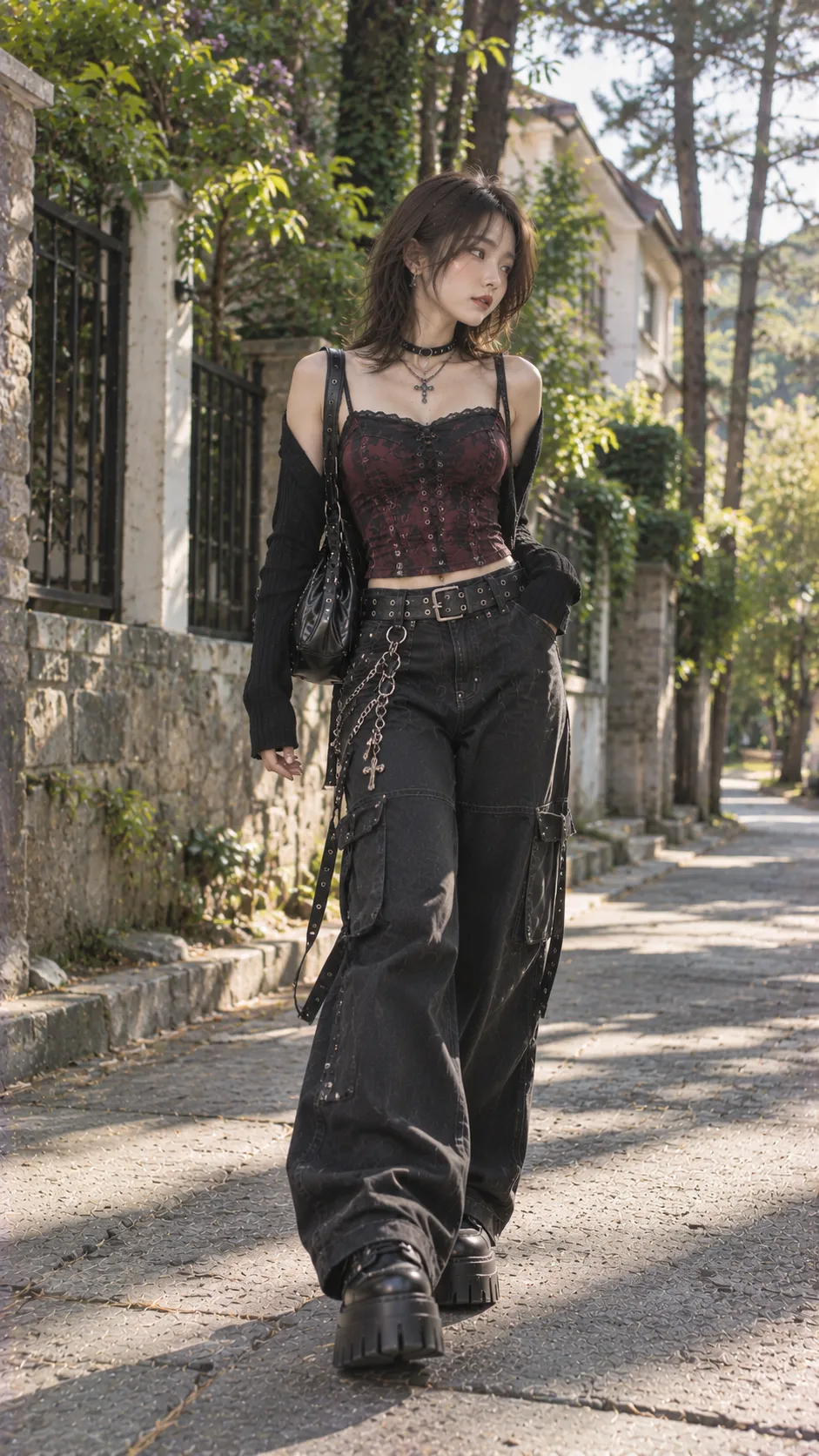
Wide trousers are not automatically comfortable if the fabric is rigid, the waistband rolls or the thighs strain. With wide-leg, straight-leg and cargo cuts, check whether the waistband stays comfortable sitting down, whether fabric falls from the hips or stands away, and whether pockets add volume where you want it.
Straight-leg trousers create a consistent vertical line. Wide-leg trousers add movement and contrast with a fitted top. Cargo pants bring stronger utility detail, but their pockets affect the silhouette. Flat or lower pockets can be easier to style when you do not want the hips to be the main focal point.
Do not buy trousers on waist fit alone. Check hips, thighs, rise and inseam. A fitting waistband with a straining fly or gaping front pockets can indicate insufficient room elsewhere. For the garment itself, see women’s cargo-pants outfits as a separate item guide.
4. Plus-Size Skirts and Dresses: Put Movement Before Concealment
A-line skirts, straight midis, bias-cut skirts, softly falling maxis and bodycon dresses can all work when the fit suits you. Ask whether the waist sits where you want it, the hem works with your shoes and the fabric moves with your body, rather than which skirt hides you.
An A-line cut allows room around hips and thighs; a straight skirt creates a clear outline; bias cutting follows curves; a maxi establishes a long line. Bodycon is also an option if you enjoy a fitted silhouette. An outer layer is an addition you can choose, rather than required coverage.
Dress necklines direct attention: square, V and off-the-shoulder necklines emphasize the shoulders and face, while a high neckline creates a more continuous area of fabric. Choose for your aesthetic and comfort.
5. Frame the Outfit with Layers Without Covering Everything
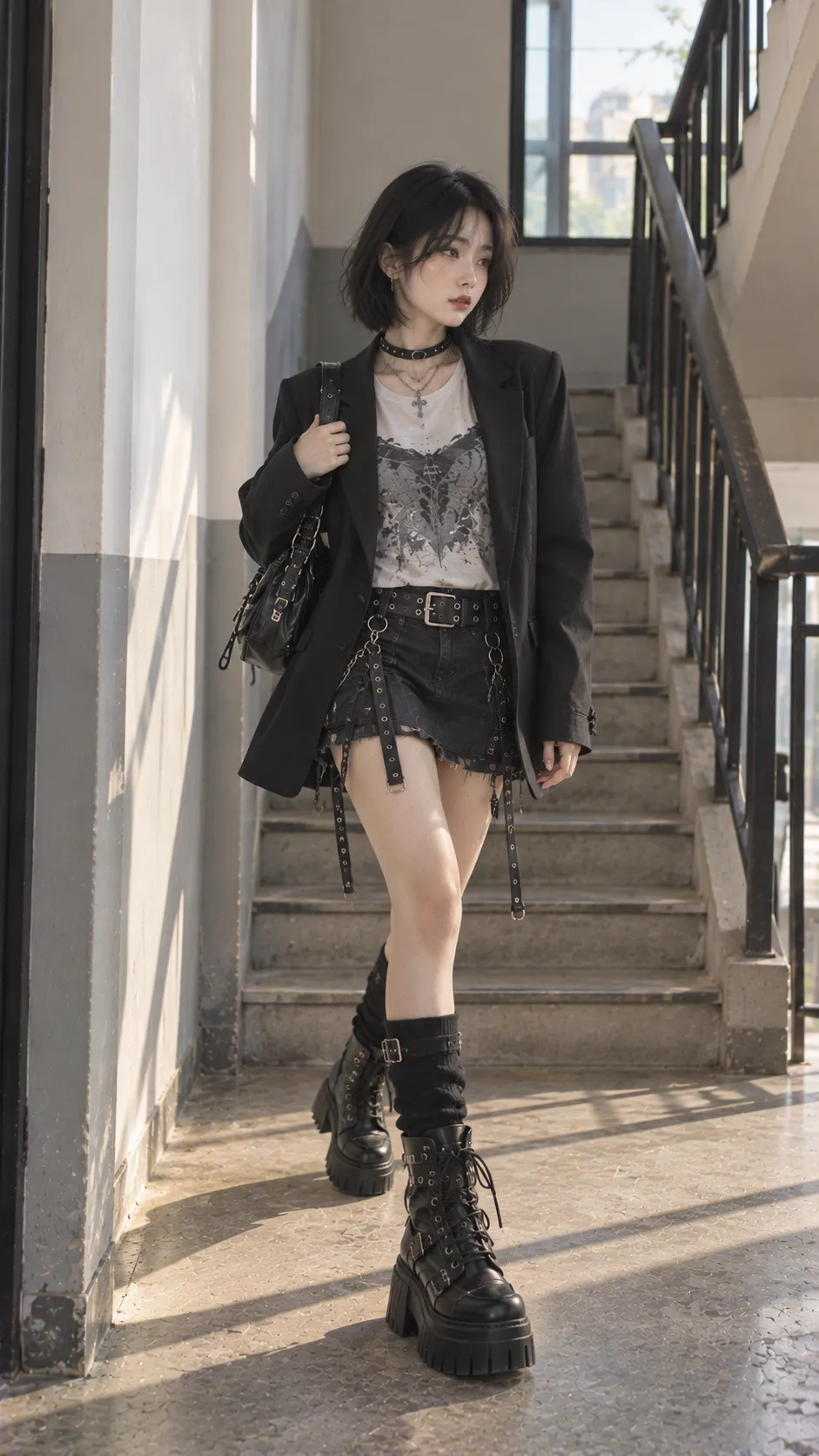
An open biker jacket, blazer, overshirt or cardigan creates two vertical edges around the torso. This organizes an outfit; it does not mean your body needs hiding. The base can be fitted, boxy or cropped. Match the outer layer’s length and structure to the lower half.
In Vietnam’s humid heat, extra layers solely for an alternative-fashion look can be impractical. Consider a light cotton shirt, open-knit cardigan, mesh layer or lightweight jacket, checking actual fabric weight and breathability. Build a complete base outfit that still works when you remove the outer layer.
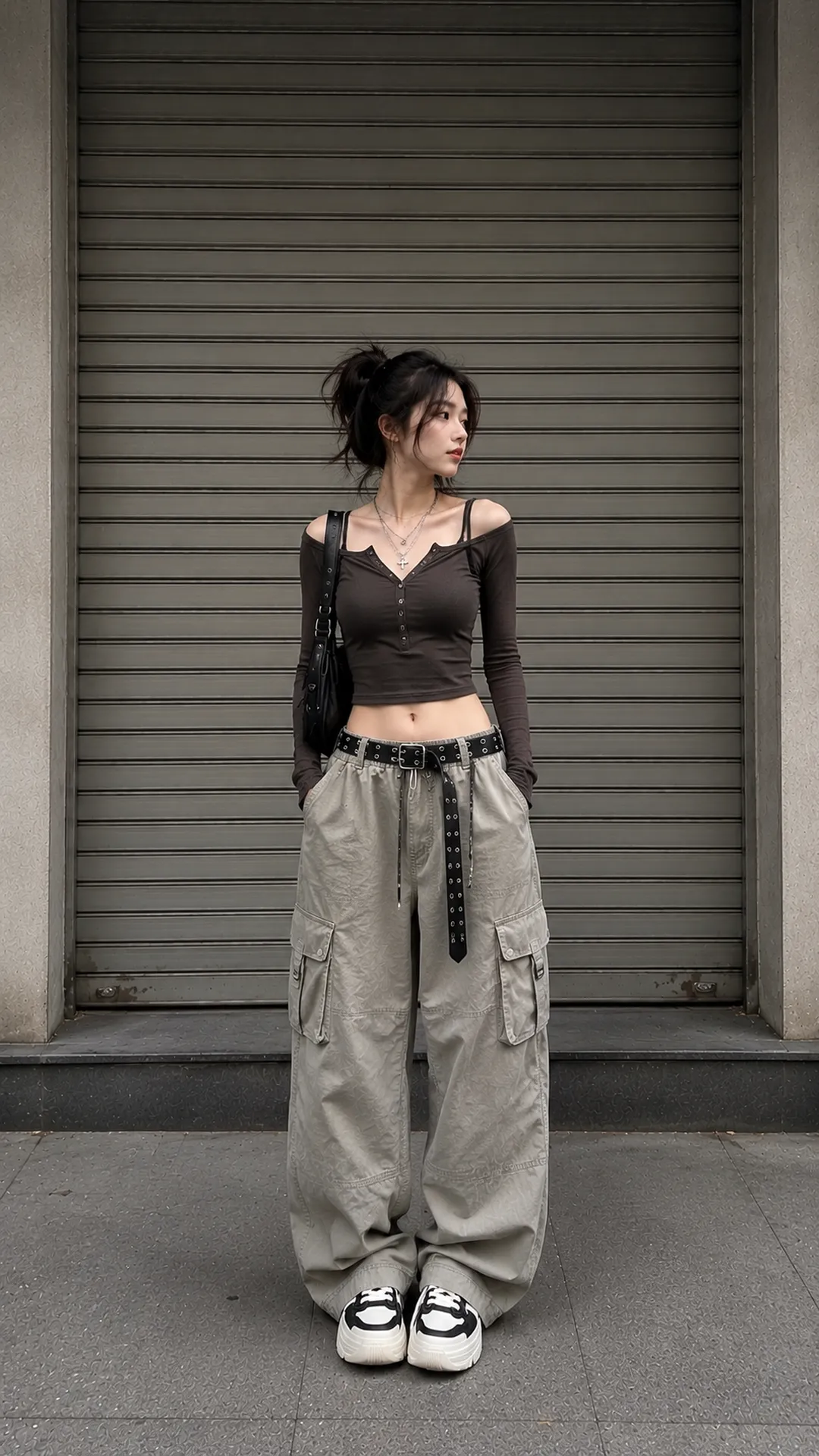
6. Light Colors and Prints Are Options Too
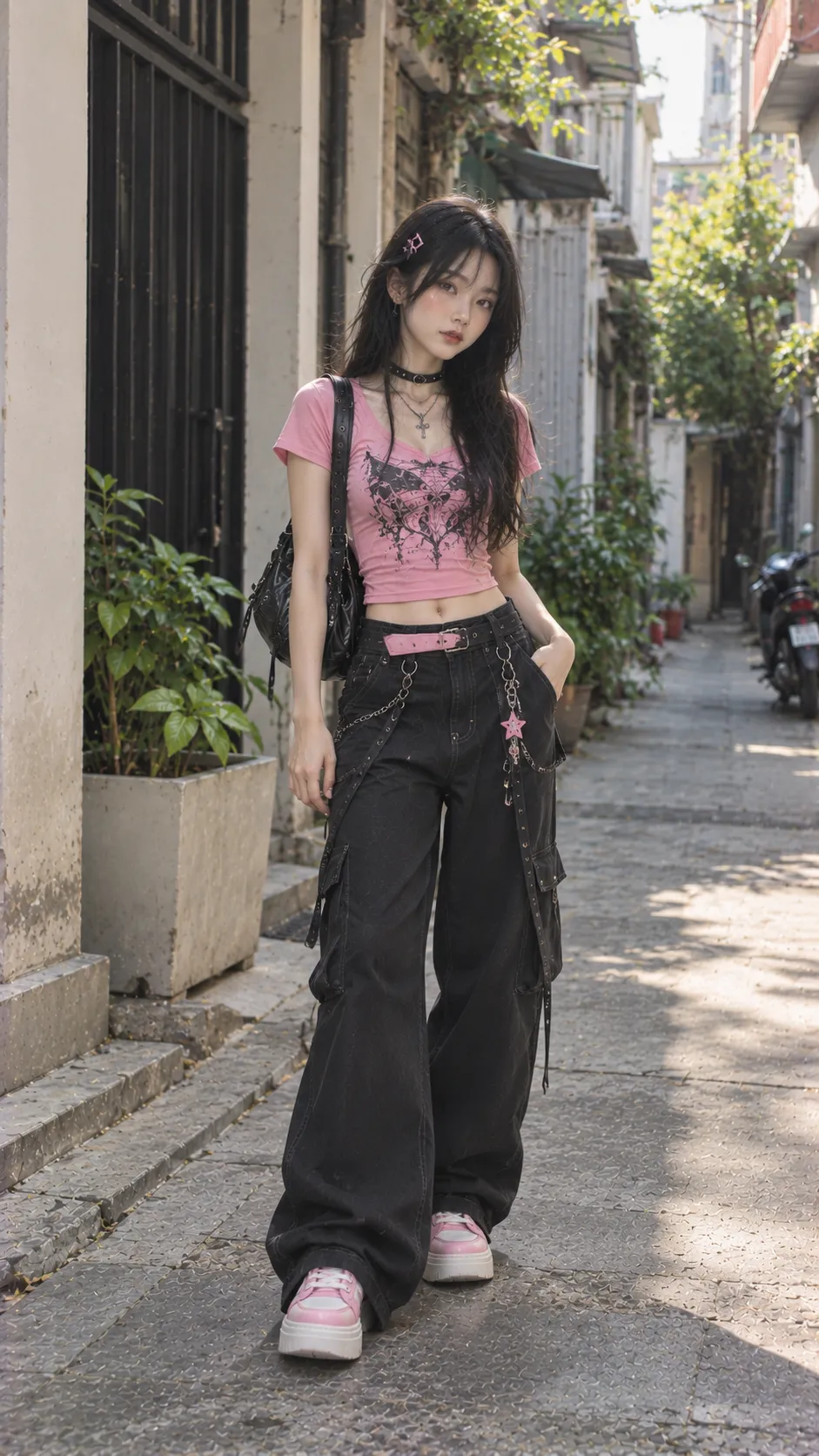
All-black is an aesthetic choice, not a plus-size obligation. A light top can draw attention toward the face; bright trousers make the lower half a statement; a monochrome outfit reduces color breaks without needing to be dark.
There is no universal rule that smaller prints look neater. A well-composed large graphic can be clearer than a surface covered in tiny motifs. Check placement, spacing and contrast. With a strong graphic, you may prefer quieter accessories; with plain clothes, a bag or jewelry can establish the focus.
7. Eight Practical Plus-Size Alternative Outfit Formulas
These formulas do not require a particular body proportion. For a pear-shaped outline and the shoulder–waist–hip relationship, see outfits for pear-shaped bodies. If height is the main variable, petite alternative outfit styling focuses on garment length and vertical proportions.
8. What Changes for Work, Coffee and an Evening Out?
For work: prioritize a stable waistband, fabric that needs little adjustment, shoes you can wear comfortably and removable layers. Personal style should still allow sitting through meetings and moving around, subject to workplace requirements. For coffee: you might choose more graphic detail, cropping, layers or accessories for a shorter outing, while checking the setting and weather. For an evening out: sheer fabric, leather, corset-inspired tops or heavier-looking boots can feature if movement remains comfortable.
On hot days, reduce layers and use lightweight rib knits, mesh, washed cotton or light denim for texture, checking their actual construction. In rain, avoid dragging hems and footwear unsuitable for wet conditions; practical choices help the aesthetic work beyond photographs.
9. Online Shopping: Read Garment Measurements and Try a 60-Second Fit Check
Measure a garment that fits and compare finished measurements for bust, shoulders, upper arms, waist, hips, thighs and length. Buying a larger label as a precaution does not guarantee fit. Listings without measurements in centimeters leave more uncertainty.
- Check fiber composition and stated stretch, rather than fabric names alone; fiber percentages do not directly measure stretch or recovery.
- Read reviews from people with similar measurements, particularly seated and side-view photographs.
- For two-piece sets, look for separate top and bottom size options if your proportions differ between them.
- Read the current size-exchange terms before buying harder-to-fit items such as corsets, rigid jeans or blazers.
When trying clothes on, do a 60-second fit check: sit, bend to pick something up, raise your arms, take a long step and carry your usual bag. A rolling waistband, straining buttons or a rising hem suggests a fit issue. This short check can reveal immediate problems but cannot establish all-day comfort. The guide to choosing clothing sizes online explains measuring and size-chart comparisons in more detail.
10. Common Plus-Size Styling Mistakes
- Making every item loose as a precaution: volume everywhere can blur the outfit’s structure. Choose one main roomy area and an anchor at the shoulders, waist, wrists or ankles if you want a clearer shape.
- Wearing only dark colors: this can exclude graphics, color blocking and focal points you might enjoy.
- Buying by body weight: weight does not specify shoulders, bust, hips, thighs or height. Finished garment measurements are more useful.
- Treating shapewear as compulsory: shapewear is optional. An outfit should also work when you do not want to wear it.
- Making every recommendation about the stomach: plus size does not imply a fuller stomach, and body shape differs from size. Identify the actual fit or visual variable you want to address.
Related Closet Outfits
Look #132 · Black Tank, Sports Jacket and Cargo Pants (Vietnamese), Look #129 · Brown Off-the-Shoulder Top, Khaki Cargo Pants and Boots (Vietnamese) and Look #35 · Off-the-Shoulder Crop Top and Black Wide-Leg Jeans (Vietnamese) are references for reading proportions, layers and visual weight, rather than compulsory sets for a particular size. The photographs do not establish plus-size sizing or fit availability.
Frequently Asked Questions
Should plus-size women wear only dark colors?
No. Dark colors are an aesthetic choice. Proportions, drape, garment lines and fit all influence the composition; the entire outfit need not be black.
Can plus-size women wear crop tops?
Yes. Choose a comfortable length and coverage, then check the hem against the waistband standing and sitting. A crop top is a proportion tool available to any body shape.
Can cargo pants work for plus-size bodies?
Yes. Check leg drape, waistband stability and pocket placement. Flat pockets add less bulk than large bellows pockets, but larger pockets are also an option if that is the emphasis you want.
How many sizes larger should plus-size women buy for an oversized fit?
There is no fixed number. Compare finished measurements, shoulder placement, upper-arm room and desired length. Sizing up repeatedly without checking proportions can lose the intended shape.
Does plus-size styling require shapewear?
No. Shapewear is a personal choice if you like its feel or finish. It is not a condition for wearing fitted dresses, crop tops or any other silhouette.
Conclusion: Let Fit Support Your Personal Style
Plus-size styling need not begin with visually shrinking your body. Start with fit, choose proportions you enjoy, add texture or color for emphasis and check movement. An intentional silhouette lets personal style lead.