

Pear-Shaped Outfits: Shoulder, Waist and Hip Proportions
Styling a pear-shaped outline need not focus on making the hips appear smaller. When shoulders are narrower than hips, you can add shoulder structure, define the waist, extend a vertical leg line or retain the natural silhouette, depending on your preferred effect.
This guide treats body shape as a map of proportions rather than a rulebook. Learn how garments shift attention between shoulders, waist and lower body, then choose whether to balance or emphasize those relationships.
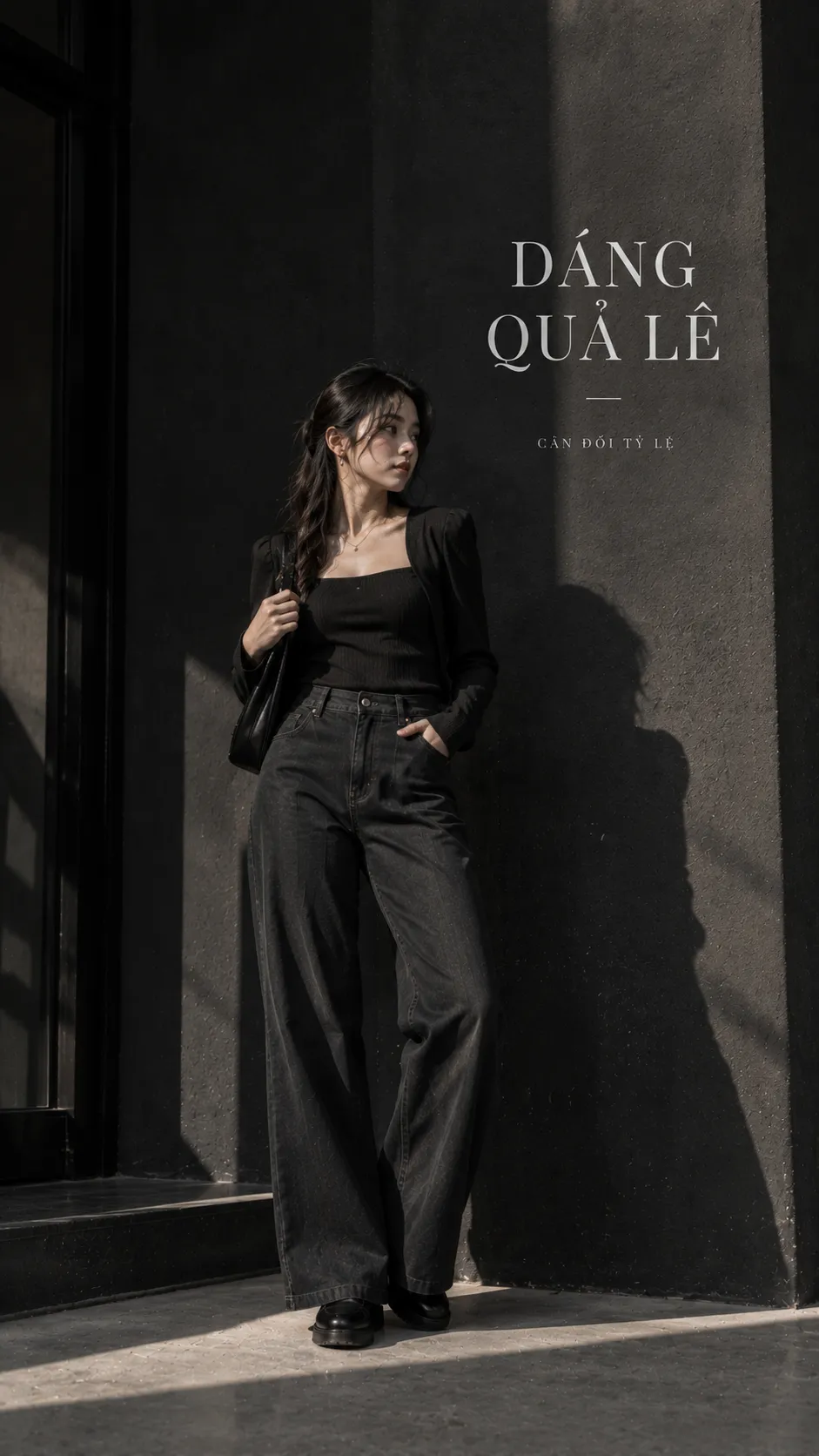
Guide collection: Alternative Outfits for Women: E-Girl, Baddie, Goth and Grunge (Vietnamese)
Pear Shape Describes a Proportion, Rather Than a Problem
In styling, pear shape generally describes hips or thighs appearing wider than the shoulders. It does not specify weight, height or how a body should look. Two people with similar shoulder-to-hip proportions may need different clothes because torso length, waist position, height and preferences differ.
So pear-shaped outfit styling starts with a choice: balance shoulders and hips, emphasize existing curves, or create clear, comfortable lines? Each goal leads to different garment choices.
For broader fit considerations, the plus-size alternative outfit guide covers a wider range. This article concerns pear-shaped shoulder-to-hip proportions, which are distinct from clothing size.
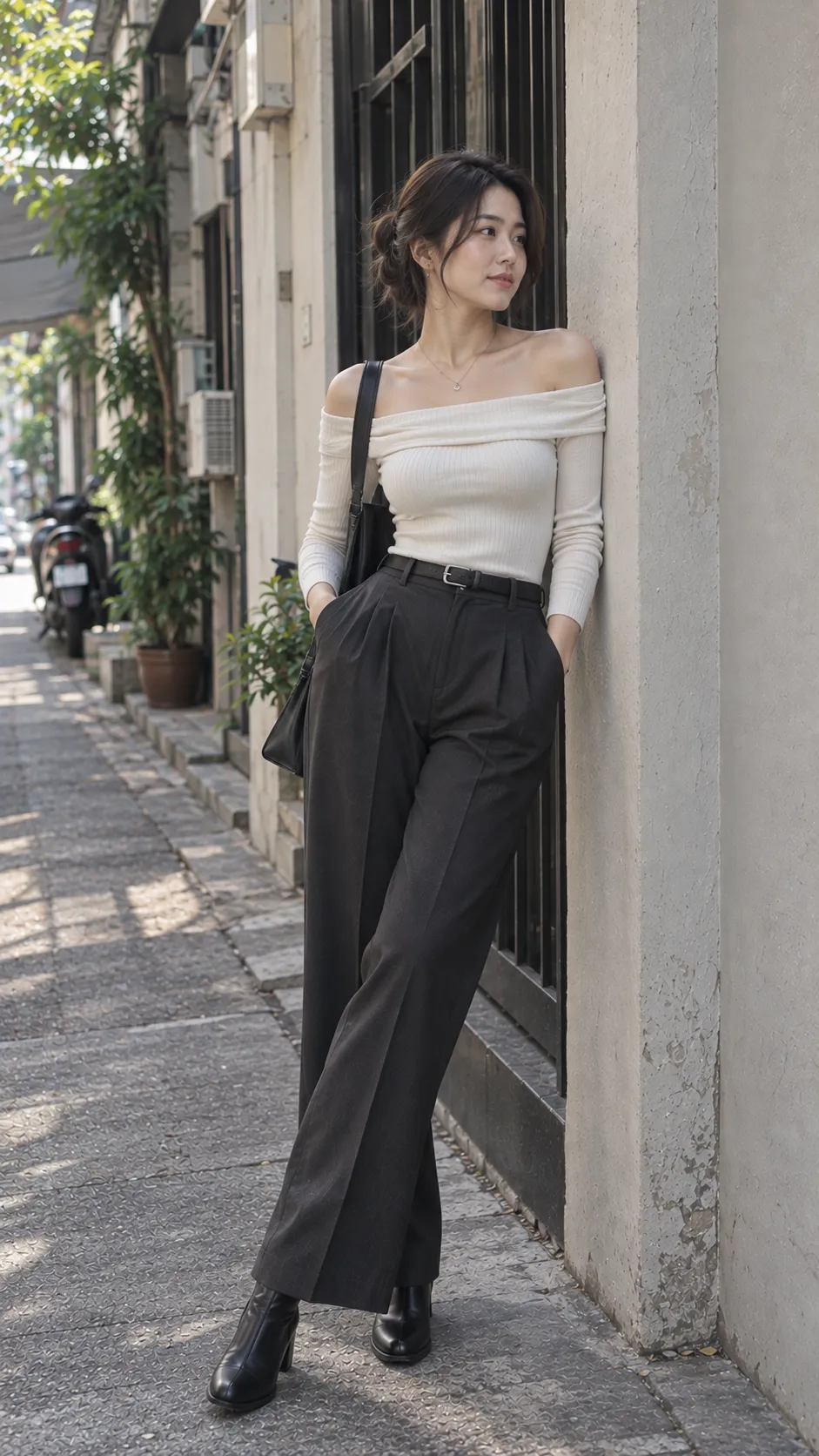
Three Styling Routes: Balance, Emphasis or a Column
Add shoulder presence
Boat, square and off-the-shoulder necklines, shaped sleeves or defined blazer shoulders give the upper half more presence. Straight or draping bottoms can keep the hip line more continuous.
Highlight the curves
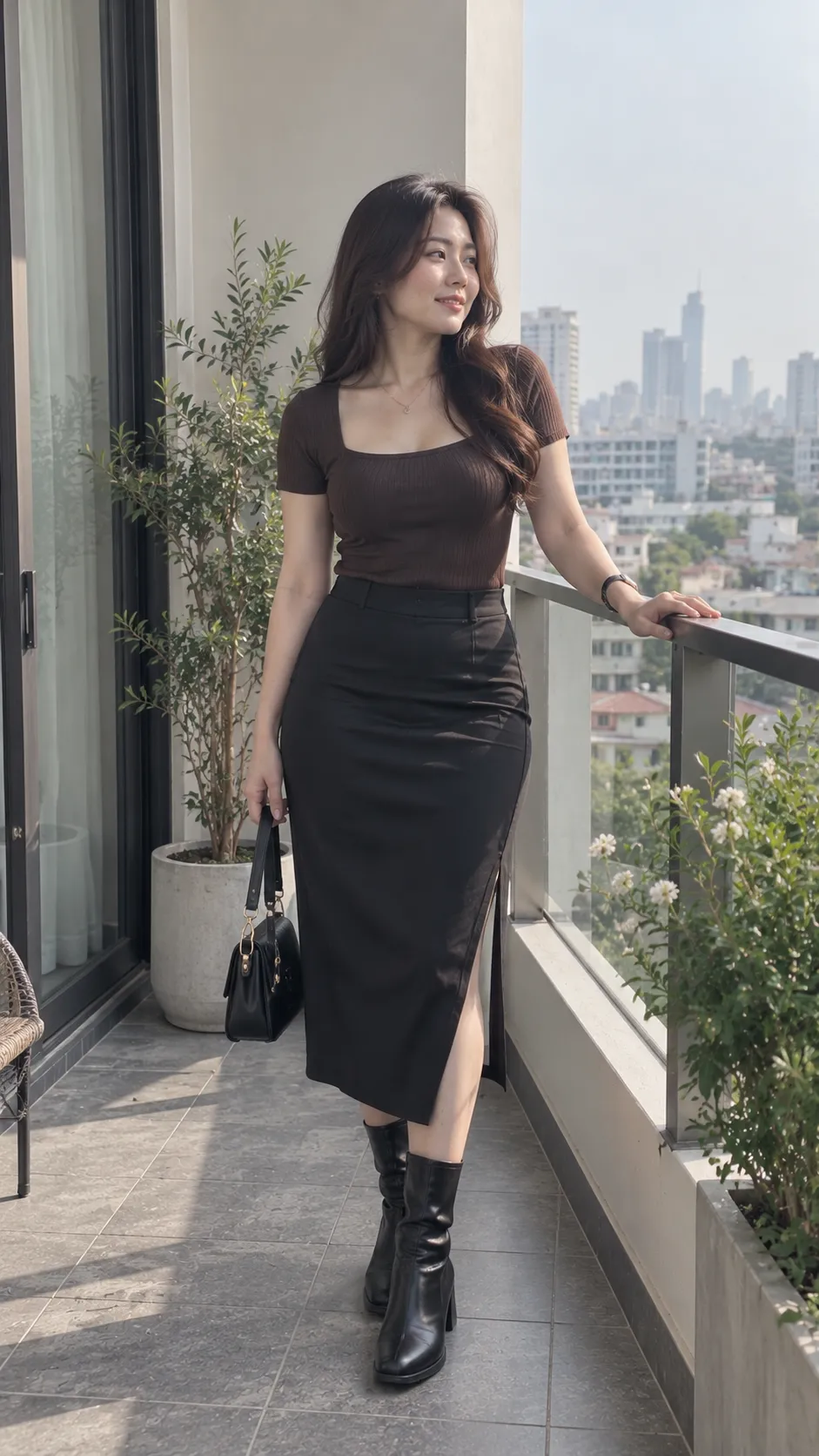
A fitted top with a bodycon or midi skirt, fitted jeans or a belt can emphasize hips and waist. These are valid choices if you enjoy the silhouette.
Build a straighter line
A boxy top with straight or wide bottoms, tonal colors or a long outer layer creates a straighter outline without needing waist emphasis.
One wardrobe can support all three routes. A defined-shoulder blazer with straight jeans suggests Balance; a fitted tank with a bodycon skirt suggests Emphasize; a boxy tee with tonal wide trousers suggests Column. Choosing a goal is more useful than following a fixed pear-shape shopping list.
Tops: Use Shoulder Lines When You Want Upper-Body Balance
Horizontally open necklines
Boat, square and off-the-shoulder necklines add apparent width around the neck and shoulders. Full sleeves may be unnecessary when the neckline already leads.
Shaped sleeves
Cap sleeves, a gentle puff or structured shoulders add upper volume. Choose a level suited to the setting.
Jackets and blazers
A defined shoulder seam provides a frame. A cropped jacket also moves focus upward and reveals the waistband.
Graphics, light colors and texture can also draw attention upward. A large-print top with dark plain bottoms can lead the composition even without a full cut, changing emphasis with little silhouette change.
For hip emphasis, a simple fitted top can let the lower half lead. Styling need not always aim for an hourglass. Choose tools for the image you want that day.
For the wider top collection, the women’s tops guide collection distinguishes necklines, fitted and boxy cuts, and layers. This guide selects only the aspects affecting shoulder-to-hip proportions.
Bottoms: Read the Fall of the Fabric Rather Than Hide the Hips
Straight-leg trousers give relatively continuous lines from hips to feet. Wide legs add volume but can retain vertical movement when the fabric drapes. Bootcuts widen gently near the hem, offering another balance. No cut is compulsory.
An A-line skirt gradually widens from the waist; a bias skirt follows curves before falling; a bodycon skirt emphasizes them more directly. Choose for Balance, Emphasize or Column rather than treating one cut as universally correct.
Pockets and washes create focal points. Hip-level cargo pockets add detail and volume. Lower or flatter pockets offer a quieter hip area if desired. You can also enjoy the utility silhouette and balance it with a structured top.
See the women’s trouser guide collection and women’s skirt and dress guide collection for garment choices beyond body-shape styling.
Dresses and Layers: Choose Vertical Lines, Waist and Shoulder Emphasis
Wrap dresses offer diagonal lines and often a defined waist; slip dresses can drape softly, especially on the bias; A-line dresses widen lower down; bodycon dresses follow the body. Pear-shaped proportions do not exclude any category.
For Balance, try an open neckline or prominent sleeves with a draping skirt. For Emphasize, a fine-strapped slip or bodycon dress can let the hips lead. For Column, consider a shirt dress or straight dress with clear vertical lines.
Cropped layers emphasize shoulders and waistband; hip-length blazers frame the torso; long coats create a column. Compare open layers in the mirror, as their edges can shift the composition substantially.
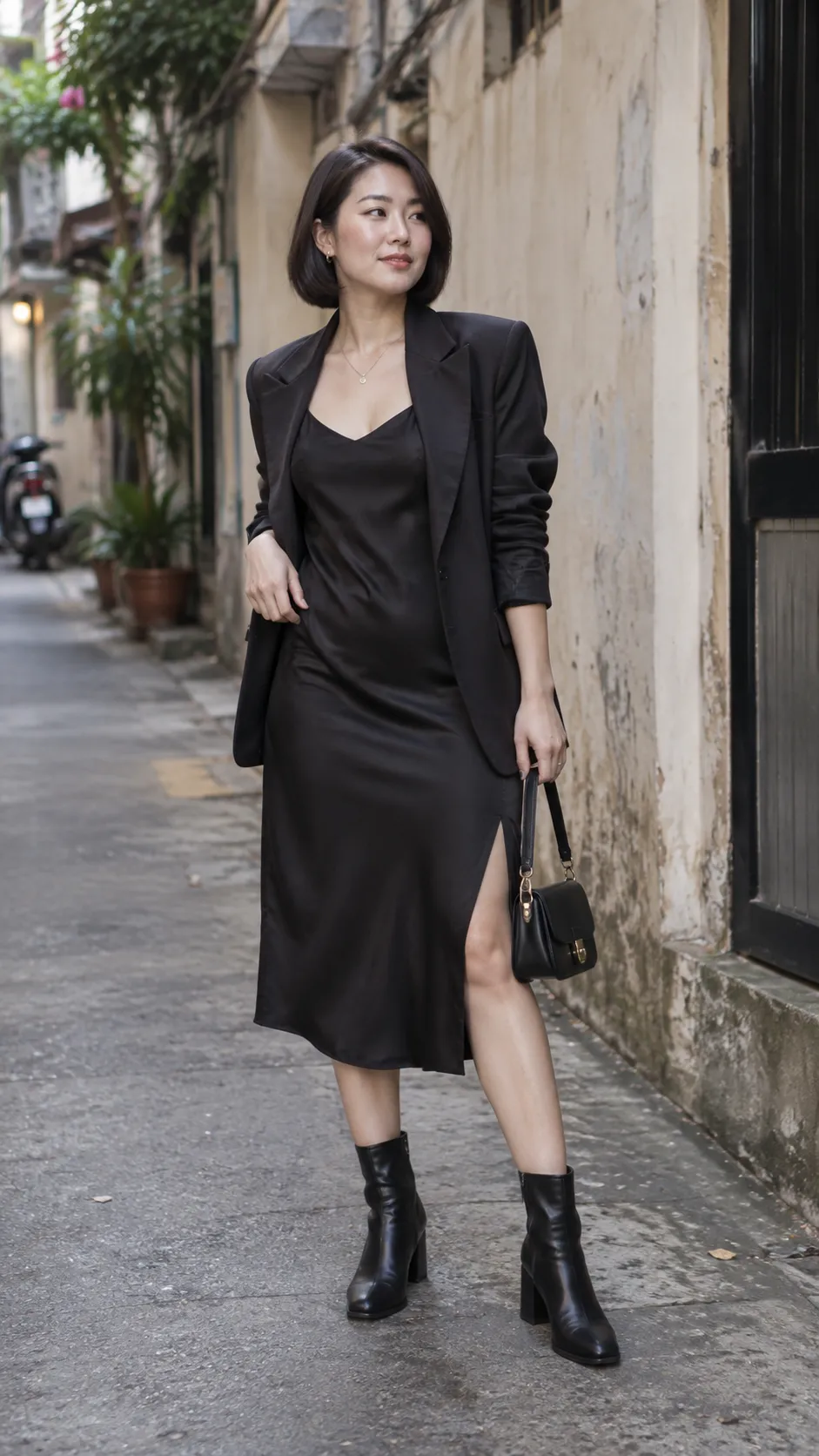
Eight Outfit Formulas for Different Goals
Square-neck top + straight jeans + loafers
Balance: an open horizontal neckline, straight jean lines and a neat footwear finish.
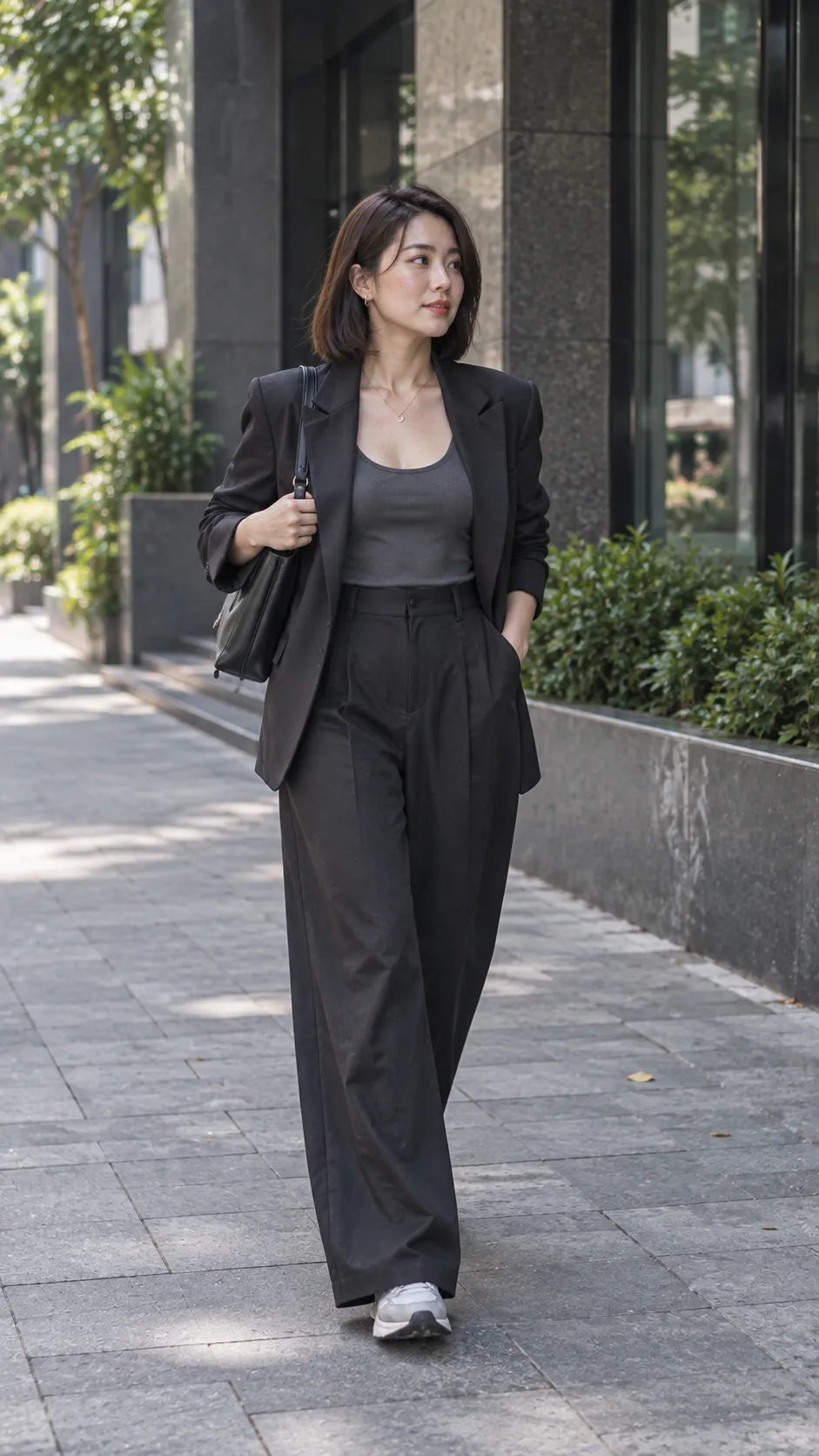
Defined-shoulder blazer + tank + wide trousers
Balance: shoulder structure responds to the lower volume; the tank keeps a neater central area.
Off-the-shoulder knit + A-line skirt
Soft balance: a wider shoulder line and a skirt opening from the waist, suited to romantic or dark styling.
Fitted tee + bodycon midi + boots
Emphasize: curves remain visible; boots give the outfit a substantial finishing point.
Crop top + cargo pants
Utility emphasis: the crop reveals the waistband and cargo pockets add hip-area detail. Choose it when you want the lower half to lead.
Boxy tee + tonal wide trousers
Column: continuous color and two roomy shapes make a straighter outline without waist definition.
Slip dress + cropped jacket
Mixed emphasis: the dress follows the body while the jacket adds a shoulder line and a higher break.
Graphic top + dark straight skirt
Focal-point balance: the upper graphic or color draws attention while the lower half stays quiet.
Footwear and Accessories Can Move Attention Beyond Shoulders and Hips
Shoes do more than suggest longer legs. Chunky sneakers and platforms add lower visual weight; pointed boots extend a line; loafers give structure; ballet flats keep footwear visually lighter. Choose for the mood and hem length, with comfort and stability first.
If wide trousers cover most of the shoe, choose a visible shoe shape or alter the hem. With a calf-length midi, shaft height and the gap above the shoes determine the lower rhythm. These are general proportion questions.
Earrings, a scarf, necklace or high-carried bag can bring focus upward for Balance. A belt draws it to the waist. A shoulder bag ending at the hip emphasizes that area, which may suit your chosen route.
If you enjoy a bag ending at the hips, use it. Added apparent width describes an effect rather than a wrong item. Decide whether you want that effect in this outfit.
Pear-Shape Rules You Can Question
“No light-colored trousers”
Light colors can draw attention downward, which may be your goal. For Balance, echo their presence with a graphic or light top; for lower-body emphasis, let the trousers lead.
“No fitted clothes”
Fitted and bodycon cuts show body lines. You can choose them when you enjoy that silhouette.
“You must cover the hips with long tops”
A long top is one silhouette, not a duty. Cropped jackets and short tops can reveal the waistband and make a deliberate break.
“Always widen the shoulders”
Balance is only one route. Emphasize and Column are valid too.
“One body shape determines every garment”
Torso length, height, comfort, material and personal style all matter. Use body shape as a map rather than a law.
Fabric Can Change Proportions as Much as Cut
Two wide-leg trousers can read differently in rigid denim and a fluid fabric. Firm denim holds a stronger shape from the hips; fluid fabric follows movement before falling. Both can suit Balance, but may call for different upper-body emphasis.
Similarly, reflective satin can make a skirt more prominent than matte cotton of the same cut. A light, ribbed or graphic top may add shoulder-area presence without puffed sleeves. Surface and color distribute attention alongside garment cut.
Color and Print: Choose a Focal Point Instead of Default Concealment
Light color, print and shine often attract attention. For Balance, place graphics, a bright knit or jewelry higher up. For hip emphasis, choose a patterned or metallic skirt. For Column, use tonal dressing to reduce distinct color blocks.
Pear-shaped proportions do not require dark bottoms. White jeans, a silver skirt or light cargos can lead the outfit; link the top through color, neckline or accessories. Apparent reduction need not be the default goal.
Check Sitting and Movement, Rather Than Only a Standing Photograph
Try close-fitting bottoms while sitting, stepping and using stairs. Pulling seams or a sliding waistband suggest a different fit, size or fabric, rather than an unsuitable body shape. Check skirt hem width for walking and whether a blazer catches around the hips when seated.
A Quick Check When the Outfit Feels Different from Your Goal
For Balance, try more neckline, color or texture presence at the top before replacing the bottoms. For Emphasize, reduce shoulder detail and let lower color, shine or fit lead. If comfort is the goal, put fit first and set body-shape rules aside; Column is an equally valid option.