

Understand workwear before choosing clothes
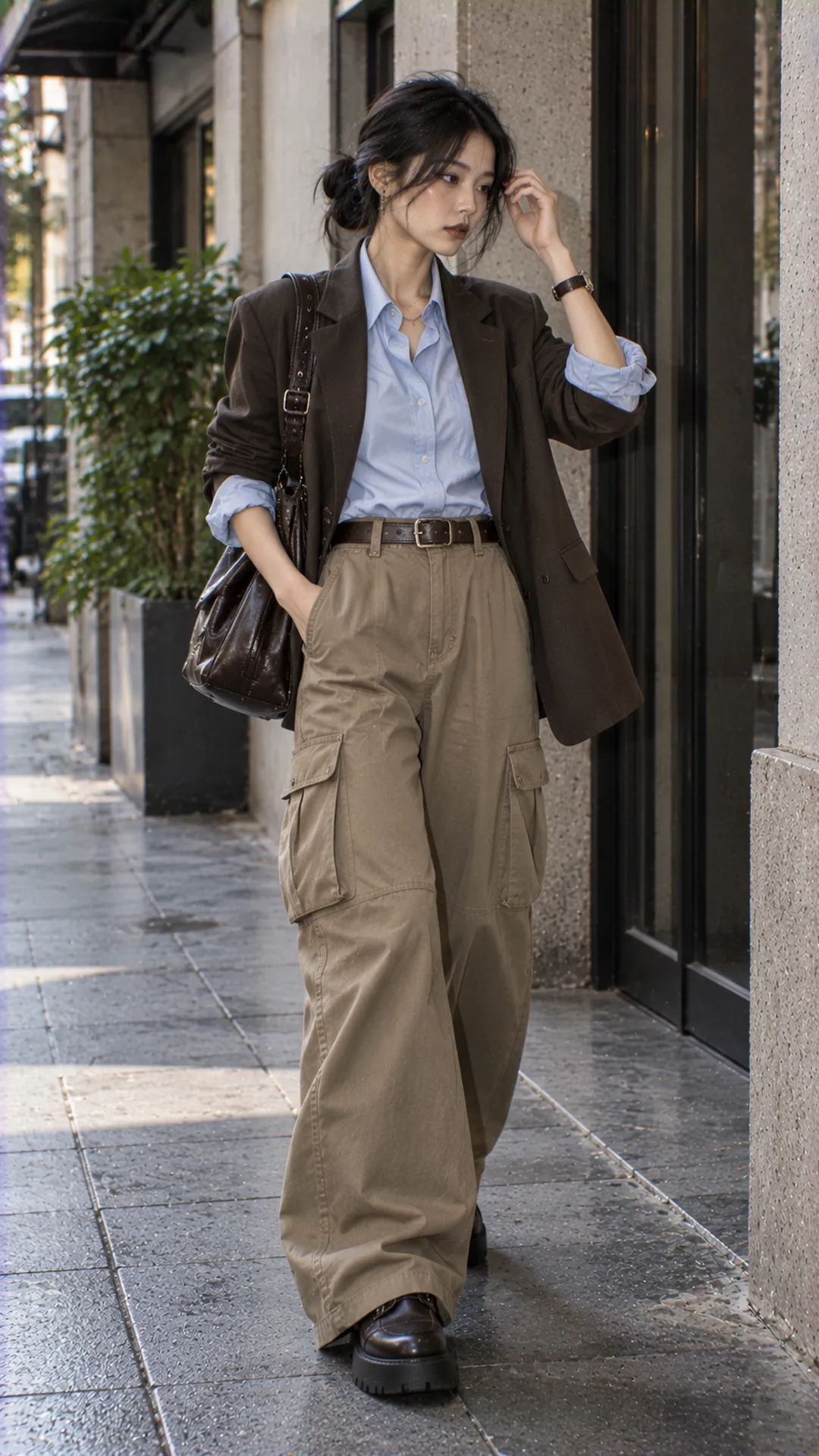
Workwear can mean clothing used at work. Here, it describes styling borrowing labor-clothing designs: clear lines, useful pockets and structured-looking fabric. This differs from English shopping articles using workwear as a general term for office blazers, shirts and dresses.
The exhibition Beyond Utility at The Museum at FIT places functional clothing alongside fashion interpretations, showing how an item's original purpose can change with context. Workwear fashion need not have one occupation or founding year.
Nor should it be treated as a wardrobe originally only for men. Denim: Fashion’s Frontier presents a women's denim work jacket from around 1850, constructed in relation to women's clothing of that period. Today's combinations extend possibilities rather than demanding a particular body or gender expression.
Protective clothing, workwear fashion and officewear
Specialist work clothing is selected for actual tasks. Where protective clothing is required, follow workplace requirements and product specifications. Thick fabric, dark colors or large soles alone do not establish flame resistance, chemical resistance or foot protection.
Workwear fashion uses those details to create an image. Patch pockets may be smaller, jackets cropped and trousers softer. Such changes can improve daily wearability without automatically retaining the original garment's function.
Officewear is assessed by formality and workplace rules. Carpenter trousers with a shirt may suit a relaxed office but not a client meeting requiring formal dress. When consulting the fashion aesthetic dictionary, consider context rather than a turned-down collar alone.
Recognize construction, not just brown
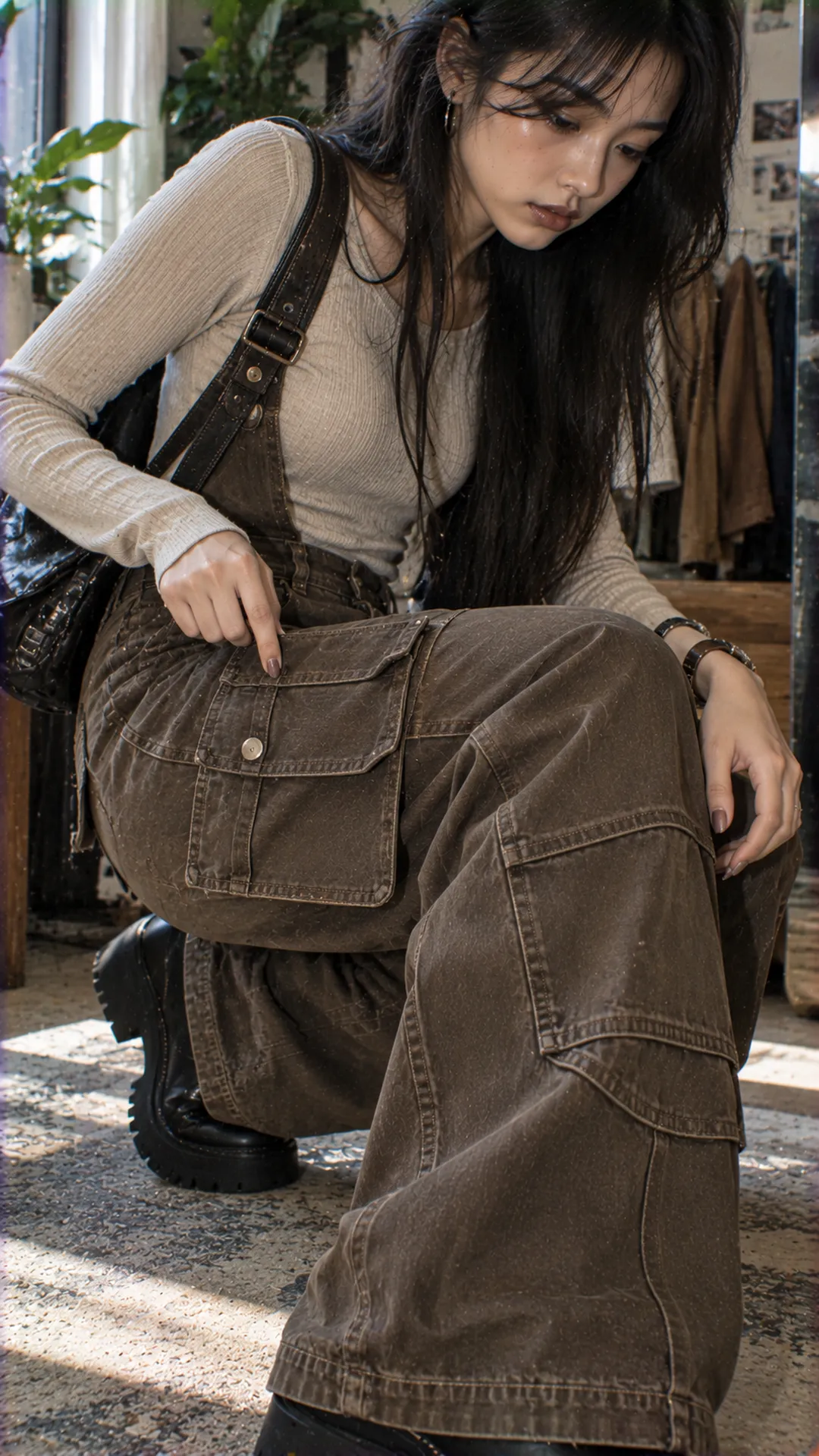
A chore jacket is often recognizable through a simple collar, front buttons and visible patch pockets. Carpenter trousers suggest utility through tool pockets or loops; double-knee designs add panels over the knees. Not every design contains every feature, and one outfit need not collect them all.
Reinforcement details originally had specific practical reasons. For example, the 1948 uniform designed by Helen Cookman at The Met has reinforced areas related to friction during work. With contemporary fashion, inspect actual construction; contrast stitching may be mainly decorative.
Earthy brown, indigo, olive, cream and black are easy options, but color does not determine the whole style. A pale pink patch-pocket top with gray carpenter trousers can retain the idea. Conversely, an entirely plain, fitted brown outfit without functional references may suggest another direction.
Choose a main piece and test its cut in motion
Start with something you like: a patch-pocket jacket for upper-body emphasis, carpenter trousers for a roomy silhouette or overalls for continuity. Take the rest from your wardrobe. This reveals whether you like the cut or only the advertising image.
Reach forward and sit in a jacket. Dropped shoulders can be intentional; a straining back or pinching armholes need attention. For trousers, test the seated waistband, thighs on a step and hems with shoes. Wide trousers still need appropriate length; sizing up repeatedly does not replace a deliberately wide cut.
Put your phone in a pocket to see whether it distorts the fabric. High, low, flat and voluminous pockets create different accents; none is banned for a body shape. If you like volume organization in Japanese streetwear, borrow the idea of one leading shape and reduced competition elsewhere.
Three women's outfits from one pair of carpenter trousers
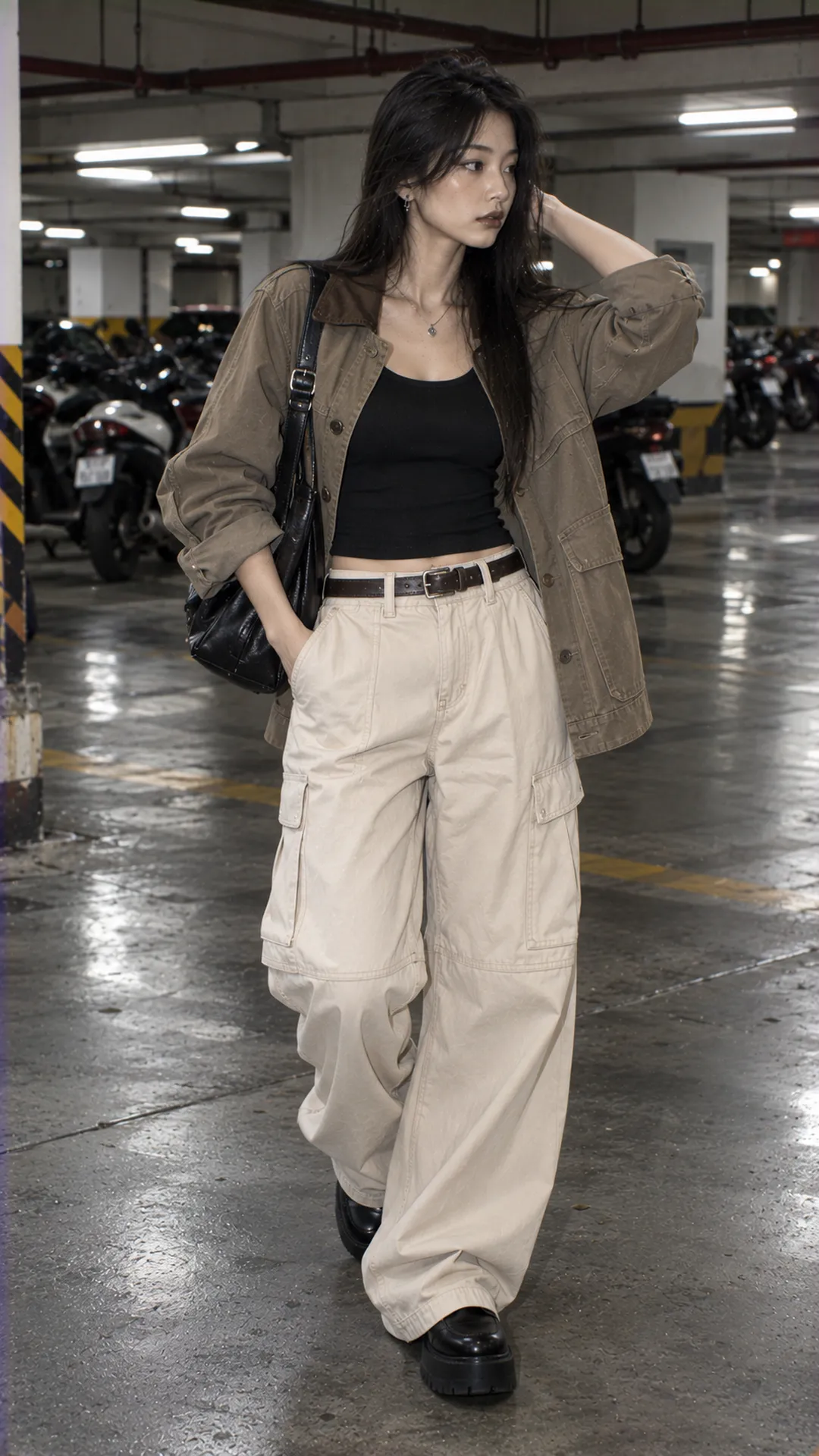
School or coffee: try indigo carpenter trousers, a fitted cream tee and streamlined sneakers. Let the top end near the waistband or partially tuck a longer one. Two clear color areas reveal pockets and seams without large accessories.
For a softer result: replace the tee with an open-neck, short-sleeved blouse with few ruffles. Brown flats echo a small bag while the trousers supply structure. Moderate drape allows gentle movement, but inspect coverage in light before deciding on an underlayer. Bows and heels are not required for the outfit to count as women's clothing.
A relaxed workday: combine minimally detailed dark-gray carpenter trousers with a pale blue shirt and loafers. Allow room across the back while keeping cuffs tidy. If the office discourages many pockets, use plain trousers and retain one chest-pocket overshirt for a subtler utility reference.
All three change the accompanying pieces without replacing the trousers. Photograph the complete outfit with actual shoes: piled hems can make it heavier than intended. Hemming or another length usually helps more than continually pulling the waistband up.
How does a patch-pocket jacket work with a skirt?
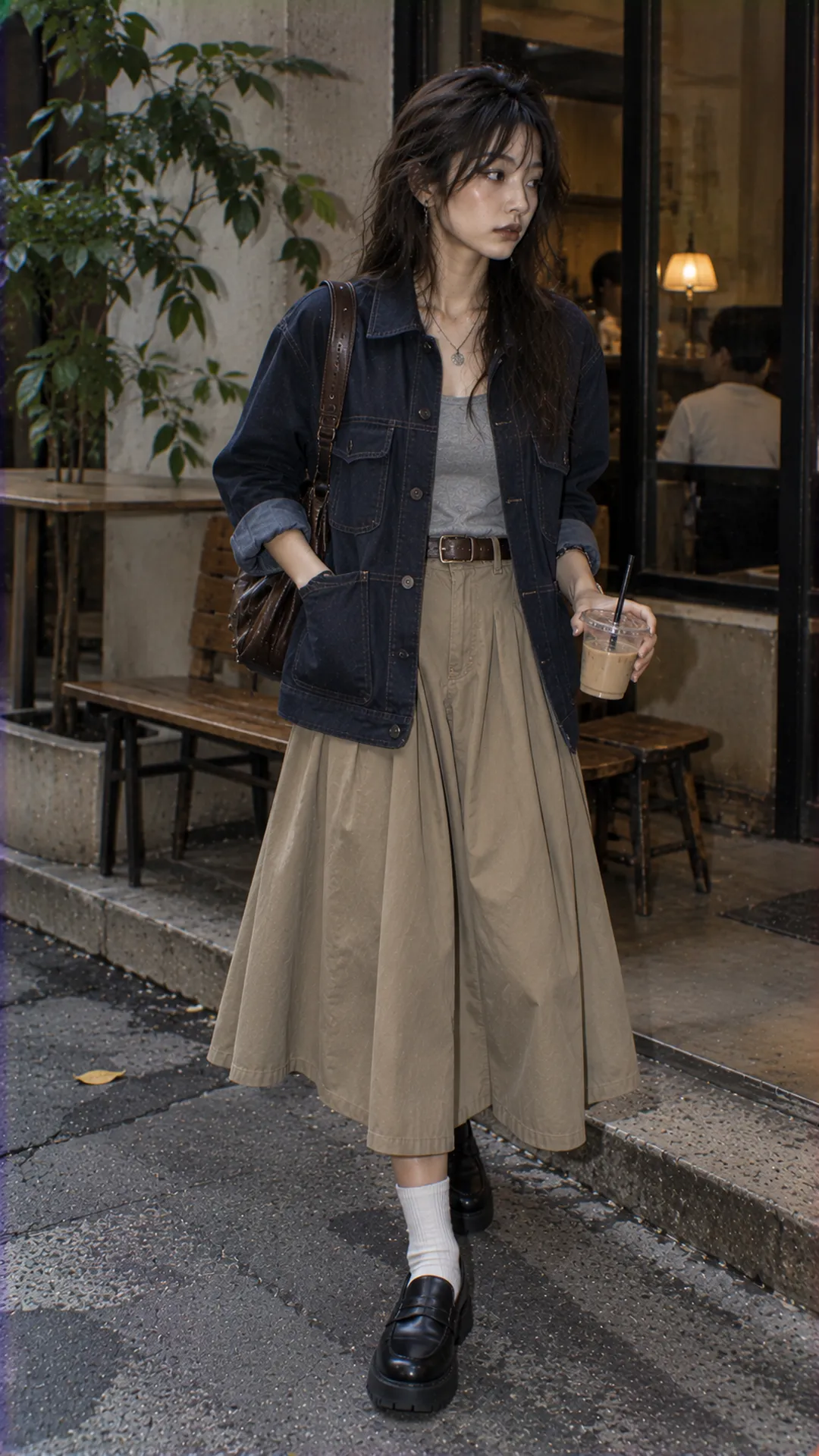
A dark-blue chore jacket can accompany a light base top, draped midi skirt and flats. The jacket creates volume above while the skirt falls softly below. A simple base lets the collar, pockets and buttons remain clear without competing bows or layered collars.
If both jacket and skirt are long, open the buttons to reveal the base between them. For a boxier, wider result, retain a hip-length jacket; for a clear waistline, try a shorter one. These are visual choices, not corrections to a supposedly wrong body.
With a rigid denim skirt, soften the other piece through a light jacket or soft tee. A plain fabric bag completes the outfit. For boots, check the space between hem and shaft while walking rather than judging only a still photograph.
Keep workwear details in hot weather
You do not need thick canvas at midday. Try a short-sleeved patch-pocket shirt with light carpenter trousers, or a tee and visibly seamed skirt. The design cues lie in construction; layer count and fabric weight can follow your routine.
Cotton labels do not guarantee equal breathability. Inspect thickness, lining and roominess; if possible, sit for a few minutes and walk. Two garments with the same fiber content can feel very different when one has extra pocket and knee layers.
For air-conditioned spaces, carry a removable overshirt instead of fixed multiple layers. The guide to layering outfits for women helps with lengths; in workwear styling, also check whether inner and outer pockets stack into one bulky area.
Fix outfits that feel heavy or too uniform-like
If jacket, trousers, boots and bag are all large, decide which should lead. Keep wide trousers with a streamlined shirt, or the boxy jacket with moderately straight trousers. Change one piece before adding accessories to rescue the outfit.
If matching colors feel too much like a uniform, separate top and bottom colors or replace one piece with a skirt. A small scarf can also help, without occupational badges or tool accessories added merely for supposed authenticity.
Workwear does not automatically become alt fashion with a chain. For an alternative direction, choose one clear personal reference, such as a favorite graphic tee or silver accessory, then keep the other pieces simple enough to reveal it.
Buy less by checking the right details
Before buying, establish whether you need a jacket, trousers or simply like a pocket detail. Inspect internal seams, button attachment, pocket depth and panel placement. Online, compare measurements with a comfortable existing piece rather than relying solely on “oversized.”
For used clothes, inspect knees, crotches, elbows and pocket corners. Fading may suit your taste; weakened fabric needs an assessment of repairability. Choose care instructions that fit your routine. Trousers that work across many days help more than an entire set useful only for one photo shoot.