

Airport Outfits for Women: Ten Adaptable Formulas
An airport outfit needs to work through several settings: handling luggage, queues, screening, waiting, temperature changes, and extended sitting. Appearance therefore needs to work alongside adjustability.
Instead of treating ten combinations as interchangeable photographs, this guide follows the airport journey. Movement, layers, bags, footwear, and temperature come before the aesthetic details.
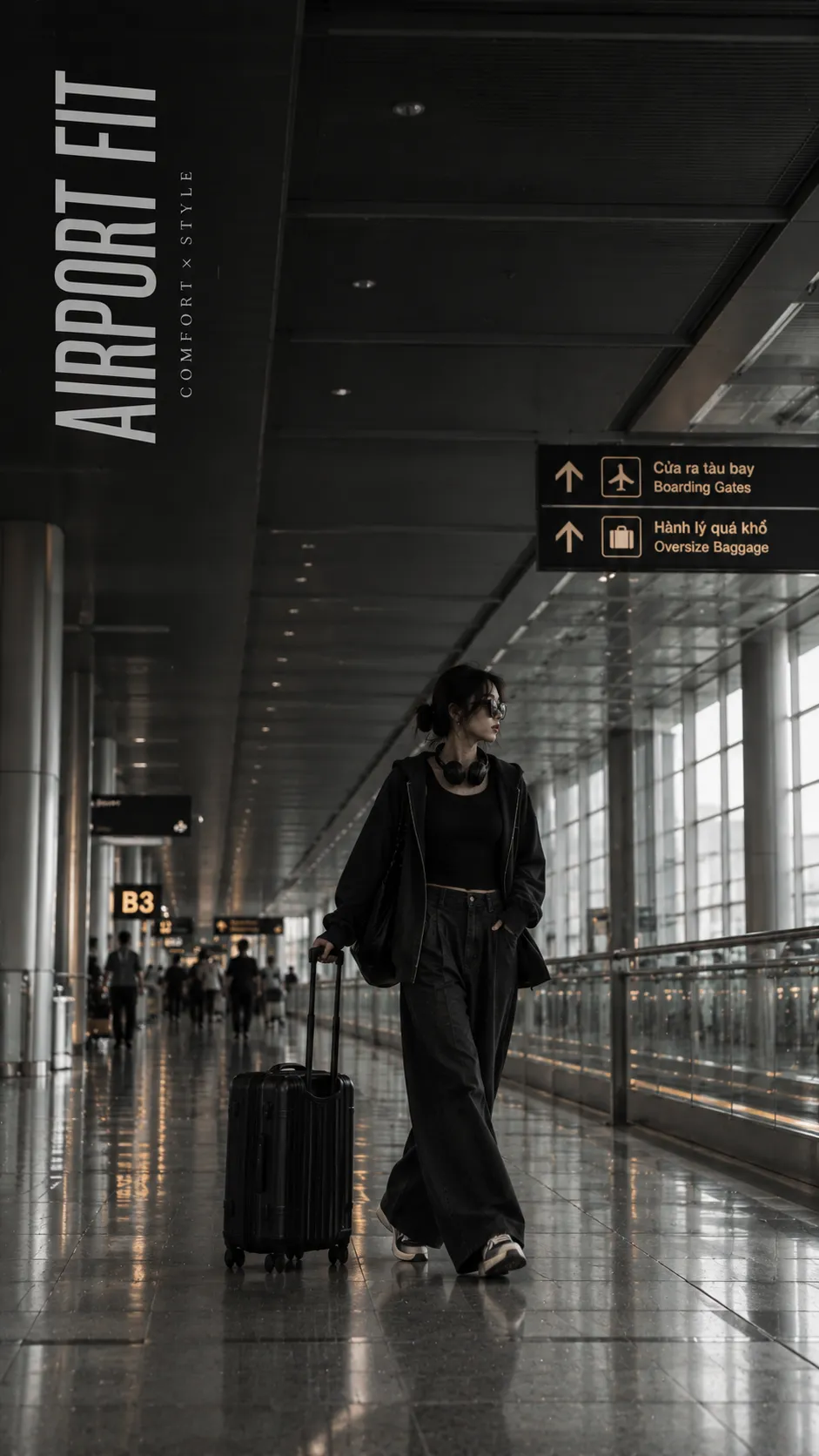
Guide collection: Women's Alternative Outfits: E-Girl, Baddie, Goth, and Grunge (Vietnamese)
Plan for the Airport Journey, Beyond One Photograph
Home to the terminal
You may walk quickly, handle luggage, and move through warm outdoor areas. A removable outer layer, hems clear of the ground, and a reliably closing bag can help the outfit adapt.
Standing and moving
Check how clothing sits under the actual backpack or tote. Bag straps should not repeatedly catch a hood, scarf, or projecting hardware.
Access and adjustment
Complicated fastenings, belts, and jewelry can take time to handle. Plan how to manage them while following the actual checkpoint instructions; this guide does not predict what screening staff will ask you to remove.
Indoor temperature changes
A zip hoodie, cardigan, or light jacket offers an adjustable layer without replacing the whole outfit.
Extended sitting
Test waistbands, seams, zippers, and fabric while seated. A combination that looks good standing but presses at the waist or back can become uncomfortable during a longer journey.
For a polished casual base, see what Casual Chic means. For a sportier direction, the athleisure guide compares sportswear references with other everyday styling approaches.
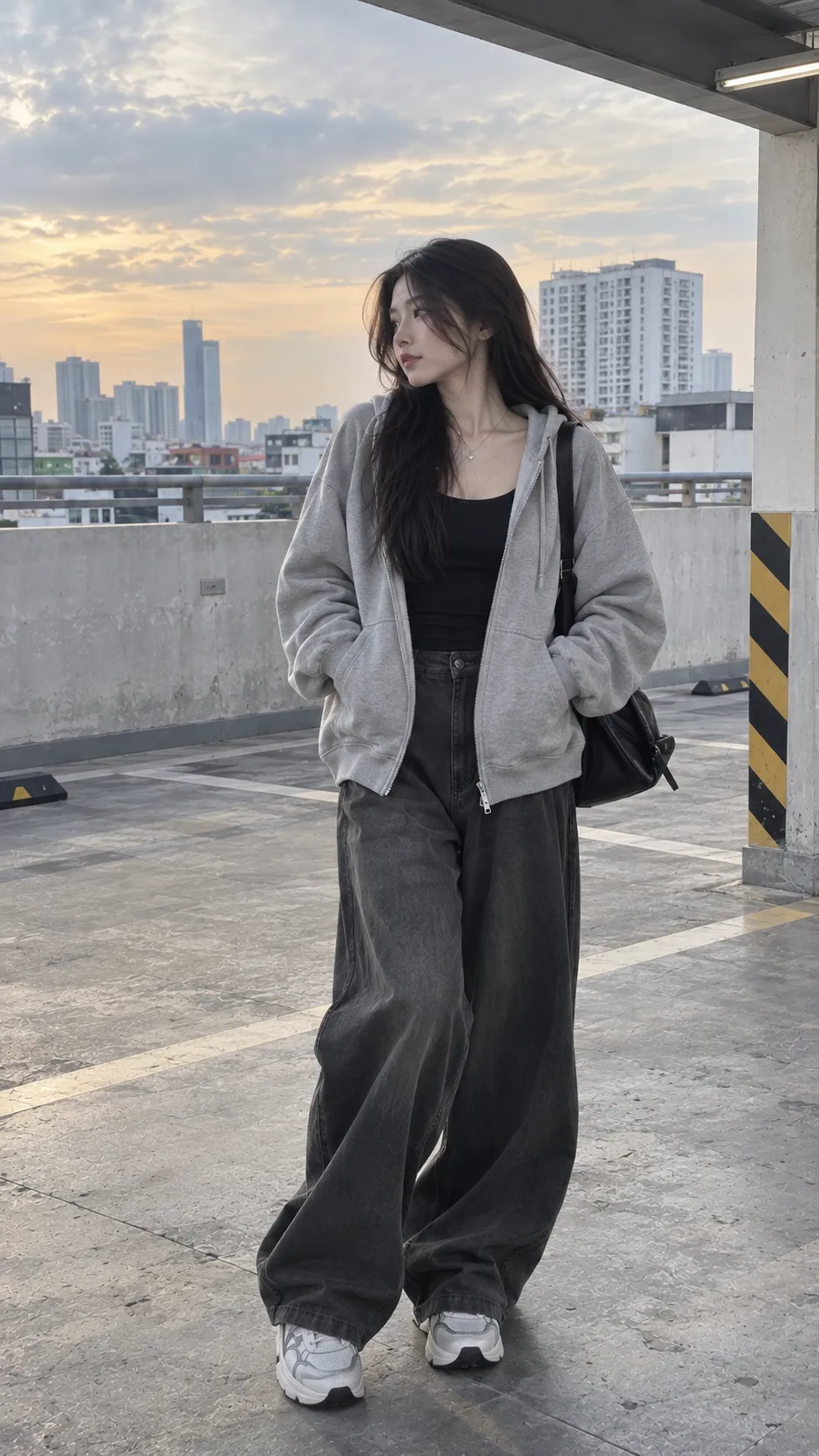
Four Checks Before Choosing the Outfit
Movement does not require joggers. Soft jeans, suitable stretch trousers, a slit maxi, or a knit dress may also work if the actual fit allows it. Test the posture and duration rather than relying on the garment label.
Screening procedures depend on the airport and journey. Check the relevant official guidance and follow staff instructions; do not build the outfit around an assumption that a particular item will never need removal.
Adjustable Layers: The Base Should Work on Its Own
A zip hoodie allows front-opening adjustments. A cardigan avoids hood bulk against a seat, while a bomber provides a different shoulder shape. Any of them can be unsuitable if too heavy, stiff, or warm. Choose for the journey and your own temperature preferences.
Ten Airport Formulas, from Simple to Alternative
Tank + Zip Hoodie + Soft Wide Trousers + Sneakers
A defined upper base contrasts with trouser volume; the open-front layer can be adjusted as needed.
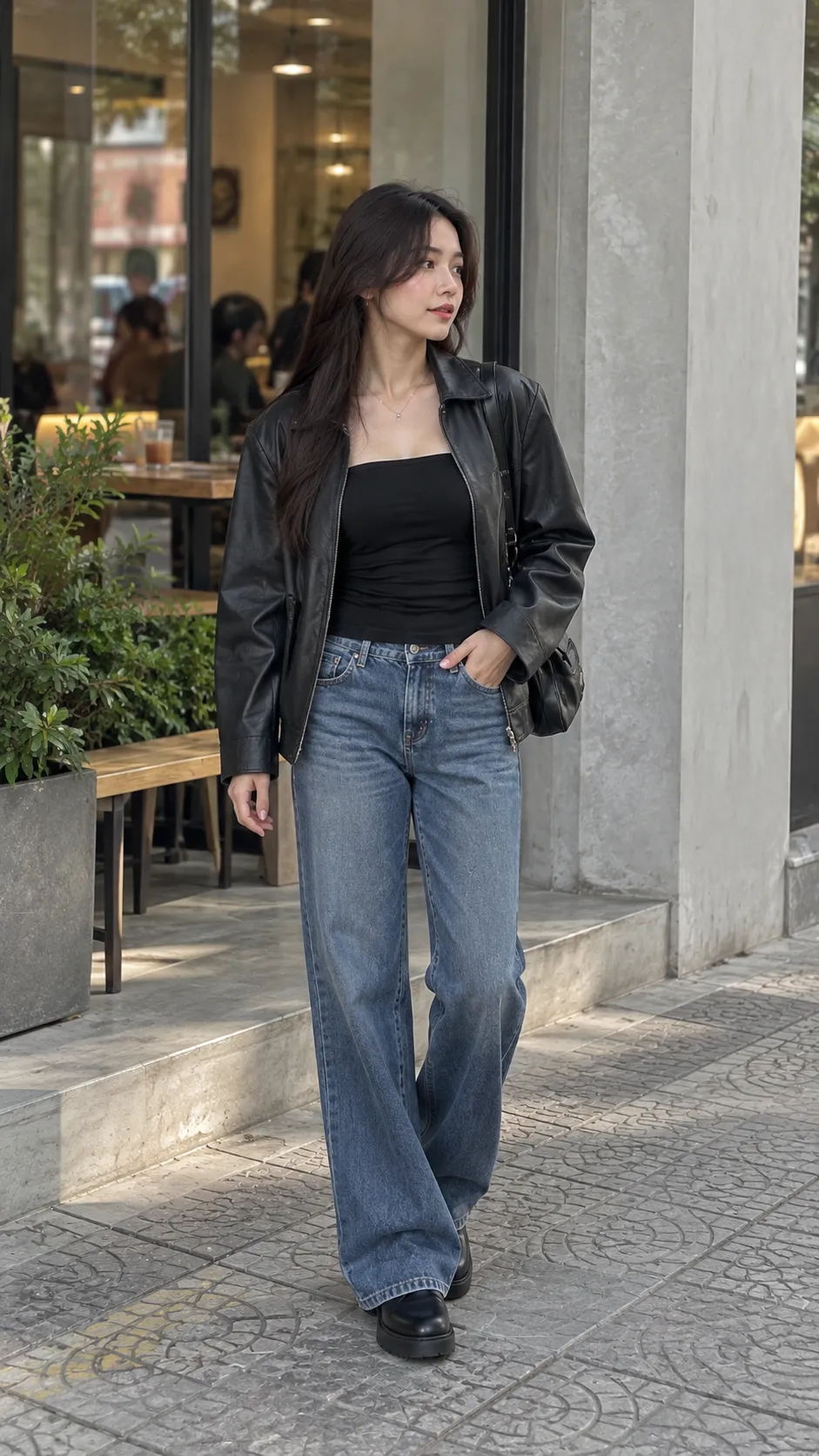
Fitted Tee + Stretch Straight Jeans + Loafers
A city-casual direction. Test the actual denim while seated and choose footwear you have already assessed on a comparable walk.
Baby Tee + Straight Joggers + Light Bomber
An athleisure or streetwear reference with clear hems and a defined shoulder layer.
Fitted Long-Sleeve Top + Slit Maxi + Sneakers
Check that the skirt and slit allow your actual stride, sitting, and luggage handling. A sneaker label alone does not establish comfort.
Tonal Knit Set + Denim Jacket
The related colors connect the base, while the removable jacket adds structure. Check stretch recovery and fabric weight.
Graphic Tee + Soft Cargo Pants + Low-Profile Sneakers
An alternative casual formula. Check whether cargo pockets or their contents press against you when seated.
Slip Dress + Cardigan + Sneakers
A dress changes the waistband arrangement, but still needs testing at the hips, straps, and seams. The cardigan adjusts coverage and styling.
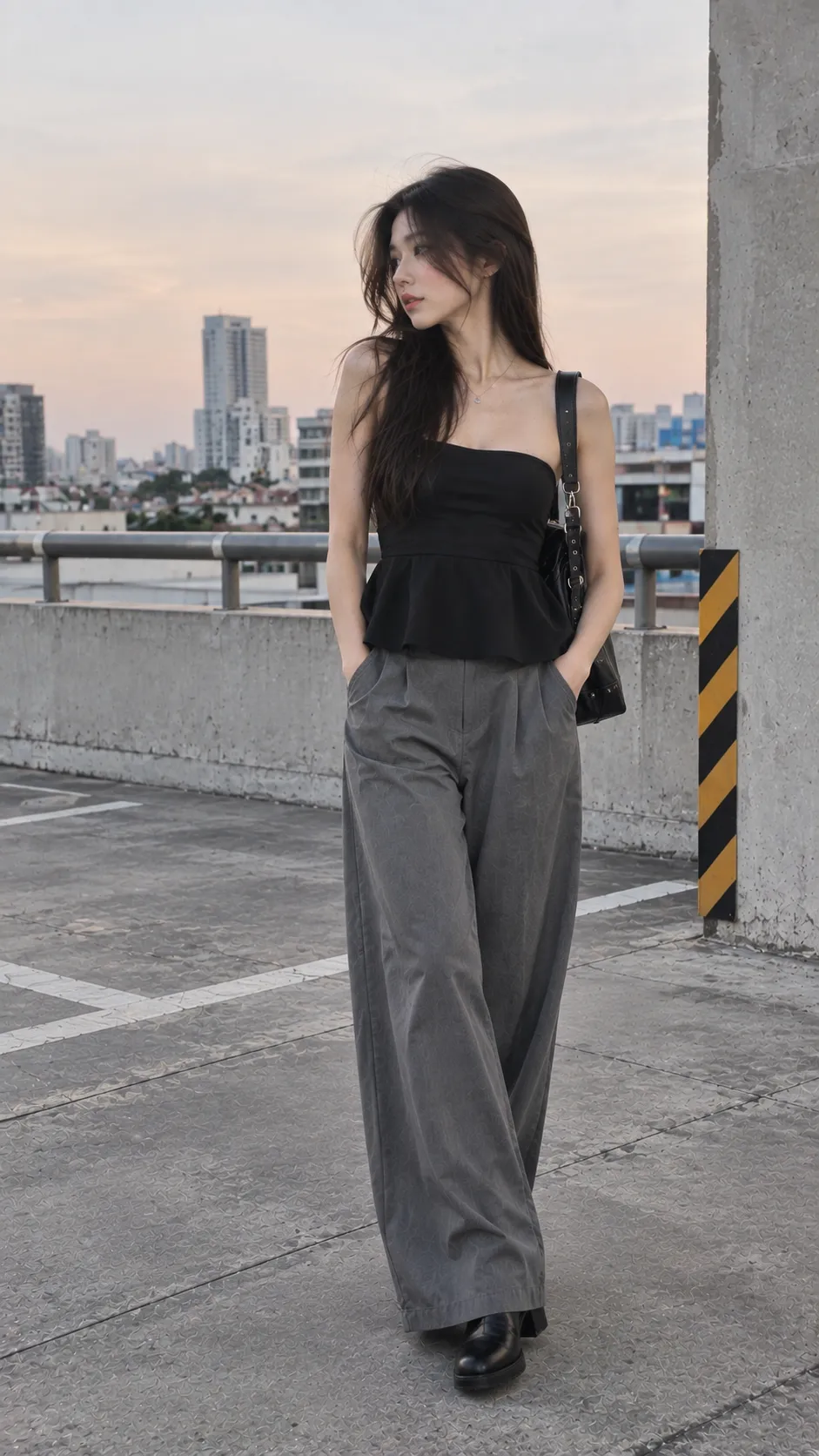
Black Tank + Charcoal Trousers + Light Leather-Look Jacket
A darker city direction. Check that the jacket does not feel stiff, heavy, or bulky against the seat.
Oversized Tee + Bike Shorts + Crew Socks + Sneakers
A shorter base with a roomy top. Consider an additional layer appropriate to the expected indoor conditions and your preferred coverage.
Fine Knit + Relaxed Trousers + Sneakers + Shoulder Bag
A simple starting point if your arrival plans call for a more polished appearance, subject to those plans' actual requirements.
For recording daily combinations outside travel, read what OOTD means. This article stays focused on airport activities rather than becoming a general casual-outfit list.
Footwear: Choose a Pair You Have Tested
Sneakers offer many shapes, but support and comfort depend on the actual pair and fit. Compare a lower-profile shape with straight trousers or a skirt, and a more substantial sole with roomy trousers or a hoodie. You do not need a new pair solely for an airport photograph.
Loafers are another option if they already work for your feet and planned walking. Boots may suit colder conditions, while their laces or buckles add handling steps if removal is requested. Assess platform weight and the terminal route rather than choosing from appearance alone.
Footwear also affects hem clearance. Check full-length trousers with the actual sole height and shape. If you plan to change shoes after arrival, test the trouser length with both pairs.

Bags: Make Needed Items Easy to Find
Give documents and devices you need during the journey a clear accessible location. Store chargers, personal items, and spare layers separately where practical. Check that closures remain secure when you set the bag down or move it.
A small shoulder bag may not hold everything; an open tote may make organization harder; a backpack changes weight distribution and needs repositioning when seated. Choose for your actual load, movement, and applicable airline allowance rather than treating one bag type as universally best.
With a suitcase and personal bag, check loose straps and chains against the luggage handle. A long scarf, chain belt, or large charm may need adjustment if it catches during movement.
Retain Personal Style Through Practical Pieces
Personal style need not depend on difficult clothing. A black tank, charcoal trousers, small silver-toned detail, and shaped jacket suggest Dark or Alt references. A baby tee, relaxed pants, and shoulder bag suggest Y2K. A narrow palette and streamlined footwear offer a Casual Chic direction.
Place accessories where they do not repeatedly obstruct handling bags or layers. Smaller earrings, a necklace, cap, or simple ring offer options; test your actual choices. A statement bag or jacket can be easier to manage because it can be set aside or removed when appropriate.
Choose a combination you can walk, sit, and rest in. Do not persist with stiff trousers or painful shoes for the sake of matching an airport reference image.
Seven Common Airport Styling Problems
1. Testing Only While Standing
Sit for ten minutes and check the waistband, seams, and fastenings.
2. Relying Entirely on the Outer Layer
Check that the base works when the jacket or hoodie is removed.
3. Trailing Trouser Hems
Adjust the length against the actual shoes before the journey.
4. Untested New Shoes
A long travel day is a poor setting for discovering that a pair causes discomfort.
5. An Unorganized Bag
Give frequently needed items a clear location rather than searching the whole bag each time.
6. Difficult-to-Manage Hardware
The issue here is handling and snagging, not a claim that decorative hardware is generally prohibited.
7. Too Much Warmth Without Adjustment
Separately adjustable layers may give more options than one very thick garment.
Short and Long Journeys Change the Priorities
For a shorter trip, you might choose clothing closer to your arrival plans: straight jeans, a knit top, a softer blazer, or tested loafers. Structure can still work if movement and seated fit are comfortable.
For extended sitting, assess stiffness and pressure more closely. Suitable stretch trousers, straight joggers, a knit set, fluid wide-leg trousers, or a softer dress offer possibilities. Check every waistband, button, seam, and belt rather than assuming one category will be comfortable for everyone.
After Several Hours Seated
If you have plans immediately after arrival, test how the actual fabric creases and recovers. Some knits, denims, and blends behave differently from easily creasing linen; the fiber name alone does not establish wrinkle resistance. Lighting and garment tone also affect how creases appear.
A lightly structured outer layer can restore the shoulder shape over a tested base after the flight. A small accessory or structured bag can provide another visual change without replacing the entire outfit.
Choose a Main Aesthetic Reference
Dark casual: black tank + charcoal trousers + zip hoodie or jacket + a silver-toned detail. Y2K: baby tee + relaxed pants + shoulder bag + sneakers. Minimal: knit set + streamlined sneakers + structured tote. Alt: graphic tee + cargo pants + tested boots or sneakers, with snag-prone chains and hardware assessed before leaving.
One main reference can give the outfit a clear direction while the other pieces serve the journey. Once movement, temperature, and storage work, you can spend less time adjusting clothing or searching a bag.
A Five-Minute Check Before Leaving
Sit in the complete outfit with the actual bag and shoes, then handle the suitcase. Check document and phone access, layer removal, and hem clearance. Reconsider accessories that repeatedly catch straps or the luggage handle.
This test answers questions a standing mirror photograph cannot. The airport outfit needs to work as you move through the journey.
For connections, consider how many separate pieces you must manage between gates. Compact layers, reliable bag closures, and footwear tested for walking can reduce repeated adjustments when time is limited.