

Normcore Style: Intentional Ordinary Dressing and Repeatable Outfits
Normcore can look ordinary: plain tees, jeans, sneakers, sweatshirts and simple jackets. Its interest lies in deliberately reducing conspicuous fashion signals.
This guide covers the fashion meaning of Normcore and distinguishes it from Minimalist and Casual Chic styling. It does not concern similarly named coffee products.
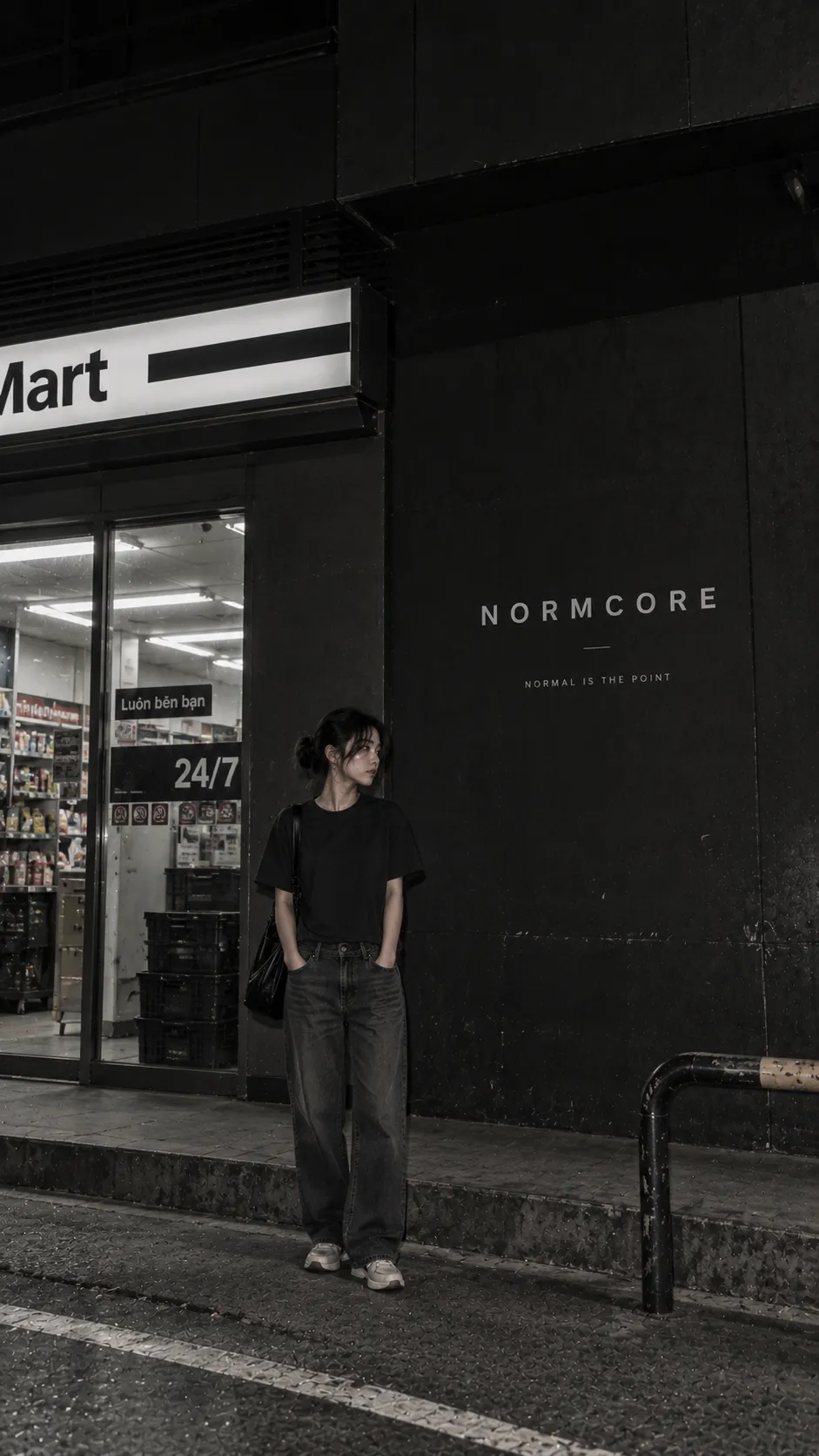
Guide collection: Aesthetic Dictionary: Fashion Style Reference (Vietnamese)
What Is Normcore?
Normcore in fashion describes deliberately ordinary garments with understated fashion signals: tees, sweatshirts, straight jeans, chinos, sneakers and simple jackets. Here, the emphasis is intentional familiarity rather than random dressing.
Normcore style often favors comfortable fits, familiar colors and repeat outfits. A white tee, straight blue jeans and basic sneakers can recur without major reinvention.
This does not mean ignoring clothes. Proportion, denim wash, tee width, jacket length and footwear still involve choices, simply without making each a statement.
For a broader style map, see the Aesthetic Dictionary (Vietnamese).
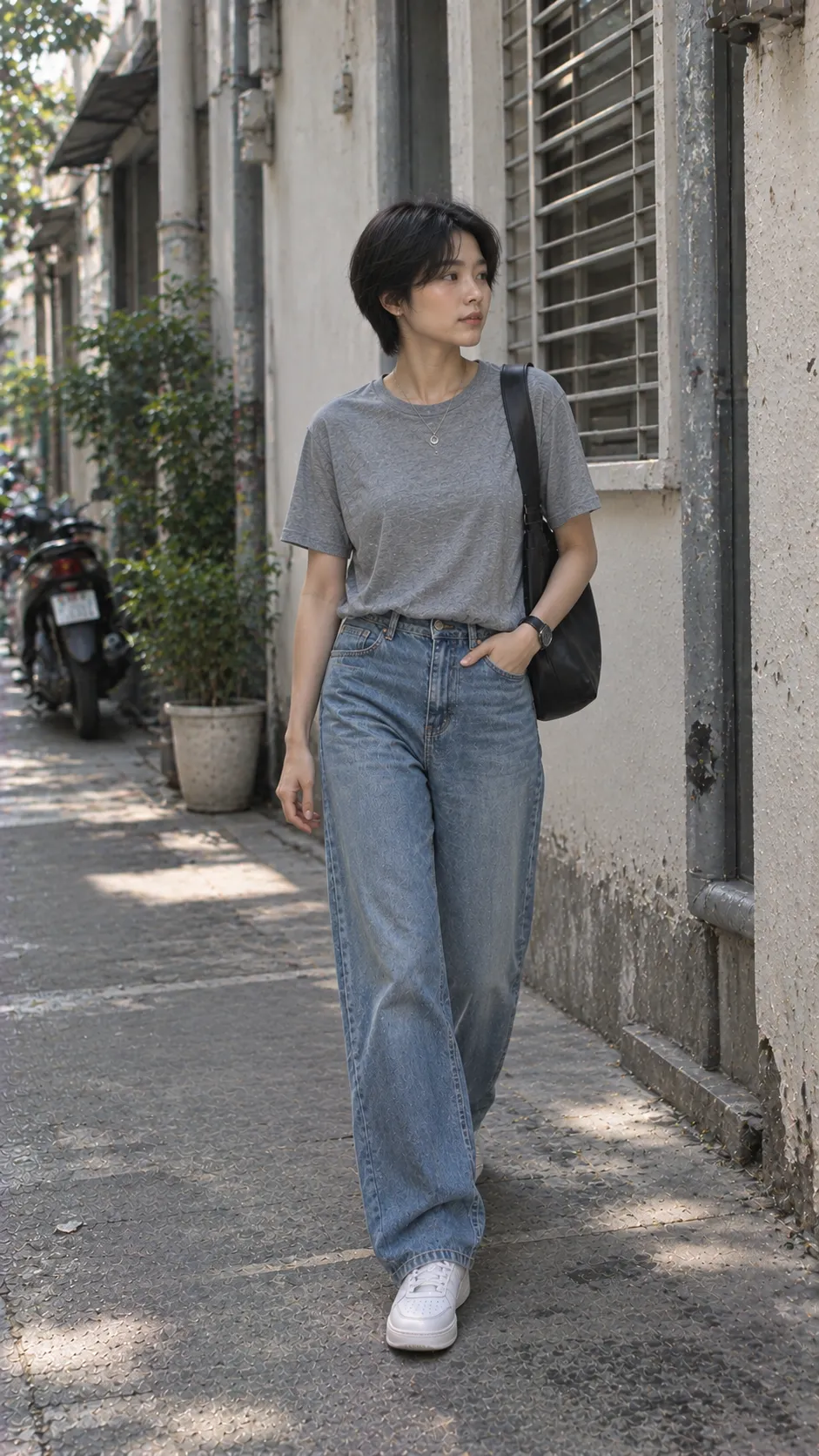
Four Cues for an Intentional Ordinary Outfit
1. A Consistent Silhouette
Choose straight, relaxed or slightly oversized fits and repeat their logic. A loose tee, extremely skinny jeans and very cropped jacket may feel less visually calm; choose that contrast intentionally if you prefer it.
2. Familiar Colors
White, gray, navy, black, blue denim, olive, beige and brown are accessible options. Monochrome is not required.
3. Supporting Footwear
Classic sneakers, simple loafers or restrained sandals can support the shape without becoming the main statement.
4. Practical Layers
Hoodies, windbreakers, denim jackets, cardigans and overshirts respond to weather and proportion rather than requiring a complex aesthetic.
Normcore, Minimalist and Casual Chic Compared
Normcore
Prioritizes ordinary, familiar and repeatable clothing, sometimes with dad-style, sporty or utilitarian references.
Minimalist
Often emphasizes edited lines, palettes and materials more visibly.
Casual Chic
Keeps everyday ease with more polish, such as a structured bag, neat footwear, a blazer or tailoring.
Explore Minimalist and Casual Chic for their distinct styling purposes. Related terminology does not make these guides interchangeable.
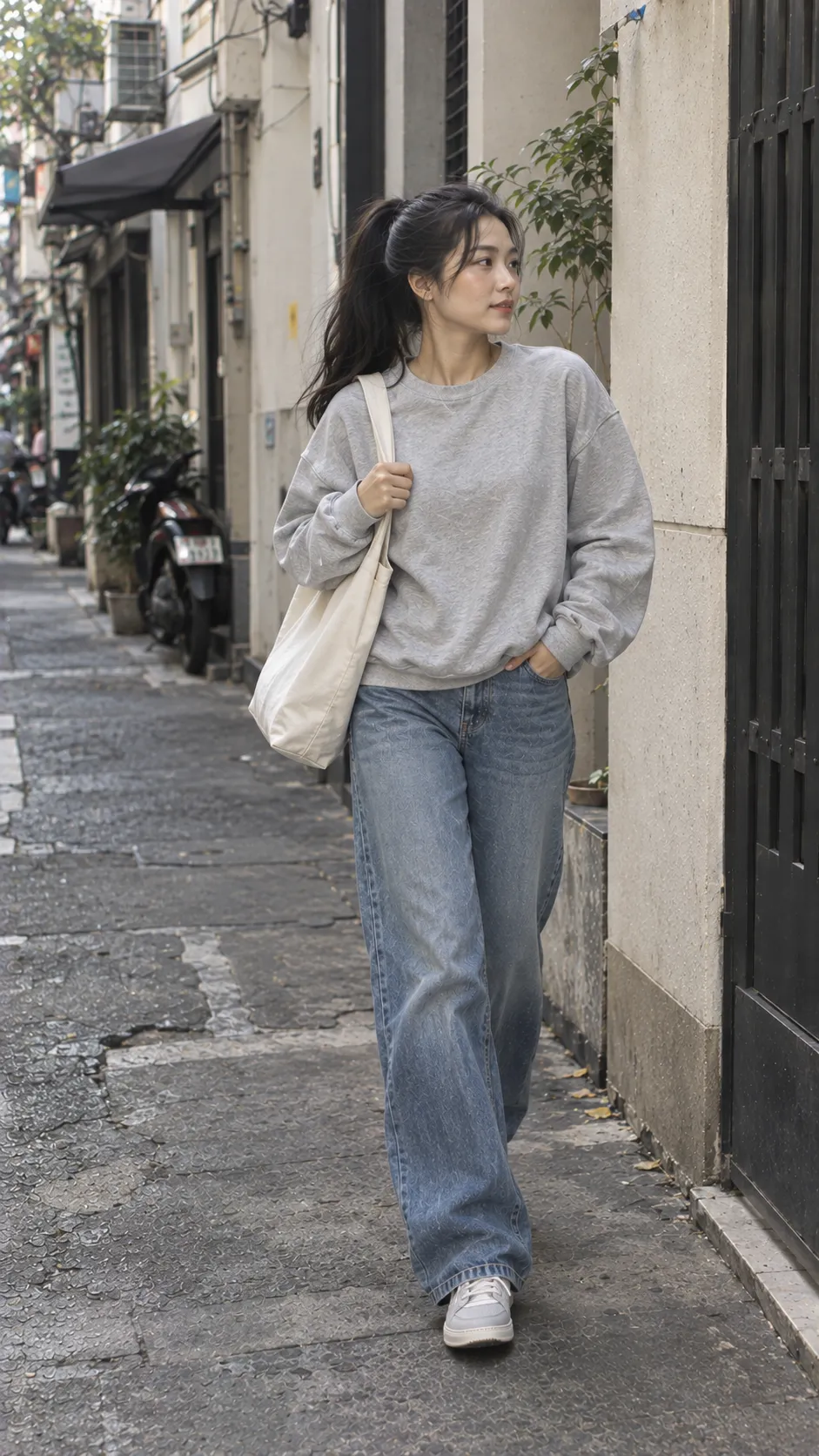
Build a Uniform from Six Garment Groups
Plain tees, long sleeves, sweatshirts and crewneck knits. Check neckline and shoulder fit.
Straight jeans, relaxed trousers, chinos and simple track pants.
Denim jackets, windbreakers, basic bombers, cardigans and clean-lined coats.
Classic sneakers, simple loafers and restrained sandals.
Totes, basic shoulder bags and compact backpacks.
A watch, cap or belt; keep them secondary if understatement is the goal.
Eight Accessible Normcore Formulas
1. White tee, straight jeans and sneakers. 2. Gray sweatshirt, blue jeans and retro sneakers. 3. Black tank, relaxed trousers and a cardigan. 4. White long sleeve, dark track pants and sneakers. 5. Loose Oxford shirt, jeans and loafers. 6. Gray tee, olive chinos and a windbreaker. 7. Crewneck knit, straight denim and flat shoes. 8. Basic hoodie, straight trousers and a long coat.
Vary the denim wash, width or outer layer rather than buying a new set each time. The wardrobe functions as a reusable system instead of a sequence of statement outfits.
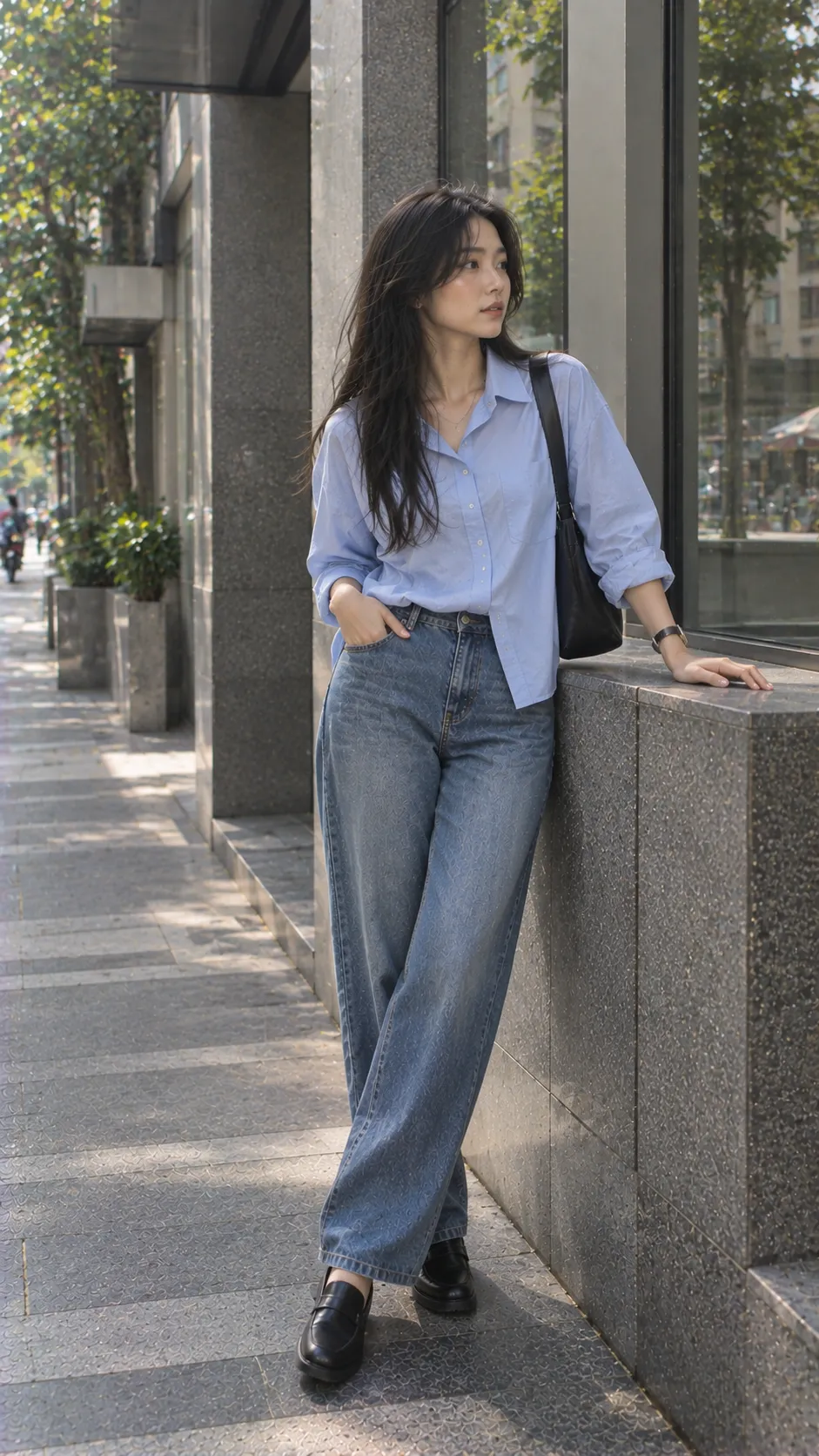
Can Normcore Use a Dark Palette?
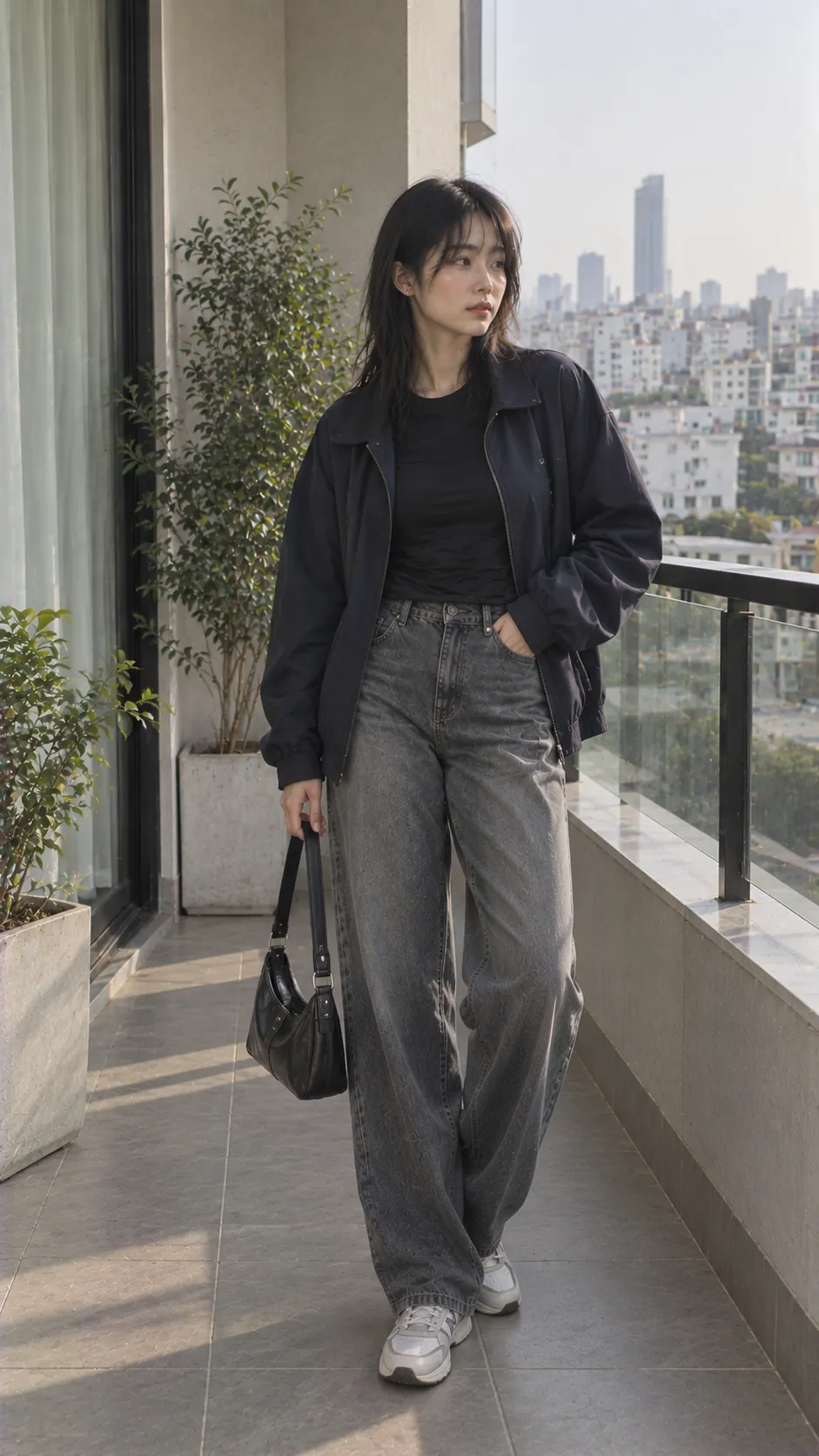
A black tee, charcoal jeans, dark navy jacket and black sneakers can remain Normcore when their shapes and details are familiar and repeatable. Ordinary dressing need not use only light colors.
For an alternative wardrobe, change palette, wash and fit while keeping commonplace garments. This connects to darker preferences without automatically becoming Goth or Dark Minimalism.
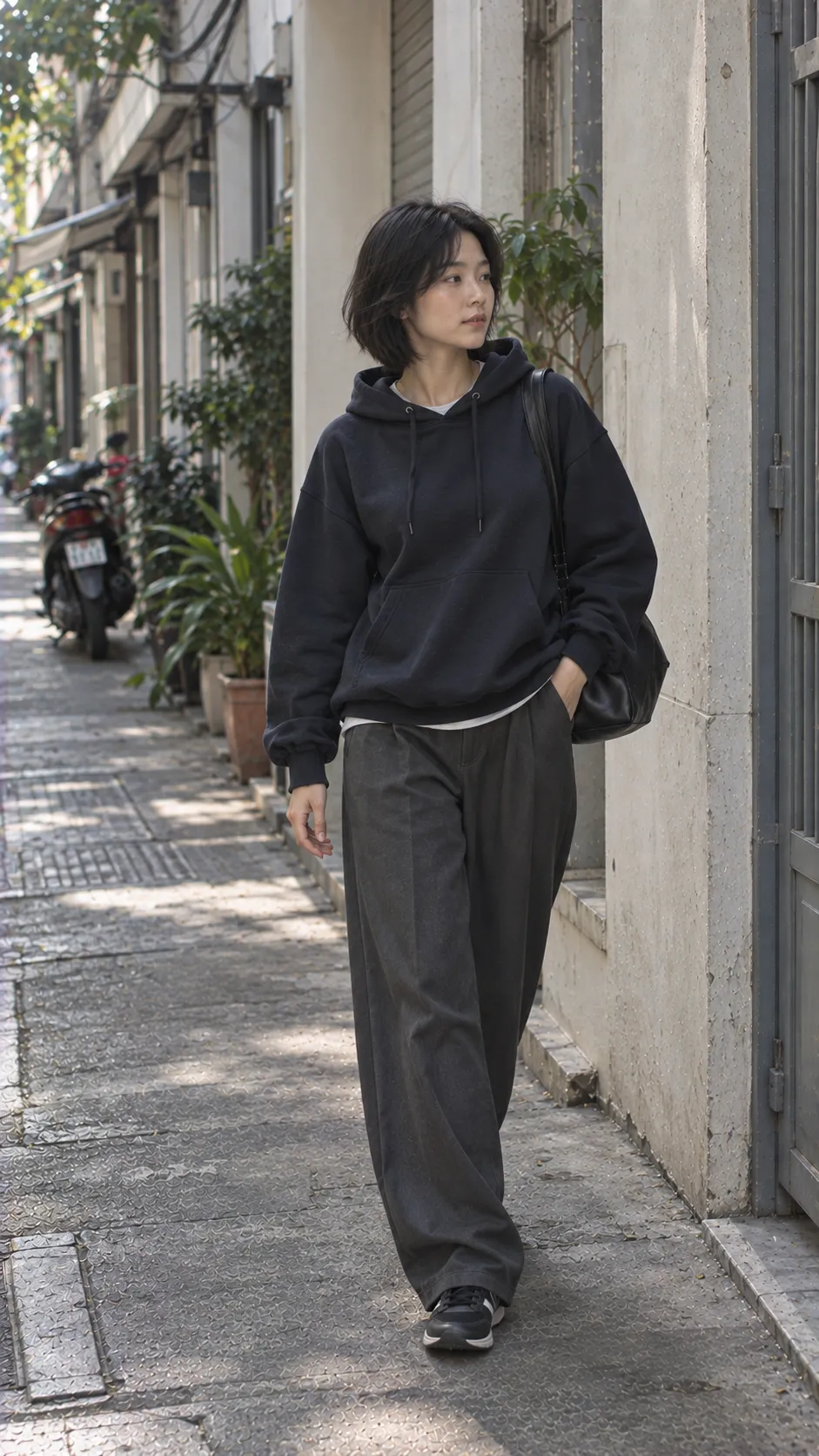
A black hoodie, straight gray jeans and simple sneakers communicate a different level of visual signaling from an all-black harness, platform and dramatic-makeup outfit. Color alone does not decide the style.
Seasons and Everyday Routines
In hot weather, try tees, tanks, straight shorts, simple sneakers or sandals. In cooler conditions, use sweatshirts, jeans, cardigans or windbreakers; in cold weather, knits, coats and relaxed trousers. Keep practical layers, comfortable fit and repeatability consistent.
For frequent travel on foot, a tote or backpack and sneakers may fit naturally. For a casual office, loafers, trousers and knits move closer to Casual Chic while remaining understated if the cuts stay familiar.
Five Misunderstandings
1. Treating Random Dressing as Normcore
Fit and proportion still involve intention.
2. Making Everything Monochrome Minimalism
Blue denim, olive and familiar sporty colors can also fit.
3. Relying on Luxury Signals
Large logos and statement bags may shift the outfit’s emphasis.
4. Buying a “Normcore” Wardrobe Instead of Using Existing Clothes
Commonplace pieces you own can be the best starting point.
5. Confusing the Fashion Term with Coffee Products
This guide concerns clothing and personal style only.
References
These references provide terminology and historical context. Everyday combinations and applications are Apocalypse Closet editorial suggestions.
Basic Does Not Mean Cheap or Expensive
Normcore does not require a price tier. An affordable tee with a suitable shape, resilient neckline and frequent use may serve your wardrobe better than a logo-heavy designer piece. You can also invest in durable denim, knits or sneakers you wear repeatedly.
Assess practical cost per wear: does it enter regular rotation, combine with existing pieces and tolerate its intended care and use? Those questions make the wardrobe functional beyond a reference image.
Relaxed Fit Does Not Mean Oversized Everything
A relaxed outfit still benefits from hierarchy. Pair a loose tee with straight jeans, a roomy sweatshirt with moderately fitted bottoms, or a long coat with a simple base. Maximum volume throughout may read more strongly as streetwear.
Check shoulders, sleeve length, hem placement and trouser break. A plain tee with your preferred shoulder position can appear more considered than an arbitrarily large size.
Sneakers, Loafers and Flats
Classic sneakers offer a familiar, repeatable option. Loafers work with shirts, trousers or straight jeans for a smarter direction. Ballet or other simple flats can also suit basic outfits, including capri trousers or cropped straight jeans.
You do not need a shoe sold as Normcore. Choose familiar footwear with restrained details that fits your schedule. Walking comfort may matter more than matching an image exactly.
Normcore for Alternative-Fashion Wardrobes
You can reduce the number of strong cues without abandoning personal preferences. Try a plain black tee, straight jeans and simple sneakers, or a charcoal knit, trousers and loafers. A familiar silver-toned ring or black shoulder bag can retain individuality.
An understated outfit can provide variety between more maximal combinations and give statement pieces greater impact when you choose them.
Plan Ten Variations from Seven Core Pieces
Choose two tops, two bottoms, one outer layer, one pair of shoes and one bag: for example, a white tee, gray sweatshirt, blue jeans, black trousers, navy windbreaker, white sneakers and black tote. Swapping tops and bottoms, with or without outerwear, produces a practical rotation; use weather and fit to decide which combinations work.
Then consider one addition—a cap, loafers, knit or denim jacket—that expands multiple combinations instead of requiring a whole new outfit.
Color Beyond Beige, Gray and White
A navy sweatshirt, red cap, green windbreaker or blue denim can fit when garments remain familiar and reusable. One accent can add interest without becoming a major color-block statement.
Color need not become the outfit’s theme. A white tee, blue jeans and muted red jacket can still feel ordinary through relaxed fit and proportion.
Women’s Normcore Does Not Require Menswear Shapes
Straight jeans, a fitted rib tee, simple flats and a cardigan can work as readily as oversized or androgynous shapes. The intention is understated presentation rather than removing femininity.
Choose waistlines, necklines and footwear to suit your preferences. Repeatability and familiar garments allow several proportions.
Personal Taste Without Constant Trend Changes
Repeated preferences establish identity: straight rather than skinny jeans, gray and navy rather than beige, or retro sneakers rather than loafers. Familiar individual pieces can still form a recognizable wardrobe.
Reduce statement intensity without erasing preference. A consistent uniform can express personal taste more clearly than a stream of unrelated microtrends.
When Might Normcore Not Suit You?
If dramatic silhouettes, maximal accessories or theatrical styling make daily dressing enjoyable, you may prefer another direction. Normcore is an option for repeatable outfits, not a measure of maturity or sophistication.
Repeating Outfits
Reusing jeans, sneakers and a jacket is part of this approach rather than a creative failure. Change a top or layer without requiring a wholly new formula each day.
Record a comfortable combination that suits your schedule as a uniform. Over time, three to five reliable formulas can guide more useful purchases.
Frequently Asked Questions
Is Normcore difficult to style?
No. Begin with silhouette, proportion and footwear rather than adding many aesthetic signals at once.
Which colors should I start with?
Black, gray, white or familiar neutrals can connect with your wardrobe; add accents afterward if useful.
Do I need many accessories?
No. Suitable footwear and perhaps one restrained detail can be enough; neither is a requirement to make a statement.