

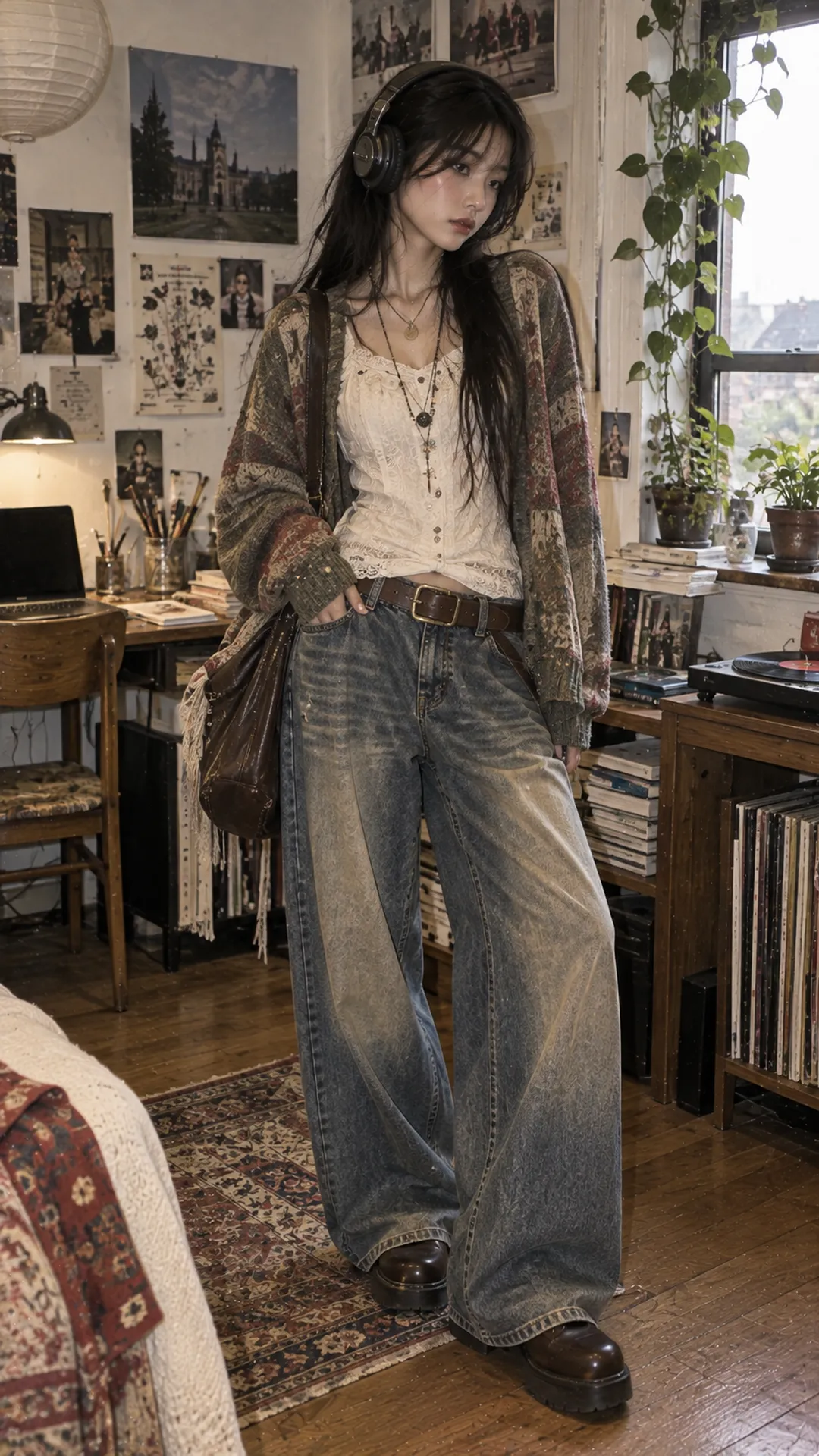
Understand hipster as a broad category
In contemporary fashion discussions, hipster is associated with independent taste, an interest in older clothing and choices outside mainstream styling. It is a cultural label used in several ways, however, rather than a clothing system with official standards. This guide focuses on interpreting it through clothes, without using appearance to infer personality.
GQ's look back at Indie Sleaze emphasizes that hipster once covered many different looks and that the name Indie Sleaze came later. Dividing them into two entirely separate communities would therefore be inaccurate. They overlap; your current styling lets you emphasize the references you enjoy.
Women's hipster outfits can lean toward collared tops, cardigans and vintage-looking accessories, or take a rougher direction with denim, graphic tees and lace-up shoes. Focus on how the pieces relate: place one older-looking detail beside everyday clothing, rather than making every element imitate the same online template.
Read an outfit through shape, texture and detail
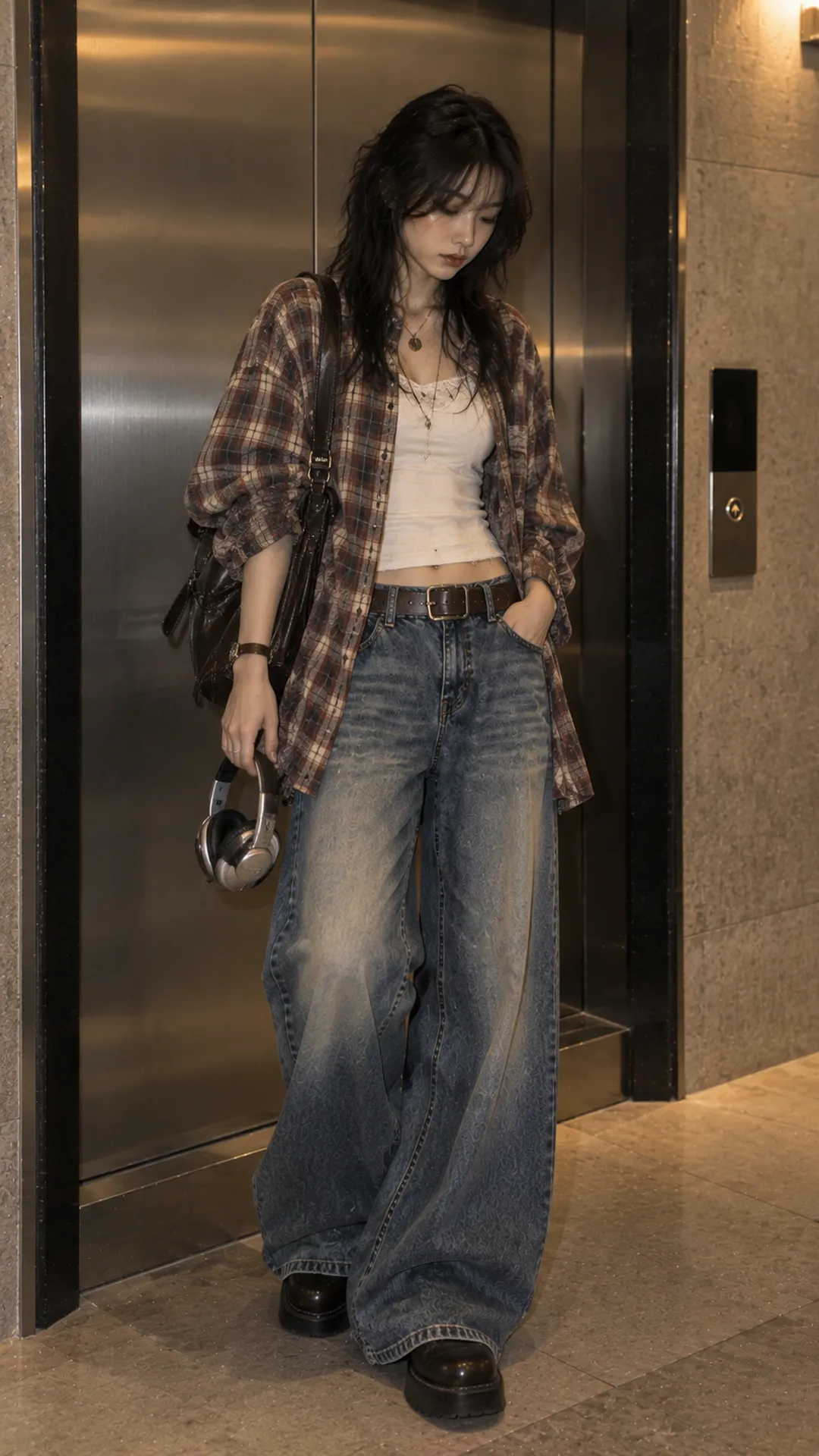
Roomy shapes with clear endpoints
Try a slightly loose shirt with straight-leg trousers, or a streamlined cardigan with a long skirt that moves. Differences in volume let individual pieces remain visible. You do not need an absolute loose-top, fitted-bottom rule: an entirely loose outfit can work when shirt hems, cuffs and trouser hems are chosen intentionally.
The side view also helps. An overlong top can turn the back and hips into one block, while a shorter one reveals the transition to the trousers. Keep a relaxed silhouette if you like it; change only what makes you keep pulling, smoothing or adjusting the clothes as you move.
Different surfaces create depth
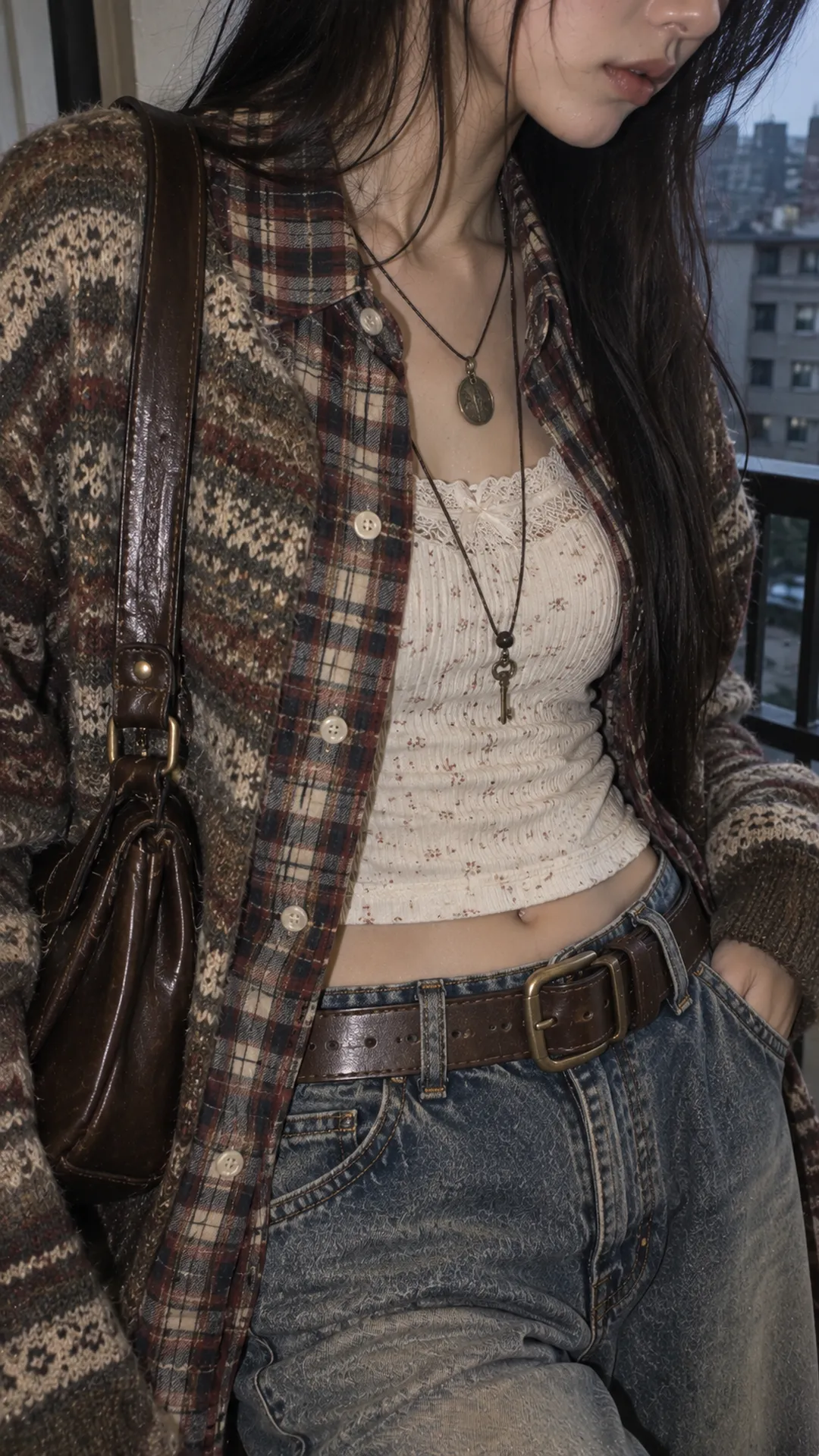
Denim has a diagonal weave, knits have visible loops, and plain fabric provides a flatter surface: placing two together already creates contrast without adding color. In hot weather, retain that contrast through a cotton top and lighter denim rather than thick knitwear or multiple jackets.
Do not equate an aged appearance with damage. Fabric softened over time with sound seams may be worth keeping; unwanted peeling, tears or difficult odors need separate assessment. Nor can you call something sustainable simply because it is brown, uses natural fibers or is sold as hipster.
Let accessories follow how you use them
A bag with a distinctive clasp, your usual glasses or a long-used belt can add character. If you do not normally wear hats, you do not need a beanie to complete the outfit. Try removing an accessory: if the result feels better and retains its theme, leaving it out makes sense.
Where do hipster, vintage and Indie Sleaze overlap?
Vintage can refer to a garment's age; vintage style also describes inspiration drawn from older fashion. Hipster can use those references without recreating one decade. An older shirt with current trousers still suits this approach. The guide to vintage style and the distinction from retro helps you read product descriptions more clearly before buying.
With Indie Sleaze, the practical distinction is emphasis. Collared tops, cardigans, denim and vintage-shaped bags can produce a gentler hipster direction. More graphic tees, shiny or worn textures, stacked accessories and an evening-gig feeling may shift the outfit toward Indie Sleaze. This is an overlap, not a rigid boundary.
In its article on Mark Hunter's photographic archive, Vogue places Indie Sleaze in the context of party photography and hipster culture. If that appeals to you, explore the separate guide to Indie Sleaze and women's outfit ideas; this article prioritizes wearable daytime combinations rather than recreating nightlife.
Start with a piece you already want to wear again
Choose a patterned shirt, cardigan or interestingly shaped bag from your wardrobe. Place it beside two simple foundation pieces and familiar shoes. Try the combination before seeking accessories. Ask how the piece fits your life, rather than whether it resembles a reference photograph closely enough.
If the shirt is the main feature, keep the trousers and bag relatively simple. If the shoes or bag lead, reduce competing details in the clothing. Assigning roles also reveals real gaps: you may need well-fitting trousers rather than another item labeled hipster.
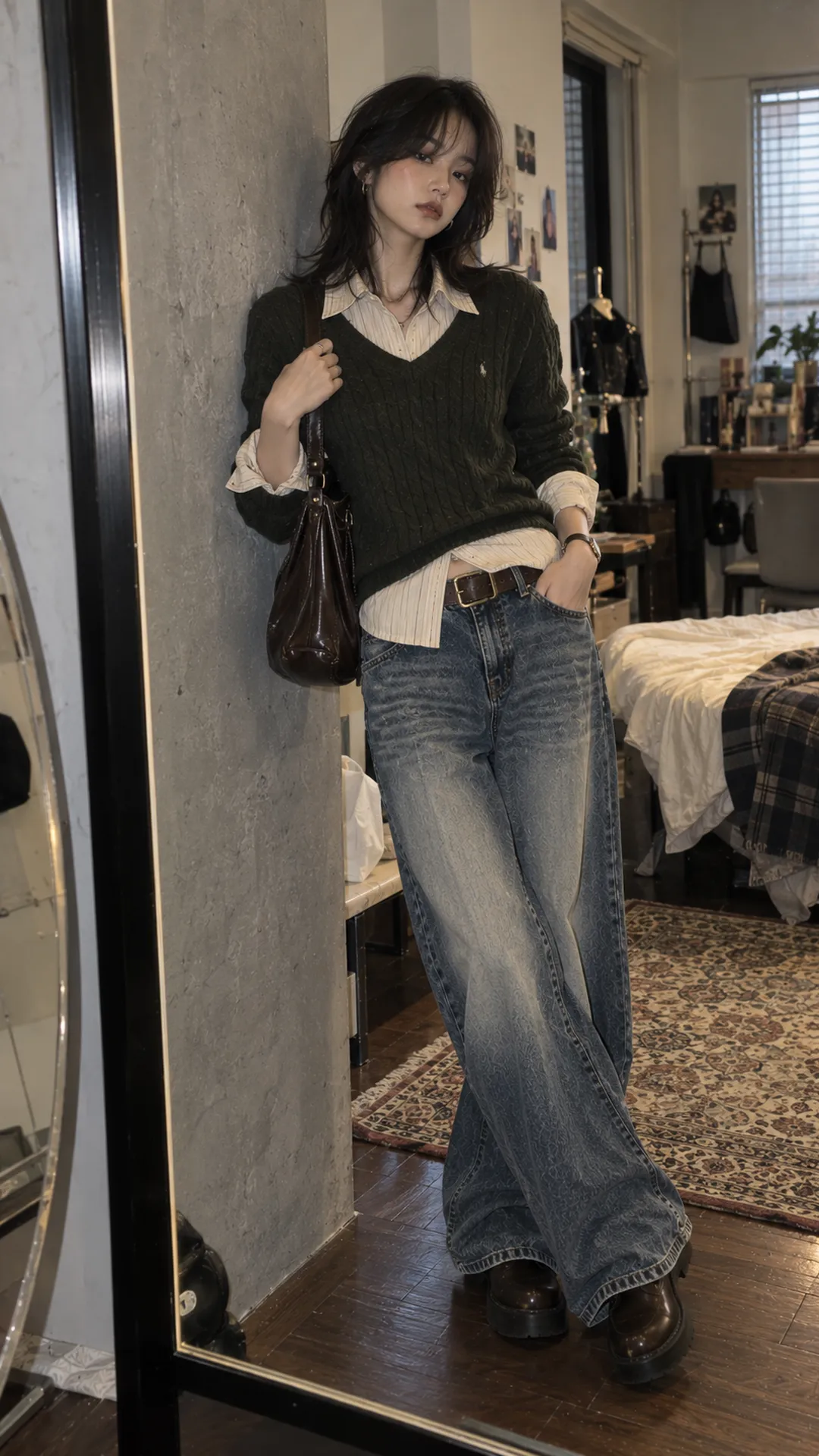
Four women's outfit ideas with different levels of emphasis
A small-check shirt, indigo trousers and lace-up shoes
Choose a small-check shirt with one color echoed in the trousers or shoes, then try it buttoned and loosely tucked. Straight-leg trousers give a clear line from hip to foot so other details do not overwhelm the print above. An existing brown or black bag is enough; you do not need a hat, scarf and glasses together.
If the tuck adds bulk at the waist, try leaving the shirt out or tucking only the front. If the hem covers too much of the trouser pockets, a shorter shirt is an option. Walk in the shoes to check whether trouser hems catch at their tops; adjusting length is more practical than insisting on a supposedly definitive trouser shape.
A muted cardigan, light base top and A-line skirt
A moss-green or deep-red cardigan against a light top draws attention to the upper half. An A-line skirt with few folds opens below while remaining easy to manage. Flats or low-top sneakers can suit a walk, a bookshop visit or meeting friends.
Try the cardigan open and with a few buttons fastened to choose your preference. If hems end together and make the middle feel heavy, shorten the inner layer or choose a shorter cardigan. In hot weather, omit the base top if the cardigan works on its own and you feel comfortable with its coverage.
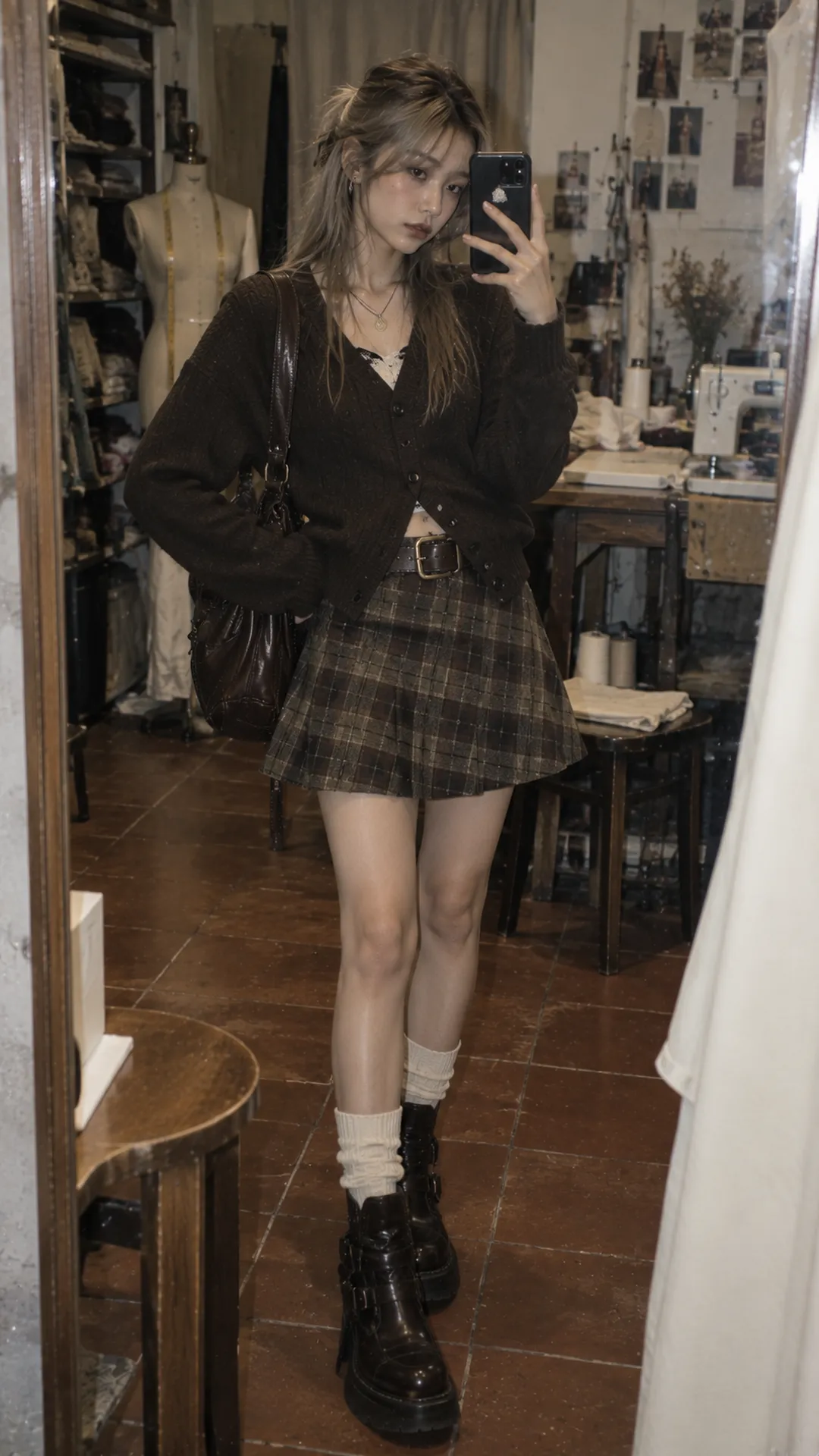
A distinctive collar, plain denim and a soft bag
An unusual collar can be the main feature by itself. Pair it with plain denim without needing large distressed areas, then choose a soft bag to reduce formality. If the collar has ruffles or embroidery, avoid covering it with layered necklaces. Space around the neck lets the design remain visible.
The outfit can feel romantic or edgier depending on the shoes. Flats give a light finish; boots add visual weight at the feet. Neither is more correct: choose for your actual walking distance and weather. Shoe color can echo a button or small detail without matching exactly.
A graphic tee, streamlined straight-leg trousers and an open shirt
Choose a graphic you actually like, make it central and frame it with a plain open shirt. Moderately roomy trousers leave space above while keeping the combination wearable. Check whether your bag strap crosses the main image. Changing how you carry it can clarify the outfit.
In hot weather, remove the shirt and keep the graphic and shoes. For more layers in cooler conditions, the guide to layering outfits for women explains separating hems and managing thickness. Layers are optional; one well-chosen fabric can still express your taste.
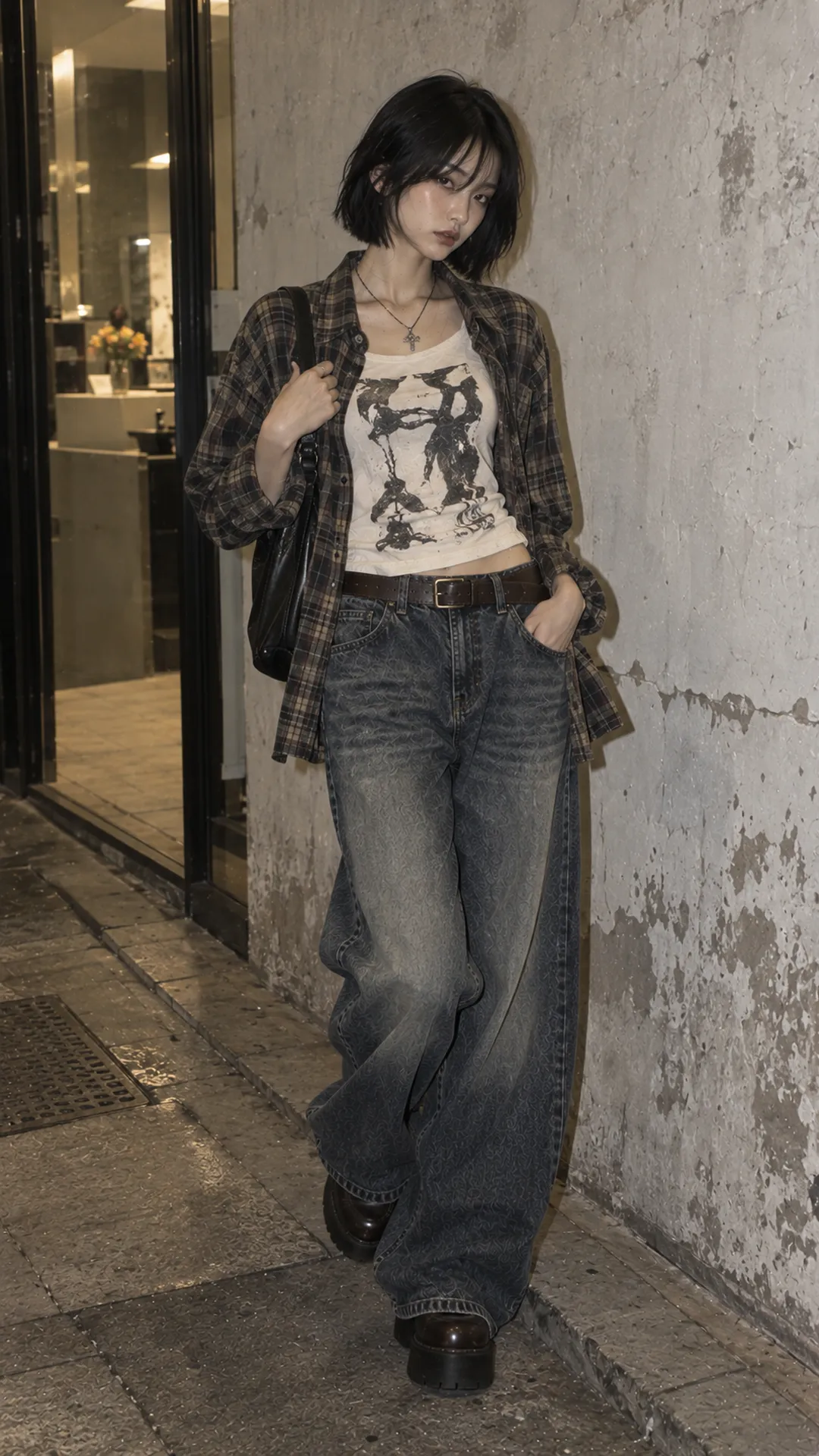
Choose secondhand clothes and alter them for your current body
For a used top, check the shoulders, bust, armholes, buttons and sleeve length. For trousers, test the waistband seated, the crotch fit and the hem with your intended shoes. A size label is only a starting point; actual measurements and comfort help you decide. Do not preserve an uncomfortable cut just because the item looks old.
Before alterations, identify what needs changing: a long hem, wide sleeves or a waist that does not fit. Small changes can increase use, but alteration possibilities depend on construction. Ask a tailor about options and seam allowance before buying on the assumption that everything can be fixed.
Follow the care label and the fabric's actual condition. If its composition is unknown or it feels fragile, ask a knowledgeable professional before aggressive treatment. A worn aesthetic does not mean you need to fade, tear or artificially age new clothing.
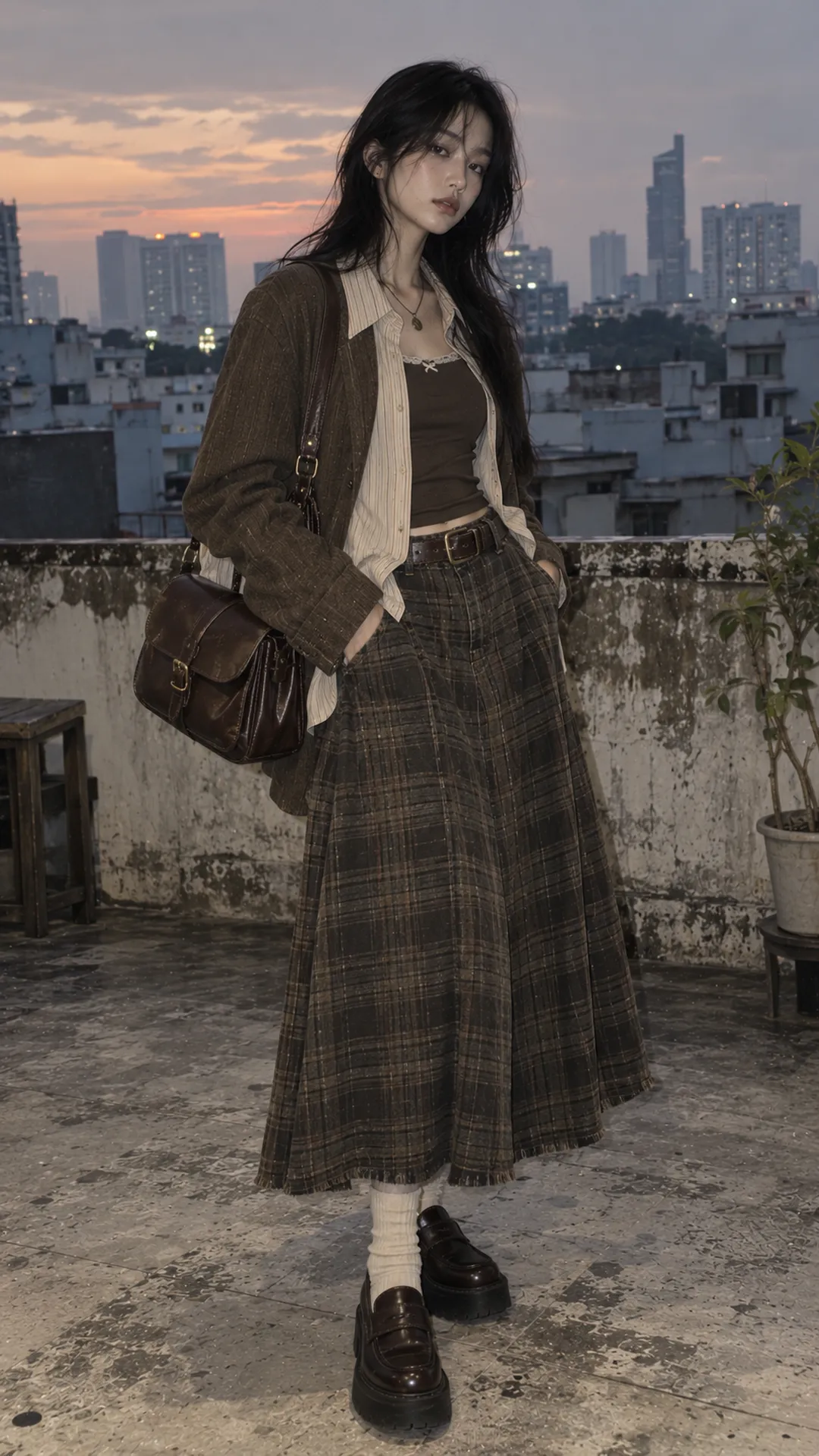
Keep your taste instead of collecting symbols
If the outfit feels like a costume, try removing the piece least connected to your habits. A hat, scarf and glasses may each be attractive but make the story too dense together. Keep one detail you want to use repeatedly and let the rest serve movement and context.
If you are unsure what appeals to you, photograph the same clothes with two choices of shoes or bags. Compare after a day of wear instead of deciding solely in the mirror. To expand your vocabulary, the fashion aesthetic dictionary provides related directions. Hipster style is most useful when it helps you try combinations that matter to you, rather than turning your wardrobe into a prop list.