

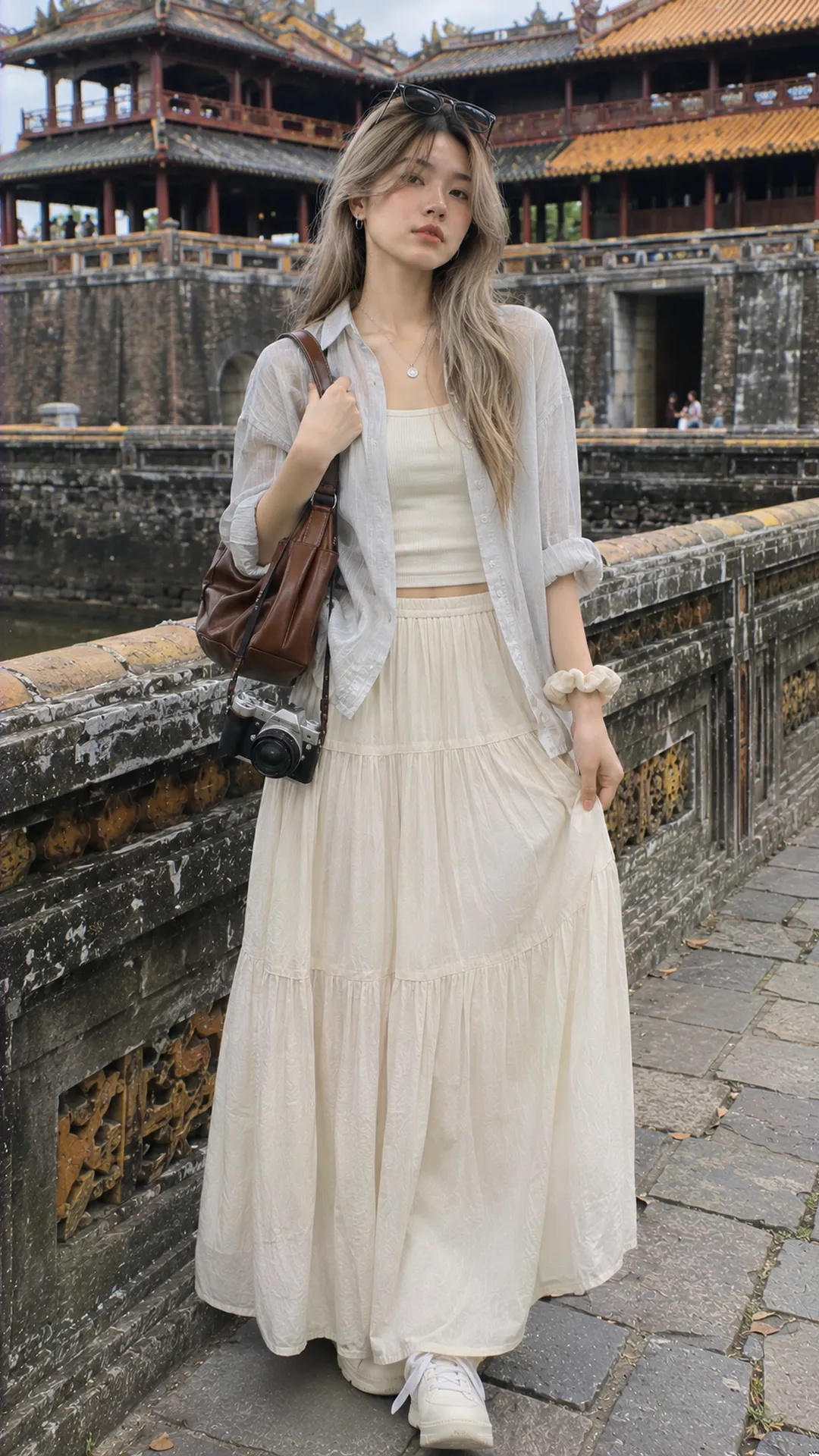
Decide three things before packing
First, identify what you’ll be doing for most of the day. An outfit for a few minutes of photos may be impractical for walking, sitting in a vehicle, and sightseeing all afternoon. Pack a separate photo outfit if you like, and make sure your base outfit works for most of the itinerary.
Second, check the weather close to departure. Vietnam Tourism describes Hue as having a rainy period with cool to cold weather and a hot, sunny period. Use that climate overview as a starting point for packing, then check the forecast for the specific day when choosing fabric thickness and rain layers.
Third, try your shoes before deciding on the length of pants or a skirt. A skirt that sits well with heels may sweep the ground when you switch to flats for walking. Start with the pair you’ll wear most and then decide if a second pair is worth packing for photos.
What to wear to Hue’s Imperial City
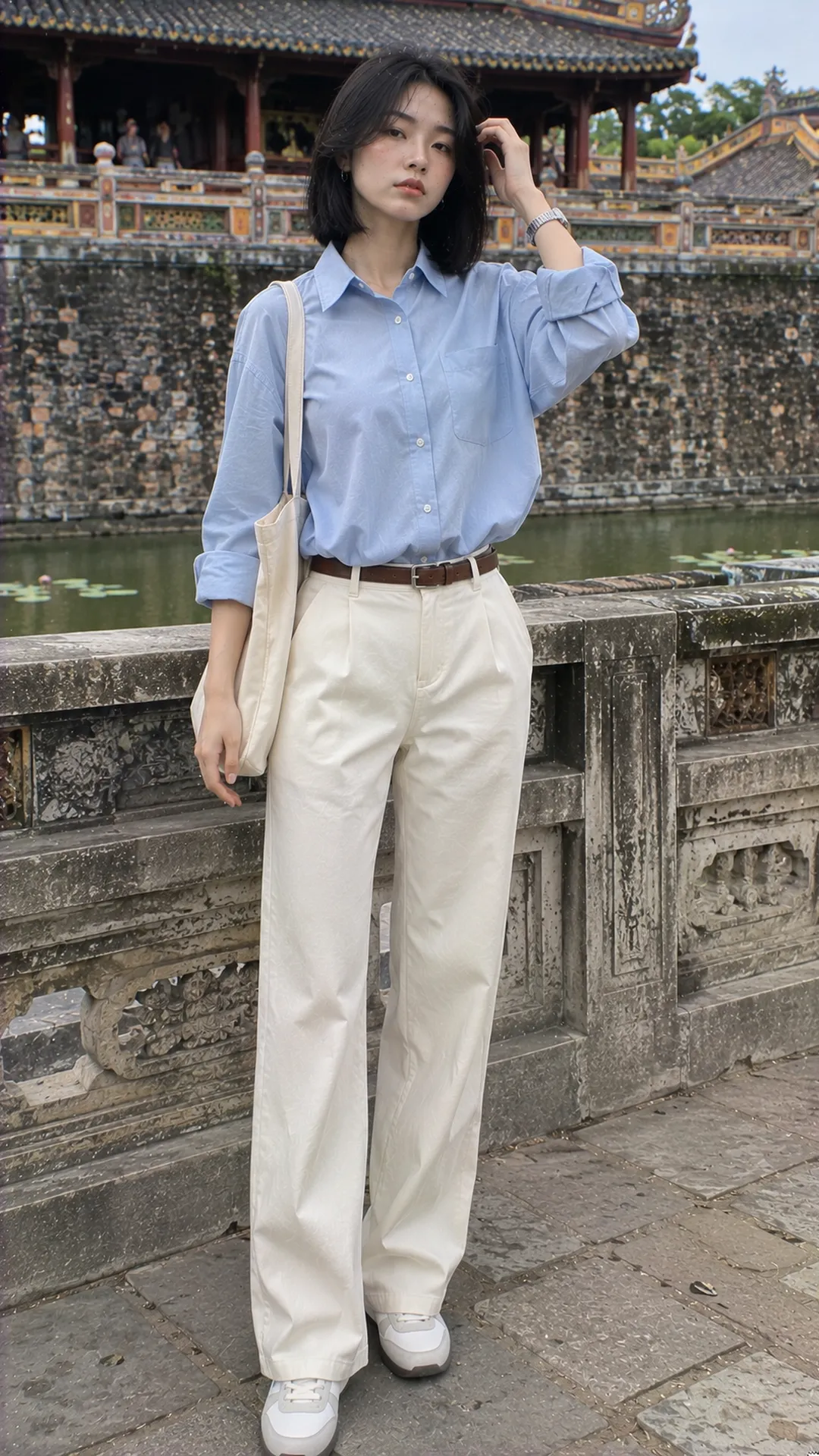
A button-up or other sleeved top, straight-leg pants, and familiar closed-toe shoes make a practical outfit. Leave enough room at the shoulders to carry a bag, raise your arms, and sit comfortably. Choose pants with a hem you can walk in without lifting. Try cream, soft blue, brown, or ivory based on the pieces you have.
If you prefer a skirt, choose a length you can walk in and check any slit when seated. A dress with a secure bodice will save you from adjusting the neckline or straps. A light jacket can provide more coverage when needed. Choose a layer that stays in place as you move.
Read and follow posted guidance at places of worship or sites with their own dress requirements. Covering your shoulders and choosing a suitable hem are sensible preparations when the rules vary or are unclear. Check the guidance for the specific parts of the Imperial City you’ll visit.
Pack only what you need in your bag and check that the strap doesn’t pull your neckline sideways. If your top or dress has detail at the chest, a bag with minimal hardware keeps the upper half simple. See our guide to choosing outfits for different activities to plan for walking, sitting, and taking photos on the same outing.
Choosing an ao dai for photos: try the panels and pants together
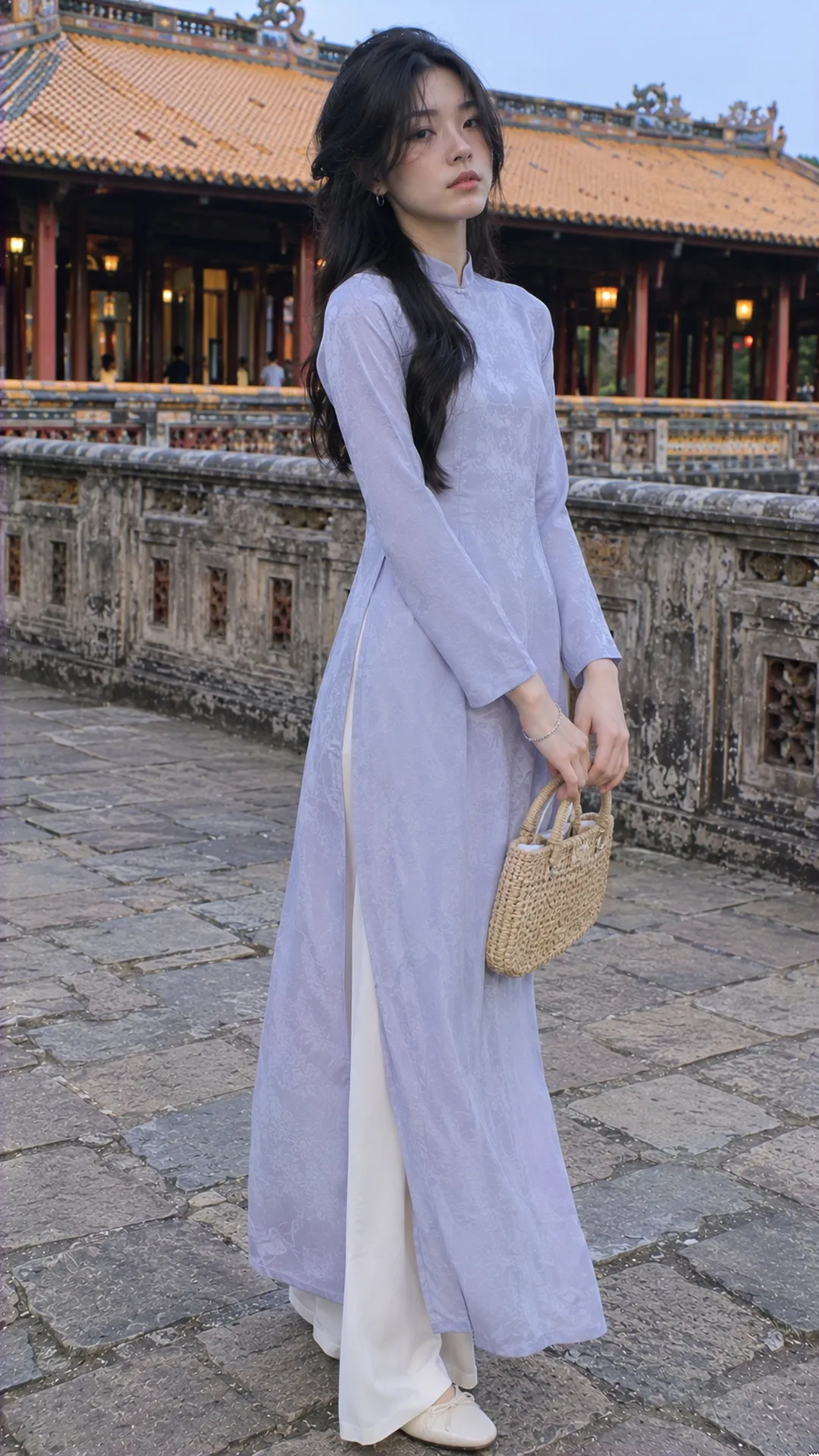
An ao dai is an option if you like the lines of its long panels and want a separate outfit for photos. Purple is one choice among many. Try the color near your face, then think about how it will look against the architecture you’ve chosen.
Check the shoulders, neck, chest, and underarms first. Then sit, step up onto a stair, and reach forward. The panels and pants should work with the shoes you’ll wear while moving as well as standing still. If you constantly lift the panels or tug at the pants, consider adjusting the length before the trip.
With a light-colored ao dai, check the inner layers in regular light and with light coming from behind. Choose undergarments based on the fabric’s opacity and whether you want their edges to show in photos. If you rent the ao dai, ask how to put it on and care for it, and get permission before pinning or altering anything.
Choose accessories that let you pose naturally. A small bag or a hat you want to use may be enough for the photos. Put accessories away when traveling between sites and keep the panels clear as you walk. Try sitting and walking in the ao dai as well as posing in it.
Three outfits to repeat around town and at cafés
Plain button-up with straight-leg pants
Try a pale blue or ivory shirt with brown or gray pants or denim with an even wash. Tuck it in to show the waistband or leave it out if the hem sits where you like. Check for bunching when you sit so you can move between the café and the street without frequent adjustments.
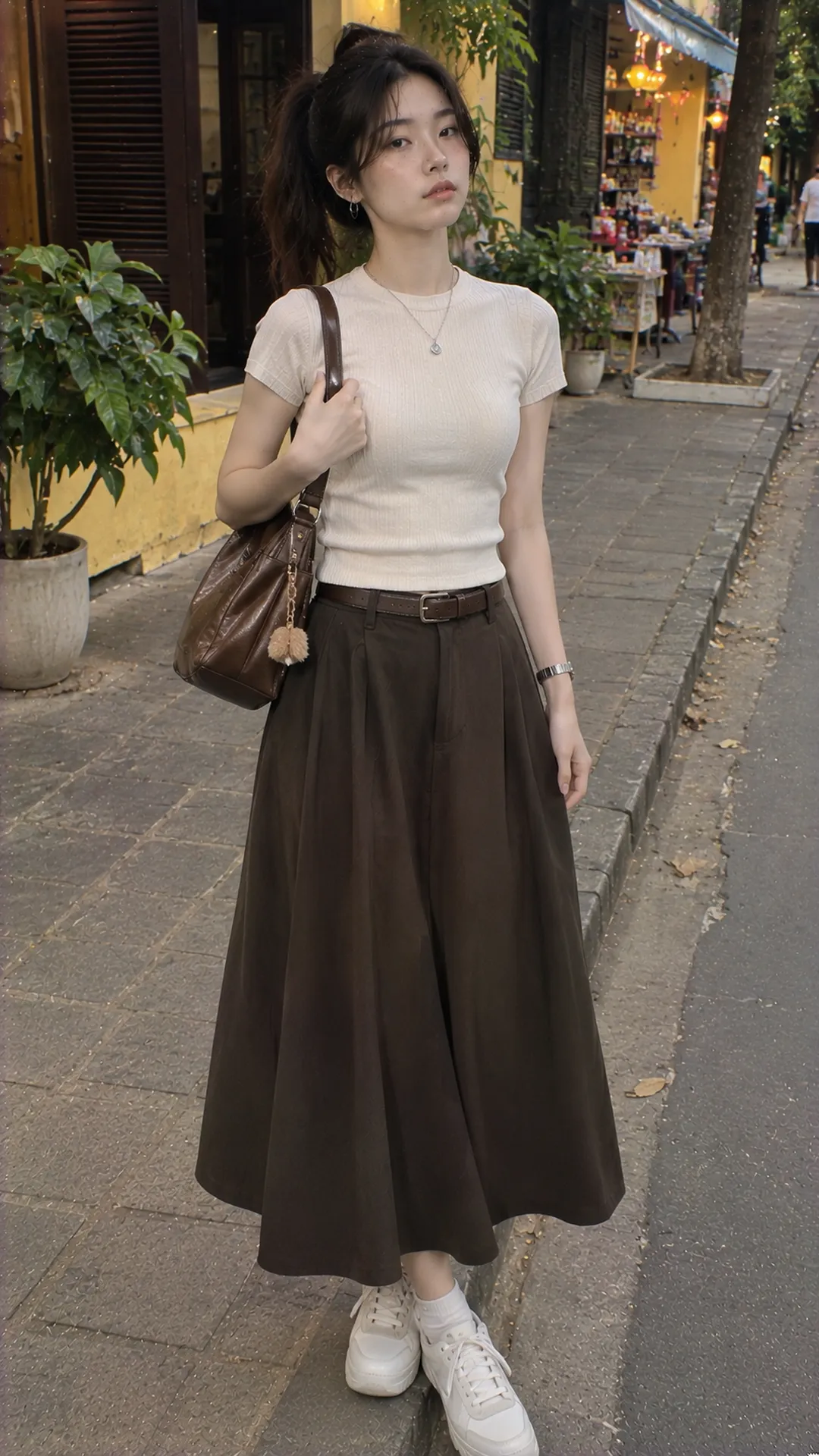
Slim top with a moderately flared skirt
A slim top gives the skirt room to move visually. If the skirt is long, walk in it with your bag and planned shoes. Wind can shift the hem, so check coverage as you move. Our guide to women’s skirts and dresses covers waistlines, flare, and hem length.
Simple dress with a removable layer
A one-piece dress means fewer items to coordinate, and a jacket lets you adjust between spaces. Try the outfit with and without the jacket to make sure the base works on its own. Keep the bag and shoes plain with a patterned dress. With a solid dress, earrings or a bag can add a small accent.
Choose colors that stand out against the setting
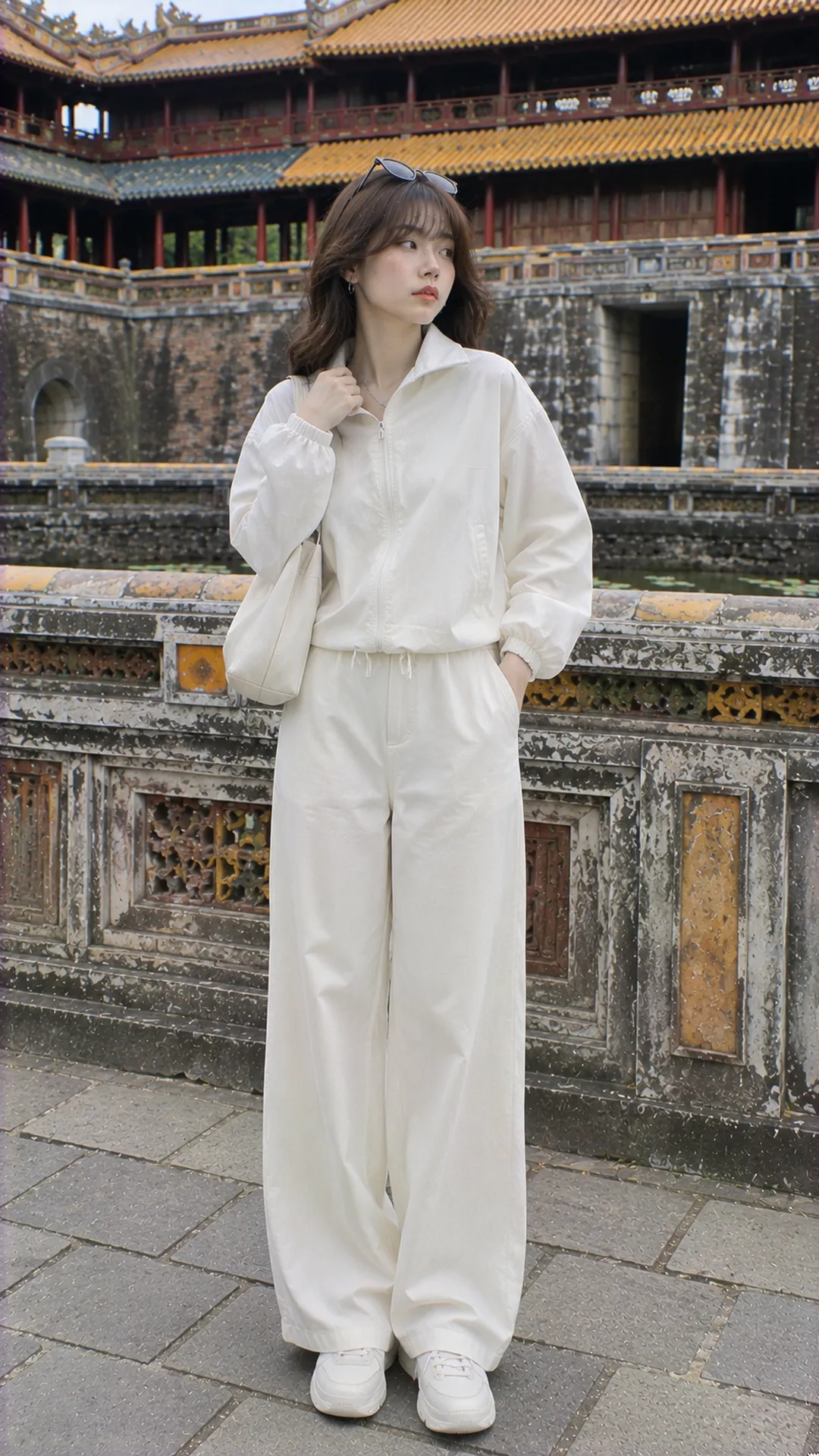
Start with the backdrop. Against a dark, detailed background, a simple light outfit can make your outline clear. Against a light backdrop, try a deeper color or a different hue. Use contrast where it helps the photo.
An ao dai or dress with a strong silhouette can carry a simple palette. Small prints can work, though it’s worth checking a full-length photo to see whether the pattern is still clear or looks busy. If you prefer a large print, keep accessories simple and choose a quieter backdrop.
For group photos, you can agree on lightness or a color family without matching exactly. For example, each person could wear a muted shade with simple accessories. Our guide to creating a fashion mood board helps you compare photos of the actual pieces before you go, so you can see how different whites or purples look together.
Adjust for sun, rain, or cooler weather
For a sunny day, choose an outfit you’ve tried that leaves room to move and keeps decorative layers light. Check the fabric and lining for breathability and coverage. When packing a hat or extra layer, think about where you’ll put it when you take it off.
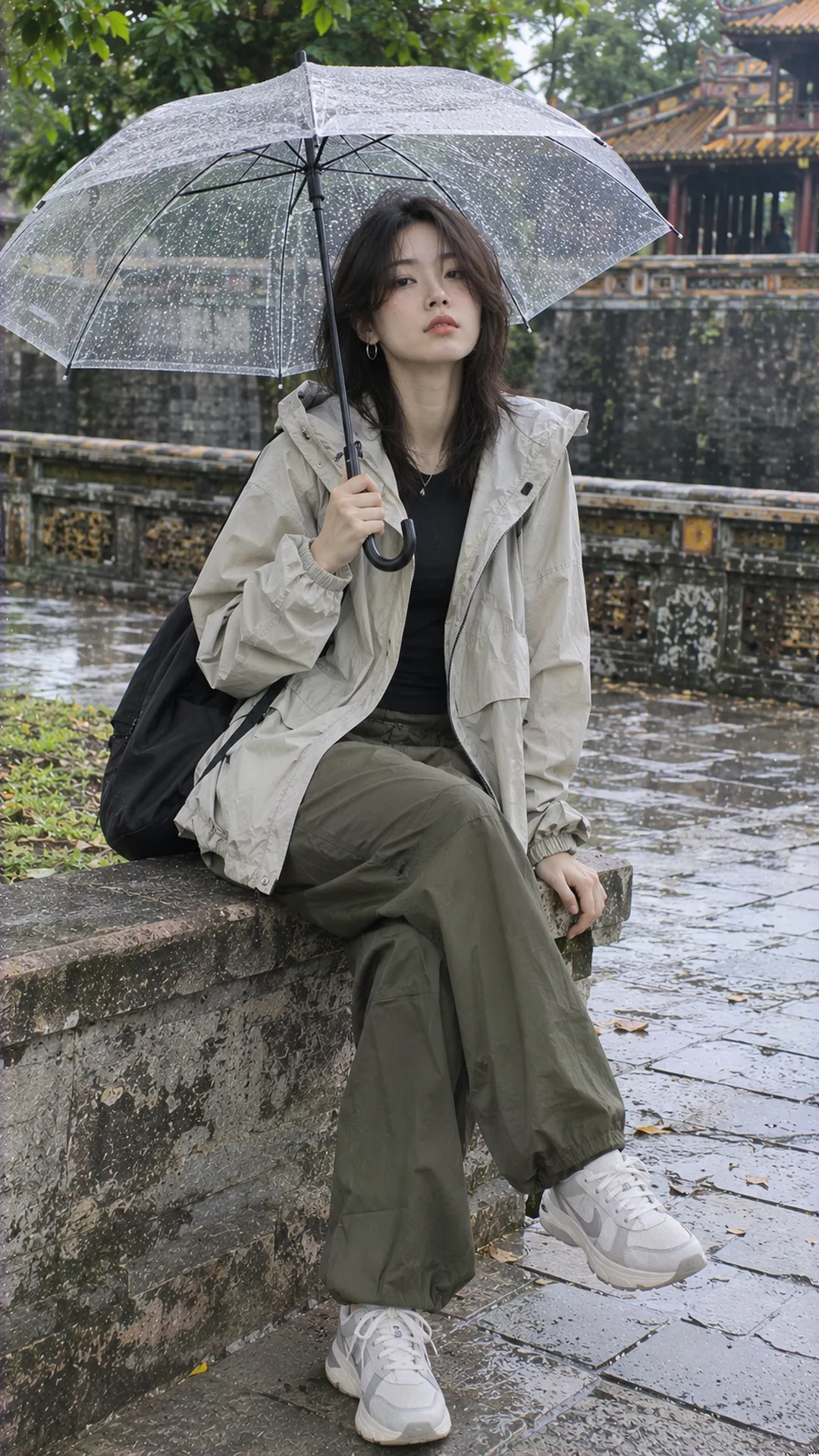
If rain is forecast, choose hems that clear the ground and plan to keep a spare outfit dry. Very long dresses or pants can get in the way even on short walks. Check whether the shoes you’re bringing are designed for wet surfaces, since traction varies among sandals and sneakers.
If it’s cooler, add an easy-to-remove layer and check the room in the sleeves. A tight jacket can bunch over a puff-sleeve dress. Our guide to layering women’s outfits helps you choose a role for each layer and keep the outfit easy to wear.
Shoes, bags, and packing for the trip
Walk in your main shoes for a while before the trip. Check the heel, toe, and straps in motion, even if the shoes look good with your ao dai. If you pack a spare pair, account for its weight and where you’ll put the pair you take off. Our women’s shoe guide helps you balance hem length and the visual weight of the shoes.
Pack pieces that can make more than one outfit: one pair of pants with two tops, a layer that works with both a dress and pants, and a bag for essentials. Set aside pieces intended only for photos so you can keep your travel outfit practical. Pack fabrics that wrinkle according to their care instructions and straighten them out when you arrive.
If you’re flying, wear an outfit that’s comfortable for sitting and bring a separate layer you can remove. See our women’s airport outfit guide for that part of the journey, then swap a piece when you reach Hue. A small change can make the same base work for sightseeing.
Try everything on a day ahead to pack less
If you have several photo sessions, try changing one color instead of the whole outfit. Keep the same pants, swap a light shirt for a dark solid top, and carry the bag differently. With a dress, a different layer or small accessory can give you another look. Keep the changes you can manage on your own, especially if you’ll be sightseeing back to back and want to spend less time changing and repacking.
Put on the full outfit, carry the bag, sit down, and step onto a stair. See if the hem catches, the neckline needs adjusting, or the shoes pinch. For photos, try lighting close to what you’ll have at the location and check coverage and color in person.
Finally, take out any bulky piece with a limited purpose if you can do without it. Keep a comfortable base outfit, a way to adjust for the weather, and any photo outfit you’ve tried. That gives you clothes for a full day in Hue as well as the photos you want to take.