

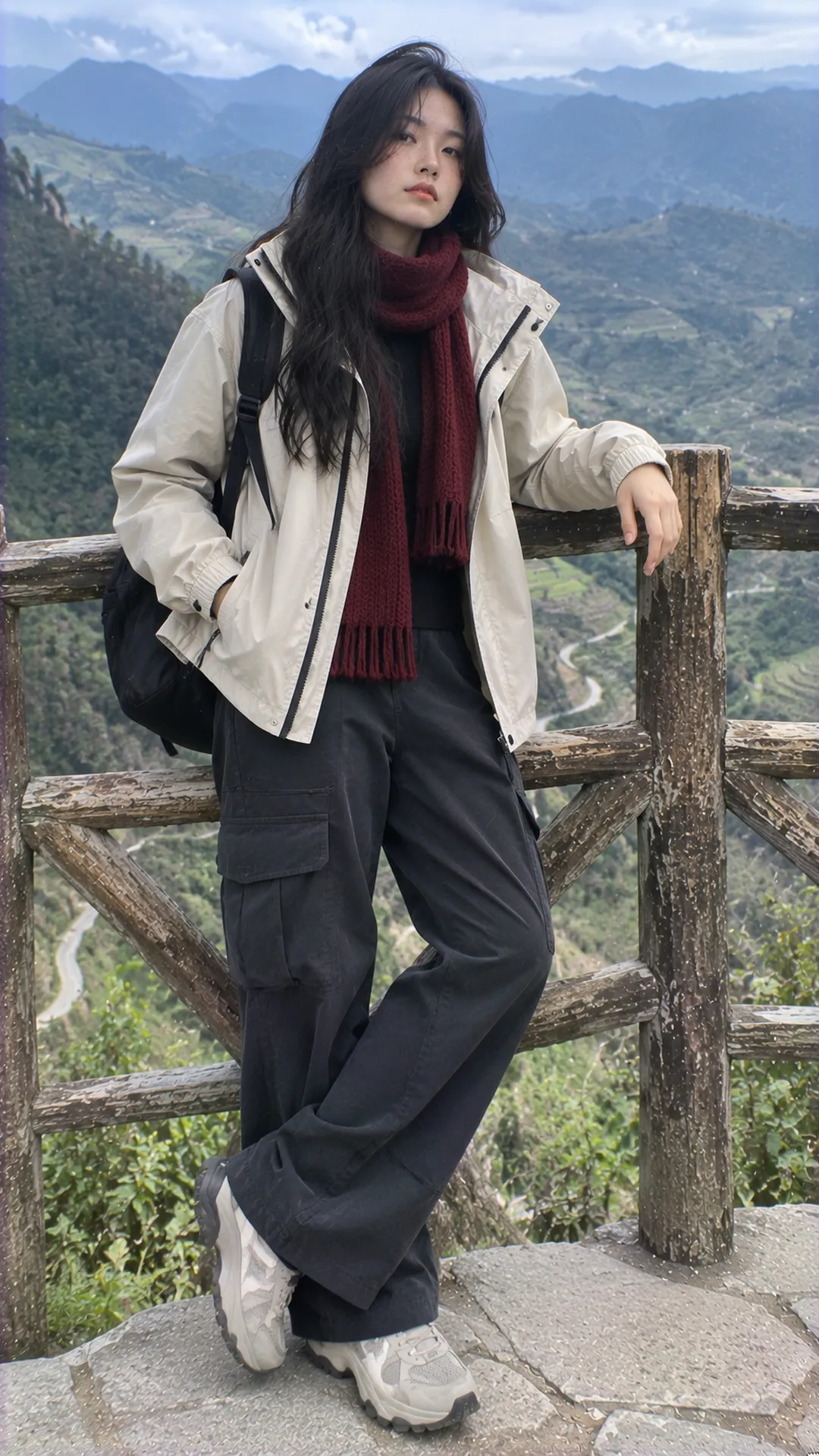
Check your itinerary before choosing a jacket
A day mostly spent in a car with short walks calls for different clothes from a day on a motorbike or walking on uneven ground. Work out how long you’ll spend outdoors, where you can store a layer, and where you can change. Those details help you pick more practical layers and shoes than photos from a previous season alone.
Vietnam Tourism’s destination guide notes cold winters in the Ha Giang highlands and wet roads during the rainy months. Use that overview as a starting point, then check the forecast for the places and dates on your itinerary. Conditions can vary over the course of the trip.
Ask your accommodation or tour operator what the activities involve. Will you be sitting in a vehicle, climbing steps, walking on dirt paths, or stopping briefly for photos? Use that information alongside an assessment of trip conditions and adjust your clothes when the activities change.
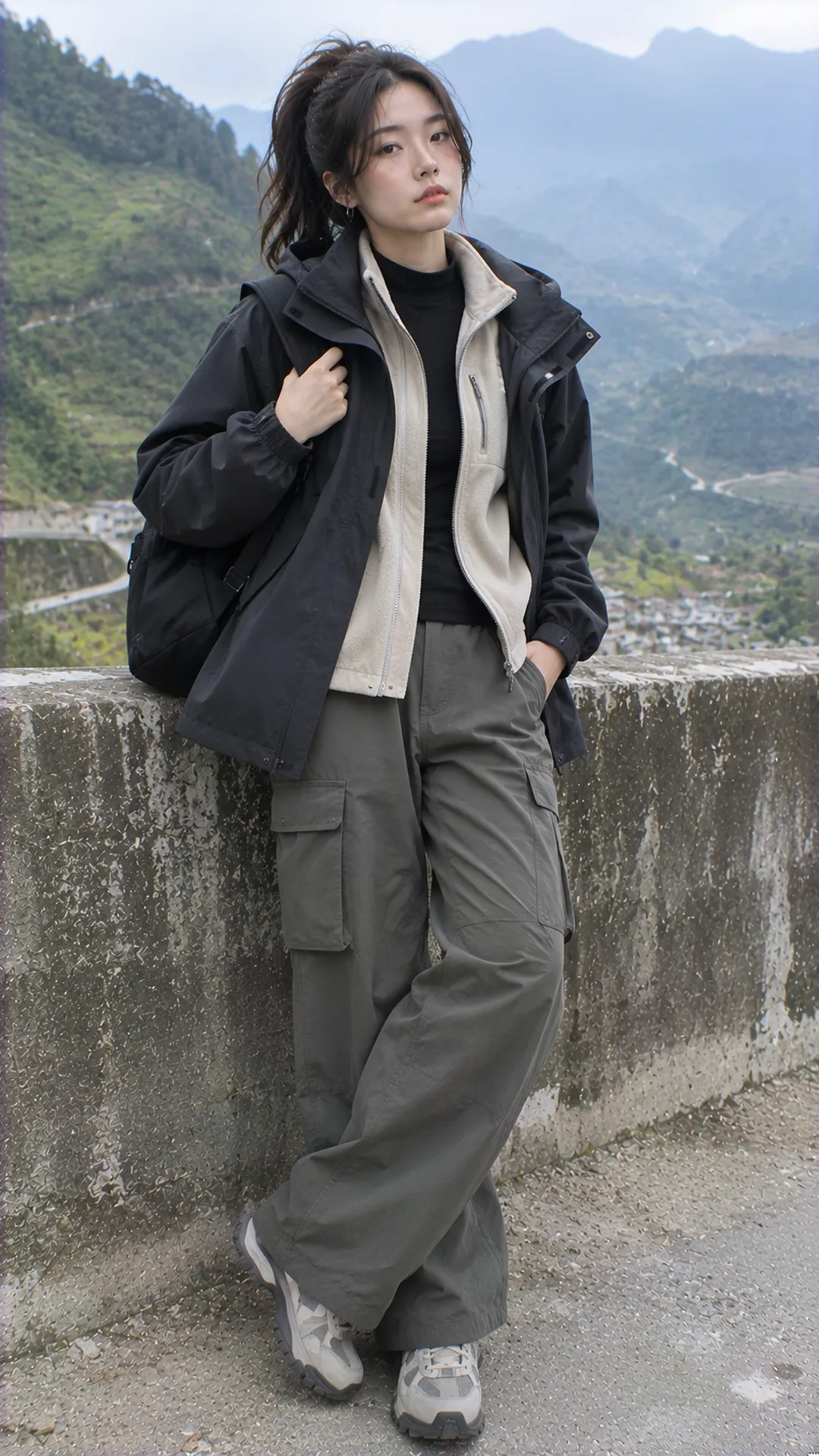
Build a base outfit you can layer
Base layer: check how the fabric and seams feel
Choose a top that fits, stays flat at the waist, and feels comfortable under a bag strap. Try sitting, reaching forward, and adding a jacket. If the base layer pulls at the shoulders, adjust its fit first. For active days, check the material and documented features for the way you’ll use it.
Midlayer: add warmth and keep room to move
A slim knit or suitable warm layer can fit between the base and outer layers. Check bulk at the underarms, elbows, and neck with everything on. Two loose pieces can bunch together. One layer of the right thickness may be easier to wear than several layers with no clear purpose.
Outer layer: choose for the expected wind and rain
Read the description for the exact style to see what protection it offers. A thick or fleecy jacket may still let rain through, while a thin shell may offer the protection you need. Zip it up over the midlayer, then sit and raise your arms to check for pulling.
Our guide to layering women’s outfits explains how to coordinate length and width. For travel, also decide which layer you’ll take off first and where you’ll put it. The outfit should be easy to adjust while carrying your bag.
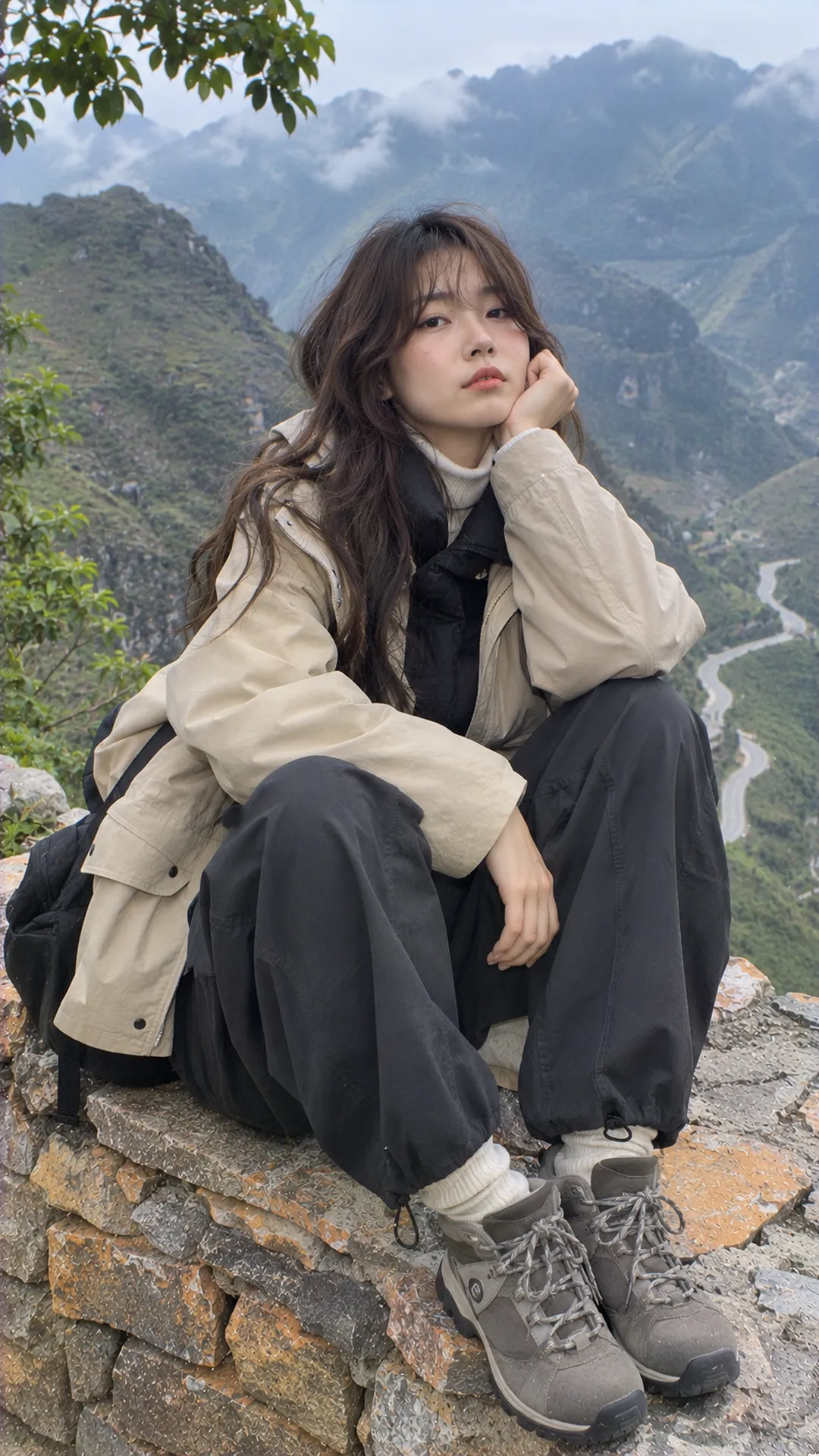
Dress for the season and the day’s conditions
Cool and transitional weather
Pack a base outfit you can wear on its own and a jacket you can reach easily. Keep it near the top of the bag if you expect to take it off and put it on several times. For an early start and an afternoon finish, test the outfit with fewer layers and with all of them. Check coverage and whether fabric bunches at the waist.
Straight-leg pants, a slim long-sleeve top, and a removable jacket are a good combination to try. Pick thickness according to the forecast and how warm you tend to feel. If you heat up while walking, plan where to store the jacket. If you cool down while seated, keep an extra layer within reach.
Warmer or rainy weather
Choose clothes with room to move, hems that clear the ground, and a way to keep a change of clothes dry. Pack layers for the weather you expect. If rain is forecast, check your pants, shoes, and bag as well as your jacket, and consider a spare pair of socks.
If you’re bringing a raincoat or shell, try it over the complete outfit. Check that the panels, drawstrings, and bag straps stay clear. Sit and take a few steps to see whether the outer layer moves as easily as it fits when you stand still.
Cold weather
Add warmth to suit the conditions and check your neck, wrists, and legs. Keep a familiar base outfit and choose an extra layer for the warmth you need. Scarves and hats should fit, be easy to stow, and stay out of your line of sight while you move.
Try all the layers in several positions, especially sitting as you would in a vehicle. A waistband can feel tighter after you tuck in thick layers, and a scarf can bunch around the collar. Fix those points at home so you can travel without tugging at your clothes.
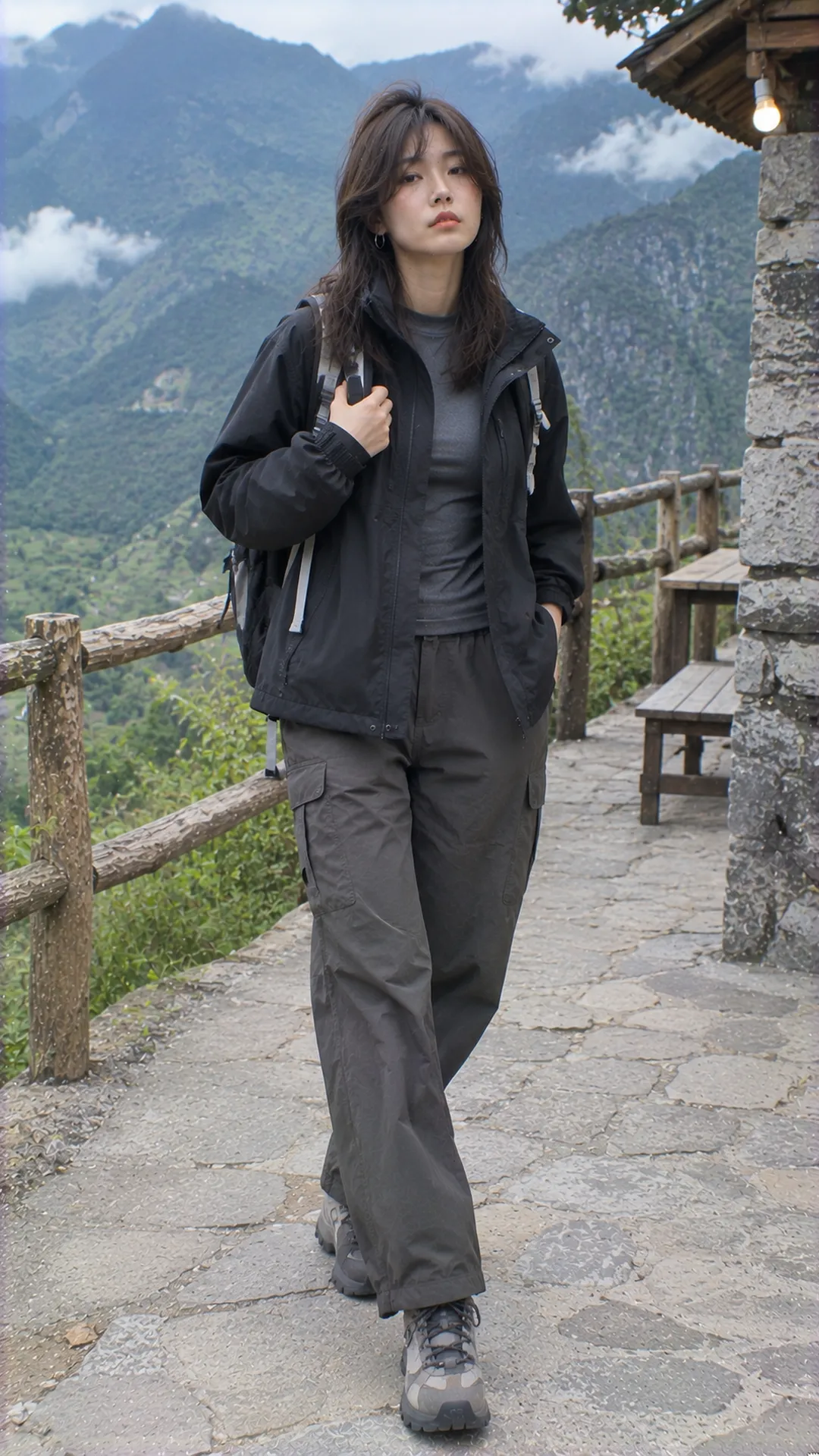
Choose pants and details for how you’ll travel
By car: Choose a waistband you can sit in for long periods, a removable jacket, and hems that stay clear as you get in and out. Soft denim or straight-leg pants with room to move are options, depending on the garment. Sit in them long enough to notice any pressure points.
By motorbike: Choose long pants with a tidy cut, suitable closed shoes, and layers without trailing panels, scarves, or long straps. Wear protective gear designed for riding. When trying on the outfit, check that layers and bag straps stay clear and let you move freely. Settle those details before planning photos.
Lots of walking: Choose pants that let you take long steps, hems that clear the ground, and shoes you’ve tested during similar activity. Tight knees or excess fabric bunching over your shoes can get in the way. Our women’s pants guide helps you compare cut, rise, and length before choosing color.
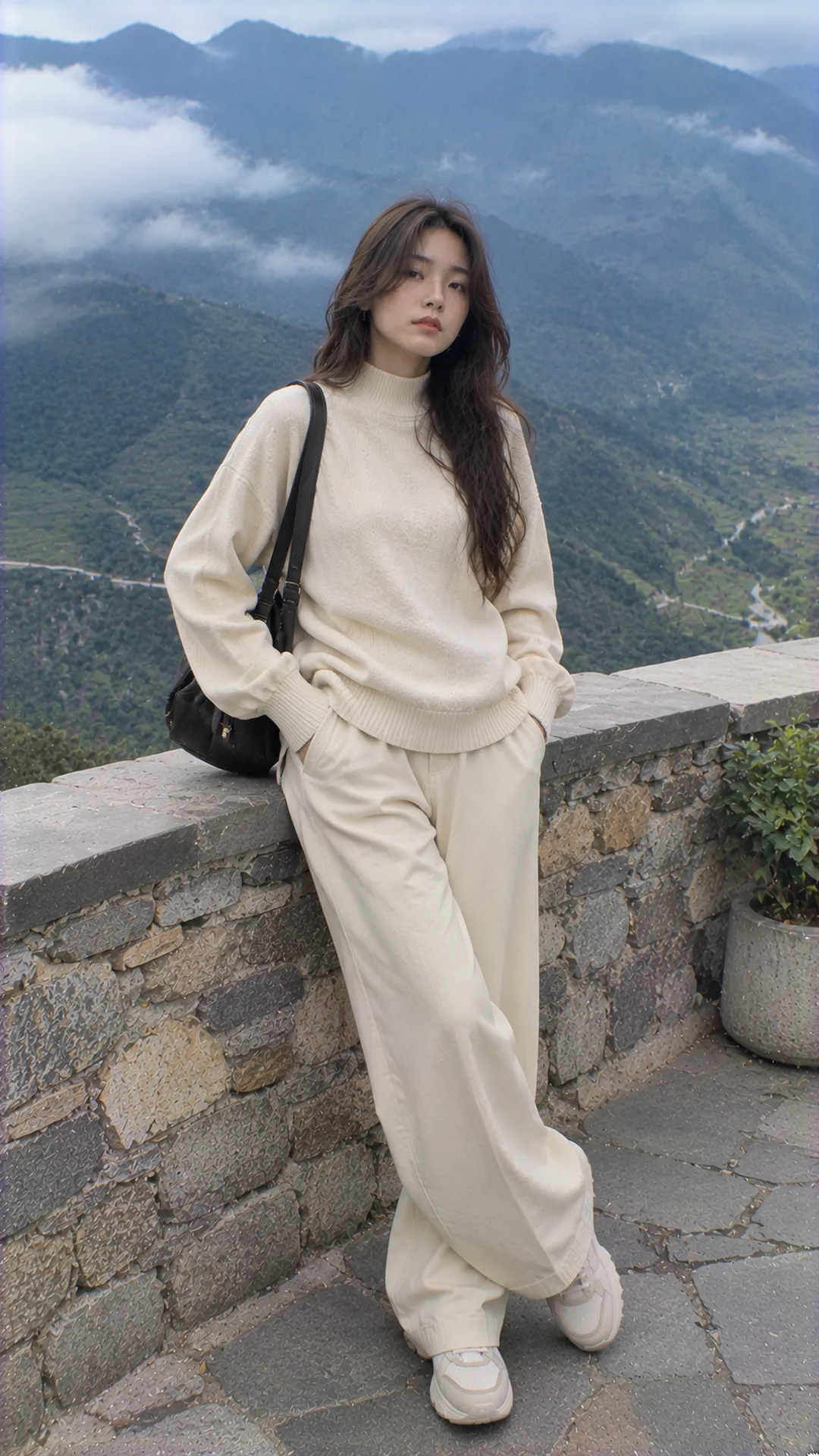
Planning a dress or standout outfit for photos
Keep a complete travel outfit and bring one piece you can change into at a suitable stop. Swapping a top or adding a colorful layer takes less space than several long dresses. Choose a stable spot, follow the site’s guidance, and check that holding up the skirt leaves you free to walk.
Try a long or paneled skirt with the shoes you’ll wear. In windy conditions, keep accessories compact and check coverage. Choose an outfit you can manage while carrying your own jacket and bag. If the weather changes your plans, a pants outfit with clear colors and lines can work well in photos too.
Cream, brown, deep blue, or a bright color can all work depending on the setting. A solid top helps you stand out against a busy background. Against a quiet backdrop, a print you like can be the focal point. Our guide to creating a fashion mood board helps you choose two palettes from clothes you already own before packing.
If you’d like to wear local traditional clothing, learn how it’s worn and ask the provider about appropriate use. Check which community and tradition the particular garment belongs to before describing it. Follow the guidance for the piece you’re wearing.
Shoes and bags for a full day out
Try the shoes with the socks you’ll take. Check for heel slip, toe pressure when stepping down, and laces you can secure neatly. Bring a pair you’ve already tested. Suitability for the terrain depends on the specific shoe’s design, whether you choose sneakers or boots.
Our women’s shoe guide covers how shoes look with different hems and how much visual weight they add. For the trip, prioritize a pair that suits your activities. If you pack separate shoes for photos, treat them as an extra and build your travel outfit around the main pair.
Choose a bag that closes securely and keeps things within reach. Try the straps with every layer on. Check for short straps pressing into your underarms or a large bag hitting your hip. Keep the rain layer and any layer you’ll remove often easy to reach, and separate spare dry clothes from wet items as space allows.
Pack pieces you can wear again
Choose pants that work with two tops, a suitable midlayer, and an outer layer you’ve tried. Pack changes based on the trip length, laundry options, and forecast. Photograph the combinations before packing so you know what can be swapped.
For a flight or a long wait before reaching the highlands, our women’s airport outfit guide can help you dress for the first part of the trip. Change your jacket and shoes on arrival if needed. Keep warm layers packed until you need them if you have somewhere to stow them.
For a personal touch, pick one detail that’s easy to change, such as the base top color, a compact scarf, or a bag. Our guide to dressing for different outings helps you keep an accent that works with what you’ll be doing.
Final check: dress, sit, walk, and remove layers
Put on the whole outfit with shoes and bag, then sit and take a few long steps. Take off the outer layer, put it in the bag, and put it back on to see whether the process is easy. Check hems, straps, scarves, and necklines. A small snag at home can become annoying after a full day.
Before leaving, check the expected conditions again and add or remove layers accordingly. Keep a base outfit you can wear on its own, suitable shoes, and a way to keep spare clothes dry. Once that’s in place, choose the colors and styling you want for photos.