

What Is Devilcore? Infernal Motifs and Dark Outfits
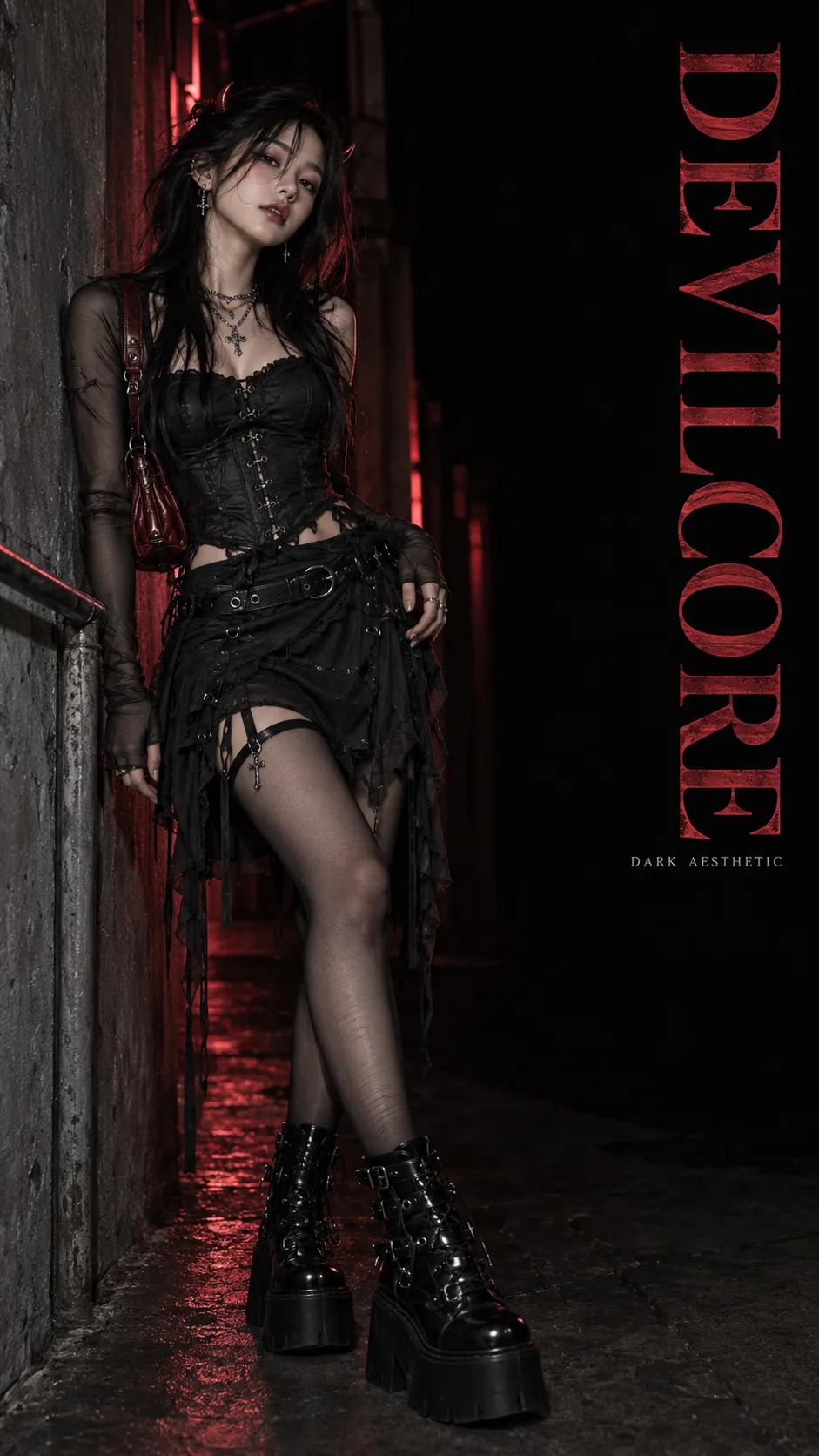
Devilcore — also searched as devil core — is an informal internet micro-aesthetic that uses devil or demon imagery as its main visual reference. Black, burgundy, red, and metal details can support horns, flame graphics, chains, buckles, harnesses, fishnets, lace, or leather-like surfaces.
Black and red alone do not define it. Motifs, texture, and silhouette need a shared direction. This guide covers fashion styling rather than inferring anyone's religion or personal identity from clothes.
Guide collection: Aesthetic Dictionary: A Guide to Fashion Styles (Vietnamese)
What Is Devilcore?
Devilcore is a loose online label for devil, demon, and infernal imagery in darker alternative styling. Community references group black, red, mesh, lace, leather-like surfaces, chains, chokers, horns, and horror graphics together. Treat such descriptions as informal usage rather than a settled historical dress code.
Instead of a uniform with one fixed origin, use it here as a visual reference system: infernal imagery leads, supported by deliberate color, texture, and hardware.
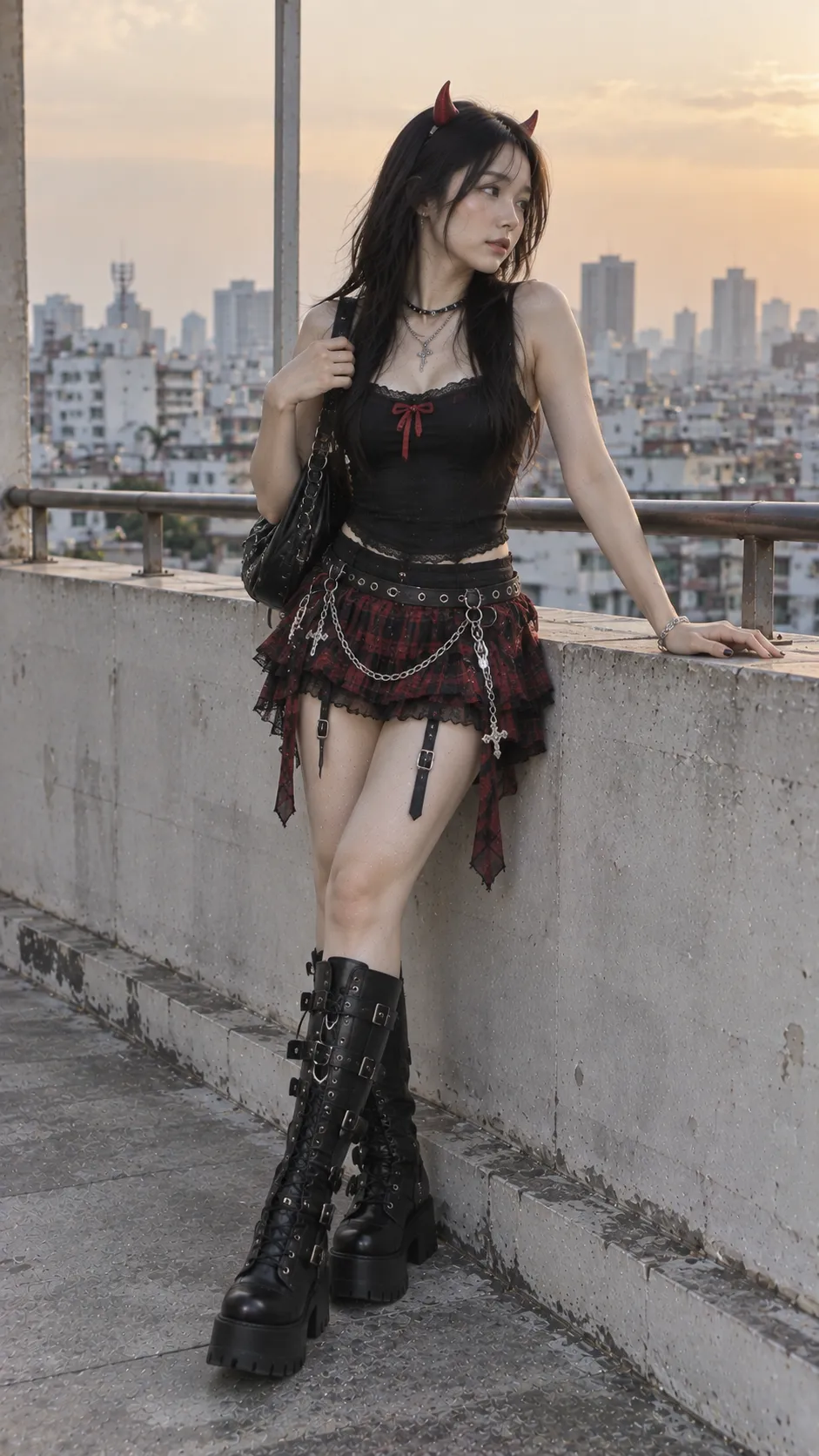
A black tee and combat boots alone need not suggest Devilcore. A horn-detail hood, dark skirt, selected red accent, and related metal detail may make the intended reference clearer. Compare this narrower motif-based direction with the broader Goth style guide for different needs.
Five Visual Features
Assess five layers before adding more products. Several clear, related references may be enough without completing a rigid checklist.
Establish silhouette, then motif, followed by supporting textures and hardware. Buying many horn, chain, or buckle pieces first can leave decoration without a coherent shape. Fit and fabric fall still matter.
Three Levels of Emphasis
You need not combine horns, a corset-inspired top, and tall platforms every day. Adjust emphasis for the setting.
Five Wearable Dark Outfit Routes
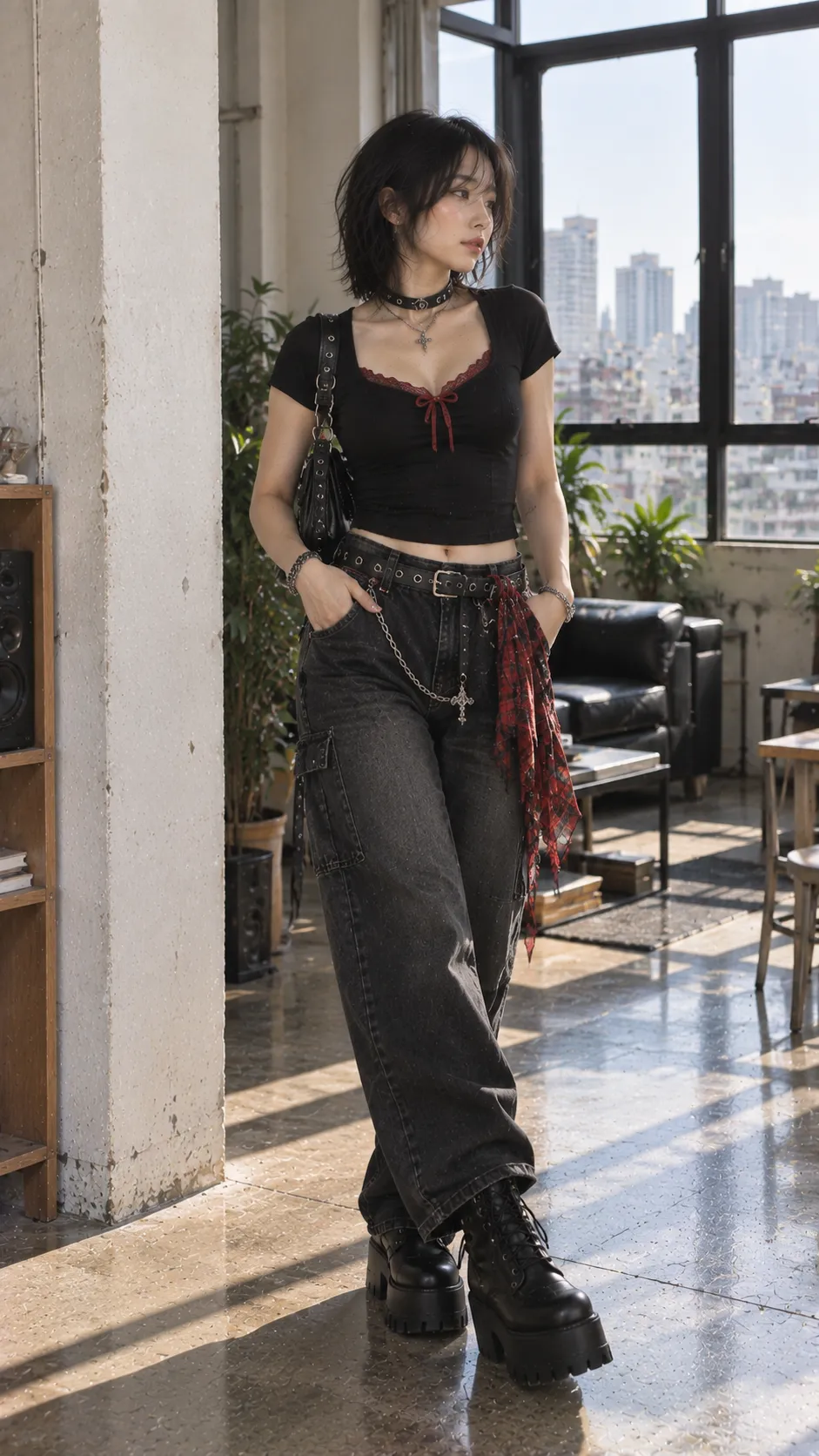
1. Fitted Top, Black Cargos, and Platform Boots
Compact upper → roomier bottoms → substantial footwear.
Try a black or burgundy top with moderately detailed cargos and suitable boots. A selected infernal pendant or related graphic can establish the reference. With many pockets or straps below, a large upper harness may be unnecessary.
2. Red Corset-Inspired Top, Black Skirt, and a Sheer Layer
Red focal point → black frame → sheer depth.
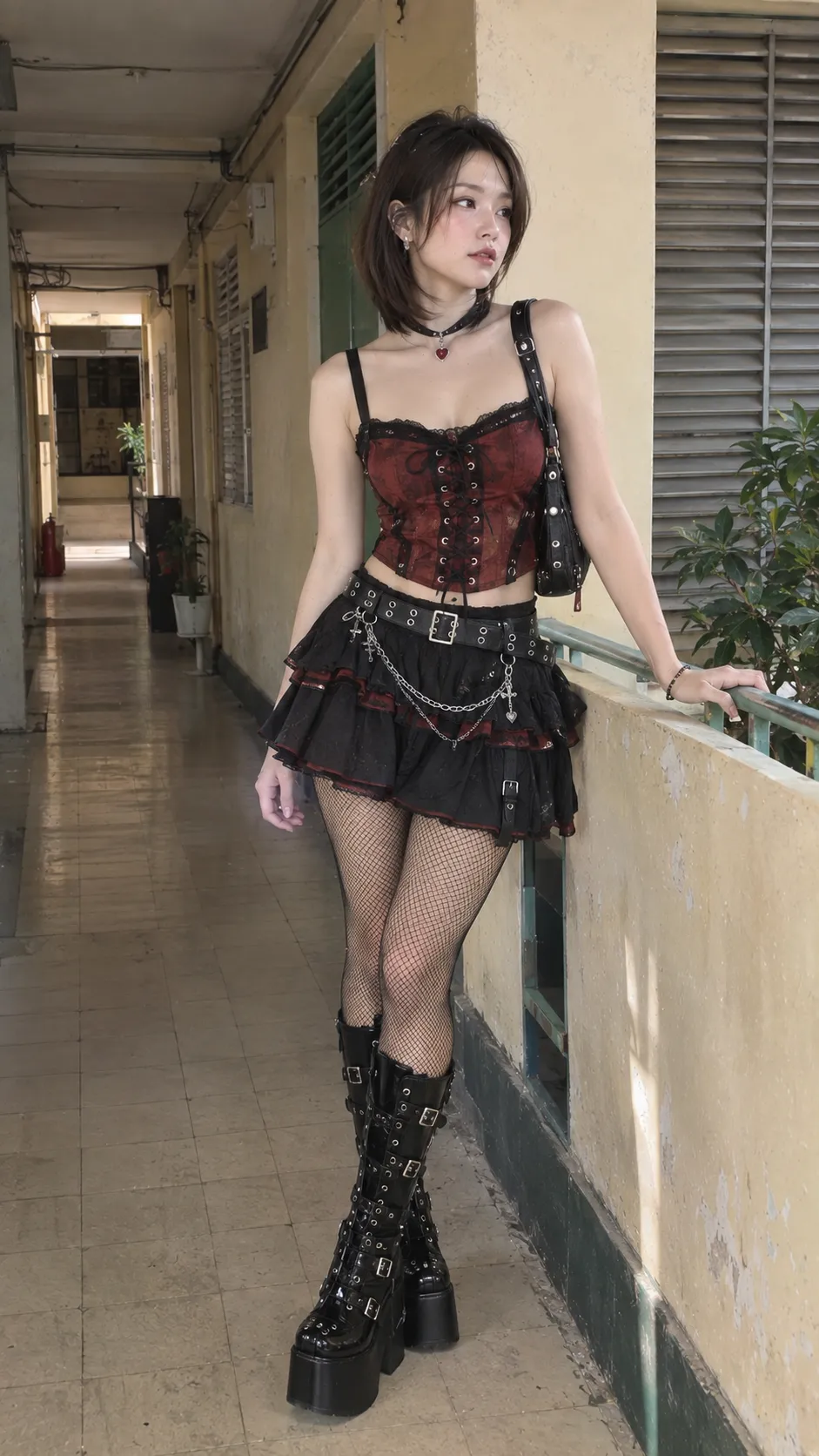
A red structured top leads while a black skirt provides a quieter foundation. Mesh or lace sleeves add texture. A small infernal detail can distinguish this feminine darker route from general Dark Feminine styling.
3. Oversized Horn-Detail Hoodie, Short Bottoms, and Boots
Upper volume → open leg area → footwear anchor.
The hood already supplies a strong motif. Quieter inner layers and a plain mini or dark shorts clarify proportions. If the hoodie contains chains, fewer necklaces may leave more space.
4. Graphic tee + mesh long sleeve + straight jeans
Graphic focal point → mesh layer → everyday denim.
A devil or flame graphic can be modest in scale, with mesh visible at sleeves or neckline. Straight black or washed jeans keep the combination adaptable. Explore Building a Dark Aesthetic Wardrobe for pieces that can work across several styles.
5. Dark Slip Dress, Leather-Look Jacket, and Substantial Shoes
Softer long line → firmer outer layer → footwear weight.
A slip dress supplies a vertical line and the jacket defines shoulders. A small motif pendant or choker can establish the reference, with red at lip, bag, or socks. Keep the desired contrast without making every item themed.
Color, Texture, and Hardware beyond Black and Red
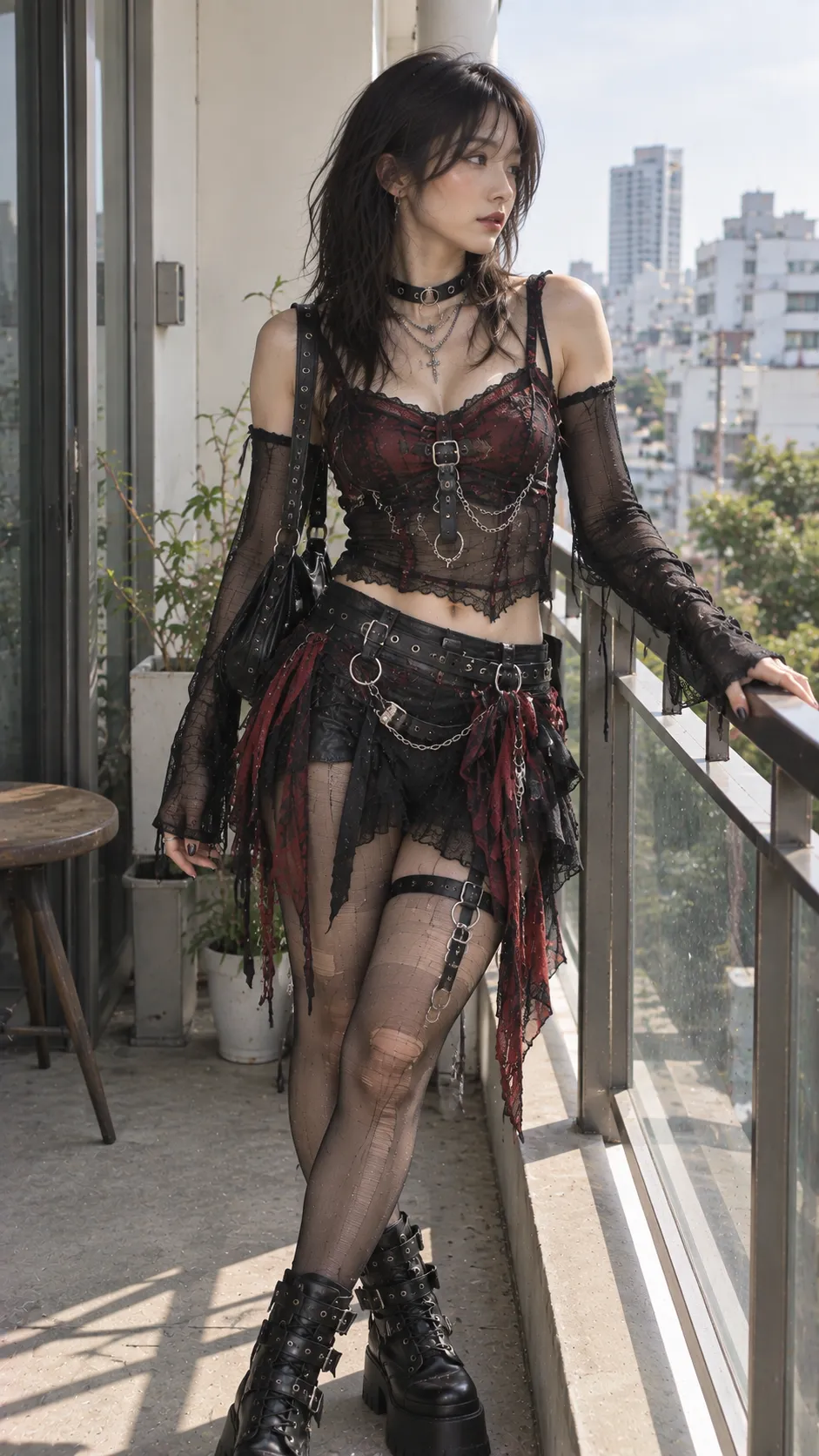
One larger base color can simplify the hierarchy: black clothes with a burgundy top and silver details, or a black dress with selected red socks or lip color. Equal contrasting blocks on every garment can produce a more graphic costume effect if that is not intended.
Matte cotton, open mesh, washed denim, shinier imitation leather, lace, or rougher knit create different surfaces. Choose a few related textures instead of using all of them.
Hardware has its own rhythm. A large belt ring may need only a finer chain; a buckle-heavy jacket may balance a quieter bag. Connect neck, waist, and footwear selectively rather than making every surface lead.
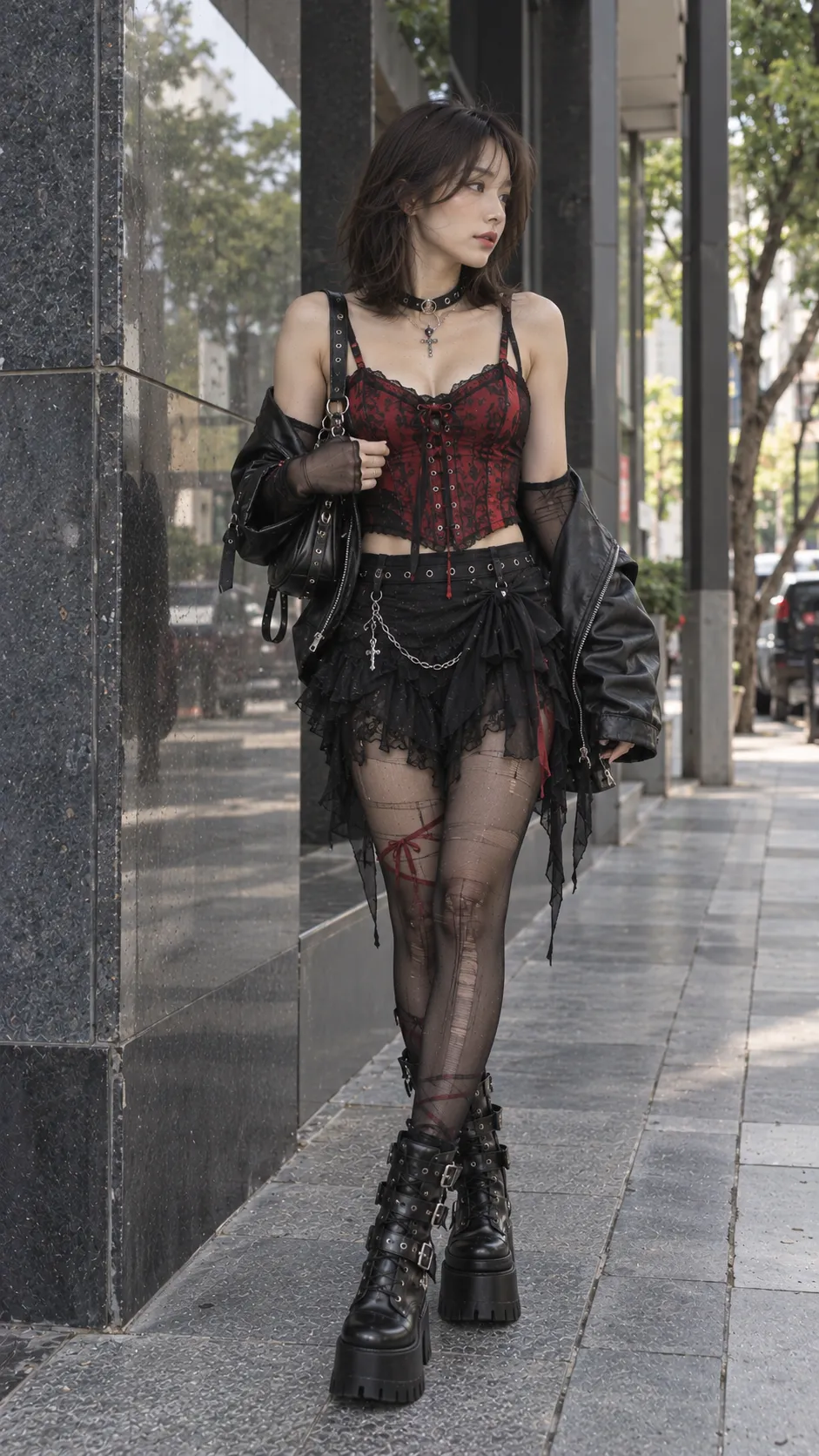
Footwear, Accessories, and Makeup as Finishing Choices
Platforms provide visible lower weight; combat-style uppers can strengthen a street-oriented route. Black sneakers can work when the clothing already communicates the motif. A longer dress may balance compact ankle boots rather than very large platforms.
Chokers, chains, pendants, silver rings, or horn details are optional tools. Repeat a metal or shape deliberately; mixed metals can also work when intentional. A leading head accessory may need quieter nearby jewelry.
Makeup is optional. Strong liner, dark-red lips, or smoky eyes can increase emphasis, but a related clothing motif can communicate the direction independently. One strong makeup feature may be enough beside detailed clothes.
Devilcore, Goth, Emo, and Whimsigoth
Warm-Weather Devilcore: Lighter Layers, Clear Contrast
Thick leather, dense tights, and heavy boots can be impractical in heat. Retain motif and silhouette with a tank or baby tee, suitable light mesh, a manageable skirt, or lighter cargos.
Move the red accent to a small bag, belt, makeup, or socks instead of another jacket. Choose footwear around actual walking needs. The aesthetic depends on connected references rather than a fixed number of layers.
Five Common Styling Mistakes
1. Every symbol at once
Horns, tails, flames, symbolic graphics, harnesses, and spikes may compete. Choose one main motif with a smaller supporting reference if desired.
2. Assuming black and red are sufficient
Colors establish a palette; an infernal motif distinguishes the narrower label. A red tee, black trousers, and sneakers can remain general casual styling.
3. Hardware without hierarchy
Similar-scale chains at neck, shoulders, waist, hips, and shoes can compete. Establish one leading area and a smaller echo.
4. Ignoring the setting for the image
Large platforms or dense layers may be unsuitable for the intended day. Adjust shoe design, material weight, or accessory scale without abandoning the references you enjoy.
5. Calling every dark style Devilcore
Goth, Emo, Whimsigoth, and darker streetwear retain distinct contexts. Use Devilcore here when infernal imagery is central rather than as a universal dark-fashion category.
Frequently Asked Questions
What does Devilcore mean?
An informal dark alternative micro-aesthetic built around devil, demon, or infernal motifs, often supported by black-red contrast, mesh, lace, leather-like textures, and selected hardware.
Is Devilcore the same as Goth?
No. They may share dark clothing, boots, or hardware, but Goth is broader and has its own music and cultural contexts. Infernal imagery is a narrower focus here.
Do you need horn accessories?
No. A demon graphic, flame motif, or another infernal reference can lead. Horns are recognizable but optional; a palette or chain alone may remain general dark styling.
How can you wear a quieter version every day?
Use a familiar black base, dark denim, suitable shoes, and one small motif or pendant with a selected red accent. Keep the reference concentrated rather than repeating it everywhere.
References
The original community reference is Aesthetics Wiki — Devilcore. Treat it as documentation of variable community usage rather than an academic classification. The article from Prospect on Micro-Aesthetic Culture provides broader context. Outfit routes and styling logic are Apocalypse Closet editorial interpretations, not rules about religion or identity.