

What Is Emo Style? Emo Girl, Scene and E-Girl Differences
Emo girl usually describes a girl interested in emo music or styling. Familiar fashion references include band tees, dark denim, side-swept fringes and eyeliner. None of those features establishes a person's personality or mental health.
Emo's musical origins date to the mid-1980s, while its widely recognized internet fashion imagery developed through later waves. This guide explains what emo style meansand how to distinguish its clothing references from scene, e-girl, grunge and goth.
Guide collection: E-Girl / Alt Girl: Guides, Outfits and Dark Y2K (Vietnamese)
What Is Emo Style?
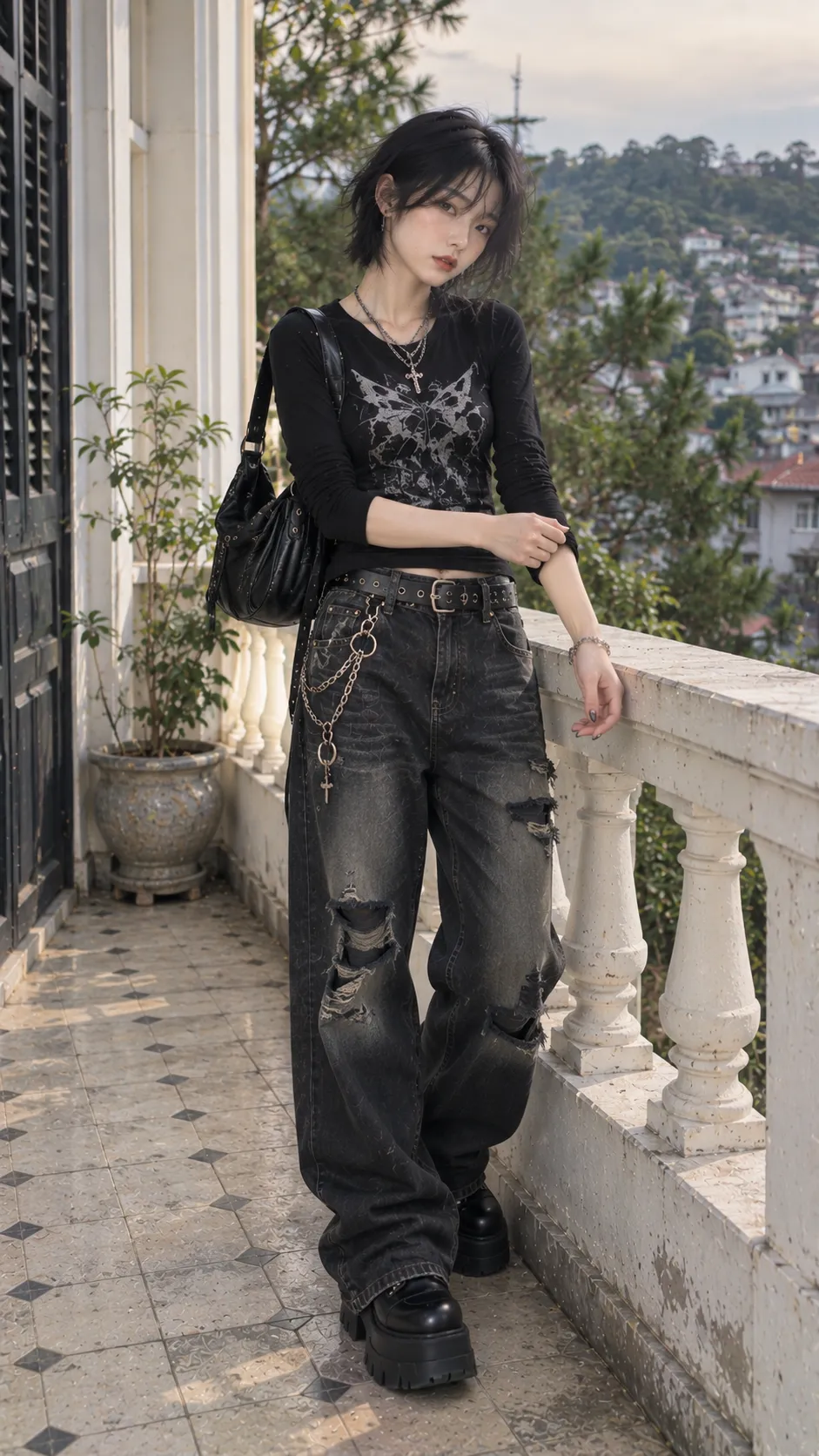
Emo first describes music developed from hardcore or post-hardcore. The term later also referred to communities, expression and fashion imagery associated with different emo waves. Emo fashion is a useful visual description, but does not reduce an entire subculture to a clothing checklist.
Popular imagery often uses dark palettes, band or graphic tees, dark denim, fitted or straight shapes, striped long sleeves, studded belts, canvas or skate shoes, chokers or wristbands, and defined hair or makeup. These associations are particularly strong for 2000s imagery rather than the genre's entire history.
A contemporary Emo-inspired outfit can borrow two or three references without reproducing a uniform: graphic tee, dark straight jeans and silver belt, or striped sleeves beneath a tee with a dark skirt and sneakers. Relationships between pieces matter more than the number of alternative items.
What Is an Emo Girl? Is That the Same as an E-Girl?
Emo girl can refer to someone connected with emo music or choosing emo-inspired expression. Online, it is sometimes applied more broadly to dark clothing, side-swept fringes or strong eyeliner, but those features alone cannot establish community identity.
Emo girl and e-girl are not interchangeable labels. Emo has a specific musical history. E-girl imagery developed within internet culture and can remix emo, anime, gaming and Y2K influences. Explore what e-girl means or the comparison below to see both overlap and differences.
Do not use emo as evidence that a person is sad or experiencing a mental health problem. Music, clothing and makeup are forms of expression rather than grounds for those assumptions.
Where Did Emo Begin?
Emo emerged within Washington, D.C. hardcore punk in the mid-1980s. Histories often cite Rites of Spring and Embrace as early examples of what was called emocore: hardcore energy with more introspective, emotional and personal expression.
Importantly, early emo did not have a fixed black-fringe-skinny-jeans uniform. Today's familiar internet emo look developed more visibly through later waves: 1990s indie or emo, then 2000s interactions among pop-punk, post-hardcore, MySpace and mall culture.
Music came first, while fashion imagery changed over time. An emo listener need not wear mall-emo clothing, and an emo-inspired outfit does not represent the entire subculture.
Recognizable Emo Fashion References
| Feature | Common visual association | Contemporary use |
|---|---|---|
| Color | Black, charcoal, white, red or burgundy, sometimes brighter accents | A dark base with one accent rather than compulsory all-black |
| Top | Band or graphic tee, fitted tee and striped long sleeves | One main graphic with fewer competing logos or prints |
| Bottom | Skinny or dark denim, straight jeans and fitted trousers | Straight or moderately baggy alternatives can work when other references remain clear |
| Shoes | Canvas sneakers, skate shoes or boots | Prioritize wearable shoes rather than platforms solely for an alternative label |
| Accessories | Studded belts, wristbands, chains or chokers | One or two strong references instead of dense hardware |
| Hair | Layers, side-swept fringes, dark colors or contrasting streaks | Borrow framing or layers without replacing your whole haircut |
| Makeup | Eyeliner or kohl with defined eyes | One eye emphasis; white foundation or dark lips are not compulsory |
Band Tees Refer to More Than Decoration
Band tees can connect to music, shows and communities. If your interest is primarily visual without a particular artist reference, abstract artwork or a text-free dark tee may provide a more neutral alternative to an unfamiliar band's logo.
Many 2000s Emo Silhouettes Are More Compact
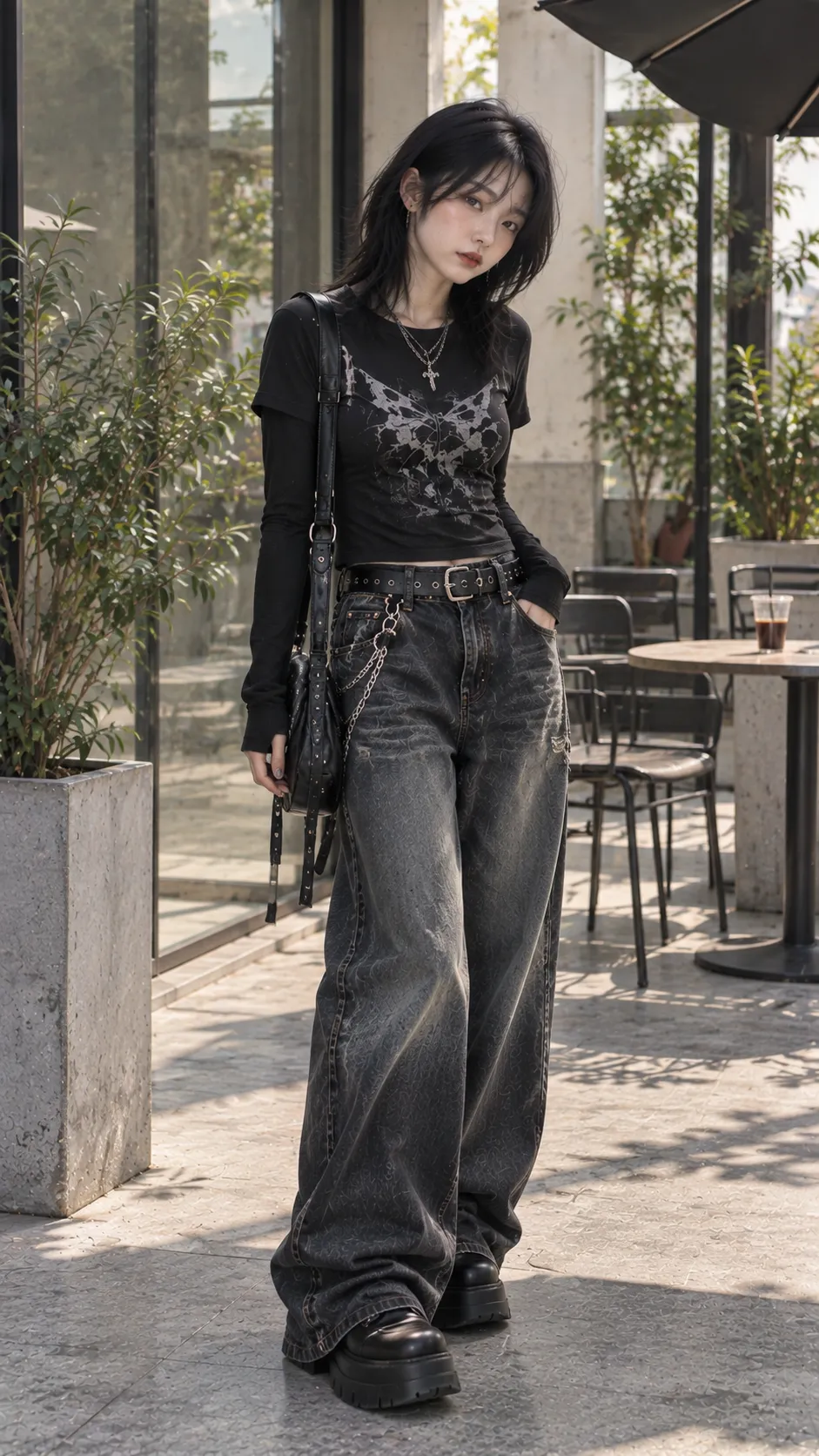
Fitted tees or tanks with skinny or straight dark denim recur in 2000s imagery. When updating with baggy jeans, a compact top, belt or hair and makeup reference can retain the direction instead of moving entirely toward grunge or streetwear.
Hair and Makeup Are Strong Signals, Not Requirements
Side fringes, layers and eyeliner can communicate the reference quickly, but a complete haircut change is unnecessary. Natural hair can work when graphics, colors, bottoms and accessories already form a coherent outfit.
How Emo Fashion Changed Across Periods
| Period | Context | Commonly remembered imagery |
|---|---|---|
| 1980s | Washington D.C. hardcore / emocore | Everyday punk or hardcore clothing rather than one mainstream emo uniform |
| 1990s | Expansion of underground and indie emo | Tees, jeans, cardigans or flannel, often less theatrical than later imagery |
| 2000s | Mainstream visibility, MySpace, malls and pop-punk or post-hardcore intersections | Skinny jeans, band tees, stripes, studded belts, side fringes and eyeliner |
| 2020s–2026 | Revival through Y2K and alternative internet culture | 2000s references mixed with baggier jeans, mini skirts, mesh and contemporary sneakers |
This timeline helps explain why two outfits described as emo can look different. Early or 1990s references may be very understated; a 2000s revival uses more immediately recognizable visual codes.
Emo vs. Scene
They overlap substantially, particularly around the MySpace era. However, scene often pushes the visual intensity toward playful maximalismthrough neon, animal or checker prints, dense accessories, large hair volume and bright streaks.
Popular emo imagery often keeps colors darker, music or graphic references clearer, and simultaneous neon accents fewer. These are visual tendencies rather than absolute community boundaries. Read what scene style means for hair, color and MySpace-era comparisons.
Emo vs. E-Girl
E-Girl is a newer internet aesthetic with varied influences. It can borrow striped layers, eyeliner, chokers, dark graphics, plaid skirts or chains from emo, punk and scene, while adding gaming, anime, TikTok-era makeup, hair clips and online image-making.
The useful distinction is the frame of referencerather than exclusive ownership of a garment. Emo has a particular musical and subcultural history; e-girl is a highly remixable internet aesthetic. Explore our e-girl style guide and E-Girl / Alt Girl Looks (Vietnamese) for the broader visual context.
Emo vs. Grunge
Both can use band tees, dark denim and boots. The distinction often lies in silhouette + texture + attitude. Grunge favors relaxed shapes, worn surfaces, distressing, flannel, roomy knits and less precisely arranged layers. Popular 2000s emo looks are often more compact and graphic, with hair, makeup or belts providing clearer signals.
Baggy jeans do not exclude an emo interpretation. But oversized flannel, distressed baggy trousers and heavy boots without other references can lean toward grunge. See what grunge is and how it differs from punk or the Punk / Grunge guide hub (Vietnamese).
Emo vs. Goth
Black clothing, eyeliner and boots can appear in both, but their music histories and visual references differ. Goth developed through post-punk or goth rock and can use lace, mesh, leather, velvet, dramatic shapes or romantic and industrial references. 2000s emo imagery more often emphasizes band or graphic tees, fitted dark denim, stripes, studded belts and side fringes.
Neither black nor eyeliner alone establishes goth or emo. If corsetry, lace, platforms, silver hardware and dark romantic shapes organize the outfit, explore what goth style means before assigning a label.
Modern Emo-Inspired Outfits Without a Costume Effect
1. Band or Graphic Tee + Dark Straight Jeans + Sneakers
Let the tee anchor the look and add a simple belt if useful. Straight jeans update the silhouette while keeping a clear line. With a large print, reduce competing chains or patterns.
2. Striped Long Sleeves + Tee + Dark Bottoms
Striped sleeves beneath a tee are a recognizable 2000s reference. Try straight jeans, a dark denim mini or moderate baggy jeans. If the torso already has layers and graphics, quieter shoes give it space.
3. Fitted Black Top + Dark Denim + Studded Belt
An option without a band tee. The belt becomes the main signal, reinforced by eyeliner or hair framing if desired. Canvas sneakers can keep the result more grounded than large platforms.
4. Graphic Tee + Mini Skirt + Dark Tights
This contemporary combination overlaps with e-girl styling. Music or graphic references, dark colors and simpler shoes can maintain an emo-inspired emphasis rather than adding many hair clips, pastels or kawaii accessories.
5. Mesh Layer + Graphic Tee + Denim
Mesh adds texture without defining the style by itself. Keep it secondary, let artwork lead and use denim as the base. See what to wear with mesh tops for coverage and layer choices.
6. Modern Baggy Jeans with Clear Emo References
If skinny jeans are not your preference, moderate baggy or straight-wide denim can work with a compact graphic top, belt and optional hair or makeup references. Update the shape while retaining an organizing direction.
Neighboring Looks for Comparison, Not Emo Examples
The following outfits belong to neighboring styles and are not presented as emo examples. They show alternative references that are easily confused with the label.
Example scope: neighboring punk, grunge and e-girl looks, without relabelling them emo.

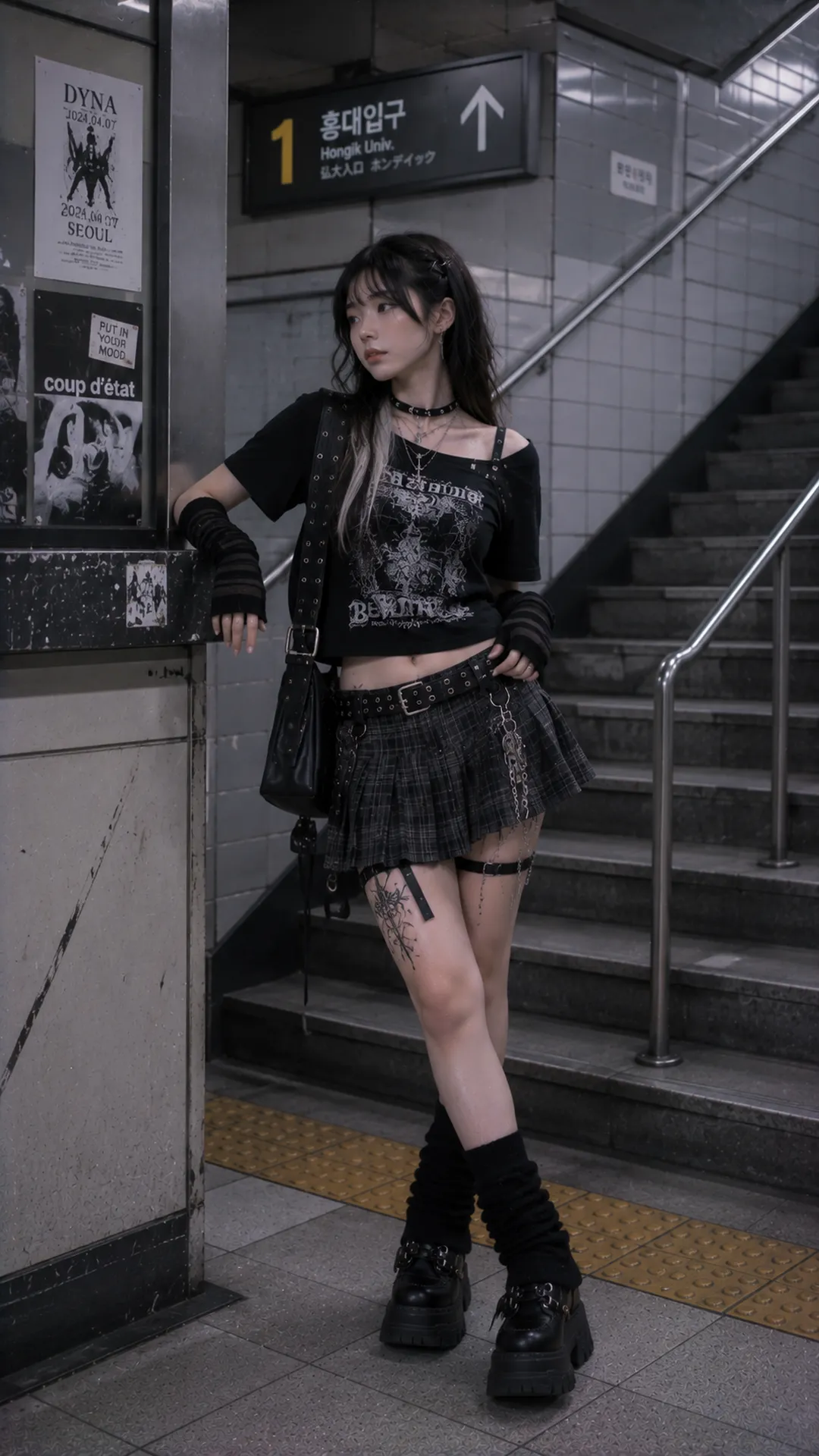
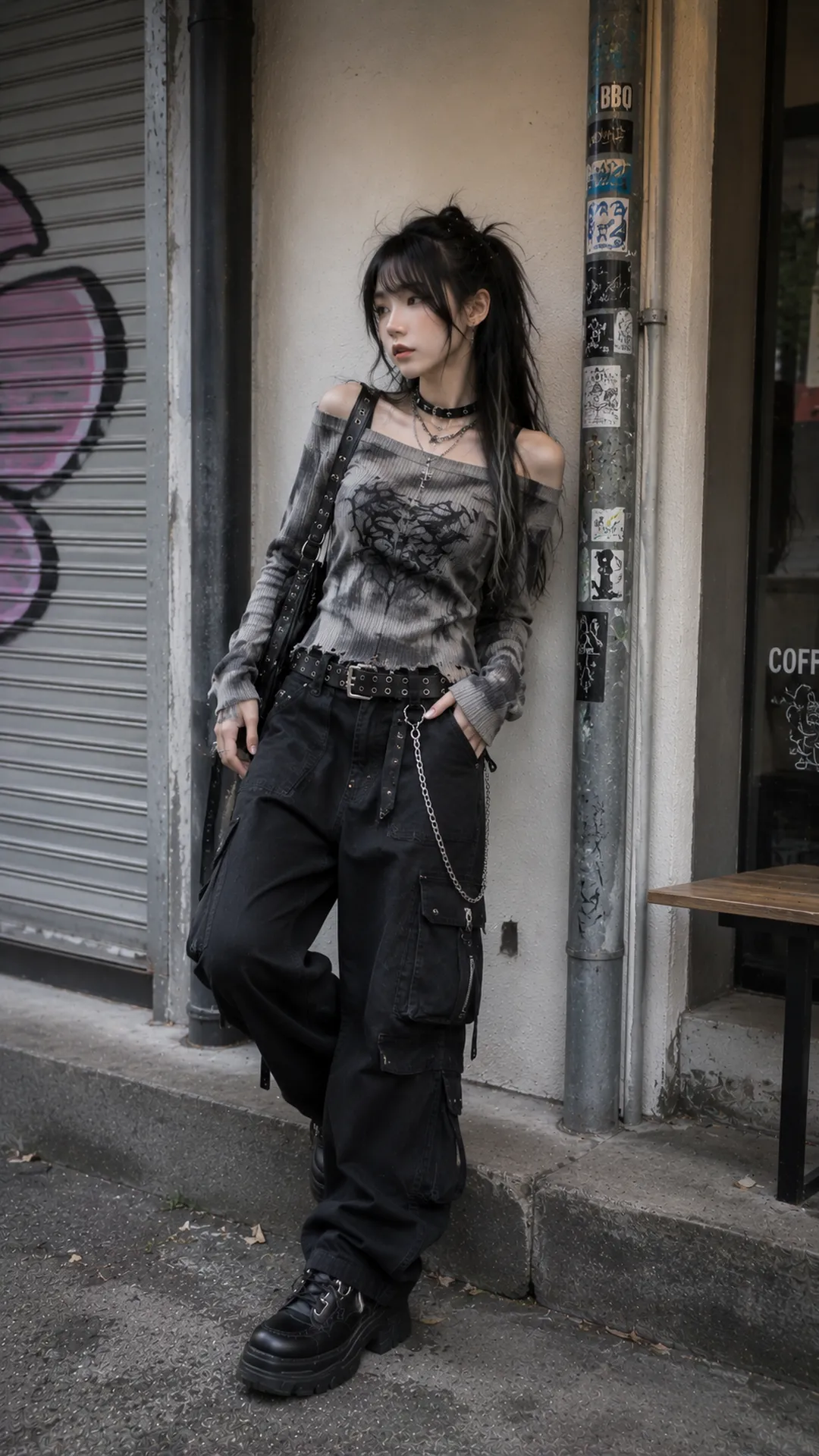
- LOOK #03 (Vietnamese): wide cargos, combat boots and chains give stronger punk or grunge signals; dark color alone does not make it emo.
- LOOK #43 (Vietnamese): cropped artwork, plaid skirt and platforms illustrate an internet-alternative overlap with an e-girl emphasis.
- LOOK #50 (Vietnamese): mesh, graphics and cargos create alternative texture without enough specific references to establish emo.
Six Common Mistakes
- Calling every dark outfit emo: color alone is a weak signal without context, shape or artwork.
- Treating skinny jeans as compulsory: they are a strong 2000s association rather than an eternal rule.
- Mixing scene references while using an emo label: neon, maximal accessories and large hair volume can change the emphasis.
- Treating e-girl and emo as identical: e-girl remixes many internet influences and has a different history.
- Making it a costume checklist: hair, eyeliner, stripes, belt, chain, band tee and gloves need not appear together.
- Using a band logo at random: more neutral artwork may suit an outfit without a specific music reference.
Where Emo Fits Within Alternative Fashion
In Apocalypse Closet's topic map, emo sits near scene and e-girl as an alternative-fashion reference, while sharing musical connections, band tees and dark styling with neighboring punk or grunge. Proximity does not make them identical. A useful reading sequence is Emo definition → comparison → item guide/style page → outfitinstead of treating every alternative branch as emo.
Sources and Further Reading
The original guide uses these sources for music history and changing imagery:
- AllMusic — Emo Music Style Overview — Washington, D.C. hardcore origins and later emo waves.
- Willamette Week — How Emo Fashion Has Evolved — changing fashion across periods, including the difference between early emo and a 2000s uniform.
- VICE — Late-2000s Scene Context — scene and MySpace context for comparison.
Modern outfit suggestions and look analysis are Apocalypse Closet editorial guidance. Linked outfit images serve as comparisons rather than typical emo examples.
Frequently Asked Questions
What is emo style?
Emo fashion describes imagery associated with different emo waves: dark palettes, band or graphic tees, dark denim, stripes, belts, sneakers or boots, and defined hair or makeup. Its musical and subcultural history comes before the outfit label.
Musical origins
Emo developed through Washington, D.C. hardcore or post-hardcore in the mid-1980s. Familiar 2000s internet imagery emerged through later waves and does not represent the entire history.
Are emo and scene the same?
Not entirely. Scene often uses more neon, prints, accessories and hair volume; popular emo imagery tends darker and more compact. They overlap substantially, particularly in the MySpace era.
How does emo differ from e-girl?
E-girl is a newer internet aesthetic remixing many alternative influences, including emo-like stripes, eyeliner or chokers alongside gaming, anime and TikTok-era styling.
How does emo differ from goth?
Their music histories differ. Goth can emphasize romantic or industrial textures and dramatic shapes; 2000s emo is often associated with band tees, dark denim, stripes, studded belts and side fringes.
Can you wear emo-inspired outfits without skinny jeans?
Yes. Straight jeans, moderate baggy denim or dark denim skirts can work when artwork, color, accessories or hair and makeup retain coherent references.