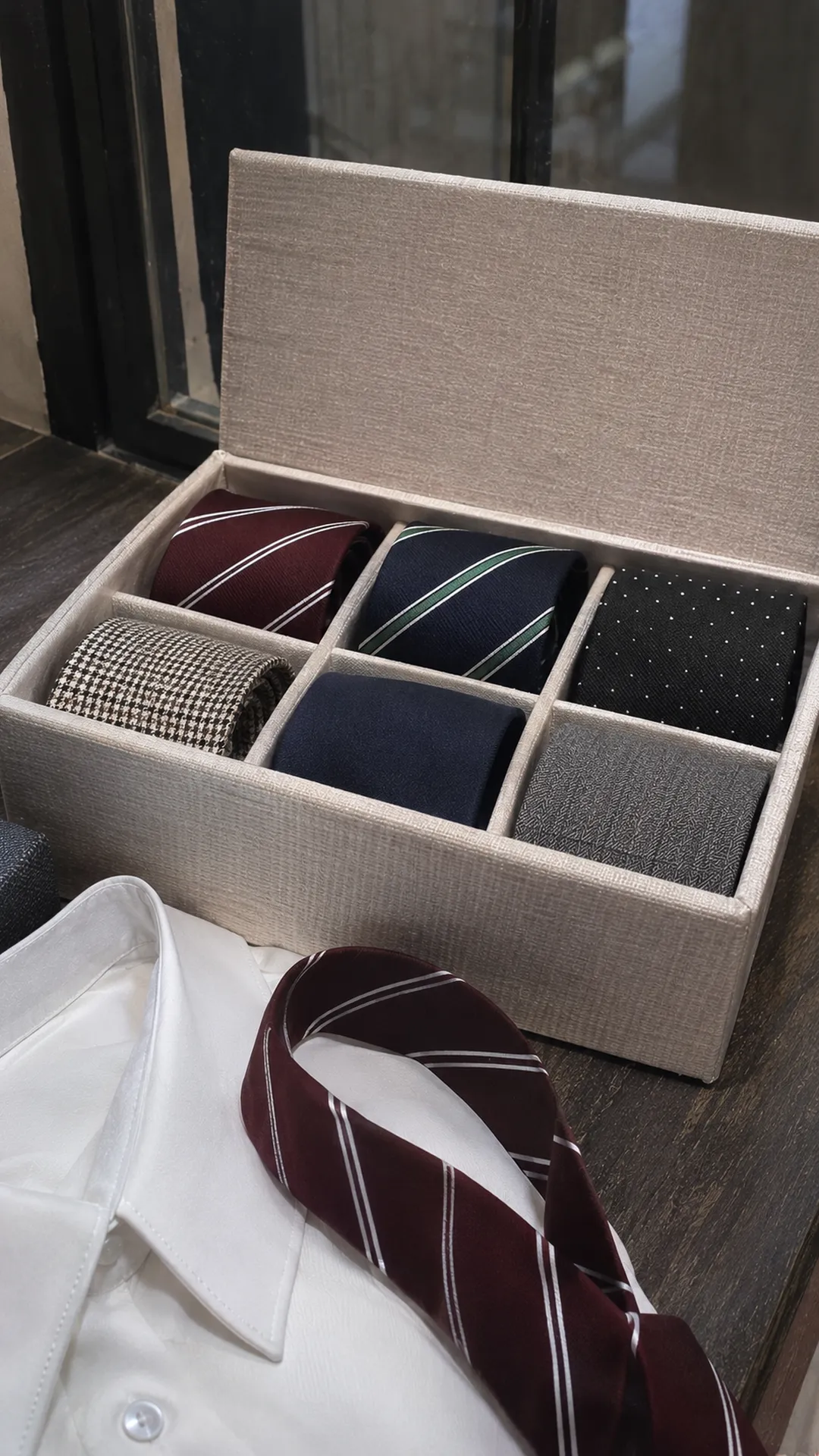
Understanding cravat, caravat and necktie
Merriam-Webster defines cravat as a band or scarf worn around the neck, and also as a necktie. In English texts, cravat therefore does not always mean the familiar long tie with a pointed end. Context and images help identify which version the writer means.
When researching “caravat” for everyday styling in Vietnamese, distinguish three forms: a long tie hanging over the torso, a bow tie sitting horizontally at the neck, and a folded or wrapped neck scarf. All create accents but occupy different areas. A necktie draws the eye vertically; a bow emphasizes width; a scarf can form a broader, softer area.
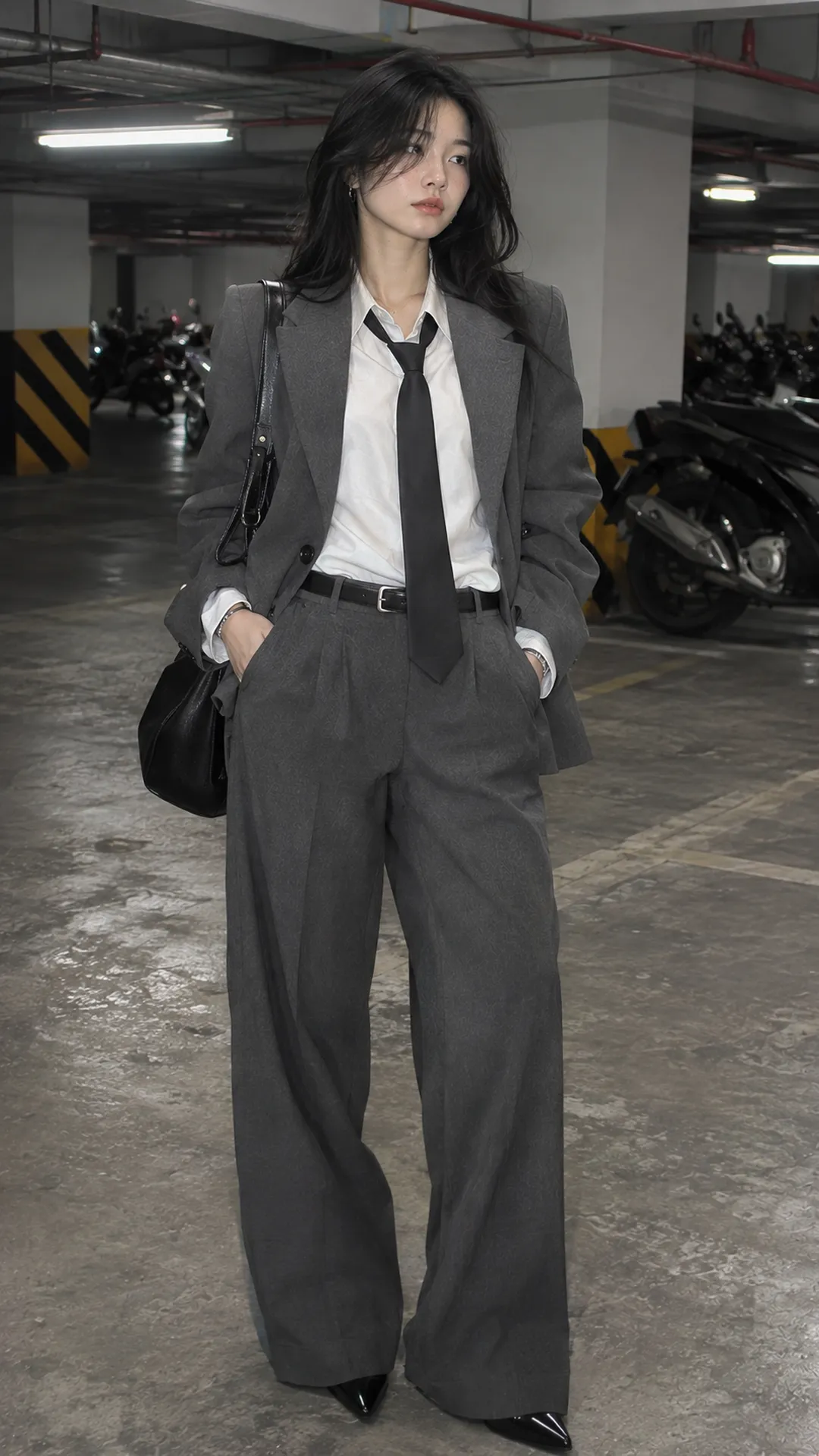
There is no need to assign the accessory one fixed aesthetic. The same black tie can appear with a suit, a shirt and denim, or a skirt-and-boots outfit. To look up style names, Apocalypse Closet's Aesthetic Dictionary points you to relevant guides; an item name alone does not describe the complete outfit.
Choose the tie's role before the design
Look at the outfit without accessories and ask what it needs. If the clothes are simple, the tie can be central. If the blazer already has broad shoulders and prominent buttons and the inner top has many details, a low-contrast solid tie is easier to manage. Every shirt collar does not need a tie.
For polish, prioritize a neat collar, stable knot and untwisted tie blade. For a relaxed feel, loosen the knot moderately or choose a matte finish. Keep that relaxation controlled: if it slides sideways whenever you bend, adjust how you wear it before adding something else.
For an alternative outfit, choose one clearly distinctive feature, such as a tie on a loose shirt with denim pants. You do not need to increase chains, belts, earrings and patterns all at once. Our statement accessories guide for women helps distribute accents around the neck, waist and arms without crowding one area.
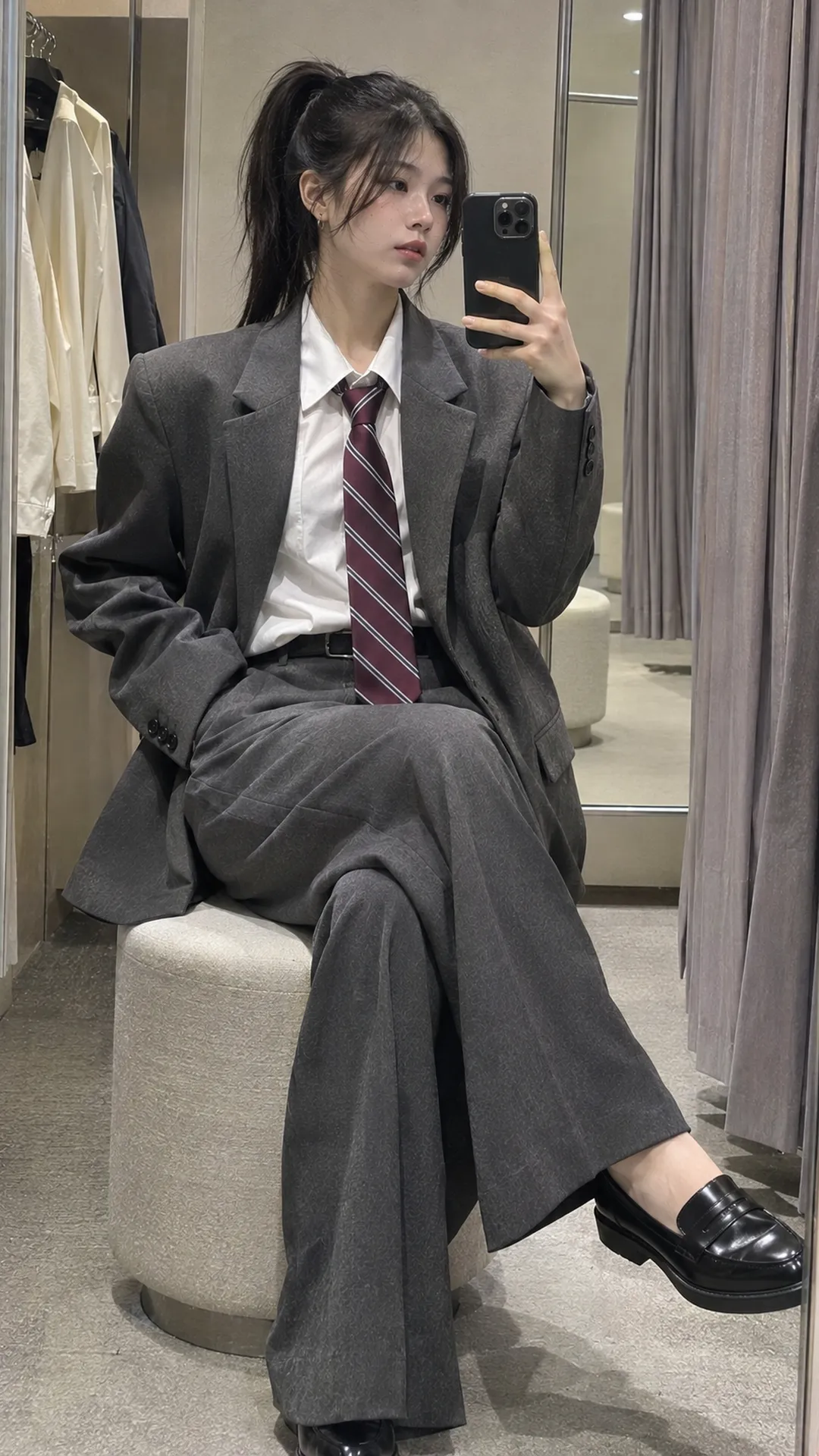
Read width and length alongside the collar
Width: consider the blade and lapels
A narrow tie creates a defined vertical line and is easy to use with fairly neat collars and blazer lapels. A wide tie forms a larger area and can work if you want it prominent on a loose shirt. This is a visual relationship, rather than a rule assigning narrow ties to small bodies and wide ones to larger bodies.
Lay the tie on the shirt and step back from the mirror. If the collar is large and the tie very narrow, do you like that contrast? If both lapels and tie are wide, does the upper half feel crowded? Choosing the visible result is more useful than buying only a currently popular width.
Length: decide where the tie should end
For a polished outfit, the waistband is a useful reference point for the tip. High-rise pants, cropped tops and untucked shirts create different reference points, though. Choose an intentional endpoint, then adjust the knot so the rear tail is not awkwardly long and difficult to hide.
A shorter tie can reveal the waistband; a longer tie extends the vertical line farther down the torso. If its tip lands on a large belt buckle, the details may obscure each other. Try removing the belt or adjusting length before deciding you need a new tie.
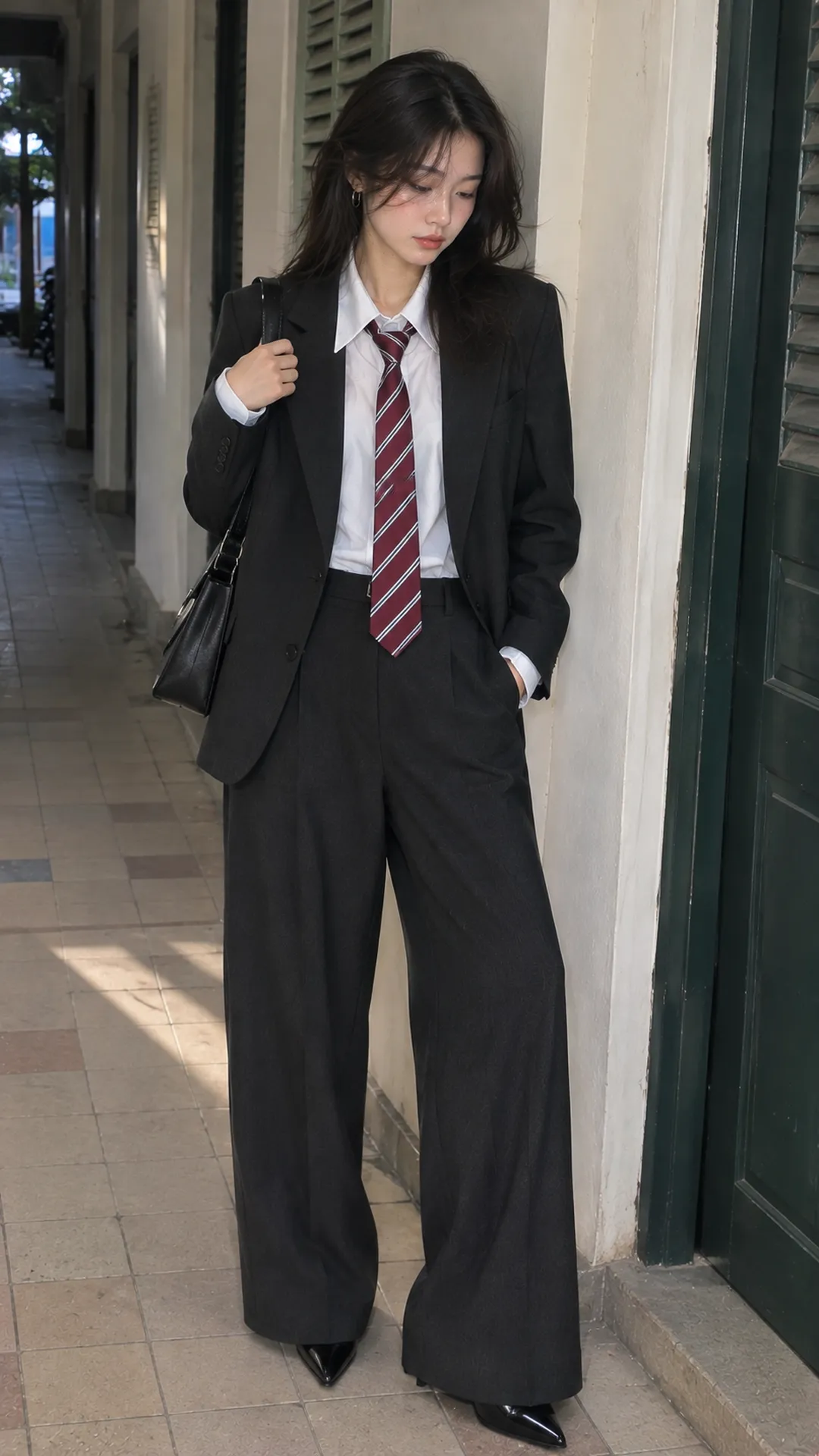
Match the knot to the collar opening
A small knot occupies less space and suits a neat neckline accent. A larger knot forms a more prominent area but needs enough collar room. Fabric thickness affects the knot too; the same tying method can look very different with two differently constructed ties.
Before tying, flatten the tie and identify its front. Once adjusted, check that both collar points lie naturally, the blade is untwisted and you can turn your head comfortably. Do not tighten the knot to force an ill-fitting collar into position.
If you are new to ties, practice one simple knot with the actual tie you will use instead of learning several at once. Photograph the starting lengths of both ends that produce a successful result for future reference. This helps repeat it without constantly retying before you leave.
When loosening a tie, adjust collar and knot together. A slightly lowered knot on an open shirt feels different from one close to the neck. Sit and bend to check whether the looseness maintains your intended position during everyday use.
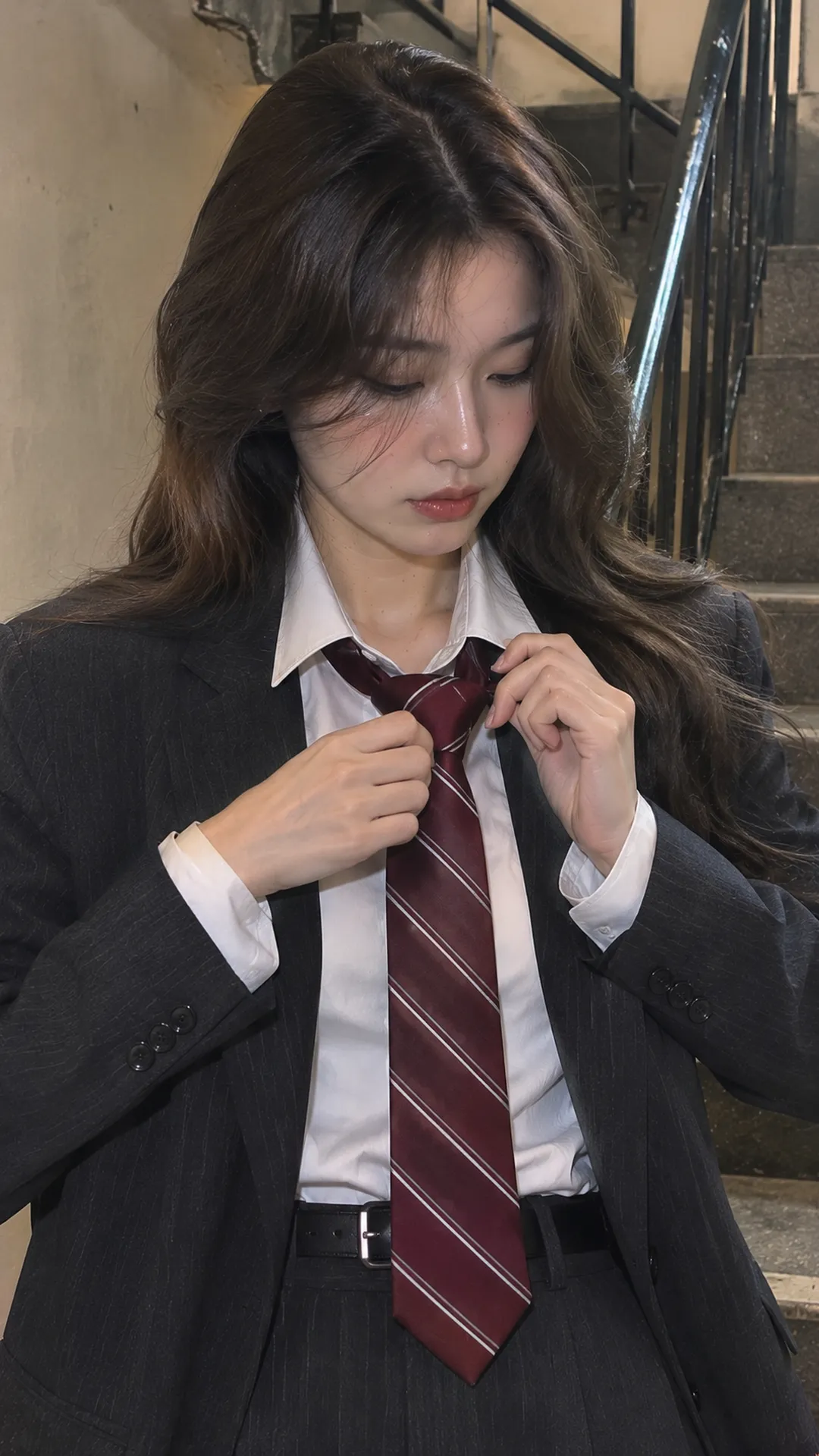
Color, texture and pattern: change one element at a time
A solid dark tie on a light shirt gives clear contrast. On a similarly toned shirt, it becomes a subtler detail defined by its outline or sheen. For an all-dark outfit, try texture differences before adding color: a matte shirt and slightly lustrous tie feel different from two shiny pieces.
Small patterns create close-up detail, while large stripes or prominent motifs draw attention from farther away. With a striped shirt, try a solid tie first. To mix patterns, vary their scales enough and keep their colors related; you do not need every shirt color represented.
Read the fiber composition instead of inferring it from shine. A silk-like surface does not confirm silk content, and textured weaves come in many forms. When buying online, close-ups of the front, back and tip help show stitching, edges and pattern consistency.
Do not choose solely for a photograph of a beautiful knot. Check the whole blade: will the pattern sit where you want after adjusting the length? A motif near the tip may disappear under a waistcoat, while repeated stripes remain readable on the exposed section.
Four women's tie outfits
Plain shirt, relaxed trousers and a medium-width tie
This is an easy base because the vertical lines of buttons, tie and pants already relate. Choose a regular or slightly loose shirt and tuck neatly to avoid waist bulk. Shoes and bag determine the remaining formality; a neck accessory does not replace appropriate clothing for your destination.
Loose shirt, denim and a narrow tie
Denim makes the outfit feel less like officewear, while the tie retains structure above. Try a partial tuck or a shirt hem that does not cover too much of the pants. Our women's shirt outfit guide helps adjust clothing proportions before adding accessories.
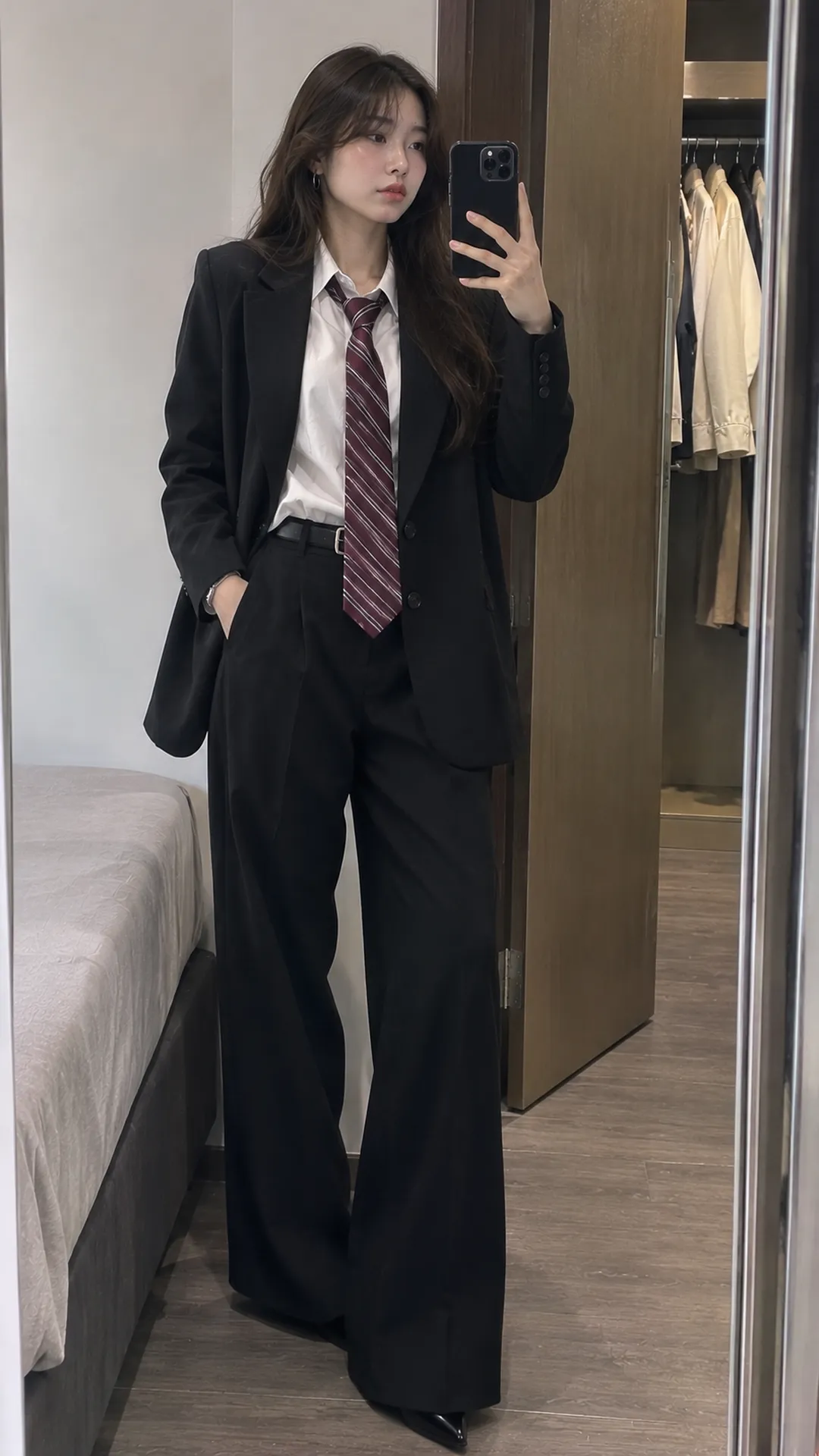
Open blazer, shirt and solid tie
The lapels frame the tie at the center. With broad lapels and defined shoulders, avoid choosing an oversized knot simply to “balance” everything. Remove a detail such as a lapel pin or necklace. When buttoning the blazer, check whether enough tie remains visible for the effect you want.
Shirt, skirt and structured shoes
Straight and pleated skirts both work, but move differently. Keep the tie solid if the skirt already has many folds or patterns. To avoid a uniform-like effect, deliberately change color, texture or proportions instead of adding several school-inspired accessories at once.
If you are trying a style outside your usual choices, our beginner's guide to alternative fashion helps you choose one central piece. The tie can fill that role, with the shirt, pants and shoes drawn from your current wardrobe.
Fixing details that make a tie look unintentional
A twisted or off-center blade: undo and flatten it before retying. Do not just pull the front end if the rear section is folded beneath the collar. Check how bag straps and lapels affect the tie as you move too.
A knot too large for the collar: try a neater knot or thinner tie. If the collar lacks room, changing shirts may make more sense than forcing the points outward. Both collar and knot should sit naturally when your shoulders relax.
Too many chest details: remove a necklace or reduce pins first. Photograph both versions to compare. If the tie is central, a quieter background usually makes it clearer than surrounding it with multiple metal lines.
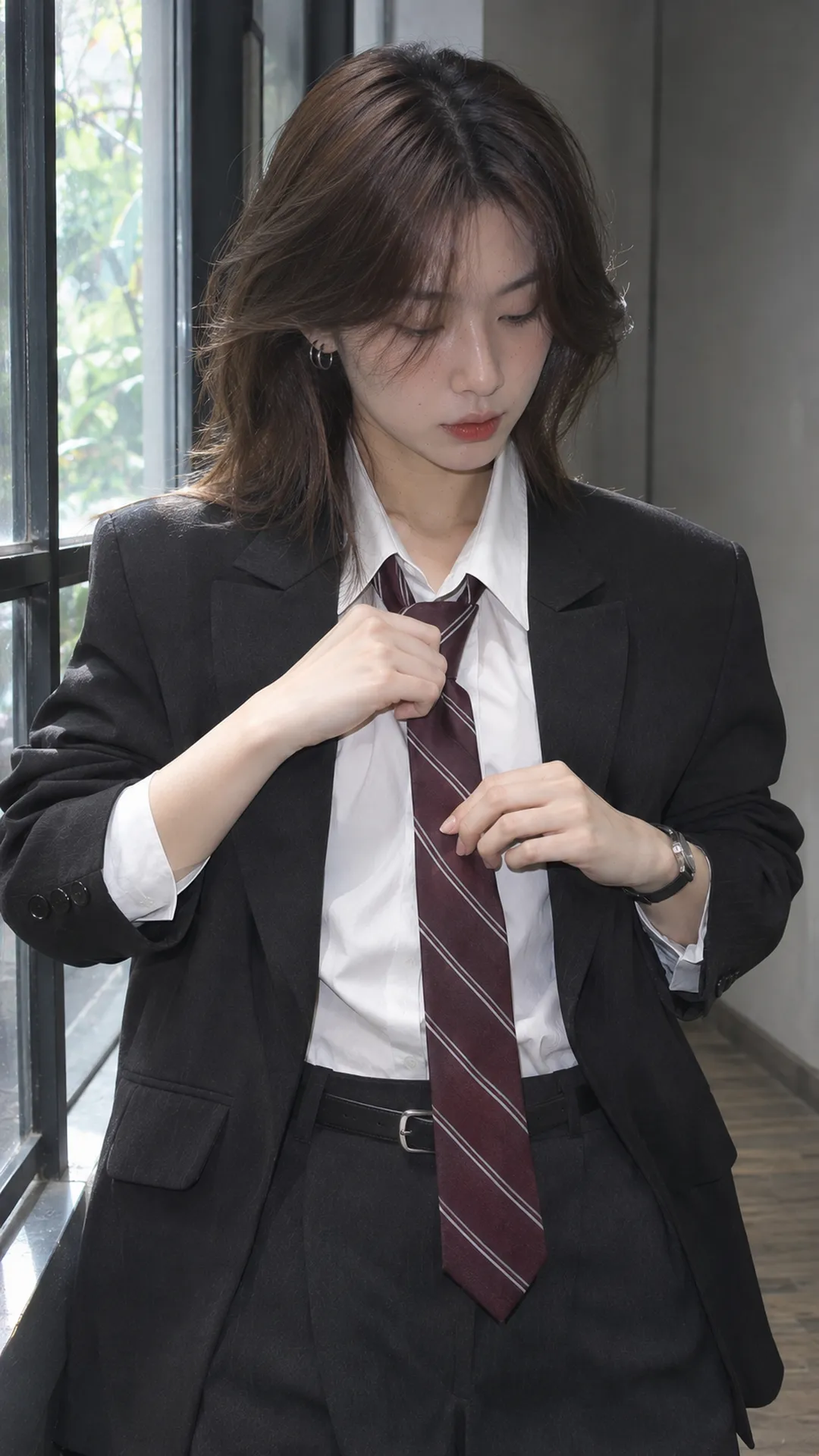
Buy a usable tie and store it appropriately
Before ordering, ask for length, width at the broad end and material information. Check return conditions, especially if you do not yet know what length works after tying. Our alternative fashion shopping hub explains reading listings and budgeting, which is more useful than buying many designs simply because each costs little.
After use, gently undo the knot by reversing the tying steps, avoiding yanking the narrow end through a tight knot. Store according to material instructions, keep dry and avoid sharp hooks. Treat stains according to the label instead of scrubbing hard or applying high heat to every surface.
Understanding cravat terminology is only the start. To use a tie in women's outfits, choose its role, balance collar and length, then test it in motion. A suitable tie creates your intended accent and remains easy to rewear with existing clothes.