

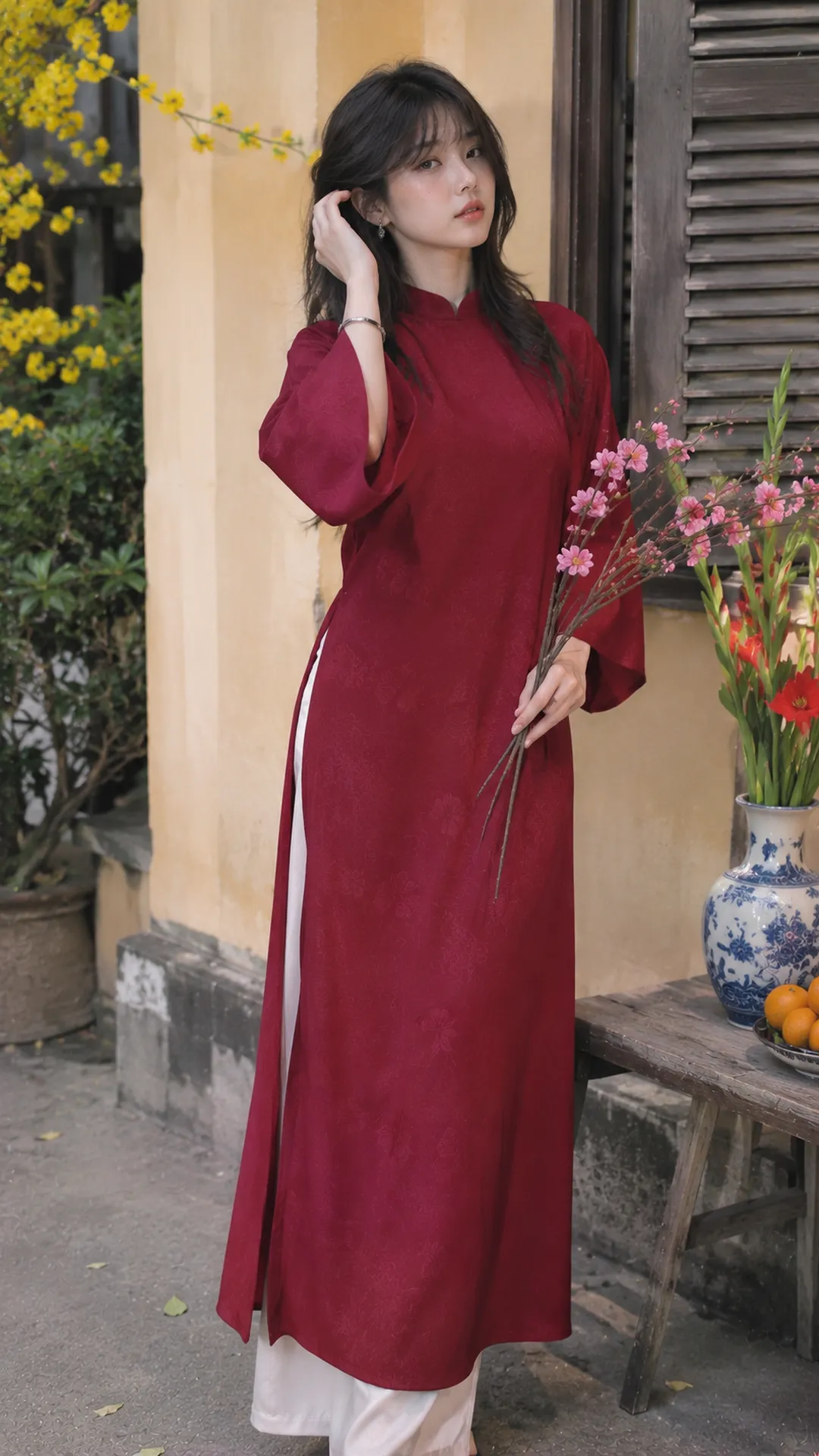
Choose one concept for a cohesive session
Before choosing poses, decide whether you want a gentle, cheerful or clean modern series. This guides outfit colors, setting and props. A plain light áo dài against a simple wall differs greatly from a bold garment amid abundant flowers and festive couplets.
Choose a few references you can recreate at your planned location. Note the specific feature you like: space above the head, how the panels are held or the gaze. Our fashion moodboard guide helps filter images by purpose instead of copying the entire setting, model and clothing.
Agree with the photographer beforehand on priority shots. If family photos are the goal, photograph everyone before individual portraits. To show the complete áo dài, start with full-length shots including panels and shoes; avoid spending most of the time on face close-ups and missing the outfit.
Prepare an outfit for standing, sitting and walking
Try the áo dài with the pants, underwear and shoes you will use. Check the neck, armholes, sleeves and side slits when lifting your arms or sitting. A garment that fits standing but pulls while holding a fan or hugging a relative makes relaxation difficult during the session.
Check pant and panel length with the actual shoes. If walking between locations, bring comfortable shoes for moving and change for photos if needed. Avoid photo shoes that compromise balance, though: comfortable poses are generally easier to hold and repeat.
Check fabric transparency in light similar to the setting, especially for light colors. Look from the front, side and back. When choosing jewelry, test whether earrings catch hair, bracelets snag fibers or the bag hides the main pattern. Our guide to accessories by focal area helps reduce competing details around the face and neck.
Pack a clean cloth, hair clips and a compact personal bag. Bring only what you will use; someone holding numerous bags will struggle to join group shots. If going out afterward, see our guide to choosing outfits for your plans to account for traveling, sitting and rest time.
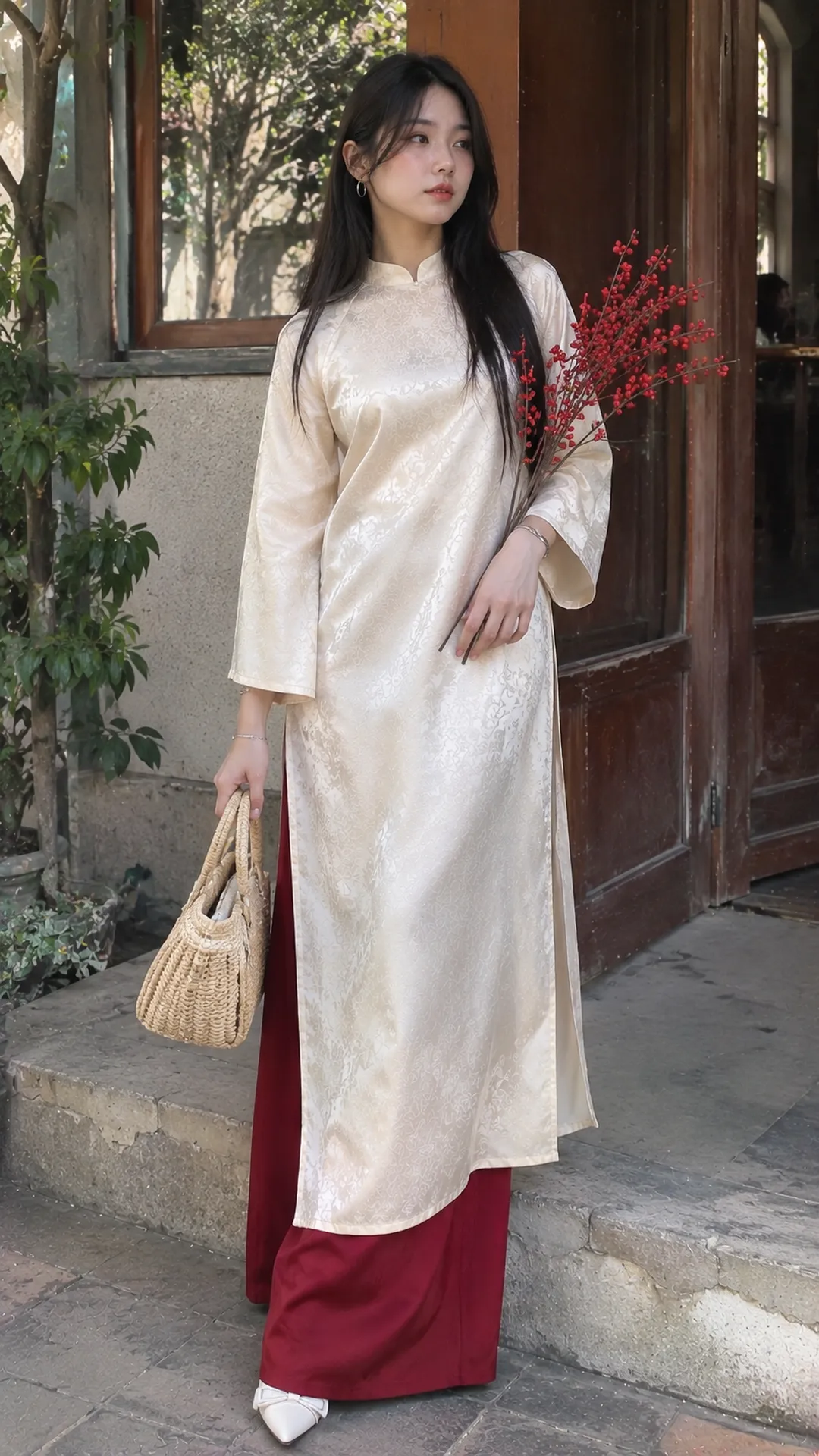
Find the background and light before directing poses
Check behind the head and shoulders: do branches, signs or poles appear to cut through the person? Moving a few steps or changing camera direction can simplify the frame considerably. With a colorful background, try standing farther from it so the person and áo dài do not merge into the decorations.
Start with a test shot in even light. Avoid half the face in harsh sun and half in shade unless you intentionally manage that contrast. With a white or shiny áo dài, review highlights to ensure patterns and folds remain visible instead of becoming a blank white area.
Do not prescribe one shooting time for every location. Building direction, shade and weather change the light. Have a porch, window or indoor-background option if it rains. For phone photography, our phone outfit photography guide explains camera angles and reviewing test shots.
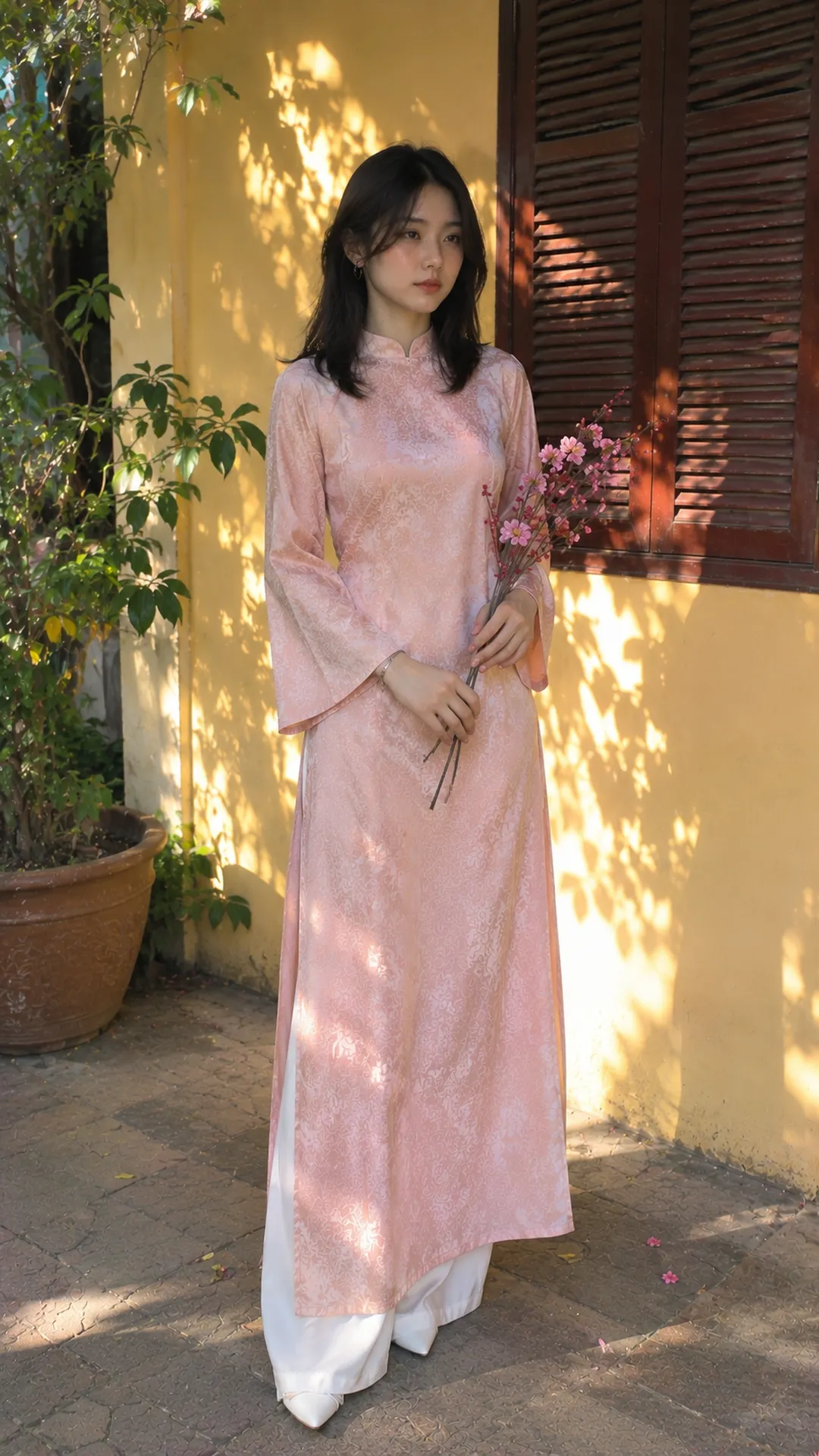
Four easy standing poses in an áo dài
Stand relaxed with a slight turn
Plant your feet securely, then turn your torso moderately to an angle you like, keeping shoulders relaxed. Rest the hands lightly in front without gripping fingers or pressing elbows tightly to the body. Take one photo looking at the camera and one looking aside; change the gaze before changing the whole pose.
Hold a prop in one hand and relax the other
Place a fan, flowers or small bag where it does not hide the main pattern. The other hand can lightly touch the wrist or rest by your side. If the prop is prominent, there is no need for a strong panel-pulling gesture. Check a test shot for hands merging into an unclear block.
Adjust a sleeve or look down at a detail
Make a real, slow, small movement instead of holding a hand in midair. The photographer can capture the moment while you adjust a cuff or look at flowers. Lower your arms and rest between attempts to avoid tense shoulders. Every photo does not need the same head tilt.
Stand by a doorway or architectural line
Choose a position with space for the panels to fall. Lightly rest a hand on a surface you are allowed to touch, without leaning hard enough to bunch or dirty the garment. Keep your own balance; the setting organizes the frame rather than serving as support you must cling to.
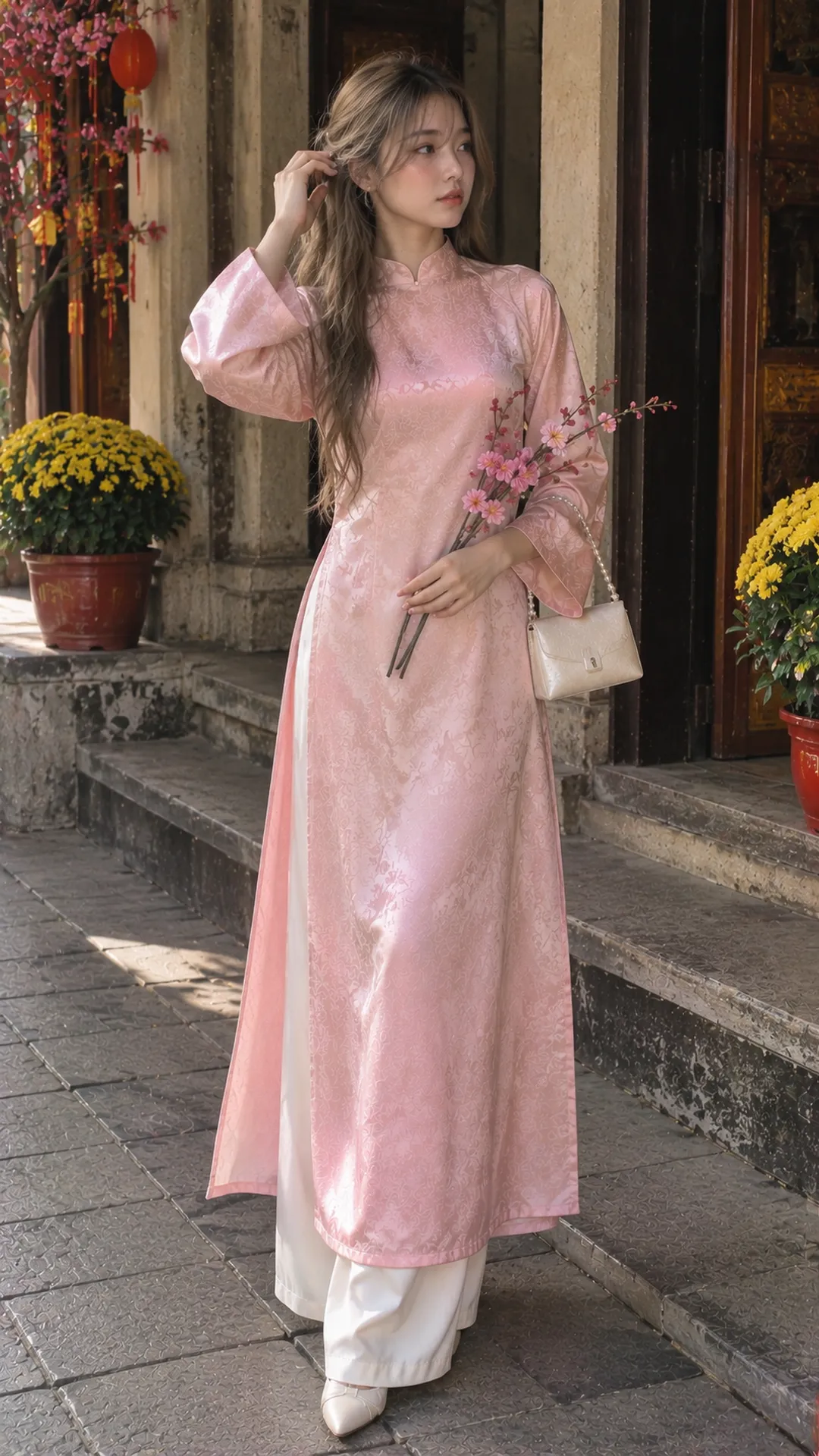
Create movement through steps and seated poses
For walking shots, cover a short agreed route with steps suited to the pants and panels. The photographer should capture natural panel movement rather than ask for exaggerated strides. Try walking across the frame and slightly toward the camera to compare effects.
If holding the panels, lift just enough to clear the ground or shoes. Repeated high tosses are unnecessary: large movements can obscure the body, expose areas you prefer covered or depart from your concept. Take a few passes and review instead of repeating many times without checking.
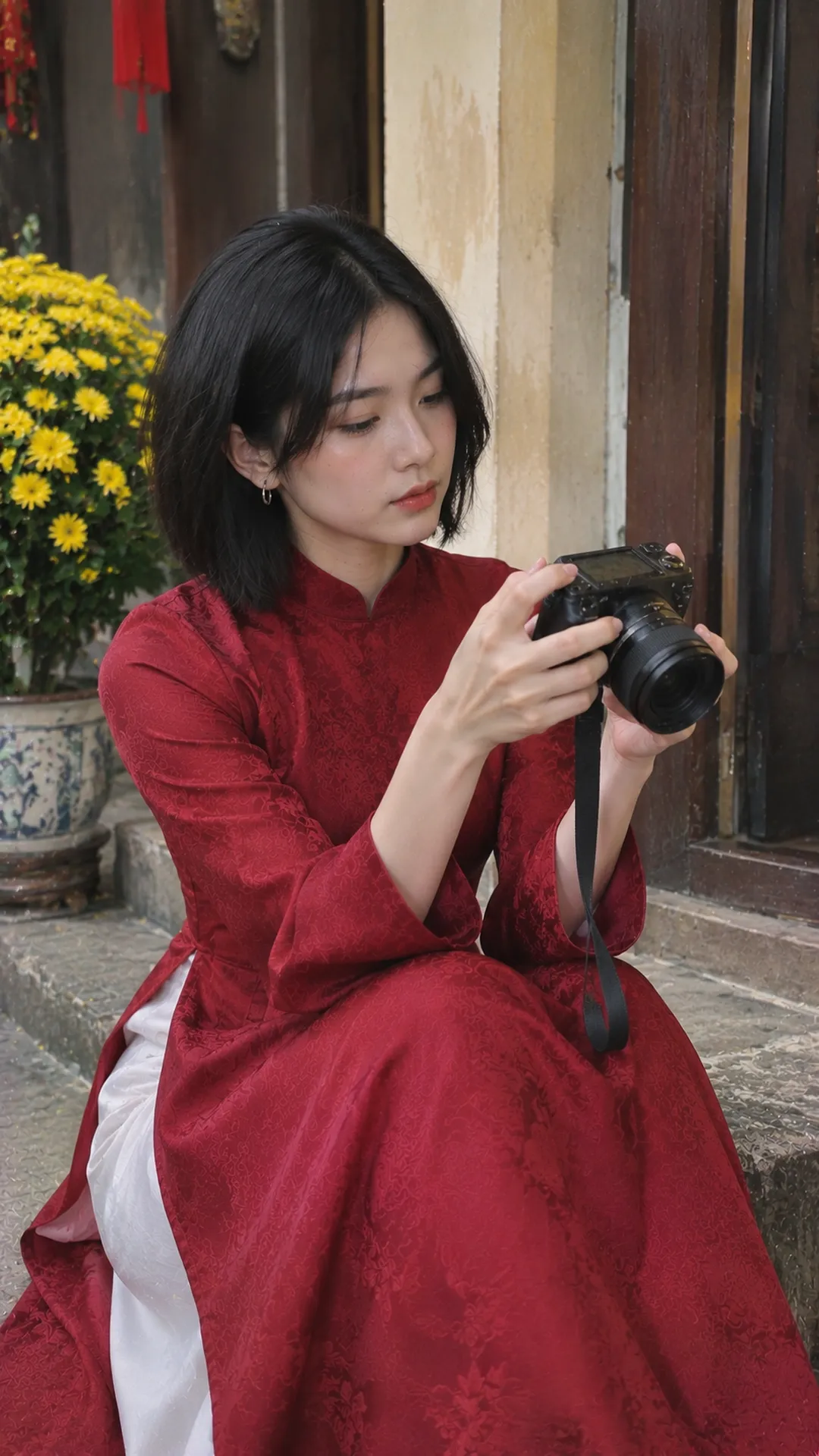
For sitting, choose a clean, stable surface. Arrange the panels before placing your hands, then sit naturally upright with relaxed shoulders. Position pants, hems and shoes so they will not catch when standing. If a low chair strains the garment, change the chair or return to standing instead of forcing the pose.
Seated half-body shots can focus on neckline, hands and expression. Wide shots need enough room for the panels. Avoid cropping at a bunched fabric area if the goal is to show the garment's lines; move the camera back or change foot placement for clarity.
Couples and families: small interactions
For two people, begin side by side, then look at each other, hold one object together or walk slowly. The hands need not match. Leave enough separation to keep the áo dài from overlapping into an indistinct area, especially in matching colors.
For family Tết áo dài photos, prioritize an arrangement in which everyone stands or sits comfortably. Place chairs first for those who need them, then position others around them with suitable spacing. Check that every face is visible; a clear photo including everyone is often more valuable than an unusual arrangement missing someone.
Agree on one person directing so the group does not receive conflicting instructions. First photograph everyone looking at the camera, then try looking toward one person, talking or passing a gift. Let young children participate as they can, without requiring long holds or unstable standing positions.
Choose a related palette rather than requiring identical clothes. Repeat one color on a few people and keep others softer. Avoid one heavily patterned outfit accidentally becoming the focal point if the goal is a balanced group photo.
Check the frame after each group of photos
Quickly check four things: clear faces, natural hands, uncaught panels and distracting background details. Fix repeated issues before moving locations. Do not check expressions alone: a lovely smile can still accompany an unintentionally cropped hem.
Vary framing for rhythm: full-length for clothing, half-body for interaction and close-ups for sleeves or flowers. Detail shots should add to the story instead of replacing all photos of people. Leave some negative space if you want a vertical composition later.
When selecting photos, compare similar shots and keep the clearest version of each idea. Numerous photos with only tiny hand differences are unnecessary. For family photos, check every face before deciding, rather than choosing for one person and overlooking another with closed eyes.
A manageable schedule to avoid tiring before the final shot
With a self-timer, place the camera on a stable support and test the empty frame first. Use an easy-to-remember standing marker so you do not have to arrange the panels while guessing whether you are in frame.
Start with a simple background to help everyone get used to the camera. Capture essential photos first, then movement and interactions. Include breaks to adjust clothes, drink water and check belongings. For multiple locations, prioritize fewer stops with enough time over chasing every backdrop.
In crowded places, wait your turn and keep pathways clear. Ask about rules before using large props or shooting in managed spaces. Tết áo dài photos can work beautifully with a simple background when light, garment panels and expressions are considered; an elaborate session is not required for worthwhile images.