

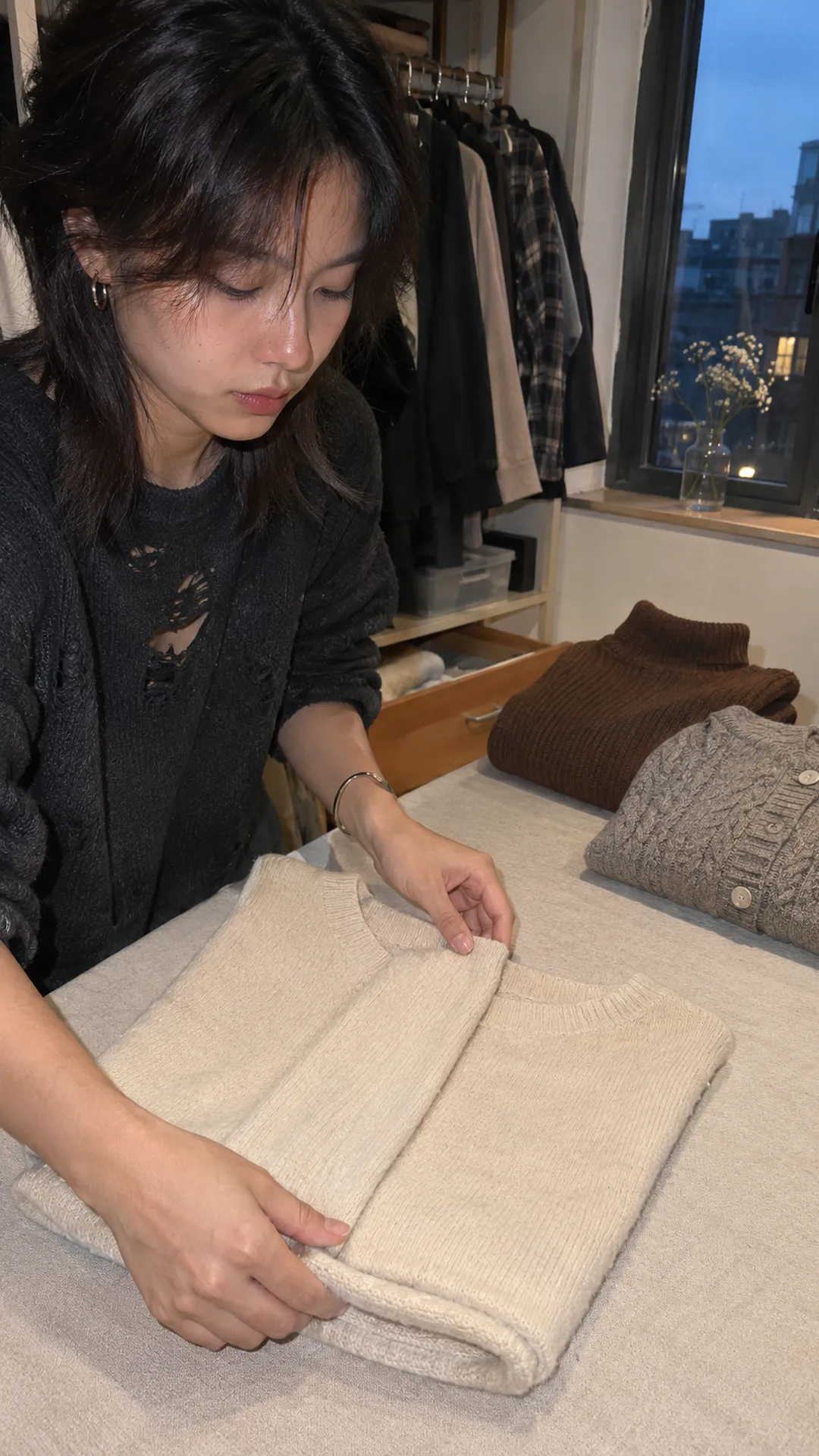
Prepare the sweater and storage space
Make sure the sweater is completely dry and its pockets are empty. Use a clean surface free of anything that can snag the yarn. If the sweater is damp after wearing or needs cleaning, follow the care label before storing it with clean clothes.
In its wool care guide, Woolmark distinguishes woven wool garments, which can go on suitable hangers, from knits, which are best folded gently and stored in a drawer. Check the construction before deciding how to store a wool garment.
A garment sold as a sweater may be made from wool, cotton, acrylic, or a blend. Check the fiber label. Our guide to different types of sweater fabrics explains how fibers differ from stitch structure. Follow the specific care label for washing and heat.
Estimate the width, depth, and height of the drawer. A shallow drawer calls for a wide fold with fewer layers. In a deep drawer, thin sweaters can sit side by side with dividers if needed. Make sure the drawer closes without pressing on the clothes before folding the rest.
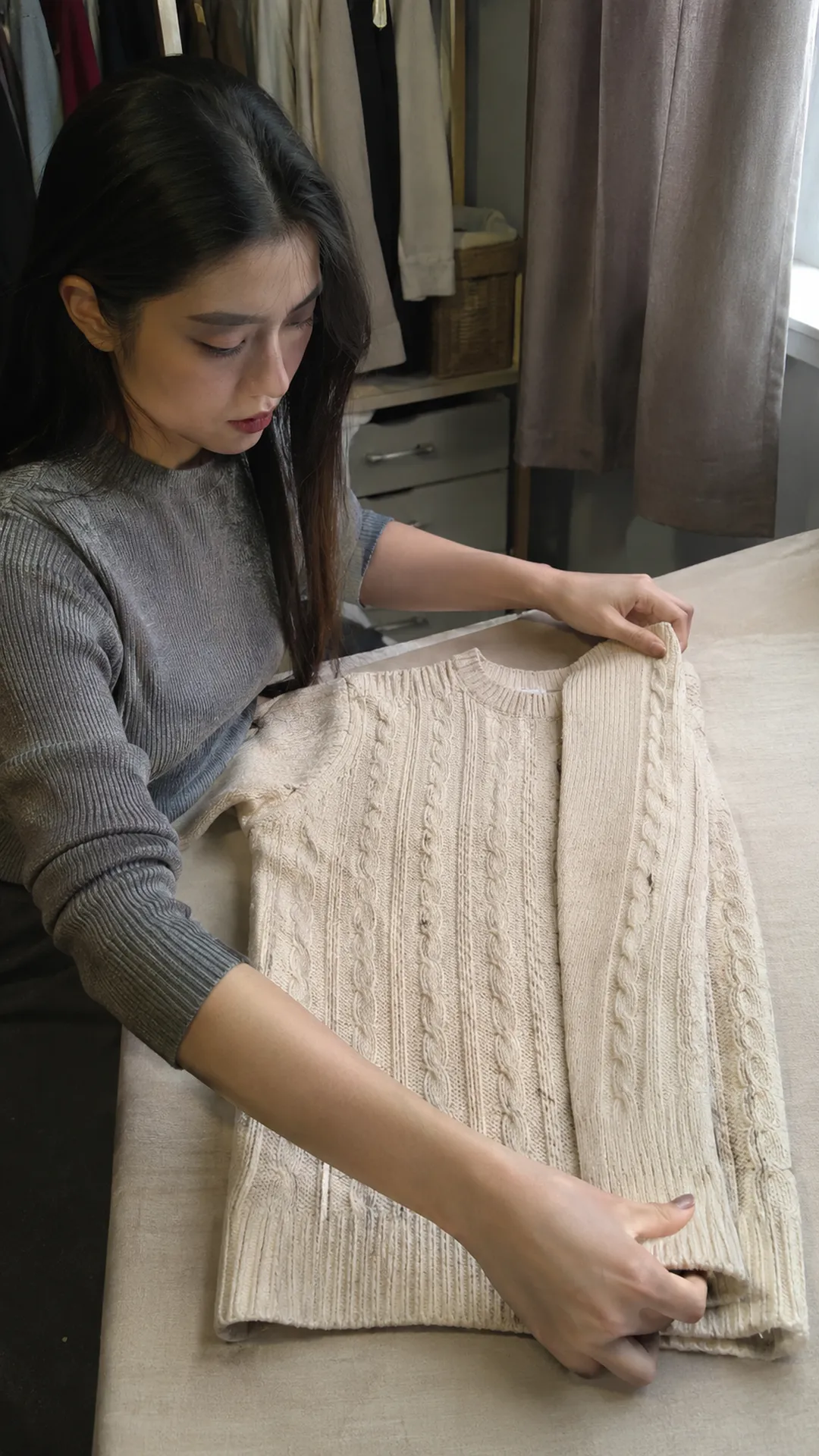
Fold a long-sleeve sweater flat in six steps
- Lay the sweater flat. Spread the body and sleeves and ease the shoulders, side seams, and hem into their natural positions. A plain sweater can lie face down. If it has raised details, place it so they won’t be crushed.
- Fold one side of the body inward. Make a roughly straight edge from shoulder to hem at the width you want for storage. Lift and place the fabric gently, letting its shape determine how square the fold can be.
- Lay the sleeve along the body. If the sleeve extends past the hem, gently fold the cuff back. Keep sleeve fabric from piling up near the neck or the middle of the chest.
- Repeat on the other side. Compare the thickness on both sides and adjust the angle of the sleeves. Offset them if lining them up makes the bundle too bulky.
- Fold the hem up. Try one broad crosswise fold for a thick sweater. A long, thin sweater can fold into sections to suit the drawer. Keep the creases soft.
- Put the folded sweater away. Lift it with both hands and support the bottom. If it comes open, adjust the fold or use a divider for support. Avoid binding it with a rubber band.
Adjust these steps to the cut. A drop-shoulder seam sits lower than a conventional shoulder seam. Follow the natural shape of the fabric so the fold sits securely without stretching either side.
Open the sweater after the first try and look for fabric that has bunched or caught. If a cuff sits under a row of hard buttons, move the sleeve to the side. A small shift can flatten the bundle without extra folds.
Choose a flat fold or upright storage by thickness
Thick sweaters: make a wider bundle with fewer layers
A chunky knit gets taller with each fold. Fold the sides just far enough, place the sleeves along the body, and fold the body once. A wider bundle takes more shelf space but is easier to lift and needs less compression.
If you stack sweaters, put heavier pieces with fewer details at the bottom and lighter ones above as space allows. Keep the stack low enough to remove one sweater without tugging. The right height depends on how thick the sweaters are.
Thin sweaters: store them side by side if they hold their shape
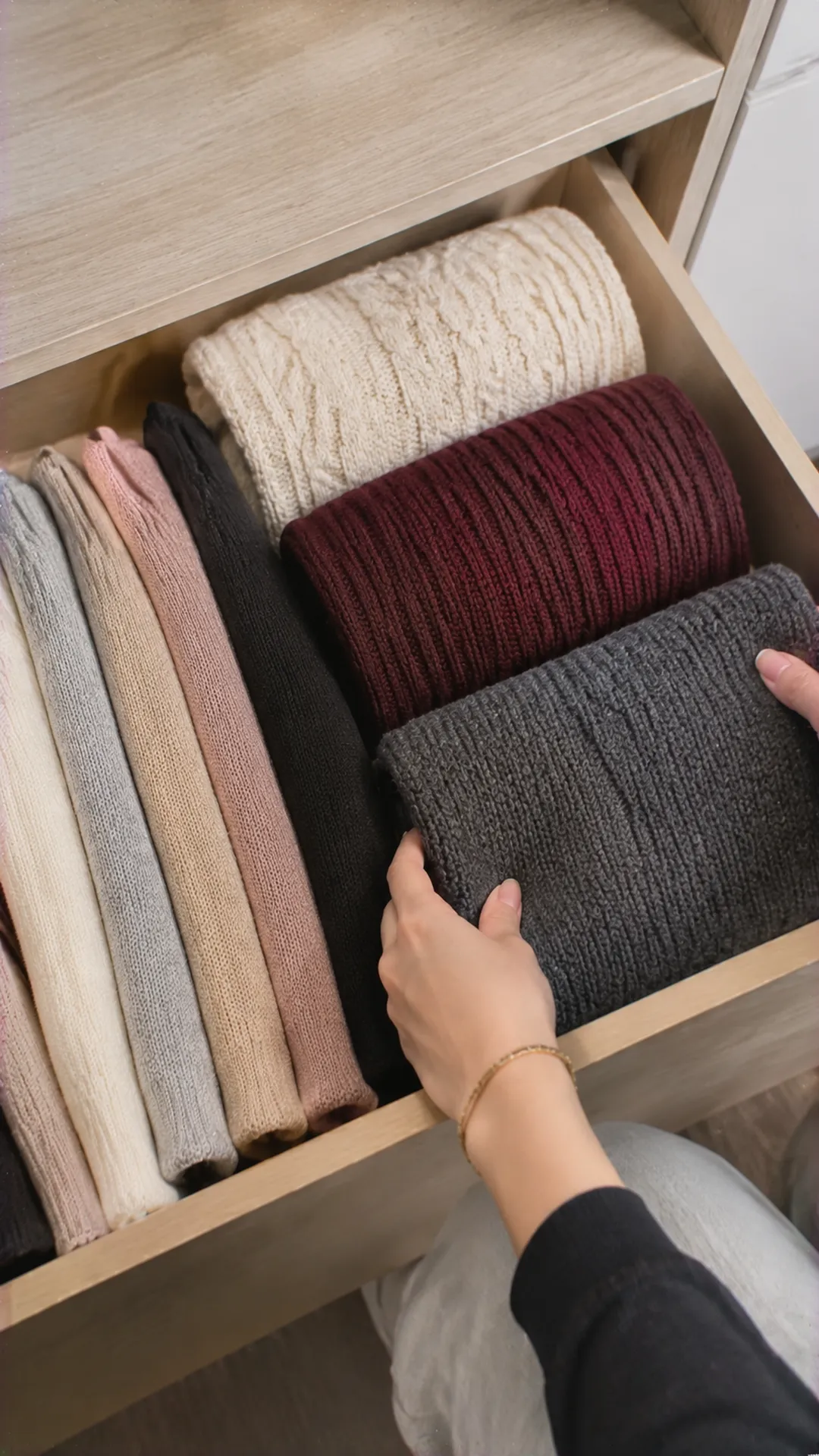
After folding the body into a strip, fold it into two or three sections to suit the drawer. Set the sweaters side by side with a recognizable edge or color visible. If a soft sweater slumps, try a smooth divider before adding another fold.
Upright storage works best with room to take out one sweater without pulling the others along. If the drawer is crowded, move some pieces elsewhere or turn the rows before trying to make every bundle smaller.
Handle turtlenecks, hoods, and buttons
Let a turtleneck lie in its natural shape. If the neck is long, spread it across a free area of the body before folding. Check that the collar is flat and clear of the thickest part of the sleeves.
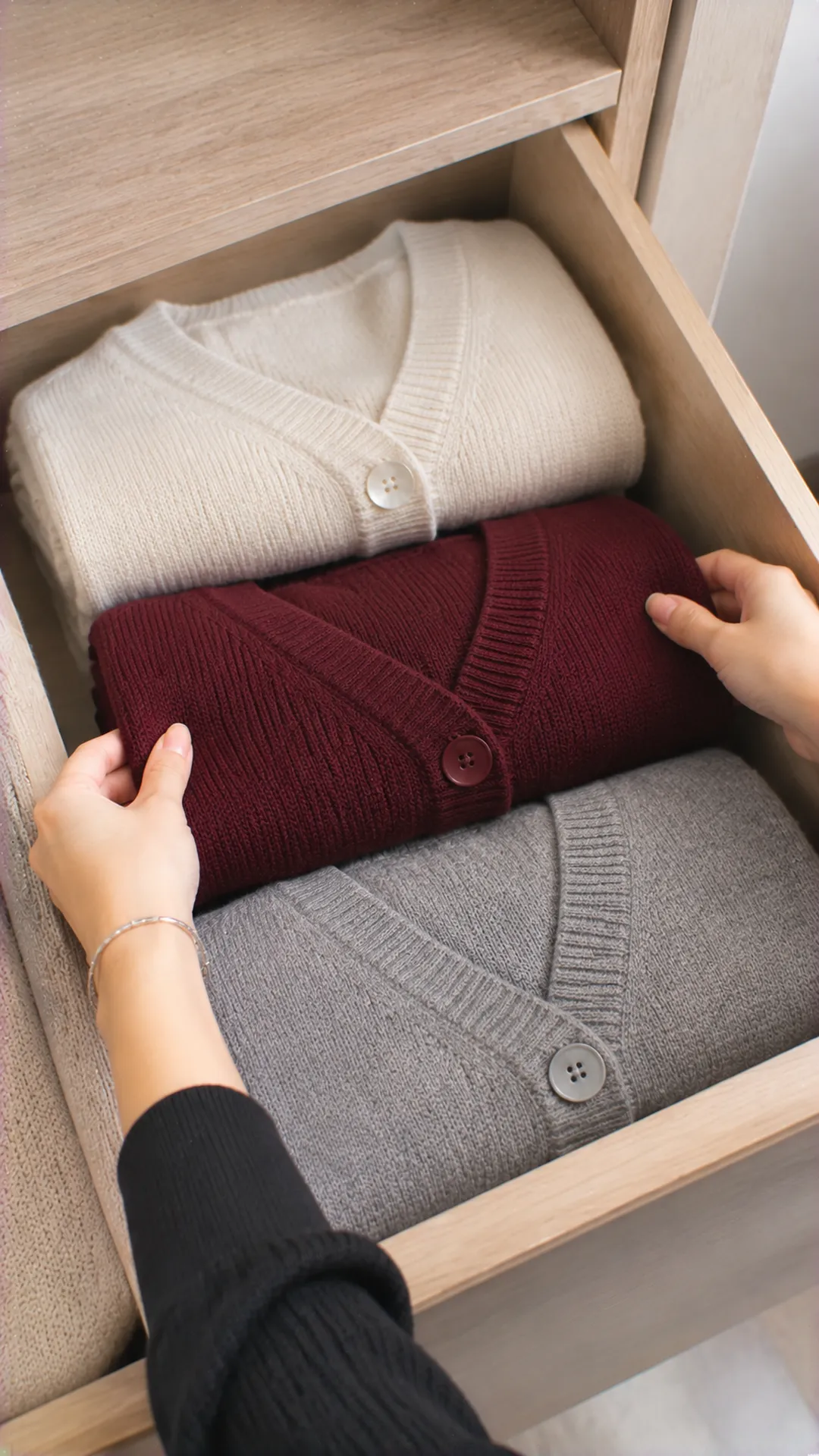
Straighten a cardigan’s front panels and placket before folding. Fasten only the buttons needed to hold the panels in place if the care instructions allow. Align the panels without stretching them. Keep large buttons or raised decorations out of folds that will bear weight.
With a tie-front cardigan, undo tight knots and lay the ties along the body to avoid a lump. If the tie is removable, store it with the cardigan where you can find it. Keep metal hooks away from the knit stitches.
Give a hood its own space. Lay it fairly flat away from where the sleeves overlap, then fold the body. Make a larger bundle for a thick hood than you would for a thin crew neck.
If you’re choosing an everyday style, our women’s cardigan guide covers length and construction. Consider how easily it stores as well as how you’ll style it, especially if you have few shelves.
Arrange the drawer so folds stay in place
Sort by thickness and how often you wear each sweater before sorting by color. Keep a weekly favorite easier to reach than a seasonal piece. Pulling items from the bottom will quickly shift even a carefully folded stack.
Use a drawer divider for thin knits if needed and a shelf wide enough for thicker ones. Leave a little space for your hands. A drawer with room to take one item out is easier to maintain than a tightly packed one.
Keep hooks, metal cords, and sharp accessories out of sweater stacks. If you use bins, check their inside edges and contact surfaces. Choose a bin that fits the folds comfortably.
Our guide to folding clothes by garment type is useful if you’re reorganizing the whole drawer. Adjust your approach for sweater thickness and sleeve placement, which differ from a tee or pair of jeans.
Pack sweaters without squeezing them
Choose how many sweaters to bring based on when you’ll wear them. Fold each one wide enough to lie flat in the compartment, clear of direct pressure from shoes or other hard items. Use packing cubes to organize clothes and leave enough room to zip them easily.
For thin sweaters, try a loose roll and then unroll the actual garment to check the result. Rolling can still leave creases. With beading, raised stitches, or rigid parts, arrange the piece to protect those details from pressure.
Check whether a garment can tolerate long-term compression before vacuum packing it. How well it recovers depends on the product. Check the instructions or ask the maker. If you’re unsure, pack fewer pieces so there’s room to fold them loosely.
At your destination, unpack the sweater and lay it out or store it as space allows. Treat creases according to the care label. Avoid untested heat or pulling on the fabric to smooth it out.
Troubleshoot the shape of the folded sweater
A high spot in the middle: See whether the sleeves, collar, or hood overlap in one place. Open the last fold, spread the layers out, and fold again gently.
A lopsided bundle: Check how the panels, sleeves, and side seams sit when you lay the sweater out. With an asymmetrical cut, aim for a fold that lies securely without pulling the shorter side.
The sweater unfolds when lifted: Support it with both hands and leave more room around it. In a deep drawer, divide the rows so you can reach pieces without passing over several others. Check whether the drawer arrangement is causing the problem.
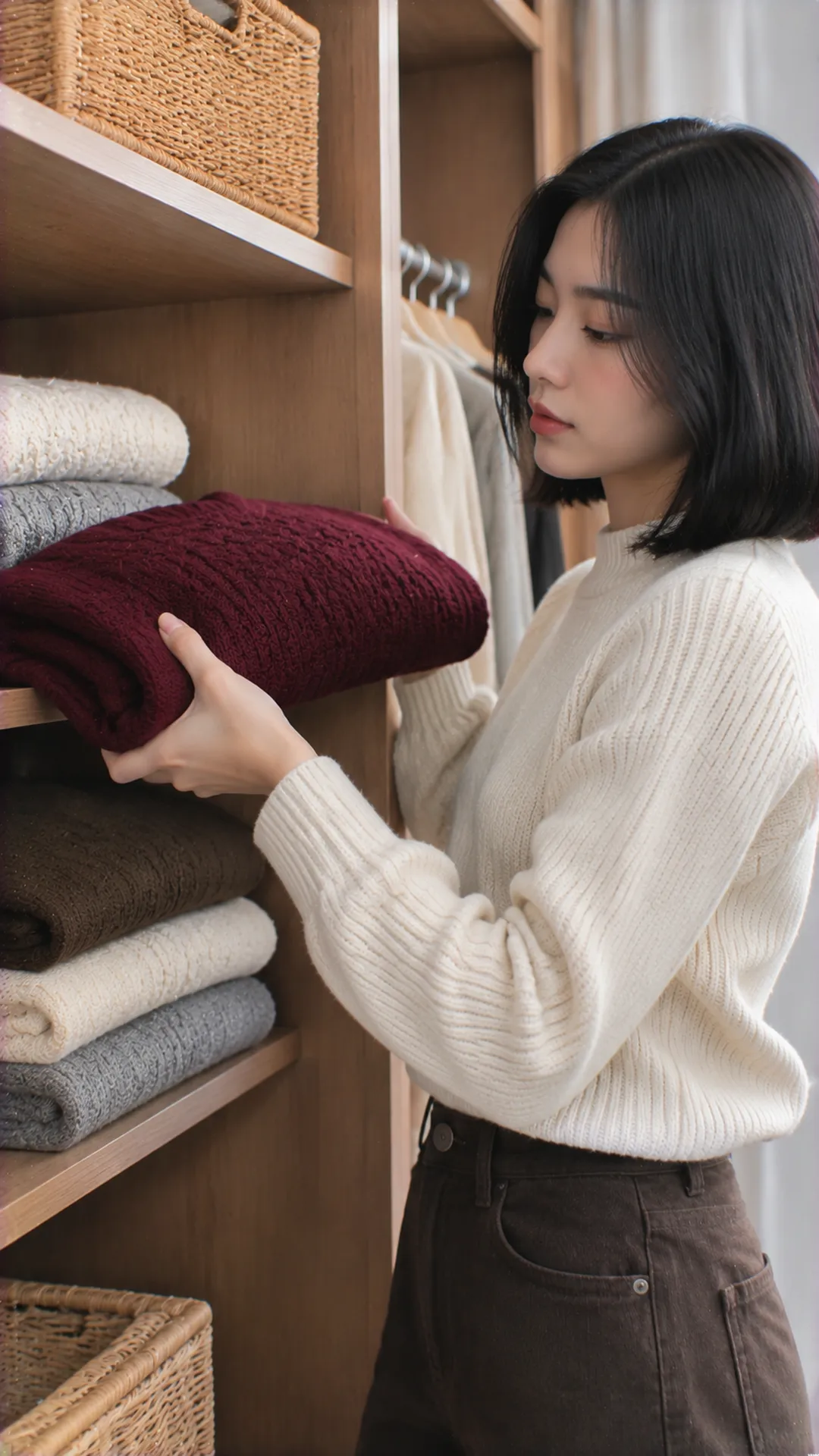
Test one sweater before reorganizing the closet
Choose a sweater you wear often, fold it to fit the drawer, and take it out and put it back a few times. See whether you need to lift the whole stack or fix a cuff each time. Adjust the fold on that sweater before repeating it across your wardrobe.
If the shoulders are already misshapen or stitches have stretched, folding may leave that damage as it is. Follow the garment’s care or repair guidance before applying heat or trying to pull it back into shape. Gentle folding helps you store the knitwear you have.
Keep the sweater clean and dry, fold it gently to fit the space, and make sure you can lift it without tugging. Choose a way to store it that you can repeat on a busy day.
If you’re considering another sweater, see what to check before buying clothes for help with the care label and storage needs. A sweater that fits your closet and routine will be easier to use regularly.