

Read a cardigan through three details
Hem length determines the break
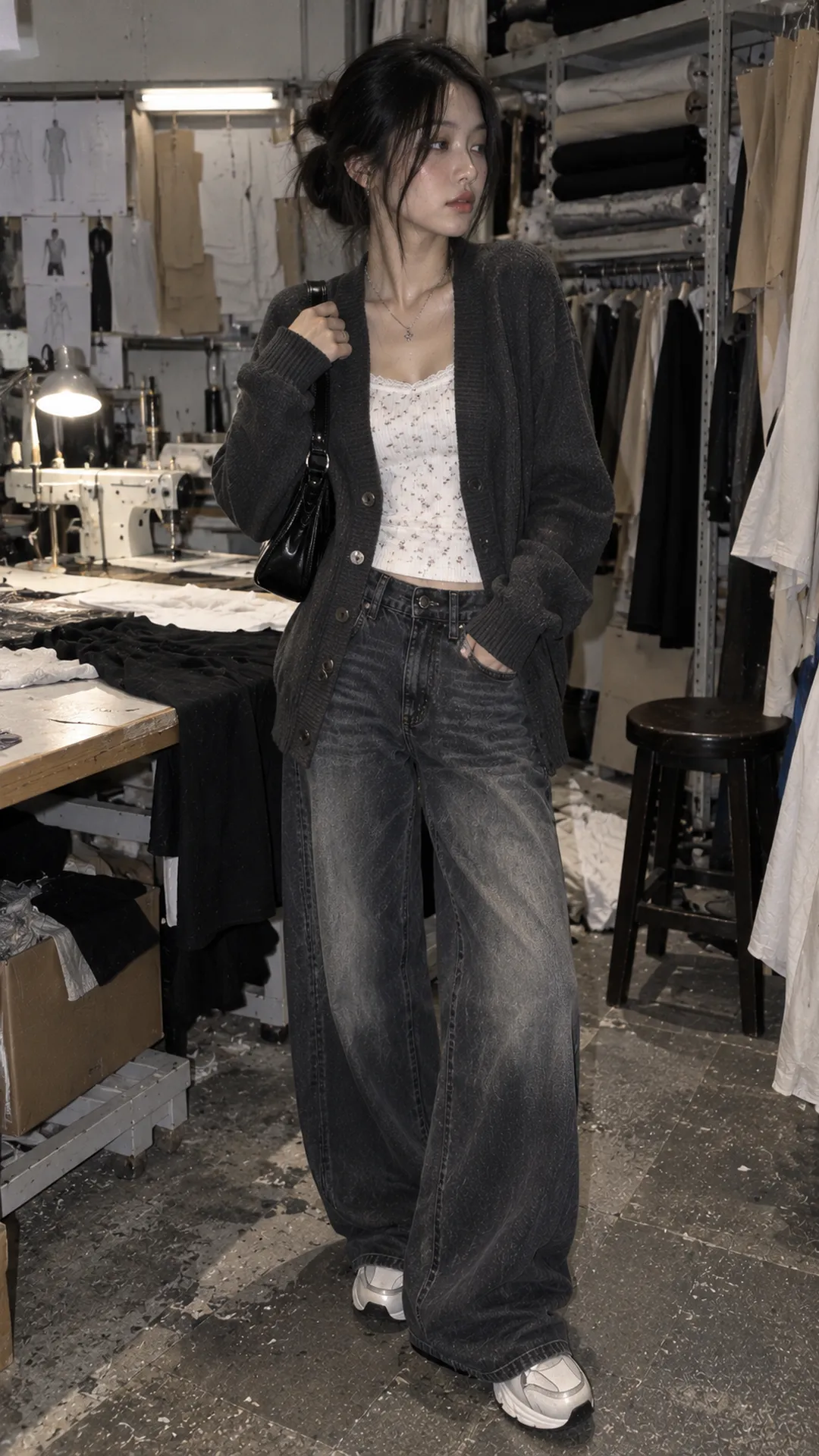
A cardigan ending near the waistband creates a clear break between upper and lower body. A hip-length design covers the top of trousers or a skirt, softening that boundary. A design extending below the hips or toward the knees creates a long outer frame; when open, the inner outfit determines the visible waist position.
Do not rely absolutely on 'cropped' or 'longline' labels. The same garment length ends at different points on people with different torso proportions. Measure from your shoulder to your preferred hem position, then compare product measurements and a garment that already fits.
Shoulders, sleeves and body create volume
Fitted shoulders and relatively slim sleeves help a cardigan sit under another jacket. Dropped shoulders, wide sleeves and a boxy body feel more relaxed but need space in the outer layer. If you plan to wear a blazer over it, try the complete outfit; pieces that fit separately may become bulky together.
A loose fit does not necessarily require sizing up. A larger size can make sleeves too long, widen the neckline and lower the buttons unintentionally. Choose an intentionally loose cut, then check the areas that need to stay secure, such as cuffs and neckline.
Buttons and necklines change how you wear it
A V-neck opens the center of the chest, while a round neck frames the area closer to your neck. Small buttons draw less attention than large or shiny ones. If wearing it buttoned as your main top, sit down and reach forward to see whether the placket pulls into gaps.
A buttonless cardigan works as an open layer but is harder to wear as a standalone top without a way to secure the fronts. Avoid buying solely for color and then improvising ties or pins that change the design. Establishing its role first helps you choose something you will actually use.
Choose an inner layer that avoids bulk
Under a close-fitting cardigan, keep shoulder and sleeve details minimal. A thin T-shirt or tank with neat seams is generally easier to manage than a puff-sleeved shirt. Check the hems too: a longer inner layer is fine, but its exposed section should look intentional rather than bunching beneath the cardigan.
With a loose cardigan, a closer-fitting inner layer creates contrast. When the outer layer is open, the waistband and base layer's outline remain visible. If both layers are loose, retain at least one defined area or break, such as exposed wrists or a smoothly tucked inner top.
For an open knit, assess transparency under realistic lighting. Choose your inner layer for the coverage you want, not just color. Even a tonal top can show strong outlines if its seams are thick or its surface contrasts with the knit.
The guide to women's layering by each layer's role explores differences in length and surface. With a cardigan, a base and outer layer are often enough; add a third only when it serves a clear temperature or shape function.
Short cardigans: three adaptable formulas
Buttoned with mid- or high-rise straight-leg trousers
Choose a cardigan with its hem at or near the waistband, buttoning it to your preferred coverage. A neat upper body contrasts with straight trouser legs. If a tight ribbed hem makes the cardigan puff above the waist, try a less restrictive hem instead of constantly pulling it down.
Choose shoes alongside trouser length: hems should not drag simply because you switch from heels to flats. A moderately structured bag keeps the outfit's lines clear. A cream cardigan with brown trousers or a gray cardigan with black trousers offers two combinations you can adapt through accessories.
Open with a tank and jeans
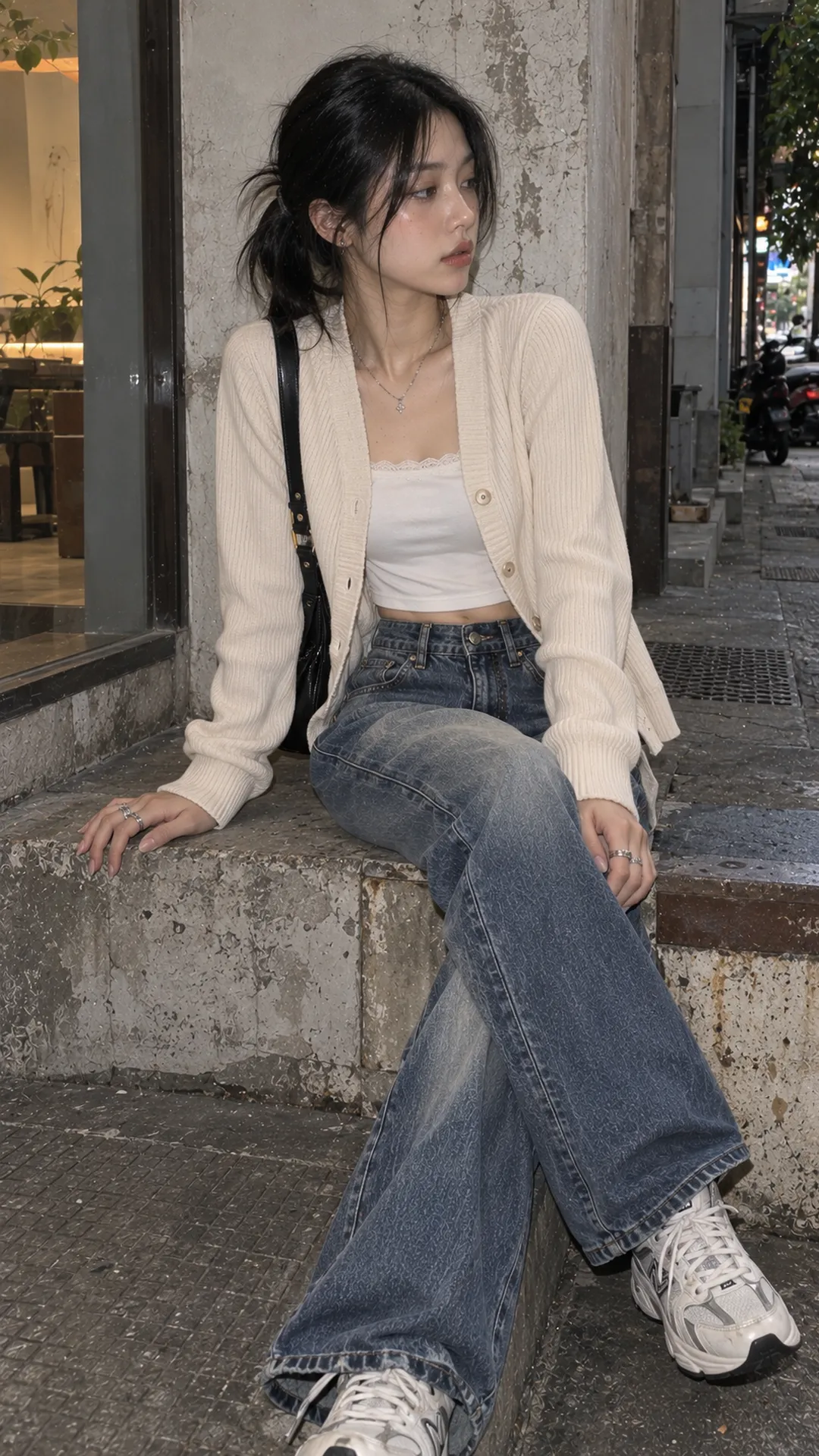
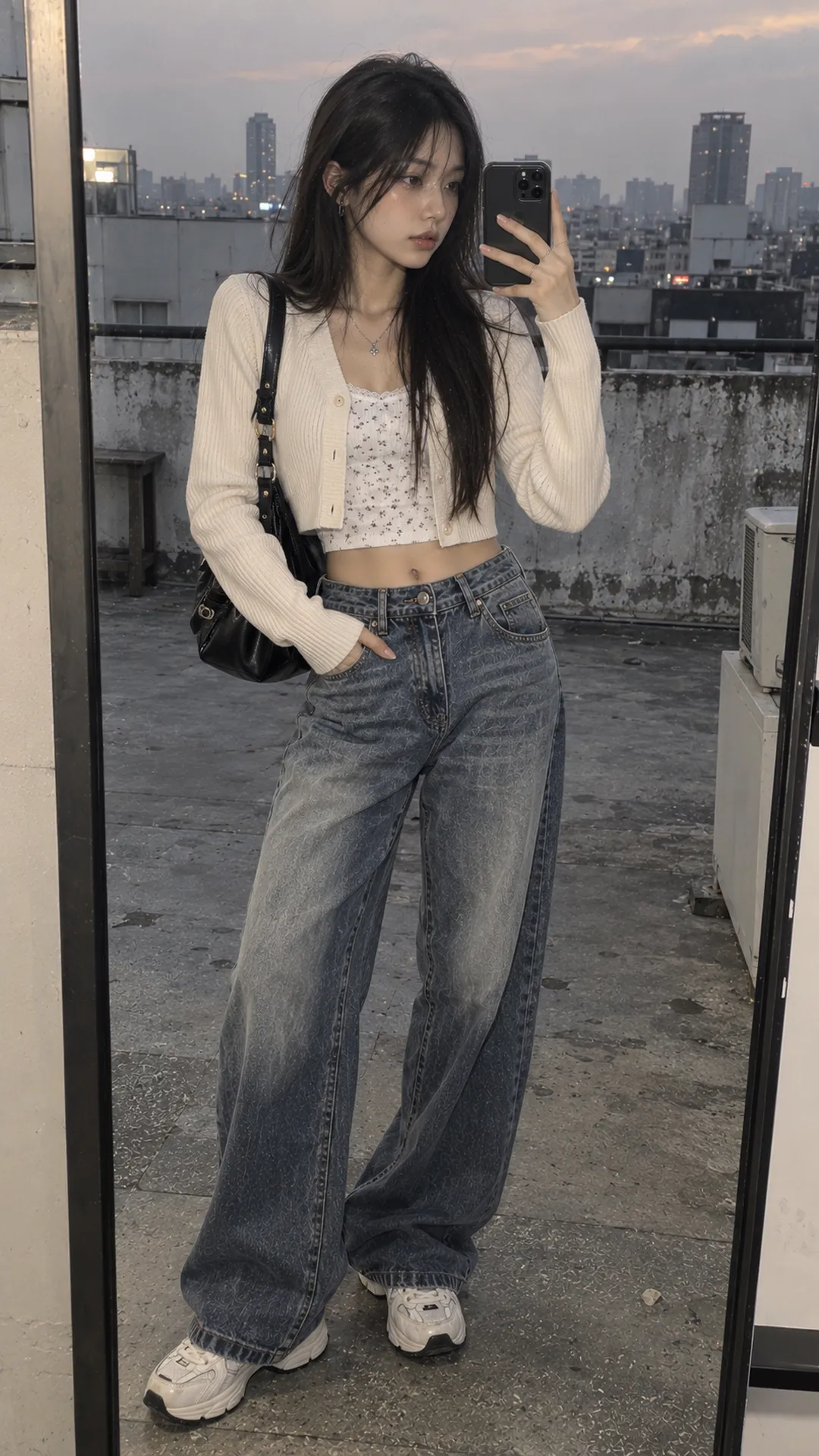
Let the tank provide a neat base while the short cardigan frames each side. Tuck the inner layer to reveal the jeans' waistband. If both layers are similar in color, the contrast between knit and smooth cotton can separate them without a dramatic color difference.
With wide-leg jeans, choose sneakers or sandals with enough presence to suit the legs. If the cardigan already has large buttons and raised pockets, keep the necklace simple. For a more expressive direction, try a belt with a defined buckle before adding many neck and wrist accessories.
With a skirt: consider the flare
A fitted short cardigan and flared skirt define the waist clearly. With a fitted skirt, a slightly looser cardigan can balance the upper body. Check where the cardigan hem meets the skirt: a thick ribbed band at the point where the skirt starts flaring can create unintended bulk.
To distinguish A-line, fitted and pleated skirts before choosing a top, see the guide to skirt shapes and lengths. Do not assume every short skirt takes the same cardigan; skirt construction determines how much volume needs balancing.
Long cardigans: keep vertical lines without hiding the outfit
An open long cardigan over a neat base
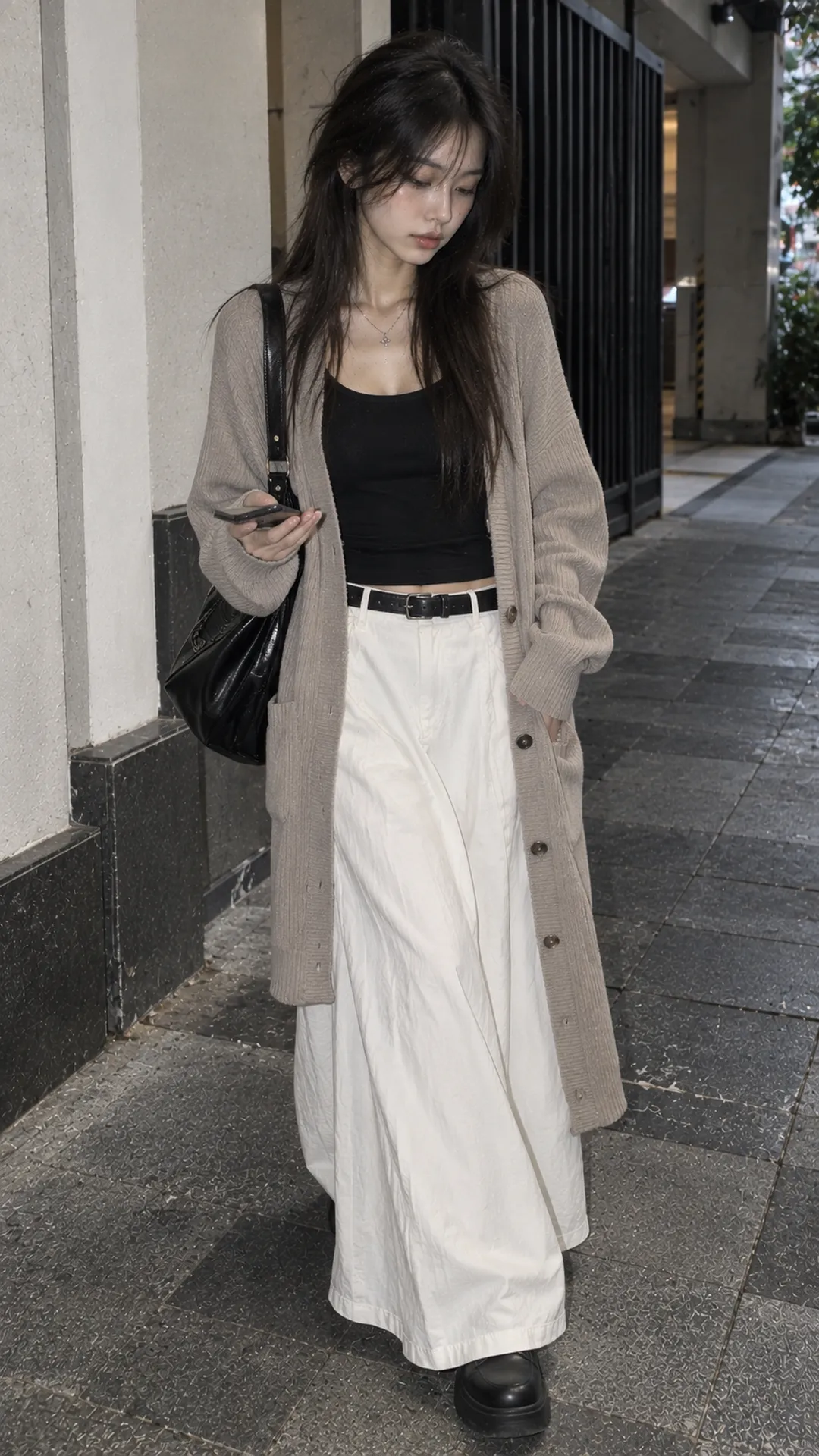
A cardigan extending below the hips can layer over a T-shirt and straight-leg trousers. Open fronts reveal a central vertical strip of the base outfit. For a clearer waist, tuck the inner top or choose a visible waistband before adding a belt over the cardigan.
A long, loose cardigan can still work with wide trousers, but assess the outfit from the side. If shoulders, sleeves and trouser legs all look bulky, reduce the inner layer's volume or choose sleeker shoes. This concerns proportion, not rules banning particular bodies from loose clothing.
Over a dress
A dress creates a continuous shape; a cardigan adds edges and texture. Compare both lengths: a cardigan shorter than the dress reveals more of the skirt, while similar hems make the outer layer seem more covering. No fixed centimeter difference works for every design.
If the dress has ruffles or flared tiers, a plain cardigan with few pockets is easier to balance. With a simple dress, add more texture in the cardigan. Walk a few steps to check whether the layers cling, roll or pull against each other; a still photo cannot show this.
Long cardigans in a real schedule
Before going out, sit, put on your bag and step up and down a low step. The hem should not become trapped beneath you when you stand or brush nearby objects. If traveling by motorbike, choose a length you can secure safely, keeping loose fronts away from moving parts.
A heavy long cardigan can take up considerable bag space when removed. If you will mostly be outdoors with brief visits to cold rooms, a thin hip-length cardigan may be more practical. An attractive photo length should not be the sole reason to choose something you must carry all day.
Use color and texture to give a cardigan emphasis
For quick styling, pick up a color already present in your trousers, skirt or bag. A muted-blue cardigan and blue jeans relate in color, while a light inner top separates the layers. Three exact shade matches are unnecessary; differences in lightness often make the outfit clearer.
With a bold cardigan color, start with simple trousers or a skirt. A deep-red cardigan over black can be the focal point without a strongly colored bag. If you enjoy several colors, repeat a small shade in an accessory to connect the parts rather than adding unrelated pieces.
Raised knits, fuzzy yarns and decorative buttons already provide visual detail. With a textured cardigan, a large necklace may cover the neckline you want to emphasize. The guide to choosing accessories by focal point helps balance the neck, wrists and waist without adding many pieces.
Choose a cardigan for hot days and cold rooms
Do not assume every garment described as a wool cardigan has the same composition. Read the fiber label, then check thickness, knit construction and feel. A cardigan that looks thin in a photo can still feel stuffy if it fits closely or the inner layer is thick and enclosed.
When moving between outdoor heat and air conditioning, prioritize an easy-to-open, easy-to-remove cardigan and a base outfit complete enough to wear alone. Your bag should hold it without tightly packing it beside sharp hooks. Brief shoulder coverage while seated does not necessarily require a thick knit.
Try your bag strap over the shoulder too. A snag-prone knit may not suit a highly detailed strap. If you regularly use a backpack, check the shoulder and back contact areas rather than only the front; these practical wear points are easily overlooked when shopping.
Fix common problems before buying another cardigan
If gaps open between buttons, check fit rather than hiding them with accessories. Wear the cardigan open with a suitable inner layer or choose a cut with more room where it pulls. Not every cardigan is designed to button fully as a standalone top.
If the outfit has too many horizontal breaks, review the inner hem, cardigan hem, waistband and belt. Keep one main break and soften the others. Tucking the inner top removes one hem line, while a lower-contrast belt can reduce detail at the waist.
If sleeves bunch, try a slimmer-sleeved inner layer before sizing up the cardigan. If the body is loose but the neckline and shoulders look right, keep the fit and rebalance the lower half. The guide to choosing women's tops by fit helps compare a cardigan's role with other outer layers.
Wash and store according to the specific garment's label
For knitted wool garments, Woolmark advises drying flat and notes that hanging a wet garment can stretch it under the water's weight. Check your specific cardigan's label, however, because compositions and care requirements vary.
Before washing, inspect decorative buttons, embellishments and looped yarns. Do not increase heat or use vigorous spinning simply to speed drying. Once dry, store according to the product instructions, avoiding tight packing with zippers or edges that could snag the knit.
Choose a cardigan for both how you wear it and how you care for it. If you do not want to spend time on a material requiring special treatment, consider that before buying. The best choice retains the shape you like and works in outfits you actually wear.