

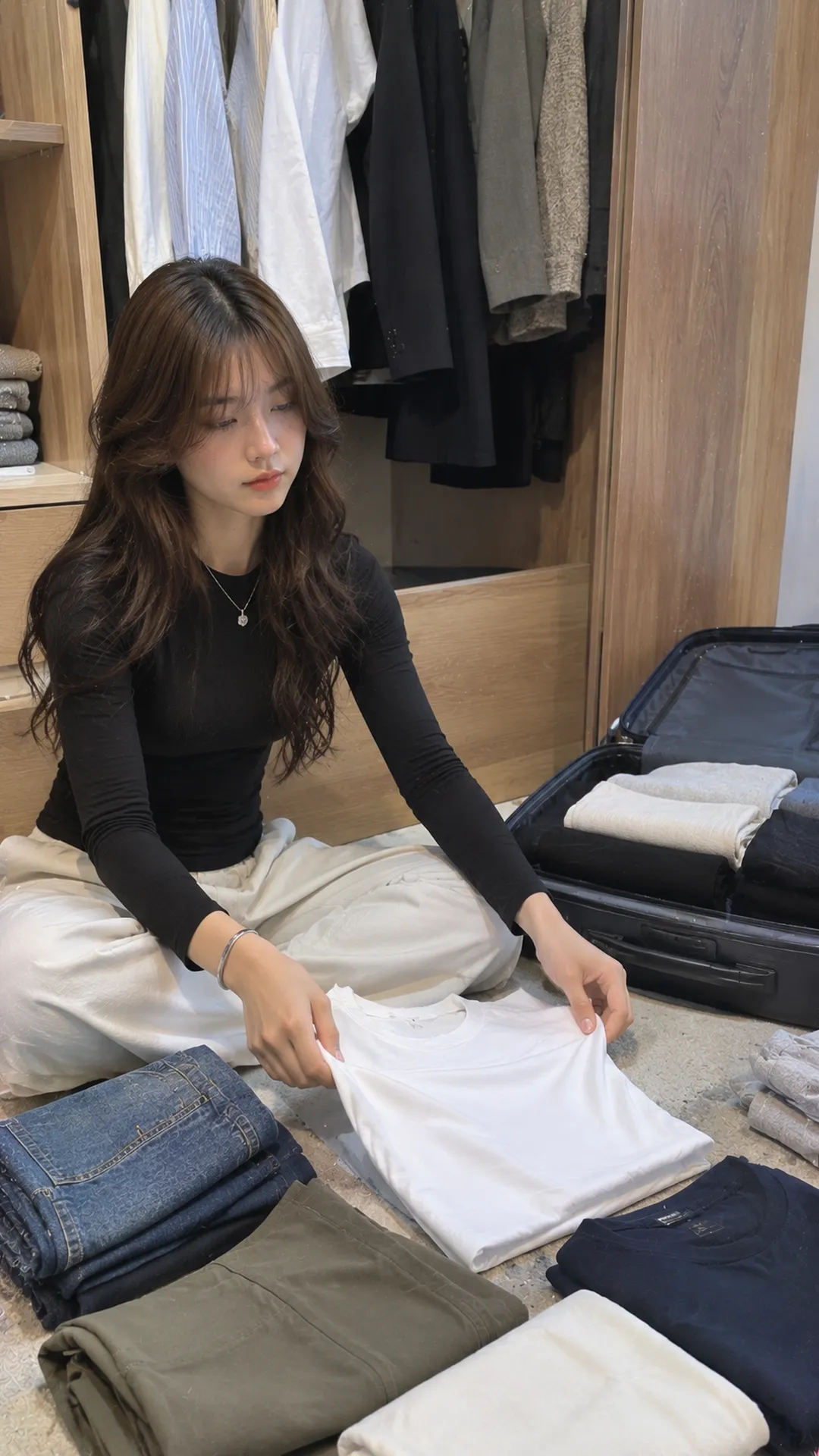
Flat folding, upright folding or rolling?
Flat folding suits garments you want in a broad bundle with fewer overlapping layers, such as shirts or creased trousers. Upright folding creates compact bundles stored side by side in a drawer. Rolling works for some soft travel garments, but does not guarantee wrinkle-free results for every fabric.
Use the drawer's width and height as limits. If closing it requires force, it is too tightly packed or the bundle dimensions do not fit. Keep everyday items visible and accessible; store occasional pieces separately so you do not have to search through everything.
All tops and pants do not need identical folded dimensions. A thin tee and thick jeans may share a width but differ in height. Group by garment type and thickness first, then adjust folding within each group. This is easier to maintain than forcing everything into one template.
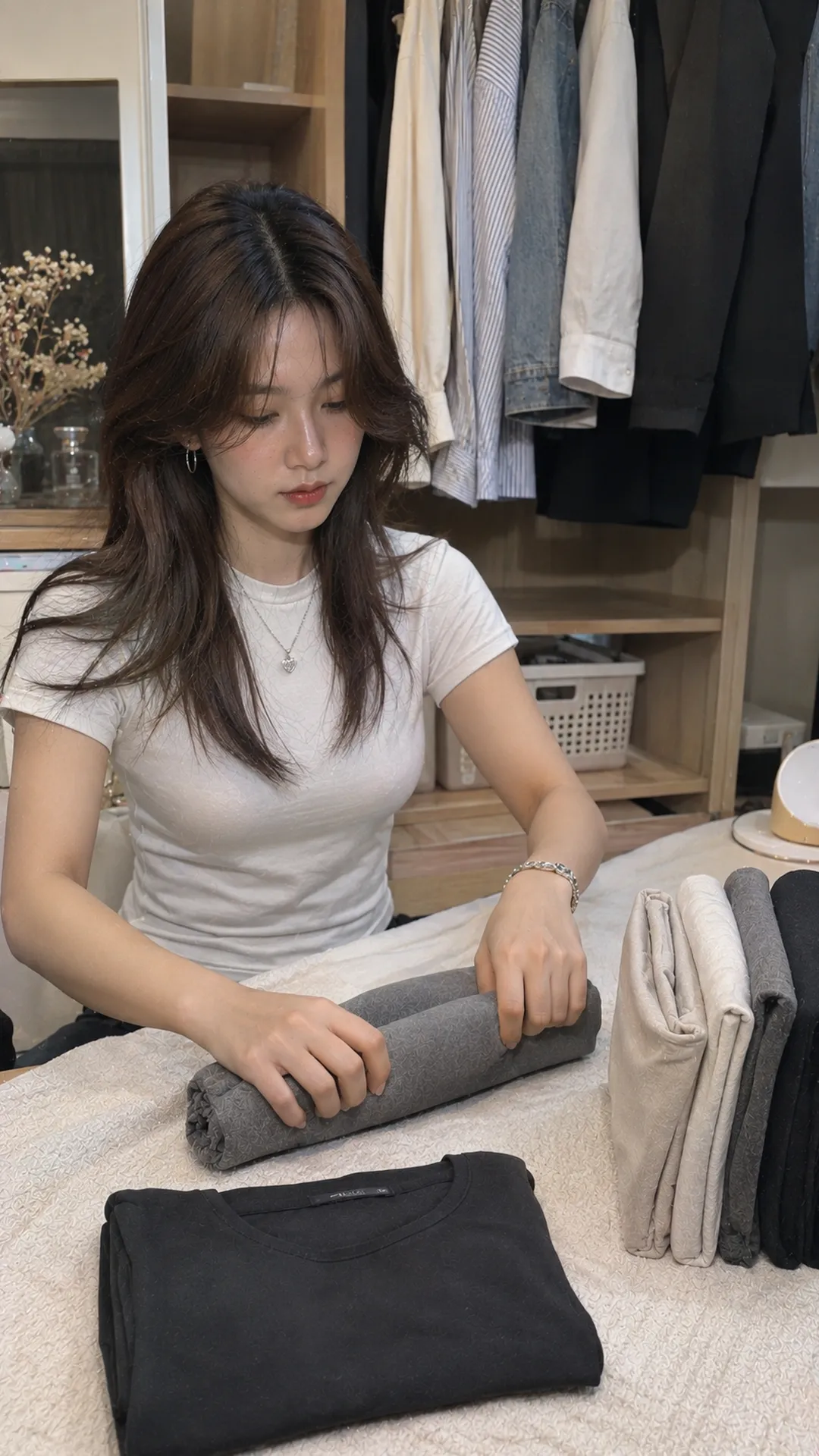
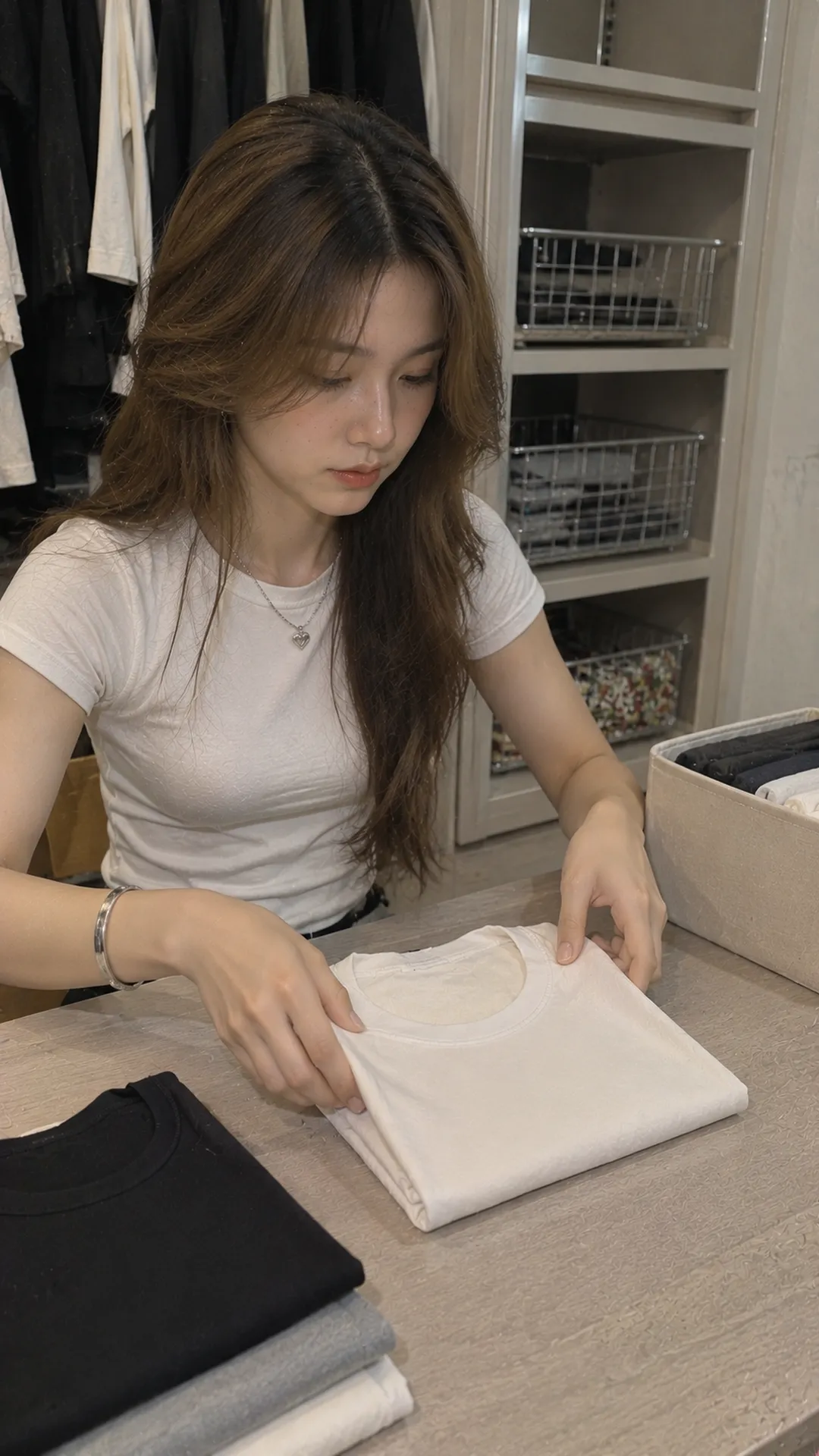
Fold T-shirts into upright bundles
- Lay the shirt flat, gently smoothing the body and sleeves so no folds are trapped underneath.
- Fold one side inward and place its sleeve neatly along that folded section; repeat on the other side.
- Check the resulting rectangle and adjust its width to fit the intended drawer.
- Fold upward from the hem in two or three sections, depending on shirt length and drawer depth.
- Place the bundle beside similar items, with recognizable color or print facing your viewing side.
Do not press down hard. With thick prints, avoid a sharp fold through the graphic if the care instructions prohibit it. Shift the fold or store the garment flatter instead of forcing it into the same small size as plain tees.
For long sleeves, fold them along the body before folding up the hem. If they form a thick mound in the middle, change their angles to distribute them across both sides. Once stored, remove a middle shirt as a test; if the others collapse, add a divider or lower the bundle height.
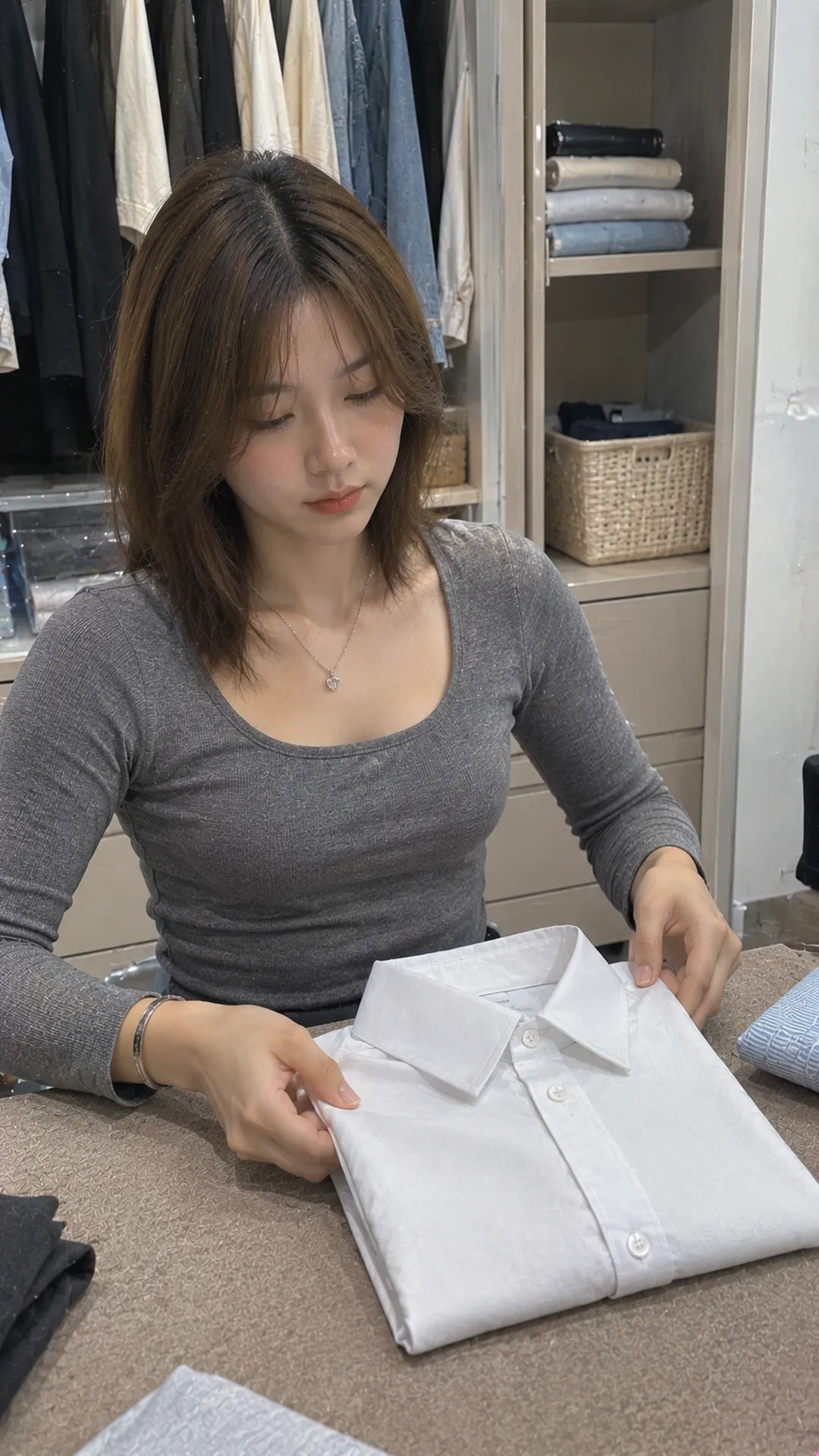
Fold shirts while protecting collars and buttons
First fasten a few buttons to align the fronts, then lay the shirt face down. Arrange the collar in its intended shape without crushing it under weight. Fold each side inward along a fairly straight line, then lay the sleeve along the folded body.
For long sleeves, reverse the sleeve direction once to bring the cuff within the shirt's length. Gently smooth the underarms and shoulder seams before folding the hem upward. The number of folds depends on length and storage space; fewer large folds are generally easier to manage than many small folds in a garment meant to stay flat.
Place shirts on top or in a separate compartment so collars are not crushed by jeans, shoes or heavy items. If wearing one soon after arrival, unpack and hang it or treat creases according to its label promptly. Do not wait until departure time and expect it to flatten completely by itself.
For ruffles, puff sleeves or unusual collars, identify vulnerable areas first. Suitable clean paper may separate details to prevent rubbing, but avoid tight packing. Folding should support the shirt's construction rather than flatten its shape to save a little space.
Fold jeans and pants without pressed creases
Empty the pockets, lay the pants flat and untwist the legs. Fold lengthwise to align the legs, then tuck the protruding crotch section inward if needed for a neat bundle. With thick pants, avoid concentrating every waistband, pocket and fastening into one excessively high end.
Fold from the hems upward in two or three sections to fit the drawer. In a stack, alternate waistband direction between layers to reduce leaning. For upright storage, leave the waistband or another recognizable feature at the top to distinguish dark pants.
Arrange cargo pockets, drawstrings and decorative fastenings neatly inward first. Do not tightly tie drawstrings around the bundle if that strains the waistband. Store heavily embellished pieces away from snag-prone fabrics.
To organize by pants shape rather than color alone, use our Women's Pants Guide to identify your categories. This makes it easier to assign work trousers, casual pants and specially structured pieces suitable storage areas.
Fold tailored trousers along existing creases
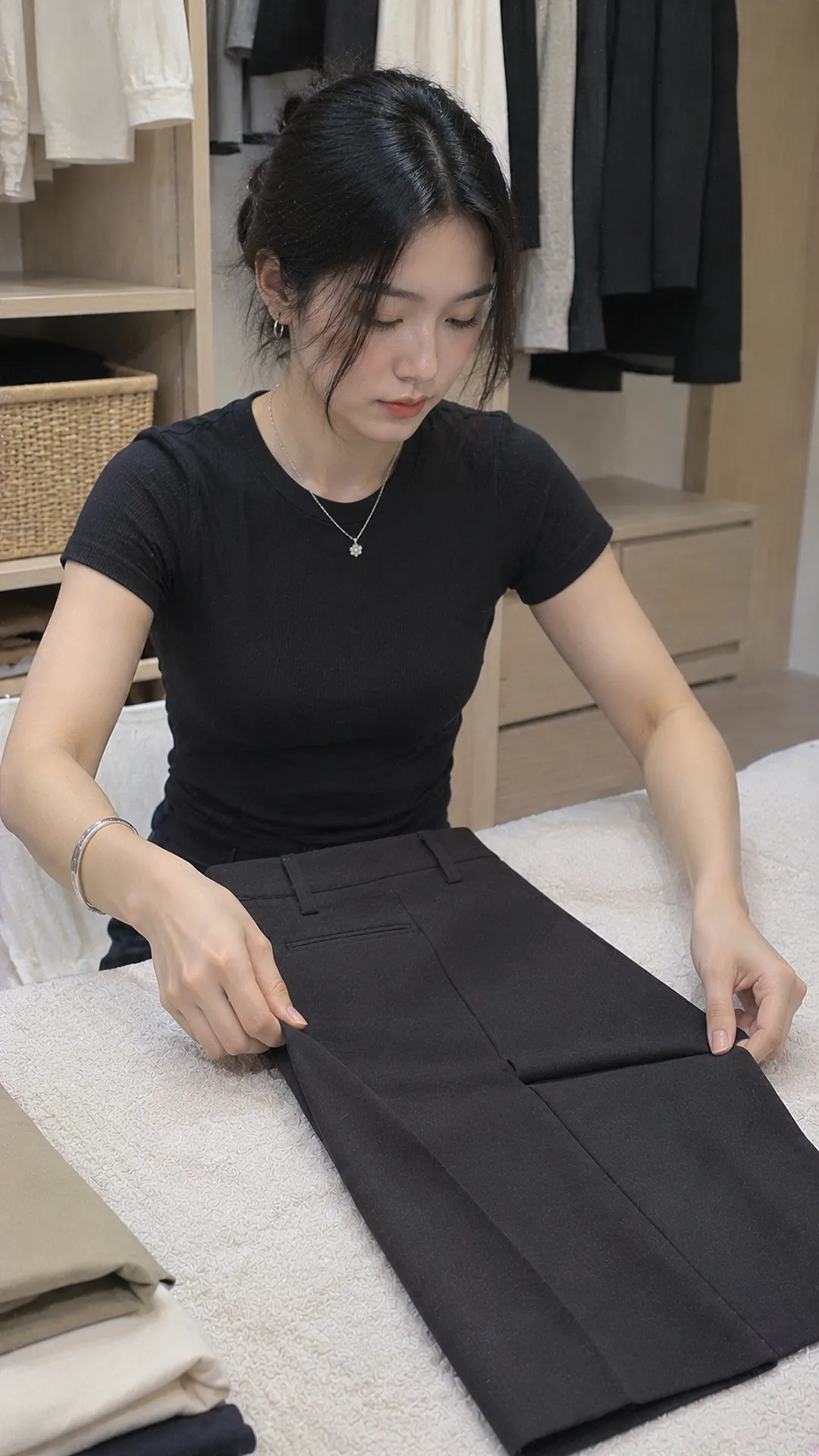
For trousers with a clear pressed front crease, align that crease rather than folding the side seams together as with jeans. Arrange both legs neatly, checking from thigh to hem before folding across. If you cannot identify the crease, spread the trousers out and inspect before creating a new one.
Choose crosswise folds suited to the storage space and avoid pressing them beneath heavy objects. If you have hanging space and a suitable hanger, hang the trousers instead of folding them small. Material, construction and care instructions determine the choice; all tailored trousers do not require identical storage.
In a suitcase, lay creased trousers flat and keep shoe fastenings, cosmetics and hard objects from pressing directly against them. For a meeting, pack for easy removal and care on arrival. Planning garment care at your destination matters as much as the initial folding.
Knits and detailed garments need separate approaches
For wool garments, Woolmark recommends cleaning before storage and folding to help retain their shape. When folding knitwear, support the whole body instead of pulling sleeves or neckline to align the edges. Make a fairly broad bundle and avoid stacking too many heavy garments on top.
Boned corsets, molded cups and rigid details should not be rolled like T-shirts. Store according to their structure and manufacturer instructions without bending boning or crushing cups. Separate lace, mesh and raised-fiber fabrics from zips, hooks and studs to reduce snagging during retrieval.
Before buying drawer organizers, measure the folded garments and the actual drawer interior. Our alternative fashion shopping and care hub helps you reassess wardrobe needs; a whole new set of boxes may be unnecessary if relocating garment groups solves the issue.
Combine rolling and flat folding for travel
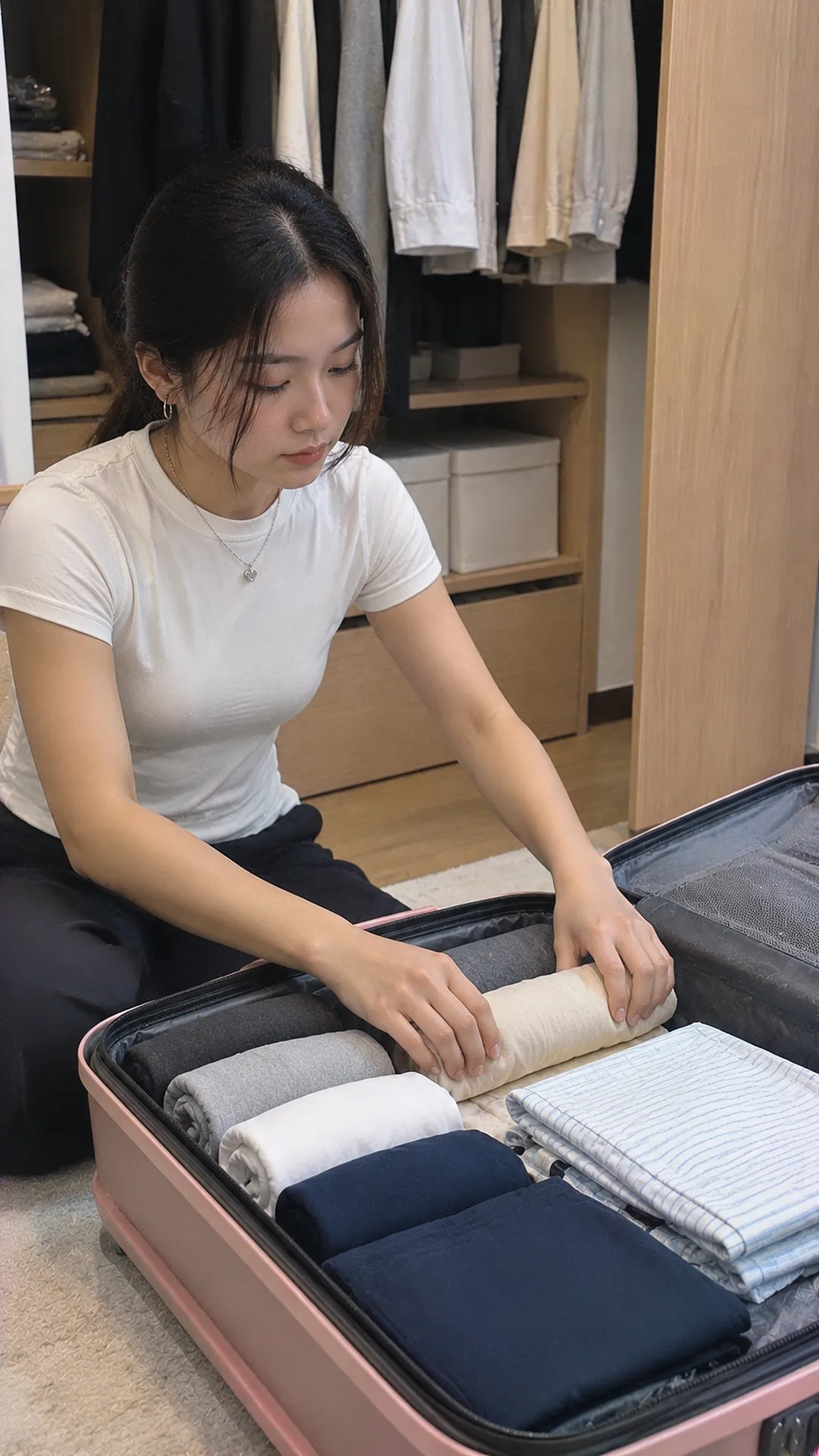
To roll a T-shirt, first fold it into a rectangle with sleeves contained. Roll evenly from one end with moderate tension to avoid twisting, without squeezing as though wringing laundry. Align soft pant legs first, then roll upward from the hems. If the waistband is too thick, flat folding may pack more easily.
You do not need one method for the whole suitcase. Roll soft tops in packing cubes, place shirts and tailored trousers in separate flat layers, and put structured pieces where they face less pressure. Packing cubes help separate and retrieve groups, but do not guarantee wrinkle prevention.
Place heavy items in a stable suitcase area without directly crushing collars or soft details. Shoes need separate bags; toiletries need suitable containment to limit damage from leaks. Keep worn clothing apart from clean items, especially when laundry facilities are unavailable during the trip.
Leave room to repack for the return. If someone has to sit on the suitcase to close it initially, retrieving things during the journey will be difficult. Our women's airport outfit guide helps choose what to wear in transit, reducing pieces you need to unpack and refold repeatedly.
Arrange drawers to remove one item without disrupting the row
Organize by frequency of use first, then garment type and color. Frequently worn tops should be visible as soon as the drawer opens. For similar dark garments, expose a recognizable neckline, label or print so you do not need to unfold each bundle.
Do not fill every gap. A little room lets you remove and replace pieces without shifting the entire row. Test dividers with a few items to find suitable dimensions. Compartments that are too small require more folds; ones that are too wide do not support the bundles.
Deal with damp or dirty clothing before storing it. For wardrobes with many black pieces, our guide to washing and caring for black clothes covers the preceding steps; neat folding cannot replace washing, drying and following labels correctly.

Maintain your system through a small trial
Do not empty the entire wardrobe before knowing whether the method suits you. Choose one T-shirt drawer, use it for a few days and observe which pieces collapse or are hard to identify. Adjust bundle width or grouping before applying the method elsewhere.
Return items facing the same way and to the right group. If one garment always crowds the drawer, reconsider its location instead of compressing it more each time. An effective folding system is one you can repeat after a busy day, find clothes in quickly and use without compromising their structure.