

What Is Power Dressing? Presence through Clothing
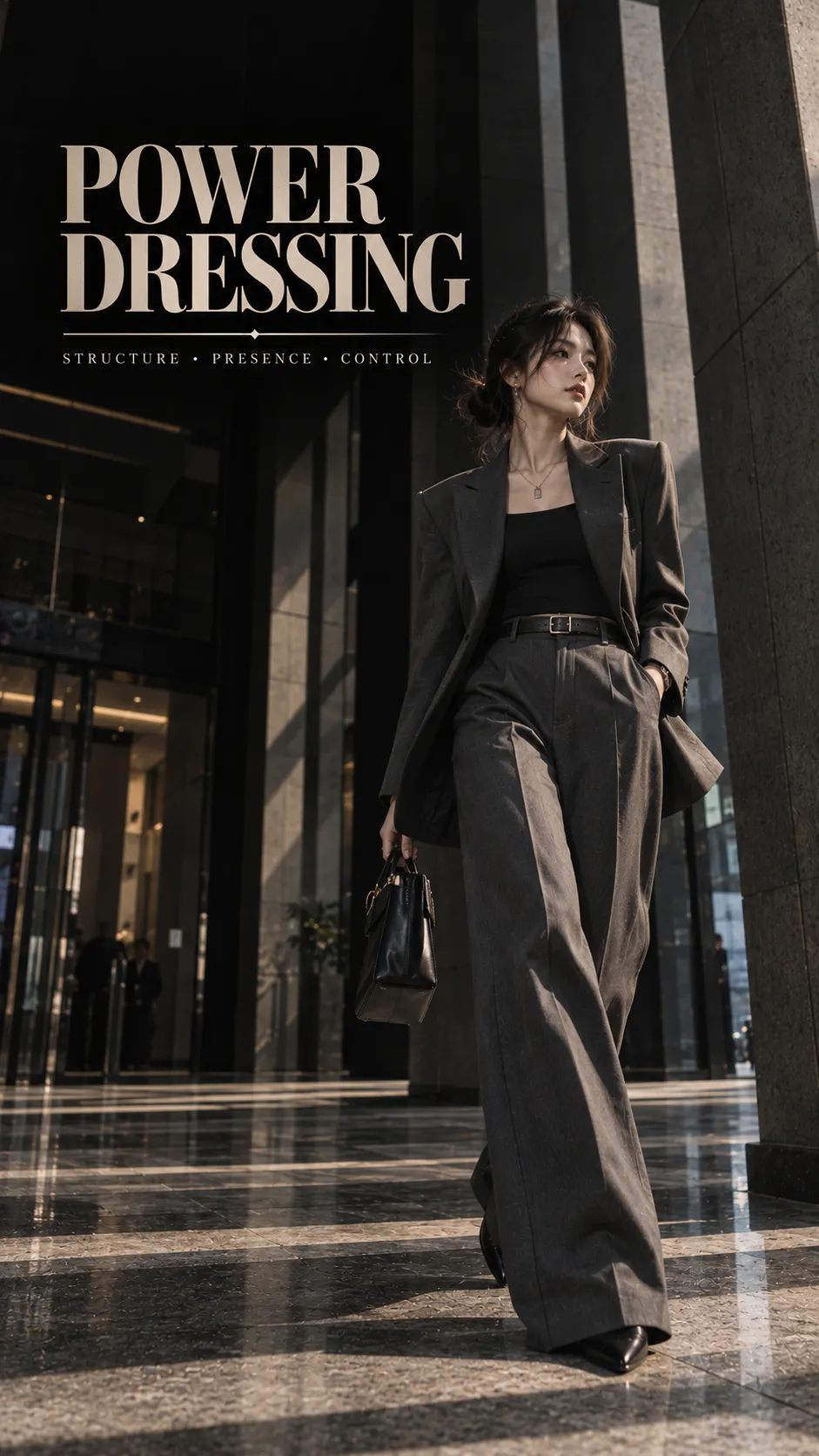
Power dressing uses clothing to communicate an impression of confidence, authority and agency. A familiar reference is 1980s power dressing: broad-shouldered blazers, defined tailoring, prominent accessories and silhouettes that occupy more visual space. Clothing can suggest these qualities; it does not establish the wearer's actual competence or power.
A modern interpretation need not recreate an entire 1980s executive outfit. This guide separates a sense of presence from stiffness, using blazers, trousers, skirts, knitwear and shoes in context while retaining personal references.
Guide collection: Aesthetic Dictionary: A Guide to Fashion Styles (Vietnamese)
What Is Power Dressing?
Power dressing uses clothing as a visual language associated with authority. Beyond appearing expensive or sensual, it asks: Does this silhouette give the wearer a deliberate presence appropriate to their role and setting?
The suit is a familiar example because tailoring has associations with professional status and organizational dress. FIT's Power Mode exhibition considers the suit's relationship to power and conformity. A blazer alone therefore does not carry one fixed message: its fit, combination and context matter.
Modern interpretations extend beyond a matching power suit. A defined-shoulder trench, neat knit polo with high-rise trousers, a dress with a clear shoulder or a restrained monochrome composition can provide presence through deliberate shape and finish.
Why Is 1980s Power Dressing Such a Familiar Reference?
FIT's Fashion History Timeline documents prominent shoulders, stronger colors, substantial accessories and suits in the 1980s. Clothing responded to changing professional and social contexts, including women's participation in management and workplaces whose authority codes were associated with menswear. This is a limited context, not a single universal experience.
FIT exhibition material identifies padded-shoulder suits and narrower skirts among the period's power-dressing references. Donna Karan's interchangeable wardrobe approach offers another useful comparison: coordinated pieces adaptable to a working day. For present-day styling, these suggest both clear structure and a compatible wardrobe system.
This history should not become a rule that women must resemble men to have authority. It reflects particular social and dress conventions. Tailoring can be used alongside feminine references without erasing identity or forcing the body into one shape.
A Power-Dressing Framework: Structure, Scale and Finish
A blazer shoulder, trouser crease, collar, waist seam or coat line makes the composition appear deliberate.
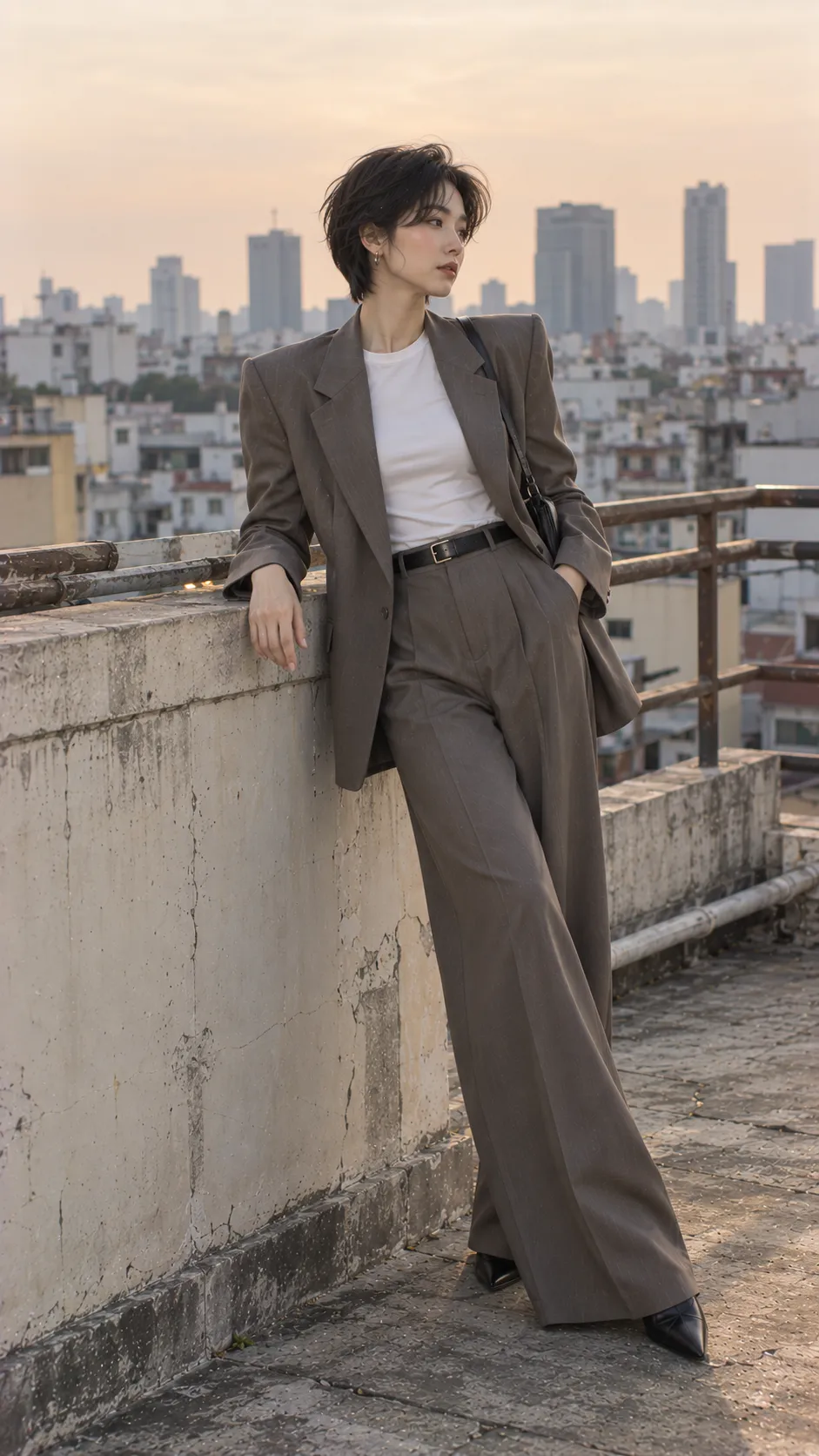
Broader shoulders, longer trouser lines, clear lapels or a shaped bag can supply visual presence. Scale concerns the relationship between garment and body, rather than automatically choosing oversized clothes.
Check trouser hems, shoes, belt scale and collar position. Unwanted bunching or pulling can weaken the intended composition; expensive labels are unnecessary.
Four Levels of Power-Dressing Intensity
Six Power-Dressing Outfit Formulas with Softer Elements
Moderately shaped blazer, fitted tee, straight trousers and loafers
Why it works: The blazer frames the body, the tee lowers formality and the trousers retain a vertical line. An option for those who prefer tees to shirts, where permitted.
Monochrome suit, crewneck knit and pointed flats
Why it works: The suit provides structure, knit softens the neckline and flats offer an alternative to executive-style heels. Charcoal, navy or chocolate can replace all-black.
Boxy blazer, straight midi skirt, belt and ankle boots
Why it works: Shoulder volume contrasts with the skirt's straighter line while the belt provides a waist reference. Feminine styling need not depend on ruffles.
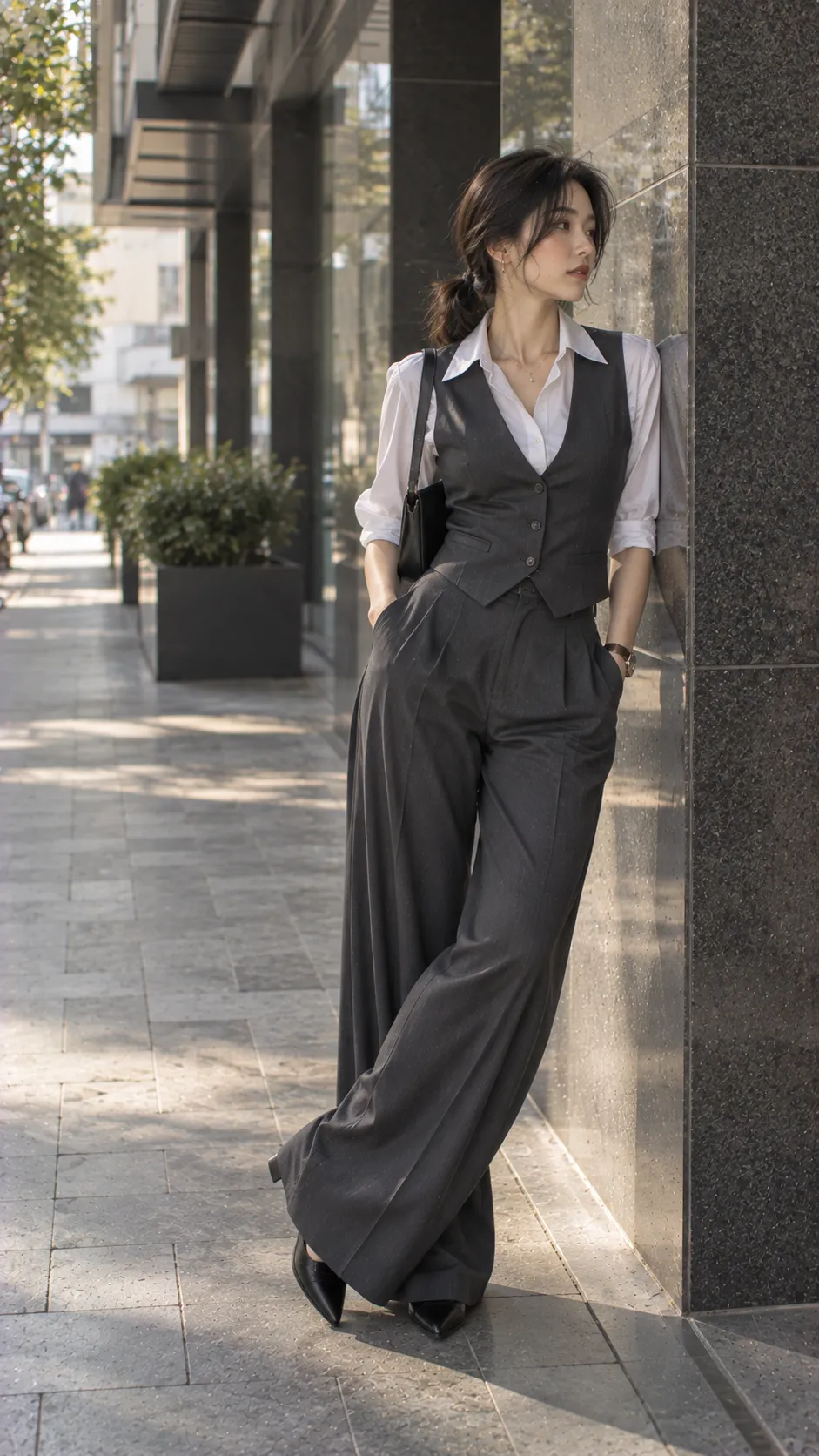
Waistcoat, wide-leg trousers, rolled-sleeve shirt and geometric jewelry
Why it works: A waistcoat retains tailoring without a full jacket. Geometric jewelry can repeat the clearer lines of the vest and trousers.
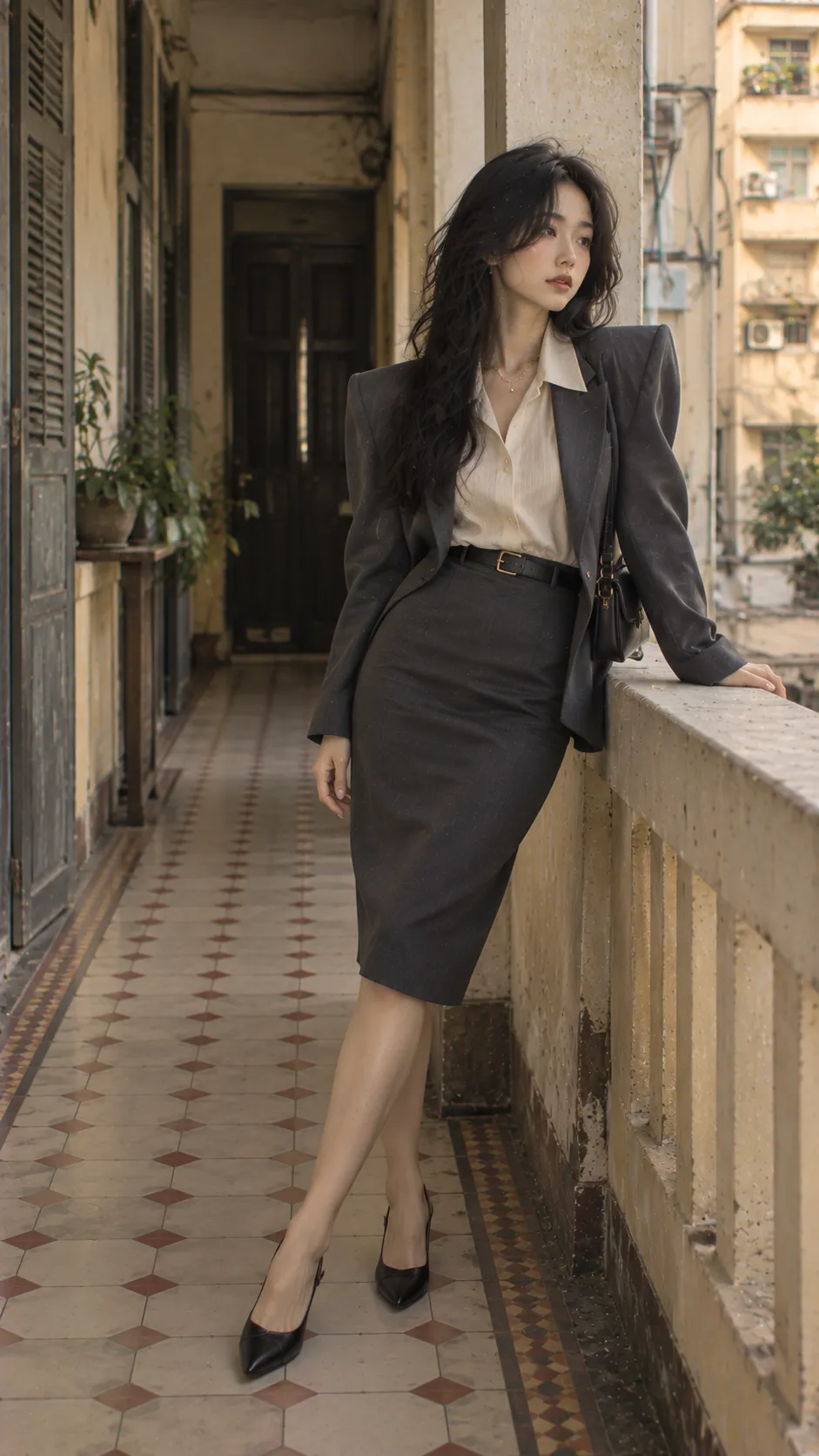
Emphasized-shoulder blazer, pencil skirt and slingbacks
Why it works: Broader shoulders contrast with a narrower skirt. Contemporary hair, makeup and restrained accessories can make the reference less literal; a complete neon palette is optional.
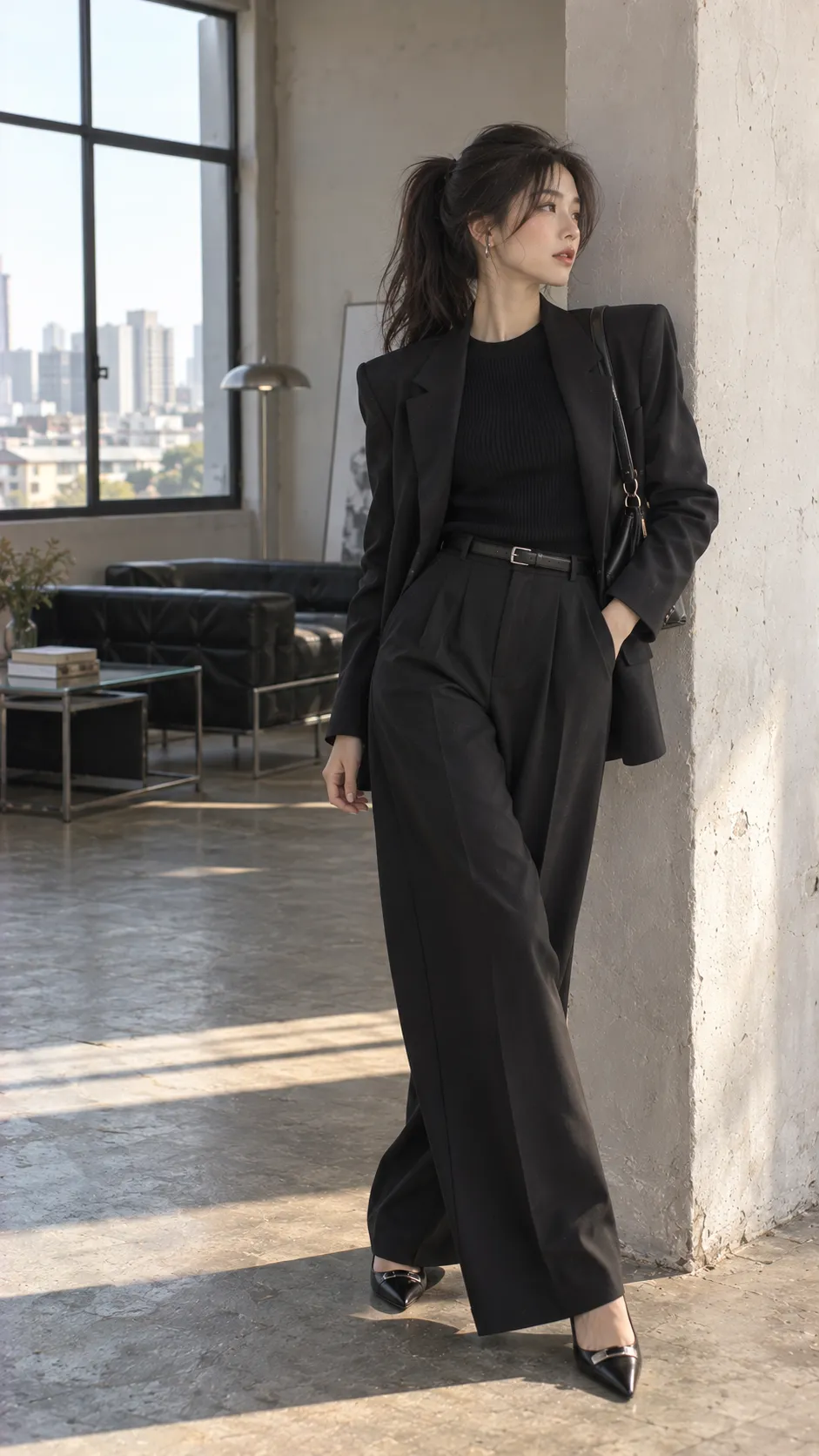
Black blazer, turtleneck, trousers and silver-colored hardware
Why it works: Monochrome emphasizes shape. Stronger lace, heavier boots and Gothic motifs can move the references toward Corporate Goth.
Softening Blazers and Tailoring while Retaining Presence
A less formal neckline can soften the composition while the blazer retains the frame, where the setting permits.
Selected softer wool blends, viscose fabrics or crepe can introduce movement. Inspect actual weight, weave, lining and drape; these names do not guarantee cooling or softness.
A strong shoulder can take quieter shoes; prominent pointed glossy shoes can sit beneath a softer blazer.
An open collar, rolled sleeves or visible ankle can reduce visual density. Coverage remains a personal choice within the setting's requirements, not a fixed division between power dressing and Office Siren.
A useful relationship is one clear structure with one softer surface: a defined blazer with knit or satin, creased trousers with cotton, or a pencil skirt with a shaped cardigan. Combining contrasting surfaces makes the chosen emphasis easier to read; softness does not remove real authority.
Power Dressing versus Office Siren, Business Casual and Corporate Goth
Centers an intended impression of presence through tailoring, scale, proportion and finish; it can overlap several aesthetics or formality levels.
Centers a sharper, sensual Y2K officewear aesthetic using fitted lines, small glasses and pencil-skirt references. See What Is Office Siren?.
Centers an employer-specific work dress code. See Women's Business Casual Guide.
Corporate Goth adapts Goth references to workwear. A black suit alone need not be Corporate Goth; without those additional references it may simply be dark tailoring. These descriptions overlap without becoming synonyms.
Power Dressing and Body Proportions: Adjust Clothing, Not Bodies
No shoulder width requires correction. If you want less upper-body volume, use a more moderate shoulder and place volume in trousers or a skirt. If you want a stronger shoulder frame, try a clearer seam rather than automatically adding thick pads. A shorter jacket, higher rise or continuous crease can change the apparent torso-to-leg ratio if that is your preference.
For more abdominal ease, avoid a restrictive belt. An open single-breasted blazer over a related-color top creates vertical edges without tight compression. Pleats and suitable drape can provide room through the hips; inspect fit while sitting and moving instead of relying on a body-type rule.
The aim is to organize clothing according to your preferences, rather than making the body disappear or treating it as a problem.
Power Dressing beyond the Office
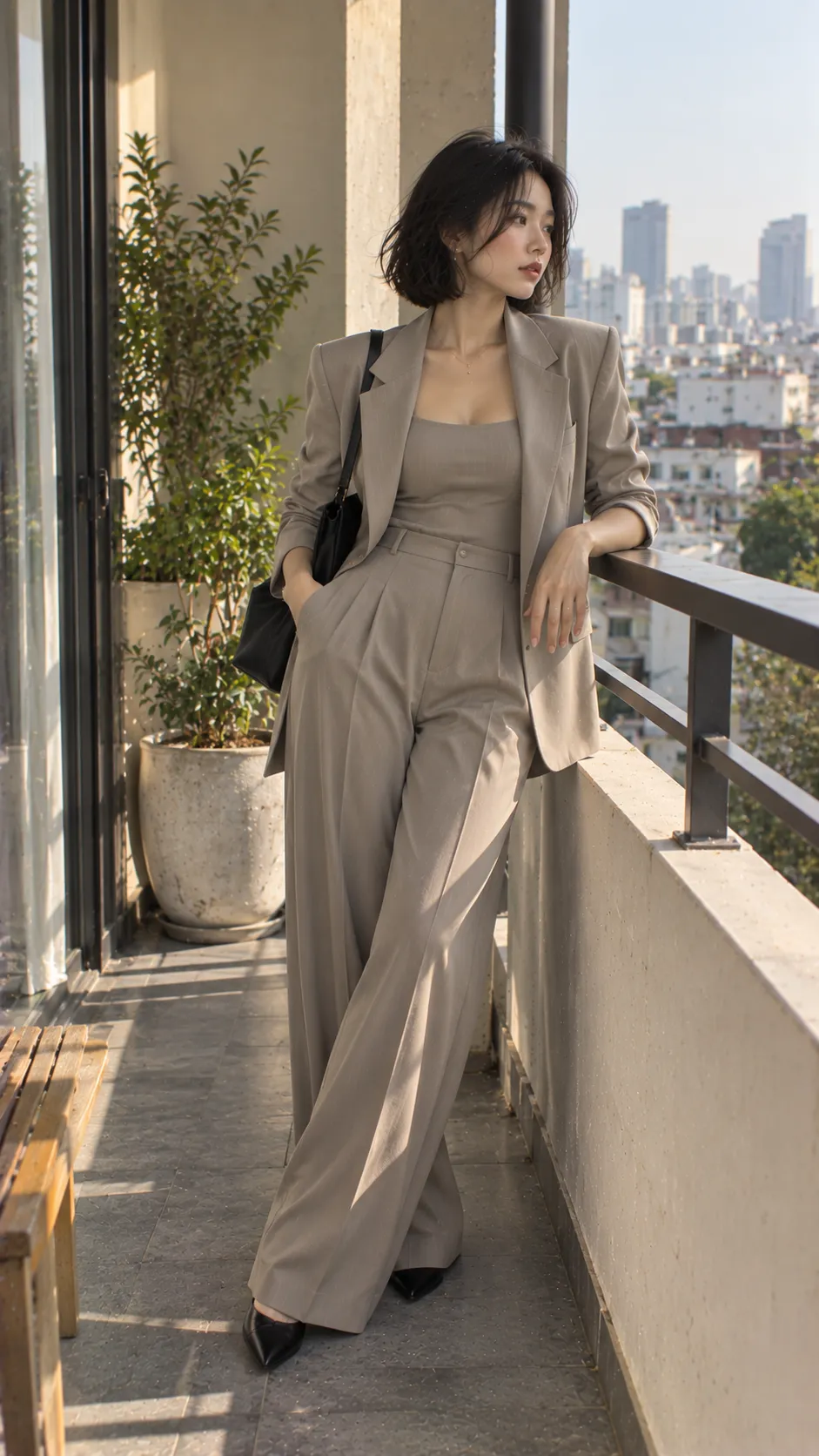
An intended impression of presence can also suit dinner, events, galleries, networking or an ordinary day. Change the formality layer while retaining selected structural references.
For evening, a suit can take a camisole or satin top where permitted; trousers can become a straighter long skirt, or jewelry can increase in scale. For a casual day, try the blazer with dark denim and loafers. Shoulder, length and finish can remain while the formality changes.
One optional visual exercise is 70% structure and 30% personality. Structure might come from tailoring, a crease or continuous line; personal references from color, jewelry, bag, a small graphic or texture. These are loose styling proportions, not measurements or rules. Stronger statement details simply change the emphasis.
Power Dressing in Hot Weather: Keep the Lines, Reduce Bulk
Several layers of a heavy suit may be impractical in Vietnam's heat. Consider a half-lined or unlined blazer, vest, structured short-sleeved shirt, lighter trousers and suitable shoes. Inspect the actual construction and conditions. Retain the shoulder line, vertical line and considered finish rather than every material associated with a 1980s reference photograph.
Light colors can also provide presence. Ivory, stone, gray-blue and chocolate can create defined combinations through proportion and contrast; black is optional.
Five Common Power-Dressing Misconceptions
1. Larger shoulder pads always mean more power
Relate shoulder scale to jacket length and the lower silhouette. Very broad, long tailoring creates a particular effect rather than automatically improving the composition.
2. A suit works regardless of fit
Check shoulder placement, sleeves and trouser hems. Deliberate ease matters more to the intended outline than a designer label.
3. Authority must look cold
Black, sharp heels or a severe expression are unnecessary. Cream tailoring, soft knit and flats can provide clear lines. Appearance does not determine actual authority.
4. Ignoring the dress requirements
A statement suit may be more formal than a relaxed workplace expects; a casual outfit may differ from a meeting's stated requirements. Check the actual context rather than assuming.
5. Buying a single aesthetic instead of useful combinations
Learn from interchangeable wardrobe systems: a blazer, trousers, skirt and tops that work across combinations may see more wear than one occasional power suit.
Frequently Asked Questions
What is power dressing?
Power dressing uses silhouette, tailoring, scale and finish to communicate an intended impression of confidence or authority. The broad-shouldered 1980s suit is a familiar historical reference, but clothing does not establish competence or status.
Does power dressing require a suit?
No. A blazer, coat, dress, knit or trouser combination can provide structure, deliberate scale and a considered finish.
How does power dressing differ from Business Casual?
Business Casual concerns workplace dress requirements; power dressing concerns an intended visual impression. An outfit can serve both through deliberate tailoring and proportion, within the employer's actual policy.
Can power dressing include feminine references?
Yes. Combine a defined shoulder or trouser crease with a knit, skirt, slingbacks or softer jewelry if that suits your preferences. No one body shape or gender expression is required.