

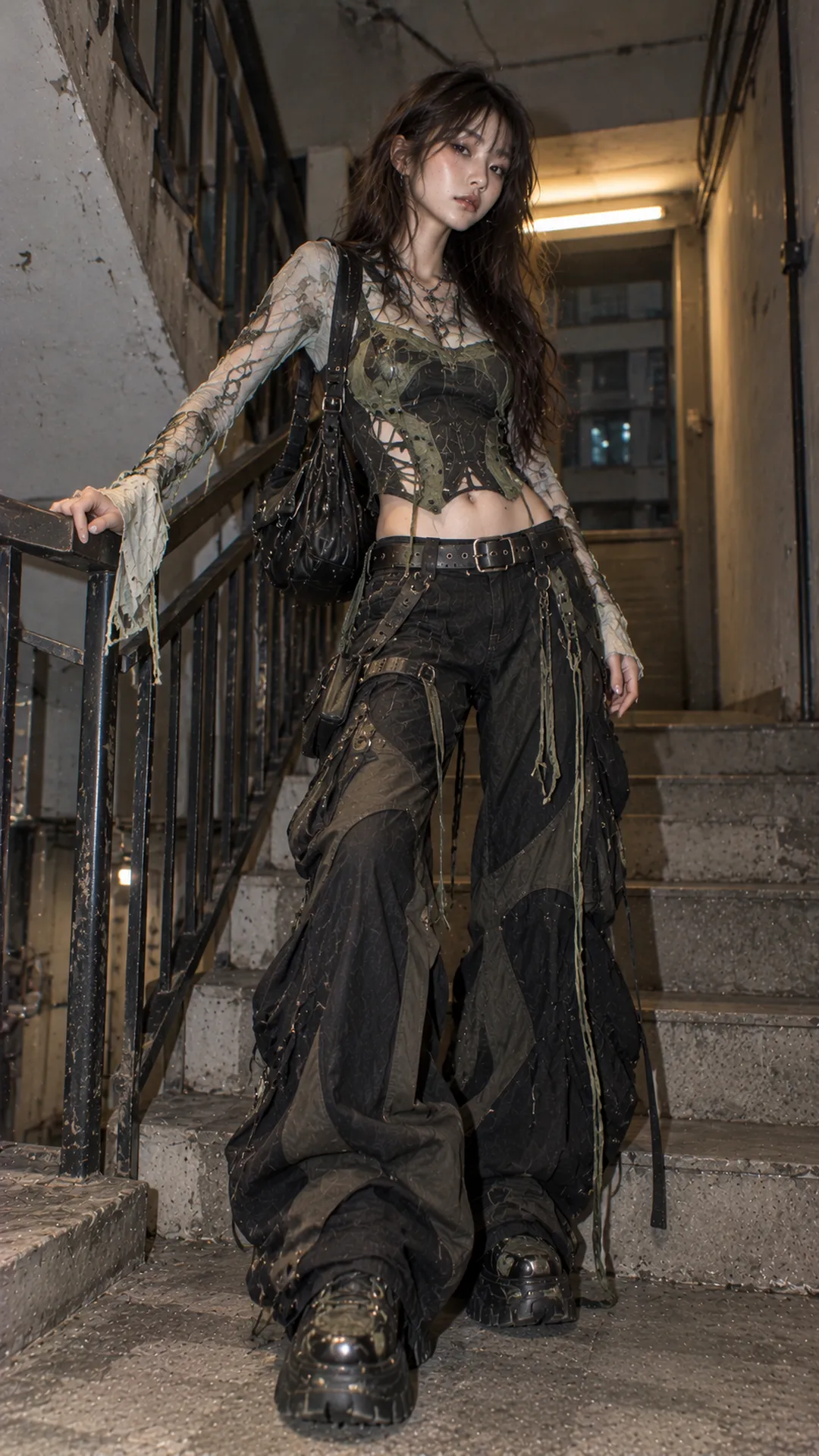
What is biopunk before it becomes a fashion reference?
The Living Glossary of Digital Narrative describes biopunk as science fiction focused on biological advances made possible through technology. Stories may explore genetic modification, the power of biotechnology companies and the social consequences of intervening in life.
A useful distinction is what is being reimagined. Cyberpunk often suggests computer networks and digital technology; biopunk directs attention toward bodies, cells and organisms. The two can overlap in a work, but neon colors or black clothing alone do not identify either.
In a wardrobe, biopunk is best understood as a design reference, not a uniform with mandatory items. The combinations below interpret it for daily wear, using organic lines and contrasting surfaces to suggest the idea rather than recreating a particular character's costume.
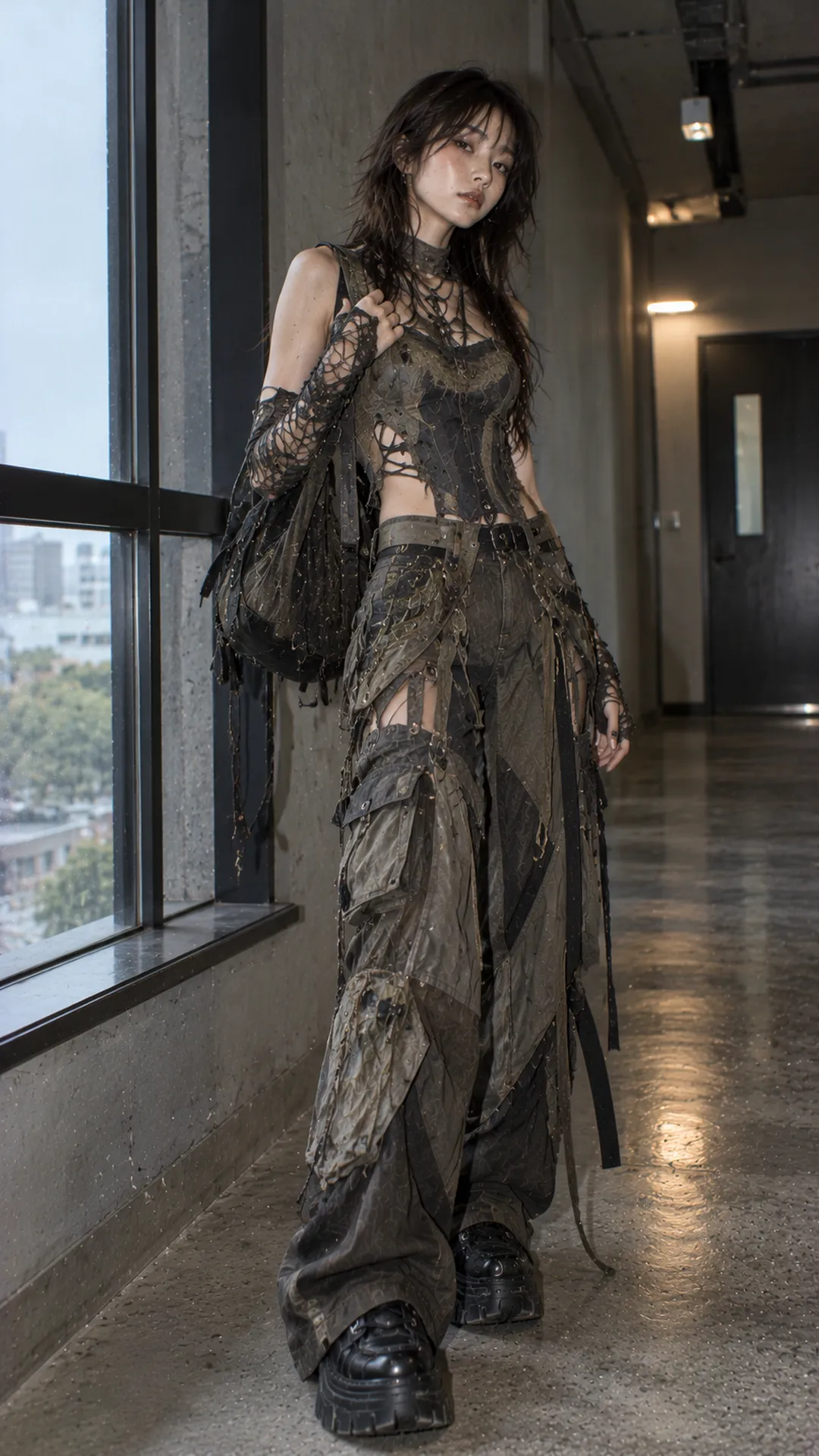
Three ways to make biological inspiration visible
Rhythmic curves rather than just extra straps
Look for a top with curved seams running from shoulder to body, asymmetric gathering or bands of color continuing across a panel. These can suggest movement and organic structures without anatomical prints. If every line is straight, gridded and fastened with buckles, the effect tends to feel more like equipment.
For a subtle start, choose a curved-seam top and plain trousers. Check whether the seams remain clear when worn or are distorted by tension. One well-placed detail works better than multiple decorative straps unrelated to the garment's shape.
A thin layer over an opaque base
Mesh or sheer fabric over a covered tonal top can suggest a membrane. The gap between layers lets the surface change with movement. The outer layer can appear only at the sleeves, shoulders or hem; it does not need to cover the entire body.
Choose a minimally patterned base so the outer weave remains visible. Dense prints on both layers may become confusing. Check the outfit in daylight, because actual coverage can differ from indoor photographs.
Patterns that suggest organisms without literal illustration
Branching shapes, irregular cells, curved rings or diffused color marks can provide references. What matters is a consistent association across the outfit. A single leaf on a shirt is not enough to make it biopunk; consider the cut, fabric and styling together.
You do not need horror imagery or anatomical details. An abstract print on a top, echoed in the curve of a bag, already creates a visual connection. Keep the intensity low if that makes it easier to wear regularly.
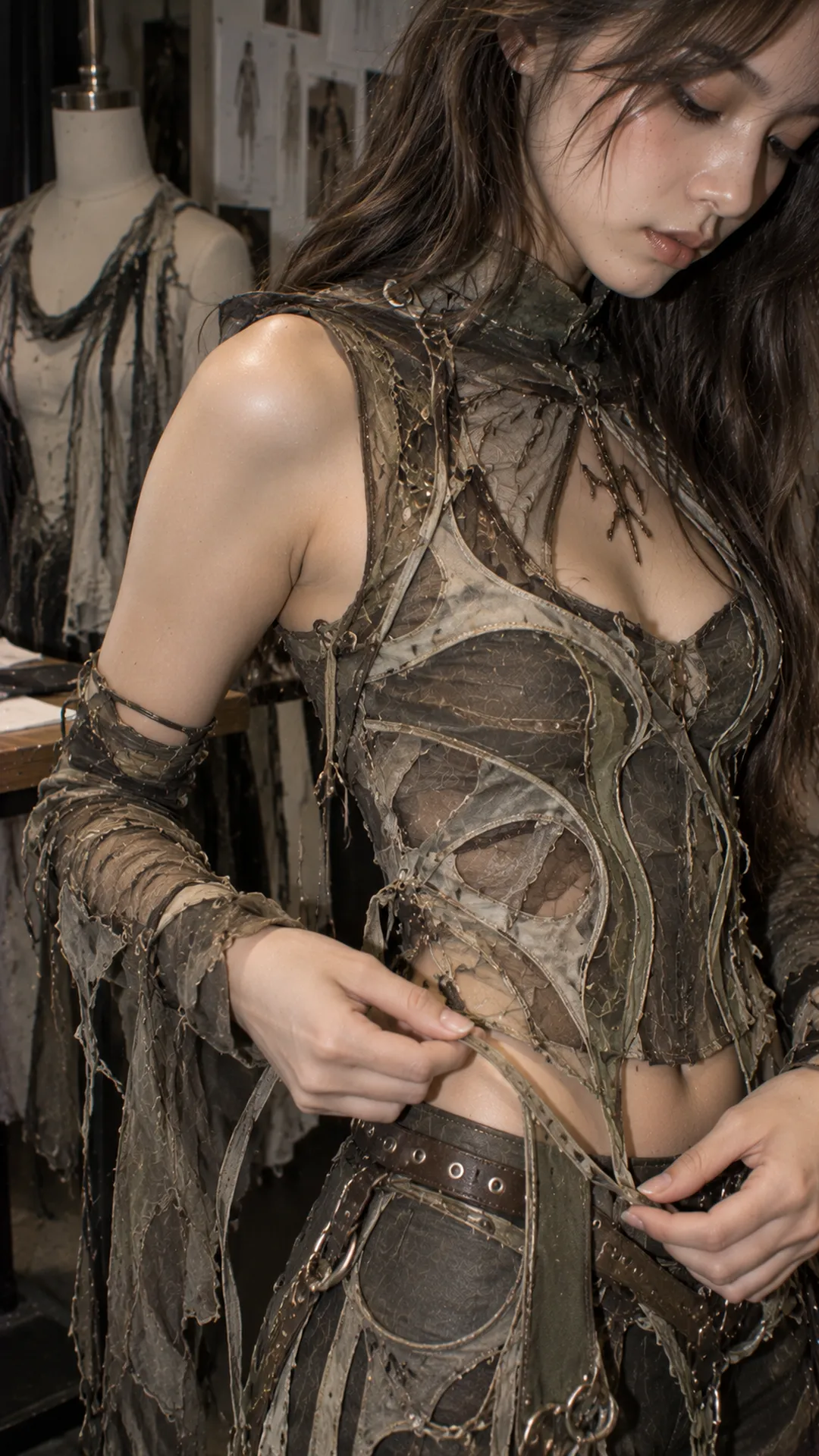
Choose colors and fabrics for the effect you want
Try black or charcoal as a base, then add a color that suggests biology to you: moss green, yellow-green, cool purple or gray-pink. These are styling choices, not an official compulsory biopunk palette. Concentrating a bright color in a small area often makes the item's shape clearer.
For a lighter direction, use cream or pale gray with dark piping. The contrast reveals seams and structure without a lab coat. Avoid asking color to carry the entire idea: keep at least one cue in the lines or surface.
For fabrics, try combining a matte surface with a slight sheen. For example, pair a ribbed top with a smooth, subtly lustrous skirt, or twill trousers with a mesh-paneled top. If everything is shiny, reflections can obscure the cuts; if every surface is alike, the outfit may lack depth.
A biological appearance does not prove that a material is bio-based. A cellular-print top may still use conventional fabric. Likewise, a biopunk label does not establish biodegradability, waterproofing or environmental performance. If those factors affect your purchase, check the product information rather than inferring them from an aesthetic's name.
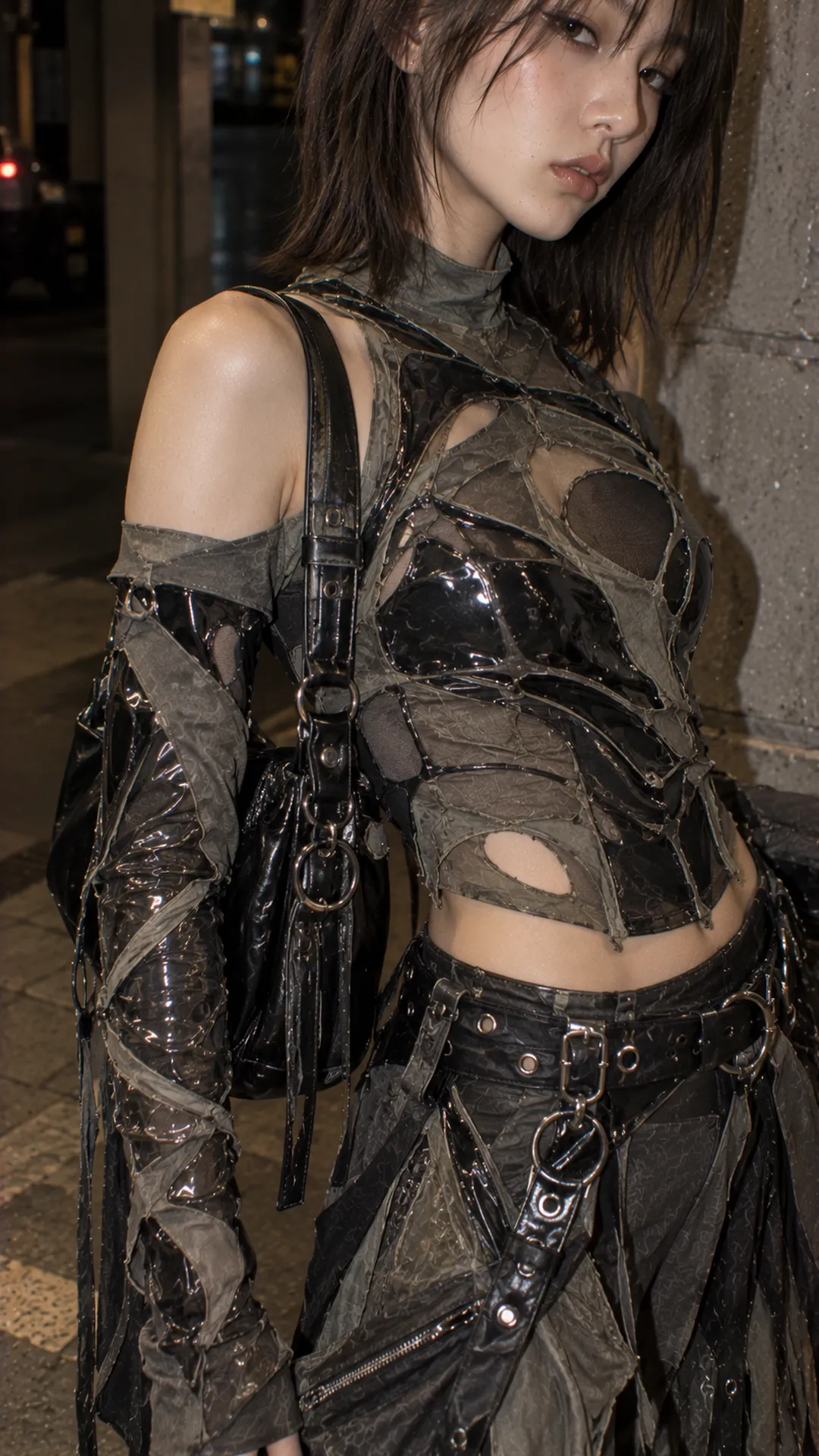
Three wearable outfits for trying biopunk
A curved-seam top and straight-leg trousers for everyday wear
Choose a fitted black top with gray curved seams, charcoal straight-leg trousers and streamlined sneakers. The seams are the main feature; plain trousers provide a quiet surface that lets the eye follow the top's construction. A small curved bag can repeat the shape without adding a new color.
If a tight top strains the seams or restricts your armholes, try another size or cut. You can retain the organic effect with a little ease. Adjust long trouser hems so they do not hide the shoes completely or drag as you walk.
For more definition in the evening, add a plain curved bracelet or a subtly glossy bag. Add it only when it contributes shape or texture; more accessories are not necessary to make an outfit look “futuristic.”
Abstract mesh layers and a straight skirt
Try a covered black base top, mesh with a branching print and a tonal straight skirt. The base supplies a stable color area while the outer pattern shifts slightly in motion. Choose outer and inner lengths that differ enough to make the two layers visible.
If the skirt already has a slit or asymmetric gathering, simplify the top. Low-cut shoes keep the foot area streamlined; boots are useful only if you like their visual weight and find them comfortable. The guide to layering outfits for women helps you manage lengths and thickness when two layers do not work together.
This outfit suits cooler outings or air-conditioned spaces. In hot weather, try one covered top with built-in mesh panels rather than adding a whole layer just to retain the effect.
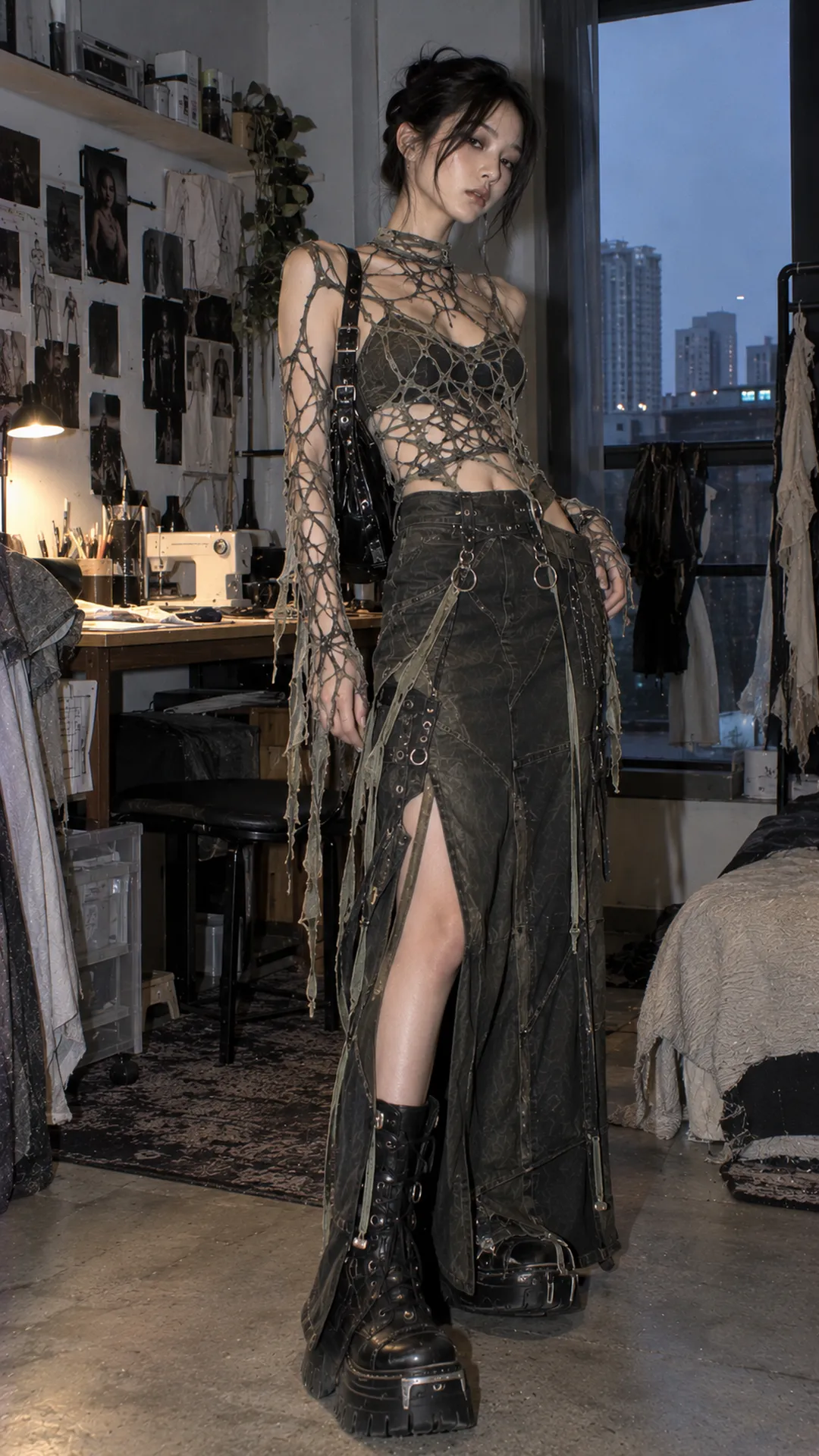
A light structured shirt and a green accent
Pair a boxy pale gray shirt with straight black trousers, a moss green inner top and a bag with a translucent detail. Open the shirt enough to reveal a vertical area of green. Keep prominent pockets to a minimum elsewhere so the result does not drift toward an operational uniform.
Look for a neat collar, clear shoulders and a shirt you can open and layer flexibly. Overlong sleeves or a very stiff body can require constant adjustment. Try it with your bag and check whether the strap pushes the collar out of position.
If you do not have a suitable bag, use a plain one you already own and choose an inner top with ribbing or a small organic print. You do not need a whole new outfit to achieve one idea.
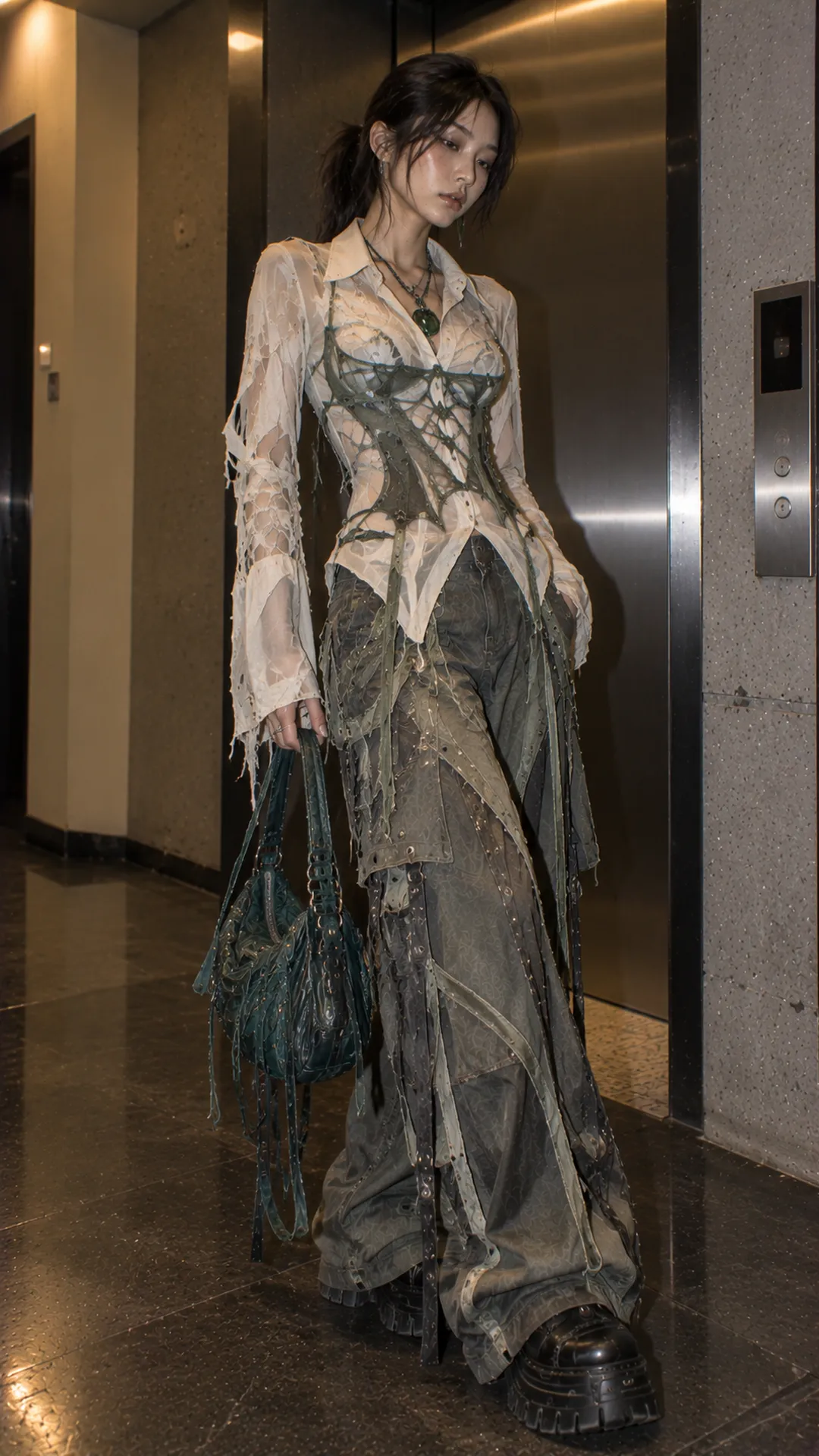
How is biopunk different from techwear and Cyber Y2K?
Techwear should be judged through clothing function: materials, movement, pocket systems and protection suited to your needs. Biopunk here describes visual inspiration. A top with multiple zippers may look technical without providing evidence that it protects against rain. Read what techwear is and how to assess its functions if you need to choose clothing for performance.
Cyber Y2K focuses on visions of the future associated with early-2000s fashion, using cues such as metallic surfaces and silhouettes from that period. Biopunk can use metallics, but its biological emphasis comes from lines, membranes or organic patterns. The guide to Cyber Y2K explains that direction's proportions and surfaces separately.
Black clothes, neon green and multi-pocket trousers alone do not provide enough information for classification. Ask what leads the outfit: living structures, technical equipment or fashion nostalgia. The answer makes the next choice clearer than attaching several style labels at once.
Checks before going out or buying more
First, try the outfit under conditions similar to your destination. A layer that looks good under indoor lighting may be too transparent in sunlight, while glossy surfaces may reflect strongly in flash photographs. Check the back and sides too, especially with asymmetric cuts or overlays.
Next, sit, reach forward and carry your bag. Decorative seams should not restrict movement; mesh should not immediately catch on a bag clasp. If you keep pulling things back into place, change the fit or reduce layers before thinking about accessories.
In hot, humid weather, concentrate the identifying cue in one area rather than wearing enclosing surfaces everywhere. Keep a curved-seam top with light trousers, or place the print in a bag over a simple base. Thin fabric is not necessarily breathable; inspect the lining and judge how it feels when worn.
Follow each item's care label, especially for coatings, prints and snag-prone fabrics. Do not wash an entire outfit the same way merely because the pieces look alike. Inspect seams and joins between different materials before buying secondhand.
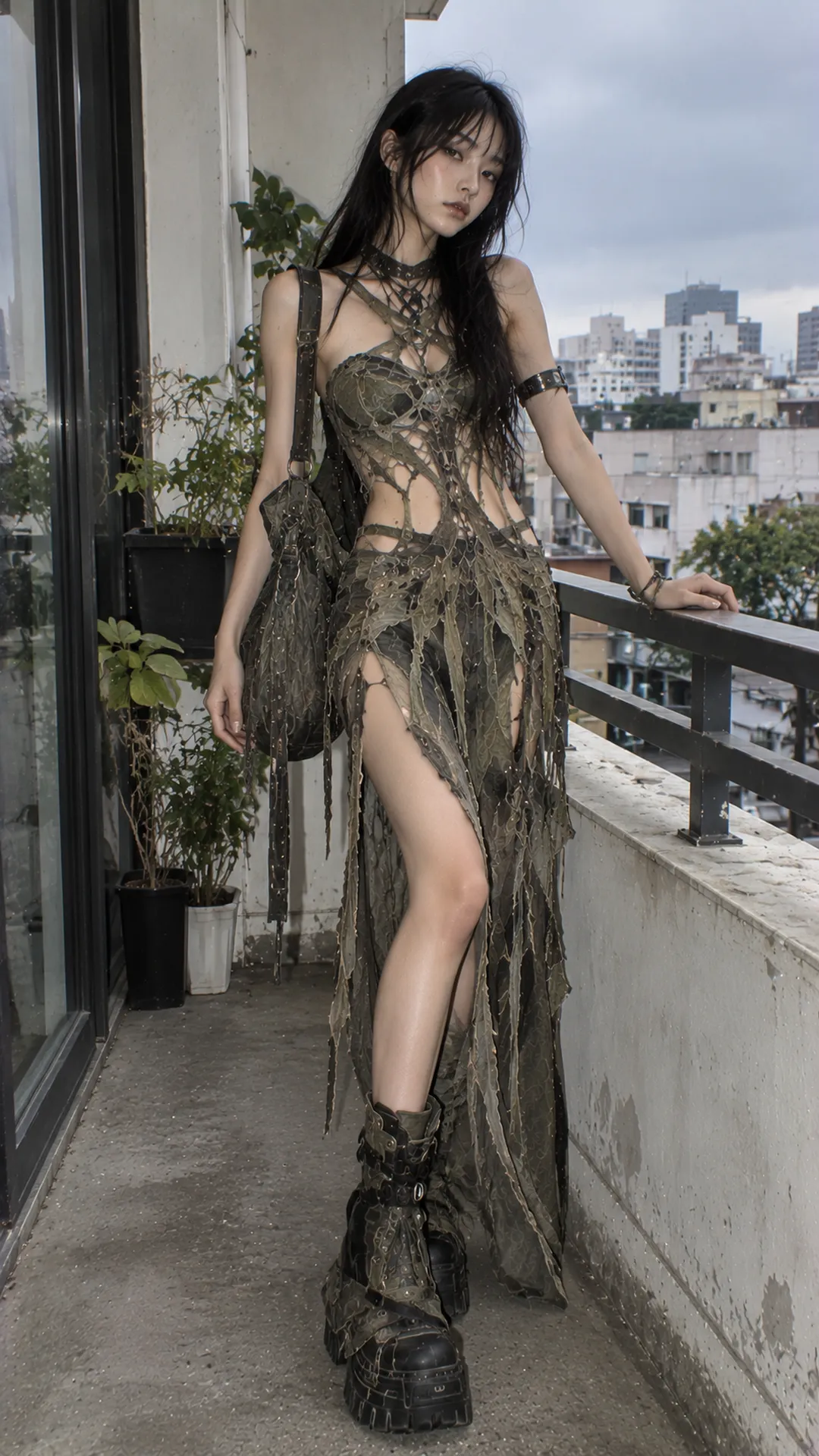
Start with one clear biological detail
If you are unsure where to begin, take one piece with curves, a branching pattern or a thin overlay and pair it with two familiar plain pieces. Take a full-body photograph to see whether the detail remains legible at a distance. If it does, you can stop there.
To compare other fashion directions before buying, use the Aesthetic Dictionary to find detailed guides. A wardrobe can share many base pieces across styles; the difference is how you arrange them around an idea.
Biopunk becomes easier to wear when treated as a design question: how can clothing suggest living structures and the future through wearable pieces? From that question, you can explore color, seams and layers while keeping the comfort of an everyday outfit.