

An Alternative Wardrobe on VND 1 Million: A Purchase Plan
In this guide: we address planning an alternative wardrobe with VND 1 million: what to prioritize, how to divide the budget, and how to avoid redundant purchases. For longer-term planning, read Building a Dark Aesthetic Wardrobe.
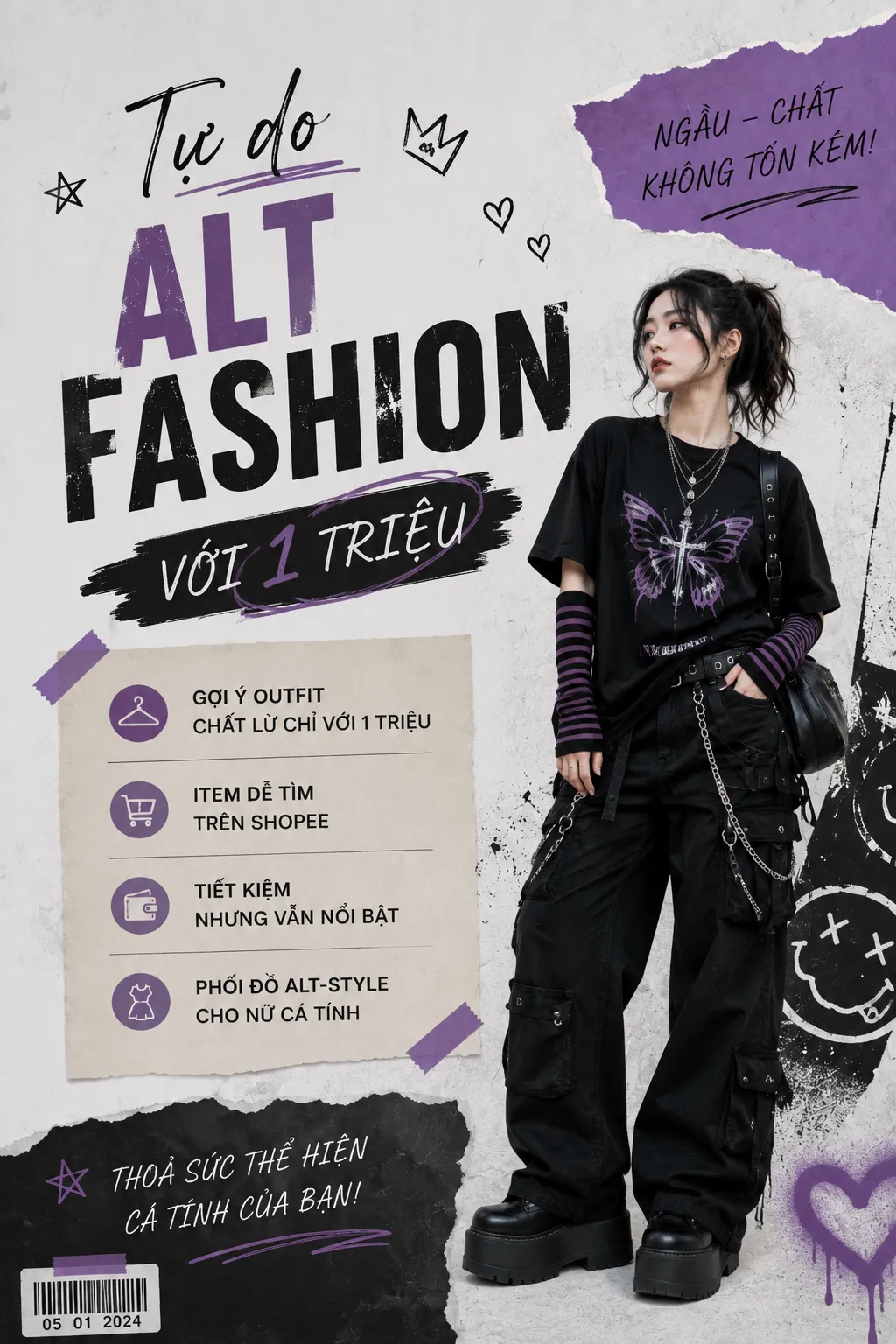
Guide collection: Alternative Fashion Shopping: Sizing, Budgets and Evaluating Shops (Vietnamese)
With a ceiling of VND 1 million, the aim is not the largest number of alternative-looking items but a small mix-and-match wardrobe: well-fitting foundations, a clear silhouette, one recognizable accent, and a reserve for sizing, shipping, or alterations. This is a budgeting exercise rather than a current market price list.
1. Your Existing Wardrobe Is Part of the Budget
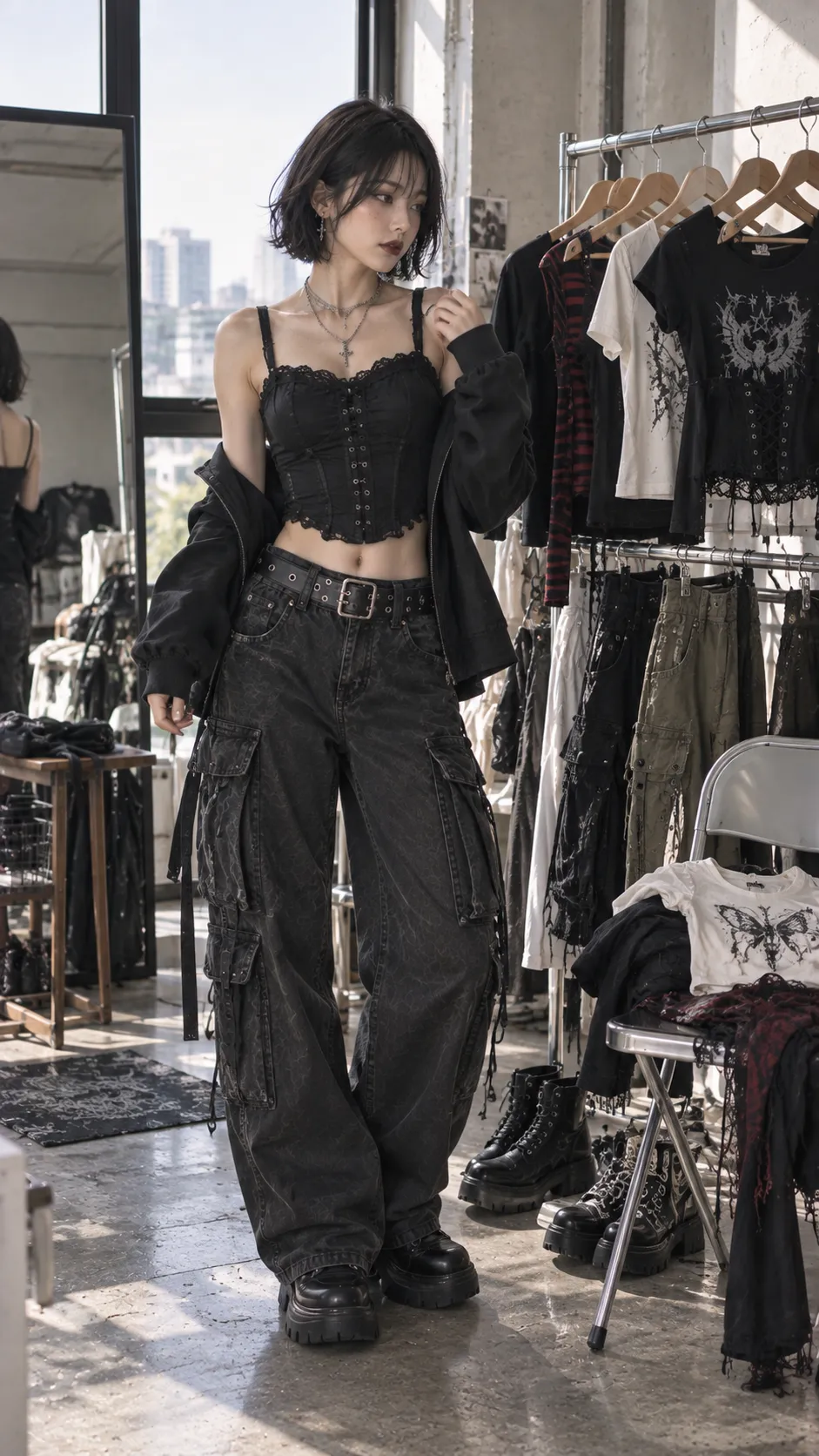
Before opening a shopping app, sort your wardrobe into four groups: compact tops, useful bottoms, outer layers, and shoes. Identify reusable black tees, baby tees, tanks, wide jeans, dark trousers, sneakers, boots, belts, and shoulder bags. Every useful existing item represents money you do not need to spend.
Buying a coordinated set differs from building a wardrobe. A set only needs to work together; a wardrobe should support multiple combinations. If you already have good wide jeans, adding a different texture, layer, or accessory may create more options than buying near-identical trousers.
2. Allocate by Role Rather Than Equal Item Counts
Avoid insisting that the budget must buy five pieces. Poorly fitting trousers plus four inexpensive accessories can still leave few usable outfits. Allocate by visual role and fit risk. The figures below are suggested allocation ranges within a VND 1 million ceiling, not current listed product prices; choose amounts that total no more than your budget.
| Role | Suggested share | Reason |
|---|---|---|
| Foundation or bottom | 35–45% | Trousers or skirts establish much of the silhouette and can carry greater fit risk. |
| Distinctive top or layer | 20–30% | Changes the mood while working with the foundation bottoms. |
| Anchoring accessory | 10–15% | A belt, chain, bag, or choker can provide a finishing reference. |
| Reserve | 15–20% | Allow room for shipping, exchanges, or alterations. |
3. Three Plans for Different Starting Wardrobes
Scenario A: You Need Useful Bottoms
Make trousers or a skirt the main purchase. Cargos or baggy jeans with suitable length, rise, and drape can pair with baby tees, tanks, graphics, soft corset tops, and knits. On a limited budget, one well-fitting bottom may create more options than three similar tops. For utility or street references, see Choosing Women's Cargos Online (Vietnamese).
Scenario B: You Already Have Good Jeans or Cargos
Use the budget to vary the upper half through a shaped baby tee, mesh, a soft corset top, off-the-shoulder knit, or outer layer. A new top can move the same trousers between Baddie, E-Girl, softer Goth, or Dark Feminine references. Instead of three graphics alone, vary necklines, fit, texture, or length.
Scenario C: Your Basic Foundations Are Already Useful
4. Prioritize Fit Risk Before Trends
Within a fixed ceiling, give more attention to items that are difficult to correct after a poor fit choice. Trousers involve crotch depth, waist, thigh room, and length. Structured tops involve bust, shoulders, and stretch. Boots involve foot length, width, weight, and exchange options. Clear measurements matter more for these than for a simple chain or small bag.
Small accessories often involve less fit risk. An unsuitable chain can be omitted, while badly fitting trousers affect the whole outfit. A well-fitting foundation with simple accessories may be more useful than a compromised foundation with many details.
Compare the listing's actual measurements rather than relying only on S, M, or L. For a separate process, see Choosing Alternative Clothing Sizes Online.
5. Three Outfits per New Piece
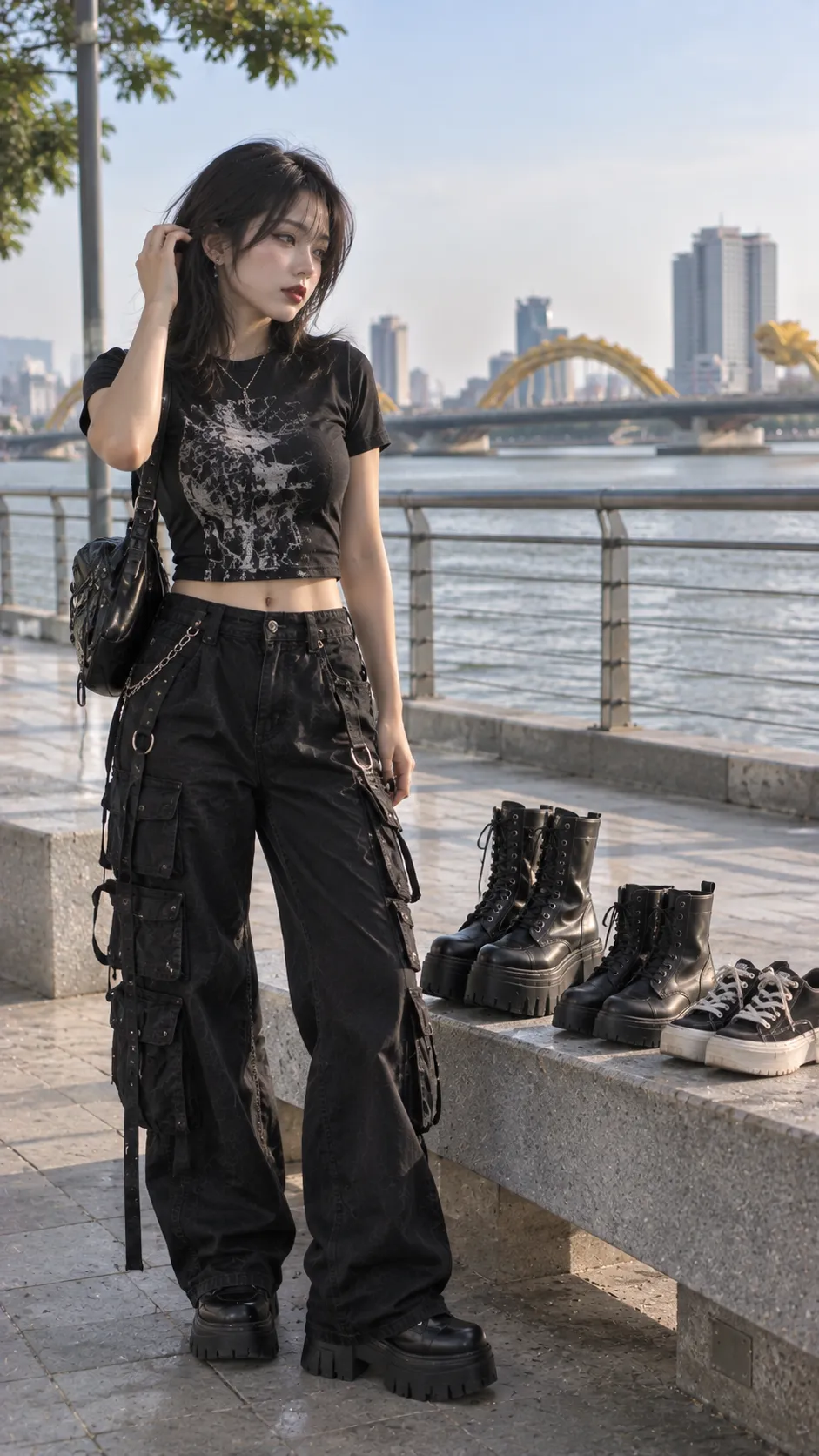
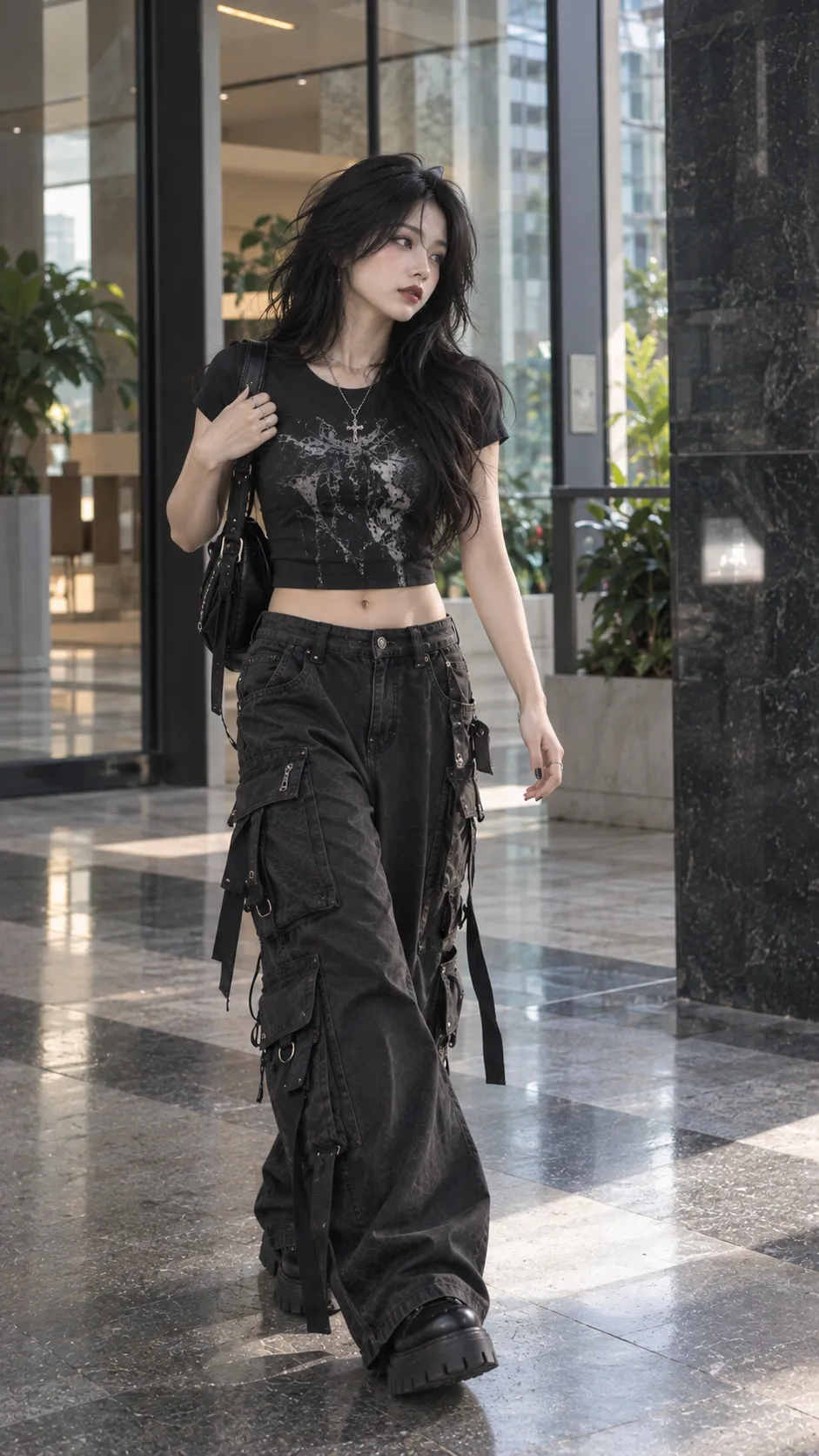
Before adding a piece to your cart, write three specific outfits using clothes you own. They need not represent different aesthetics, only real combinations you would wear. Black cargos might meet a tank and sneakers for school, a baby tee and belt for cafés, or graphics and combat boots for an evening. If only the listing's styled image comes to mind, the piece may depend too heavily on the seller's styling.
This identifies statement items that require several additional purchases before becoming wearable. A dramatic piece can still be worthwhile, but it often works better after the foundations are established. This connects with the idea of a capsule wardrobe: fewer pieces with clear roles and repeat use across settings.
6. One Small Wardrobe Can Support Several Alternative Directions
You do not need a separate capsule for every aesthetic. Reuse foundation pieces and change tops, layers, or accessories to shift the reference.
| Foundation piece | E-Girl | Baddie | Goth / Grunge |
|---|---|---|---|
| Black or gray cargos | Baby tee, striped layer, and platforms | Fitted top, shoulder bag, and sneakers | Graphic tee, small chain, and combat boots |
| Dark wide jeans | Graphic crop and silver belt | Tank or soft corset top with glasses | Worn knit or tee with a light jacket |
| Fitted black top | Plaid skirt or cargos with hair accessories | Baggy jeans and a shoulder bag | Dark bottoms with mesh or lace layers |
7. Keep Footwear and Accessories from Consuming the Budget
Shoes strongly affect an outfit but can also consume the budget. Reuse clean, comfortable sneakers or boots if they already work. Once you know which alternative directions you wear regularly, consider whether you need combat or platform boots (Vietnamese).
Accessories can act like punctuation rather than the whole sentence. A hardware belt, choker, short chain, or textured shoulder bag can finish several looks. Eight or ten accessories do little if you still lack a useful top or fitting bottoms.
8. The Wardrobe Must Work in Vietnam's Climate
Plan for heat, humidity, rain, and motorbike travel. Thick layers, heavy faux leather, or enclosed boots may appeal in reference images but receive little use. If an item is worn only for photographs or in air conditioning, its cost per wear can be high even when its purchase price is low.
Consider suitable cotton, moderate rib knits, lighter denim, draping cargos, thin mesh, and quickly removable outer layers. Length differences, texture, and visible spaces can create layering without three thick garments. Read Women's Layering Guide for ways to preserve depth with manageable bulk.
In rain, check hems, drying practicality, and footwear before decoration. Long hems can absorb water, and poorly finished metal can deteriorate. Attractive but inconvenient clothes may remain unworn.
9. Shop in Two Rounds
- Round One: Complete One Usable Outfit.
Buy one or two pieces that address the largest gaps, then wear them with existing clothes in real situations.
- Review After Wearing.
Note what is hard to combine, what remains missing, and whether the outfit feels hot, heavy, or inconvenient.
- Round Two: Expand the Combinations.
Use the remaining budget on pieces that work with both old and new items.
- Upgrade Later.
A frequently worn inexpensive piece can eventually be replaced with a more durable version once its role is clear.
This approach reduces impulse purchases and supplies real information about fit, preferences, and daily use. For planning beyond this first budget, read Building a Dark Aesthetic Wardrobe for the longer-term stage.
10. Warning Signs in a Small-Budget Alternative Wardrobe
- Buying by aesthetic label: purchasing anything called Goth, E-Girl, or Baddie despite an unsuitable silhouette.
- Repeating the same role: three graphic tees without useful bottoms or a layer to vary proportions.
- Skipping measurements: choosing a habitual size rather than comparing the listing's centimeters.
- No reserve: spending the full amount on products before shipping, exchanges, or hemming.
- Buying boots too early: footwear takes most of the budget while matching only a few outfits.
- Ignoring cost per wear: a cheap one-time purchase can offer less value than a more expensive weekly staple.
A useful VND 1 million planning goal: instead of maximizing item count, aim for three complete outfits, three uses for each new piece, and a reserve for online-shopping contingencies.
Frequently Asked Questions
Is VND 1 million enough for an alternative wardrobe?
It may support a small foundation when you reuse existing pieces. Treat it as a mix-and-match starting budget rather than a guarantee of completing a whole wardrobe in one purchase.
Should I buy trousers, tops, or accessories first?
Address the largest gap. If you lack fitting versatile bottoms, start there. With useful bottoms already available, a distinctive top or layer may add more options. Accessories can follow the foundation without necessarily being the final purchase.
Should I buy boots within this budget?
Only if footwear is a real gap and you have checked fit, weight, outfit versatility, and exchange terms. If existing sneakers or boots work, foundation clothing may deserve the first round's budget.
How do I decide whether an item is worth buying?
List three combinations with existing clothing, identify at least two real wearing settings, and check whether it duplicates another item's role. Reconsider pieces that work only in one reference image.
Does alternative fashion require all black?
No. Black, gray, and dark denim can mix easily, but burgundy, moss green, silver, muted cream, or colored graphics can also work within a coherent palette.