

Straight Tailored Trousers: Women's Outfit Ideas
What tops work with straight tailored trousers? Fitted tees, tanks, tucked shirts, vests, fine knits, open shoulders, blazers, or corset-inspired tops provide options. Choose around the actual rise, pleats, and drape.
Changing top length, footwear, and surfaces can shift tailoring among Office Siren, Dark Academia, and Dark Feminine references. This guide focuses on straight tailored trousers; general wide-leg volume has its own specialist.
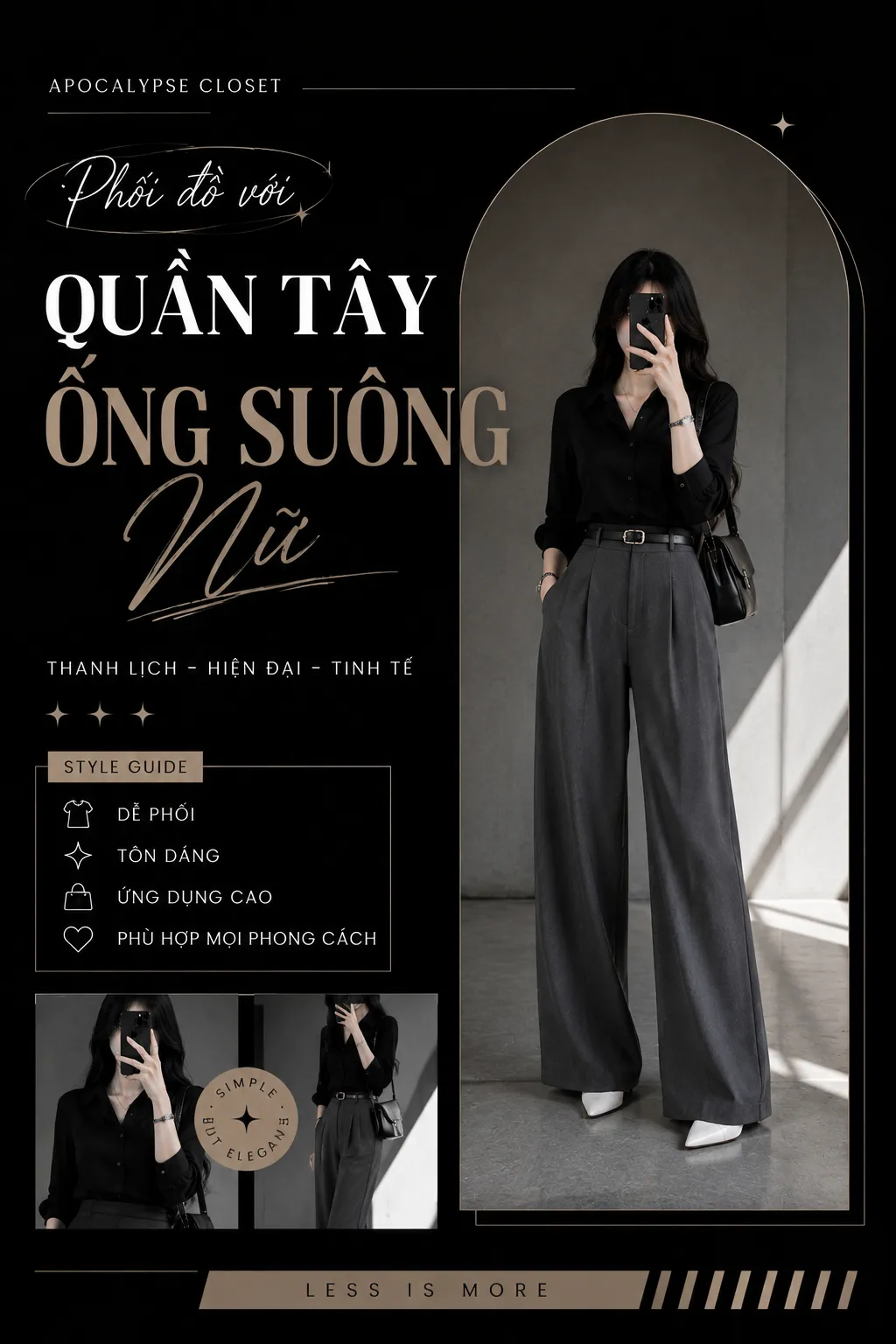
Guide collection: Women's Trouser Guides: Shape, Rise, and Styling
Starting point: mid- or high-rise straight tailoring with a fitted tee, tank, waistcoat, or fine knit. Set hem length beside the actual shoe so it clears the ground. Deeper pleats and more hip volume can contrast with a defined upper area.
On this page
Straight Does Not Mean Every Wide Trouser
Straight tailoring generally retains a more consistent leg width; wide legs create a larger lower fabric area. Labels can overlap, so inspect the actual outer line, drape, and opening rather than relying on retail wording.
The straighter silhouette can balance a softer top while a baby tee, mesh, or leather jacket changes conventional workwear references. Tailoring need not require a complete suit.
| Trouser construction | Top | Footwear | Effect |
|---|---|---|---|
| Straight, flat front | Baby tee, tank, knit | Boots or sneakers | A more compact modern outline |
| One or two front pleats | Fitted top, waistcoat | Loafers or ankle boots | Tailored structure with extra front volume |
| Wide / draping | Crop, bodysuit | Visible platform or defined toe | Larger movement and lower fabric area |
| Low / mid rise | Baby tee, cropped shirt | Substantial loafers | Y2K / Office Siren references |
Waistband and Pleats Change the Fit
Pleats provide front room and change when seated. Strong pulling that opens them while standing can indicate an unsuitable cut or size. Flat fronts create a different surface. Higher rise starts the lower area earlier; mid and low rise change the torso relationship. Compare top and hem with each.
An excessively tightened belt does not resolve an ill-fitting waistband or distorted pleats. Inspect secure waist placement, pocket gaping, and the intended crease line.
Seven Top Formulas
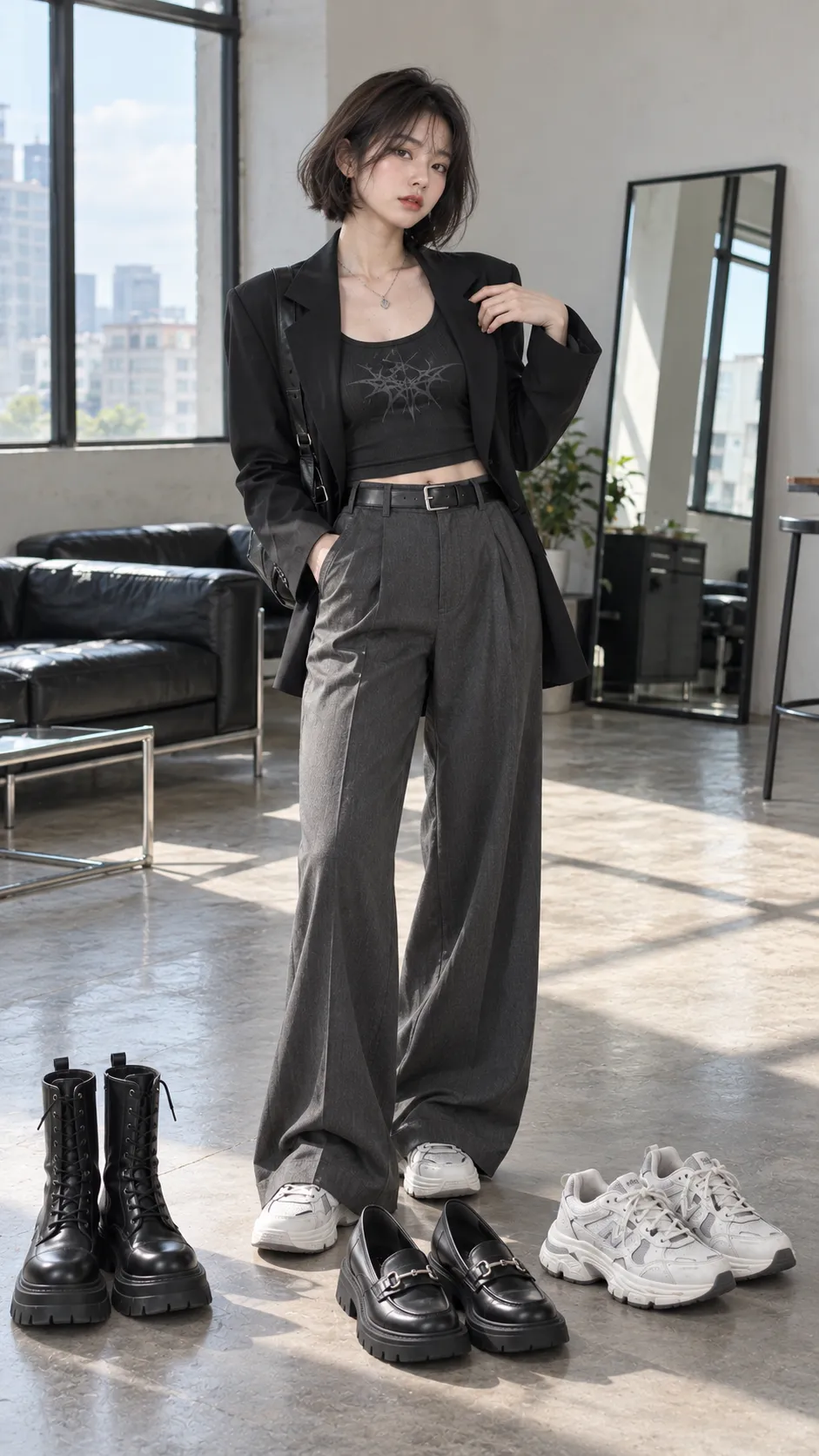
With straight tailored trousers, inspect rise, pleats, and drape as well as the top category. Fuller hips or thighs can contrast with a defined shoulder, waist, or top ending; a straighter quieter trouser can support more upper volume.
For a shirt without a complete formal suit effect, explore women's shirts by fit, color, and tuck before adding further tailoring.
1. Fitted Tee or Tank
A compact upper area leaves pleats and the leg line central. Suitable cotton creates a casual surface; rib adds another defined texture. In heat, one appropriate light top may be more practical than keeping a blazer on all day.
2. Tucked or Cropped Shirt
Top ending changes the proportion more than white alone. Deep pleats with a long oversized shirt add volume; a tuck or waist-level hem separates them. Cream, gray, cooler brown, or selected stripes add Academia references; a plain shirt with a chosen opening offers another direction.
3. Waistcoat Instead of a Blazer
A tailored vest defines shoulder and waist without sleeves. With front pleats, a more compact vest creates one counterpoint. Explore women's vest layering; a longer hip-covering hem creates another, less waistband-focused relationship.
4. Fine Knit or Turtleneck
Fine knit softens tailoring while retaining a compact outline. Darker turtlenecks create one Academia route; round or V necks feel less closed. Choose actual fabric weight for the conditions. Loafers or Mary Janes add academic references; sneakers make the finish more casual.
5. Off-Shoulder, Square Neck, or Camisole
A softer open neckline contrasts with crease and side lines. At higher rise, a tuck or top near the waistband reveals the intended transition. Compact-toe boots create a sharper finish than large platforms; either can be deliberate.
6. Blazer and Compact Inner Layer
A tank, fitted tee, or square neck beneath open tailoring changes the usual suit underlayer. A cropped blazer reveals the waistband; longline tailoring frames a straighter trouser differently. Explore women's black blazer outfits.
7. Corset-Inspired Top or Bodysuit
Upper shaping defines a waist beside trouser volume. With pinstripes, pleats, or a prominent belt, quieter bodice details can leave the middle clearer. Evening layers might add leather and boots; in heat, a simpler shaped tank offers another option.
For the broader darker academic framework, explore Dark Academia styling. All seven formulas aim for a deliberate proportion anchor so waistband, pleats, and drape remain readable. A fitted top is an option rather than a requirement.
What Shoes Work with Straight Tailoring?
Compact-toe ankle boots provide a sharper ending for Dark Feminine references. Substantial loafers add structured academic references and more visible sole weight. Sneakers make a fitted tee or tank combination more casual. Pointed shoes / slingbacks add another polished finish for appropriate work or evening settings. Platforms adds shoe height but need not compensate for excessive trouser length; reassess the hem first.
Try the hem with the actual pair. A small break above a low shoe differs from fabric pooling over boots. Entirely hidden uppers or a very short crop create other effects; choose the intended leg line and ground clearance.
Compare Side Lines and Hems
The Closet provides one tailored-trouser reference and two wider-leg comparisons. They help distinguish the outlines without labeling all roomy trousers straight.
Example scope: Look #37 is the tailored reference; #122 and #32 compare wider-leg silhouettes.
Compare Actual Closet Looks


- LOOK #37 (Vietnamese): the closest tailored-trouser reference here, with a cropped tank and jacket changing its officewear context. A photograph alone does not establish every construction detail.
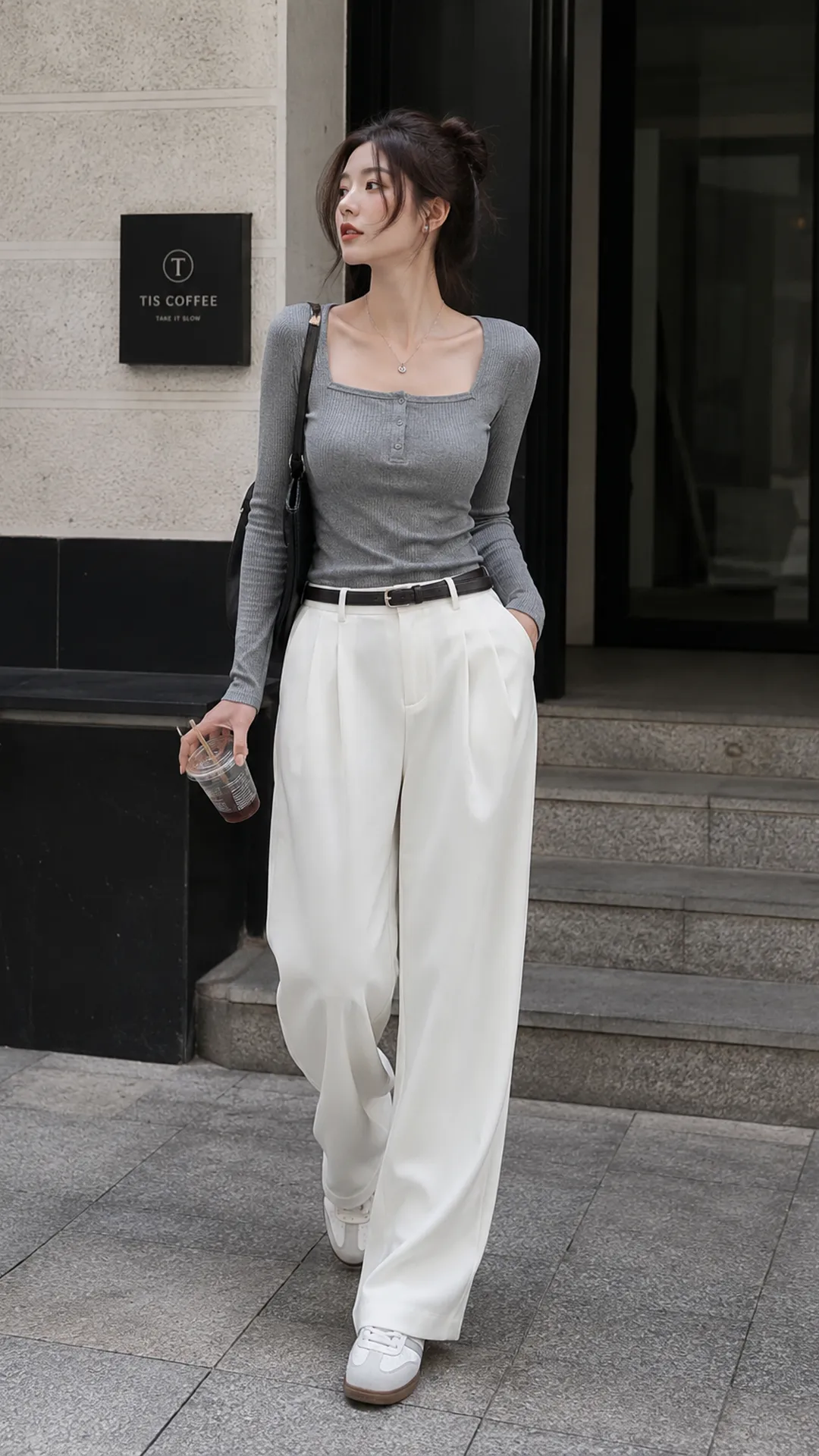
- LOOK #122 (Vietnamese): wide white trousers show the larger opening and substantial shoe area.
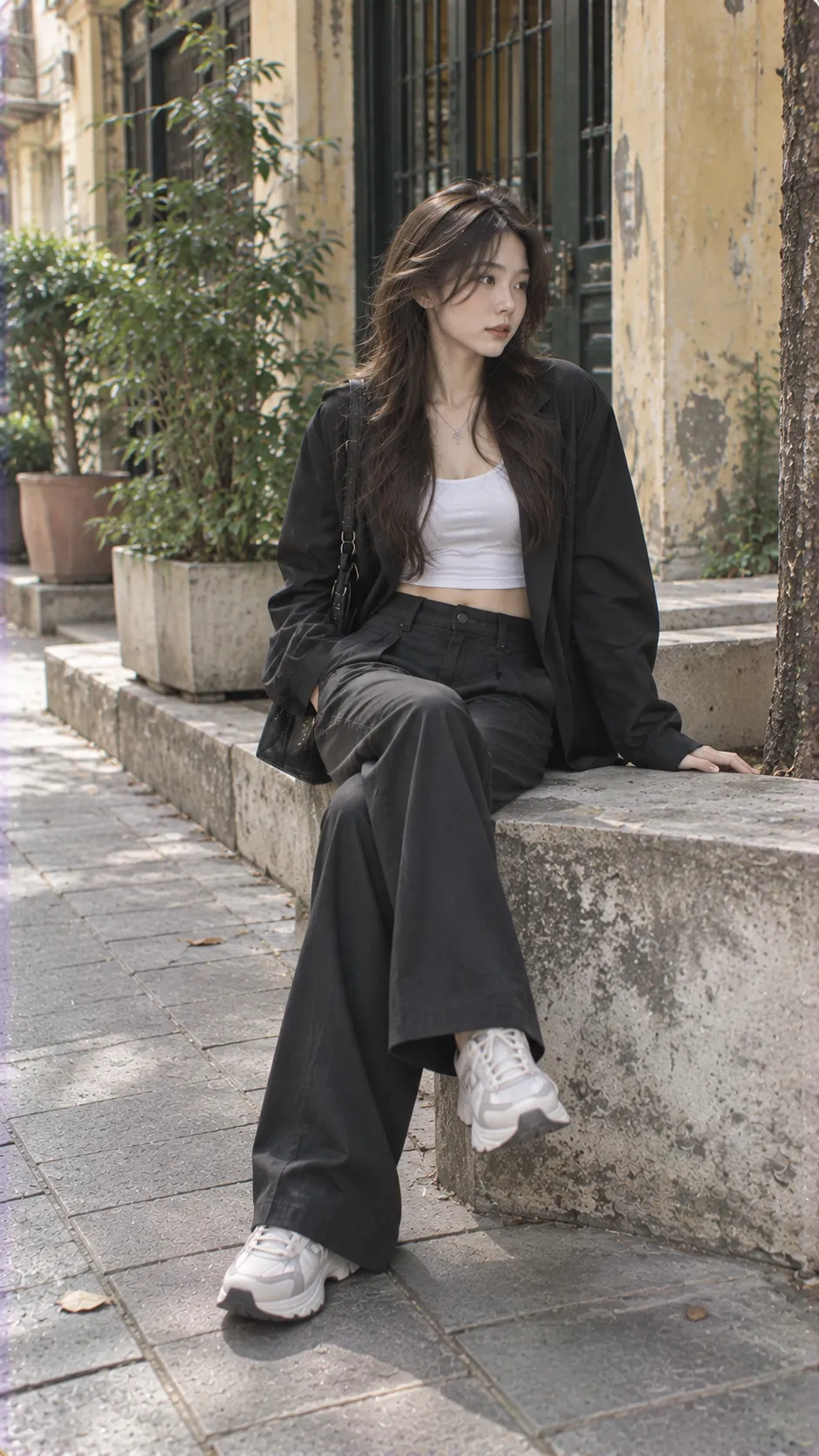
- LOOK #32 (Vietnamese): wide black trousers demonstrate how dark color can make width less obvious in a small image.
- Thigh: a straight fit can have ease without the same larger fabric area as a wide cut.
- Knee: the side line remains relatively consistent through the lower leg.
- Hem: a substantially broader lower opening suggests a wider silhouette; inspect the whole pattern and worn fit rather than one measurement alone.
Three Style Routes
Office Siren: black or gray tailoring + fitted tank or off-shoulder top + blazer or waistcoat + defined-toe footwear. Selected glasses or a fine belt can provide enough detail without every officewear cue.
Dark Academia: pleated trousers + fine turtleneck or vest + loafers or Mary Janes + brown, black, or gray. Let either pinstripes or argyle lead rather than requiring both. Matte tailoring and knit create depth.
Dark Feminine: dark straight tailoring + corset-inspired or fitted knit top + leather jacket or blazer + boots. One reflective surface can contrast with matte supporting garments. In heat, a neckline or bodice seam can supply the reference without a jacket.
Hem Length Is a Major Adjustment
Try the shoes you use most. One hem may not serve both low loafers and tall platforms equally. A slight break creates one straighter drape; extensive pooling changes it. Choose the intended use before altering length.
For a more continuous lower line, compare close shoe and trouser tones, a deliberate opening position, and a crease falling as intended rather than only increasing rise.
Fabric, Drape, and Creases
Firmer fabric can hold a crease; softer constructions can drape more. Fiber names alone do not guarantee either behavior. Compare reflection, weight, lining, and care instructions. A matte top can contrast with reflective trousers; heavier wool blends may suit cooler conditions.
Where possible, sit for ten to fifteen minutes to inspect creasing and recovery at waist and thigh. Decide whether that behavior suits the finish you want through a day.
Common Tailoring Checks
- Excess hem length hidden with platforms: can still drag or pool beyond the intended break.
- Strongly pulling front pleats: call for a hip or waistband fit check.
- Blazer, shirt, loafers, and pinstripes together: create a conventional formal reference; change one if another direction is intended.
- Top hiding the waistband: removes one of tailoring's structural anchors.
- Choosing only S, M, or L: also compare rise, waist, hip, inseam, and actual movement.
Frequently Asked Questions
What tops work with straight tailored trousers?
Fitted tees, tanks, fine knits, waistcoats, cropped shirts, or off-shoulder tops are options. More pleat volume can contrast with a clearer waist or shoulder.
What shoes work with wider tailored trousers?
Ankle boots, loafers, sneakers, or suitable platforms can work. Set length beside the actual shoes so the hem clears the ground with the desired break.
Can shorter women wear straight tailoring?
Yes. A chosen rise, top ending, hem, and shoe tone can clarify the lower line if desired. Height does not restrict the style.
How does straight tailoring differ from wide legs?
Straight cuts retain a more consistent width; wide cuts create a larger fabric area. Retail labels overlap, so inspect the worn silhouette.
How can you style straight trousers for work?
A tucked shirt, fine knit, knitted polo, or waistcoat with appropriate loafers, slingbacks, or ankle boots provides options. Check the actual dress code and hem.
Can darker tailoring work in Vietnam's heat?
Potentially. Assess fabric weight, drape, lining, and ventilation; use a suitable tank, fitted tee, square neck, or lighter vest instead of many layers. Dark color and practical construction can coexist.
Explore related directions: pear-shape outfit proportions (Vietnamese).