

Women's Vest Outfits: Choosing Layers by Shape and Style
A sweater vest and a tailored waistcoat create different proportions. Start with stiffness, length, and the space left for an underlayer.
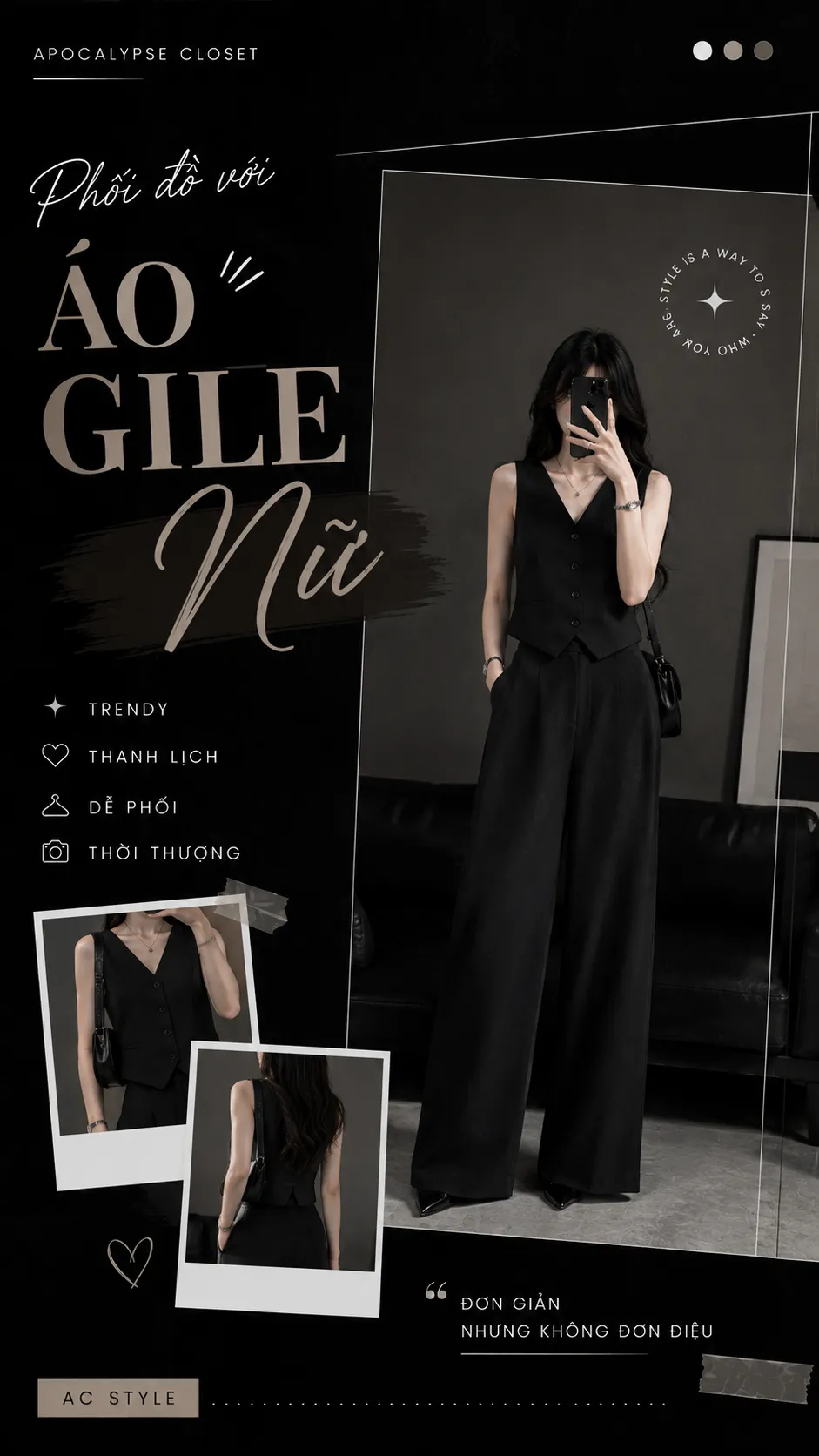
Guide collection: Women's Top Guides: Fit, Layers, and Styling
Adaptable starting point: sweater vest + compact tee or shirt + straight trousers or mini; waistcoat + tank or fitted tee + mid-rise tailored trousers. With a long roomy vest, consider a finer underlayer and a visible waistband below.
On this page
Sweater Vests and Waistcoats: Different Structures
A women's vest may mean a knitted sweater vest or a tailored waistcoat with buttons, shaping, or darts. Knit supplies softer volume and often uses an underlayer to define neck and sleeve areas. A waistcoat is more structured and may be worn as a standalone top where its construction and coverage suit, or over a tank, shirt, or mesh.
Inspect shoulder width, hem position, and whether the body is fitted or boxy. An oversized hip-covering knit already creates a larger upper area; a long shirt and very wide trousers add more volume. A waist-shaped tailored vest supplies structure that can contrast with wide trousers or a long skirt.
| Vest type | Adaptable underlayer | Bottoms | Effect |
|---|---|---|---|
| Cropped sweater vest | Baby tee, fine shirt | High-rise jeans, pleated skirt | A clearer waist and lower-body starting point |
| Oversized sweater vest | Fitted tee, less voluminous shirt | Leggings, mini, straight jeans | Relaxed Preppy / Grunge references |
| Fitted waistcoat | Tank or suitable standalone styling | Tailored trousers, maxi skirt | Office Siren/Dark Feminine |
| Boxy waistcoat | Mesh, fitted tee | Baggy or straight jeans | Y2K tailoring |
Underlayers: Deliberate Necklines, Sleeves, and Thickness
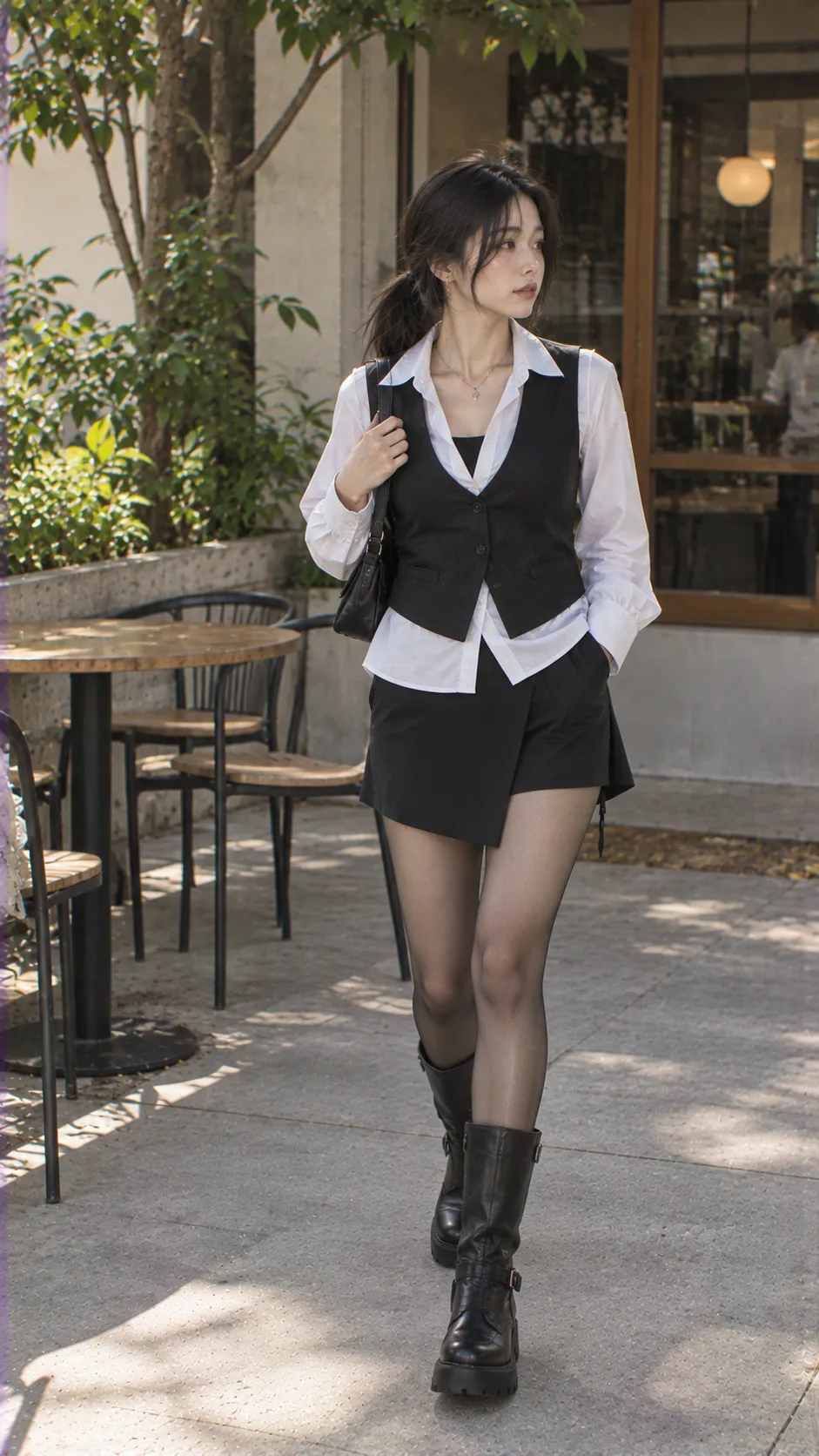
If choosing between roomy, black, or white shirts, explore women's shirt styling by fit and color before selecting the bottoms.
Because a vest leaves the arms open, the inner layer strongly changes the outfit. A white shirt introduces contrast for Dark Academia, but a stiff collar with a heavily patterned knit can crowd the upper area. A baby tee or fitted long sleeve feels less formal. Mesh or sheer fabric can introduce a darker direction beneath tailoring, especially in black, charcoal, burgundy, or cooler brown.
A useful starting point is one fuller layer and one more defined layer. With a thick roomy vest, try finer sleeves beneath it. With a fitted waistcoat, a moderate puff sleeve or softer-collar blouse may supply contrast. In heat, a square-neck tank can provide an inner layer without much extra fabric.
The Neckline as a Visual Anchor
A deeper V creates a vertical direction and can frame a pointed shirt collar or higher-neck tank. A crew-neck vest covers more of the chest and can work with a fine turtleneck or baby tee. When both necklines are elaborate, fewer necklaces or tie details can leave the face area clearer.
What Trousers and Skirts Work with a Vest?
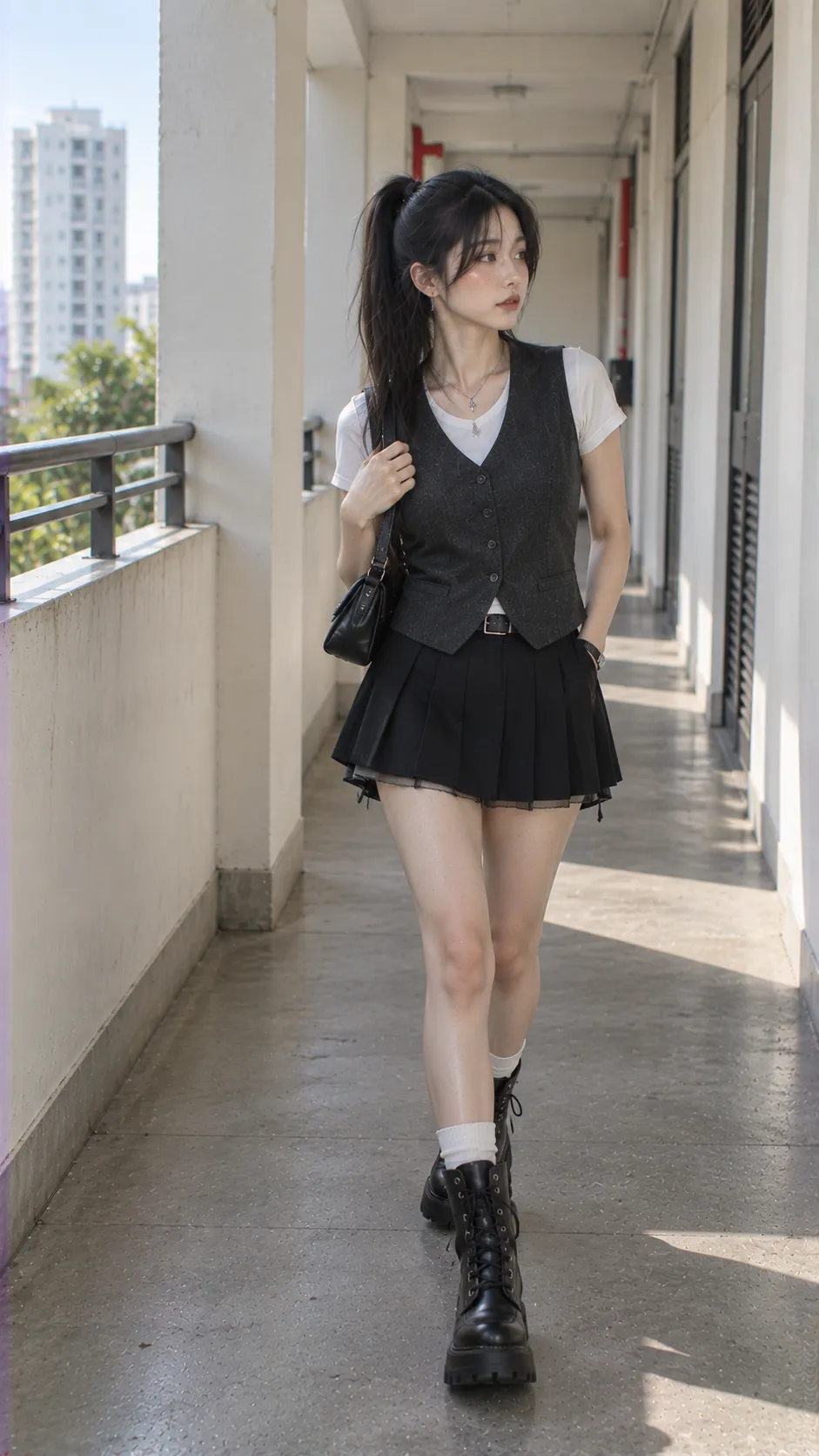
For denim, compare the straight-jeans guide. For pleats, explore pleated-skirt styling to assess additional hip volume.
Vest Length Changes the Visible Leg Line
A cropped vest finishing near the waistband marks a shorter upper area beside fuller bottoms. A mid-hip hem can conceal the waistband without reading as deliberately long. Try tucking the underlayer, choosing a visible waistband, or opening the vest to create two vertical edges.
An oversized vest does not require tight trousers. Straight jeans, a mini with substantial boots, or cargos with a defined waist can work. Retain a readable structural point at shoulders, waist, knee, or ankle when that is the intended effect.
Each layer can have a purpose: defining a collar, introducing texture, marking a waist, or creating contrast. More layers are not automatically more effective.
Three Style Routes from the Same Vest
Dark Academia: dark sweater vest + cream or gray shirt + pleated midi or tailored trousers + Mary Janes or loafers. Try a subdued palette with one main argyle or plaid pattern.
Grunge/E-Girl: roomy sweater vest + fitted tee or mesh + mini or straight jeans + combat/platform boots. A deliberately exposed inner hem can feel less uniform-like.
Office Siren/Dark Feminine: fitted black waistcoat + tank or suitable standalone styling + mid-rise tailored trousers + ankle or pointed boots. Selected silver hardware, a fine belt, and narrow-framed glasses can add detail without a complete traditional suit.
A Three-Point Layering Check: Neckline, Hem, and Waistband
A vest can feel crowded when the inner neckline, vest hem, and waistband sit close together or compete equally. Inspect those three points before replacing the entire outfit.
Example scope: Look #82 is the closest vest-like layer; the other two compare layering rather than directly showing sweater vests or waistcoats.
- Neckline: with a defined vest V or collar, simplify the underlayer or expose its collar deliberately.
- Hem: a longer vest may benefit from a visible lower-body line; a shorter one leaves more space for fuller bottoms.
- Waistband: if both layers conceal it, try a tuck, open fastening, or a more clearly defined waistband below.
Compare Actual Closet Looks
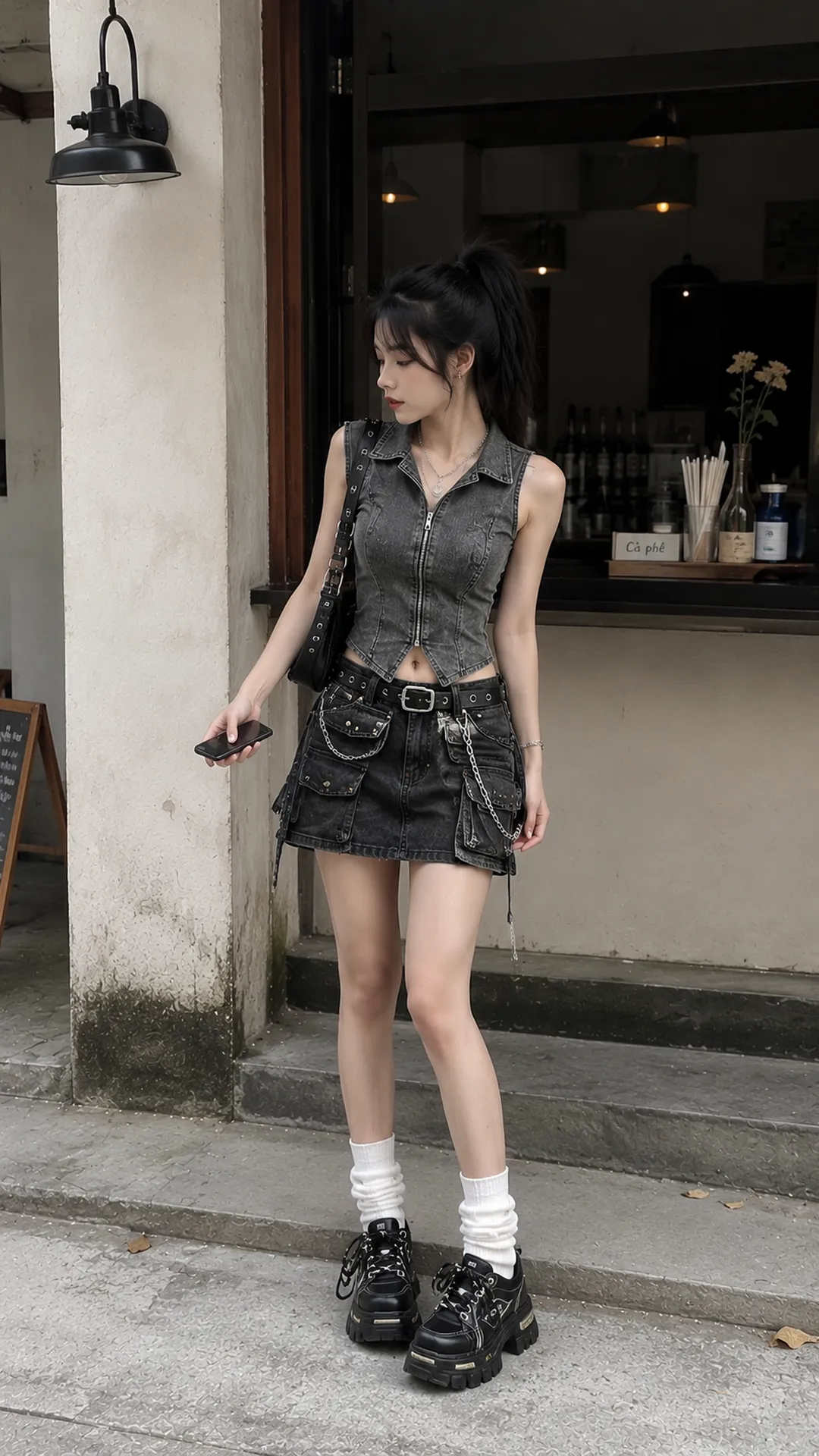
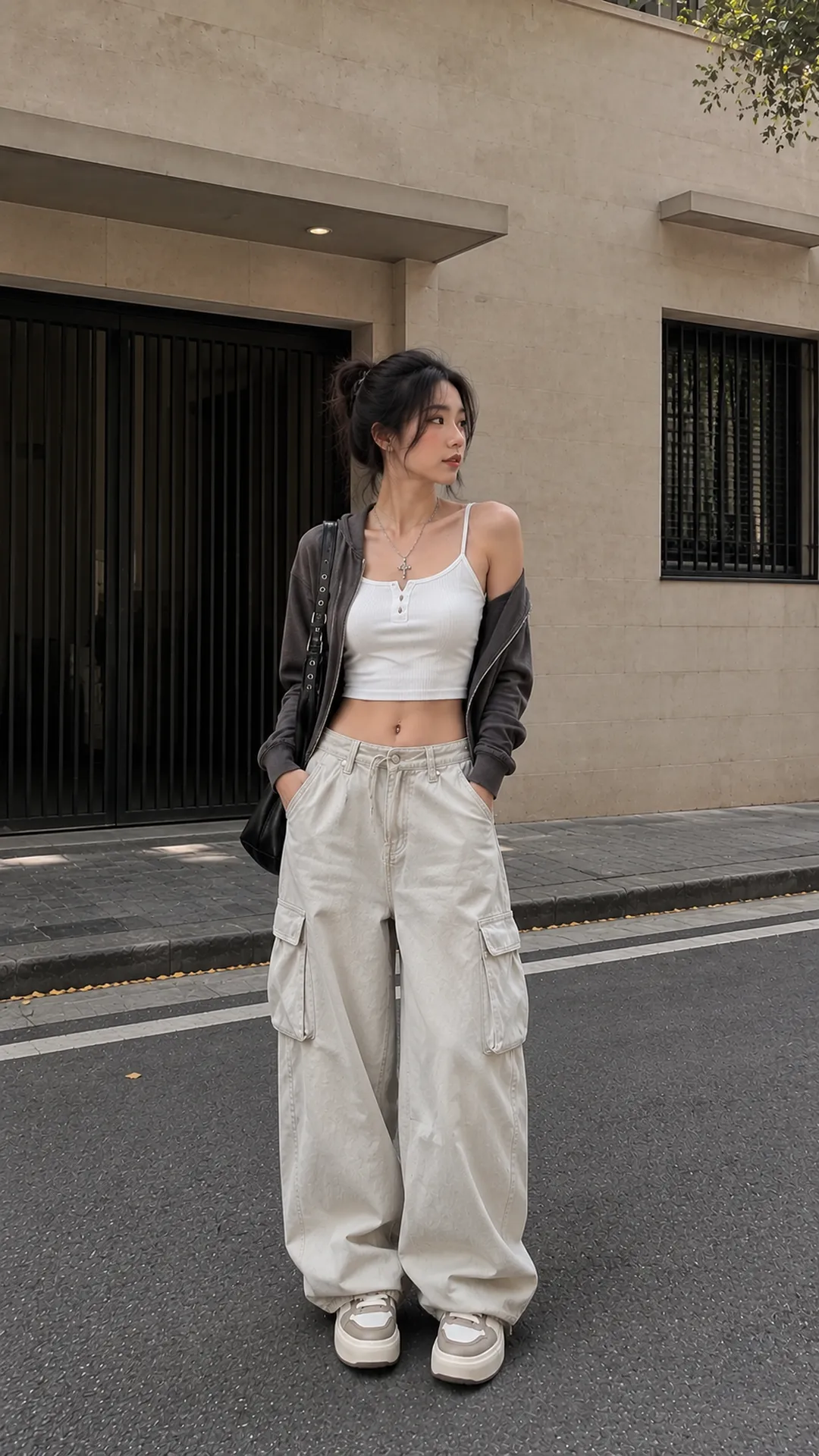

- LOOK #82 (Vietnamese): the closest vest example here. The structured upper area ends clearly before the denim skirt.
- LOOK #125 (Vietnamese): a light inner layer and open outer layer form separate frames instead of one solid upper block.
- LOOK #30 (Vietnamese): more involved layering with a corset, bolero, and waist-tied shirt. Distinct layer endings help separate the pieces.
Weather: Materials Matter More Than the Style Name
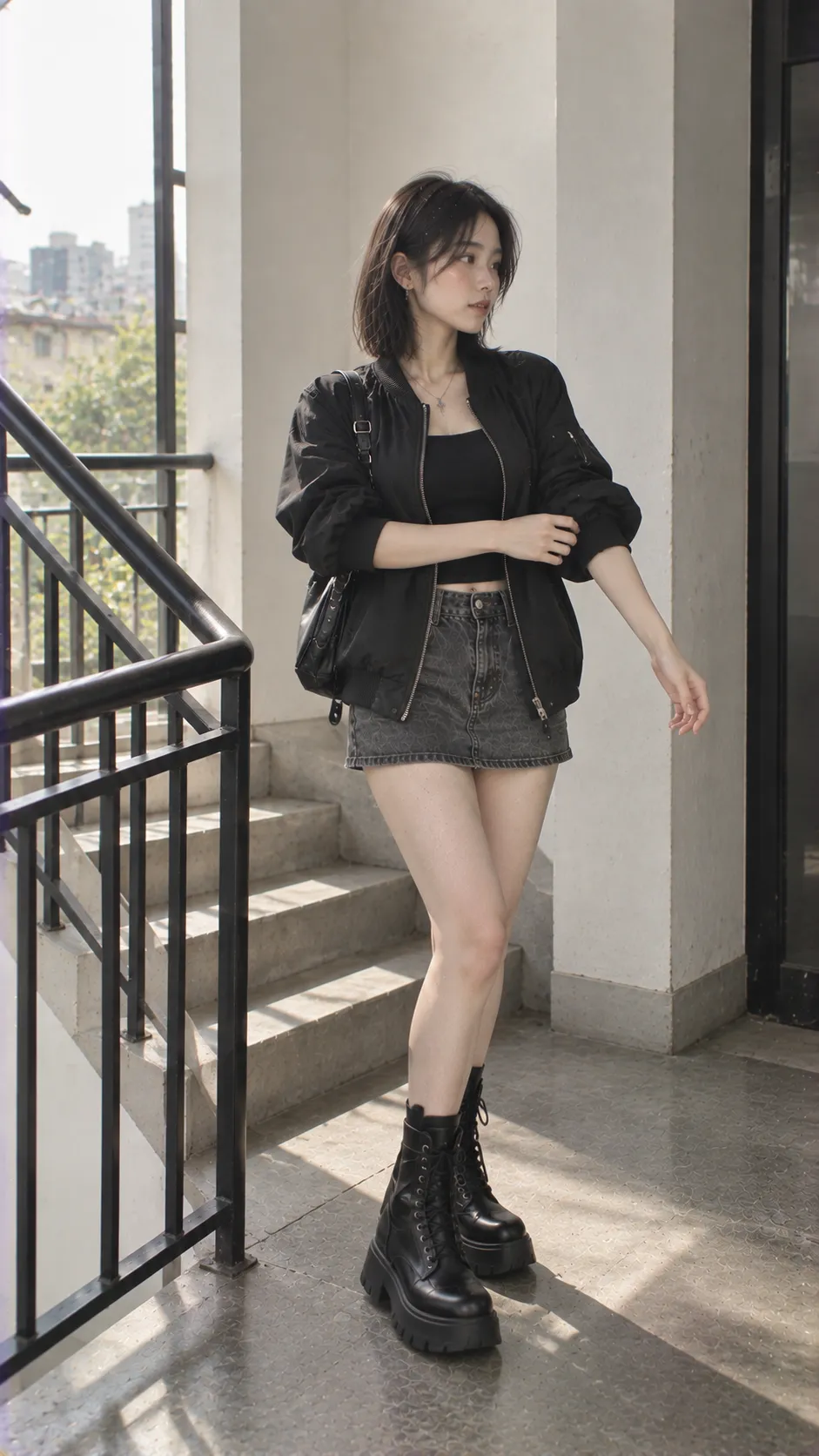
Thick wool, heavy acrylic, and fluffy knits can retain warmth and become cumbersome over a shirt. In humid heat, consider a finer knit, suitable cotton blend, or lightly lined waistcoat with an appropriate finer underlayer. In cooler conditions, a fine turtleneck can add coverage while retaining a compact shoulder outline.
Check knit friction against shoulder bags or chains, which can contribute to pilling or snagging. A waistcoat needs adequate armhole room when raising the arms. Assess the back and button tension as well as the front appearance.
Common Reasons a Vest Outfit Feels Heavy
- Three thick layers: a heavy shirt, knit vest, and blazer can crowd shoulders and armholes.
- Both hems ending together at the hip: may create a broader horizontal break than intended.
- Every school / Preppy cue together: argyle, tie, plaid, high socks, and loafers can become a deliberate costume-like combination rather than a subtler reference.
- A waistcoat pulling at the buttons: X-shaped tension creases indicate that the fit needs reassessment.
- Ignoring the back: extra fabric can change the silhouette even when the front looks compact.
A Thirty-Second Outfit Choice
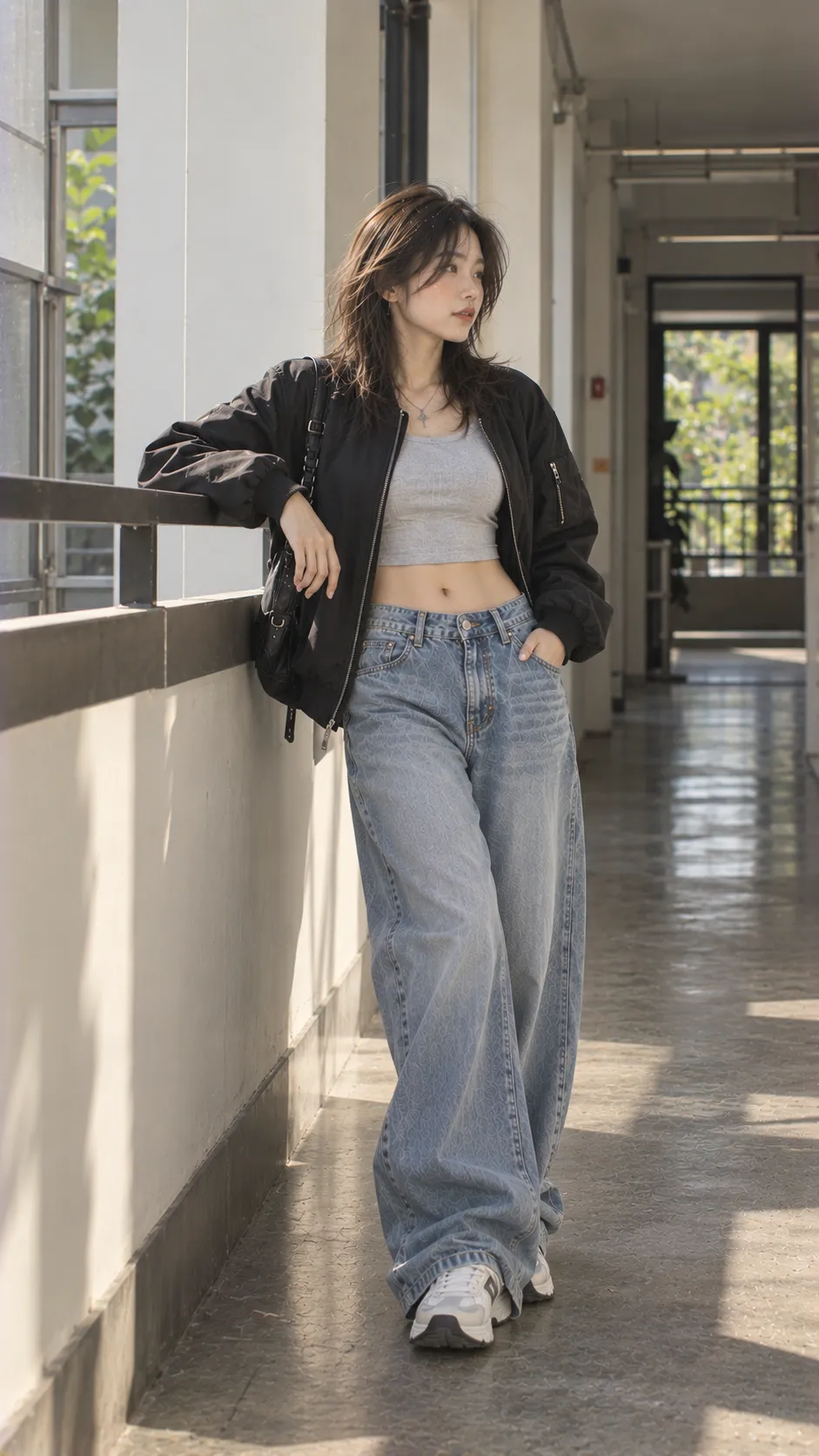
Soft / roomy vest: finer underlayer + a visible waistband below. Fitted / tailored vest: consider more volume in trousers or a skirt. For a darker direction: try black mesh or fitted long sleeves and boots instead of the white-shirt combination. For everyday simplicity: let the vest supply the main texture and keep other garments plainer.
Frequently Asked Questions
What can you wear beneath a women's vest?
A fine shirt, baby tee, fitted tee, fine turtleneck, or mesh can work. With a thicker roomy vest, compact sleeves reduce bulk around shoulders and armholes.
What trousers work with a sweater vest?
Straight jeans, tailored trousers, cargos with a defined waist, or leggings are options. A cropped vest leaves room for wider trousers; a hip-covering vest may benefit from a clearer lower-body line.
Can you wear a vest with a long skirt?
Yes. A cropped or waist-defined version distinguishes the two areas. With an oversized vest, a straighter skirt drape and visible footwear provide another option.
Does a waistcoat require an underlayer?
Not always. A suitably constructed waistcoat can be worn as a top if its armholes, neckline, and fastening provide the desired coverage. Tanks, mesh, or fitted tees offer compact layering alternatives.