

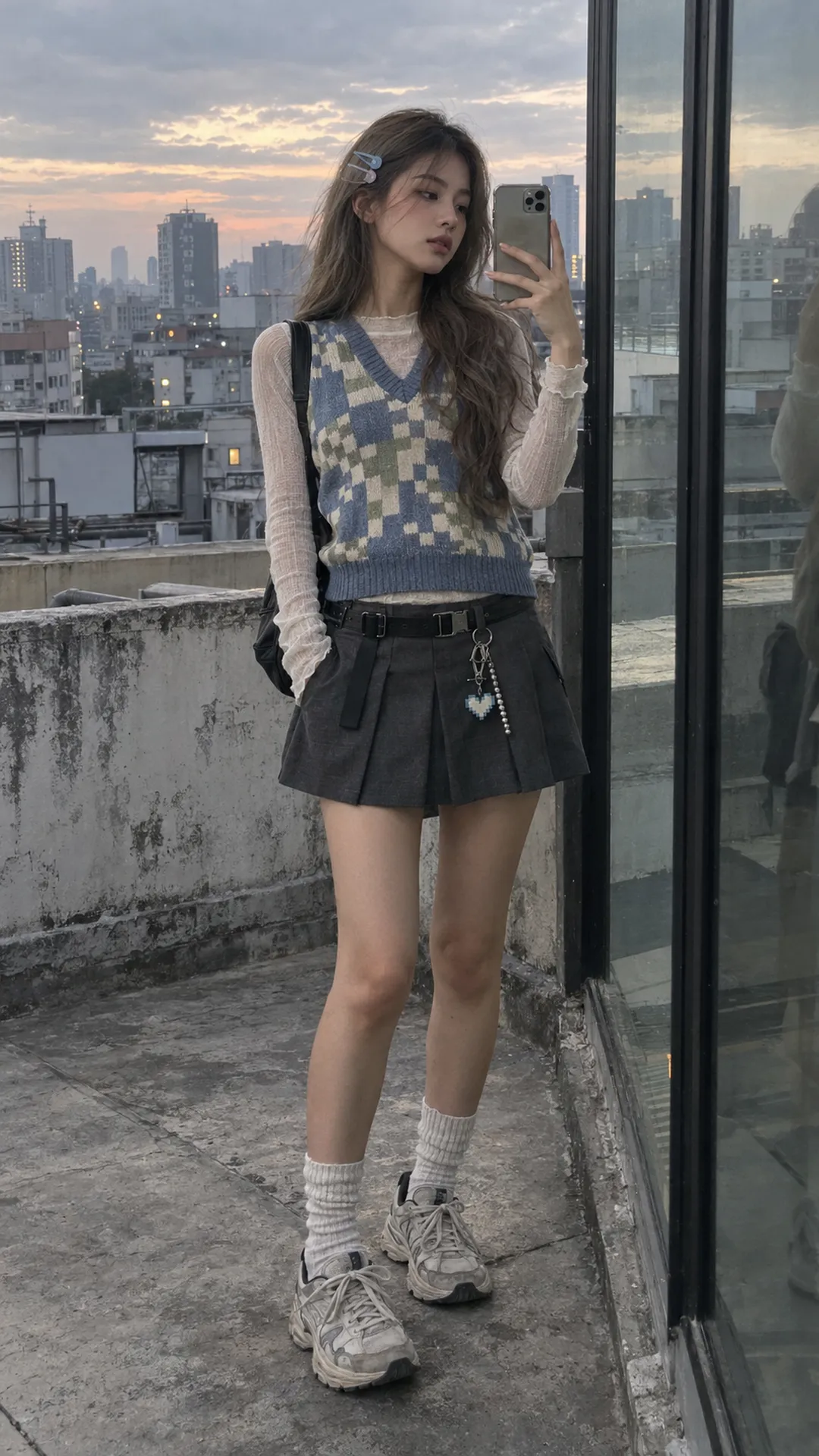
What does Webcore revisit about the old Internet?
Know Your Meme describes Webcore, also called Internetcore, through pixel graphics, web design and software sounds from the late 1990s to the early 2000s. Its scope therefore extends beyond clothes to imagery, animation and music. An outfit is one way of interpreting that inspiration through wearable items.
The old Internet supplies the reference; contemporary Webcore can select and rearrange it. You do not need to wear exactly what computer users wore in a particular year. A window in an unexpected area of empty space, an enlarged cursor or repeated icons can feel both familiar and strange.
To explore documentation rather than only fashion mood boards, start with One Terabyte of Kilobyte Age, Olia Lialina and Dragan Espenschied's project examining archived GeoCities pages. It places personal-web references in context; it is not a clothing rulebook or evidence of a fashion trend's popularity.
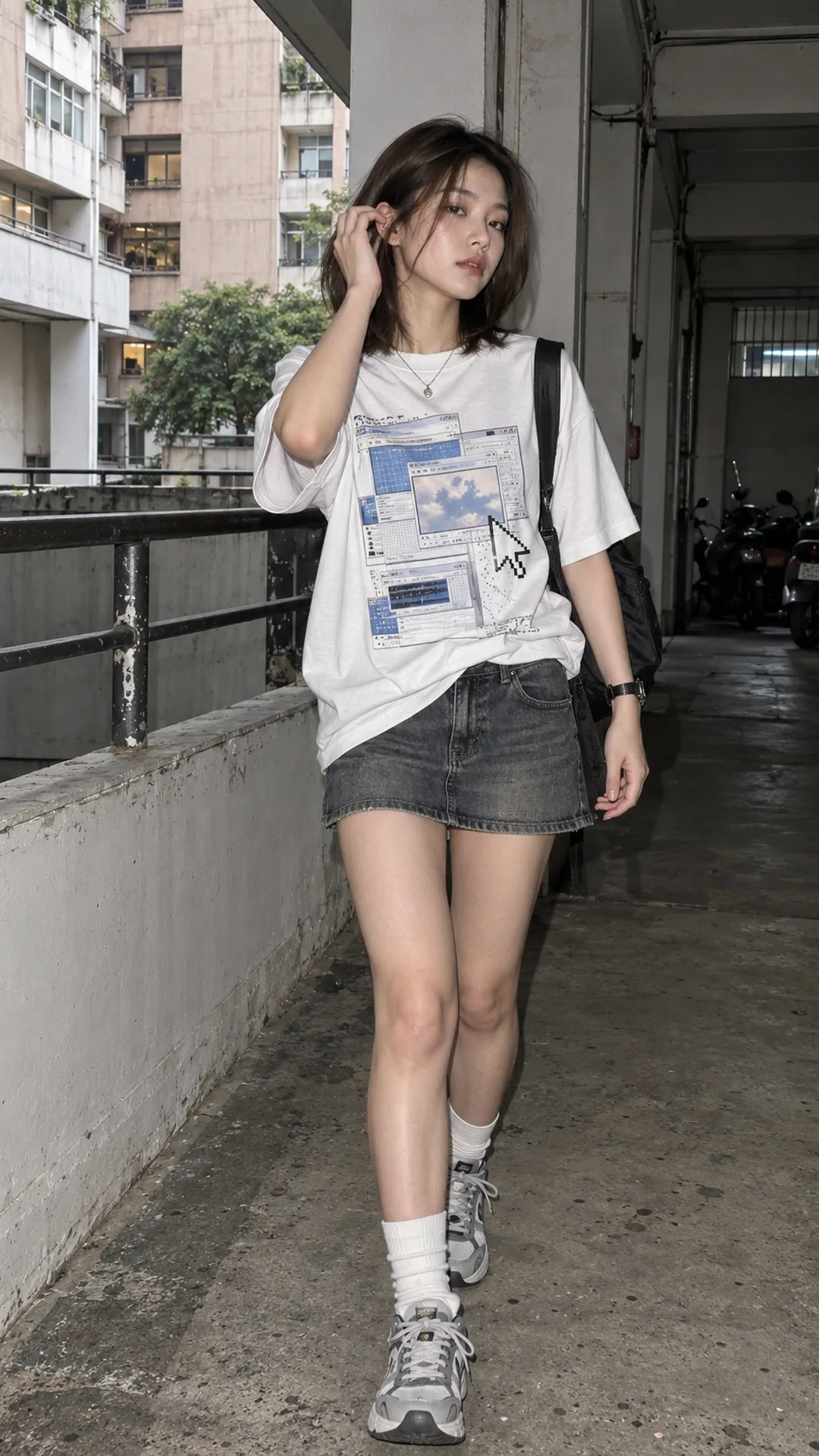
Identify the imagery before choosing materials
Window frames and interface icons
Rectangular frames with a bar across the top, small buttons and a cursor readily suggest a computer screen. When choosing a top, check whether the composition reads at conversational distance. A tiny image covered by a bag strap can be an interesting private detail, but will contribute less to the overall outfit.
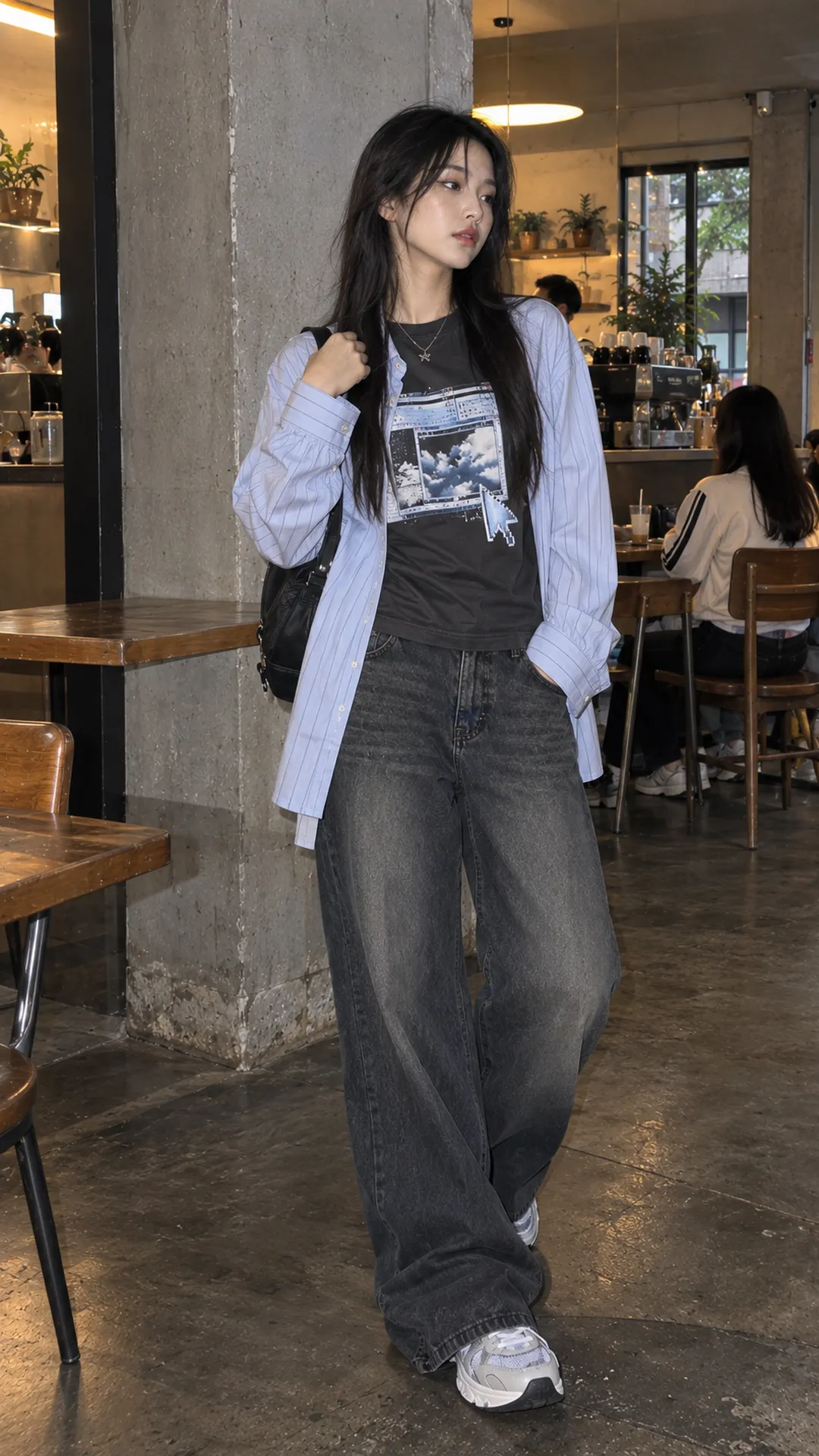
The print does not need a software company's name. An original interface composition can still suggest on-screen interaction. Placing it on the chest, back or a bag creates different effects: the chest is visible face-to-face, the back accommodates larger graphics, and a bag lets you test the style without changing your clothes.
Pixels, clip art and intentional placement
Pixels are recognizable through squares or stepped edges; clip art suggests small illustrations assembled on a page. A lone pixel heart, however, may also suggest retro gaming. For a clearer Webcore direction, place it in a window frame or beside a cursor rather than adding arbitrary motifs.
The clutter of an old website can inspire you, but you still choose how much to wear. Try one concentrated area of imagery and leave the rest quieter. This helps the eye find the theme while keeping the outfit easy to combine with existing trousers, skirts and shoes.
Color is not a uniform
Gray, blue and off-white can suggest older screens and equipment; bright colors feel more playful, while a dark base makes the frames stand out. These are directions to try, not an official palette. Repeat one color from the graphic in a bag or socks without making the entire outfit neon.
How do Webcore and Cyber Y2K differ in focus?
For styling purposes, look at the outfit's main story. Webcore brings old-web and interface imagery onto clothing. Cyber Y2K leans toward early-2000s visions of technological futures through metallic or reflective surfaces and technical-looking accessories. They can overlap, but not every silver item carries Webcore cues.
Compare two outfits with the same jeans: one has a plain silver top and wraparound glasses; the other has a cotton tee printed with a browser frame and large cursor. The second refers to the web more directly despite not being shiny. To develop the first direction, the guide to Cyber Y2K explores its surfaces and proportions in more depth.
Meanwhile, women's Y2K style covers a broader range of late-1990s and early-2000s fashion references. Webcore does not require low rises, baby tees or platform shoes. Keep longer tops, mid-rise bottoms and flats if web imagery is what you actually want in the outfit.
Three outfit directions, from subtle to explicit
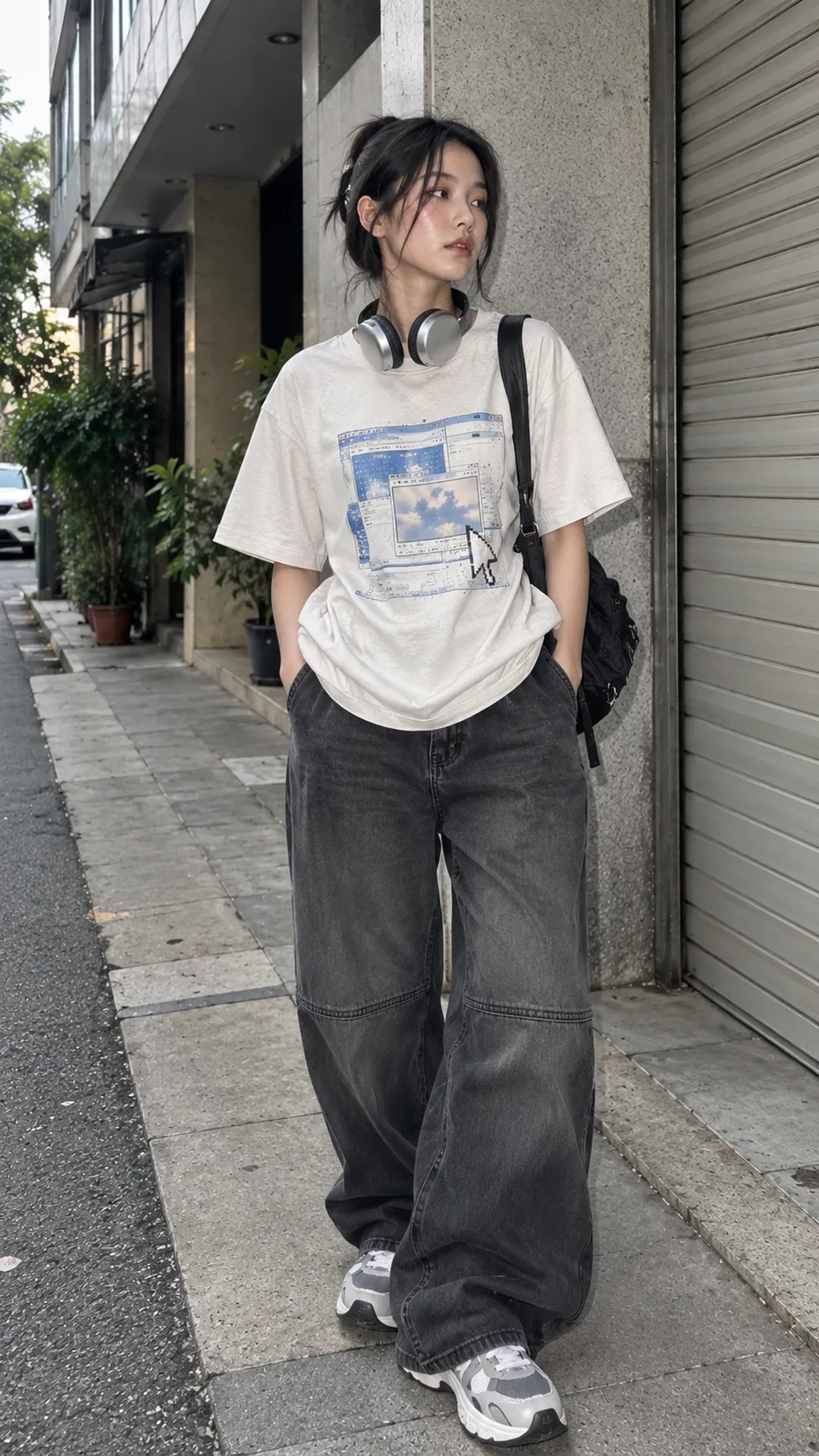
An interface tee, straight-leg trousers and one repeated color
Start with a light top carrying a blue window frame, charcoal straight-leg trousers and familiar sneakers. If you already own a bag close to the blue in the print, try it; otherwise a plain bag works. Simple trousers let the graphic stay visible while standing or sitting.
Try the top in front of a mirror with your bag in its usual position. If the strap cuts across the key detail, switch sides or carry the bag by hand. When tucking, check whether the frame's edge folds into the waistband. Leave the top untucked or choose a higher-placed graphic rather than insisting on a tuck that hides the idea.
This is an easy direction for coffee or a school day that permits printed tops. Headphones, glasses and technology-themed keychains can wait. One clear reference is enough to assess how much web imagery you like wearing.
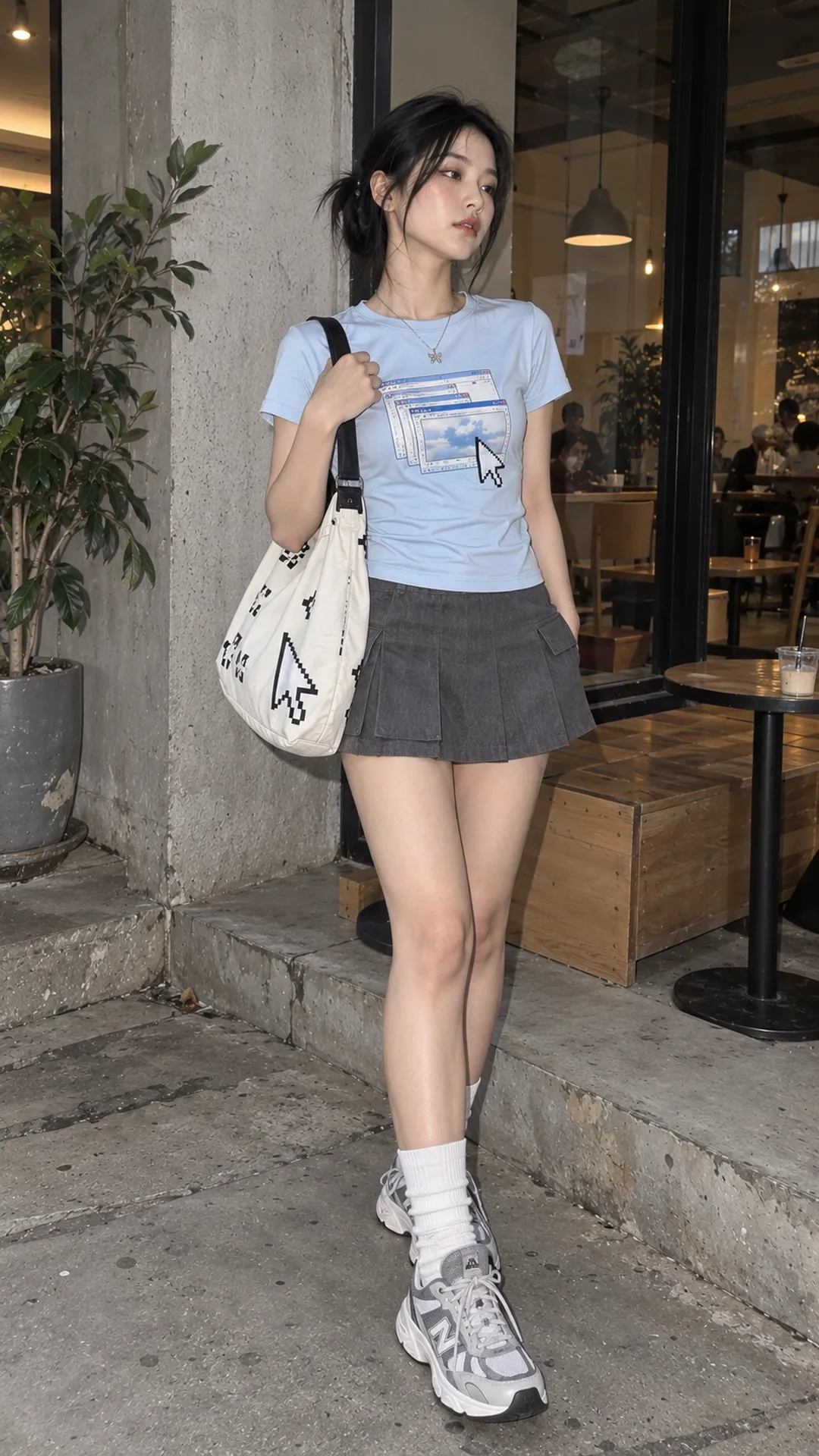
A plain top, skirt and pixel-graphic bag
If you do not want a graphic tee, move the accent to a bag. Try a plain pale blue top, gray skirt and a bag showing a pixel cursor inside a window. Choose a familiar skirt shape; length does not determine Webcore. White, gray or black shoes can all keep the lower half restrained in color.
Here, the bag's surface tells the story. Avoid covering it with a long jacket or hanging many accessories over the main graphic. If you need a laptop, use a functional bag and add a removable decoration outside. You do not need a tiny bag just because a mood board uses one.
Add a hair clip in a color from the print if you like. Stop and walk a few steps before adding another item. Carrying the bag, sitting down and retrieving your things will reveal whether the outfit suits a long outing or only a few minutes of photographs.
Dark tones with a light web frame and an open outer layer
Choose a black top with a pale gray window graphic, dark trousers or a skirt, and a light open shirt. The shirt edges form two vertical lines beside the print. Check the opening while walking: if it repeatedly hides the image, remove the layer or try a shorter jacket rather than enlarging every accessory.
A cobalt detail in a bag or shoes can connect with the graphic's colors. Keep metal accents small if the old interface should remain the focus. This outfit does not require futuristic glasses or armor-like accessories; add them only when deliberately mixing directions.
A single-layer version retains the idea in hot weather. When conditions allow and you want more structure, explore the guide to layering outfits for women to manage lengths and thickness. Layers should support both comfort and visibility of the print.
Test the graphic before buying more
Place a product image beside photographs of your existing trousers, shoes and bag. Check three things: whether the main graphic uses references you like, whether its color connects with at least one existing item, and whether your usual styling will cover it. A top labeled Webcore may still fail those checks.
For a DIY approach, first sketch a window frame and a simple icon on paper. Place the sketch on a top to judge scale from a full-body distance. Then choose a method suited to the fabric and its care needs. A removable decoration lets you test the composition before committing to changing the garment.
For ready-made prints, examine close-up photographs and read the care instructions. Intentional pixelation is a graphic feature; it differs from an image stretched until it becomes illegible. You should see deliberate shapes rather than have to guess whether a detail was originally a cursor or a blur.
What to check when an outfit does not read as Webcore
If it only suggests retro gaming, reconsider the pixel image's context. A browser frame, interface bar or icon arrangement may strengthen the web reference. If it only looks futuristic, reduce glossy accents and replace one piece with interface imagery. You are adjusting an idea, not replacing your entire wardrobe.
If the outfit feels too busy, remove items one at a time without removing all its character. Keep the detail you recognize immediately in a small phone photograph. Other pieces can serve color and comfort. To compare neighboring directions, use the aesthetic dictionary before adding more accessories.
Quick questions about the Webcore aesthetic
Do I have to wear neon?
No. Old-web imagery can appear on black, gray or white. Choose enough contrast to reveal the detail you want to emphasize; bright color is an option, not a requirement.
Do I need to have used the Internet during that period?
No. You can study documentation and enjoy a period's visual language without having experienced it. Nostalgic inspiration does not require inventing personal memories.
Can Webcore and Cyber Y2K be combined?
Yes. Try an interface-graphic top with one silver piece, then decide which is the main feature. If you want Webcore noticed first, keep the web image clearly visible. Retain pieces that feel comfortable so the idea can accompany you through the day.