

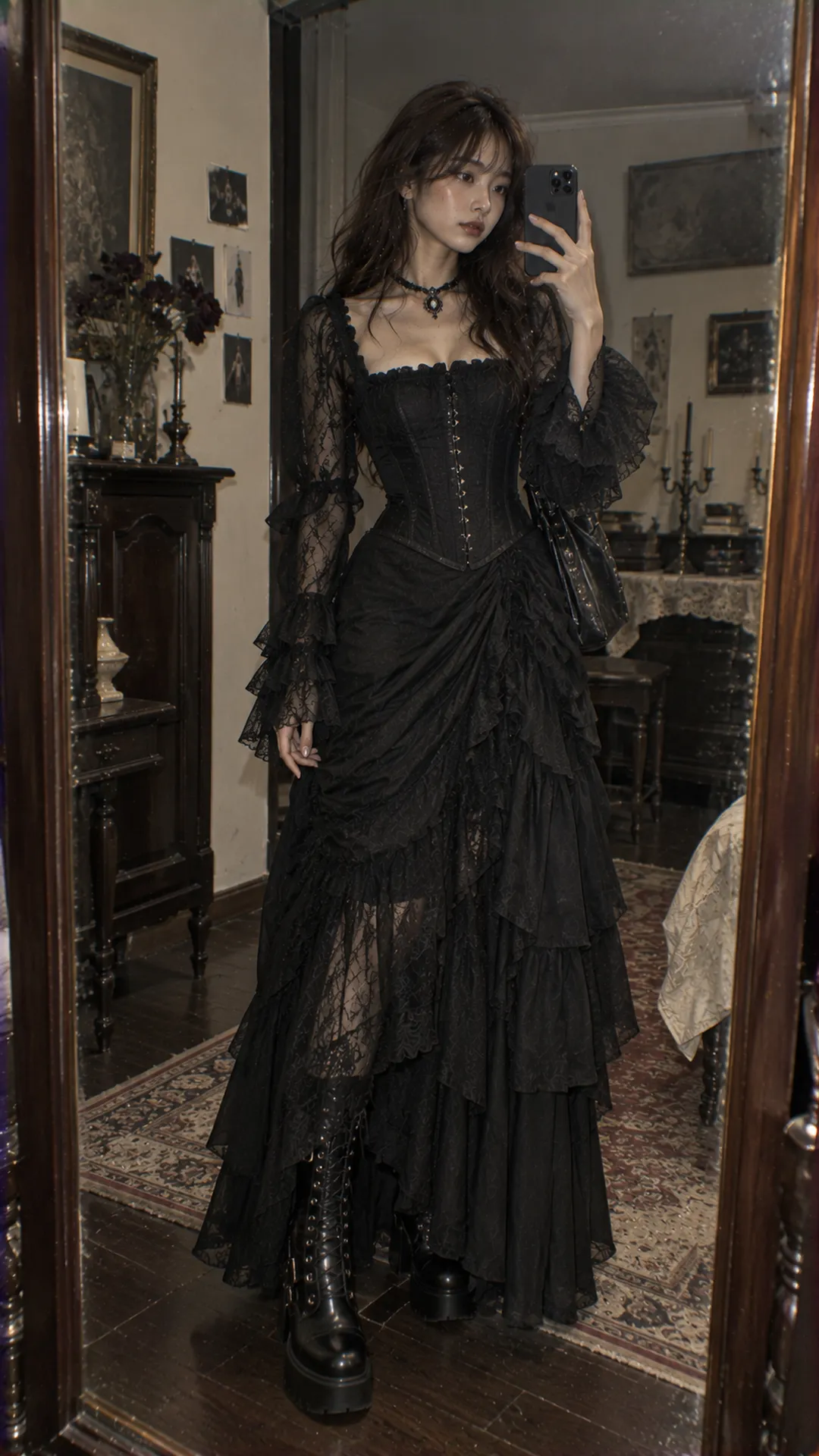
Understand the connection between Victorian and Goth
Victoria reigned in Britain from 1837–1901, too long a period to reduce to one dress shape. The exhibition Gothic to Goth at the Allentown Art Museum places Victorian mourning clothing beside contemporary Goth design. That comparison reveals influence while reminding us that the contexts differ.
Contemporary wearers may pair a high-neck blouse with modern trousers or place a historically suggestive overlay over a simple skirt. This is inspired styling. Reconstructing a particular year requires separate study of undergarments, materials, closures and period accessories.
Black does not represent all Victorian fashion either. The Met's exhibition on mourning dress shows variation in fabric surfaces, shades and silhouettes even within mourning clothing. An arbitrary black dress is not evidence of historical accuracy.
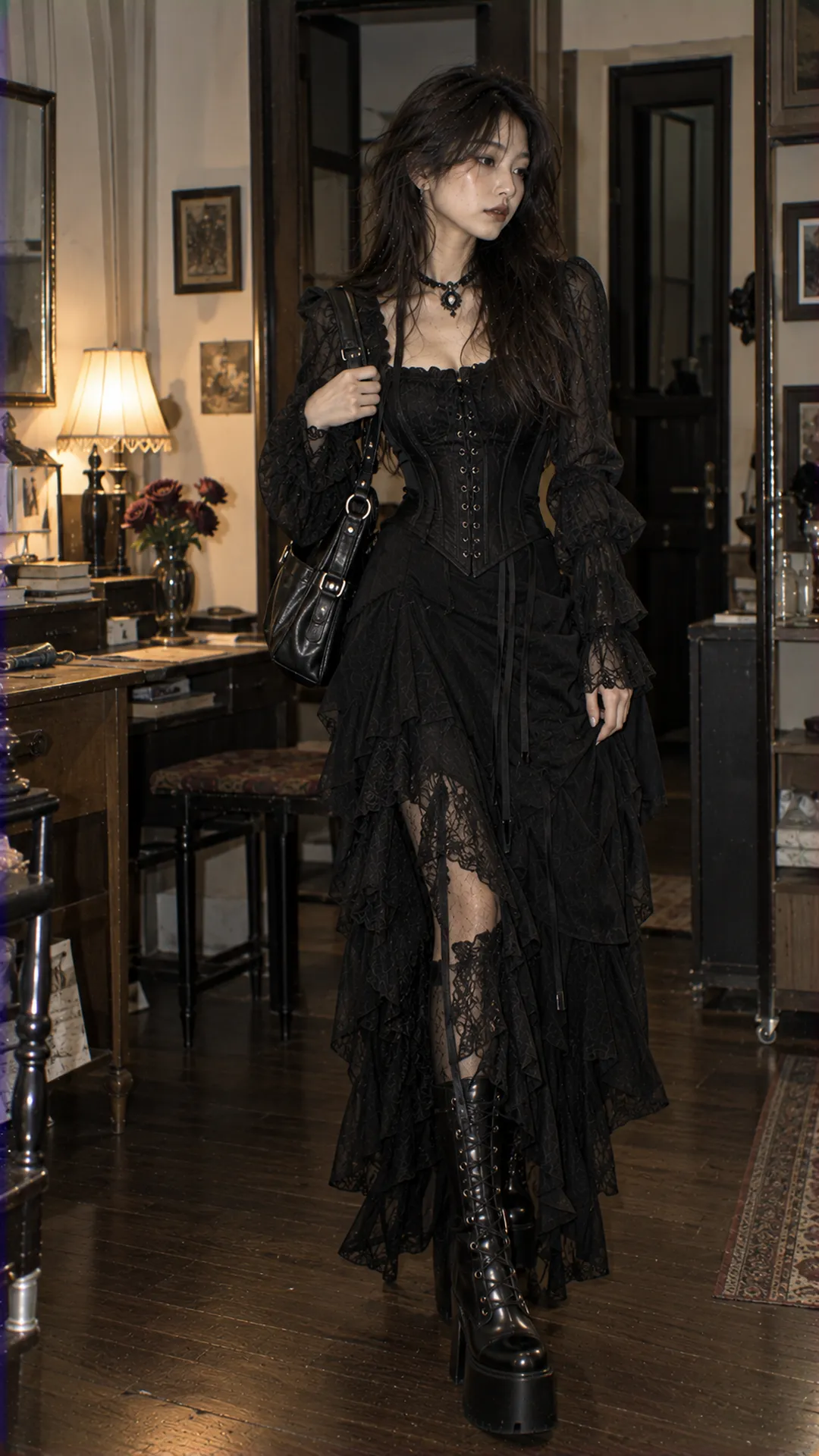
Recognize three areas: collar, bodice and skirt volume
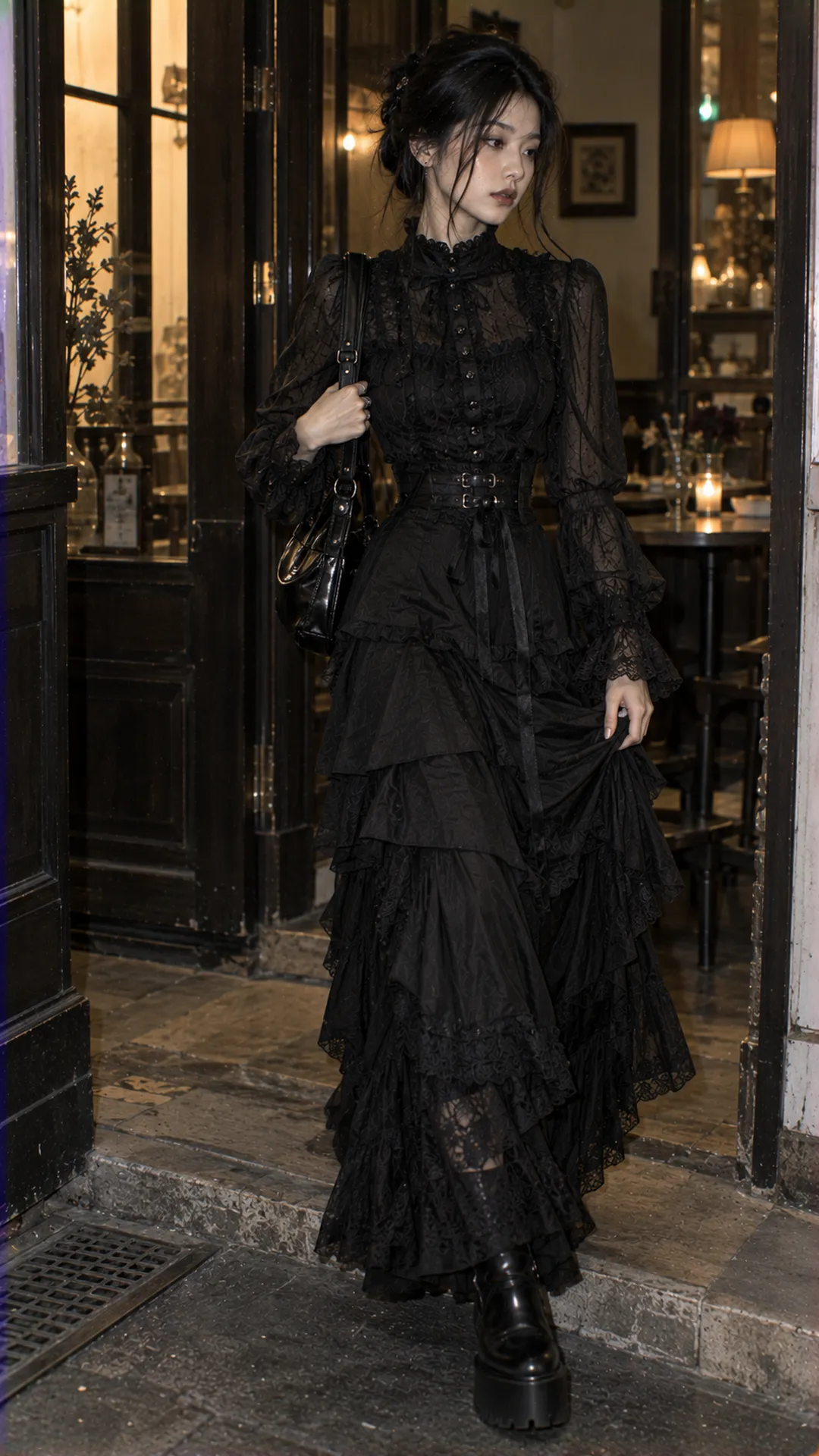
Look from a distance before examining lace motifs. A standing collar, small bow or ruffle may frame the neck. Vertical seams, buttons or bodice construction often clarify the division between bust, waist and skirt. Below lies an extended volume using drape, flare or overlays for depth.
Bodice here means the shaped upper garment; not everything resembling a corset provides shaping support. Seams imitating boning can create the intended image. Waist compression, a specialist corset or a particular body ratio is not required.
Gathering or back-focused drapery can suggest a bustle reference, but not every ruffle is a historical bustle. For modern garments, read actual construction descriptions rather than inferring from a style name. A flat-front skirt with an asymmetric overlay can already differ clearly from an ordinary lace dress.
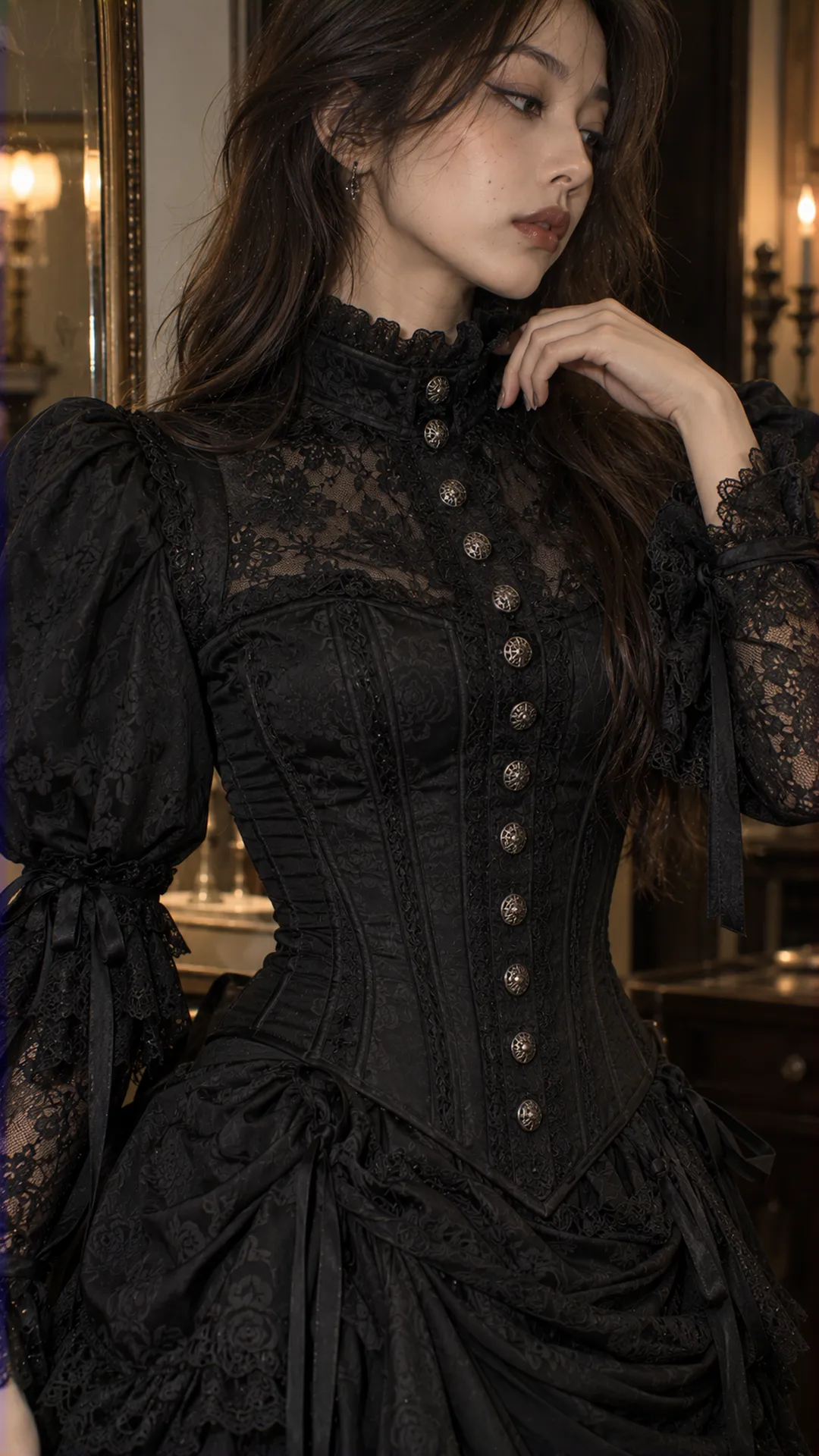
Distinguish Romantic Goth and Trad Goth
Romantic Goth is a useful reference for lace, velvet, soft movement and dark romance. Victorian Goth can use all those materials, but needs a sufficiently clear nineteenth-century garment reference in the neckline, bodice or skirt structure.
A lightly draped black dress with lace sleeves and a necklace may lean Romantic Goth. Add a paneled bodice, front buttons and a structured overskirt to move the reading closer to Victorian Goth. This is an overlap, not a correctness test based on one piece.
Trad Goth needs context in music, community and early Goth imagery. Raised hair, graphic makeup or fishnets do not independently create a Victorian reference. An outfit can blend influences, but name the borrowed elements instead of treating every Goth branch as synonymous.
Give a dark palette depth
Matte, subtly shiny and sheer black feel different despite sharing a color name. With raised lace on a blouse, a relatively smooth skirt keeps the neckline visible. With gathered skirt layers, a simpler bodice clarifies the constructed volume.
Burgundy, deep purple or ivory can transition between black areas. Try an ivory blouse beneath a black waistcoat instead of simultaneously adding a red bow, purple bag and another-colored scarf. Light near the face clarifies the collar without invalidating the outfit because it is not all black.
Lace, velvet and satin describe construction or surface, not enough to establish fiber content or comfort. Check lining and actual layer count. In humid heat, a small lace collar may be more practical than all-over lace with thick lining and a jacket.
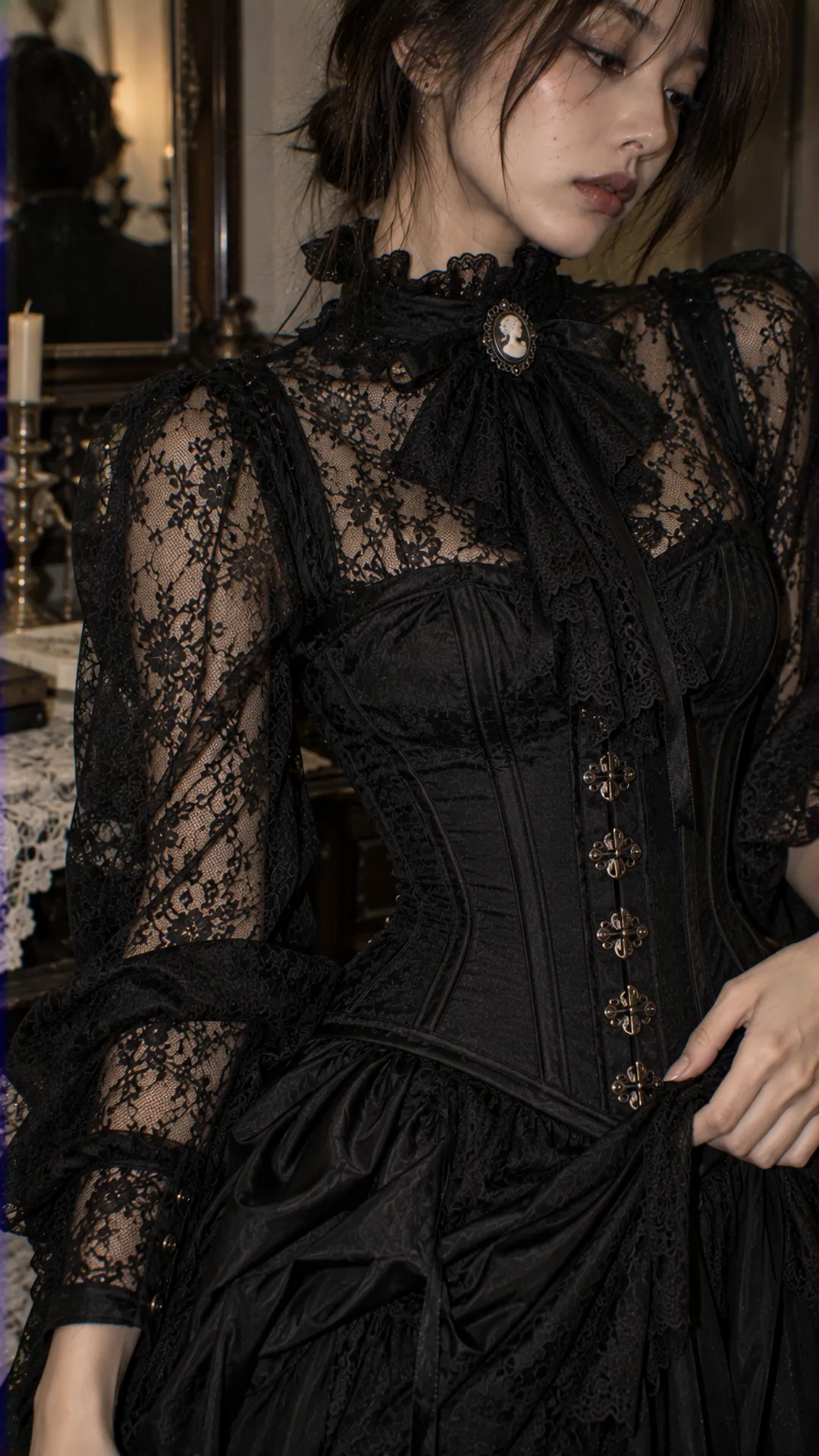
Three ways to bring Victorian Goth into everyday plans
A standing-collar blouse and streamlined long skirt
Choose a standing-collar blouse with a button row, a gently A-line black skirt and streamlined lace-up shoes. Tuck enough to reveal the top-skirt boundary and keep the bag small and simple. Vertical bodice lines and skirt length provide the main reference without hats, gloves or multiple necklaces.
For motorbike travel, check the hem seated and while getting on before leaving. A practical length takes priority over a floor-sweeping train attractive only in standing photographs. A shorter skirt can retain the collar and bodice as the identifying features.
A paneled waistcoat and straight-leg trousers
Pair a buttoned waistcoat with a blouse of moderate sleeve volume, straight black trousers and ankle boots. This is a modern interpretation, not a complete reconstruction of Victorian women's dress. The waistcoat provides upper structure while trousers help with a walking-heavy schedule.
If the bodice should remain visible, avoid choosing everything equally loose. Try the waistcoat over the actual blouse; buttoned, the front should lie relatively flat and allow reaching forward. If the blouse bunches beneath the arms, adjust inner-layer thickness before adding accessories.
A fitted top and asymmetric overskirt for a gathering
A vertically seamed top, base midi skirt and short side-focused overlay provide depth without a large skirt frame. Keep bag and shoes in one dark color family. If the overlay already has prominent gathering, omit a wide belt to avoid competing structures at the waist.
When you want more drama
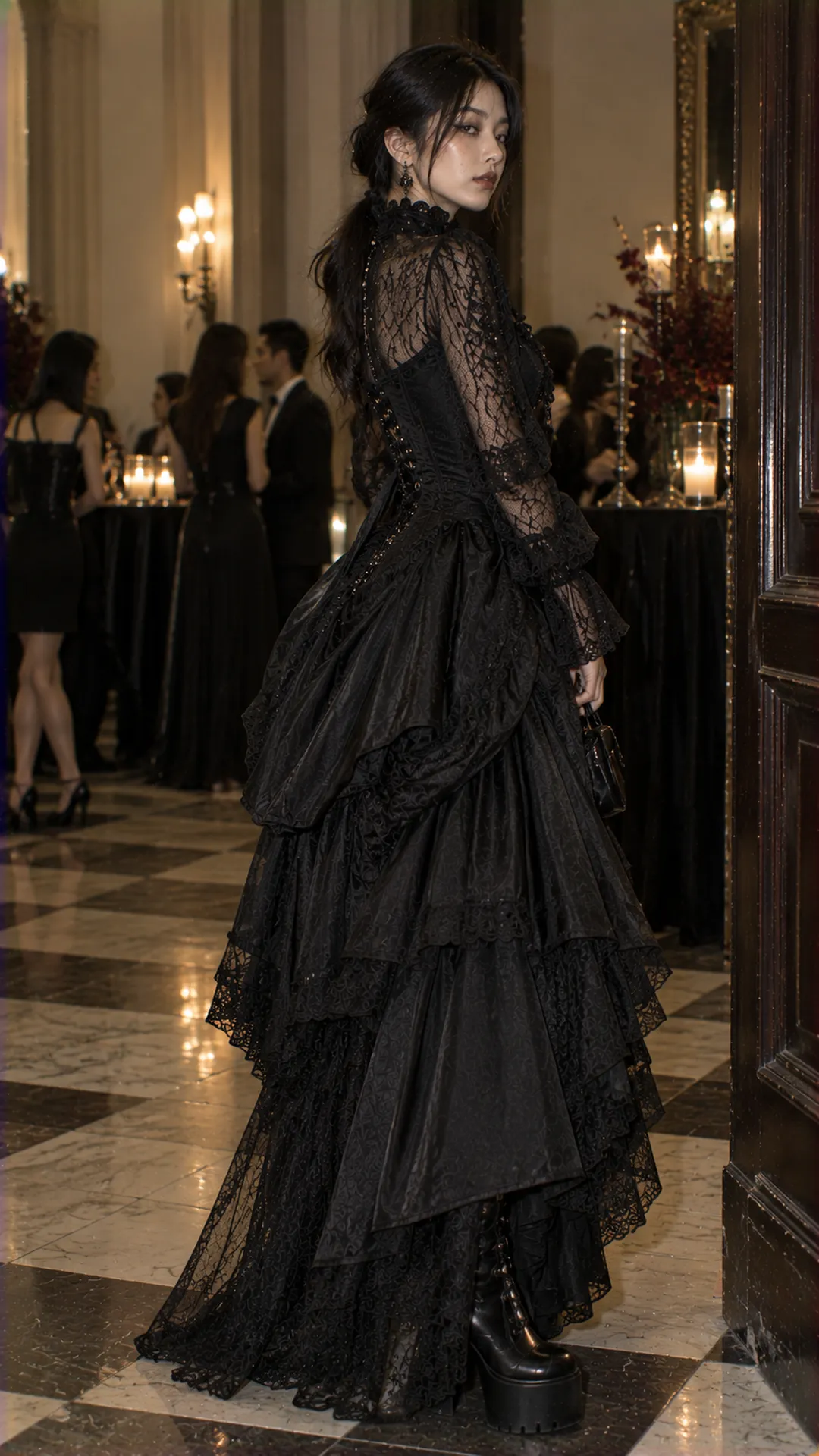
For a photo shoot or suitable event, lengthen sleeves, add a skirt layer or try a tailed jacket. Increase one dimension first: collar height, sleeve width or skirt volume. Increasing all three makes dressing, sitting and adjustments considerably more complicated.
Photograph the side to assess back drapery; the front often conceals that volume. Then sit on a real chair, stand and retrieve something from your bag. If every move needs someone to rearrange the skirt, the outfit suits assisted photography more than an ordinary outing.
The principles of layering outfits for women help assign roles: a base supplies desired coverage, a middle layer shapes and an outer layer finishes the outline. Two layers merely thickening one area can be replaced by one clearer construction.
Let shoes, hair and jewelry continue the lines
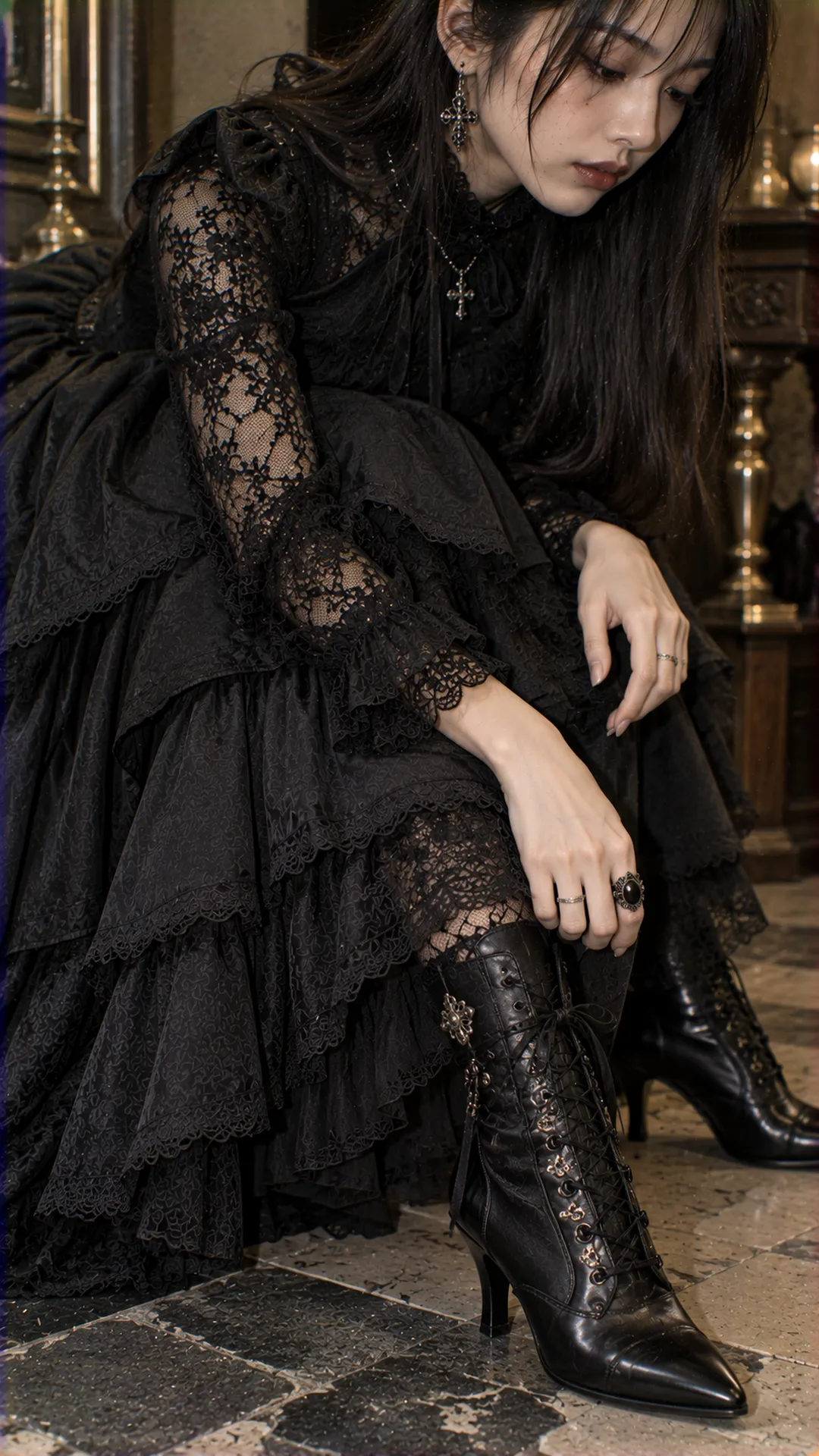
Lace-up boots, streamlined shoes or strap shoes can work according to the outfit. Choose shaft height after testing the skirt hem: a small gap creates a break, while a skirt almost meeting the shoe creates continuity. High heels are optional if they complicate your day.
With a heavily ruffled collar, tied-back or side-swept hair reveals the details. With a more open neckline, a pendant or brooch can lead. Do not place heavy metal on fine lace merely because it suits the image; check attachment and weight to avoid distortion.
Hair and makeup can follow personal taste; there is no requirement to make skin lighter than its natural color. Dark lips, eyeliner or neat hair are visual choices supporting the clothes, not replacing the top-skirt structure central to this Victorian direction.
Buy individual pieces and check before keeping them
Start with the biggest useful change to your wardrobe. With an existing long black skirt, a standing-collar blouse may help more than a near-identical new skirt. With several lace blouses, consider a paneled waistcoat or overskirt for a real silhouette change.
Online, request finished bust, waist, shoulder and torso measurements; for skirts, hem width and closure details too. Back lacing in a photograph does not prove wide size adjustment. Establish whether ties are decorative or change width, and whether the panel beneath provides enough coverage.
Follow each garment's care instructions, especially when lace, velvet and metal accessories coexist. Do not apply blouse care to the whole outfit. Let items dry before storage, inspect catching points such as hooks and zippers, and separate angular accessories from fine fabric.
For exploring several branches, the style dictionary helps locate what actually interests you. For Victorian Goth, ask which lines recall historical clothing and how you have adapted them for wear today.