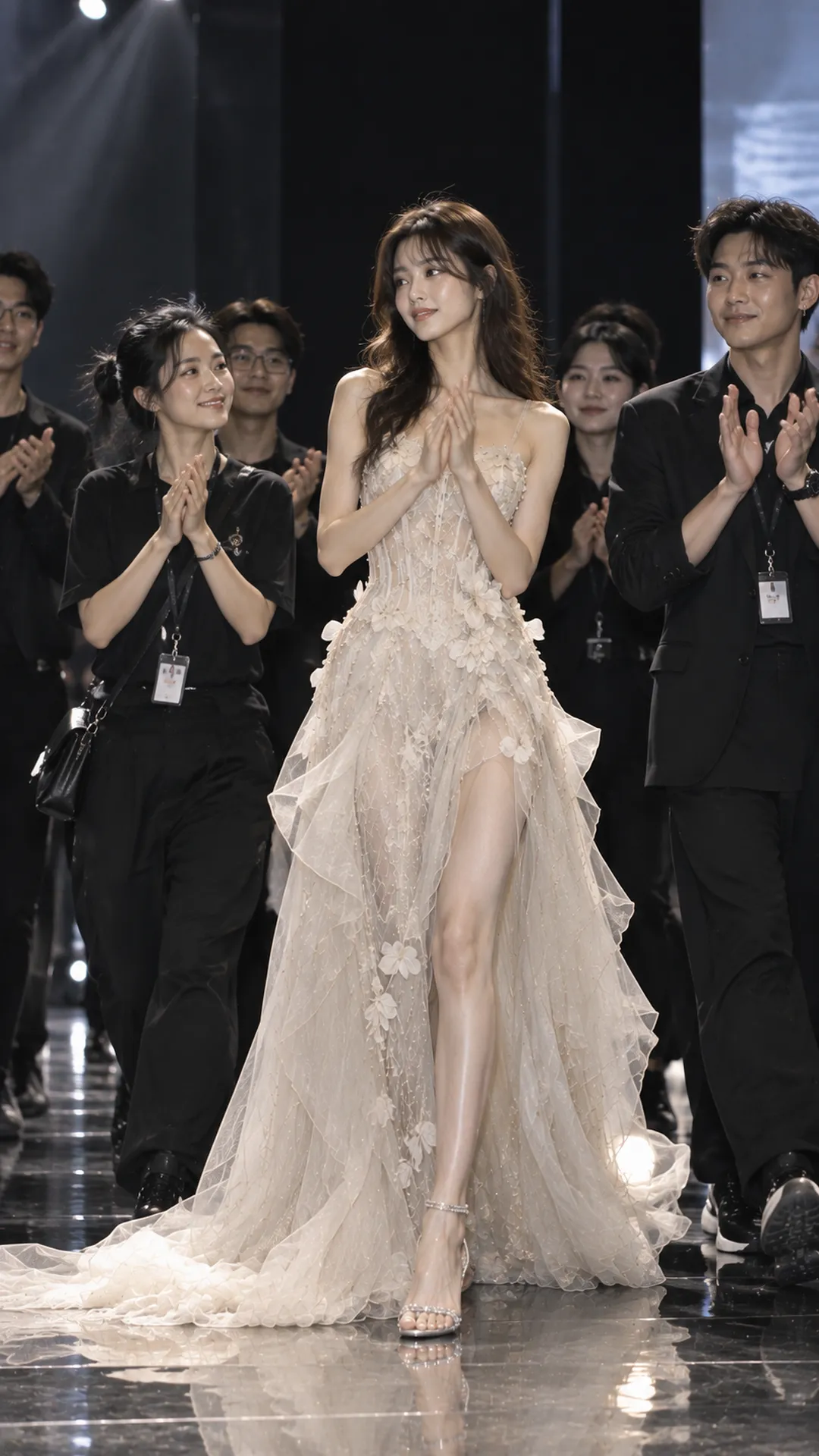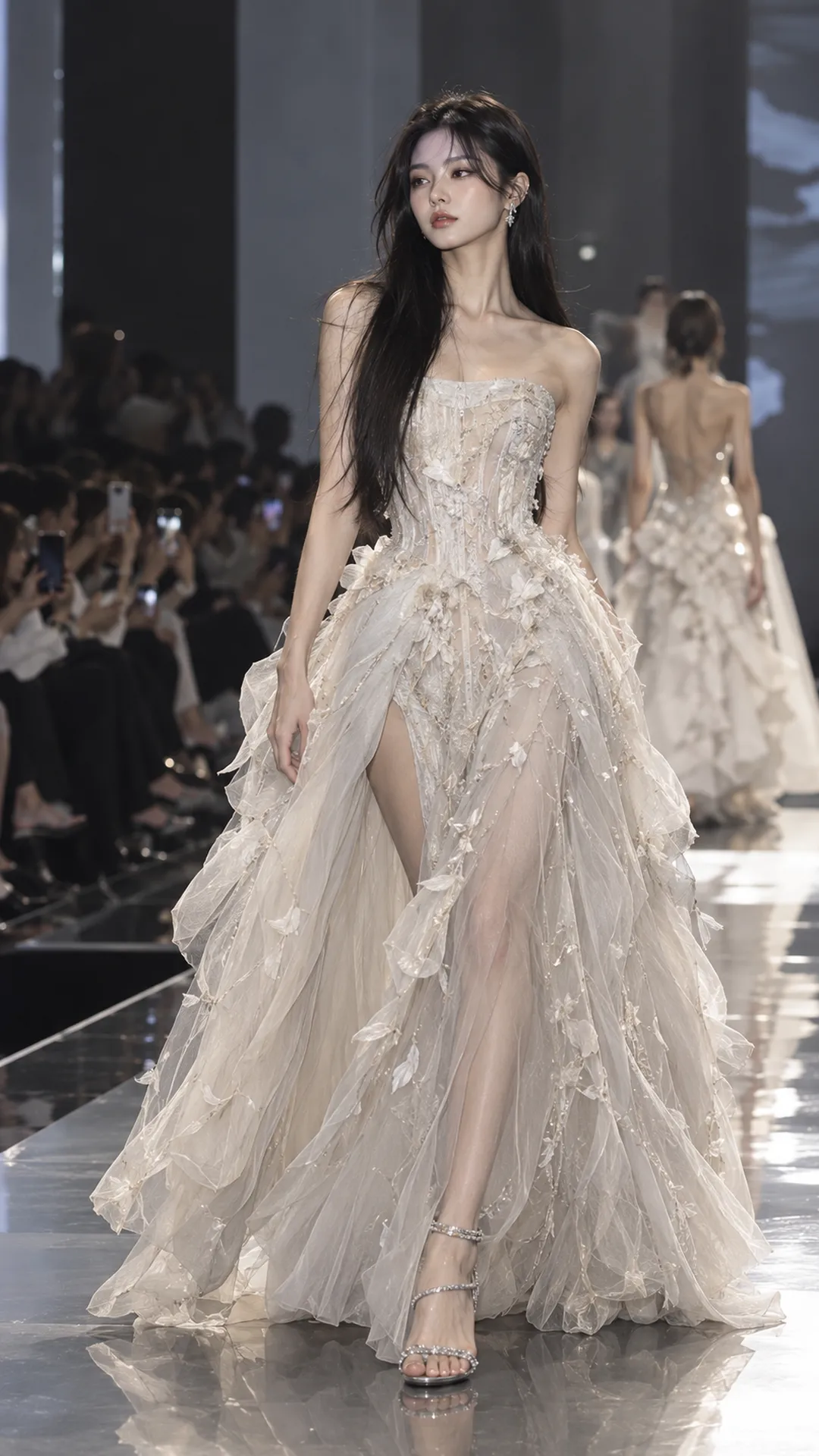
Vedette on and beyond the runway
In French, vedette has a broader meaning than show closer. Larousse records senses involving a leading role, celebrity or prominent person. Its appearance in film or theater coverage does not mean that person is modeling.
Vietnamese fashion reporting more commonly uses it for the selected closing face. Preserve that context when translating: “the model closing the show” is clearer than assuming every country uses vedette as a standardized position.
Harper’s Bazaar Vietnam explains differences between Vietnamese vedette and first face terminology and opening or closing language in international coverage. Remember the specific runway role rather than treating it as a ranking of every participating model's worth.
Vedette is not an aesthetic either. Someone can close a minimalist collection or appear in elaborate clothing. For the outfit's style, consult the fashion aesthetic dictionary to separate design language from presentation position.
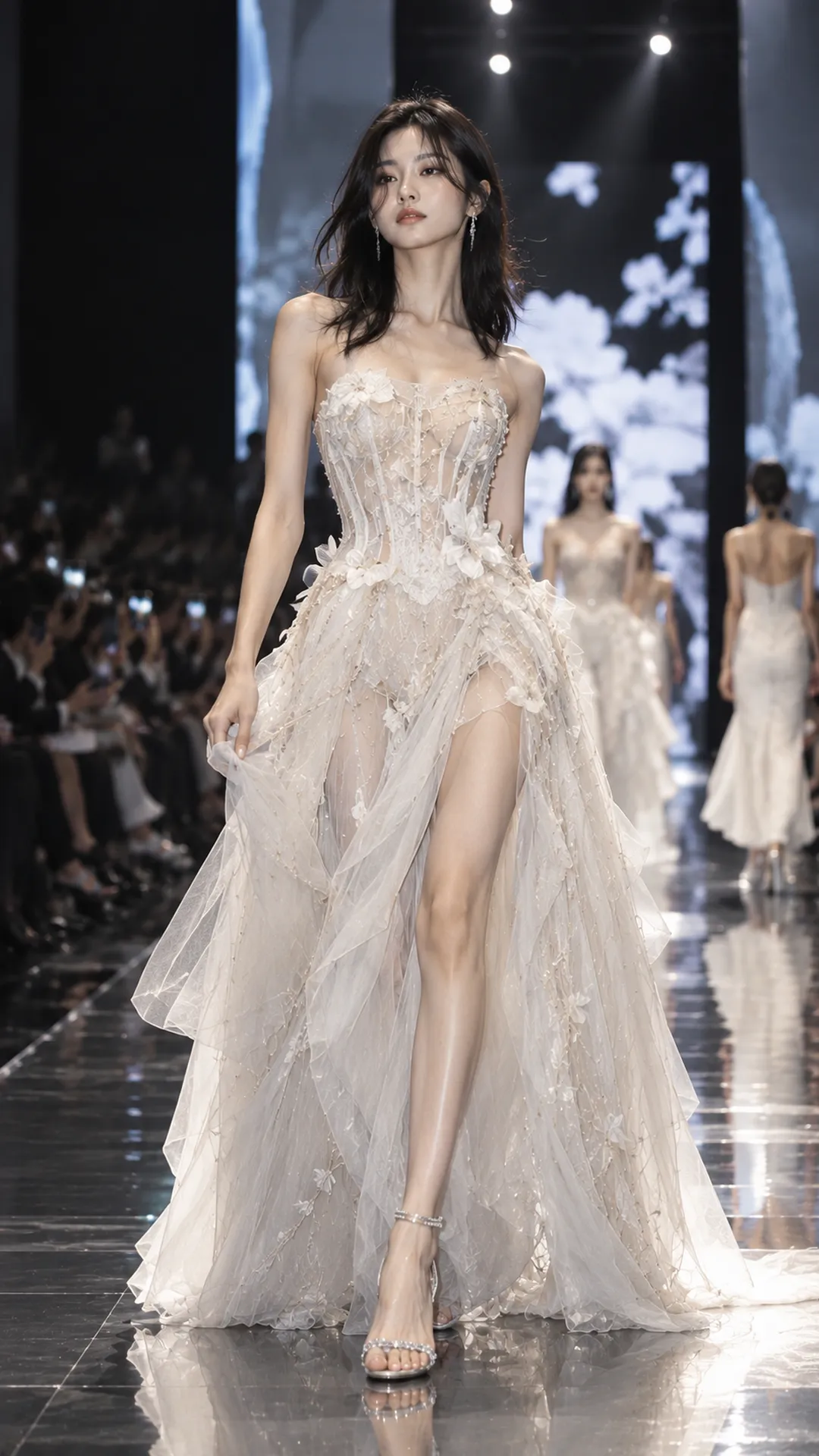
Opening model, closing model and finale appearance
The opener supplies the first signal
First face commonly describes the opening model. Observe how the initial look introduces shape, palette or movement rhythm. It opens the designer's world without necessarily telling the entire story immediately.
The closer completes the presentation
The closing model appears at the end of the defined sequence or segment. Its meaning depends on staging: reinforcing a repeated idea, creating an unexpected contrast or condensing the collection into one image.
The final look need not be largest, most expensive or most embellished. A simple garment can create a clear stopping point through a different rhythm. Describe observable choices rather than guessing price or commercial value.
The finale walk is another component
After individual looks, models may return together and the designer may take a bow. Do not identify the vedette solely by who walks last in that group. Separate individual design presentations from the collectively staged finale.
For several collections or chapters, ask which part is being closed. A chapter closer may not close the entire program. “Closing model for the collection” gives clearer scope than a headline's unqualified vedette.
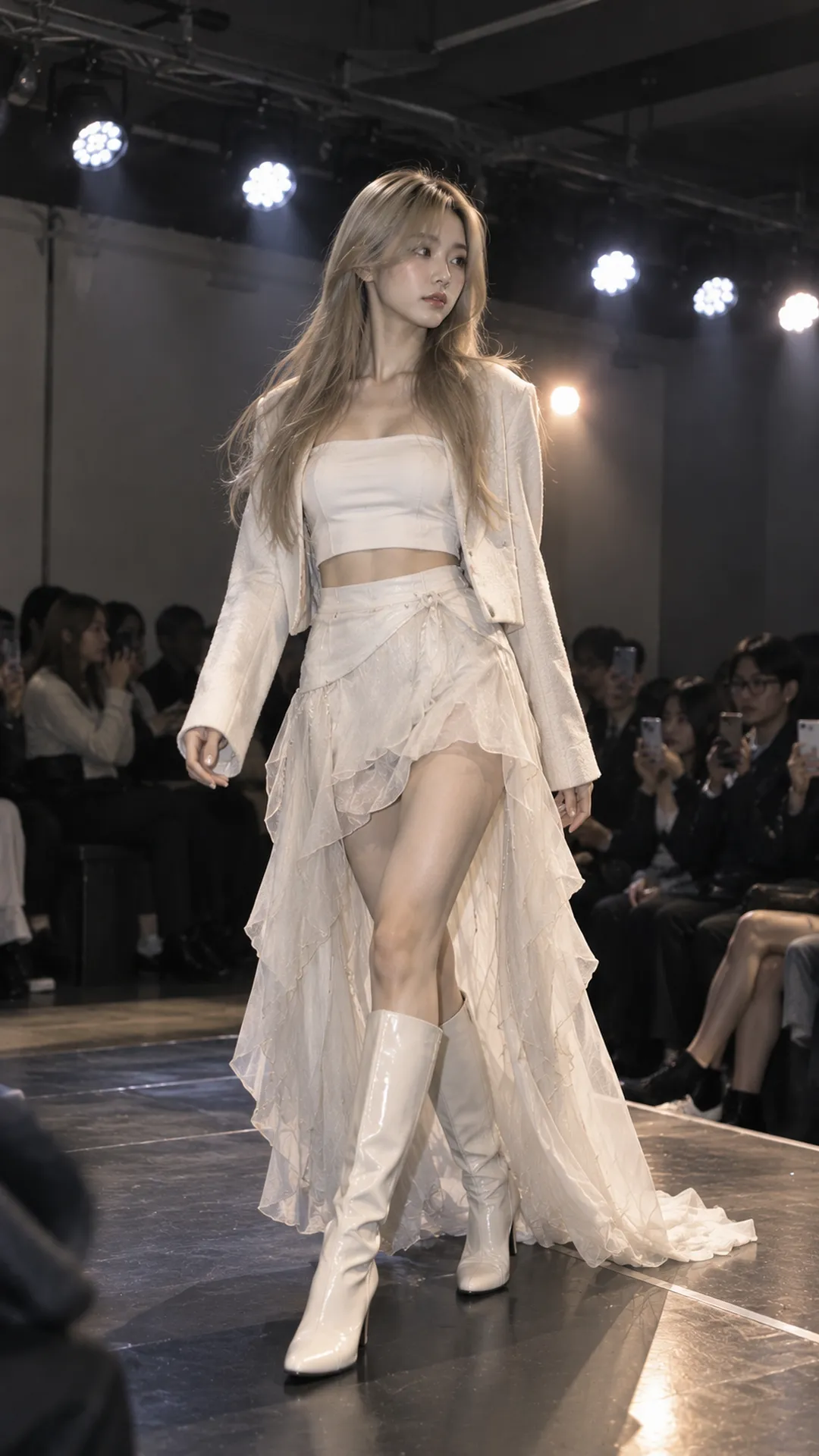
How does the closing role shape a collection?
Compare watching the final look after earlier ones with seeing its isolated photograph. The sequence reveals repeated, developed or deliberately changed details; alone, you may appreciate a dress without understanding its closing placement.
Imagine a sequence beginning with clean cuts and gradually widening shoulders. A final exaggerated shoulder could complete that volume progression. This reads design order without guessing that the designer intends to elevate one person above everyone.
Alternatively, a muted presentation may end with strong color. Check whether accessories or earlier details introduced it. The ending may clarify a signal; if uncertain, retain the observation rather than assigning definite meaning.
The model helps details read through walking, stopping and turning. Lighting, music, garment order and camera angle also contribute. Assess their coordination rather than attributing everything to one celebrity's reputation.
What might influence the choice?
No criteria apply universally to every designer. Instead of searching for mandatory height or measurements, understand casting as matching a performer to clothing, space and the show's communication.
- Handling the clothes: a long train, rigid structure or large accessory demands different movement from streamlined clothing.
- Expression: walking rhythm and pauses should fit staging; stronger is not always better.
- Image compatibility: the invited face needs a meaningful relationship with the program's story.
- Public attention: visibility may matter without explaining the entire choice.
- Production coordination: fittings, rehearsal and teamwork affect delivery.
These explain aspects of the work, not one brand's recruitment scorecard. A casting decision does not prove the selected person is best at every skill or those not chosen are inferior.
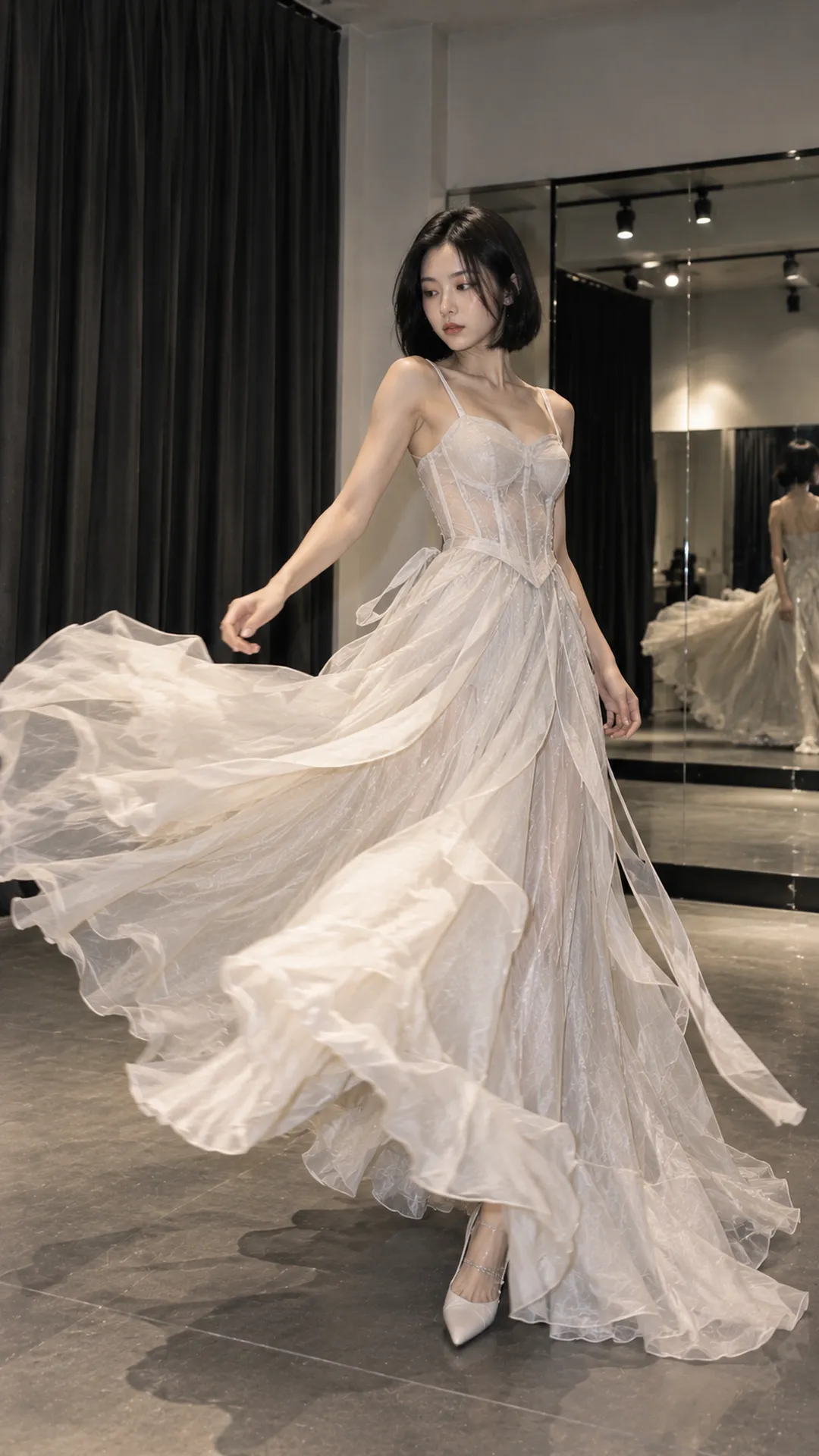
Four misunderstandings in coverage
A closing model is not automatically a brand ambassador
Closing one show and representing a brand are separate facts. If reporting confirms only the runway position, do not add an ambassador contract. Likewise, an ambassador seated as a guest need not walk.
The most famous person does not necessarily close
A widely discussed face may open, appear midway or merely attend. Find the show's own information. Online photo volume or familiarity cannot replace presentation-order evidence.
A wedding dress does not guarantee the closing position
British Vogue reported Bella Hadid opening Off-White's haute couture section as a bride in 2022. Even an image commonly associated with an ending can introduce another segment.
A photograph showing white clothing, veil or train therefore cannot establish the closing model. You need ordered video or reliable descriptions, particularly for multi-section programs.
One show position is not a lifetime title
A person may close one show, open another and appear elsewhere next time. Naming the collection makes the sentence more accurate than treating vedette as a fixed professional rank.
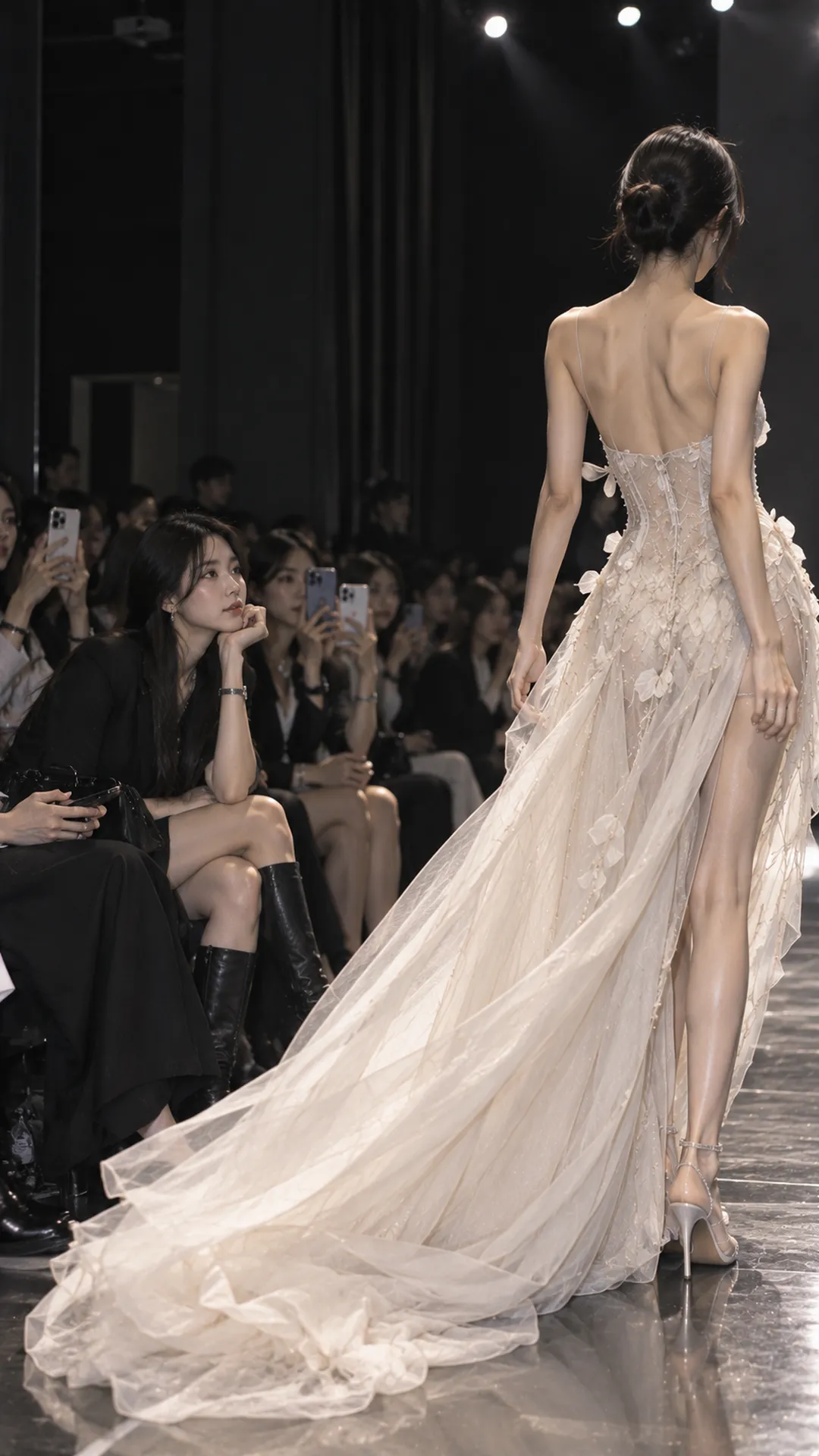
Watch a closing look to understand fashion
Start with enough footage to see before and after the model. Short edits may entertain or promote without establishing full order. You can still discuss clothing and movement, leaving sequence unconfirmed.
First note three observable things: overall shape, largest color area and fabric movement. On another viewing, examine collar, waist, sleeves, shoes or accessories. This avoids one sparkling detail capturing all attention.
Then compare the last look with several preceding ones. Continuity or deliberate opposition? Repeated volume? A change in hair or makeup rhythm? Such questions support specifics beyond “amazing presence” or “the most luxurious look.”
For inspiration notes, use the fashion mood-board method: save images with descriptions of shape, texture and color. A reasoned board helps more than collecting every widely shared moment.
From runway clothing to personal choices
You need not imitate the closer to learn from a presentation. Choose one element, such as defined shoulders, gloss beside matte or a wrist accent. Test it with existing clothes.
For a skirt silhouette, the dress shape and length guide shifts focus from a model's name to garment characteristics. For accessories, observe their support for clothing rather than assuming larger means more compelling.
Before show-inspired shopping, consider destination, travel and care. A detail effective for minutes onstage may not suit a long walk. The Alt Fashion shopping guide restores priorities around size, budget and materials.
Further questions
Must the closer be a professional model?
No universal condition applies. Some shows invite people from other fields. Consult casting information or organizer statements for the particular choice rather than inferring personal motives from a clip.
Which matters more: opener or closer?
They perform different functions within a sequence. Analyze how both serve the collection without inventing a universal hierarchy.
Does a photograph beside the designer identify the closer?
It is a clue, not sufficient evidence in every case. Compare the presentation before the bow and official descriptions; final stage arrangements vary.