

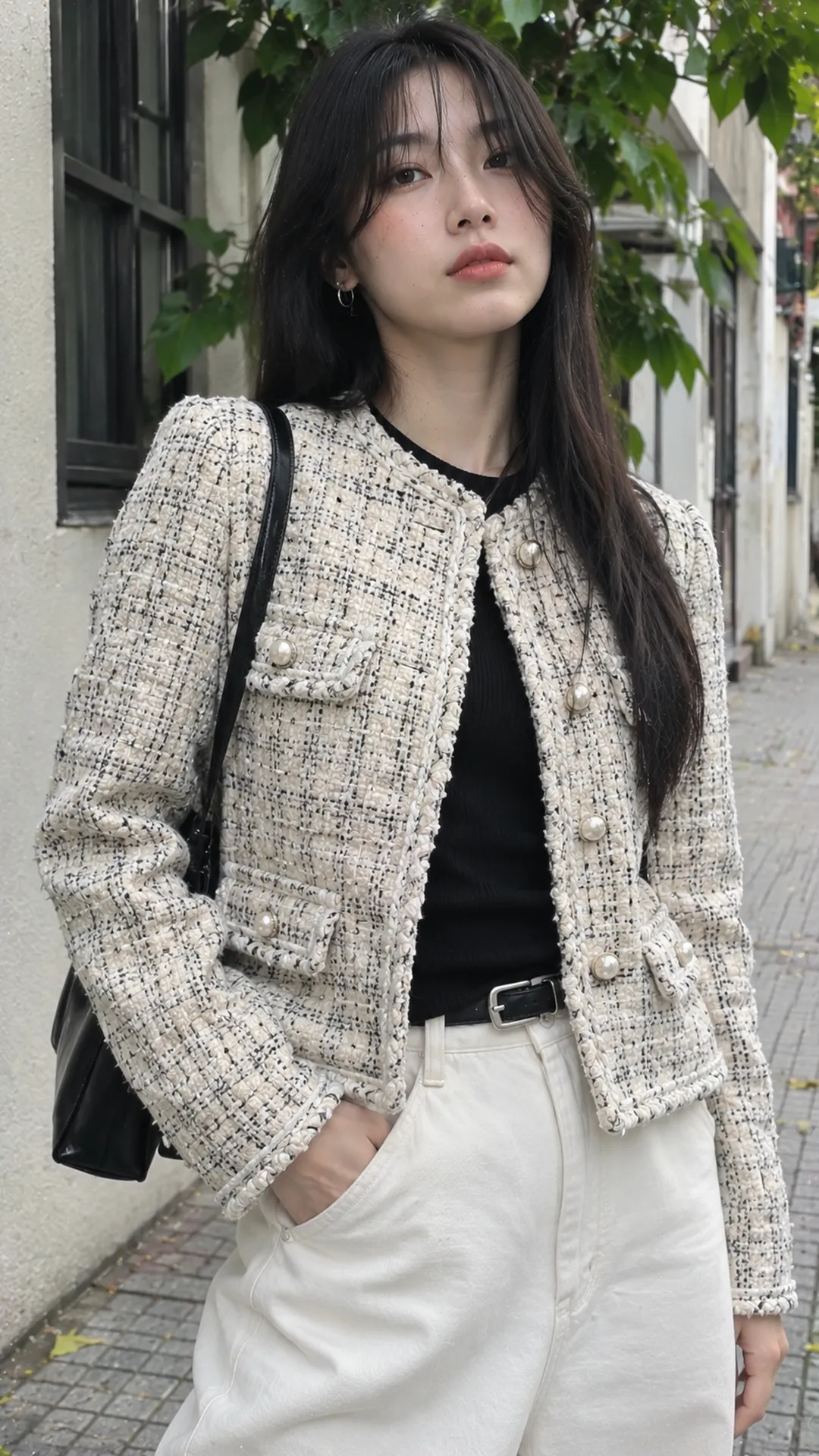
Tweed is a fabric name that can cover different fibers
According to the technical section of Première Vision’s tailoring fabric glossary, traditional tweed uses irregular carded yarns in a mixture of colors. It can have a plain, twill, or herringbone weave. Look for a range of patterns when identifying it.
Separate the surface description from the fiber content. The word tweed gives you an idea of the fabric. The label lists the fibers used in the garment. Ask for a photo of the label if the information is missing. Fuzziness and weight alone tell you little about wool content.
A multicolored surface can appeal on its own. Ask for separate documentation if origin, handweaving, or quality of finishing matters to your decision.
Look at the surface up close and from a distance
Up close, check yarn thickness, how colors are mixed, and whether loops or yarn ends project from the surface. Step back to see whether the colors blend into one tone or form a clear pattern. Both views help you see how much attention the garment will draw.
Herringbone creates diagonal lines that change direction, while checks form blocks of color or intersecting lines. Use the label to check fiber content after identifying the pattern.
Hold the fabric next to a plain piece you wear regularly. If the tweed has lots of colors and texture, simple pieces give it room. If it reads as almost one color from a distance, a neckline, shoe, or base layer can add definition without making the outfit feel crowded.
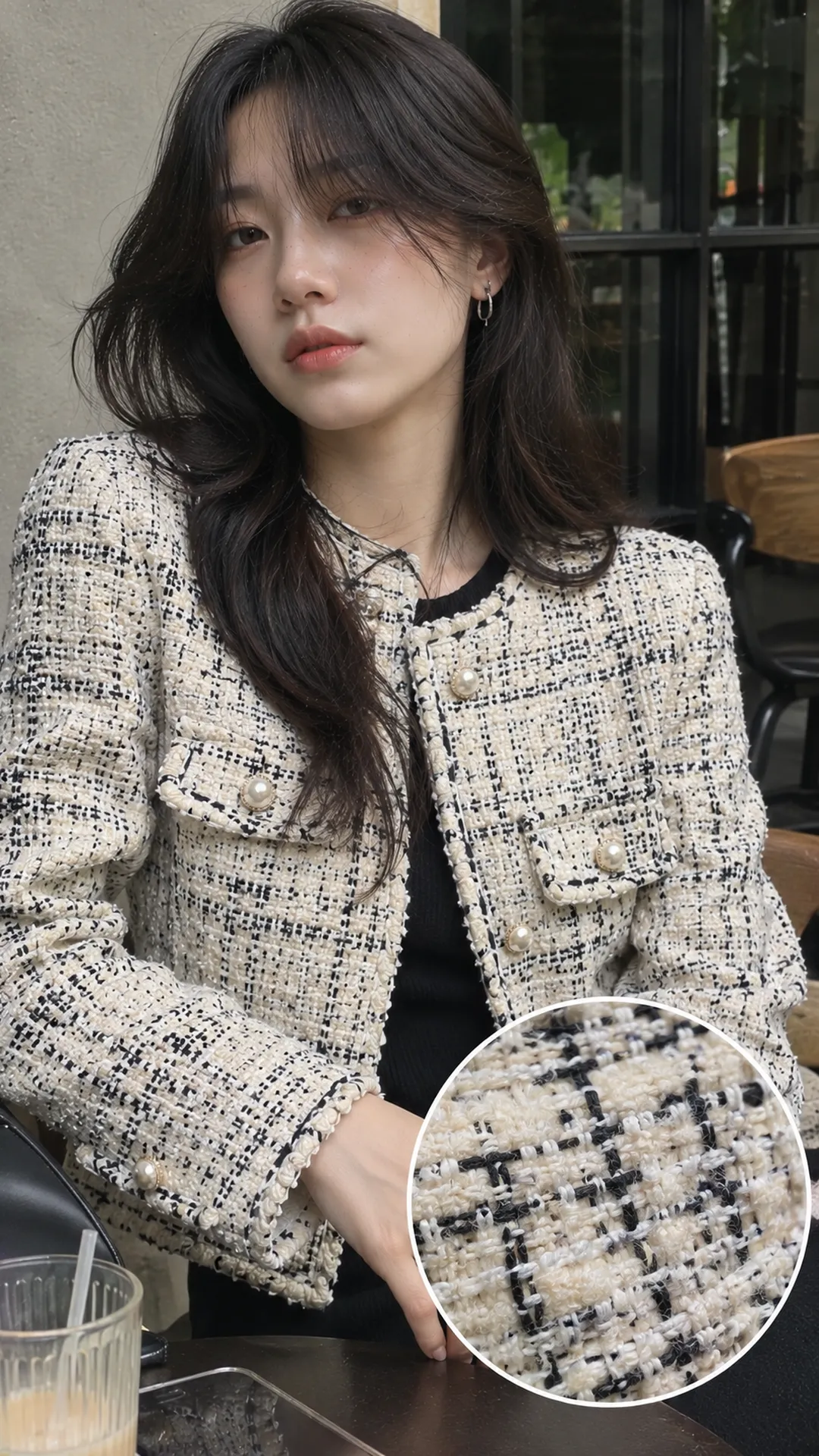
How tweed and bouclé differ
Première Vision describes bouclette in terms of curled yarn that creates a looped, raised surface. Bouclé emphasizes that looped effect. Tweed comes in a variety of weaves and finishes, some of which have no visible loops.
Retailers may use both terms together. Look for close-up photos and ask how the fabric is made. If you’re concerned about jewelry catching, check how the actual piece interacts with the accessories you wear.
Retailers can also use broad terms such as wool coating for a range of fabrics. Ask for the fiber content, front and back photos, and care instructions for the exact style.
What makes Harris Tweed distinct
Harris Tweed Hebrides describes Harris Tweed as cloth made in Scotland’s Outer Hebrides from 100% virgin wool and handwoven at the weavers’ homes. The Orb mark authenticates the cloth after inspection by the Harris Tweed Authority. The name refers to that specific cloth.
If provenance matters to you, ask the seller for the corresponding label and documentation. A product called tweed could use a different cloth. A surface photo, thickness, or color mixture is insufficient to authenticate Harris Tweed.
Check where the cloth was made and where the finished garment was sewn. Fabric and manufacturing labels can answer different questions. Read the full description to distinguish them.
Is tweed hot, stiff, or uncomfortable?
Comfort depends on thickness, weight, construction, lining, fit, and the conditions where you’ll wear it. A heavy structured jacket feels different from a light skirt even if both use tweed.
To assess stiffness, look at the garment on a hanger, then put it on and move. A defined shoulder can come from the fabric and internal structure. Check the seams, interfacing, and lining as well as the outer cloth.
Check how it feels against your neck, wrists, or waist where the fabric touches skin. A surface that feels fine in your hand may rub at the neck over time. If it’s uncomfortable during the fitting, try a different lining or design.
In hot, humid weather, consider your time indoors and outside. Our guide to choosing fabrics and cuts for hot weather covers several factors that affect comfort. With tweed, account for thickness and the number of layers in the outfit.
Check the shoulders, sleeves, and lining of a tweed jacket
Try the jacket with what you’ll wear underneath. Reach forward, fasten the buttons or zipper, and sit to check room at the chest, underarms, and back. A jacket that fits open or over a thin top may feel tighter when fastened or layered over a thicker one.
Check whether the lining pulls or shows below the hem. Examine the underarm, shoulder, and neckline seams, and look at how the buttons, trim, and pockets are attached. Inspect each area separately if the surface makes the finish hard to see.
Our guide to women’s tops by cut and layer helps you decide whether the jacket will be the main piece or an additional layer. That gives you a basis for choosing length and room for other clothes.
Try tweed skirts and pants while seated
A skirt should fit at the waistband and hips and let you take a full step. Check the fabric around the zipper, pockets, and slit. Sit down and see whether the lining pulls the hem or makes the outer fabric ride up. Check room carefully on fitted skirts.
For a dress, check the shoulders, bust, waist, and bodice length together. If one area fits and another feels tight, consider a different cut. Our guide to choosing dress lengths and silhouettes compares shapes before you settle on fabric.
With pants, check the waist when seated and look at the knees after walking. Check whether the pockets pull open. Before altering the waist or hem, ask about construction and seam allowance. Layers and patterns may need special handling to retain their shape.

A quick shopping checklist
Read the fiber label and care instructions first. Then look at close-ups of the surface, inside, and finishing details. Finally, compare the measurements with the cut you want. These checks give you more to go on than a premium label alone.
When shopping online, ask whether the chart lists body or garment measurements. Our online clothing size guide explains how to use a garment that fits as a reference. Compare a lined or structured piece with something of similar construction and stretch.
Ask about returns if you’re unsure how the fabric will feel. Photos show color and structure but give limited information about weight, rubbing, or noise as the fabric moves. Consider what you can check before ordering.
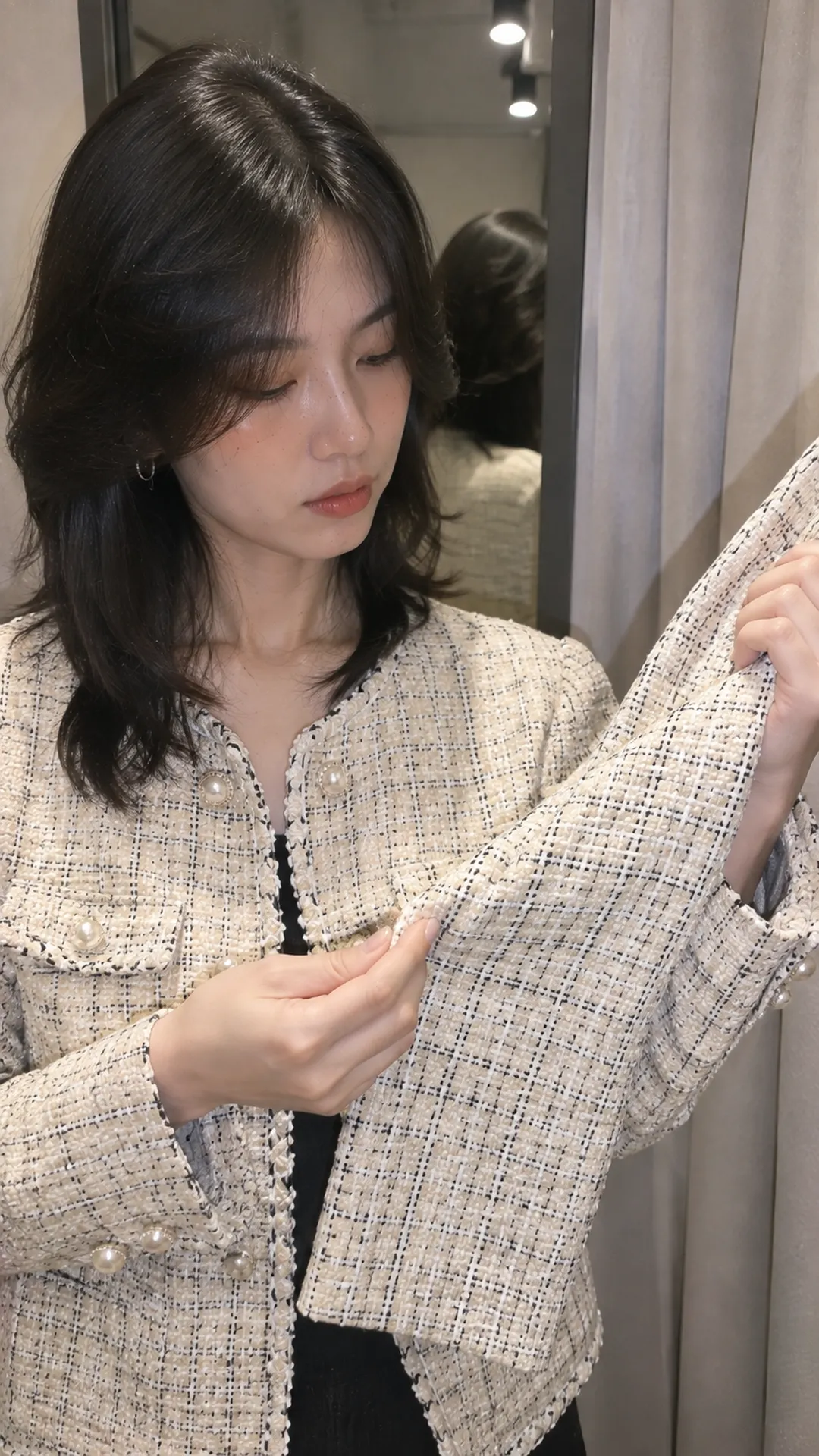
Follow the care instructions for the finished garment
Follow the label on the jacket, skirt, or pants. Care depends on the lining, interfacing, buttons, and trim as well as the outer fabric. Check that composition and construction are the same before using another garment’s instructions.
Empty the pockets and check for loose details before cleaning. If a yarn snags, identify how it’s attached before pulling or trimming it. For a difficult stain or an item that needs professional cleaning, show the cleaner the care label.
Store the garment dry and hang or fold it according to its structure. Support shaped shoulders properly and follow any special instructions for heavy pieces or garments that stretch out of shape. Leave room away from hooks and sharp edges that could catch the texture.
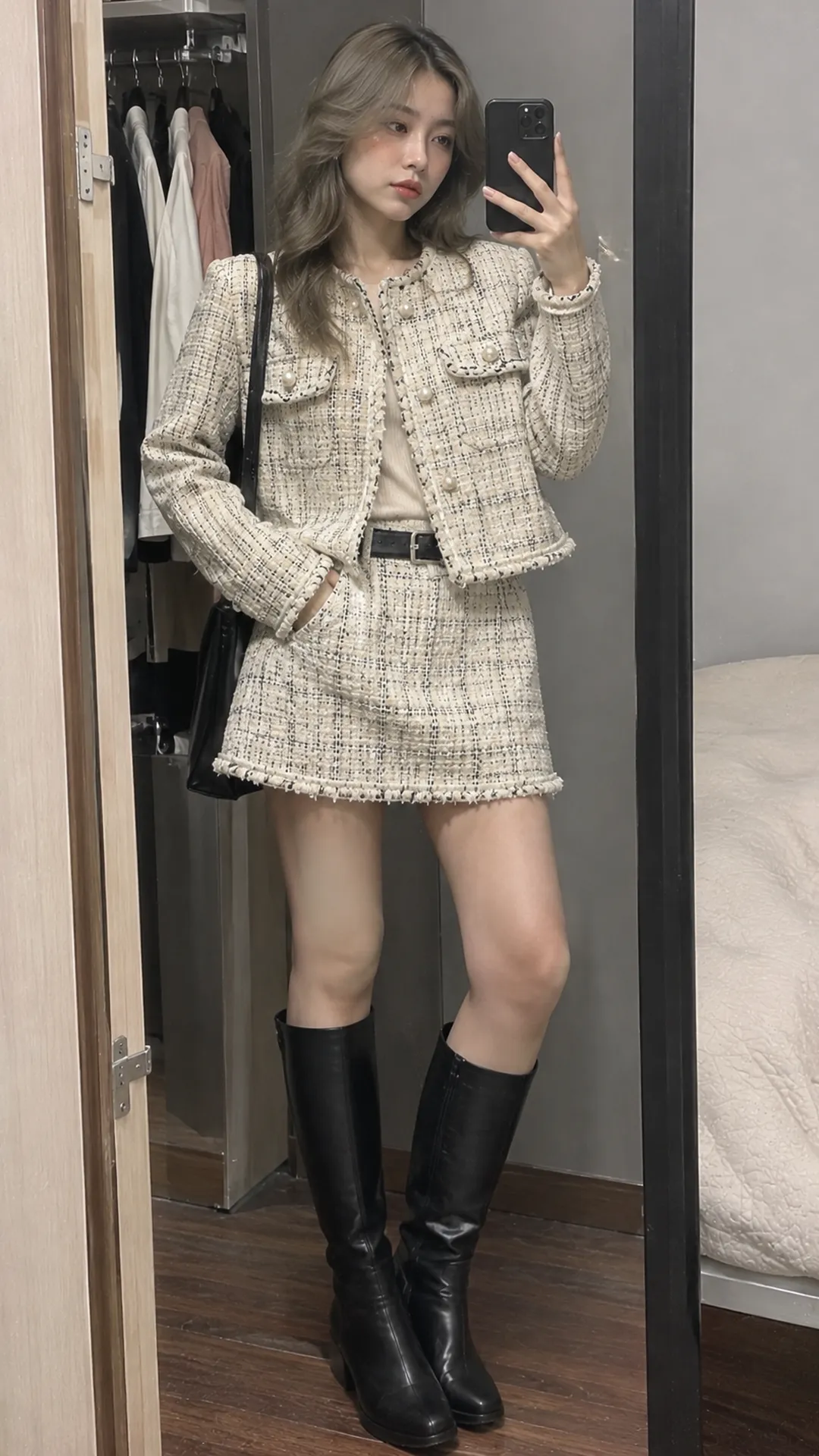
Consider how often you’ll wear it before buying
Try the tweed piece with clothes you own and consider when you’ll wear it and how you’ll care for it. If it works with only one outfit you rarely wear, look for a simpler cut or a piece that fits more of your wardrobe.
The word tweed or the presence of a natural fiber gives you limited information about sustainability. Our sustainable fashion guide considers the garment’s life cycle, use, and repair. For a purchase, look for clear labeling, a fit you like, and care instructions you can follow.
Understanding the weave, fiber content, and construction helps you ask practical questions. Is it light enough for where you’ll wear it? Does the lining feel right? Can you move comfortably and style it with what you own? Use those answers to choose the garment.