

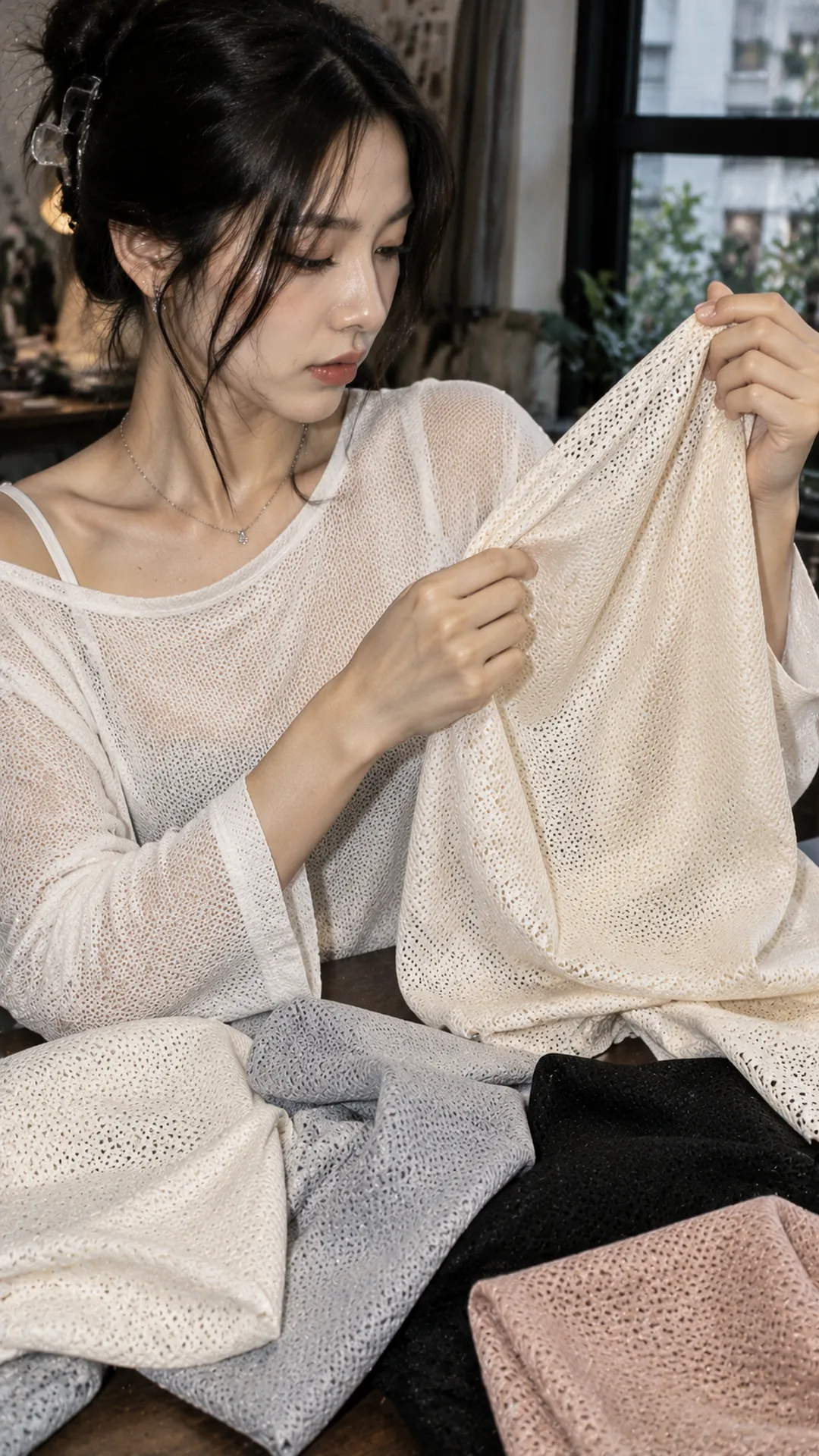
What does vai me tell you, and what does it leave unknown?
According to the introduction to vai me from May10, it has many small surface cells and may use polyester or cotton blends, with some versions adding spandex for stretch. Multiple configurations mean one fiber ratio cannot define every product using the name.
Separate trade name, composition and claimed performance. Pinhole-textured describes a seller's surface category; polyester identifies fiber; quick-drying is a separate property requiring explanation or verification. These information layers cannot replace each other.
A description saying attractive and cool still leaves thickness, lining, stretch direction and transparency under tension unknown. Ask for close-ups, composition labels and movement video rather than infer everything from one model photo.
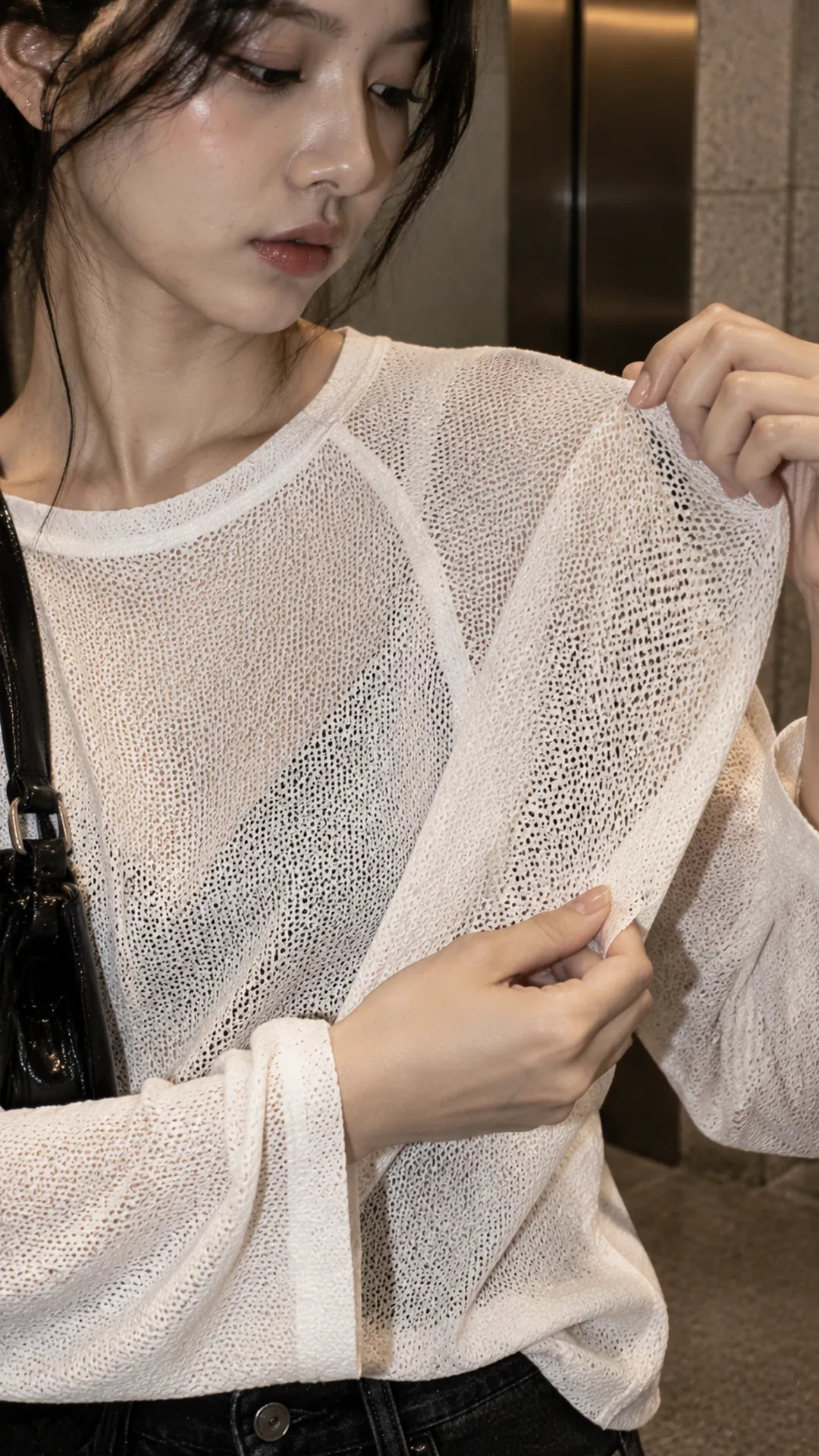
Read pinhole, check-textured and polyester labels practically
Names emphasizing surface appearance
Labels such as needle, pinhole, checked and sesame-grain textures commonly distinguish appearance. Similar-distance close-ups help more than name comparisons. Inspect cell size, raised texture and evenness; similar names cannot prove identical fabric.
For check-textured versions, distinguish structural cells from printed colored checks. A solid-color shirt can still have a small-grid surface. Before patterned trousers or bags, view at normal distance to see whether texture is noticeable or only visible close up.
Names suggesting composition or origin
Poly suggests checking polyester content, but the label must confirm percentages. For Korean or Japanese variants, ask whether this names a range or substantiated origin. A name alone cannot establish manufacturing country or superiority.
Combined labels suggesting piqué-like or mesh variants also need actual images. For a structured polo, inspect collar, placket and body; for light activity, assess shoulder and armhole room and coverage in motion. Intended use determines which information matters first.
Small cells do not guarantee comfort in every setting
Cells are one observation; wearing feel also involves thickness, garment construction, underlayers and activity. Moderate room differs from a tight cut even with the same fabric label. Try your intended wearing arrangement rather than deciding from dots alone.
Distinguish a cool initial touch from extended wear. A pleasant surface does not reveal clinging, seam friction or repeated adjustments in motion. A brief fitting cannot measure all performance, but can expose obvious inconvenience.
Sun-protection, antibacterial and odor-control claims need their own evidence. Surface cells cannot establish them. For black tops, the guide to choosing black summer clothing includes fit, layers and context beyond color.
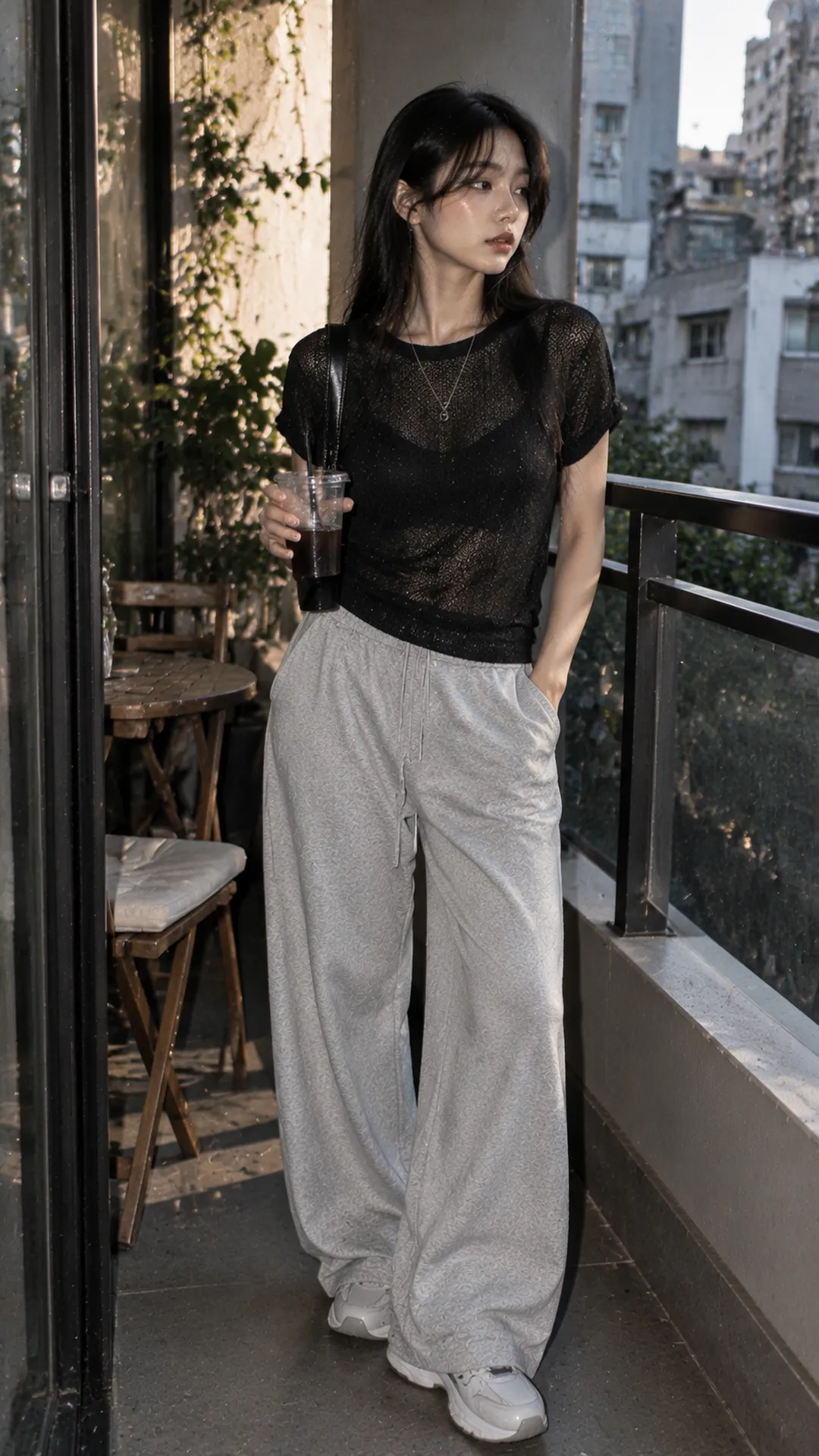
Four checks for a textured tee
Inspect coverage relaxed and under tension
View in ordinary light with your intended underlayer, then reach forward or sit to check chest, back and shoulder tension for unwanted exposure. Hanging fabric alone does not show how its surface changes when stretched on the body.
If coverage is unsuitable, try another cut or product before a thick underlayer. Adding one can solve exposure but change the original light, ventilated aim. Decide whether the top serves as a main layer, outer layer or specific-use piece.
Check stretch and recovery together
Read two-way or four-way claims and clarify the seller's actual directions. Do not pull hard to test durability; move normally and observe shape recovery. Maximum stretch may be unnecessary when you want a defined outline.
For polos, check the placket while reaching and seated. For crew necks, look for displaced or overly tight necklines. These are finished-design features, so identical fabrics can still wear differently.
Inspect seams at contact points
Raise arms, rotate shoulders and sit to feel armholes, neck and hem. Inspect inside for irritating threads or edges. If using a backpack, try straps where permitted; shoulder contact can change under load.
Read care before buying
Ask how the actual design and print are washed and dried. An easy-care body can still have prints or attached details needing a separate process. If that care is impractical, consider another design rather than ignore the label.
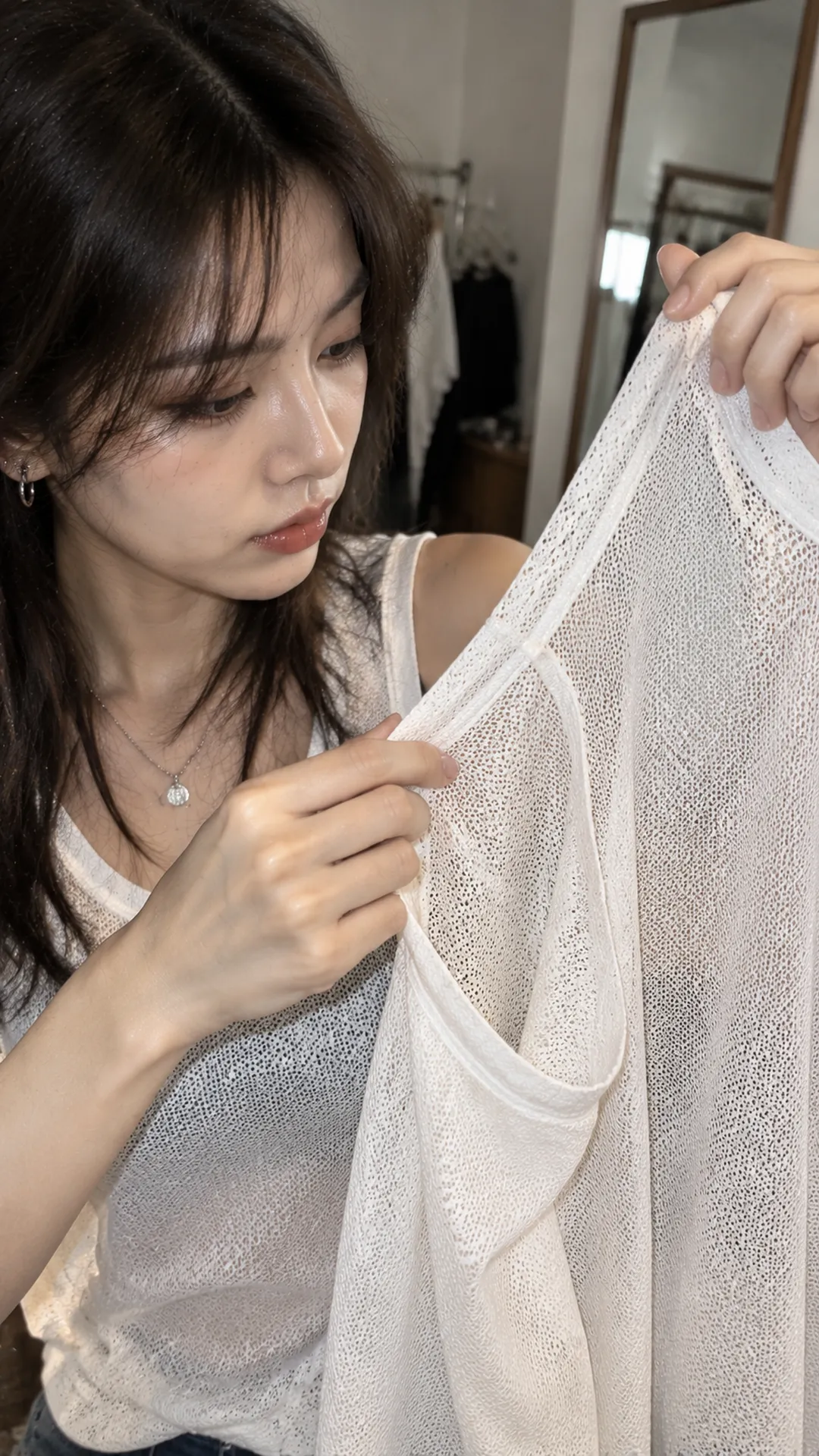
Choose for three common needs
Everyday tops: prioritize coverage, neckline and shoulder shape. Pair with existing trousers to assess untucked or tucked length. For several settings, fewer surface graphics may offer more reuse than an oversized print.
Activewear: read the manufacturer's intended activity and test suitable movement range. A sports-fabric name cannot establish suitability for every sport or intensity. Confirm a feature before buying if it is your main reason.
Group activities: inspect sizing, consistency between colors and print placement. Colors can appear differently transparent, so one photo cannot resolve all choices. Request finished measurements and exchanges rather than rely only on height and weight.
The online clothing sizing guide distinguishes body and garment measurements. Measure a favorite top for reference instead of assuming M or L is identical across sellers.
Give the texture a clear styling role
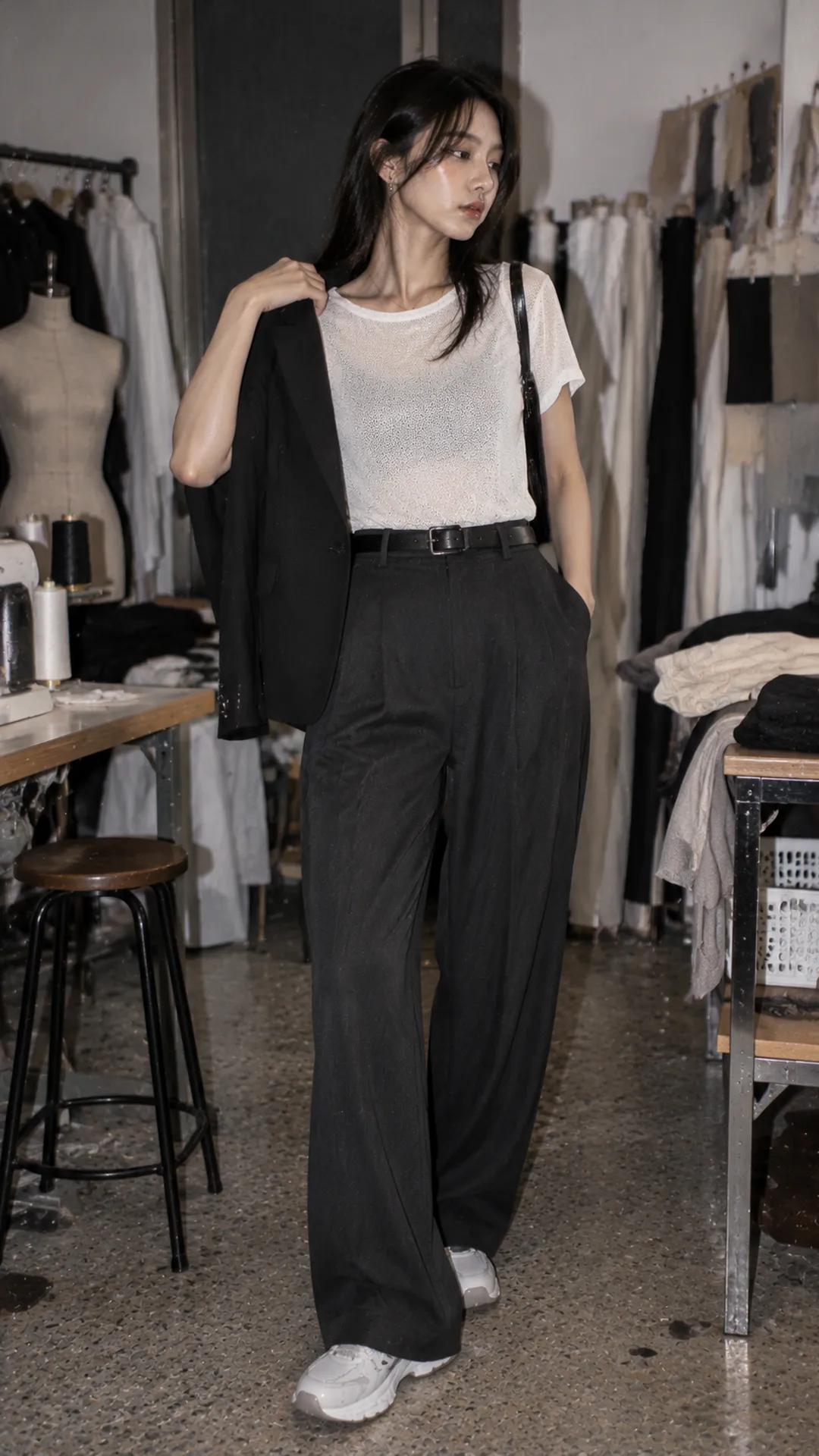
A plain top with structured trousers: use minimal graphics to reduce a full-workout feel. Relate top width to the trousers and inspect the hem. A partial front tuck can reveal the waist, but retain it only if sitting does not create pulling or uncomfortable puffing.
A graphic top with simple bottoms: let the print lead and reduce bag or belt competition. Assess fabric and graphic together because they can create two texture layers. For top shapes, the women's tops styling guides start from construction rather than material alone.
A base layer: try under an existing shirt or light jacket and check armhole bulk. Do not add layers merely for visual detail if hot-day comfort is the aim. Color and accessories can provide contrast while layers follow actual needs.
Buy through information, care for the specific product
Save composition, measurements and care before paying. On arrival, inspect model, color, seams and surface before removing tags or washing. Discuss clear discrepancies under seller policy before self-alteration.
Do not apply high heat or strong cleaners as a universal remedy. Blends, graphics and decoration differ. After several wears, record whether coverage, shape and convenience meet your needs as future purchasing evidence.
Fiber choice alone does not determine environmental impact. The sustainable fashion guide places materials within a lifecycle including long use and care. A repeatedly worn top serving your routine has clearer utility than a purchase based solely on material marketing.
When should a design stay on your shortlist?
Keep designs with clear information, suitable fit and a specific wardrobe role. Resolve missing composition, unknown coverage or unclear sizing one at a time. You need not ask for an entire textile education, only facts affecting use.
Vai me can offer a light, textured top, but the finished garment determines quality. Compare with the same criteria instead of ranking needle-textured, Japanese-labeled or poly versions by name alone. This keeps trade labels from obscuring your actual needs.