

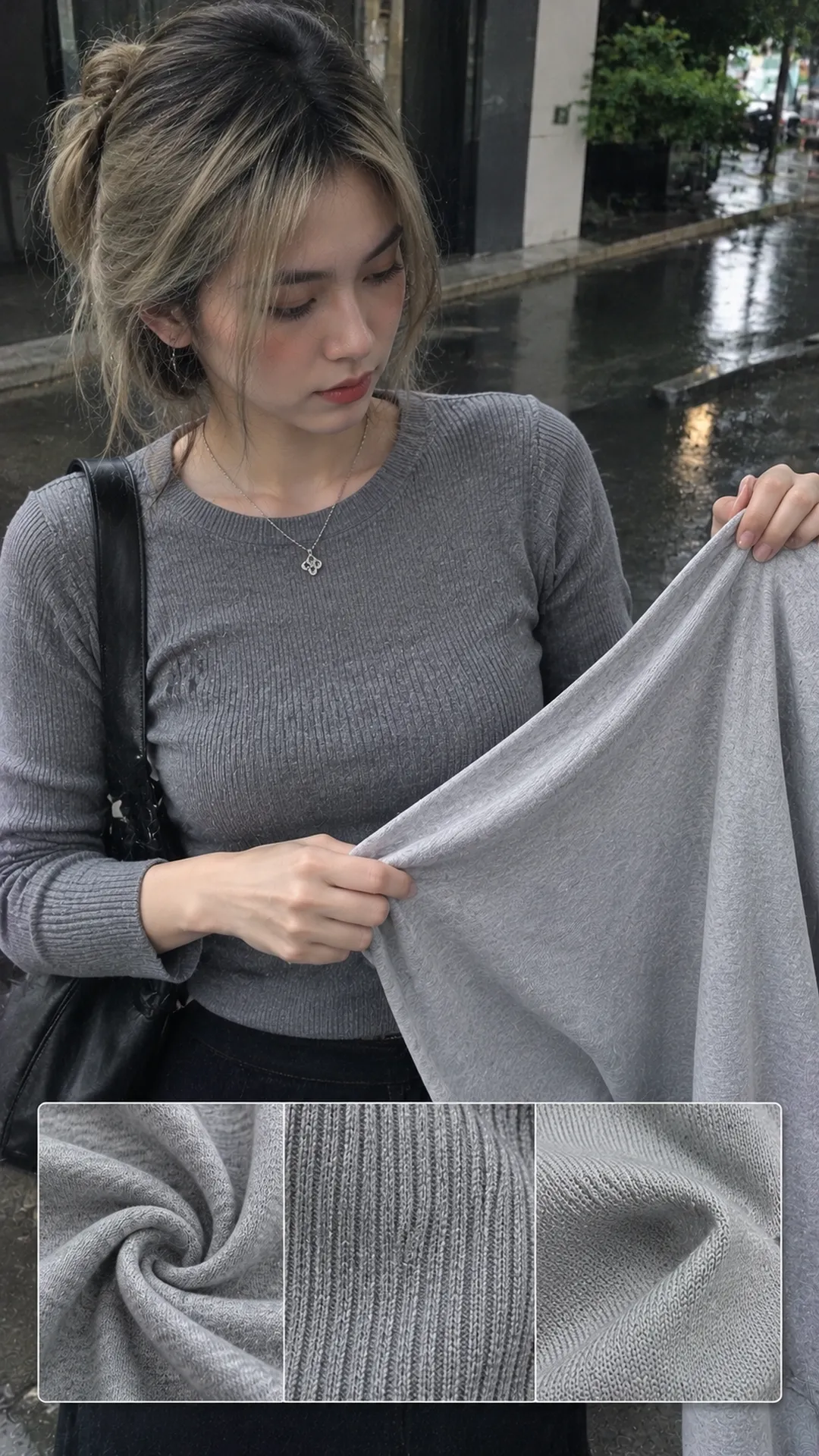
From yarn loops to fabric
According to CottonWorks’ Knit Basics guide, knit fabric is formed by linking yarn into loops. The movement of those loops helps give the fabric flexibility. “Knitted fabric” and “knit fabric” are both used in English. “Knitwear” usually refers to clothing made from knits.
Weaving interlaces lengthwise and crosswise yarns, while knitting forms loops. Pulling on a fabric by hand won’t always distinguish them. A woven fabric with elastic yarn can stretch, and the amount of stretch differs among knits.
Some knit surfaces show tiny columns of loops up close, although finishes or fuzzy fibers can hide them. If you need to identify the fabric for sewing, repairs, or care, look up the product specifications. There’s no need to pull hard, unravel a thread, or cut the fabric to check.
What’s the difference between knitwear and wool clothing?
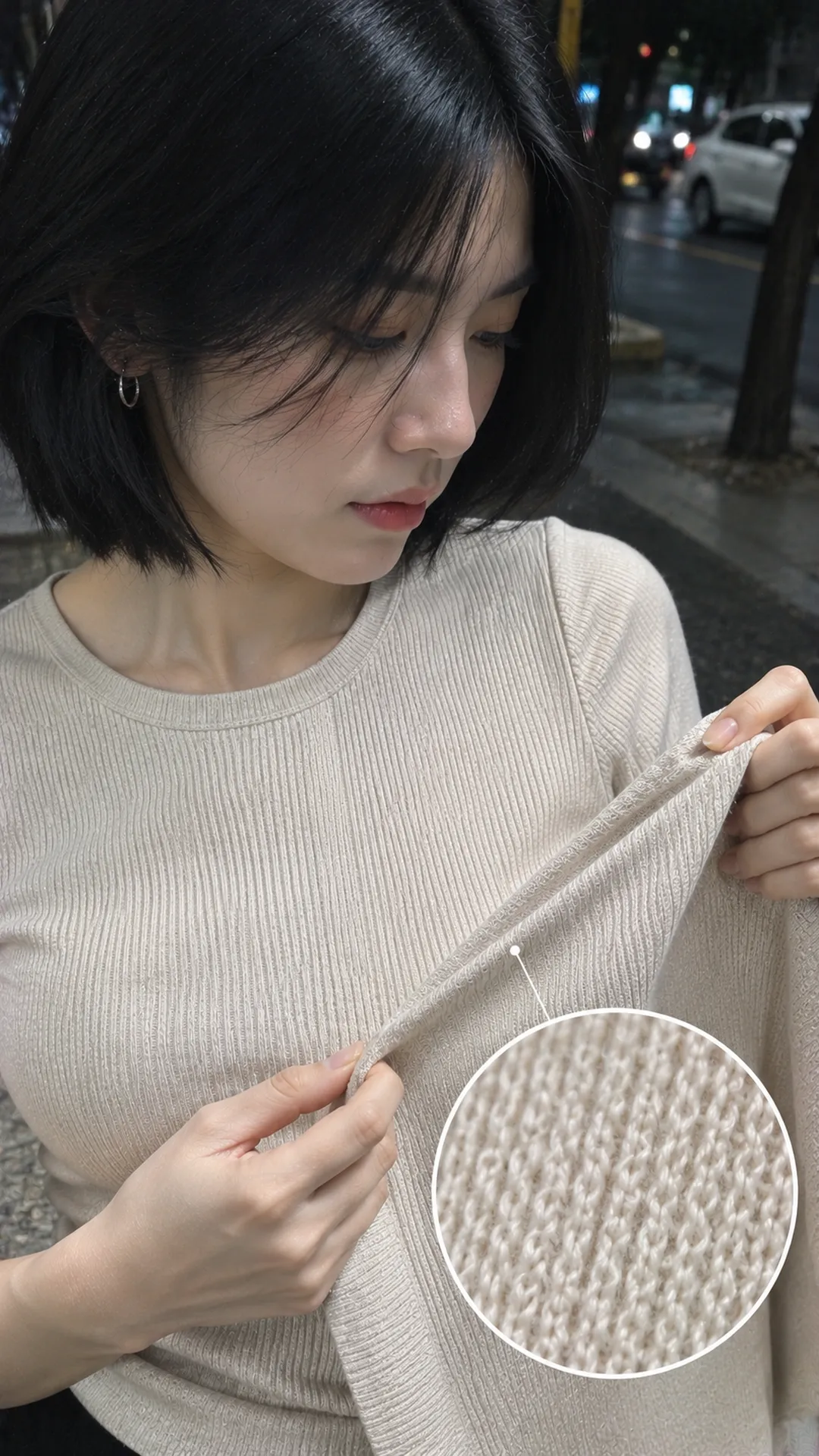
Vietnamese listings sometimes use “áo len” broadly for garments that look knitted. The term alone doesn’t establish wool content. Check the fiber label for animal wool, cotton, acrylic, or a blend even if the listing calls the garment a knit sweater.
Ask how the fabric is made and what fibers it uses. Cotton describes fiber content, for example, while rib describes a knit structure. Seeing both tells you more than a label such as “premium knit.” Consider the seams, finish, and how well the garment suits your plans.
This distinction helps you choose for the season. A lightweight knit you can wear indoors can feel very different from a chunky sweater for cold weather. Ask about thickness and look for close-up photos before ruling out knitwear in warmer weather.
Recognize jersey, rib, and interlock
CottonWorks distinguishes knit structures by their loop arrangement and the needles used. Jersey is common in T-shirts and has different front and back surfaces. Cut edges on single jersey can curl, even if the finished garment doesn’t show it.
Rib knits have raised and recessed columns. They can stretch across their width, which makes them common in neckbands, cuffs, and fitted tops. Interlock is a double knit with similar faces and is generally more stable than single jersey.
These names help you narrow the choice. Two rib knits can differ in thickness, fibers, and softness. Ask for photos of both sides, check the composition, and try the fit. Interlock can suit some uses better than others, and jersey comes in several weights.
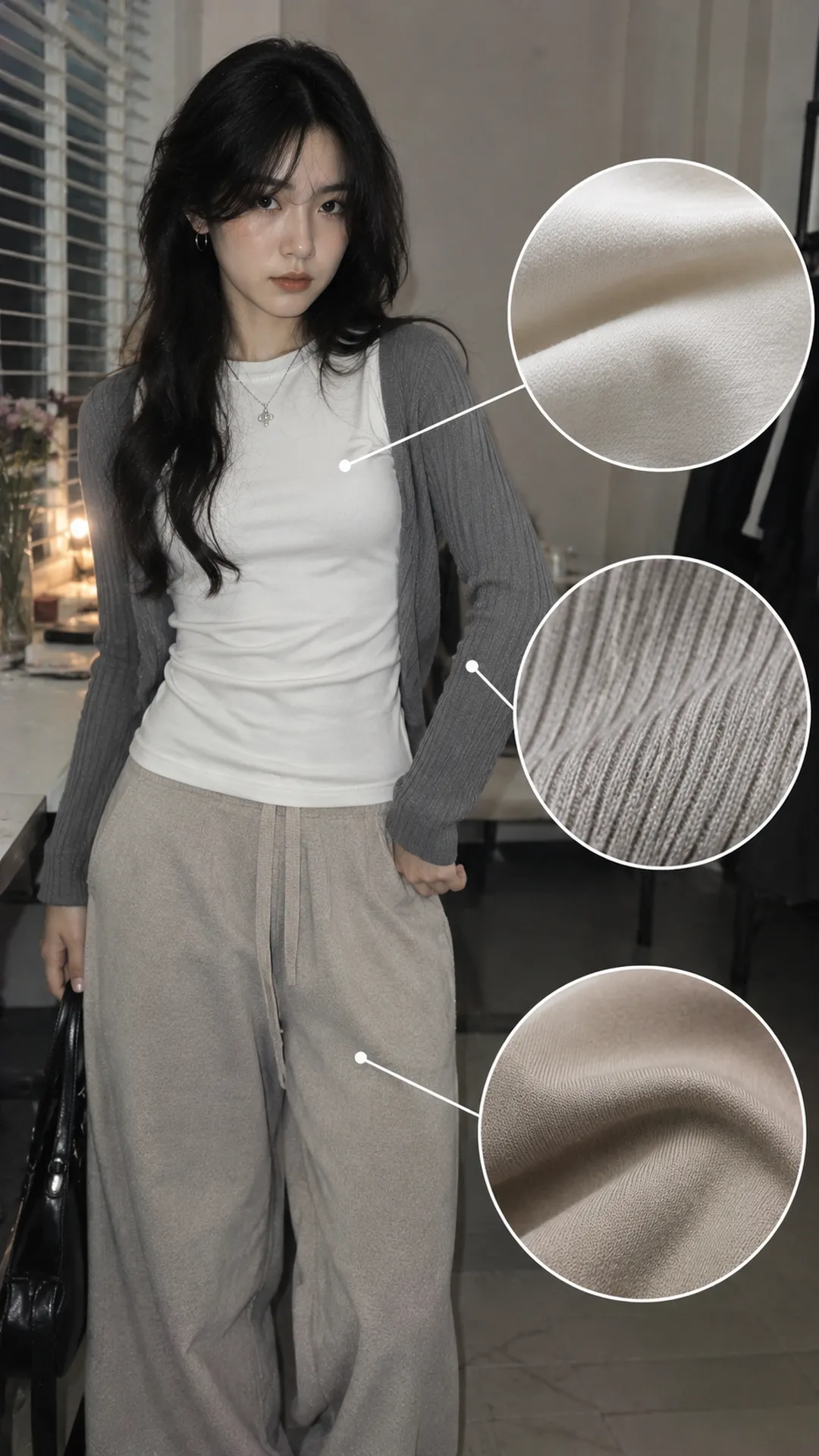
Stretch and recovery measure different things
Stretch is how far a fabric extends under tension. Recovery is how well it returns to shape once the tension is released. A top that stretches easily and bags at the elbows will feel different from one that keeps its shape after movement.
Move normally during a fitting, then check the shoulders, neck, knees, or waistband. Avoid pulling a store garment to its limit. A fitting shows how the piece feels and looks at the time. Long-term performance requires more evidence, such as the manufacturer’s test results.
If you’re allowed to handle a fabric sample, check both lengthwise and crosswise stretch. Stretch can vary by direction. Crosswise stretch affects how a fitted top goes around the body. In pants, seated movement also depends on the rise and seams as well as the fabric in the legs.
The percentage of elastic fiber and the amount a garment stretches are separate measurements. If you need a specific stretch level for exercise or a sewing pattern, ask for data on the exact fabric and how it was measured.
Benefits and points to check
Many knits move with the body. That flexibility can reduce stiffness around the shoulders and body of a tee, fitted top, or base layer. Check the size too. Stretch alone won’t make a garment comfortable if it’s too tight.
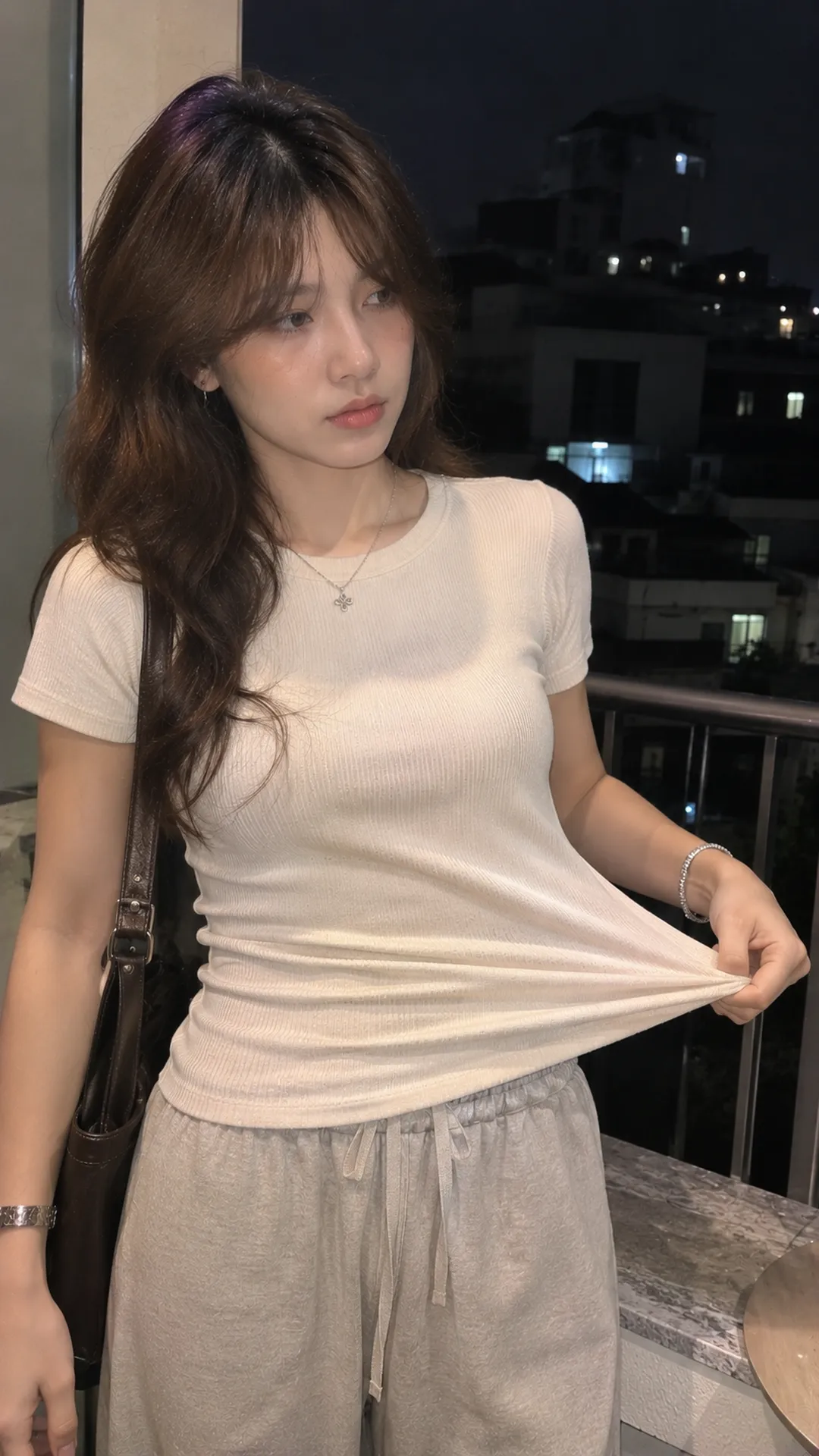
Thin knits or fabrics with larger loops can show the layer underneath. Check in lighting similar to where you’ll wear it, especially in areas that stretch on the body. Choose an intentional underlayer if you like a sheer effect. If you want more coverage, try another fabric or cut.
Some knits can catch on sharp trim, zippers, or accessories. Check the parts of a bag or metal accessory that touch the garment. Keep the pieces that sit together without snagging.
Pilling, shrinkage, and distortion depend on the fibers, structure, finish, and use. If a product makes a specific performance claim, ask what it covers and under what conditions.
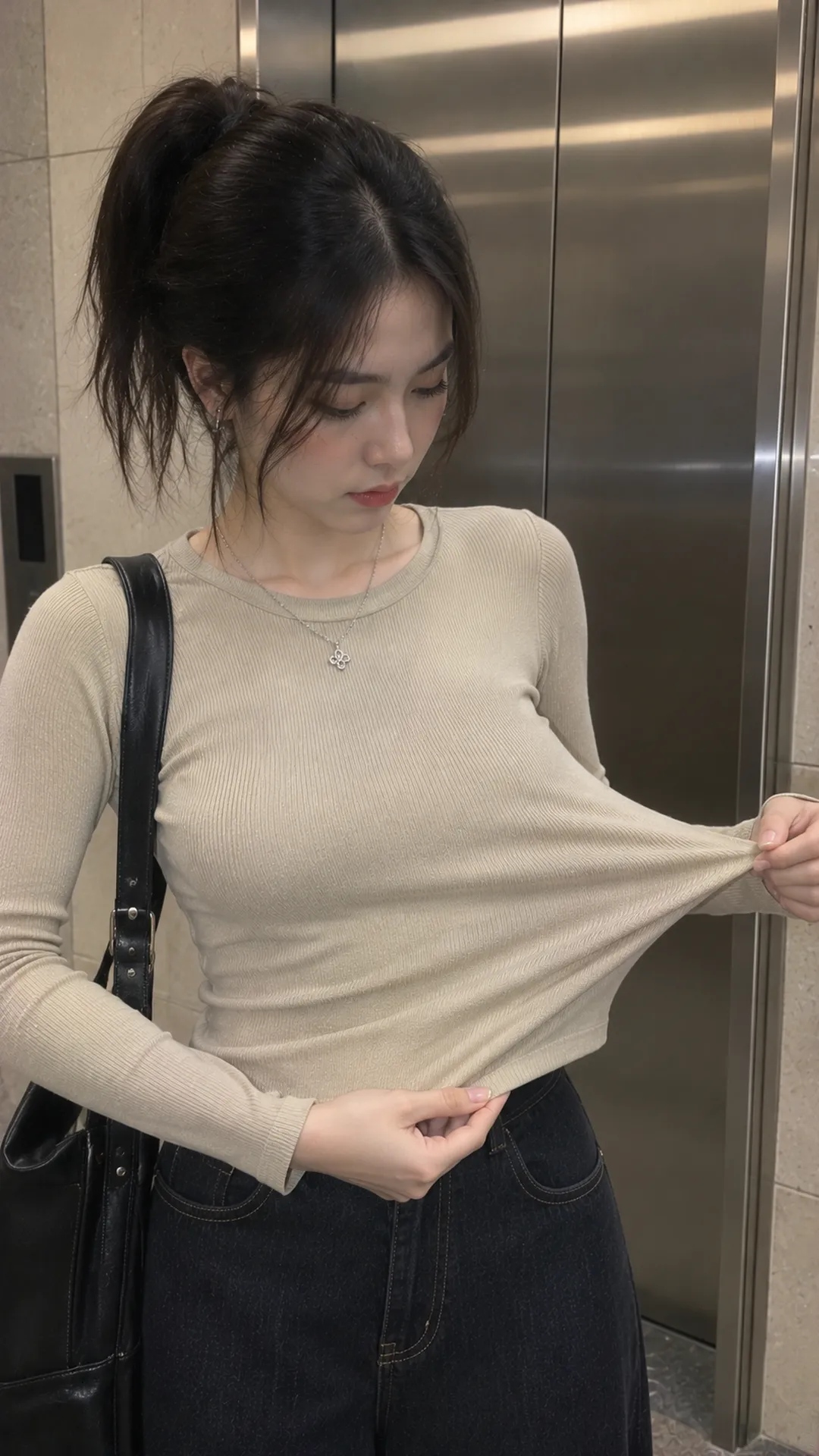
Choose a knit for the garment you’ll wear
For an everyday tee, check the shoulders, neckline, and drape after sitting and standing. Notice if the neck looks too wide or the body twists during the fitting. If you’ll wear it under a shirt, choose a weight that won’t bunch at the shoulders or armholes and try both layers together.
With a fitted rib top, look at how far the ribs open across the bust and shoulders. If the fabric has to stretch a lot just to fit, try another size or cut. The ribs can shift as you move. Check whether the hem stays where you want it without constant adjustment.
For a knit skirt or pants, sit and check the hips, knees, and waist. A phone can pull a pocket out of shape if it’s too heavy for the design. If you need several pockets, look at how they’re built and supported as well as how soft the fabric feels.
Our guide to choosing and styling women’s tops connects fabric choice with length, neckline, and fit. Decide whether you want a close or loose fit so you can compare fabrics for the garment you’ll actually wear.
Sizing and comfort in hot weather
Use the size chart for the exact garment. A stretchy fabric alone is no reason to size down. A fitted piece is designed differently from a loose one, and you may need to read their finished measurements differently. Our online sizing guide explains how to distinguish body and garment measurements before comparing sizes.
In hot, humid weather, consider thickness, how open or dense the knit is, what you’ll wear under it, and how closely it fits. An open knit worn with several layers may still feel warm. A cool touch in the shop doesn’t tell you how it will feel after sitting or walking for a while.
If you like black, our guide to wearing black in hot weather explains how color, fit, and setting affect comfort. Apply that to the individual knit. Black garments can feel quite different from one another, as can garments with synthetic fibers.
Care for knits so they keep their shape
Check the washing, drying, and ironing instructions for each garment. A lightweight cotton tee, a stretch blend, and a wool sweater can need different care. Prints, buttons, and linings may affect what you can do too.
If the label says to dry flat, use a suitable surface to support the garment while it dries. If hanging is allowed, support the garment in a way that suits its shape and avoid stretching it as you arrange it. Before storage, check that it’s dry and that the neck, cuffs, and hem aren’t pressed into unwanted folds.
If a loop snags, avoid pulling it or cutting it right away. Check what repair works for that knit or ask someone who repairs clothes. Keeping clothes wearable for longer is one practical part of sustainable fashion alongside the other decisions that go into making, buying, and caring for a garment.
Check three details before you buy
Identify the knit structure, fiber content, and cut, then move around in the outfit you plan to wear. Ask the seller for any detail that’s missing. Understanding that a knit describes how fabric is made helps you choose a top, skirt, or pair of pants for your actual needs.