

Understanding Job Burnout: Exhaustion Is Not a Personal Failure
Burnout is not a label for every form of tiredness. WHO describes it in an occupational context, involving prolonged, poorly managed work stress and three dimensions: exhaustion, distance or negativity toward the job, and reduced professional effectiveness.
This article retains the reflective spirit of The Art of Burning Out without romanticizing exhaustion. Its health information is checked against WHO, APA and Mayo Clinic. Fashion appears only as an optional way to simplify everyday decisions, not as treatment.

Guide collection: Journal
What Does Burnout Mean?
Burnout is described in WHO’s ICD-11 as an occupational phenomenon associated with prolonged work stress that has not been managed effectively. WHO states that burnout is not classified as a medical condition and applies this definition specifically to work.
Everyday speech also uses the word for exhaustion around study, caring, creative projects or feeling depleted. Those experiences deserve attention, but they are broader than WHO’s specifically occupational definition.
Begin with the experience, context and possible explanations. Poetic ideas about shutting down to be reborn do not replace clear information or appropriate support.
Three Occupational Dimensions
The three dimensions offer context rather than a self-diagnosis checklist. They help distinguish this work-related concept from an ordinary tiring day.
| Dimension | Possible experience | Important qualification |
|---|---|---|
| Energy depletion or exhaustion | Feeling drained, difficulty starting work or limited recovery after a short break | Persistent fatigue has many possible causes; do not assume burnout explains everything |
| Distance or cynicism toward work | Increasing detachment, negativity or bitterness connected with the job | Broader job-related distance rather than simply disliking one task |
| Reduced professional efficacy | Feeling ineffective or unable to produce meaningful results | May accompany concentration difficulties or a reduced sense of accomplishment |
APA describes a similar pattern and emphasizes that responses should consider both the worker and working conditions rather than making individual self-care the sole responsibility or solution.
Stress, Burnout and Depression
Stress can be short-lived or prolonged. With some short-term pressures, finishing a task brings relief. Occupational burnout concerns a more sustained work-related pattern involving depletion and changed relationships with the job, not stress duration alone.
Depression is a separate mental health condition requiring appropriate assessment. Exhaustion, concentration problems, sleep changes or reduced interest may overlap across experiences, so an online article cannot determine the explanation.
| Work stress | Occupational burnout | Depression | |
|---|---|---|---|
| Scope | May relate to a task or particular period | Defined by WHO in an occupational context | May affect several areas of life |
| Energy | Tension or feeling overloaded | Depletion, detachment and reduced efficacy | May involve fatigue, reduced interest and other symptoms |
| A medical diagnosis? | Not in itself | WHO classifies it as an occupational phenomenon | A clinician can assess and diagnose depression |
If the explanation is unclear—whether work-related strain, depression, anxiety, sleep problems or another health issue—talk with a healthcare or mental health professional rather than relying on a label.
Workplace Conditions That Can Contribute

Workload is only one factor. APA and Mayo Clinic also discuss limited control, unclear expectations, conflict, inadequate support, work-life imbalance and poor recognition. These are possible contributors rather than proof of an individual diagnosis.
- Unsustainable workload: continual demands without adequate recovery opportunities.
- Limited control: little say over deadlines, schedules, methods or resources.
- Unclear expectations: being evaluated without knowing what successful work requires.
- Limited support: isolation, conflict or an environment where concerns feel unsafe to raise.
- Value conflicts: work requiring actions at odds with what matters to you.
- No stopping point: messages and deadlines extending work throughout daily life.
A weekend off may not resolve conditions that remain unchanged. Consider workload, autonomy, expectations, support and available work options alongside individual coping practices.

When Pushing Harder Stops Helping

The original editorial point remains: exhaustion is not a moral failure. When a working arrangement is unsustainable, further personal optimization is not always the answer.
Ask whether the workload is realistic, what control is available, which deadlines are genuinely fixed and what truly requires action now.
Pausing does not automatically mean falling behind. It can reveal that the previous pace was unsustainable.
Exhaustion is neither an art nor a badge of dedication, and it is not a required stage of reinvention. The constructive task is rebuilding less depleting routines after recognizing what is wrong.
Where Can You Begin?
There is no universal recovery formula. Consider both workplace stressors that might change and personal support and recovery needs.
1. Name the Stressors
Separate workload, deadlines, limited autonomy, excessive meetings, conflict, missing support and after-hours boundaries. Specific concerns are easier to discuss than an undifferentiated statement of exhaustion.
2. Separate Essential, Deferrable and Unnecessary Tasks
Writing down priorities can clarify perceived urgency. This is a short-term organizational aid, not a treatment or a guarantee that symptoms will resolve.
3. Discuss Working Conditions Where Feasible
Consider realistic goals, concerns and changes with the relevant people at work when possible. If conditions remain harmful and unchangeable, reviewing a better-fitting role or workplace may be an option, taking your circumstances into account.
4. Seek Personal and Professional Support
A trusted colleague, loved one, employee assistance program where available, or healthcare professional can help you consider the situation and available options. You need not navigate it alone.
5. Support General Wellbeing Without Another Productivity Target
Sleep, appropriate activity, regular meals and breaks support general health. Turning every rest period into a performance target can add pressure; the aim is support rather than perfect recovery metrics.
What Not to Call a Cure
- A short holiday as the only answer: it may provide relief without changing workload, lack of control or harmful working conditions.
- Forced positivity: rewording feelings does not automatically remove the underlying problem.
- Shopping as treatment: a purchase may feel pleasant but does not address occupational causes.
- Labeling all fatigue as burnout: sleep difficulties, depression and other health issues can require separate assessment.
- Admiring exhaustion: working to depletion does not prove greater dedication.
This article can provide language and questions, but it does not replace a professional health assessment.
Simplifying Clothing Decisions When Energy Is Low
Fashion does not treat burnout. If choosing clothes is an unwanted extra decision, an uncomplicated repeat outfit may make that small part of the morning easier.
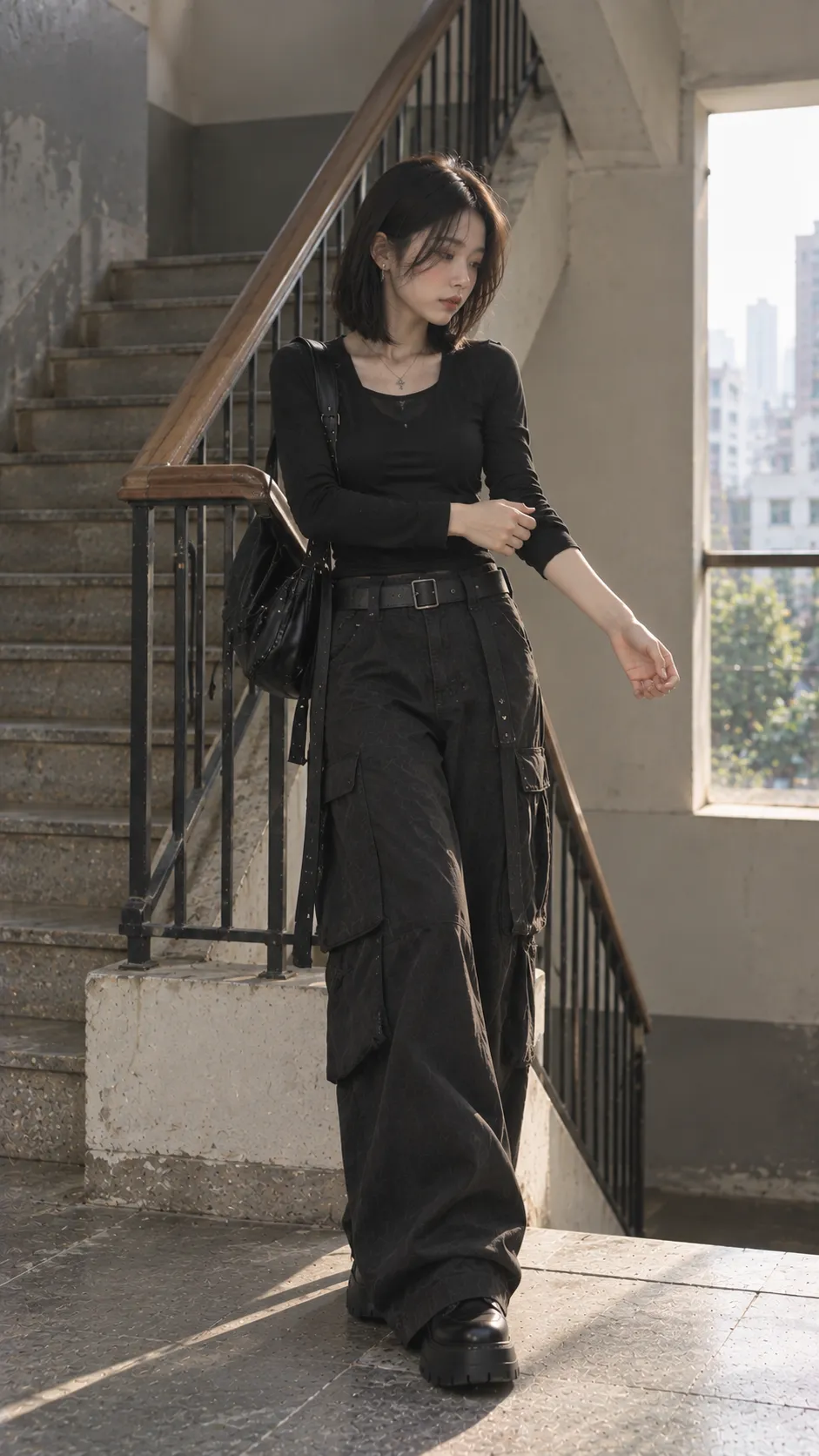
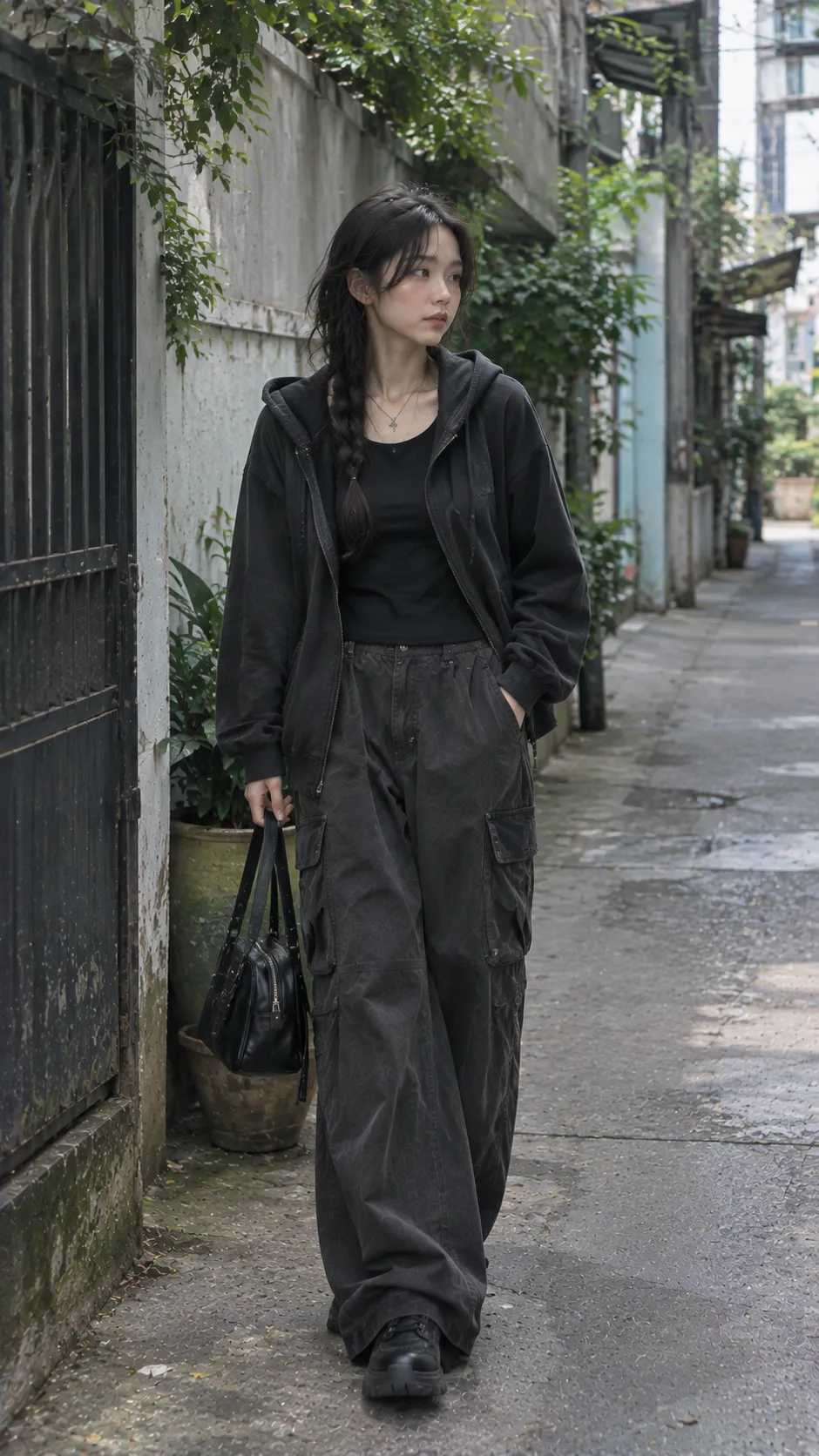
One optional Apocalypse Closet formula is: a familiar black top, comfortable bottoms, already comfortable footwear and one repeated accessory. Try a tee, cargo pants and sneakers; a fitted top, jeans and low boots; or a cardigan, trousers and pendant. The aim is fewer choices rather than proving an aesthetic.
For a smaller, reusable clothing system, see capsule wardrobes. To retain dark styling while simplifying choices, explore building a dark-aesthetic wardrobe.
Treat the outfit as a small practical convenience, not a solution to a health condition or unsustainable workplace.
When to Seek Professional Support
Consider professional help when exhaustion persists, substantially affects sleep, eating, concentration, work or daily life, or leaves you uncertain about its cause.
Mayo Clinic notes that experiences associated with job burnout can also relate to depression or other health conditions. That is why online information should not be used for self-diagnosis.
seek urgent local help through emergency services or a nearby healthcare facility. Ask someone you trust to stay with you and help you access support.
Related Closet Outfits
These are clothing references that can be simplified into repeat combinations. They are not therapeutic outfits.
References
Health information is checked against medical and psychological sources. The wardrobe connection is an Apocalypse Closet editorial suggestion, not healthcare guidance.
- World Health Organization — Burn-out an occupational phenomenon — occupational classification and definition in ICD-11.
- American Psychological Association — Workplace Burnout — working conditions, stressors and the relationship between people and workplaces.
- Mayo Clinic — Job burnout: How to spot it and take action — possible experiences, contributors, professional assessment and support options.
Frequently Asked Questions
What does burnout mean?
WHO uses burnout for a work-related pattern involving sustained unmanaged job stress, exhaustion, detachment or negativity toward the job, and reduced professional efficacy.
Is burnout a mental illness?
WHO does not classify it as a medical condition in ICD-11. That does not make persistent symptoms unimportant; professional assessment may still be needed.
How does it differ from ordinary stress?
Stress can occur briefly or persist. Occupational burnout additionally concerns a pattern of exhaustion, altered relationships with work and reduced efficacy; duration alone does not establish it.
Is it the same as depression?
No. Depression and occupational burnout should not be treated as interchangeable. Their experiences can overlap, so seek professional assessment when the explanation is uncertain.
Can leave from work cure it?
Time off may offer relief, but a short break alone may not address unchanged occupational stressors. Appropriate support depends on the situation.
Can fashion resolve burnout?
No. A simpler wardrobe can only make clothing choices more manageable; it is not treatment.