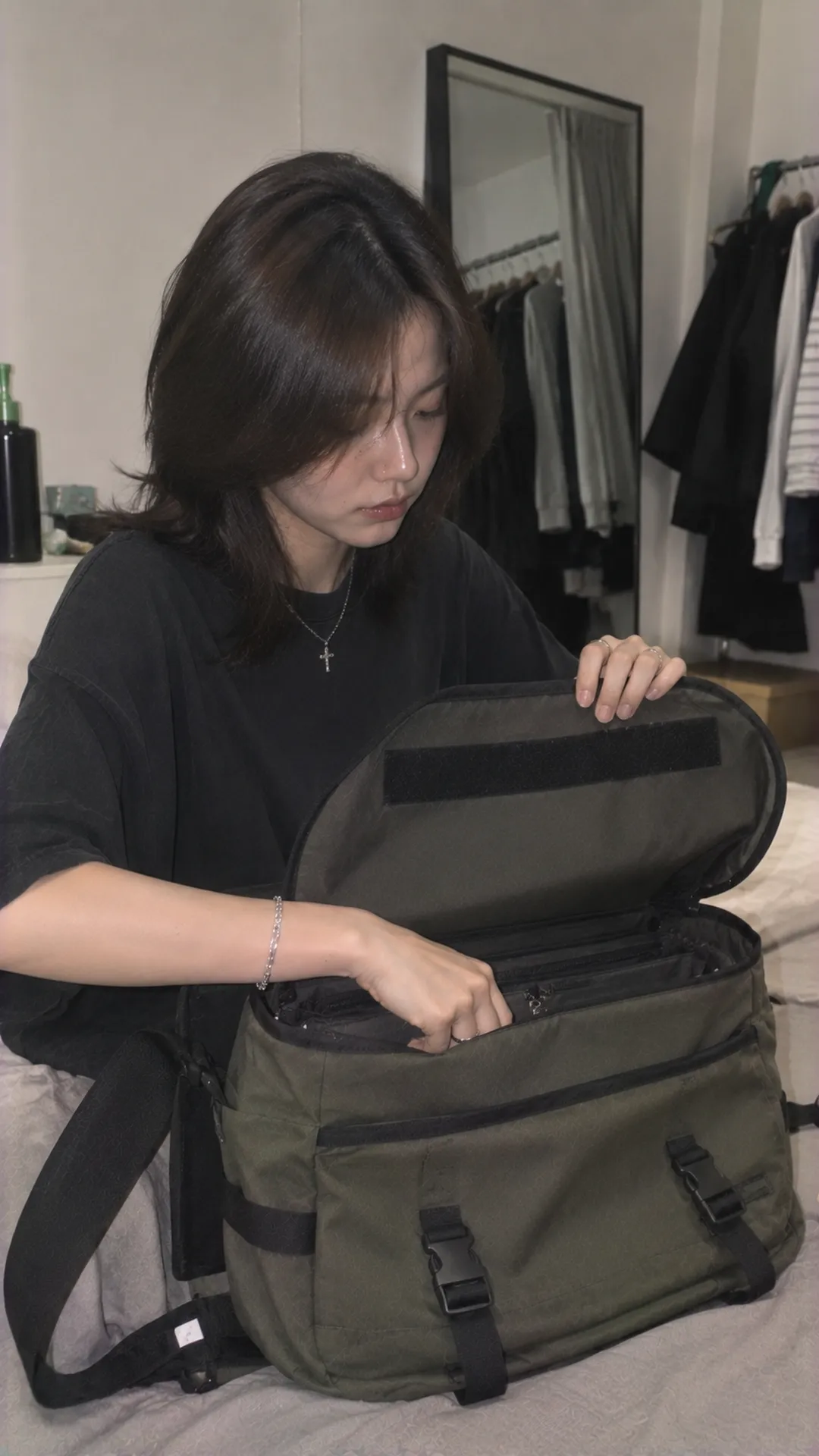
Recognize a messenger by the body, flap, and strap
On a typical messenger, the flap lifts to reveal the main compartment and the long strap attaches at both sides. One example is Timbuk2’s Custom Classic Messenger, which has an adjustable crossbody strap, buckles beneath the flap, and organizer pockets. Other messenger bags can use different features.
“Crossbody” describes how you wear a bag, while “messenger” suggests a family of designs. Messenger bags can be compact, soft-sided, or structured, and some add a grab handle. Compare what each bag looks like open and where the pockets sit.
A crossbody with a full top zipper may suit a different routine. It gives you another way to reach your belongings and a different silhouette. Check how it opens before choosing by the name alone.
Choose the size around the largest item you carry
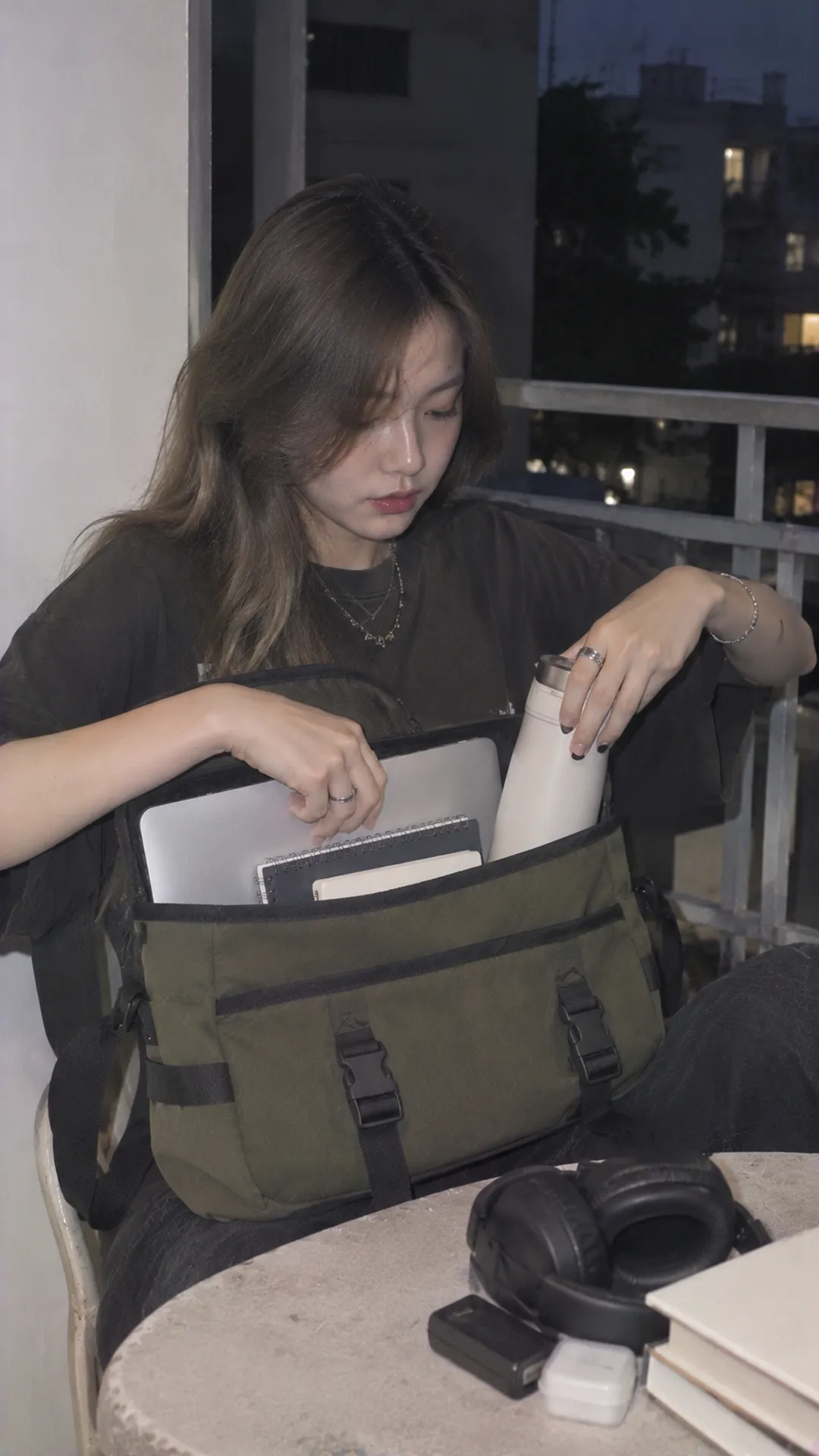
Lay out your everyday items, such as your wallet, phone, notebook, water bottle, devices, and charger. Separate essentials from things you only carry occasionally. The largest item tells you which compartment dimensions to check, while the full load determines how much the bag will bulge.
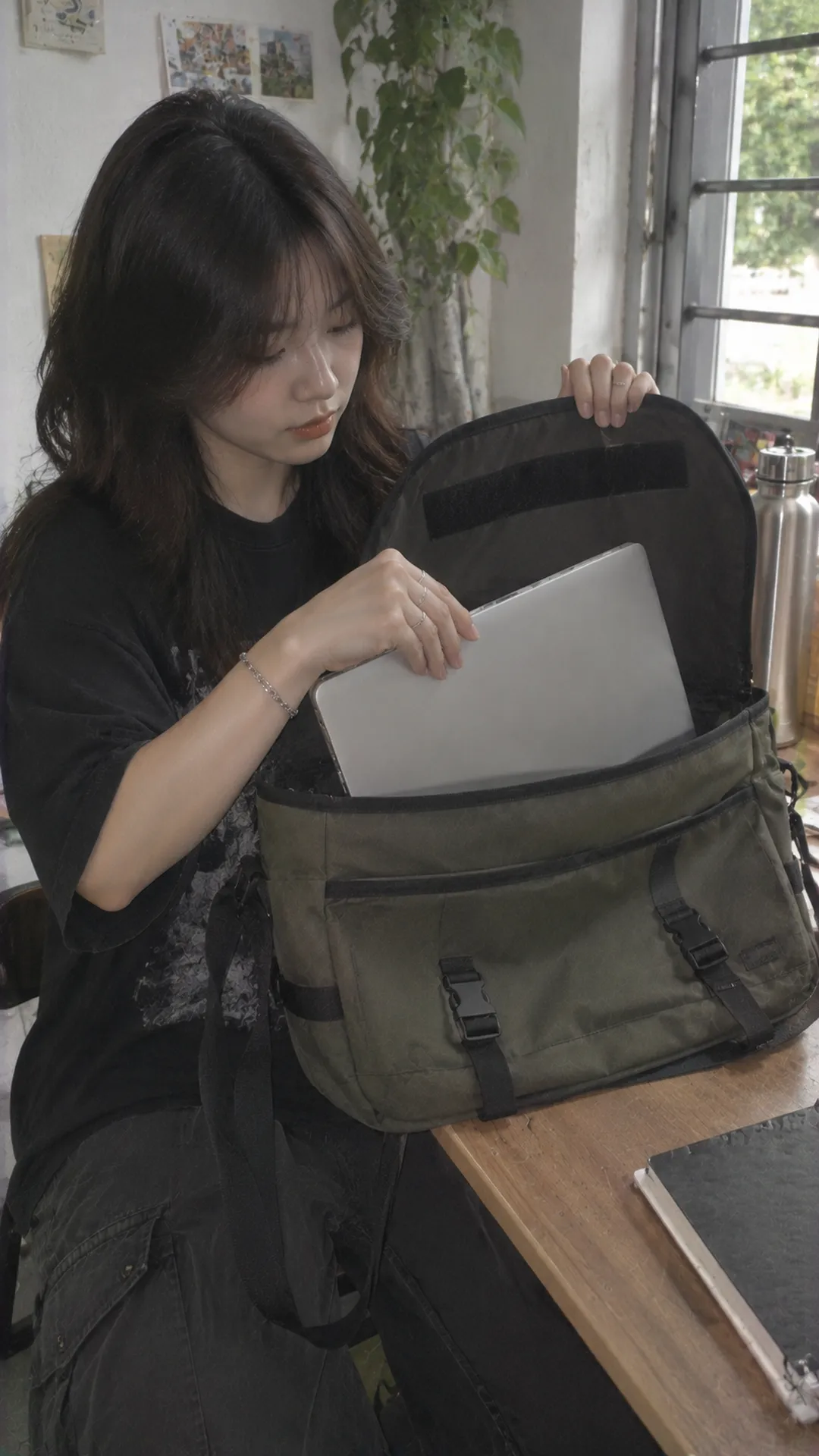
For a laptop, compare its width, height, and thickness with the actual sleeve measurements. Two laptops with the same screen size may have different dimensions, especially in protective cases. Ask how wide the opening is and check whether the laptop clears the fastening without forcing it.
For a notebook or documents, check the usable height with the flap closed. Paper that fits an empty bag may bend after you add a bottle and jacket. If you carry things that need to stay flat, look at dividers and compartment shape as well as total capacity.
Choose for what you carry most days. An oversized bag may knock against your hip or leave small items hard to find. An overfilled small bag can pull the flap out of line and change the silhouette you liked.
Try the strap with the bag loaded
If the shop allows it, load the bag with about as much as you normally carry and adjust the strap. See where it touches your shoulder, where the adjuster sits, and how the body moves as you walk. An empty bag can feel quite different from one holding a device.
While standing, try the bag at your hip, a little higher, and farther back. A low bag may swing more. A high one can get in the way of your elbow when you reach inside. Choose a position where you can move and reach comfortably.
If there’s a shoulder pad, check whether it stays over the contact point when you change how you wear the bag. For a secondary stabilizer strap, follow the instructions for the model. Extra parts are useful if they help you and are easy to use.
Try the bag over a jacket if you wear one often. A thick layer changes the strap length you need and how the bag sits against you. Check that the adjustment range works over both a tee and your usual layers.
Organize pockets by how often you use them
Use an accessible pocket for things you reach for often, such as a card, tissues, or earbuds, if it closes securely enough for those items. Keep less-used belongings deeper in the bag. A small pouch can keep things from disappearing at the bottom without adding more built-in pockets.
Open the flap while wearing the bag. See whether your hand catches on a buckle or strap and whether you need to hold the flap up while reaching inside. If you take things out often, that movement matters more than the number of decorative fastenings.
Look at the stitching around the strap anchors, buckles, and bottom corners, then open and close everything normally. If a pocket claims to protect a device, check its construction and stated limits. Thick-looking padding alone won’t tell you what it protects against.
Leather or fabric messenger bag?
Choose the finish you like and can care for. A structured leather messenger may have a defined outline, while a soft fabric bag may move more with you. The cut, lining, and construction all affect how much shape the bag holds.
Read the maker’s description of any leather, coating, or fabric fibers. Color and sheen alone won’t identify the material. Check the lining, edges, and cleaning instructions for the exact model. A bag that suits your look will get more use if you can care for it easily.
For rain, check what the maker says about the entire bag. A water-resistant outer fabric doesn’t establish that seams, openings, and fastenings keep water out. A large flap alone won’t tell you how well the bag handles rain. Protect important devices according to their instructions and the conditions you expect.
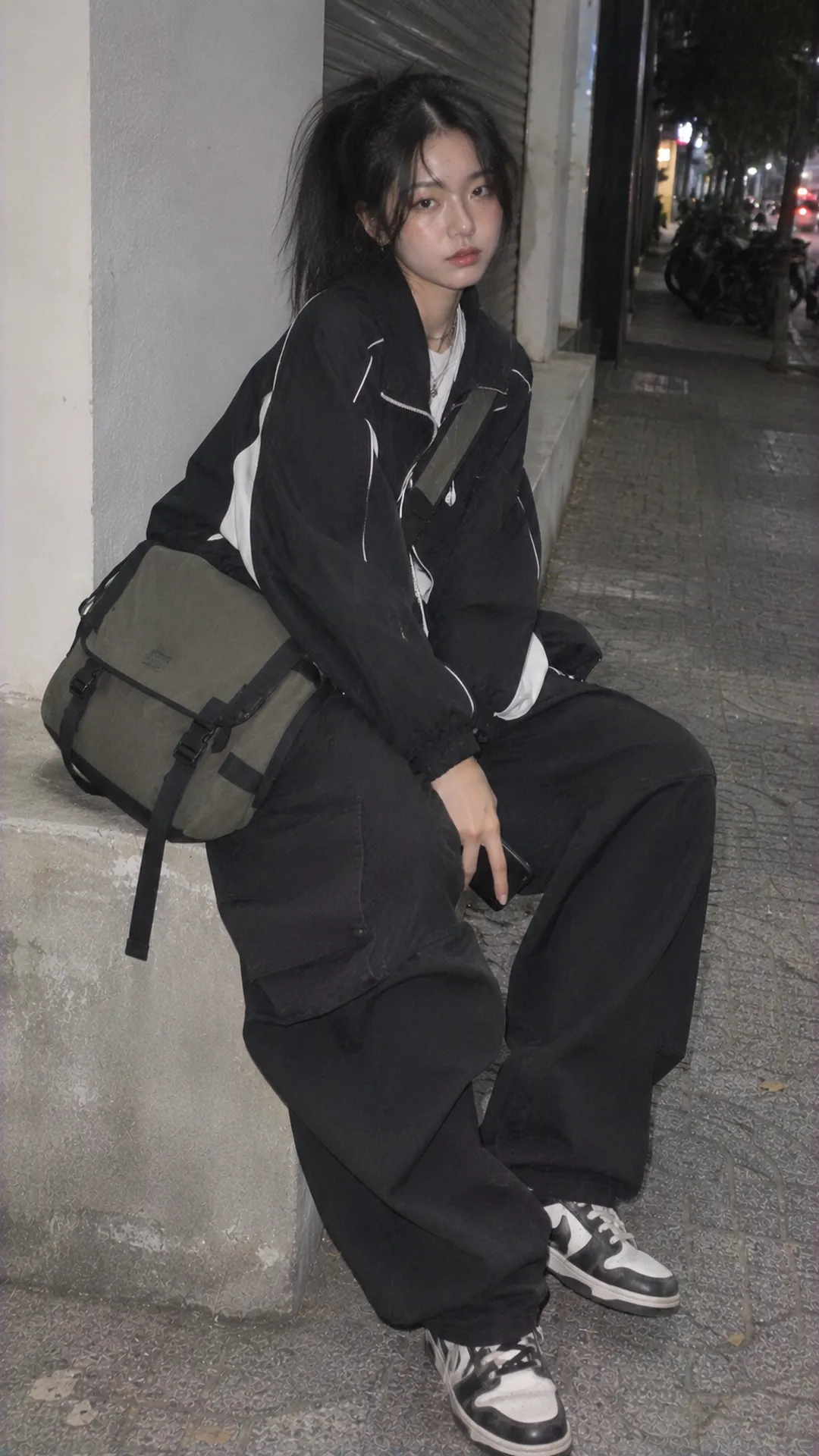
Three streetwear outfits built around a messenger bag
Try a plain tee, straight-leg pants, and a medium messenger. The strap draws a diagonal across the top, so a small print or plain fabric lets the bag stand out. With wide pants, check that the bag doesn’t add more volume at the hip than you want.
With a cropped jacket and wide trousers, adjust the bag so the jacket hem remains visible. A flap that covers the transition from jacket to waist can create a large horizontal block. Move the bag slightly to the side or shorten the strap and take another full-length photo.
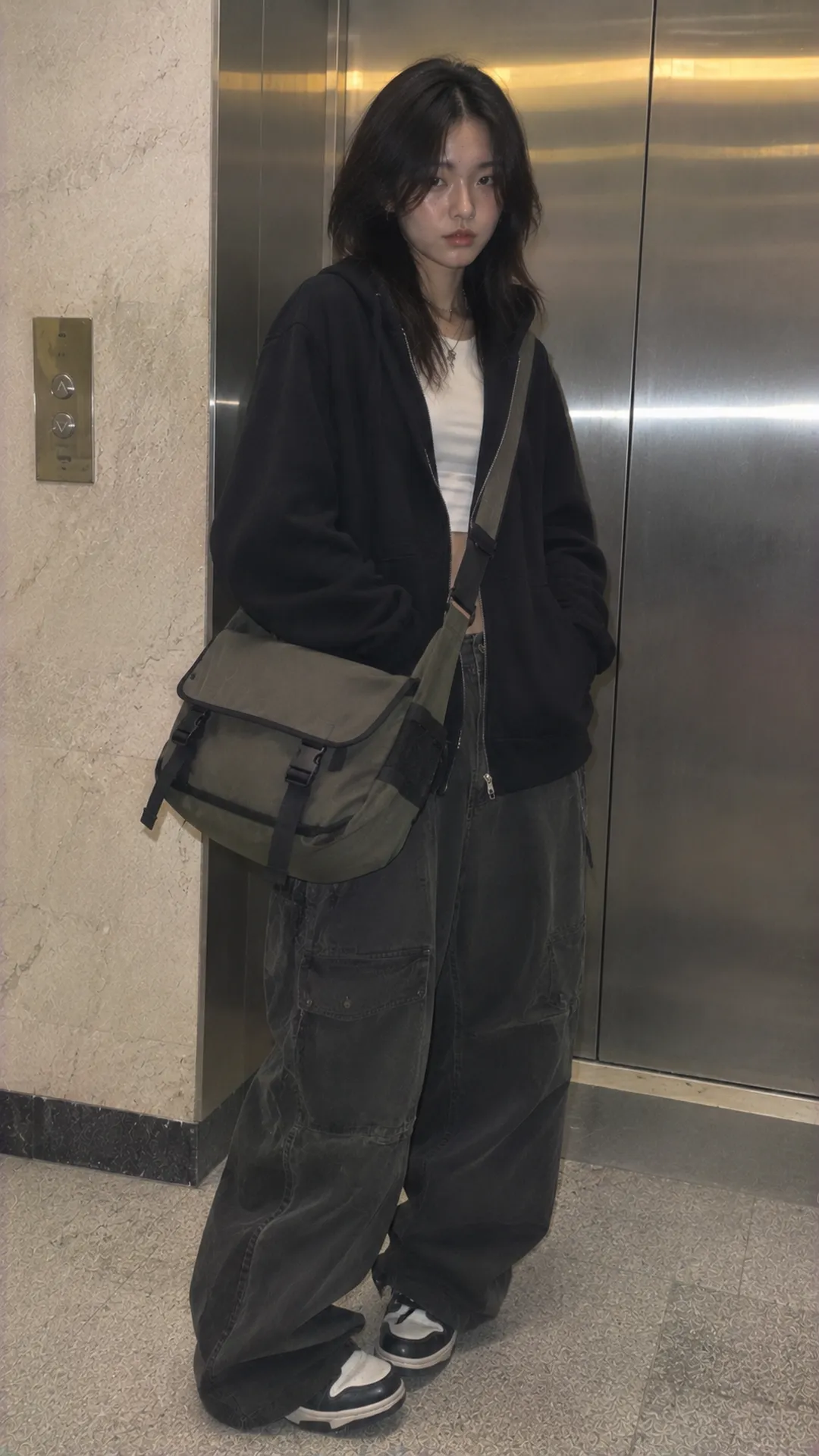
A soft messenger adds movement to an open shirt, tee, and jeans. Check whether the strap pulls both sides of the shirt in the same direction. Our guide to layering women’s outfits helps you balance length and thickness before adding a bag.
If you’re deciding what kind of streetwear you like, our guide to getting started with alt fashion using clothes you own can help you choose one focal piece. Let the messenger lead and add chains, graphics, or cargo pockets only if you like what they contribute.
Balance color and metal details
A black messenger goes with several palettes. Check its sheen and contrast against the top. A matte bag can stand out against glossy black fabric, while similar finishes may blend. Move the bag or change the top if you want the bag to show more clearly.
For a bag with a large buckle, try repeating metal in a small detail such as earrings or a belt buckle. The finishes can differ. Our guide to placing alternative accessories in an outfit can help you choose whether to highlight the neck, waist, or hip.
A bright bag stands out against a fairly simple top. You can echo the color in a small detail on a shoe or hat if you want. Our guide to essential alt-fashion accessories can help you choose a piece that fills a gap in your wardrobe.
What to check for school, work, and outings
For school or work, prioritize space for documents and devices and easy access to the things you use. A smaller bag can work for an outing with only a few essentials. If you’ll walk a long way, wear the bag long enough to see whether you have to hold it steady. If so, change the load or adjust the strap.
Our guide to alternative outfits for going out starts with the main activity. A bag that works for a short photo session can be awkward over a whole day. Choose for how you’ll spend most of your time.
Store the bag according to its construction
Empty the bag, check the pockets, and clean it as directed for its materials. Check compatibility before using a cleaner on leather, fabric, or coated surfaces. To preserve the shape, follow the maker’s storage instructions and keep heavy objects from distorting the base.
Before using it again, check the strap anchors, fastenings, and lining. Choose a messenger that holds what you need, sits securely, and works with clothes you wear. Then you can give it a different look with a change of top or shoes.