

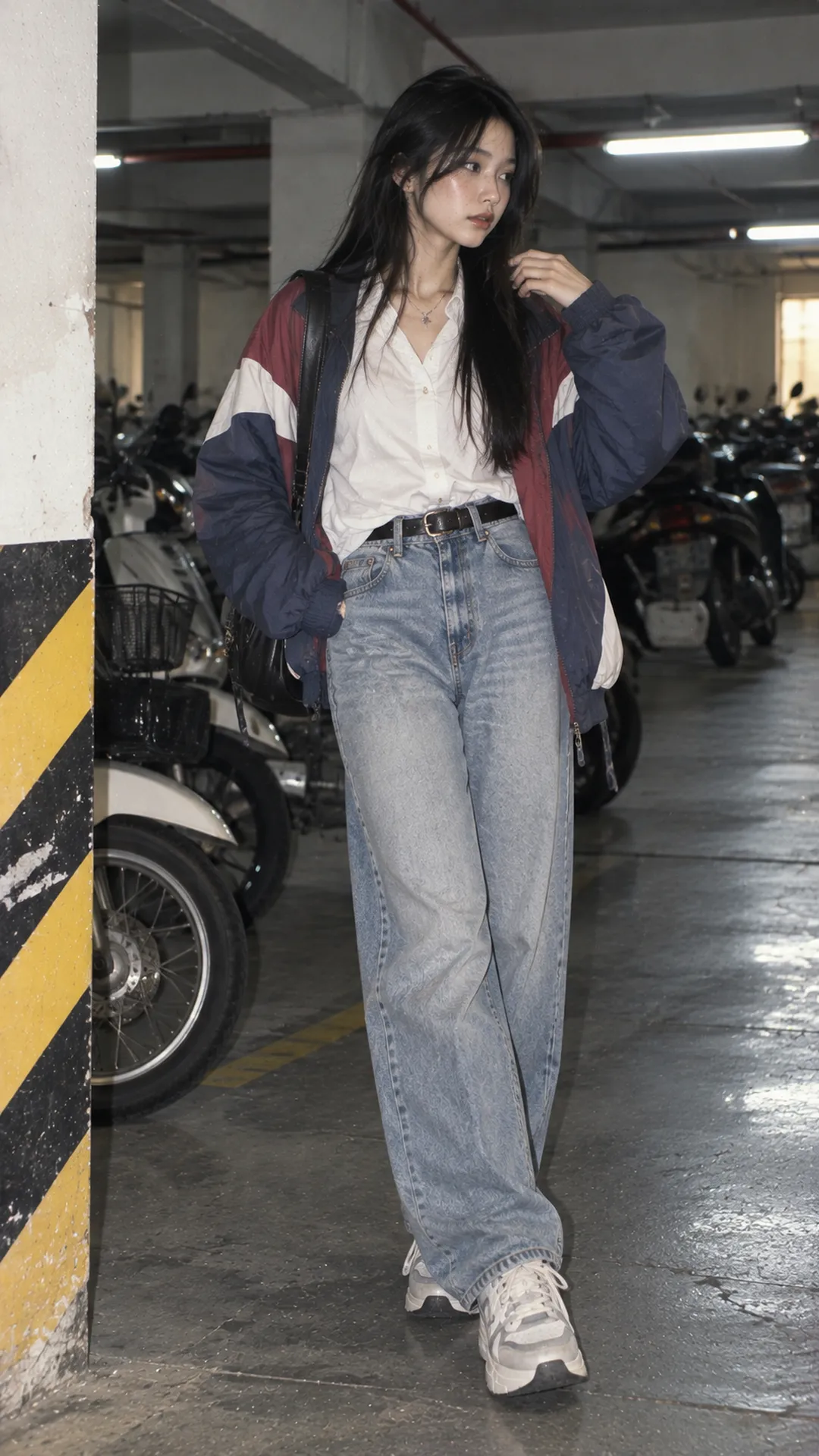
View Vietnamese fashion in the 1990s through several contexts
Calendar portraits and celebrities form one prominent part
The article The Return of 1980s–1990s Fashion in Thanh Niên discusses the influence of calendar stars such as Diễm Hương, Việt Trinh, Giáng My and Y Phụng. It helps explain how celebrity imagery contributes to fashion memories, but also discusses revival dressing many years later.
Read each passage carefully: recalling earlier clothing differs from describing a singer wearing retro pieces in the article's publication year. Ignoring the dates makes it easy to assign a new combination to Vietnamese society in the past.
Everyday life includes more situations than a calendar photograph
The series of Andy Tarica's 1995 Vietnam photographs presented by VnExpress records streets, shops and everyday activities across several locations. Such material adds living context to fashion research rather than focusing only on models or actors.
Clothing for a promotional shoot, workplace or market visit serves different needs. Region, age and conditions of use matter too. A clearly dated image establishes what appeared in a particular place, but cannot prove everyone dressed that way.
Images to compare when seeking inspiration
Shirts and denim in an actor's public image
In Diễm Hương's Youthful Beauty in Earlier Years, VnExpress describes an unbuttoned shirt in a calendar shoot alongside images of a hoodie and loose jeans. These examples show how one actor's presentation could move between softness and a more active look.
Choose one specific detail to borrow: the shirt's width, its collar arrangement or the relationship between top and trousers. You do not need the same hair, makeup and expression. Nor should one person's choices become the only rule for an entire decade's fashion.
Áo dài in memories of school and public imagery
A photograph collection republished by Hoa Xương Rồng includes a caption identifying schoolgirls wearing áo dài in Đà Nẵng in the late 1990s. The collection also contains work and trading scenes. It reminds us that many forms of clothing coexist within one period.
Áo dài are not exclusive to the 1990s. For a period-specific version, examine dated sources and garment construction rather than calling any white áo dài a 1990s design. For wear today, choose a comfortable fit and describe it clearly as nostalgically inspired.
Read accessories within the whole outfit
Hats, earrings, bags and belts often give a photograph character, but cannot date it alone. Notice which collar accompanies an accessory, how the shoulders are shaped and where the clothes end. Relationships between items often offer more to learn than finding an exact object.
Consider the photograph's purpose. Shoot accessories may be selected to stand out on camera, while daily items need to work when carrying belongings or traveling. Keep the evocative shape and reduce its size if that suits your routine.
Why not equate the whole 1990s with Y2K?
The timeframes can overlap, but the subjects differ. This article examines Vietnam in 1990–1999; Y2K often names an aesthetic associated with the transition into the 2000s. A garment can appear in several periods without making every image part of one style.
If you want cropped-top proportions, low rises, glossy surfaces or pop-inspired accessories, read the separate women's Y2K style guide. An international Y2K mood board cannot substitute for documentation of Vietnamese dress throughout the preceding decade.
Likewise, vintage does not mean the 1990s specifically. The guide to Vintage Style distinguishes older garments, reference periods and retro styling. A new shirt can feel nostalgic; conversely, an undated secondhand item should not be declared an artifact from 1995.
An approachable adaptation: a shirt and well-fitting jeans
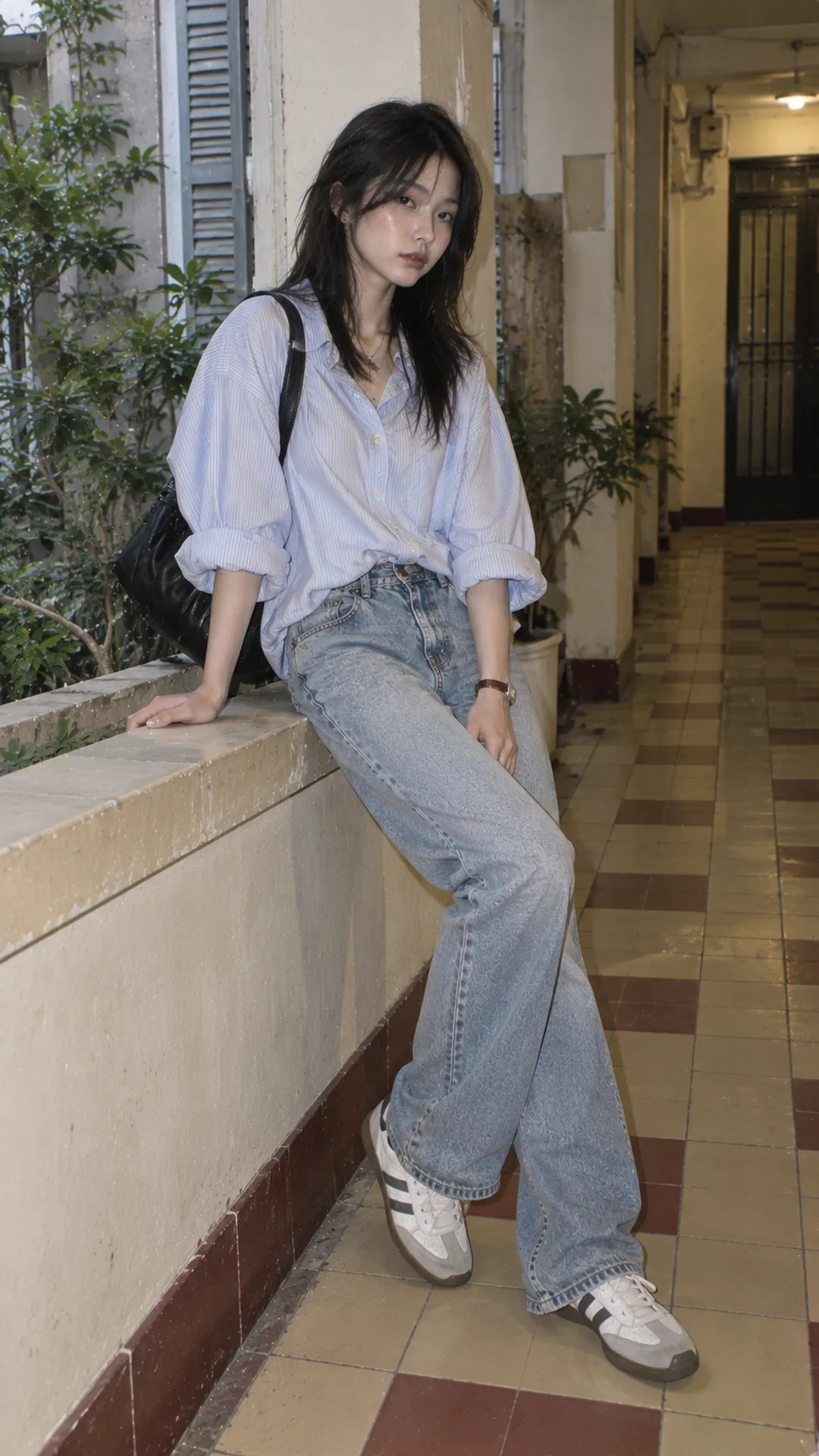
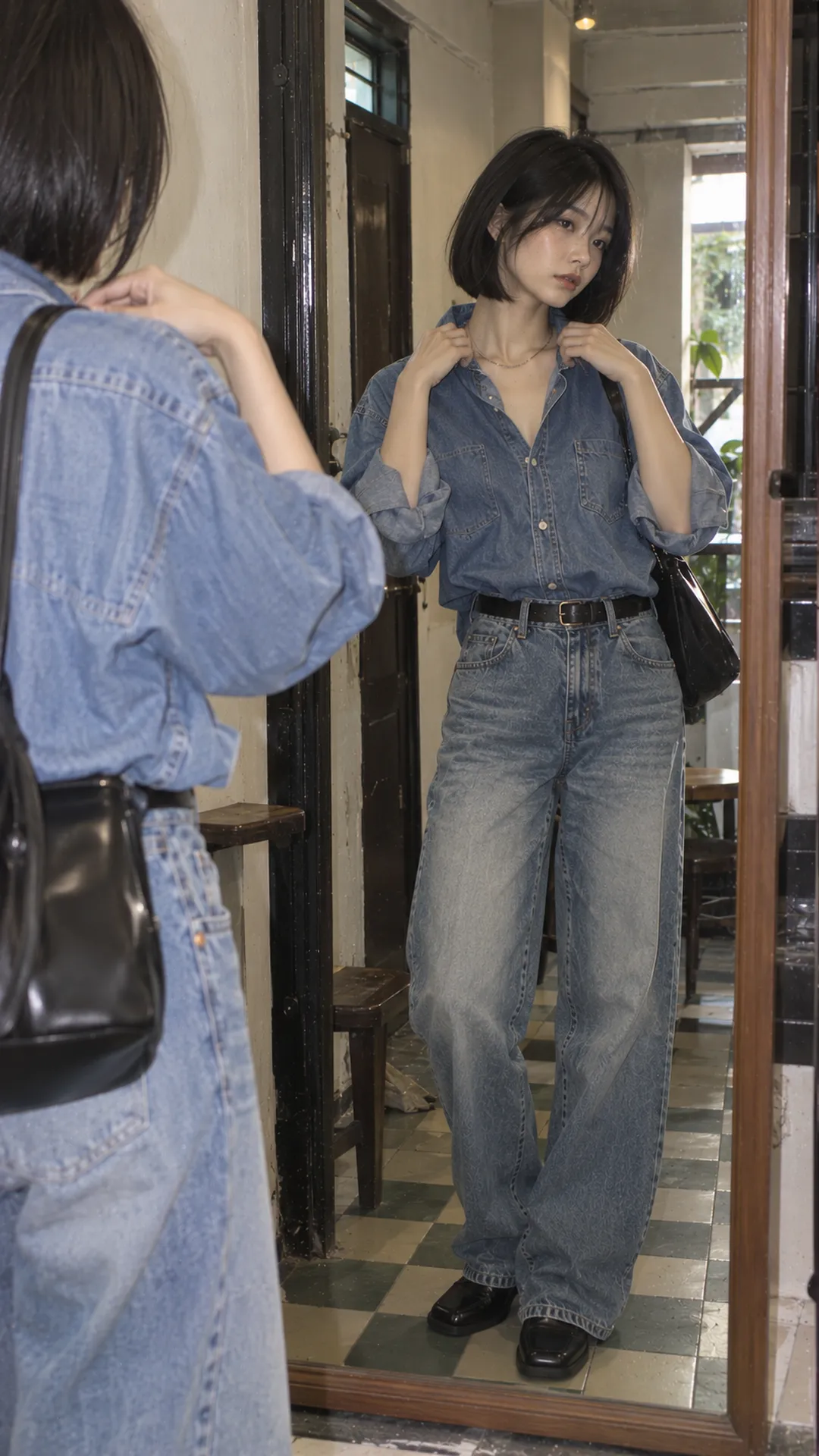
This is a contemporary styling suggestion drawn from the clothing groups discussed, not the only reconstruction formula. Start with a moderately roomy shirt and straight or slightly wide jeans. Make one piece's color or pattern distinct and let the other supply the base. A belt is needed only when it secures the fit or completes the proportions.
Try the same shirt two ways: buttoned and tucked, then open over a simple base. Take full-body photographs to compare waist position, shirt length and trouser width. If there is too much fabric above, change the tuck or choose a shorter shirt rather than replacing the whole outfit.
Test jeans when sitting and stepping onto a stair. The waistband should sit where you feel comfortable, not at a height imposed by a retro label. The hem can lightly meet the shoes but should not drag when walking outdoors. A small length alteration often helps more than extra accessories.
Choose shoes for your actual needs too. Simple sneakers or well-fitting low shoes can work. A pair that looks newer or differs from the reference does not invalidate the outfit: you are building inspired clothing, not recreating every object from a historical shoot.
If you like the softness of calendar portraits
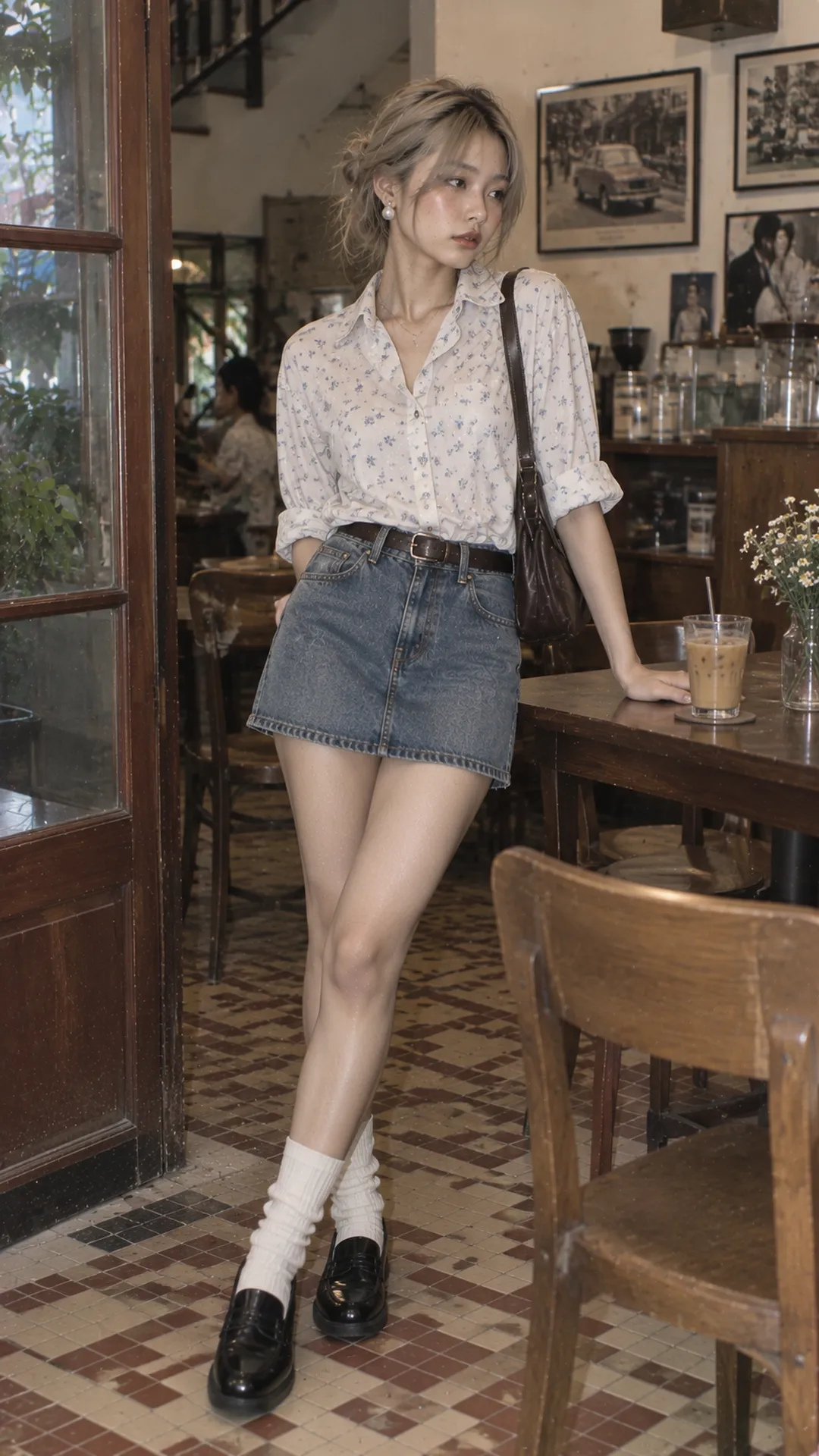
Start with the collar and drape. A plain or small-print shirt with a clearly shaped skirt can provide a base for trying earrings or a hairstyle. Choose one attraction near the face. If collar, print, jewelry and hair all stand out, identifying the element producing the feeling you like becomes harder.
With an unbuttoned-shirt reference, adjust the opening and underlayer to your comfort. You do not need the same amount of exposed skin to keep the styling idea. Likewise, large accessories can be replaced with lighter versions for longer wear.
To avoid a photographic-costume effect, remove one nostalgic detail. With a patterned shirt and statement earrings, a simple bag can work. If you choose elaborate hair for a shoot, the clothing can be less detailed. Each choice needs space to remain visible.
Choose old or new pieces for a wardrobe you can keep using
When buying used clothes, inspect collars, armholes, seams and fastenings. View stains in clear light, request interior photographs and check actual measurements. An item with an attractive story but poor fit or demanding care may not suit regular wear.
If a seller dates a piece to the 1990s, ask for support such as labels, purchase history or related documentation. Lack of evidence does not necessarily make it a poor purchase; assess design, condition and usefulness rather than paying extra for an unconfirmed date.
New clothing is also reasonable when you need specific measurements or easy-care materials. Describe it accurately as new, retro-inspired clothing. Do not deliberately damage, stain or make clothes difficult to use just to create age. A clean, well-fitting outfit can communicate the inspiration clearly.
Before adding a strongly expressive item, explore Alt Fashion and building personal style. This expands contemporary dressing; it is not evidence that all Vietnamese young people in the 1990s belonged to one subculture.
Build a reference board without mixing periods
- Record the photograph's date and location where provided; separate the repost date from the image's creation date.
- Separate everyday photographs, calendar portraits, film costumes and new retro outfit images.
- Choose one detail to learn from, such as a collar, trouser length or use of color.
- Note what you will change for your current weather, body and activities.
- Keep the source link to revisit its context rather than saving an image stripped of its caption.
A small board with a few clearly sourced images often helps more than dozens labeled only “90s.” For family photographs, ask the owner about the date and occasion. Personal memories add to the story, but an approximate timeframe is appropriate when the year is uncertain.
Frequently asked questions
Are brown clothes and an old-photo filter enough to establish a 1990s style?
They are not enough to identify a period. Film, lighting and storage can affect image color. Consider garment construction and context first. A filter changes the final image; it does not provide historical evidence for the outfit.
Do I need a complete vintage set?
No. Try one main piece with existing clothes, adjust the fit and then decide whether anything else is needed. This reveals whether you like the shape, color or nostalgic feeling without turning one idea into an impractical wardrobe.
Where can I find related styles?
Use the Aesthetic Dictionary for reading on vintage, street fashion and other aesthetics. When returning to Vietnamese 1990s references, retain the image's date and context. They provide the foundation for intentionally creating a new outfit.